


This is no longer a debate about dignity. It is a debate about where Clallam County is taking people. One camp wants to keep expanding a two-decade harm-reduction project: sterile kits, pipes, test strips, naloxone kiosks, and a “non-judgmental” front door that treats continued use as an acceptable long-term condition. The other camp wants people out of tents, out of active addiction, into detox and recovery, and back into ordinary life. Last month’s Board of Health meeting put that fight on the record.
The official story arrives first
At last month's county Board of Health meeting, the first public-comment block was almost entirely about the 2025 harm-reduction presentation on the agenda. Supporters arrived with the same script: the program is “evidence-based,” critics are spreading “misinformation,” and questioning Health Officer Allison Berry is an attack on science itself.
Bonnie Bless-Boenish, a League of Women Voters activist, opened (00:03:03). She said she had read the packet and learned the program “does much more than handing out supplies.” She asked the board to “develop a plan” to take the day’s presentation into the community—libraries, nonprofits, medical offices—so the official story would travel faster than dissent.
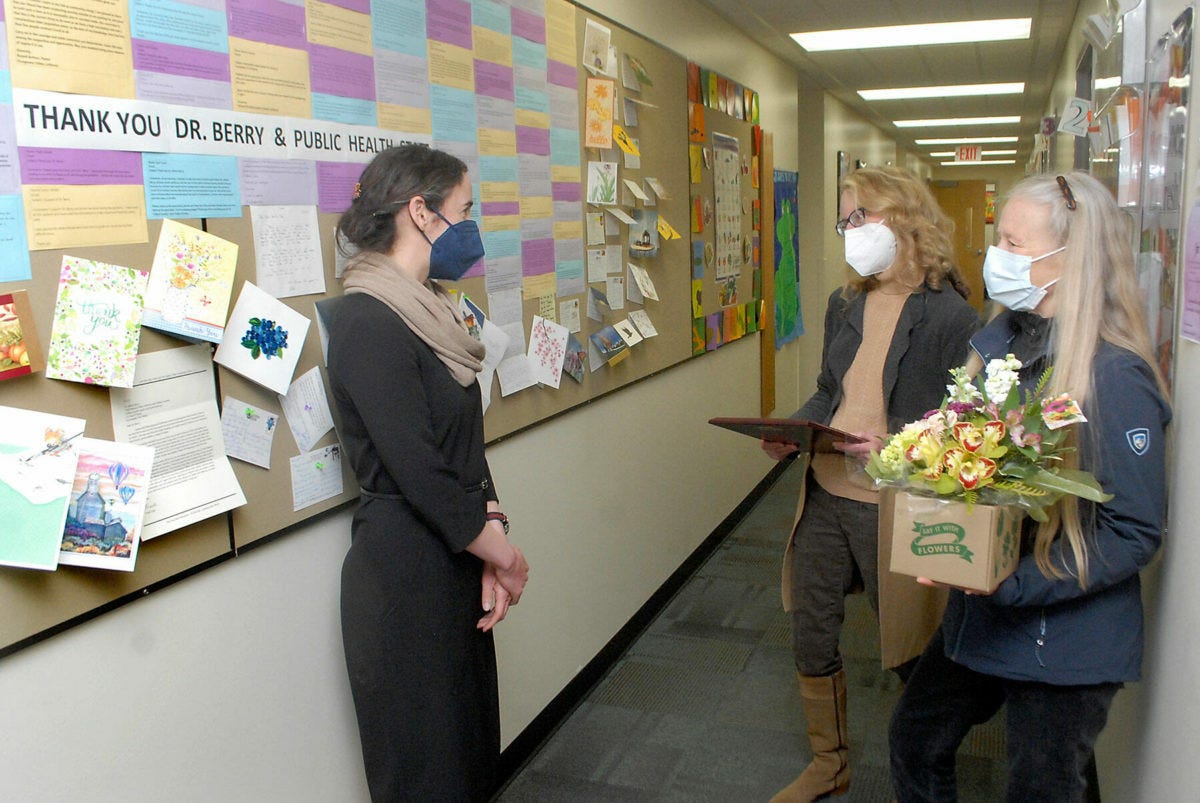
League of Women Voters activist Stephanie Sherman of Port Angeles followed (00:03:41). Public health, she said, is usually uncontroversial: vaccines, WIC, food inspections. Harm reduction is the exception. Locking people up “doesn’t really solve the problem.” The humane path is “life-saving support,” relationships, and encouragement toward treatment. Dr. Allison Berry and her staff, she said, were implementing “research-based programs.”
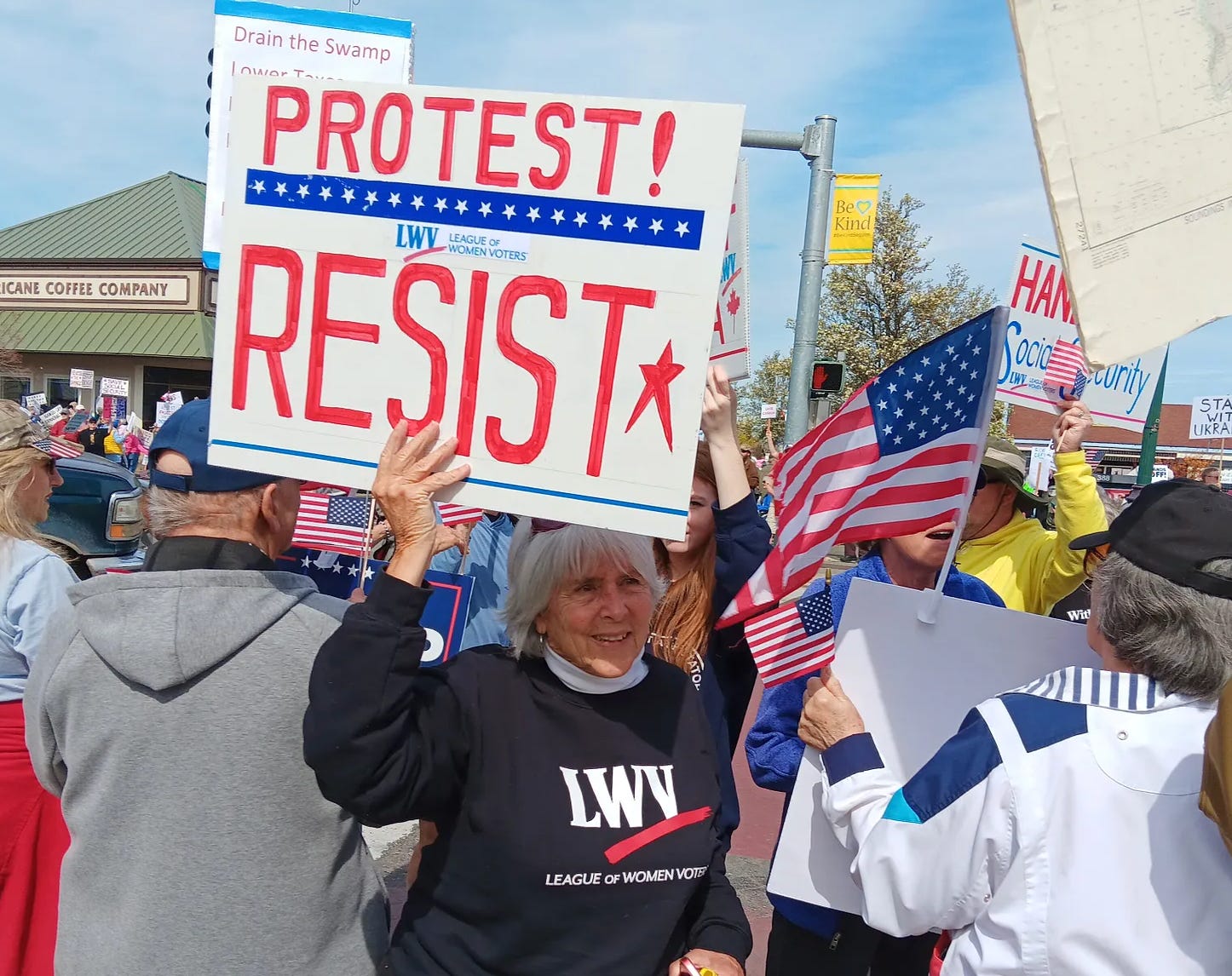
Joyce Stewart of Carlsborg—a Homelessness Task Force member who has harm-reduction supplies shipped to her home for distribution at Jesse Webster Park— drew a sharper line (00:07:13). The Harm Reduction Health Center is not a treatment provider. No paid full-time SUD professionals are on staff. Medicaid covers 28 days of inpatient care and then, she said, people return to the street because housing and wraparound care do not exist.


Stuart explained that Robert F. Kennedy Jr. took 12 years to leave heroin “with all the resources in the world.” Expecting homeless addicts in Clallam County to “get it together” on a shorter clock, she argued, is fantasy. Sweeping camps and “pitting capital expenditures against people who are homeless” would only exhaust the workers who still talk to them.
Indivisible member and former Charter Review Commissioner Paul Pickett (00:18:32) told the board to keep the categories separate: disease control is not the same as ending addiction.
Democratic Socialist Bradley “Nemo” Callaway (00:21:06) thanked staff “in the face of all of the hate and vitriol and misinformation” and pivoted to Medicare for All and the Washington Health Trust.
Tracy Abell (00:23:14) said public safety is not “more cops”; it is neighbors not overdosing.
Brenda McEllis (sp?) of Sequim (00:25:09) went further: “We do not have room in this county to question science. This is not a MAGA county. It never will be.”
That last line is the tell. The defense is no longer “here are the local outcomes.” The argument has morphed into identitarianism. Critics are not neighbors with a different point of view. They are MAGA people who are not welcome to live in this county.
Seegers puts the citation on the table
Then Jake Seegers took his three minutes (11:23).
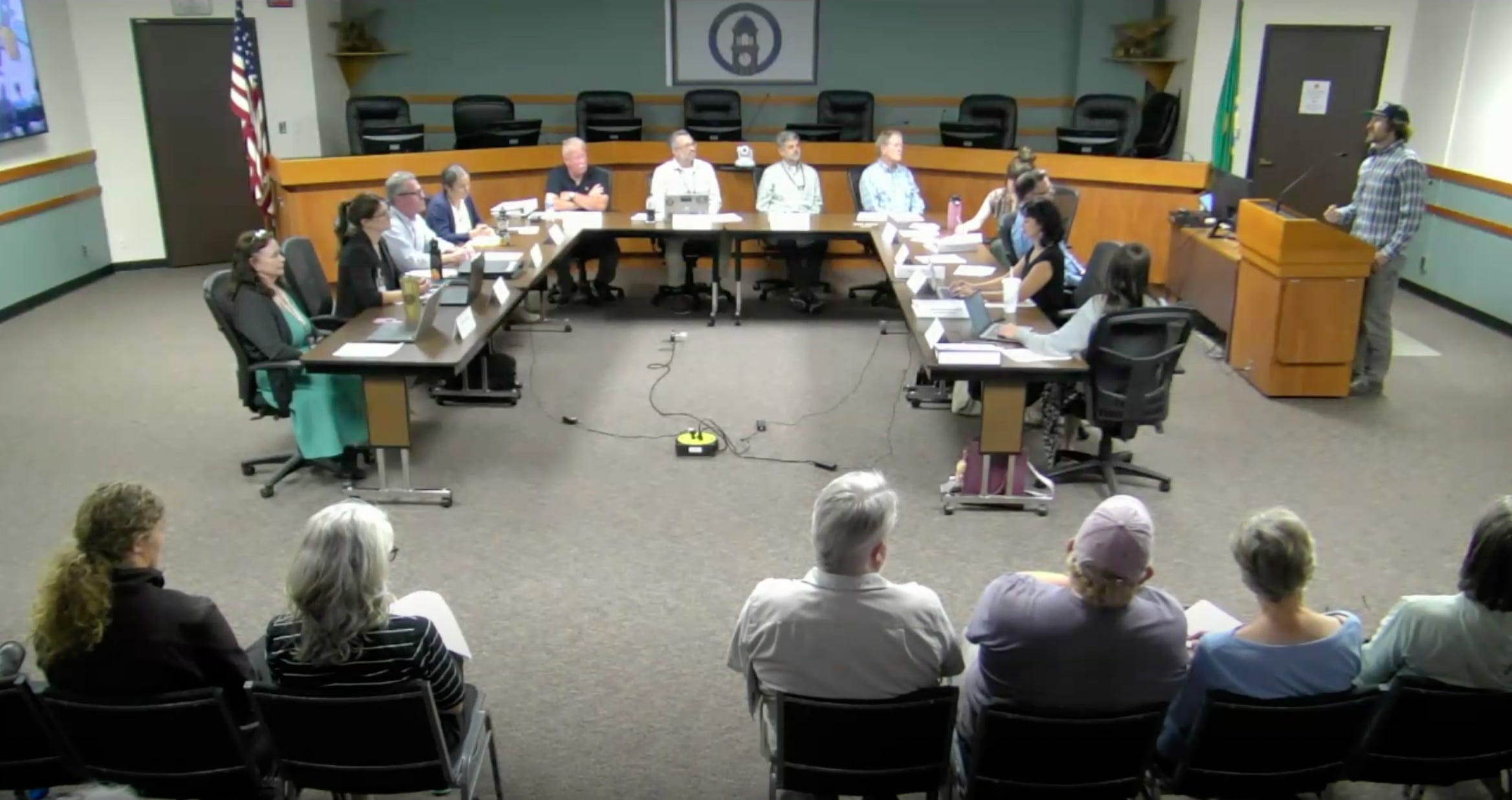
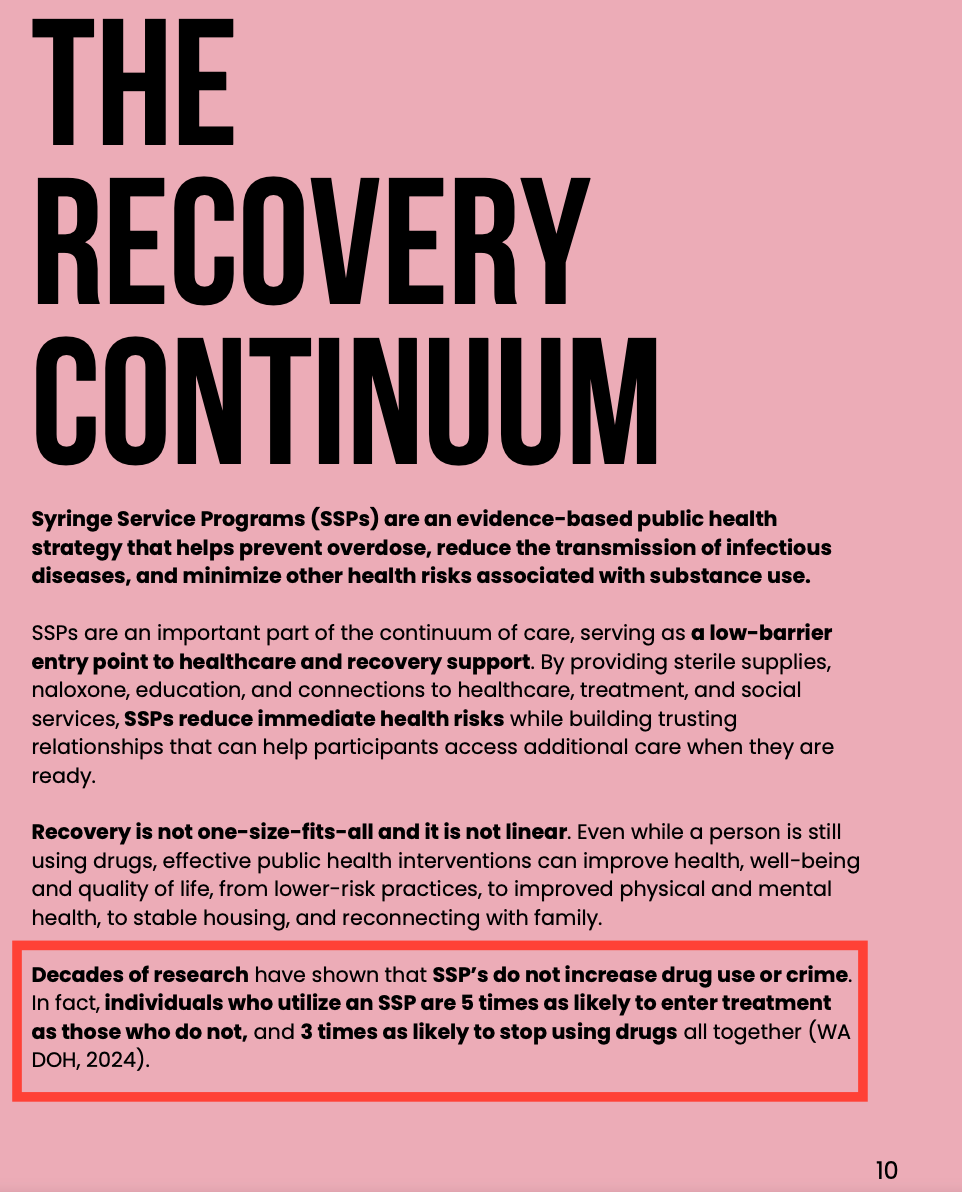
He did not ask the board to feel more compassion. He asked it to stop repeating a statistic it cannot defend locally. Staff and commissioners have said participants in syringe programs are “five times more likely to seek treatment” and “three times as likely to stop using drugs.”
Board of Health Chair, Commissioner Mike French, laughed openly at Seegers.
Seegers named the source: a 2000 Journal of Substance Abuse Treatment paper by Holly Hagan and colleagues about Seattle injection drug users.
Read the paper itself. Do not take the slogan.
The “five times more likely” line is narrow. It compared people who just started using Seattle’s needle exchange with people who never used it. The “treatment” those new users entered was methadone, not a 28-day detox bed and a clean break from drugs.
The “stopped using” language is narrower still. Researchers asked former exchange users whether they had cut down on injecting or stopped injecting. That is not the same as “they got sober.” Someone can stop using needles and still smoke fentanyl.
None of that is a study of Clallam County. It is not a study of handing out boxes of syringes, foil, pipes, and boofing kits without a one-for-one swap. It was written in 2000, before fentanyl took over the street supply. It cannot tell this county whether today’s program is moving people into recovery.
The local funnel does not look like recovery
Seegers then put the local numbers on the table:
About 1,000 participants a month last year
12,000 annual visits to the Harm Reduction Health Center
27 inpatient treatment assessments
48 warm handoffs
“That’s a terrible conversion rate,” Seegers said. “We are not actually pushing people to the treatment and the help that they need at harm reduction. We’re giving them drug use supplies.”
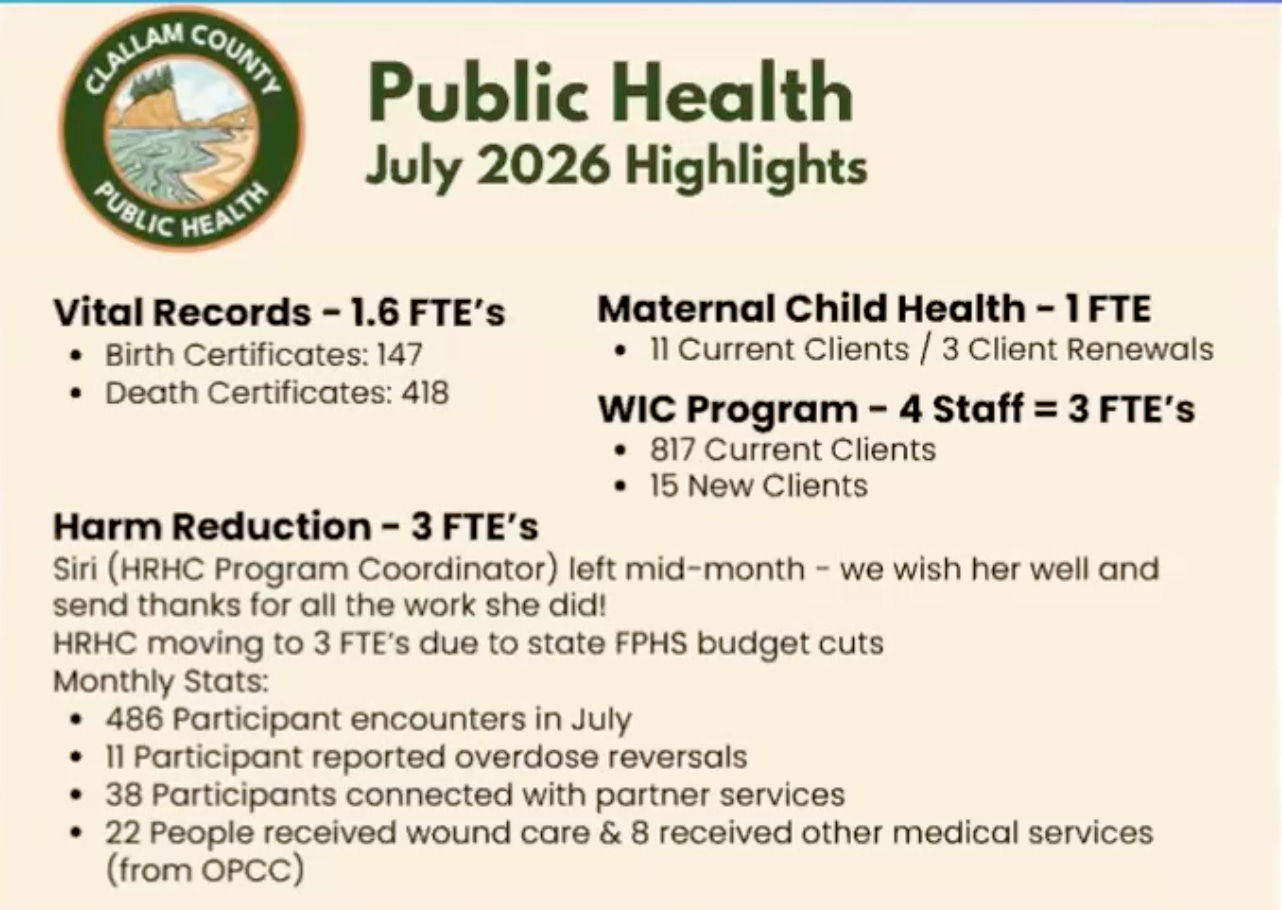
Staff later confirmed the shape of that funnel.
July alone: 486 encounters
11 participant-reported overdose reversals
38 connections with partner services on site
22 wound-care visits
Dr. Berry’s reply was that the known handoffs are only “a subset,” because people who get sober often disappear without circling back. That may be true. It is also unmeasured. A program that cannot count its own recoveries should not lecture the public about “the science.”
Berry’s other move was to divert attention.
When the local numbers look bad, the argument leaves town. Staff stop talking about Clallam’s 12,000 visits and 27 inpatient assessments and start talking about “the literature”: paper after paper, they say, shows syringe programs do not raise crime or drug use and do send people into treatment. That may be a debate worth having in a journal. It is not an answer to Clallam County.
Seegers’ point stands on its own. A 26-year-old Seattle methadone study cannot stand in for Clallam’s own ledger right now—how many encounters, how many kits, how many reversals, how much litter, and how few documented inpatient assessments. If the program works here, show it here.
Recovery versus a comfortable street
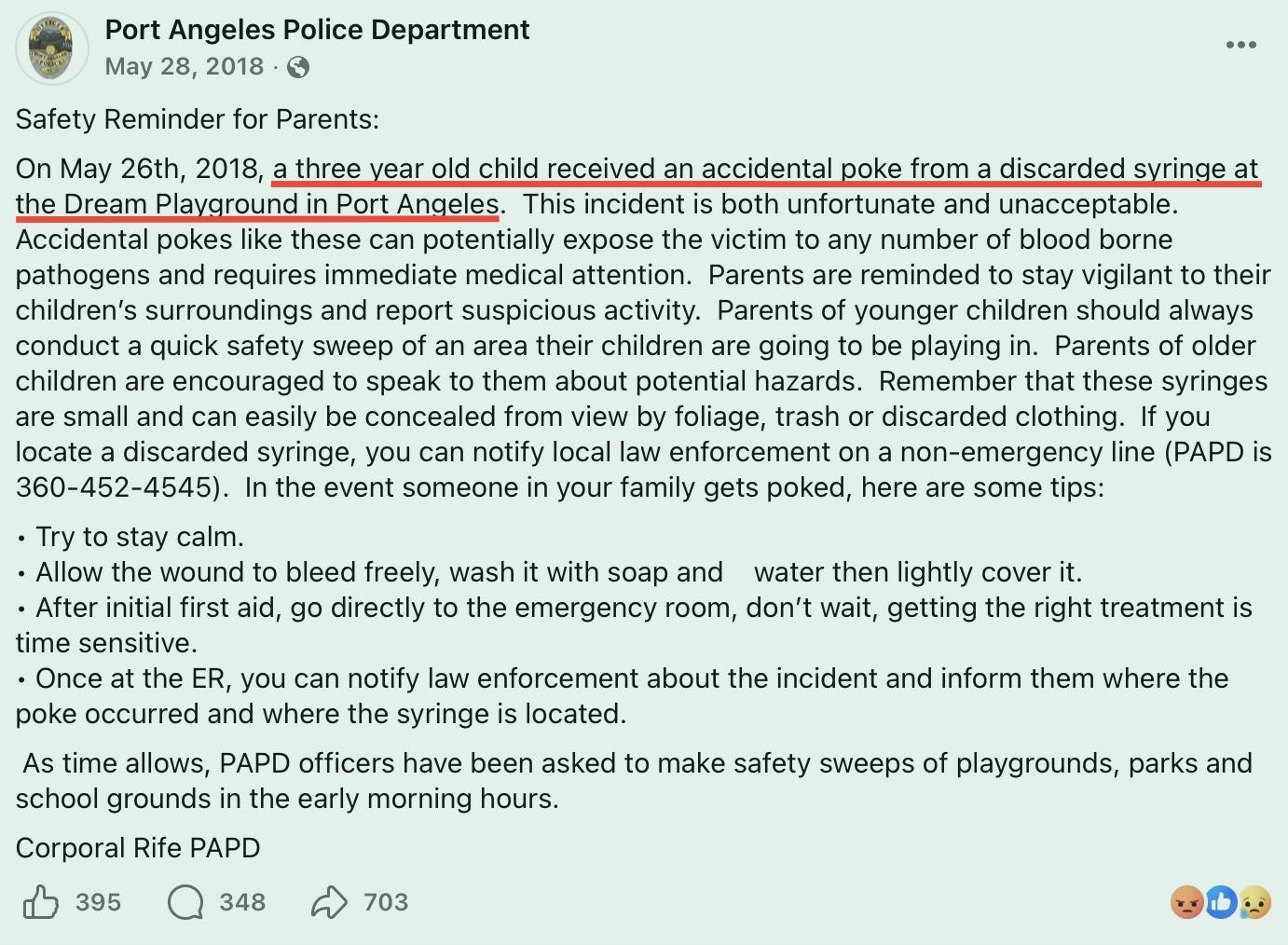
Teresa Miller of Sequim, 17 years sober, also spoke. (00:25:50 and again at 02:38:34). She did not deny suffering. She denied the strategy. “We can’t keep enabling people. We can’t keep coddling people.” She asked why the county outfits active users with kits while her son, after a DUI, lost his license with no comparable “wraparound.” Miller said, “Don’t create the problem just to create the solution.” In the later comment period, she put it more bluntly: “Why would anybody want to get sober in Clallam County?” Free supplies, test strips, wound care, food, a place to sleep—then surprise when the street still looks like the street.
Stacey (00:28:18) said the opposite from lived experience: inhalers and the center kept her alive; she is 10 months sober. That testimony matters. It does not answer Seegers’ ratio. Saving a life in crisis and building a system whose main output is supply volume are not the same policy.
Denise Lapio (00:15:59) asked a question the health department punted: the packet dates a “fentanyl explosion” around 2023. Who brought it, and how? Berry said that is “law enforcement space,” then noted Clallam was late to a national wave that displaced heroin. Fair enough as epidemiology. It is not an answer about local enforcement, trafficking, or whether a high-volume supply program is the right county response once the drug is already here.
The second hour: litter, curves, and definitions
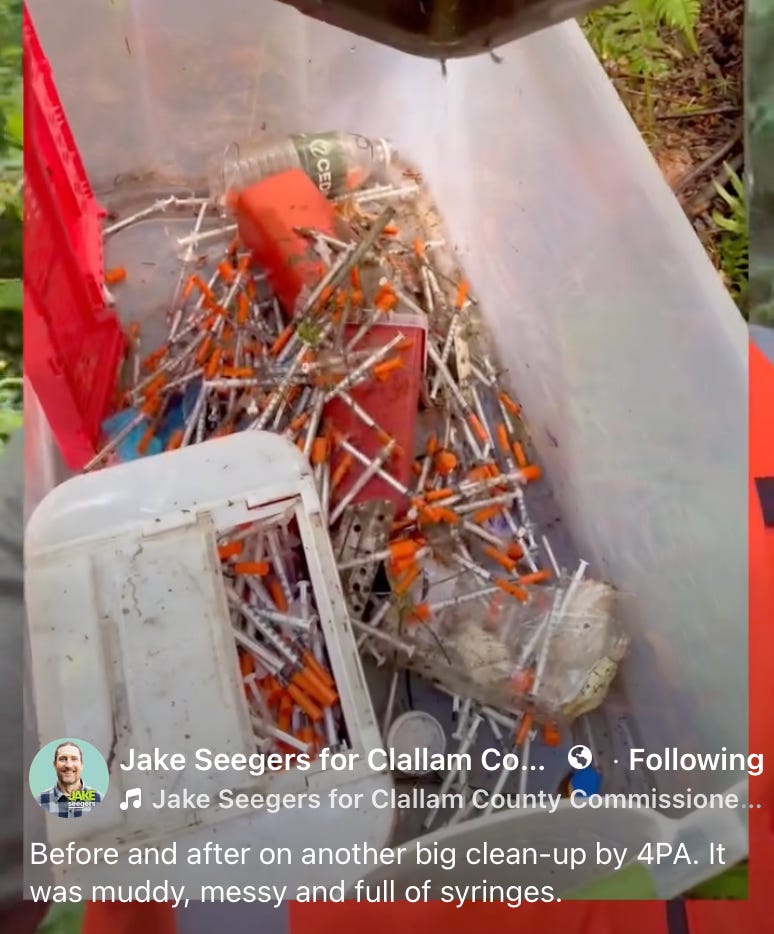
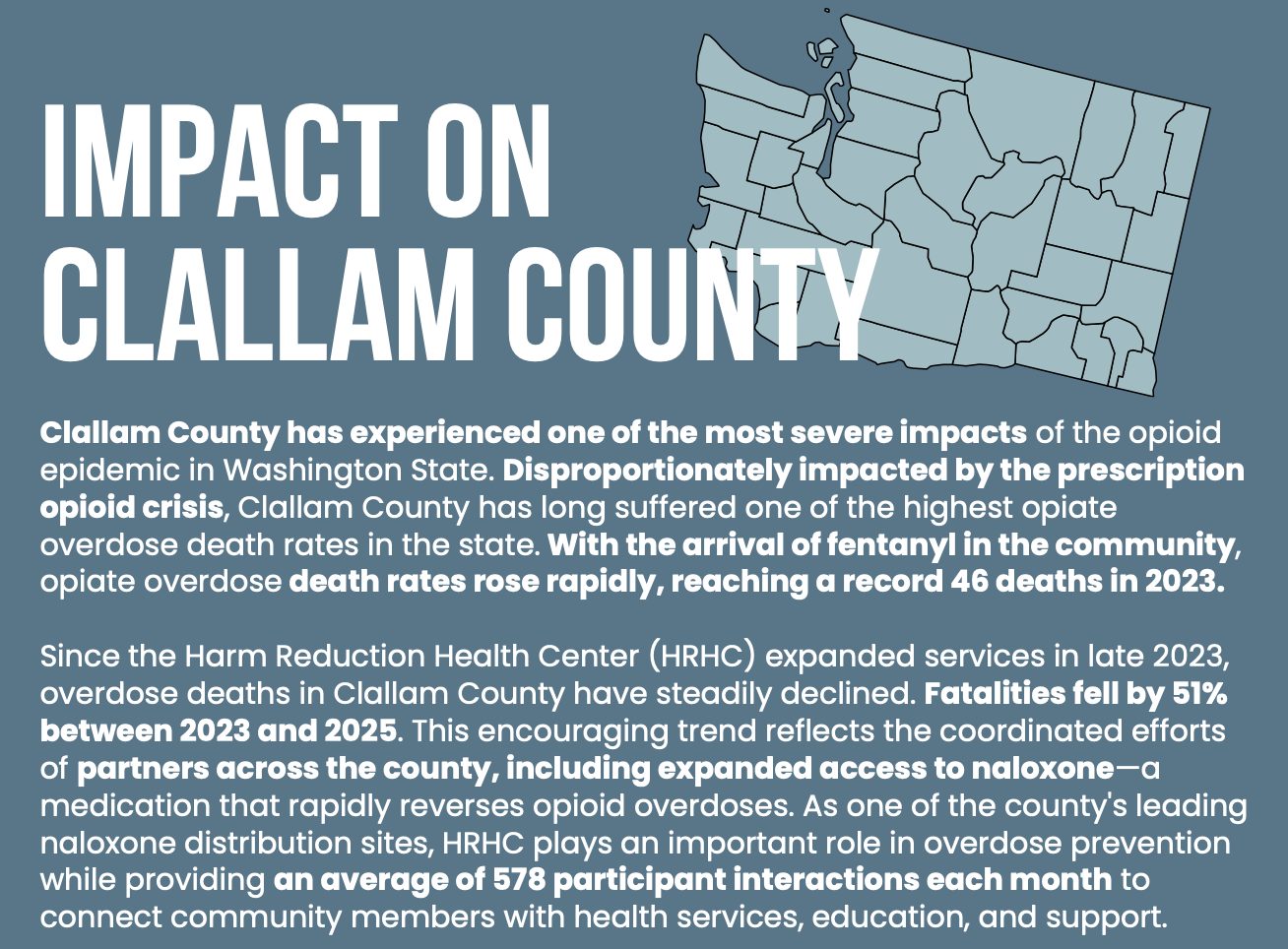
In the second comment period, Seegers came back (02:30:12) with numbers the Board of Health does not like to claim. He dated the clock to 2018—the year Allison Berry became Clallam County’s health officer—and said overdose deaths here rose 538% to the local peak. Washington rose 207%. The nation rose 64%. Fentanyl hit everywhere. Clallam’s curve was worse. He described cleanup at Tumwater Creek: hundreds of syringes, unused bubble pipes, and Narcan. He estimated thousands of naloxone kits against a small number of reported reversals and called needs-based distribution a break from one-for-one exchange.
Staff later gave the standard literature claim: one-for-one may cut needle litter, but it still raises reuse and disease risk. That is a disease-control argument. It is not a recovery argument.
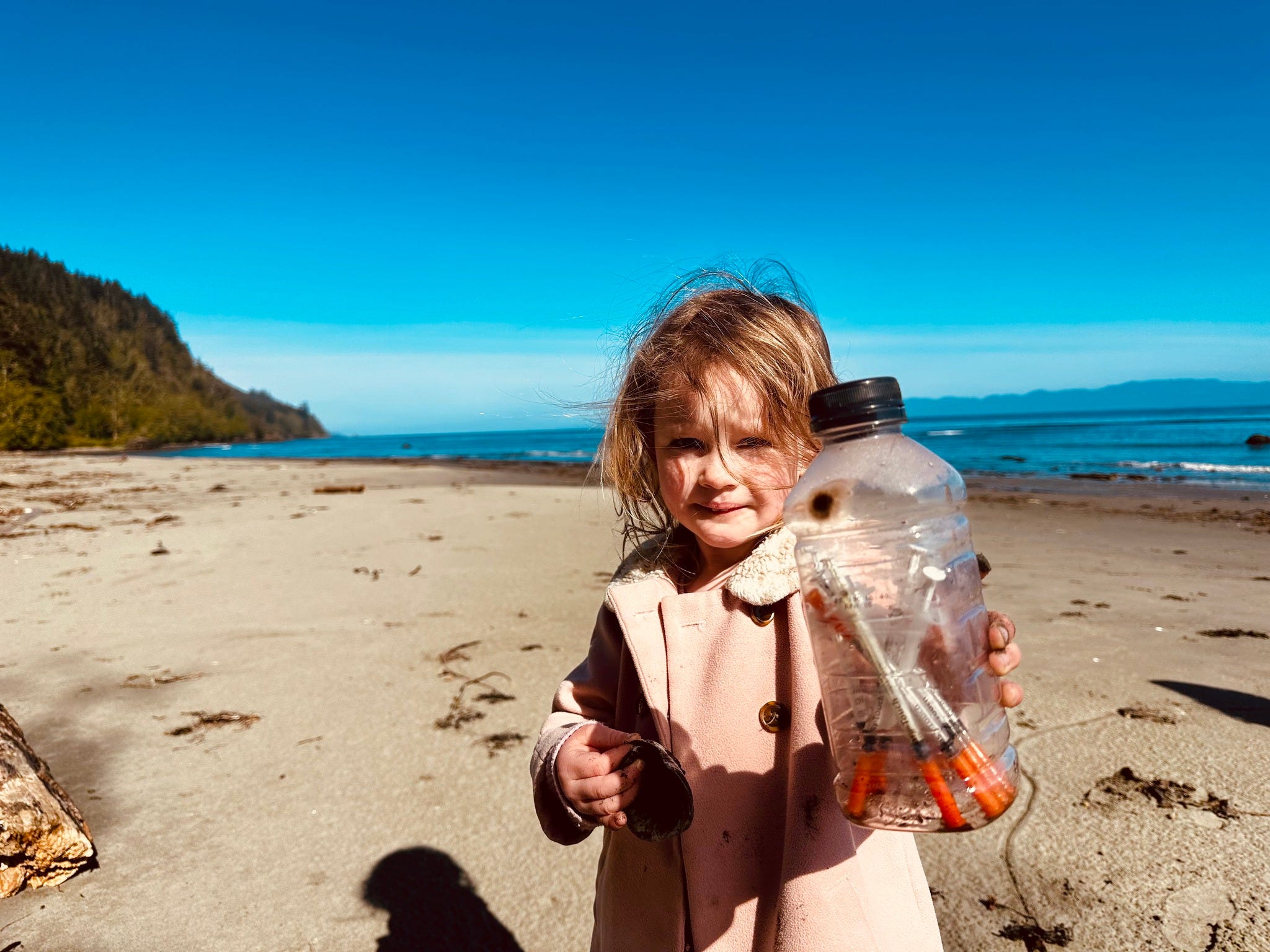
Berry, to her credit, said harm reduction is “one piece of the puzzle,” not the whole solution, and that housing, treatment, and interdiction all matter (00:30:33). She also said she does not control the budget. Both are convenient answers. The presentation still defined recovery as whatever the participant says it is—abstinence, “managed use,” or “positive health changes”—and stated that some people “may never stop using substances.” That is a moral framework wearing a lab coat. It tells a county it can keep people comfortable in addiction and call the result public health.
What the room actually revealed
The supporters in the room spoke the language of a political network that has treated harm reduction as settled doctrine: misinformation, MAGA, Medicare for All, “questioning science.” Whether each speaker carries a membership card to the Democratic Socialists, the League of Women Voters, or Indivisible matters less than the alignment. The same talking points show up whenever the program is threatened. The other side—Seegers, Miller, Lapio, and residents who clean the encampments—keeps asking for the thing the presentation never quite produces: how many people left the street, quit shooting up, and stayed off drugs.
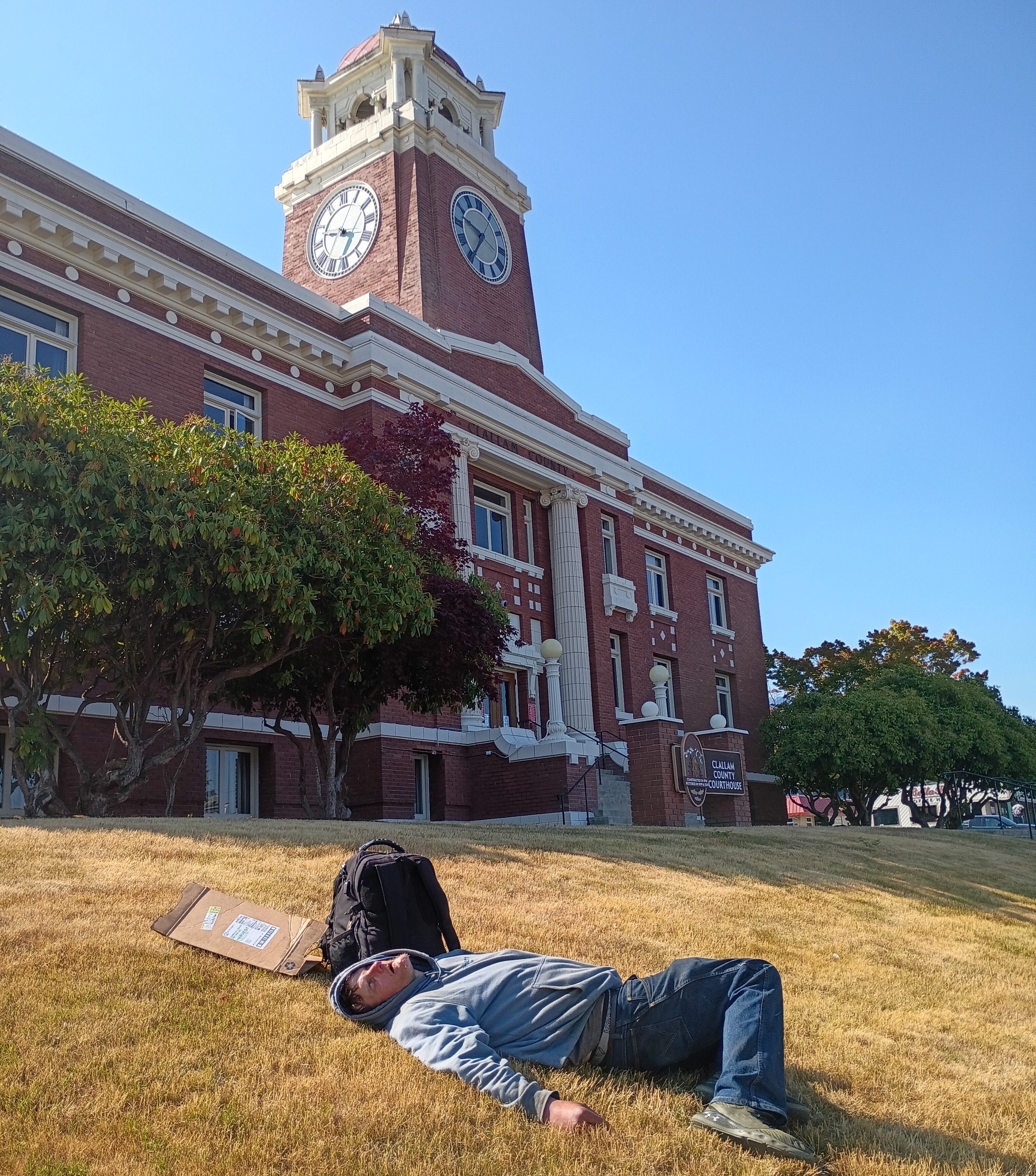
That is the fracture. One Clallam County wants a permanent low-barrier station for active use, justified by 26-year-old studies and national talking points, with Health Officer Berry as the interpreter of which studies count and which to ignore. The other Clallam County wants the hard work of detox, recovery, housing with rules, and an end to the idea that dignity is a clean pipe and a creekside tent. Last month’s meeting did not resolve it. It made the choice impossible to miss.


