


Jake Seegers told the Board of Commissioners that the Climate Element portion of the Comprehensive Plan is written for government, nonprofits, and activists — not for the people who own the land. Then Futurewise attorney Brooke Frickleton asked them not to adopt it, called the vulnerability study only “one step,” and cited the group’s new Thurston County win: planning without hard, action-forcing policies is not enough. That was a preview of a lawsuit coming to Clallam County.
Who Futurewise is
Brooke Frickleton spoke to the commissioners on Tuesday via Zoom. She works for Futurewise, a Seattle land-use group that polices the Growth Management Act. The Futurewise method is simple: comment on a Comp Plan, then sue the county before the Growth Management Hearings Board if the language isn't strict enough.
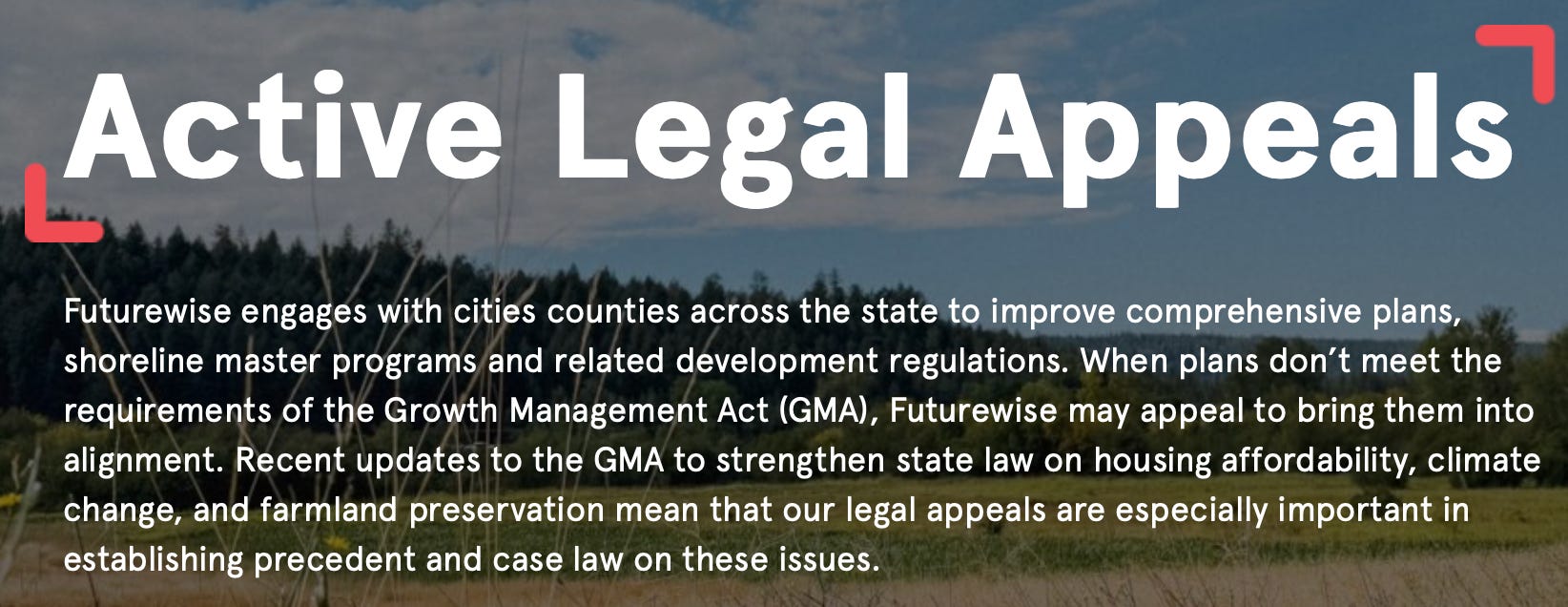
In a normal year, Futurewise runs 15 to 20 active appeals. It advertises that it wins about 70 percent of them. This statewide Comp Plan cycle, it expected that caseload to triple.
What they want is not another study. They want action-forcing policies — timelines, named departments, measurable targets, and “shall” instead of “encourage.” Thurston County already learned that. Futurewise challenged its climate element. The Hearings Board called the county “clearly erroneous.” Frickleton brought that ruling into Clallam’s chambers as the new standard.
Someone did the job the Commissioners would not
House Bill 1181 requires fully planning counties, including Clallam, to add a climate resilience section to the Comp Plan. It does not require Clallam to pay for a Climate Vulnerability Assessment, lock the most aggressive temperature forecasts into the plan, or turn soft words like “promote,” “encourage,” and “explore” into a 20-year enforcement manual.
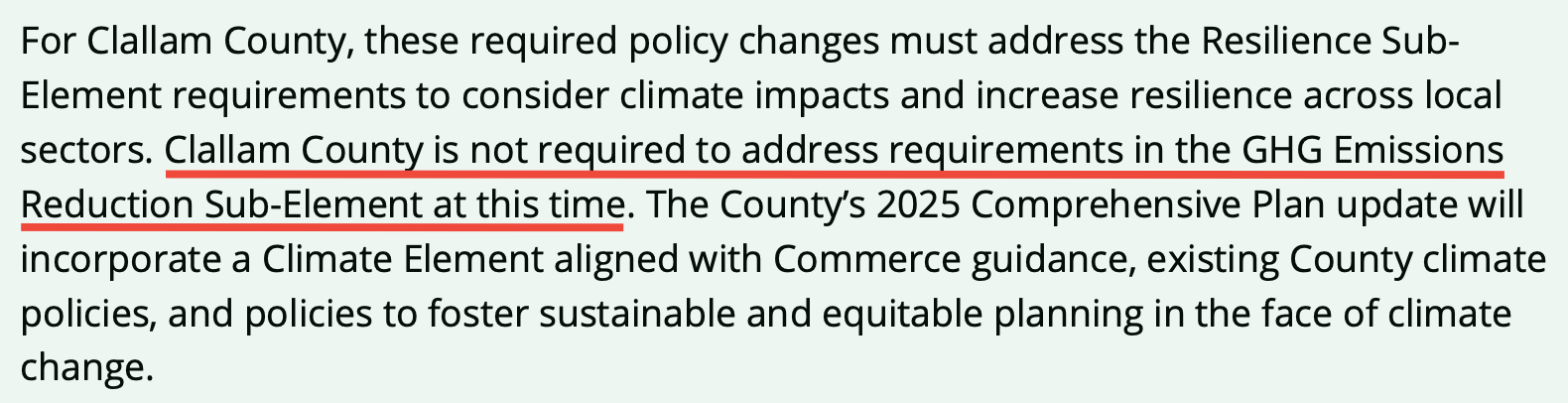
The County’s own draft Climate Element admits Clallam “is not required to address” the greenhouse-gas reduction section.
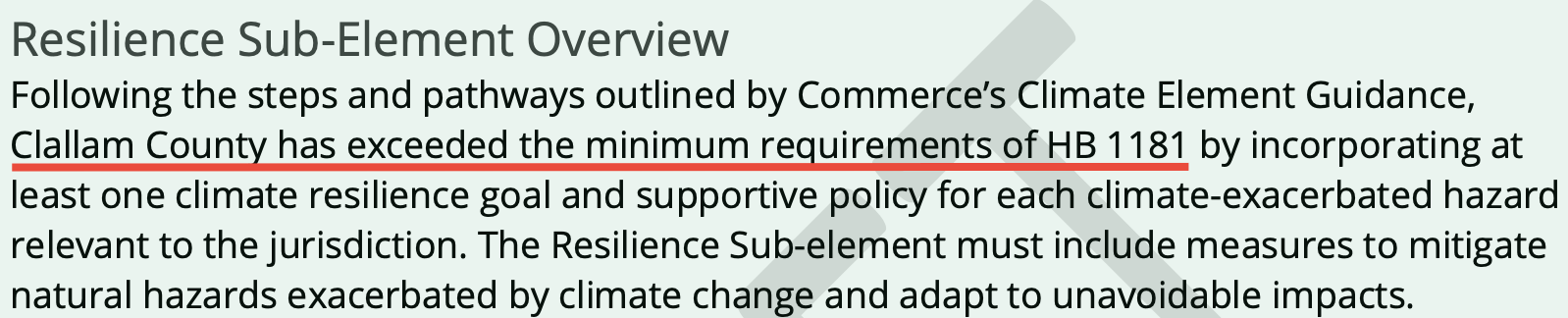
Then it brags that staff “exceeded the minimum requirements of HB 1181.” That is not compliance. That is a choice.
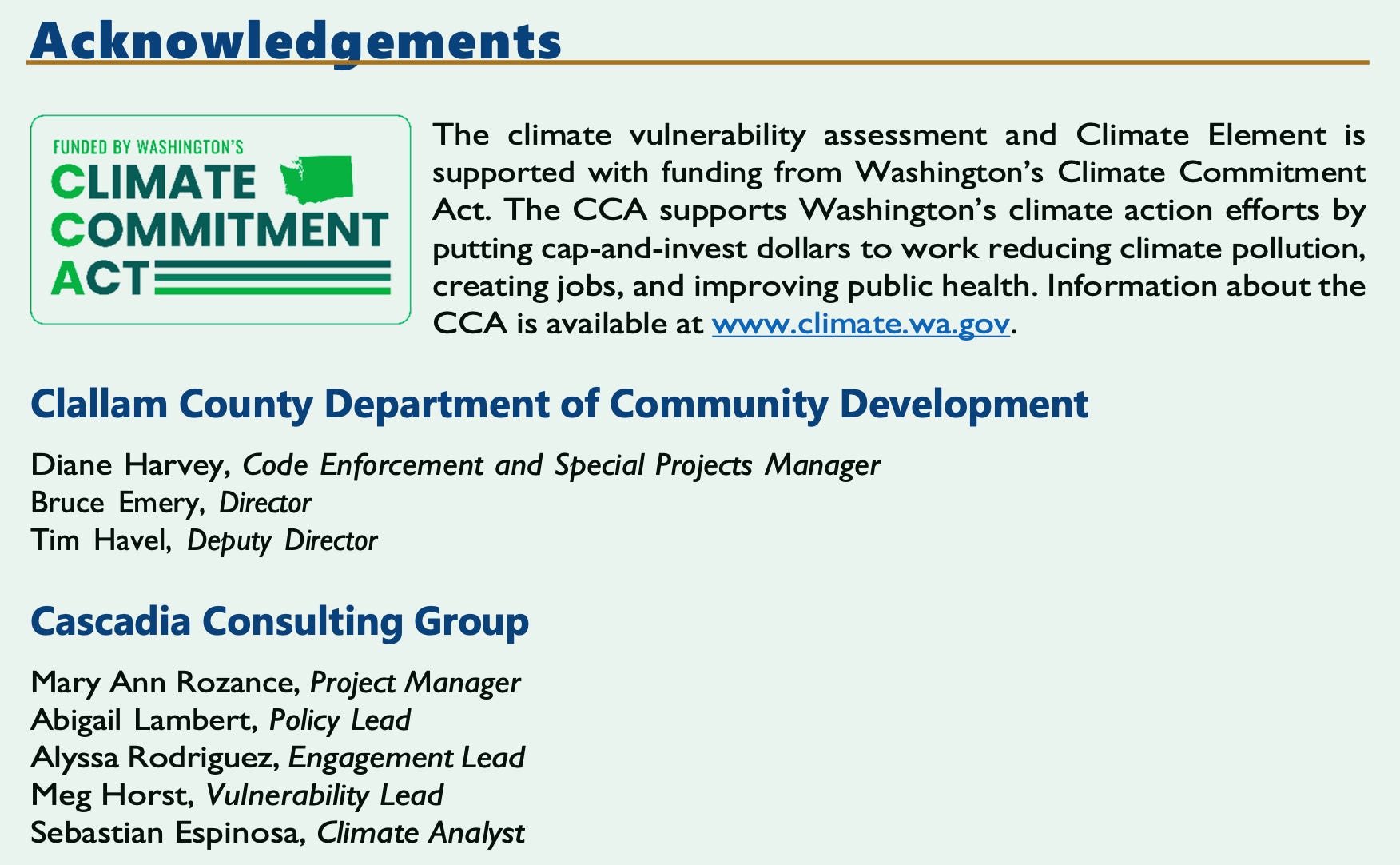
Jake Seegers named the funding source during his public comment: Climate Commitment Act funds. He named the consultant: Cascadia Consulting. He named the product: the most extreme climate story they could write and still call it science.
The Climate Vulnerability Assessment (CVA) cover page even carries the CCA logo. The acknowledgements list Diane Harvey first, then Bruce Emery and Tim Havel, then Cascadia’s Mary Ann Rozance, Abigail Lambert, Alyssa Rodriguez, Meg Horst, and Sebastian Espinosa. This is not a mystery document. These are the authors.
After the hearing, Jake put it in writing to the commissioners and Director Emery:
Commissioners and Director Emery,
It was a mistake to undertake a Climate Vulnerability Assessment built around extreme assumptions and to have the process spearheaded by activists already committed to a particular climate-policy perspective.
You have now provided Futurewise with ammunition to demand additional restrictions on Clallam County property owners for years to come.
The CVA should be rewritten using reasonable assumptions, clearly stated uncertainties, and a balanced assessment of risks before the Comprehensive Plan is finalized.
The people of Clallam County will not be intimidated or directed by threats from Futurewise.
I hope that you won’t be either.
Kind regards,
Jake Seegers
That is what a constituent sounds like when he still thinks the Board represents him.
The study picked the hottest numbers, then treated them as fact

Open page 14 of the assessment Jake marked up.
NOAA: “Since 1895, Clallam’s average annual temperature is up 1.4°F.” That is 130 years of actual record.
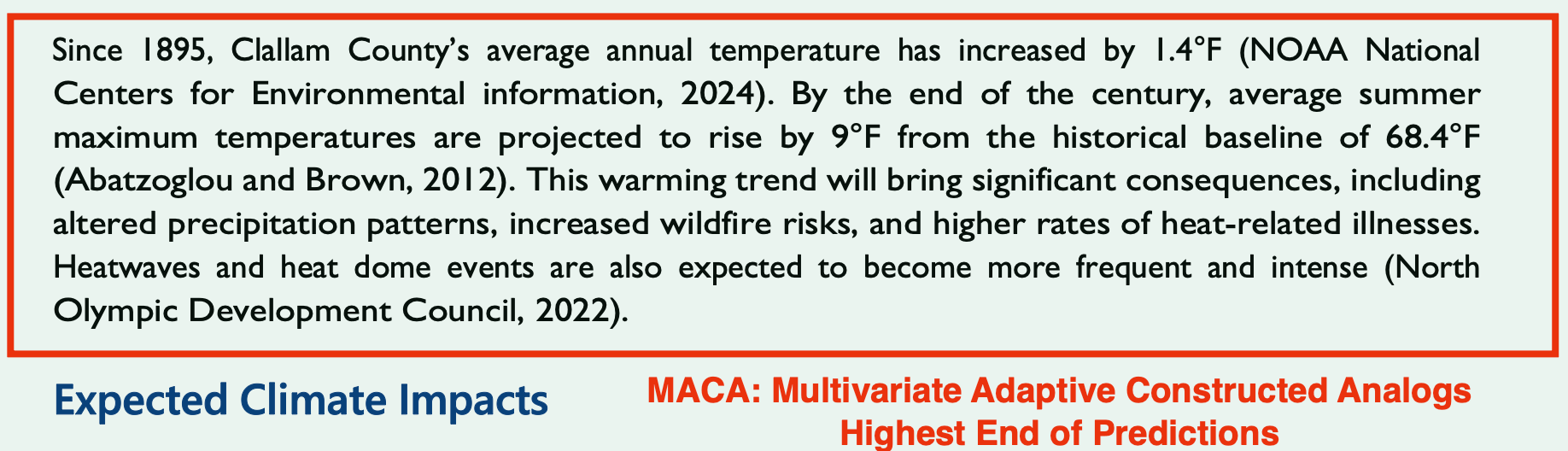
Next sentence: “By the end of the century, average summer maximum temperatures are projected to rise 9°F from a historical baseline of 68.4°F.” The source is Abatzoglou and Brown, 2012 — MACA, a method more than a decade old. Jake’s note on the page is the whole argument: MACA is a computer method that takes big global climate models and paints them onto a local map. “Highest end of predictions” means they did not use a middle forecast. They used the hottest example in that stack.
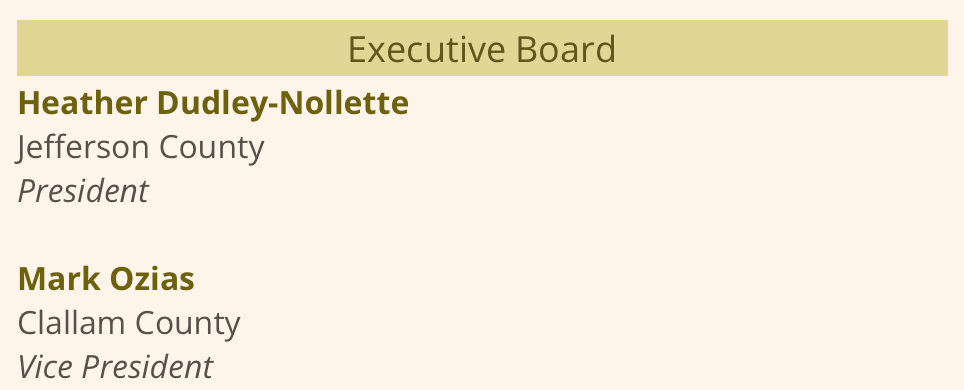
The next line — that this warming “will bring significant consequences” — cites the North Olympic Development Council, the NGO on whose board Commissioner Mark Ozias sits. The county farms the science to an NGO behind closed doors. A sitting commissioner presides over that NGO. The same man then votes on the plan when it comes back to the dais. That is not independent analysis. That is a glaring conflict of interest.
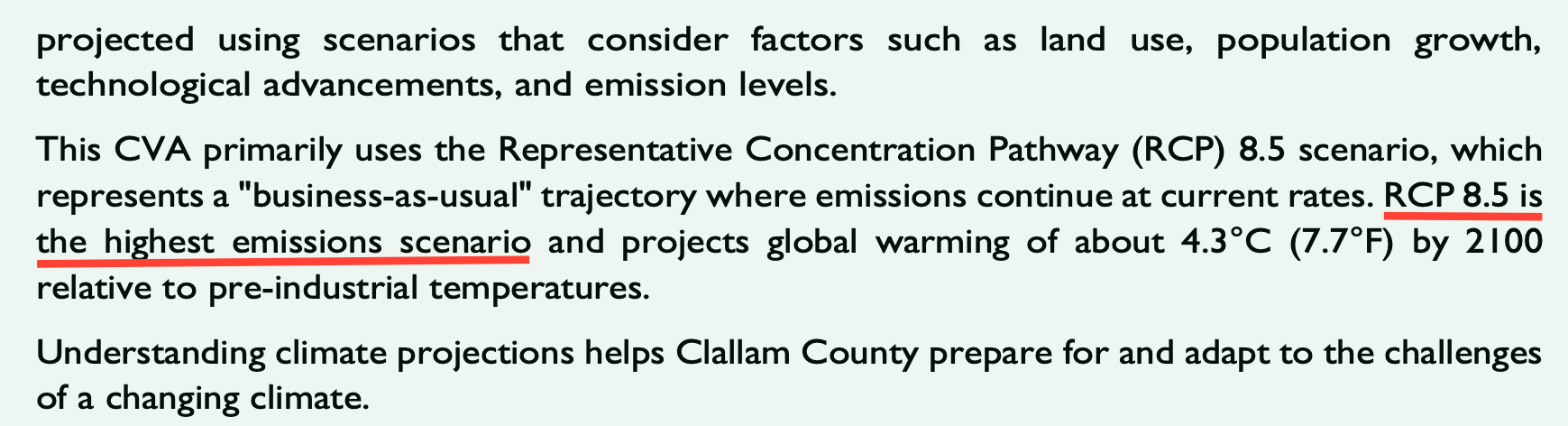
Page 15 then admits the CVA “primarily uses” RCP 8.5. That is the “business-as-usual,” highest-emissions pathway. It projects about 4.3°C (7.7°F) of global warming by 2100. That is not a middle estimate. That is the top of the stack used as if it were the county thermometer.
Page 14: “The rate of human-induced climate change far outpaces natural variability (Perlwitz, 2017).”
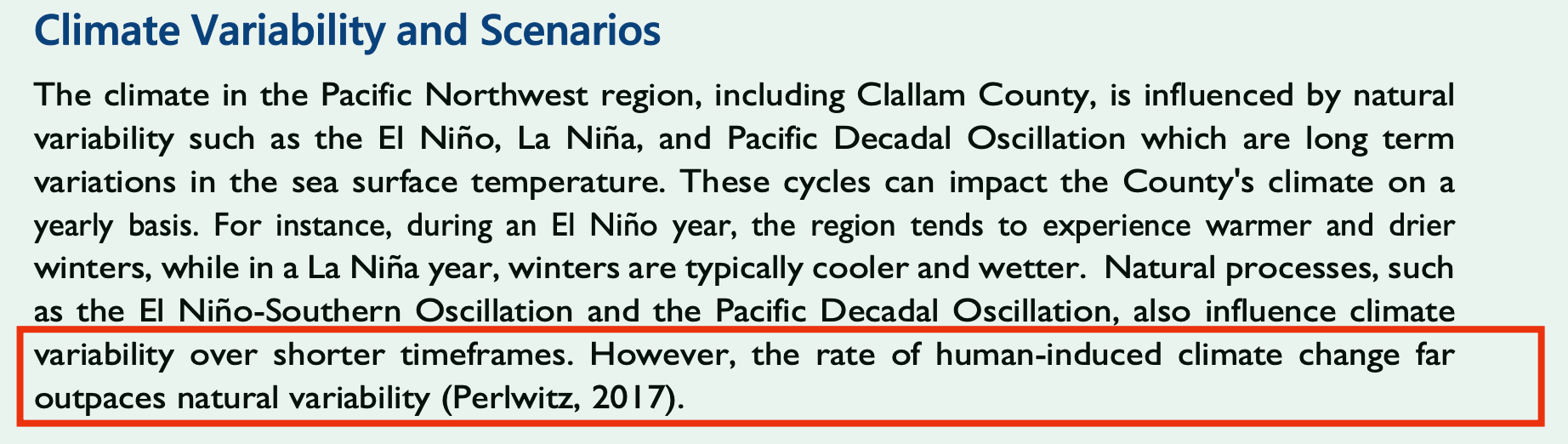
Jake told the Board: go look it up. The paper is a chapter on large-scale circulation and climate variability. It does not carry the slogan the way the CVA uses it. That slogan is now in a land-use document. Once the Comp Plan adopts it, staff will not have to re-prove the science every time they touch your file. A wider buffer, a climate overlay, a well restriction, a denied bulkhead, a “managed retreat” line — each one can be sold as consistency with the plan the County already chose. “We’re just following the science” will mean: we locked the hottest assumption into the bible, and now we are enforcing the bible.
The assessment even photographs the target. Pages 7–8 show 3 Crabs Road under king-tide water and treat the pictures as proof that climate planning must swallow shoreline property.
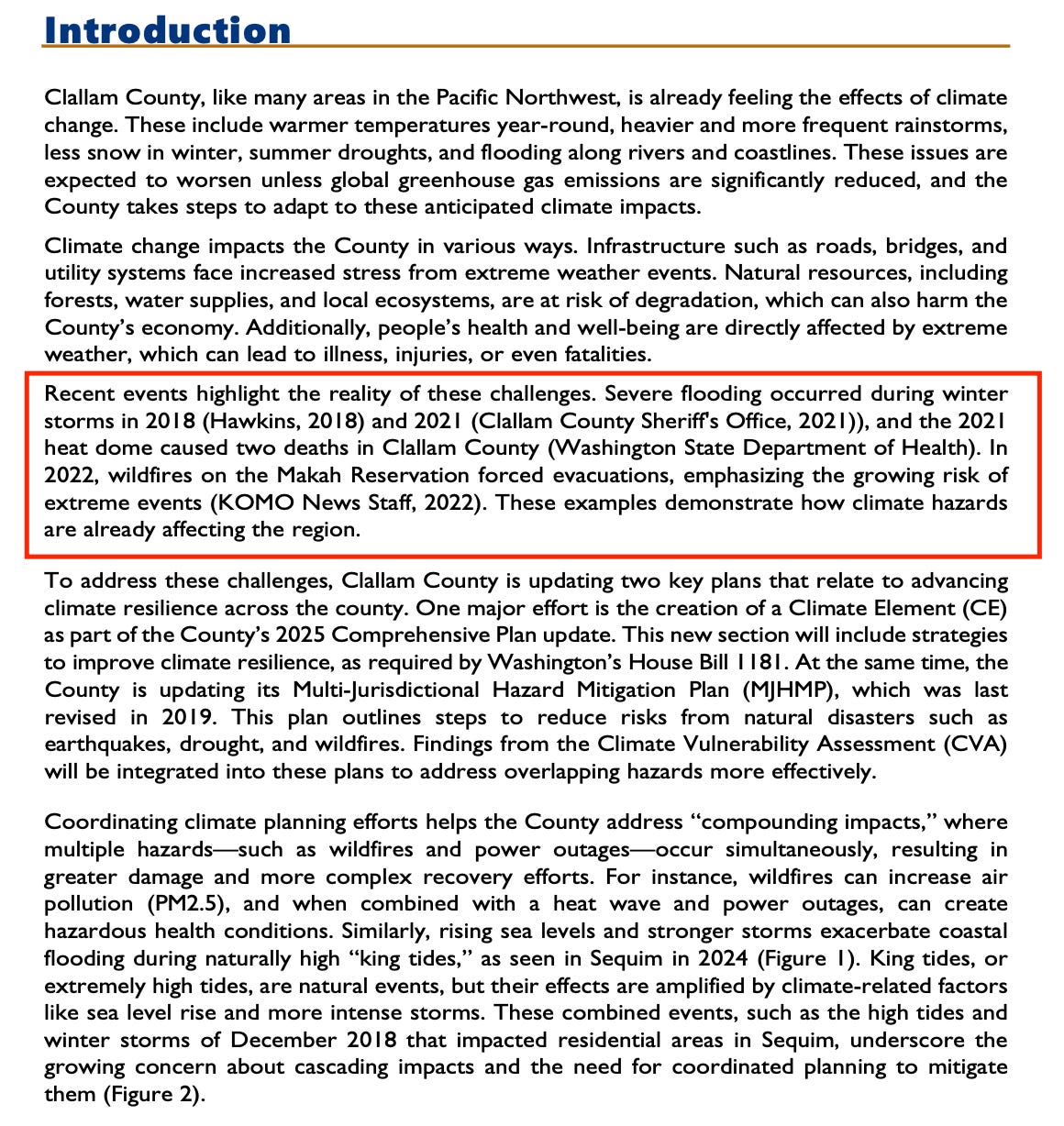
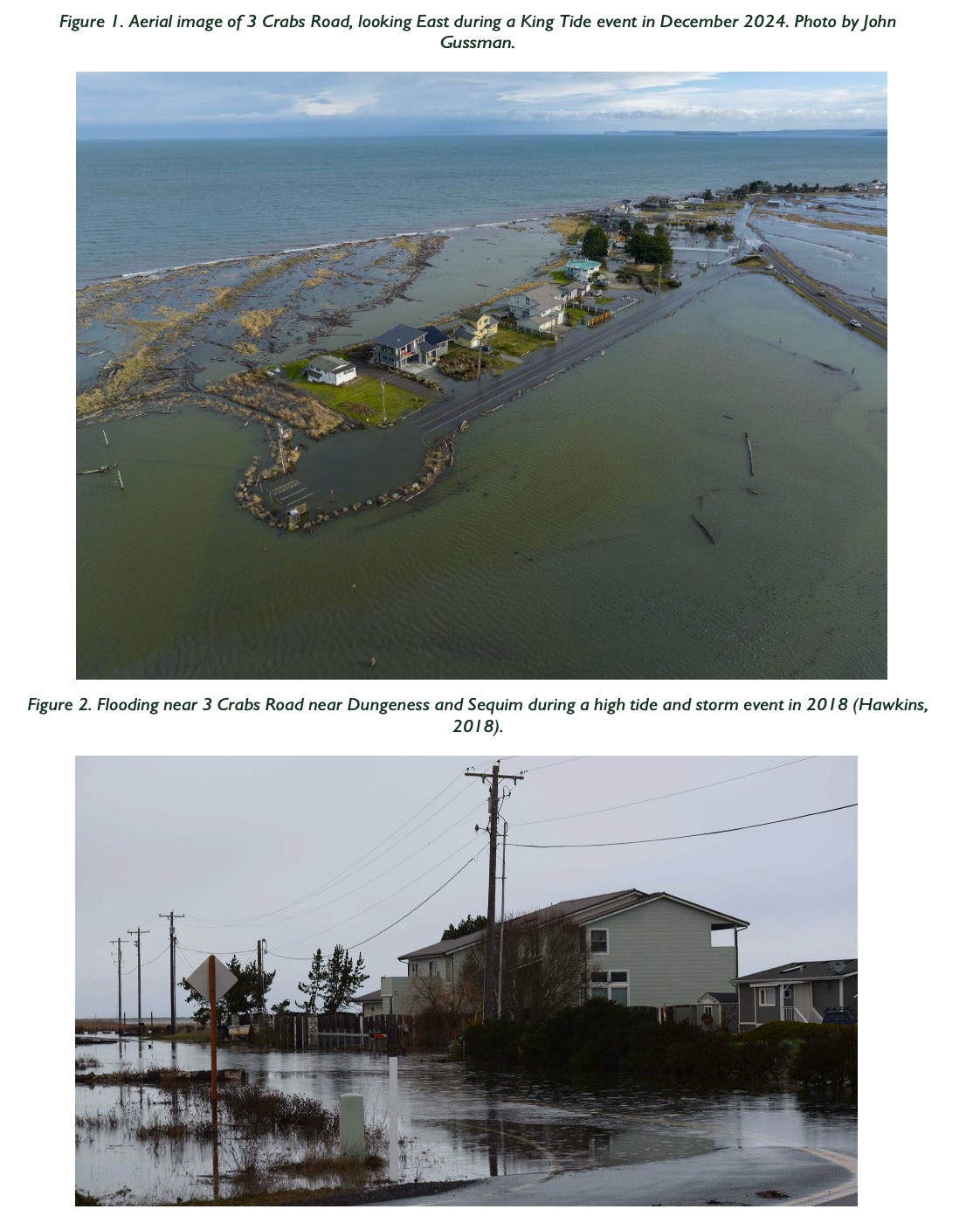
The Comp Plan draft already points toward overlays, high-risk zoning, climate language on property, and “long-term visioning” that includes managed retreat. The Marine Resources Committee told Commissioner Mark Ozias to change “should” to “shall,” treat climate forecasts as binding, and put a biologist on Critical Areas and shoreline files. Tribal trust land is exempt; your property is not.
Deaths, “especially Tribal elders,” and two sets of rules
Page 24 of the CVA leans on the 2021 heat dome: 126 official heat-related deaths statewide, then “441 more people died during this period than expected.” Jake’s margin note: There were a lot of excess deaths in 2021, not just heat.

Overdose deaths in this county were part of that year. Heat was real. Turning a contested statewide number into Comp Plan gospel is how you manufacture urgency and then regulate against it.
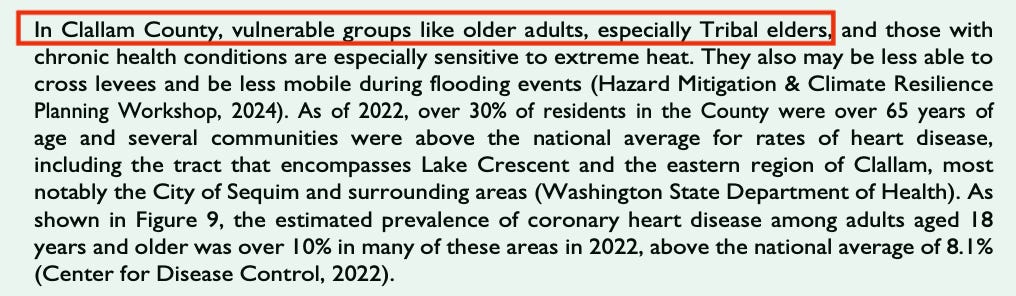
Then comes the sorting of people. Same page: “vulnerable groups like older adults, especially Tribal elders, and those with chronic health conditions.” Jake asked an honest question: why are tribal elders “especially” compared with every other older adult in Clallam County? Heat does not check tribal enrollment. Policy does.
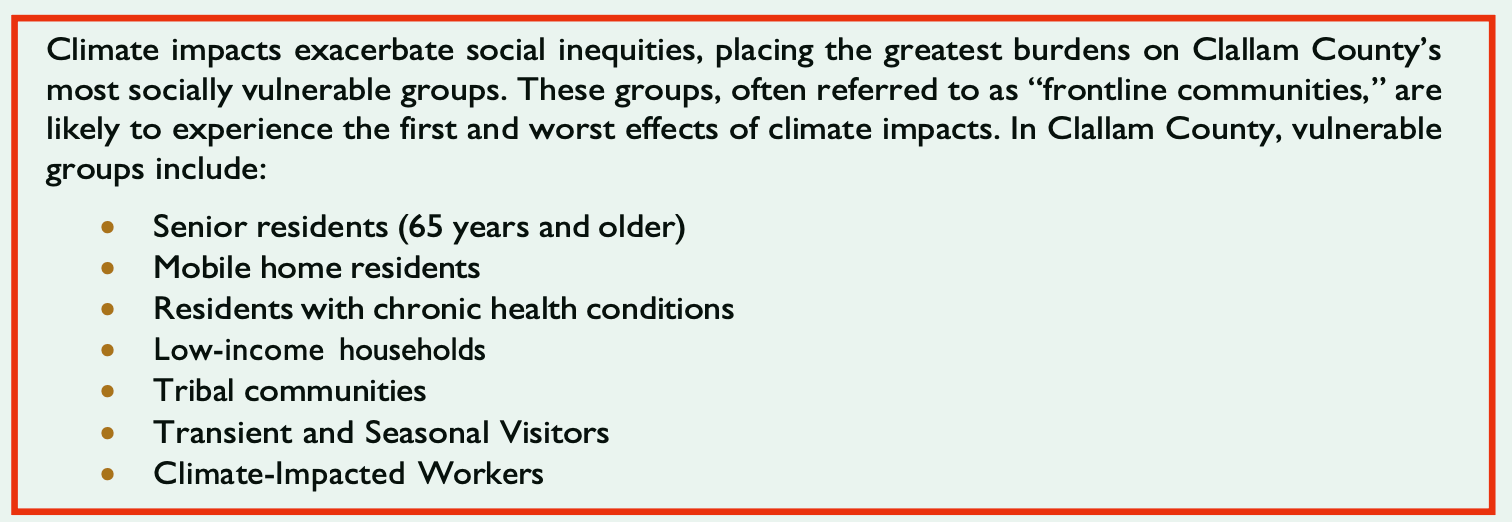
Page 17 lists “frontline communities”: seniors, mobile-home residents, the chronically ill, low-income households, Tribal communities, seasonal visitors, outdoor workers.
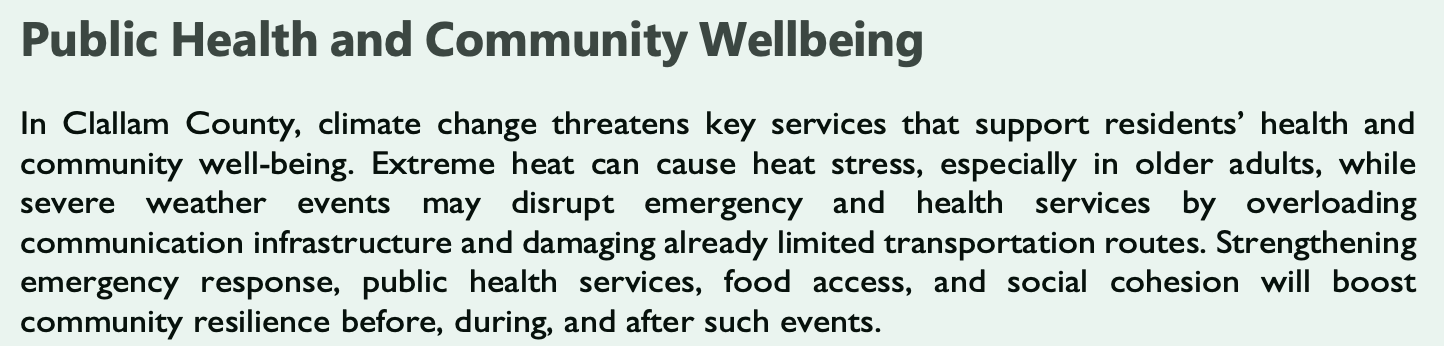
Workshop notes from the County’s own process said the same thing: “older adults, especially for Tribal elders.” The draft Climate Element repeats the same thing. Food banks and a list of NGOs get listed as “climate resilience.” The property owner trying to take care of a parcel gets listed as something to regulate.
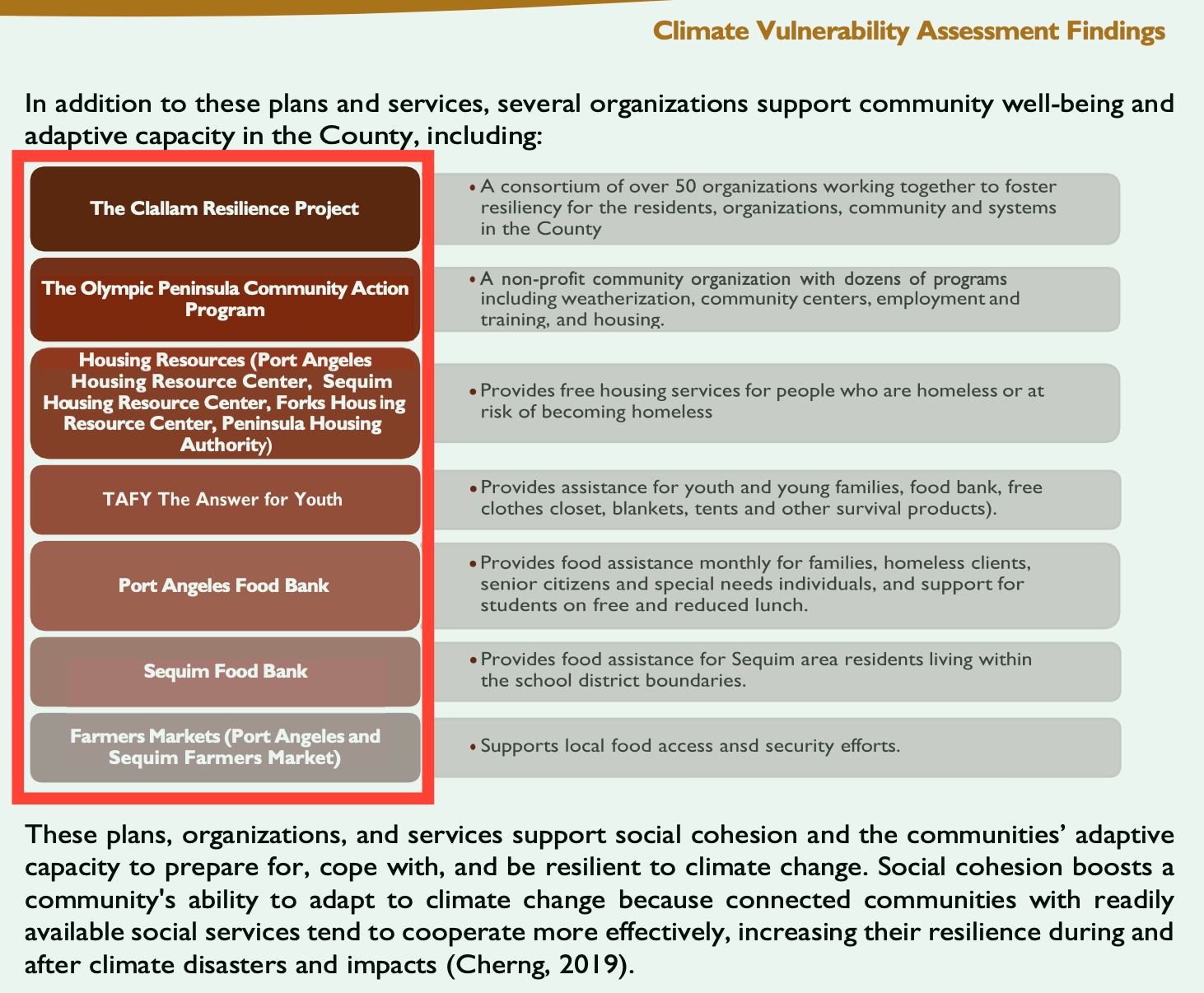
Jake named the two-tier county out loud. Nonprofits stay “safely above the fray,” he said, “despite their contribution to the environmental catastrophe on Tumwater Creek.” Property owners keep losing. The fix?: Meet House Bill 1181 only; do not exceed it. And if the Board actually worked for the people, it would stop treating a house and a parcel as a problem and start treating them as this county’s greatest private asset—including common-sense room for vacation rentals and short-term uses —instead of another round of bans.
On trust land, the Jamestown Tribe runs its own environmental process under TEPA. County Critical Areas Code does not apply the way it does on a private tax parcel.
CC Watchdog documented the Tribe’s TEPA notice to expand the driving range at Cedars at Dungeness: grade the site and fill part of a Class III wetland. Once that course went into trust, it left the county rulebook that still governs your buffers, wells, and shoreline work.
Same watershed. Rural well owners get lectured on every gallon. The CVA writes “especially Tribal elders” into the climate study. An 18-hole, water-heavy golf course does not sit under the same county code. That is not one environmental standard. That is two sets of rules.
Harvey, Cascadia, and the office that wrote the record
Diane Harvey, Code Enforcement and Special Projects Manager, is listed as project lead on the CVA. This site has already shown her asking the Planning Commission for more enforcement fees, more discretion, and mass notices that make people “fold” once they see the Hearing Examiner. The same office that wants a thicker whip is helping write the climate chapter that will justify the next round of “violations.”
Cascadia Consulting is the hired pen. The County paired the Hazard Mitigation Plan with the Climate Element and paid Cascadia hundreds of thousands to do both. Cascadia has also worked with the North Olympic Development Council and the Jamestown Tribe. CC Watchdog has reported Cascadia’s use of ICLEI tools. ICLEI is the German-based network that sells local governments software, methods, and a global “movement” vocabulary. The NODC — the nonprofit Commissioner Ozias has led — recruited local governments toward ICLEI membership and even offered to help pay dues. NODC and the Tribe have been ICLEI members. That is not a planning department finding science in a file cabinet. That is a consultant-nonprofit-tribal circuit writing the assumptions, then sending them to the dais for a vote.
Bruce Emery is the DCD director. The Climate Element is his department’s product. The Planning Commission is only advisory. Jake said it: you three make the call. You own every sentence and every restriction that follows. He told the commissioners, you are responsible for this.
The Board’s pattern is not courage. It is delay until the activist draft is the only draft left, then a shrug that the State or Futurewise “made us.” Secure entry at the courthouse sat unfinished for years after a 2017 mandate, as Jake noted, while this 600-plus-page Comp Plan is being rushed as if the people were the problem. Waiting on a luggage scanner took nearly a decade. Waiting for property owners is treated as heresy.
A Comp Plan is not a brochure. It is the 20-year instruction book for Critical Areas, shoreline rules, housing, wells, rentals, and what “climate risk” means when you want to pull a permit. Extreme assumptions in, extreme code out. Futurewise does not need to invent a record. Harvey, Cascadia, and CCA dollars already typed it.
Jake asked for leaders who will take a risk for the people, not for the government. This Board has shown the opposite habit: protect the process, protect the nonprofits, protect the consultants, and tell the owner to wait his three minutes and thank them for their comment.
How threats of a lawsuit work — and why the Washington State Association of Counties, led by Clallam’s own commissioners, will not stand in the way — is the next story. Stay tuned for Part II.
Tuesday, October 13, 10:30 a.m. — pack the room
Do not send one polite email and stay home. Sit where they have to see you.
Tell them to rewrite the CVA with reasonable assumptions and stated uncertainty — not RCP 8.5 dressed up as destiny, not “especially Tribal elders,” not 441 excess deaths treated as a local land-use finding. Tell them to meet HB 1181 only. Tell them Futurewise does not get a veto. Tell them property owners are not the climate problem.
Write all three commissioners through Clerk Loni Gores at loni.gores@clallamcountywa.gov and write DCD Director Bruce Emery at Bruce.Emery@clallamcountywa.gov.
If they will not serve the people in the room, they should not be shocked when the room stops treating them as a government.


