
Olympic Community of Health spent a year and a fortune “connecting people so they could thrive,” then published an annual report with almost no jobs, no cost per person, and no hard outcomes. Recompete was sold as a way to close the prime-age employment gap. The paperwork reads like a social-services slush fund on federal letterhead. Commissioner Mike French chairs the coalition, is running for reelection on the grant, and should start addressing legitimate concerns, not just accepting the applause.
A nonprofit, not a jobs creator
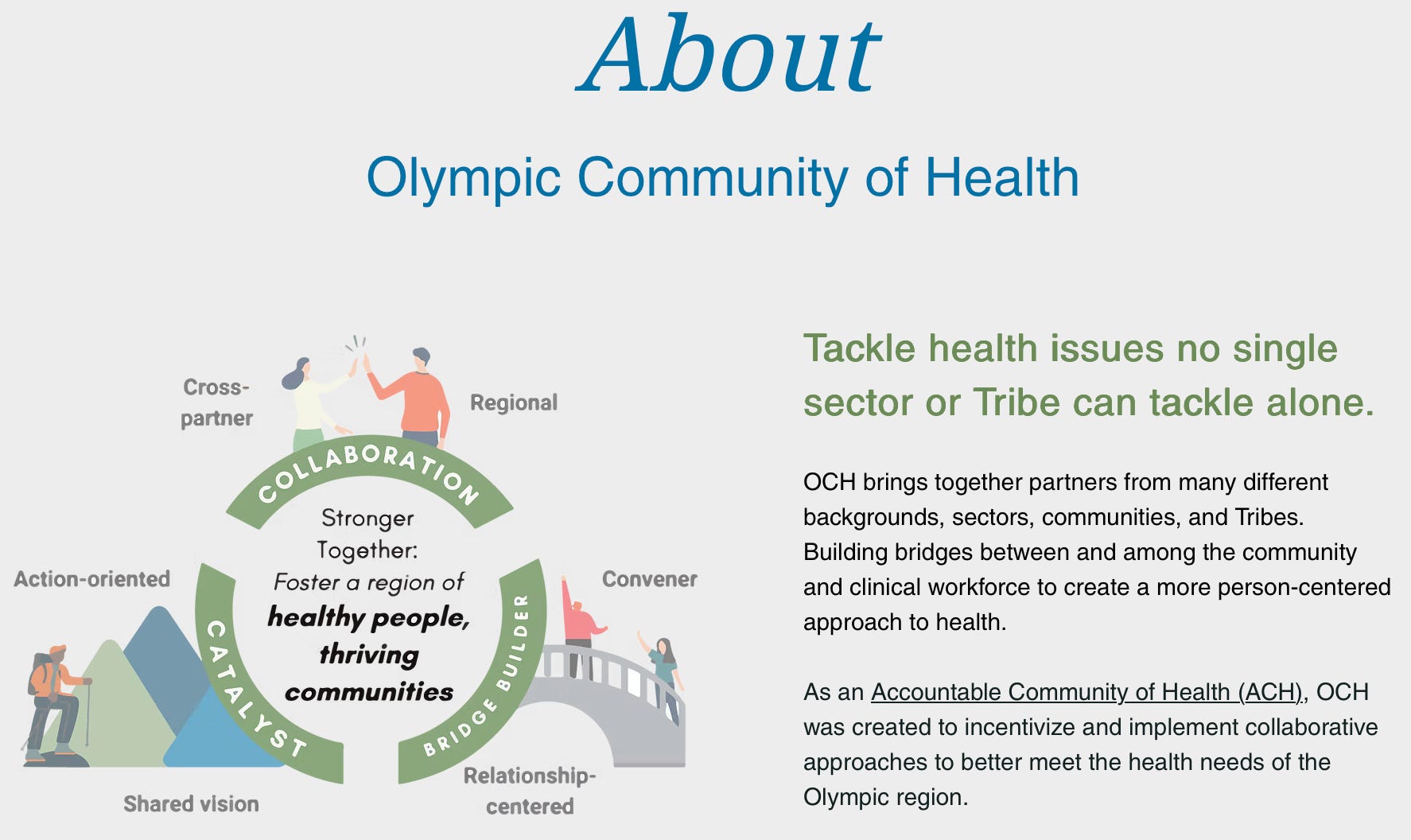
Olympic Community of Health is not a state agency. It is a 501(c)(3) nonprofit (NGO)—an Accountable Community of Health—created to convene partners and “tackle health issues that no single sector or Tribe can tackle alone.”
Olympic Connect is not a separate agency. It is OCH’s program: the community care hub that OCH built, governs, and funds. Recompete’s barrier-removal award of about $9.8 million — over a quarter of the $35 million total — went to OCH. Olympic Connect is the storefront of that nearly $10 million.
OCH’s own About page is a stack of mission language: bridges, person-centered care, equity, determinants of health. It does not say how many people got jobs, how much it costs per client, or what “thrive” means in dollars.
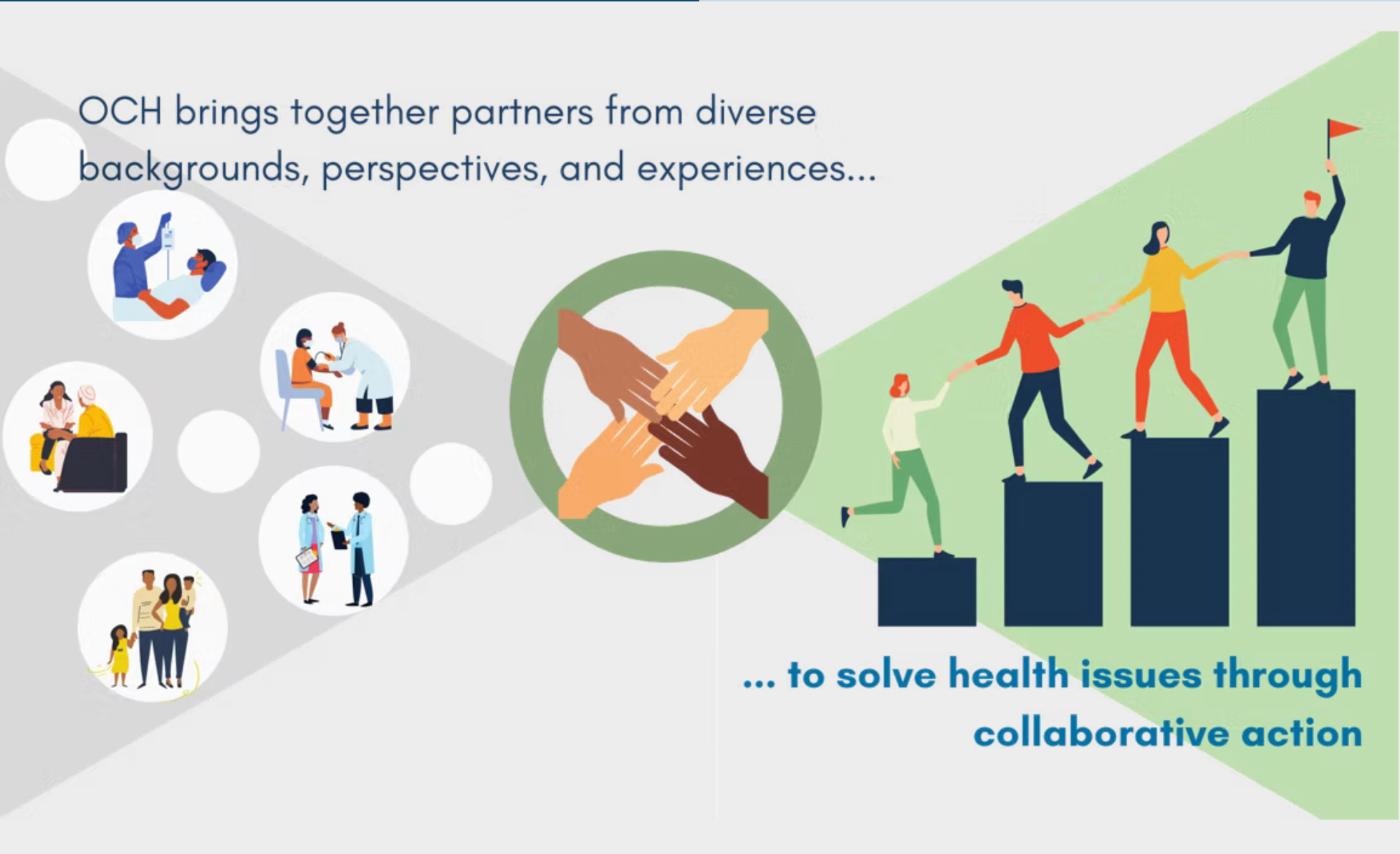
French sold jobs. The hub sells wraparound.
Recompete is a U.S. Economic Development Administration program. Clallam County is the lead applicant. French chairs the North Olympic Peninsula Recompete Coalition and has made the award the centerpiece of his second-term pitch: tens of millions to create good jobs and connect residents to living-wage work.

The original sales number floated around 900 placements in five years. Recent reporting dropped the new target to 603. Two years in, the public story is still “implementation.” The fine print shows a bulk of the money going to NGOs, wraparound services, and administration.
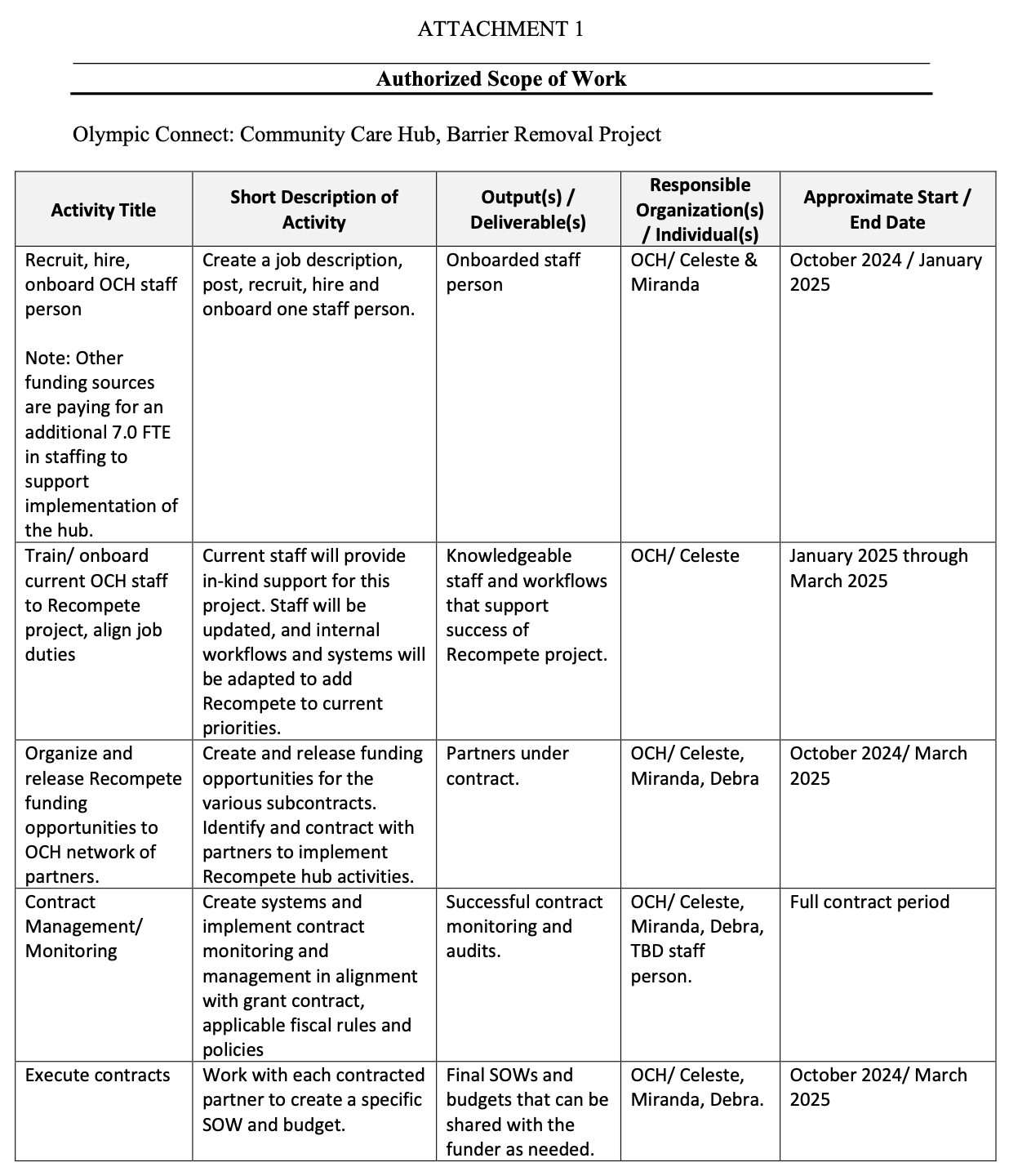
The June 2025 scope of work is not a jobs plan. It is a contracting plan. Recruit and onboard staff. Note that other funding already covers an additional 7.0 full-time positions. Train current staff. Release funding opportunities. Monitor contracts. Execute more contracts. Build a subawardee management plan. Hire a data vendor. Hire a pre-marketing contractor. Plan sustainability in 2026–2027. Jobs are the pitch. Payroll at OCH is the product.

Gas, car repairs, and “trauma-informed workplaces”
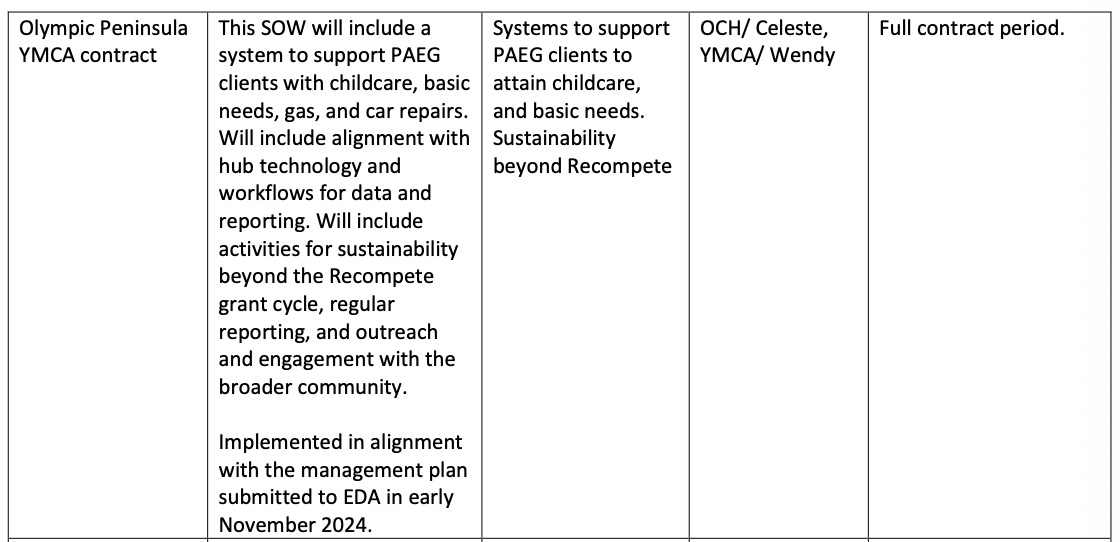
The partner scopes make the point. The Olympic Peninsula YMCA contract is supposed to help clients with childcare, basic needs, gas, and car repairs.
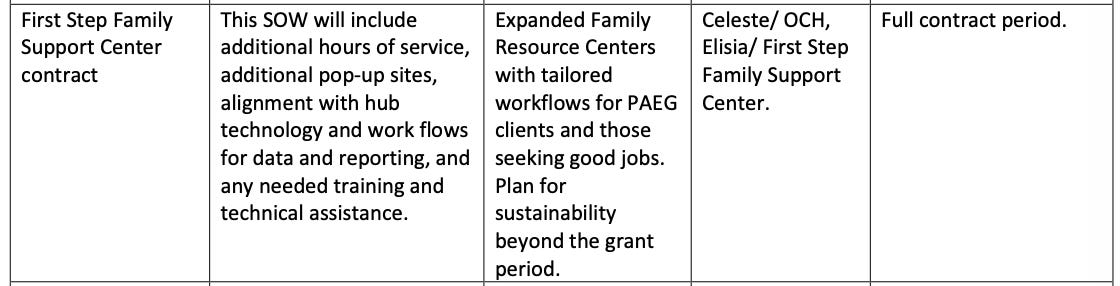
First Step gets more hours and pop-up sites.
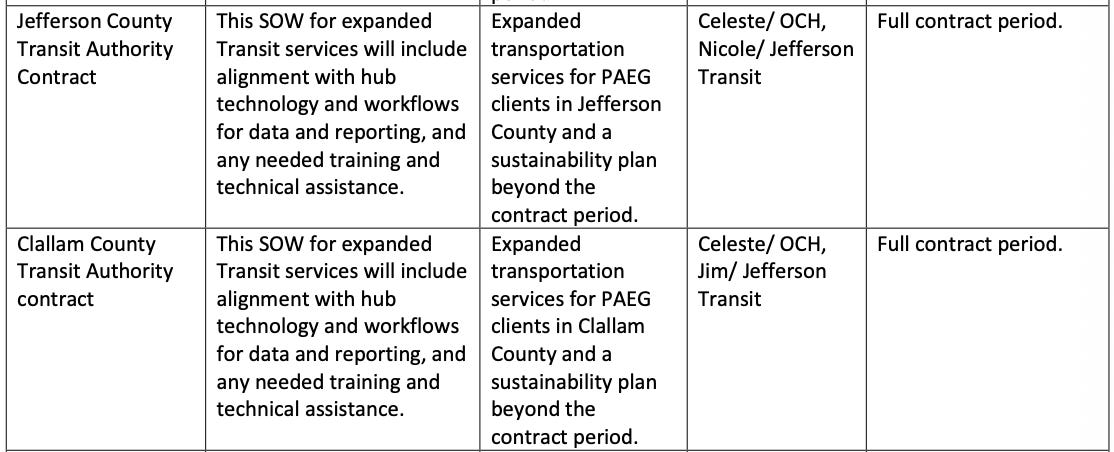
Transit authorities get expanded rides and “alignment with hub technology.”
Discovery Behavioral Healthcare and Peninsula Behavioral Health get money to support clients and employers around behavioral health and “trauma-informed workplaces.”


Community-based workforce contractors will “remove barriers.”

Short-term training is a plan to create a system to create a plan. This is not a mill, a factory, or a plant hiring on Monday. It is a referral desk with a grant.
Then there is the pre-marketing contract. OCH will run focus groups so staff can understand why some people “will be hesitant to ask for help,” organized around “stages of change” theory, so marketing will “resonate and lead to action.”
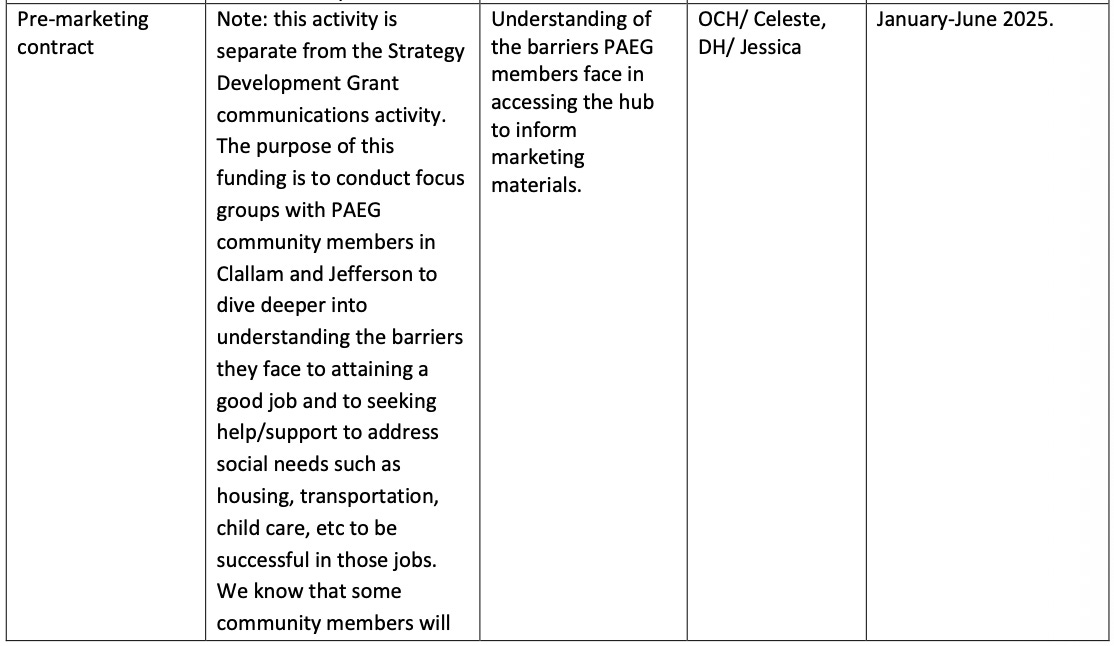
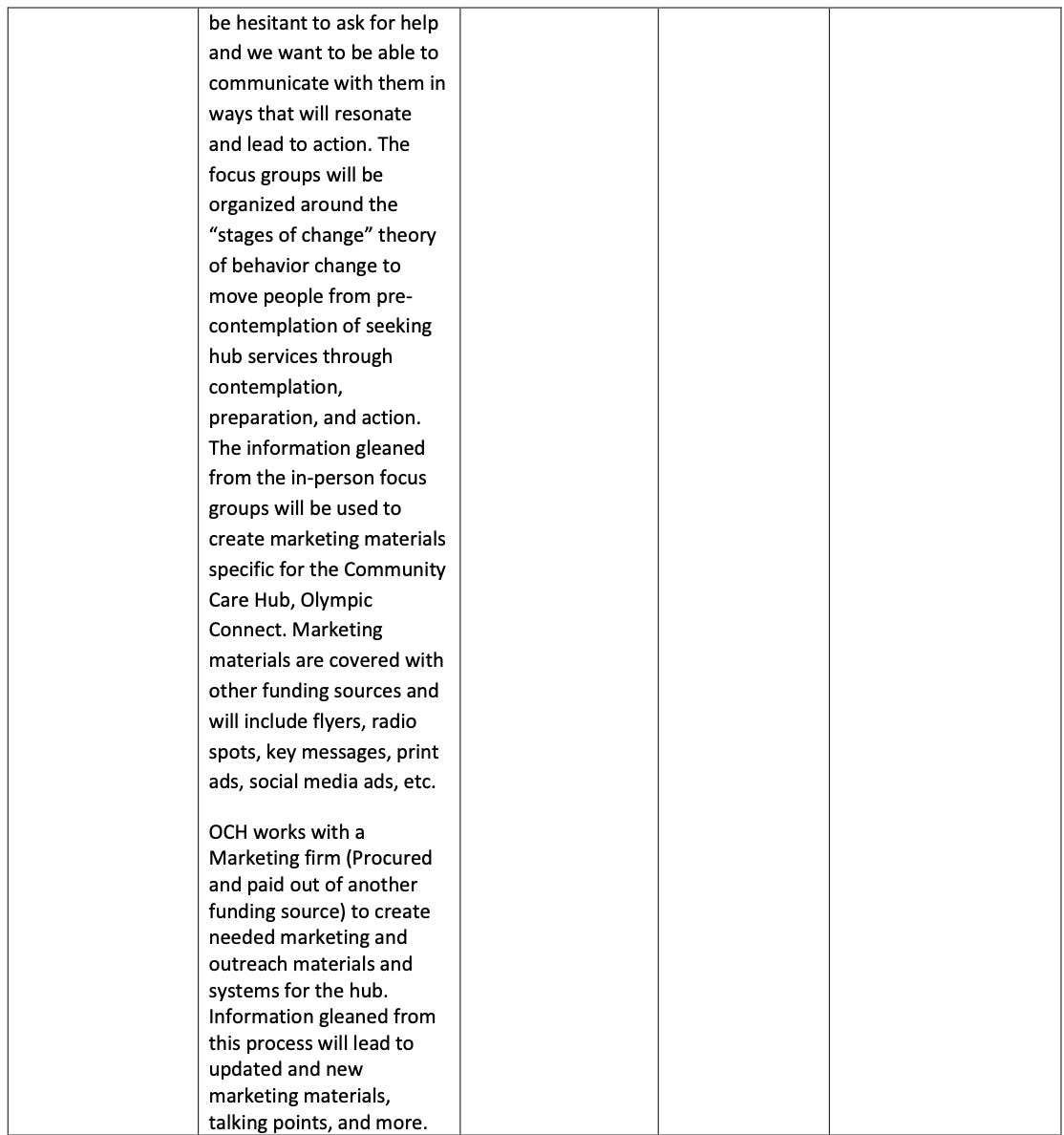
Flyers and ads come from other funding. The federal grant pays for focus groups on why people don’t want jobs. That is research into reluctance—not a count of people hired.
The annual report: activity without a bottom line
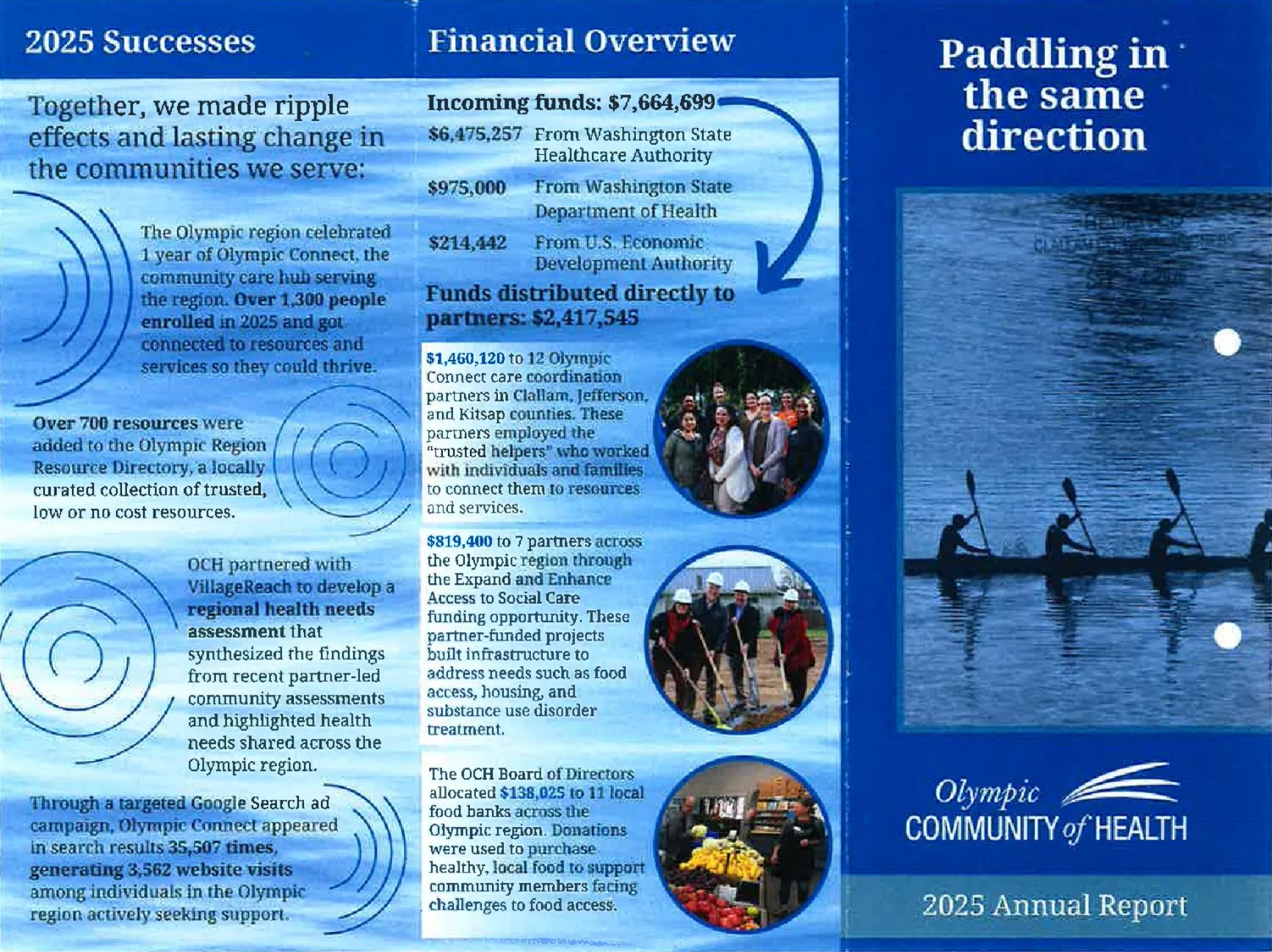
Incoming funds: $7,664,699. Most of it from the Washington State Health Care Authority ($6,475,257) and the Department of Health ($975,000). U.S. EDA: $214,442 in the year they chose to display. Funds sent “directly to partners”: $2,417,545. Of that, $1,460,120 went to 12 Olympic Connect care-coordination partners so “trusted helpers” could connect people to resources. Another $819,400 went to seven partners for food, housing, and substance-use infrastructure. The board sent $138,025 to 11 food banks. Food banks here are open to everyone, regardless of income. That is a money transfer, not proof of job growth.
What did the public get as proof?
Over 1,300 people “enrolled” and “got connected to resources and services so they could thrive.” Thrive is not a metric.
Over 700 resources added to a directory. A list is not a paycheck.
A “regional health needs assessment” that “synthesized the findings from recent partner-led community assessments and highlighted health needs.” That sentence is a report about other reports.
A Google Search campaign: 35,507 impressions, 3,562 website visits. For a multi-million-dollar hub, that is a marketing footnote dressed as impact.
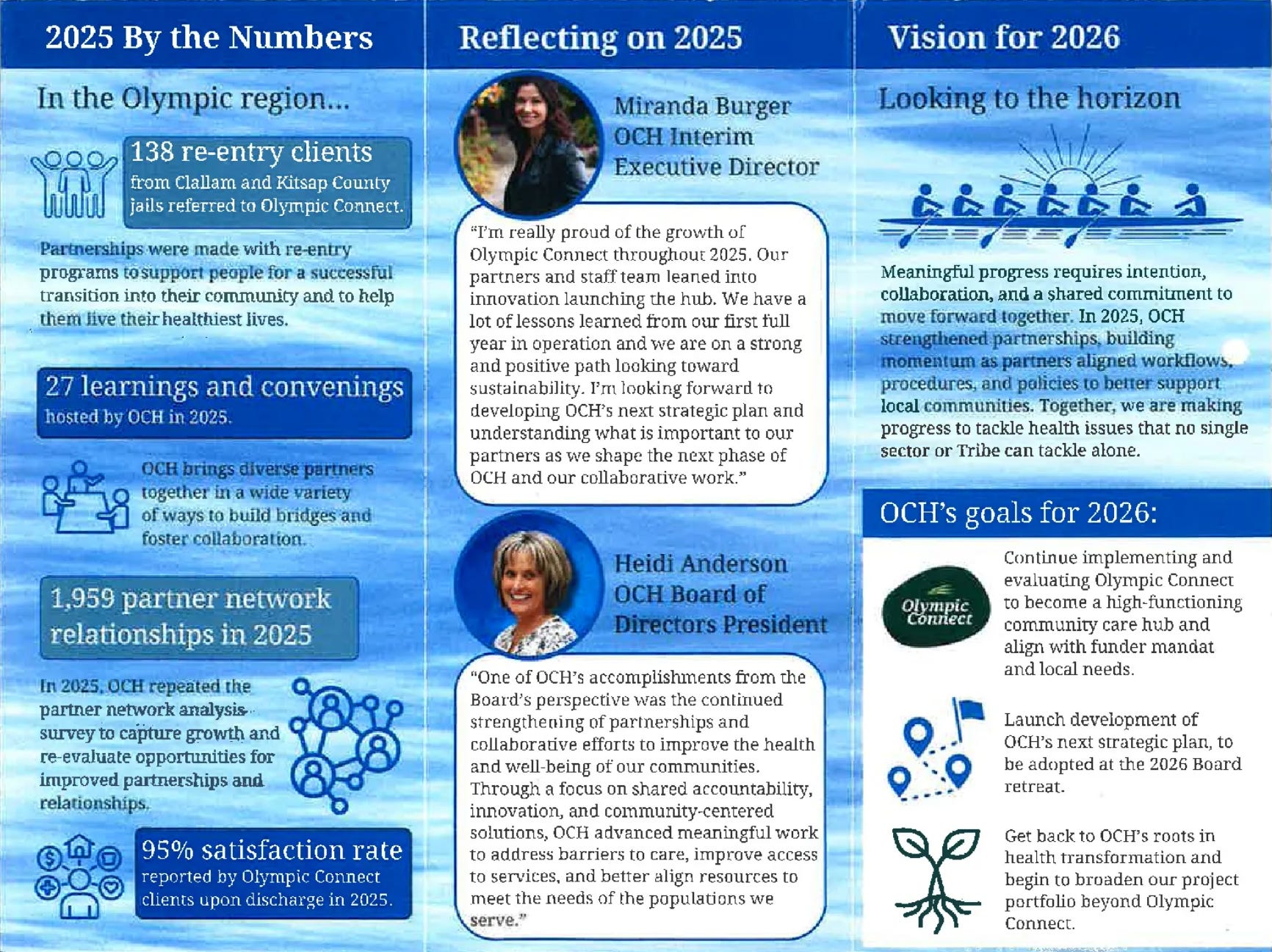
138 re-entry clients referred from Clallam and Kitsap jails. Referred is not housed, hired, or sober.
27 “learnings and convenings.” OCH’s own IRS language is that it hosts learnings and convenings to foster relationship building. Meetings about meetings.
1,959 “partner network relationships.”
95 percent satisfaction among Olympic Connect clients upon discharge. Satisfaction with a referral is not employment.
Word salad from the top
Miranda Burger, interim executive director: proud of growth, partners “leaned into innovation launching the hub,” “lessons learned,” “strong and positive path looking toward sustainability,” excited to develop the next strategic plan and “understand what is important to our partners.”
Heidi Anderson, board president: continued strengthening of partnerships, shared accountability, innovation, community-centered solutions, barriers to care, align resources. Paragraphs of verbs. No cost per placement. No jobs retained at 90 days. No comparison to the $26-an-hour wage talk French used when the grant was still a press release.
A private sector company’s annual report would show income quality, debts, and risks. OCH published kayaks, sunbursts, circular quotes, and a land acknowledgment: humility toward Coast Salish peoples on whose sacred land “we live, work, and play.”

The treasurer slot is tied to Jamestown Tribe / Jamestown Family Health Clinic.

None of that answers the only question Recompete was sold on: how many prime-age adults are on a payroll who were not before?
Credit and the record travel together
French does not run OCH day to day. He does chair the coalition that routes federal money into this model, claims the $35 million as leadership, and is asking Clallam County for another term. If the grant is his proof of economic development, the annual report and the scope of work are the audit. They show administration, trusted helpers, gas cards, trauma-informed workplaces, focus groups for the hesitant, and food-bank checks. They do not show a jobs machine.
What does OCH do? It convenes. It contracts. It refers. It writes “thrive.” Taxpayers fund the rest. Credit for the grant includes credit for what it actually bought. It’s time for Commissioner French to explain how Recompete is really performing.
Candidate Conversation This Morning!