

Commissioner Mike French is touting the new Community Wildfire Protection Plan as collaborative “resilience” while campaigning. Now those voluntary recommendations—stricter codes, setbacks, defensible-space rules, and subdivision standards—are migrating into the proposed Comprehensive Plan. Olympic Climate Action activists and the Clallam Conservation District helped shape the process. Private property owners will pay, tribal trust lands remain exempt, and affordability takes another hit.
French Made the CWPP His Centerpiece
Mike French has spent his reelection campaign proudly claiming credit for Clallam County’s updated Community Wildfire Protection Plan (CWPP).
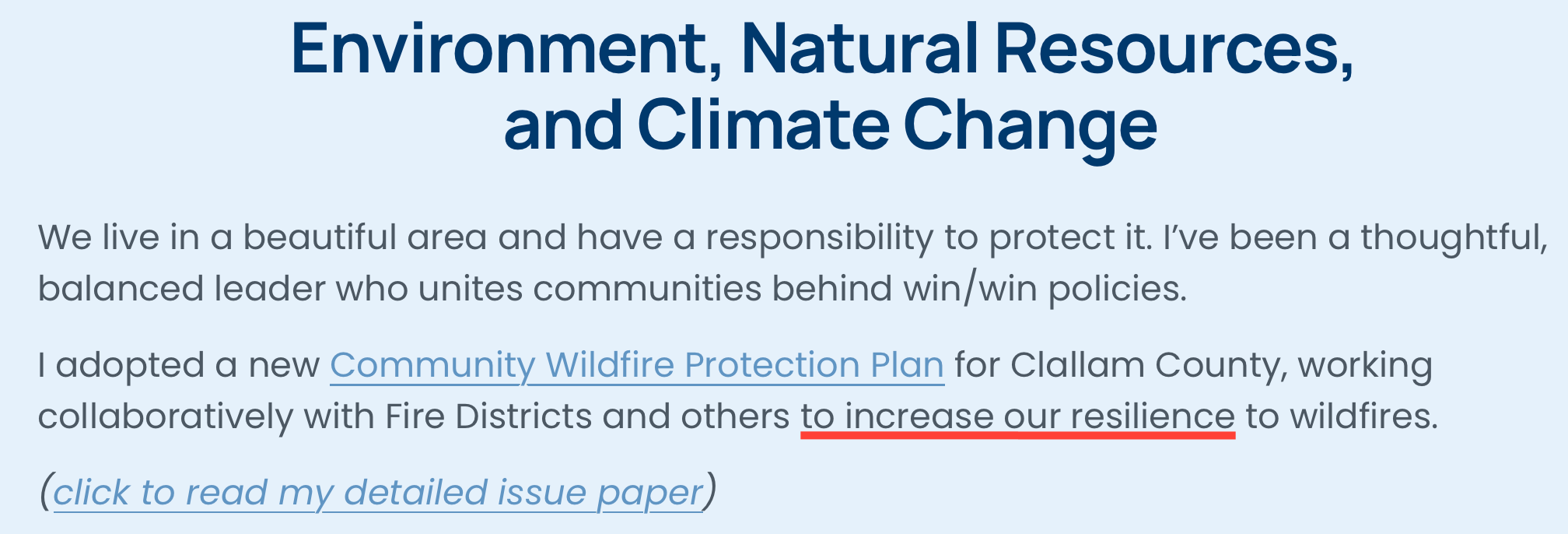
On his platform and in public statements, he calls it a collaborative achievement that boosts “resilience” to wildfires. He was there when commissioners adopted it in March 2026.
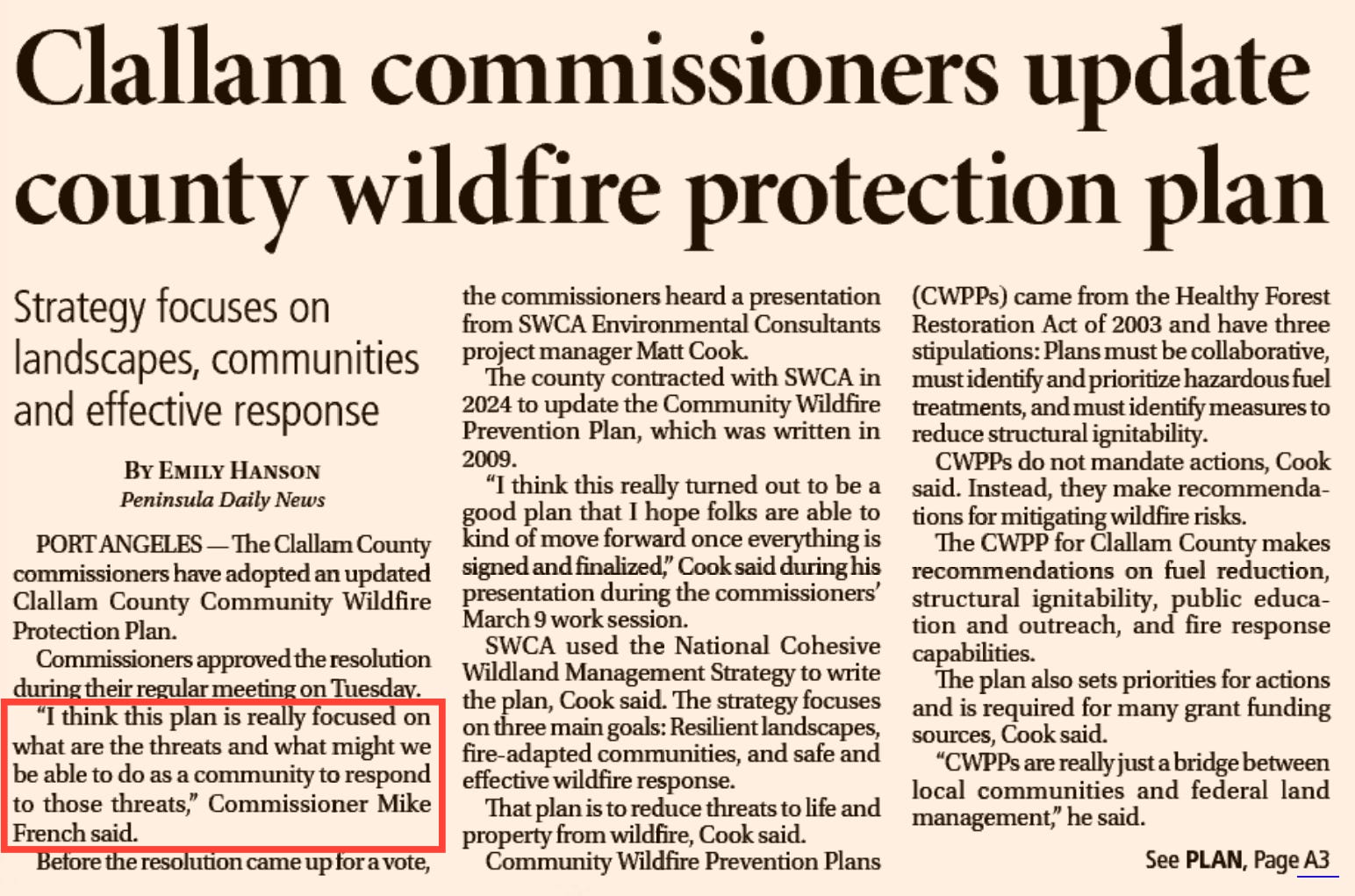
French assured worried landowners it contained no land-use restrictions.
“I hear those concerns from the member of the public. I think that this plan is really focused on what the threats are and what you might be able to do as a community to respond to those threats. That’s not the place where you’re going to find land use restrictions, but I hear your concerns and I’m happy to talk about them with you at some point,” said French. — From a KONP article on March 19, 2026
That was then.
The Comp Plan Turns Recommendations into Policy
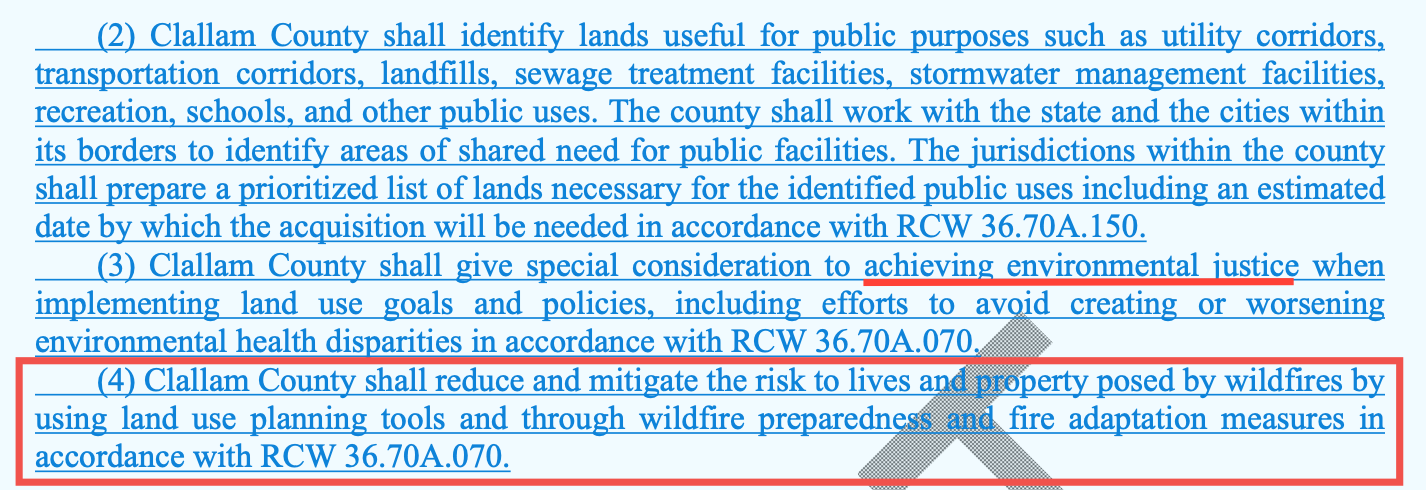
Fast-forward to the proposed Comprehensive Plan update now moving toward a Board of Commissioners hearing. The same themes French campaigned on are hard-wired into county policy. The Comp Plan explicitly aims to achieve “environmental justice” and directs the county to “reduce and mitigate the risk to lives and property posed by wildfires by using land use planning tools and through wildfire preparedness and fire adaptation measures.”
It adopts Chapter 6 of the 2021 Washington State Wildland-Urban Interface Code by reference.
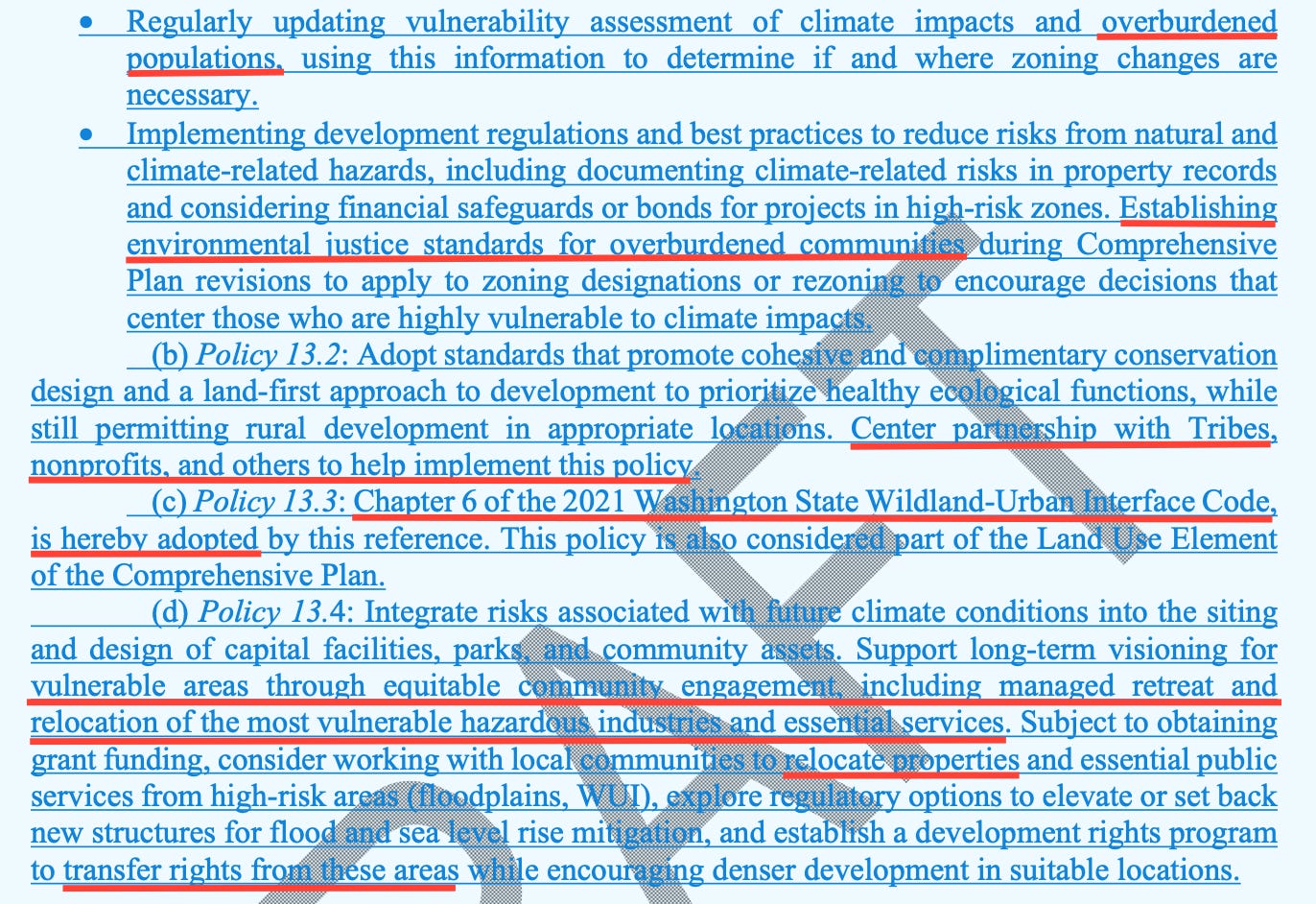
In the Comp Plan’s Climate Element, “overburdened communities” is the equity label for groups the county says face heavier climate impacts—led by Tribal communities, along with the elderly, low-income residents, and people in mobile homes. Policies push special prioritization, weatherization help, and “environmental justice standards” for them in zoning decisions. The same plan piles new wildfire rules and costs onto private property owners while tribal trust lands stay exempt.
Climate-resiliency policies call for fire-resistant building standards (vents, materials to block embers), directing new development away from high-risk and WUI areas via overlays and zoning, and supporting Firewise-style measures.

The Multi-Jurisdictional Hazard Mitigation Plan, developed behind closed doors by Commissioner Mark Ozias’ NGO, the North Olympic Development Council (NODC), is incorporated as an appendix.

The CWPP’s “recommendations”—stricter International WUI Code elements, redesigned subdivision standards for roads, access, lot layouts, setbacks, and vegetation, ongoing Home Ignition Zone maintenance, and mandatory Wildfire Safety Plans for new developments—now have an official pathway into enforceable county code.
This is not a coincidence.
French made the CWPP a centerpiece of his campaign. The Comp Plan update, developed on a parallel track, is where those ideas become lasting policy.
French owns this.
The Activists and Agencies Behind the Plan
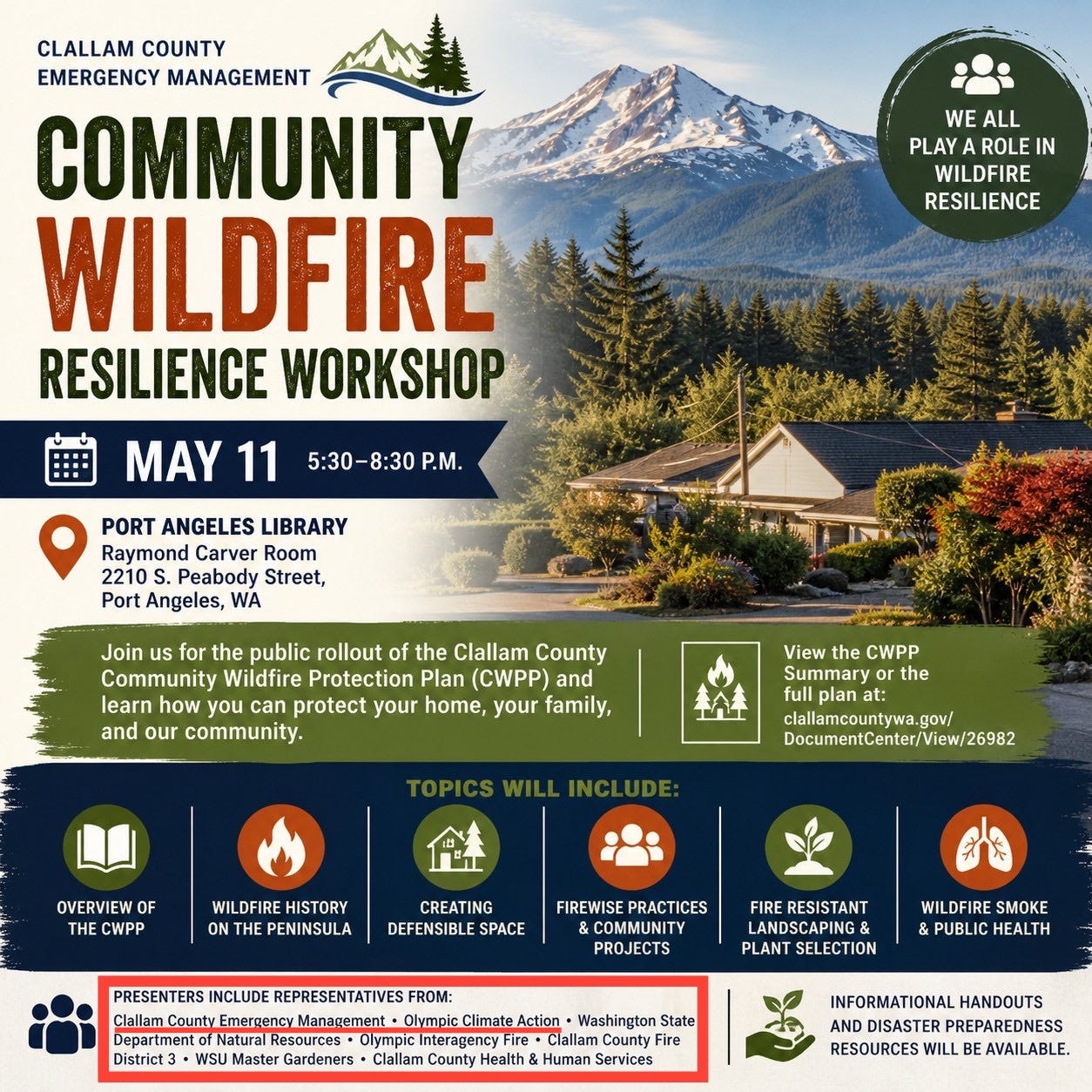
Look at who was invited into the planning. Olympic Climate Action, led by President Brian Grad, partnered with county Emergency Management to roll out CWPP workshops.
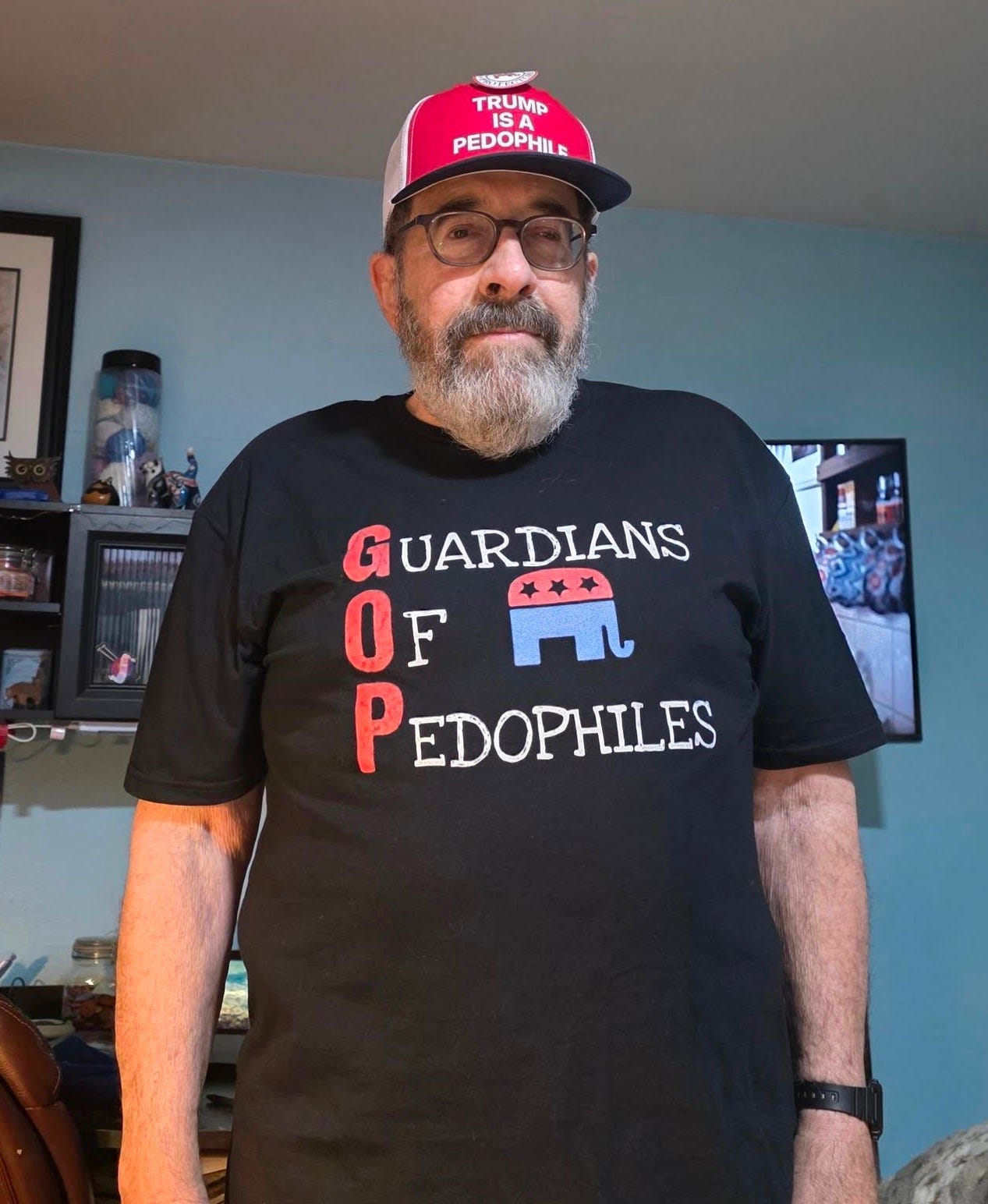
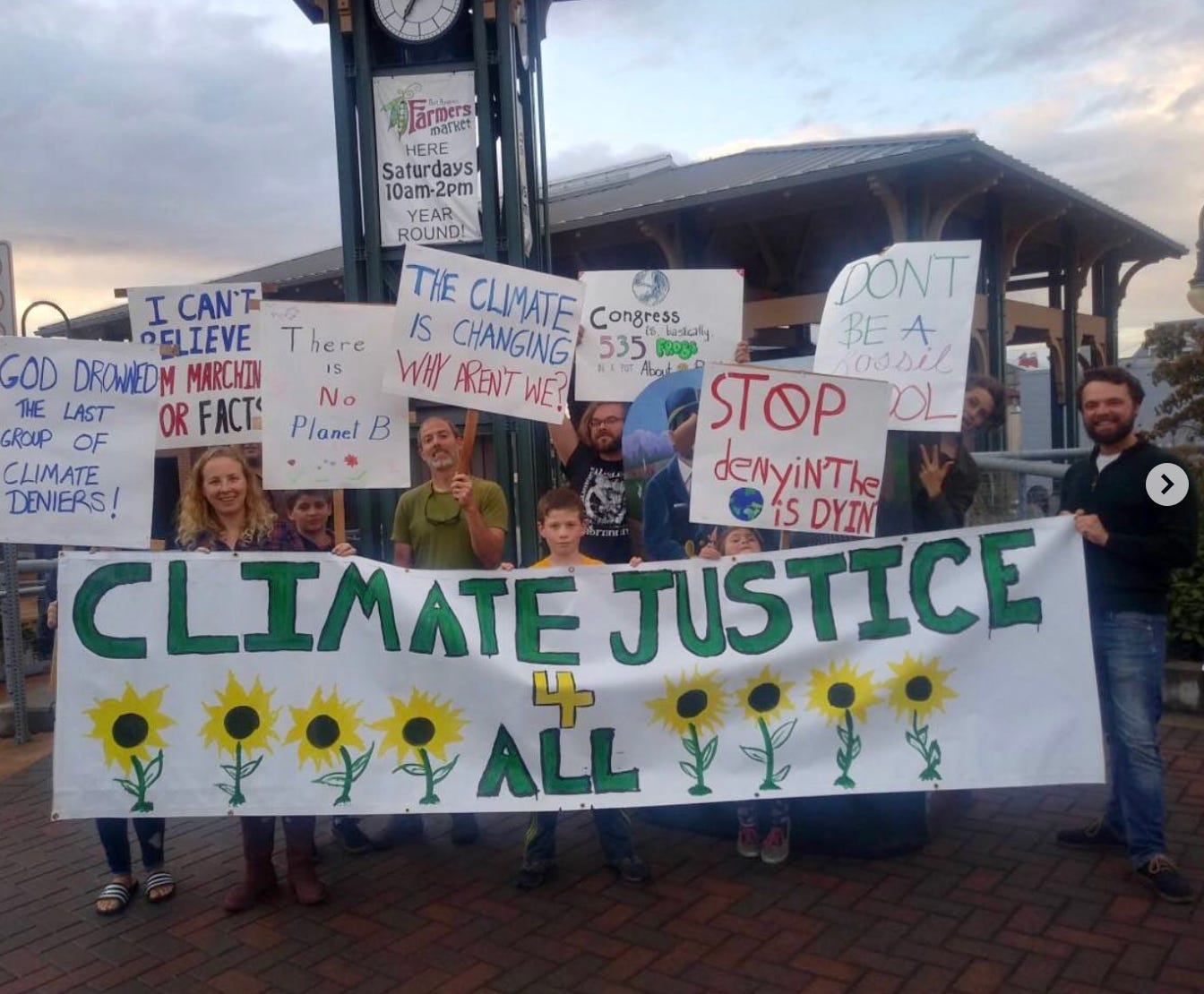
Democratic-aligned activists and climate groups shaped the narrative around equity, resilience, and expanded local control.
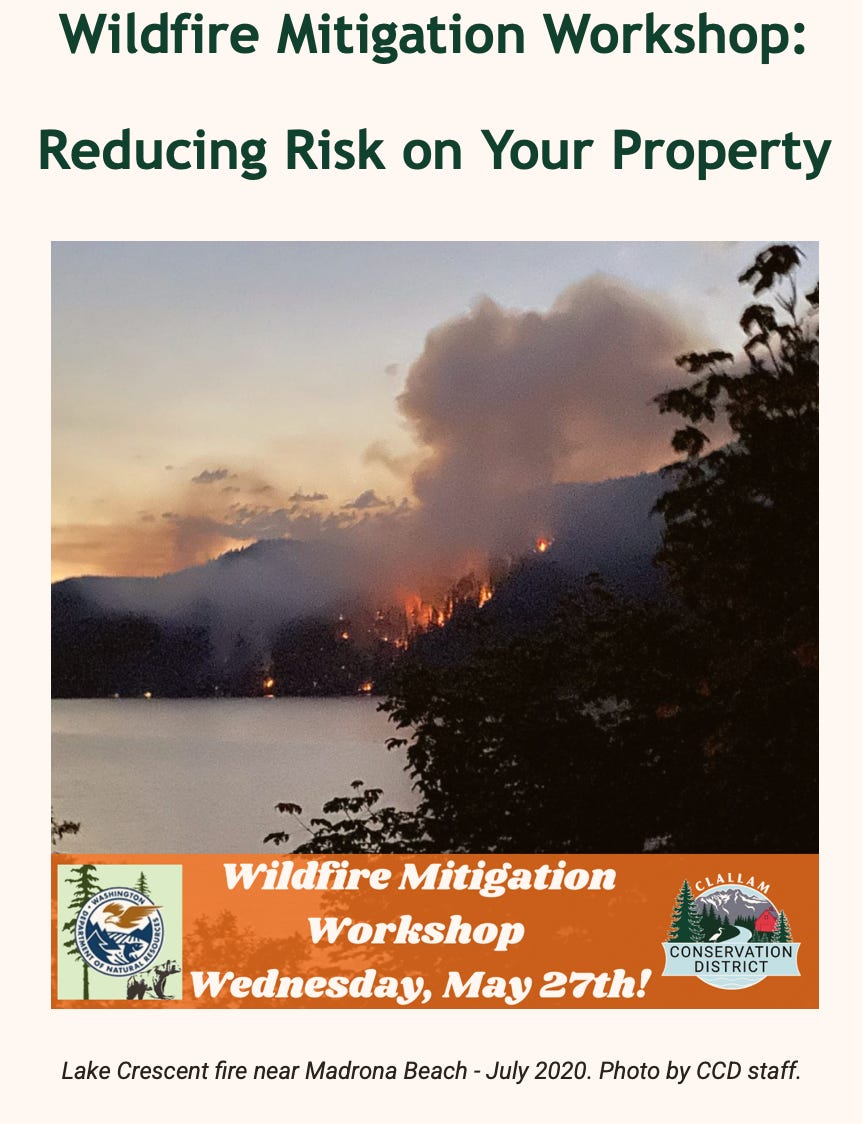
The Clallam Conservation District—already collecting a new $5-per-parcel fee that transfers millions from taxpayers—has been positioned for wildfire education and related work.
The same network that advances water rules, septic oversight, and conservation fees helped build the wildfire framework French now champions.
Higher Costs, Fewer Homes, Weaker Rights
Private property owners will feel it in their wallets and on their land. Fire-rated roofing, siding, vents, decks, and fencing cost more. Larger setbacks from forests and open space shrink buildable area—effective down-zoning that reduces density and land value. New subdivision rules on road widths, access, and vegetation raise site-preparation and permitting costs. Required Wildfire Safety Plans mean hiring “special experts,” perpetual maintenance obligations written into covenants, and future audits.
In rural forested areas where housing is already scarce and expensive, these layers compound Washington’s strict building and environmental rules. New homes become harder and costlier to build. Existing owners will face rising compliance pressure as voluntary education evolves into expectations and then code. The result:
Higher cost of living.
Fewer attainable homes.
Reduced property rights for the people who actually pay the taxes.
Tribal Trust Lands Stay Exempt
Tribal properties held in trust status? Exempt, as they have been under the Dungeness Water Rule, the Conservation District parcel fee, and similar local overlays. Private owners in an economically strained county will carry the burden while trust lands sit outside the new rules.
French and his colleagues have watched this pattern repeat. They have not fixed it.
Hold French Accountable
French told the public the CWPP was about identifying threats and community response, not land-use restrictions. The Comp Plan language and WUI Code adoption say otherwise. He campaigned on resilience. What residents are getting is another regulatory overlay that raises costs, constrains rural development, and erodes the practical use of private land—while exempting tribal trust property.
This is Mike French’s plan coming to fruition. He claimed the CWPP. He sits on the Board that will adopt the Comprehensive Plan. Hold him accountable for the higher costs, the reduced affordability, and the steady transfer of control from property owners to planners, consultants, and activist partners.
The “voluntary” phase was always temporary. The bill is now due—and Mike French is the one who put it on the table.
Public Pushback Wins More Time
Good news: your voices worked.
The Commissioners originally tried to rush the Comprehensive Plan update on a tight timeline. Community feedback forced a change. The public now has three additional weeks to review the documents and prepare testimony. Following discussion by the Board of Clallam County Commissioners, the public hearing has been moved to Tuesday, September 29, 2026, at 10:30 AM in the Commissioners’ Board Room at the Clallam County Courthouse. Current schedule:
Continue Comp Plan work session: August 31, 2026, at 9:00 AM
Call for Hearing of the Comp Plan: September 1, 2026, at 10:00 AM
Continue Comp Plan work session: September 28, 2026, at 9:00 AM
Public Hearing on the Comp Plan: September 29, 2026, at 10:30 AM
Additional work sessions or adjournments may still be called. The latest draft documents are online here.
Keep showing up. Keep writing emails. If you have concerns, put them in writing and send them to the entire Board of County Commissioners through the Clerk of the Board at loni.gores@clallamcountywa.gov. Copy the Director of the Department of Community Development, Bruce Emery, at Bruce.Emery@clallamcountywa.gov.
This extra time only exists because residents demanded it.
This morning

PABA is pleased to welcome candidates for Clallam County Auditor, Virginia Shogren (above, left) and Shoona Riggs (above, right). Held today, August 25, this meeting offers a valuable opportunity for community members to hear directly from the candidates as they present their visions and qualifications for managing county elections and public records. Attendees can look forward to an engaging discussion on the key administrative and operational priorities facing Clallam County.
To access the livestream of this meeting, go to PABA’s Facebook page.
The Port Angeles Business Association debate offers breakfast meetings with networking and educational programs every Tuesday from 7:30-8:30 am at Jazzy Joshua’s Restaurant, 113 Del Guzzi Drive (off US Hwy 101) in east Port Angeles.
Please note that Joshua’s charges $5 for attendees who don’t order breakfast, so you might as well order something tasty.
Thursday
Lewis Bennett is misrepresenting a public candidate forum.
Bennett — an Indivisible activist whose group is backed by the League of Women Voters, and who displays a blood-streaked sign in his yard comparing Jake Seegers to Donald Trump — is advertising that he is hosting a “private” event at the Sequim Prairie Grange this Thursday.
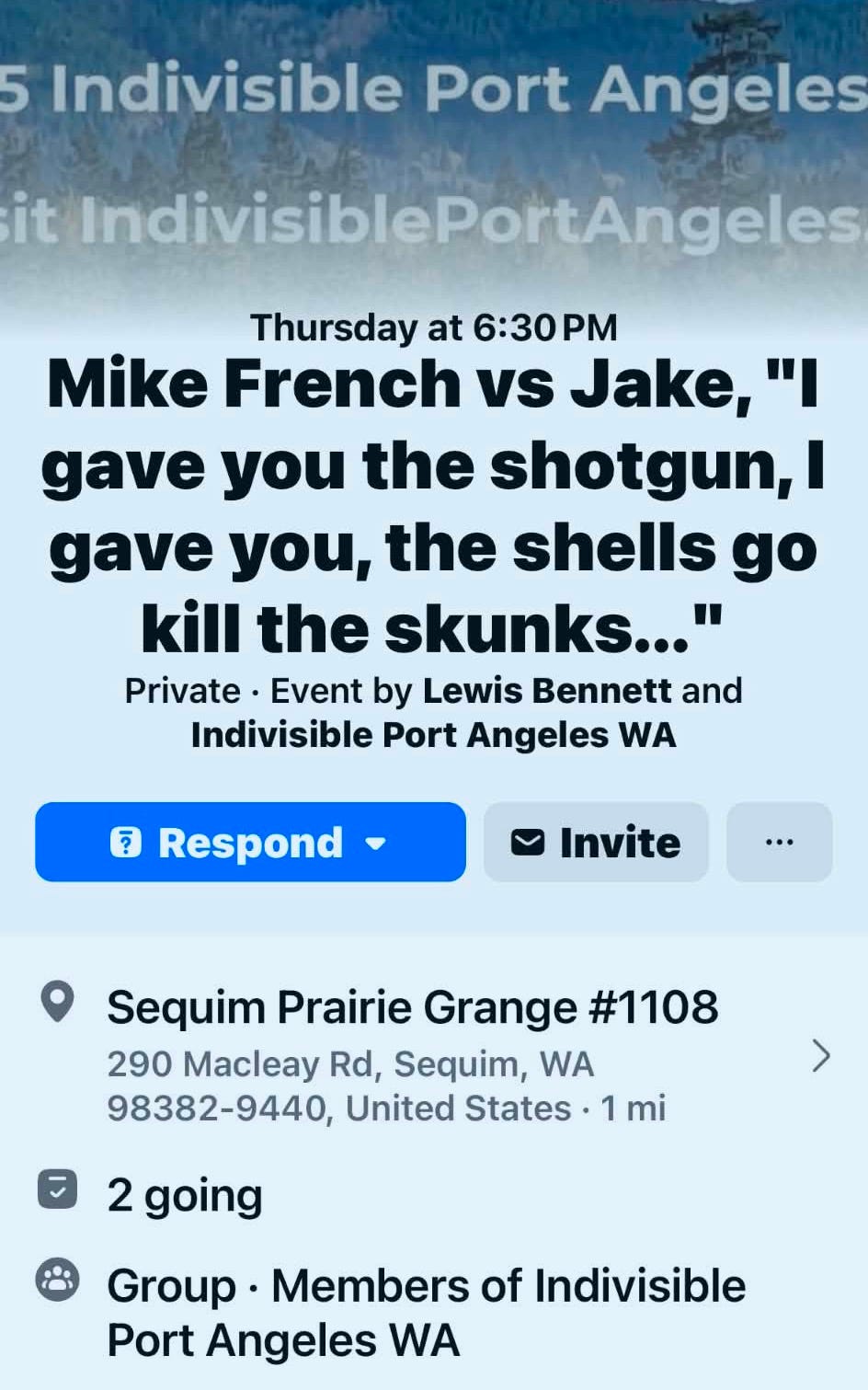
It is not Bennett’s event.
It is not private.
The Calico Cat Club is hosting an open community conversation between candidate Jake Seegers and County Commissioner Mike French. The public is invited on Thursday at 6:30 p.m. at Sequim Prairie Grange.