


WARNING: This article discusses sexual exploitation, drug use, and crimes against a child. This content is not suitable for children.
In this Sundays With Seegers, Commissioner Candidate Jake Seegers examines the illegal encampment that operated for months beneath Port Angeles’ Eighth Street Bridge—complete with drug supplies from the county’s Harm Reduction program and a sign that openly advertised sex in exchange for drugs. Seegers then details the case of a registered sex offender who offered marijuana to a 15-year-old girl at the Gateway Transit Center and sexually assaulted her. The piece asks a hard question: What kind of environment are our current policies creating before police ever get the call?
A Quiet Neighborhood Again
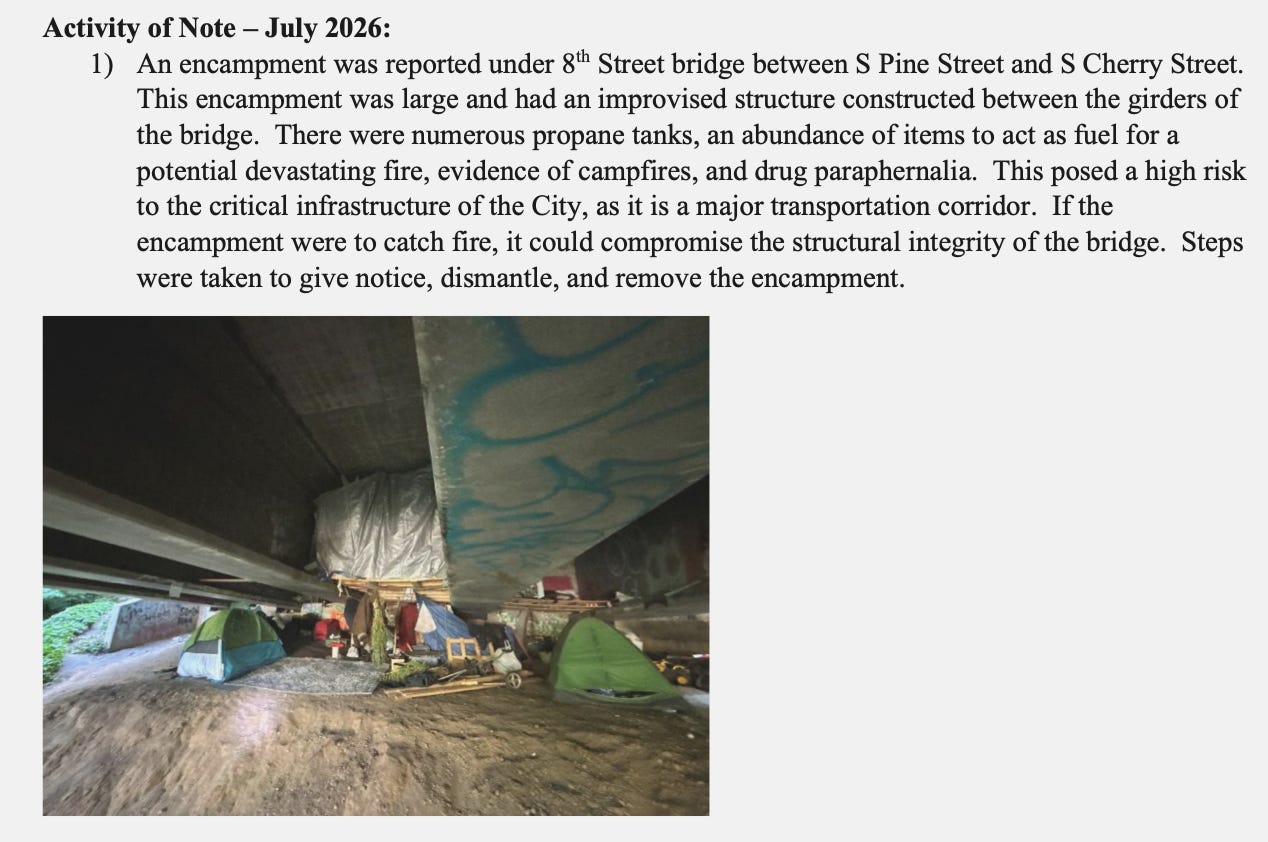
A homeless encampment built into the girders of the Eighth Street Bridge above Valley Street was documented to have “numerous propane tanks, an abundance of items that could act as fuel for a potentially devastating fire, evidence of campfires, and drug paraphernalia.”
In a report to the Port Angeles City Council, the Police Chief warned that the encampment posed a serious fire risk—if ignited, it could have shut down a major transportation corridor and critical city infrastructure—yet it was allowed to remain for eight months.
During the August 4 Homelessness Task Force meeting, a young Coast Guardsman, recently stationed in Port Angeles, stood in the gallery and asked pointed questions.
Afterward, I introduced myself. He thanked me for helping 4PA dismantle the sprawling homeless encampment built into the I-beams beneath the Eighth Street Bridge.
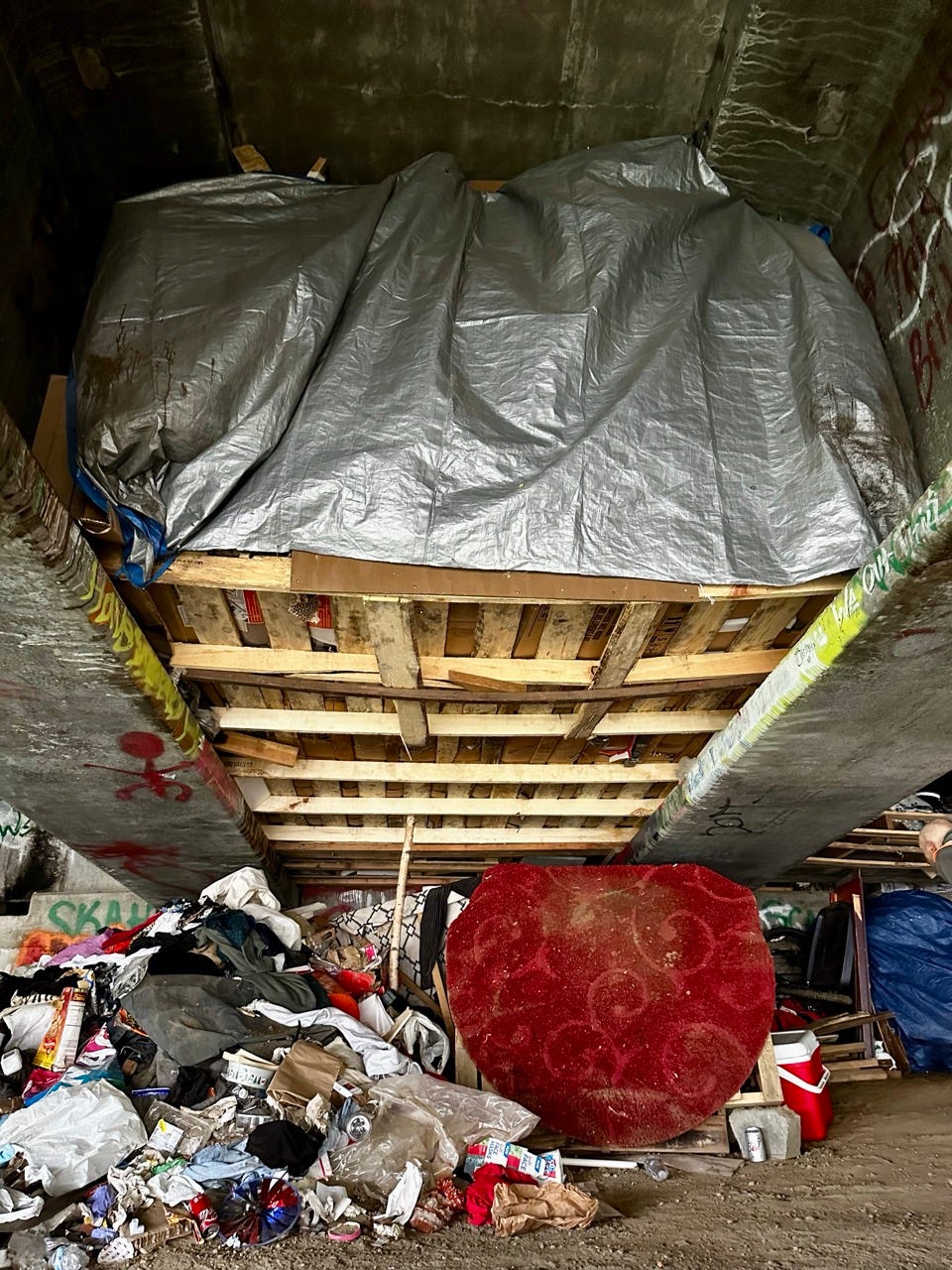
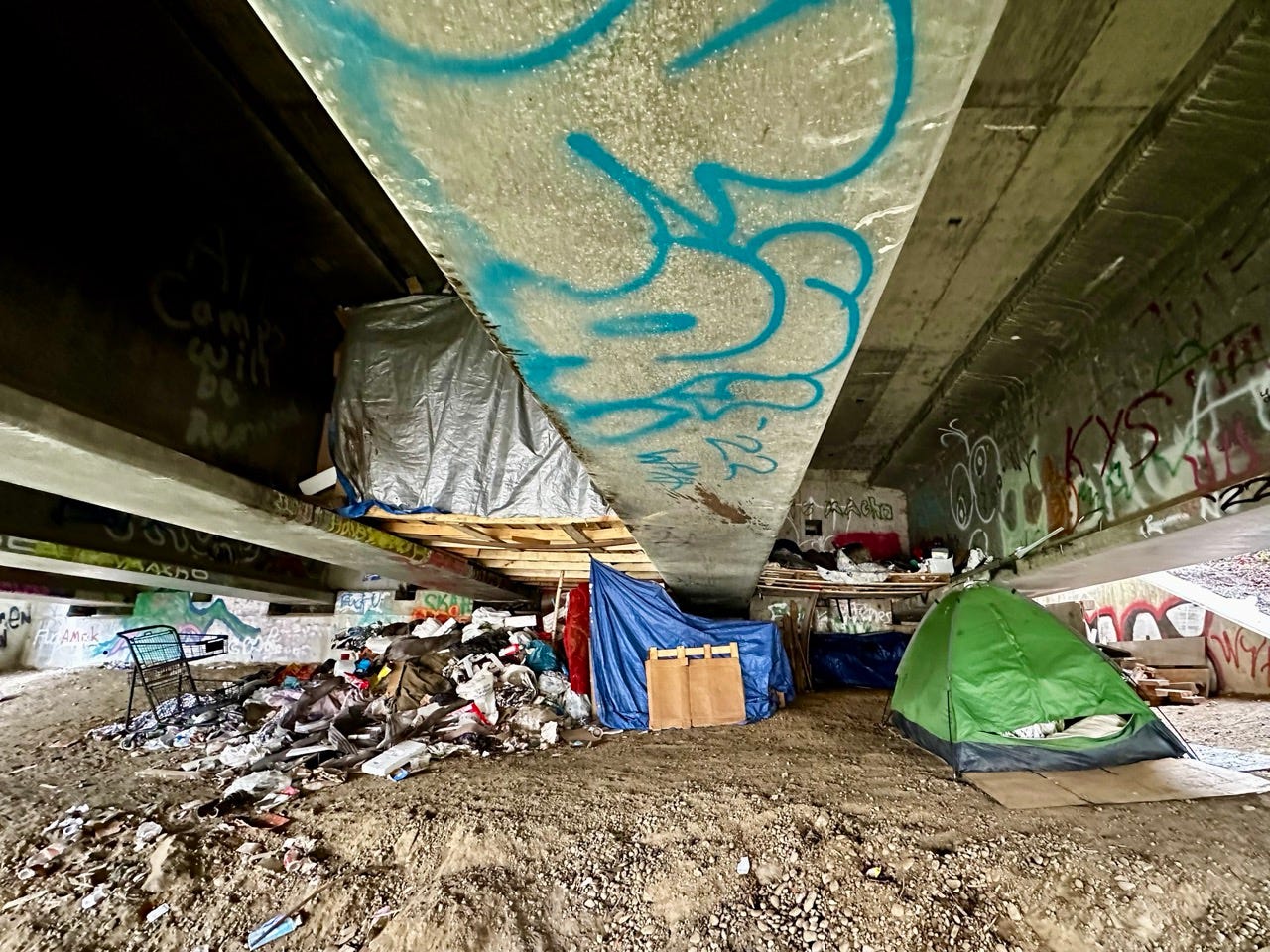
Here’s what the encampment looked like before:
Here is what it looked like after 4PA:
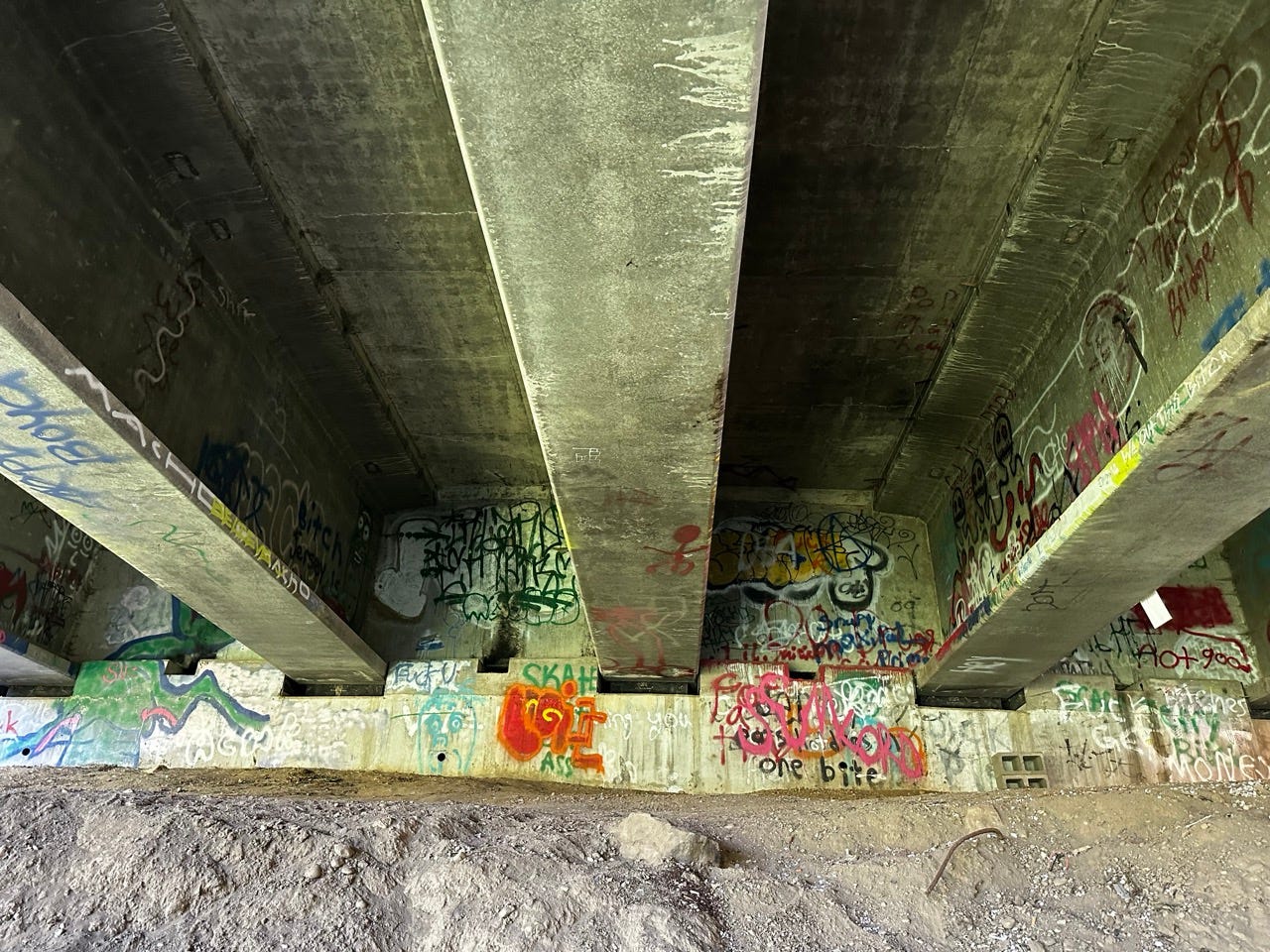
The young “Coastie” lives near the bridge. Before the encampment came down, he said that yelling and other disturbances from beneath the bridge regularly spilled into his neighborhood.
Now, he told me, it is quiet.
It was a simple conversation, but it reminded me of something our leaders too often seem to forget: public policy is personal.
When government allows an illegal encampment to remain for months, someone lives next to it.
When government tolerates open drug use, someone walks their child past it.
When government refuses to enforce laws intended to protect parks, waterways, and neighborhoods, community members and critical areas bear the consequences.
And when government creates an environment where addiction, outdoor living, and lawlessness are accommodated rather than confronted, vulnerable people are not the only ones who arrive.
Predators arrive too.
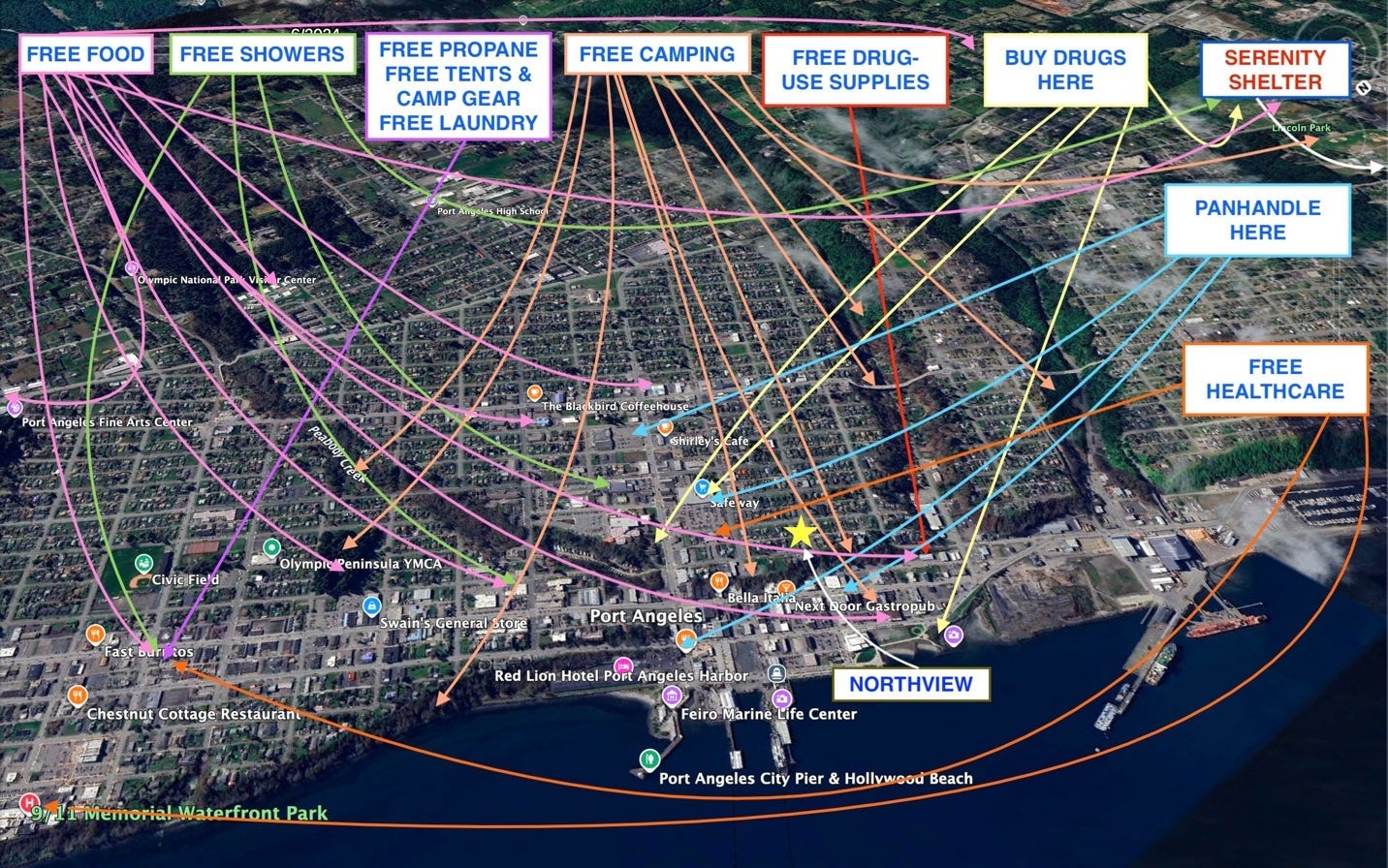
What Lived Under the Eighth Street Bridge
For at least eight months, people were allowed to construct and occupy an illegal structure beneath the Eighth Street Bridge. Inside, I repeatedly found drug-use supplies traceable to Clallam County’s Harm Reduction Health Center.
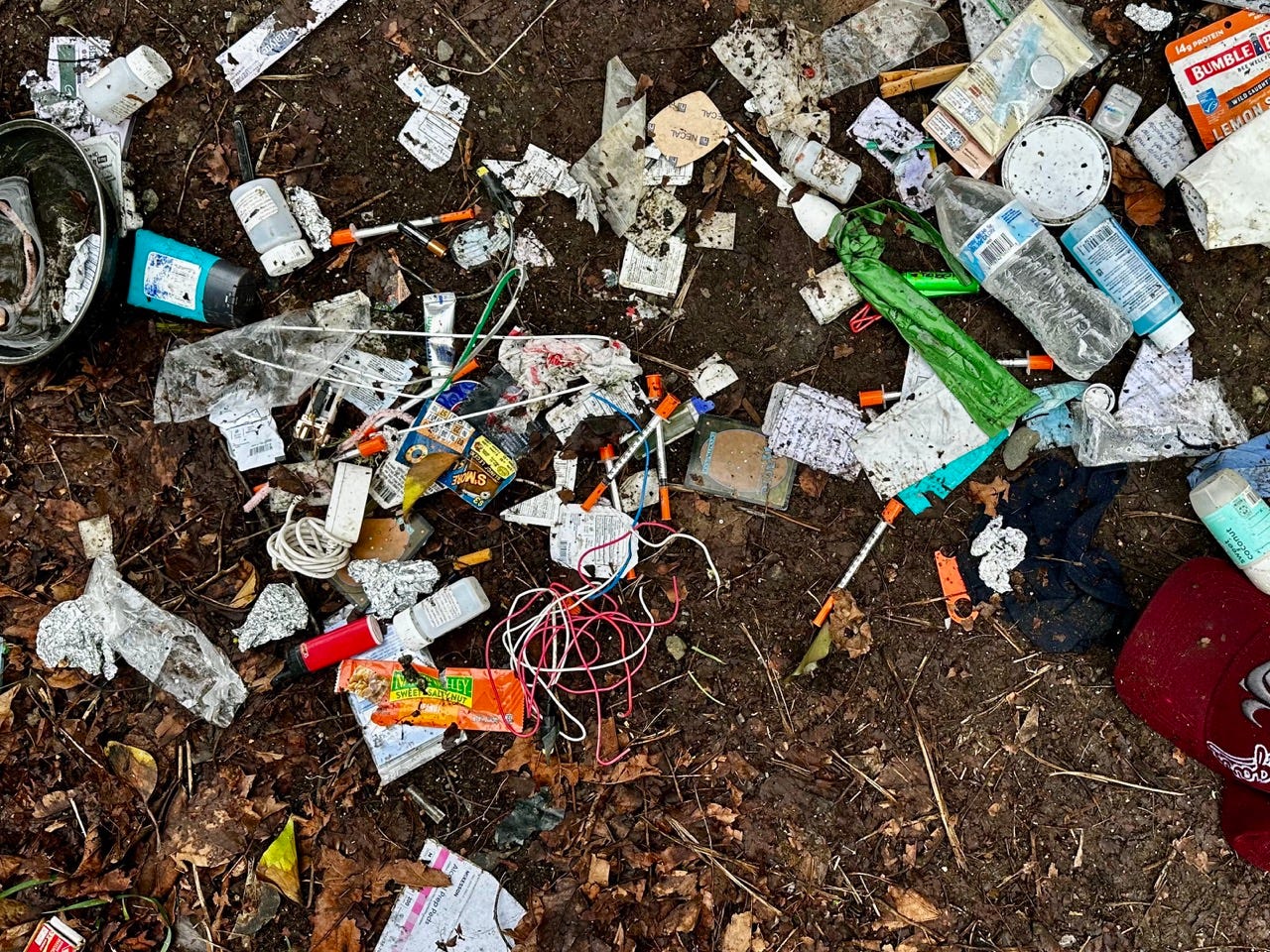
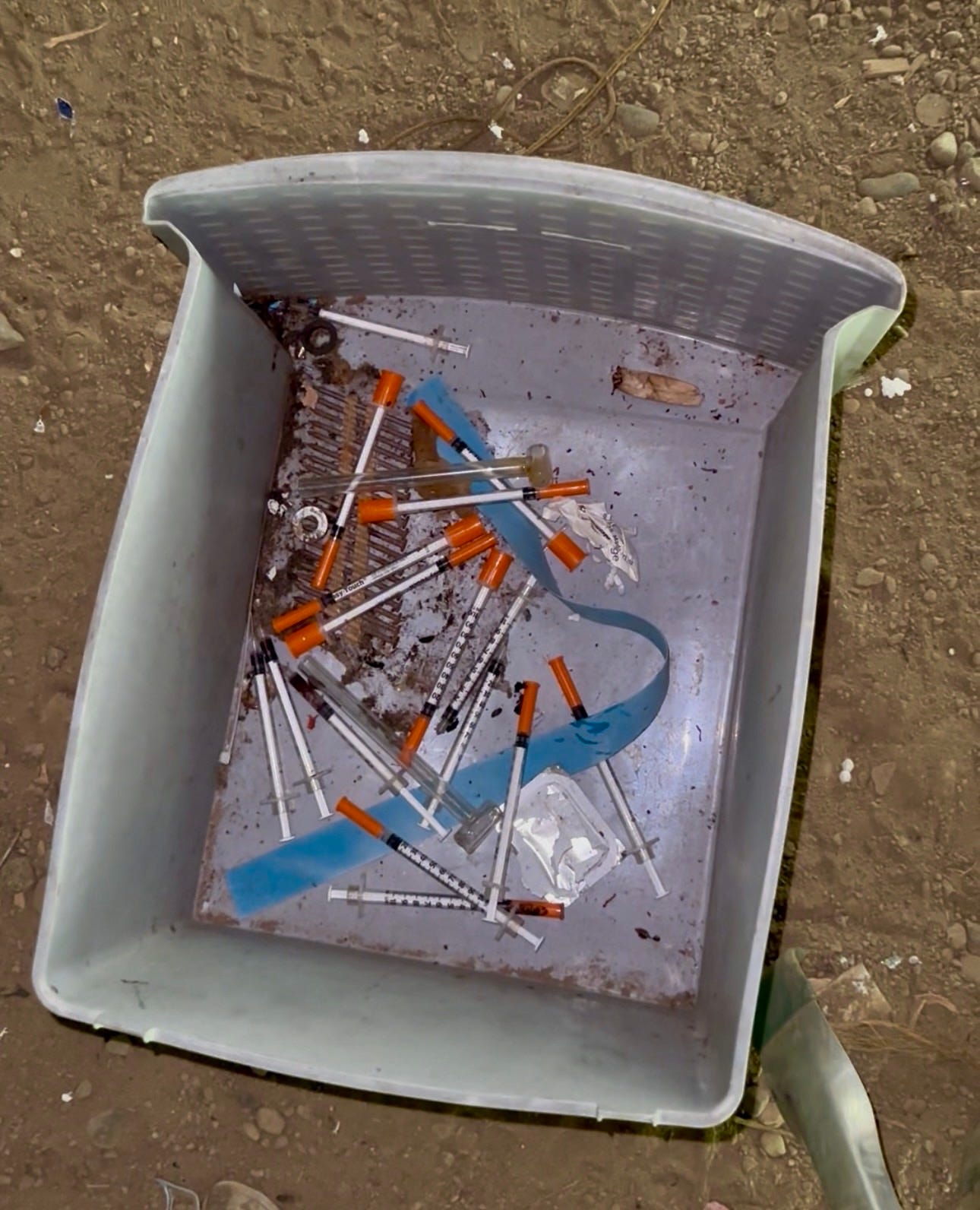
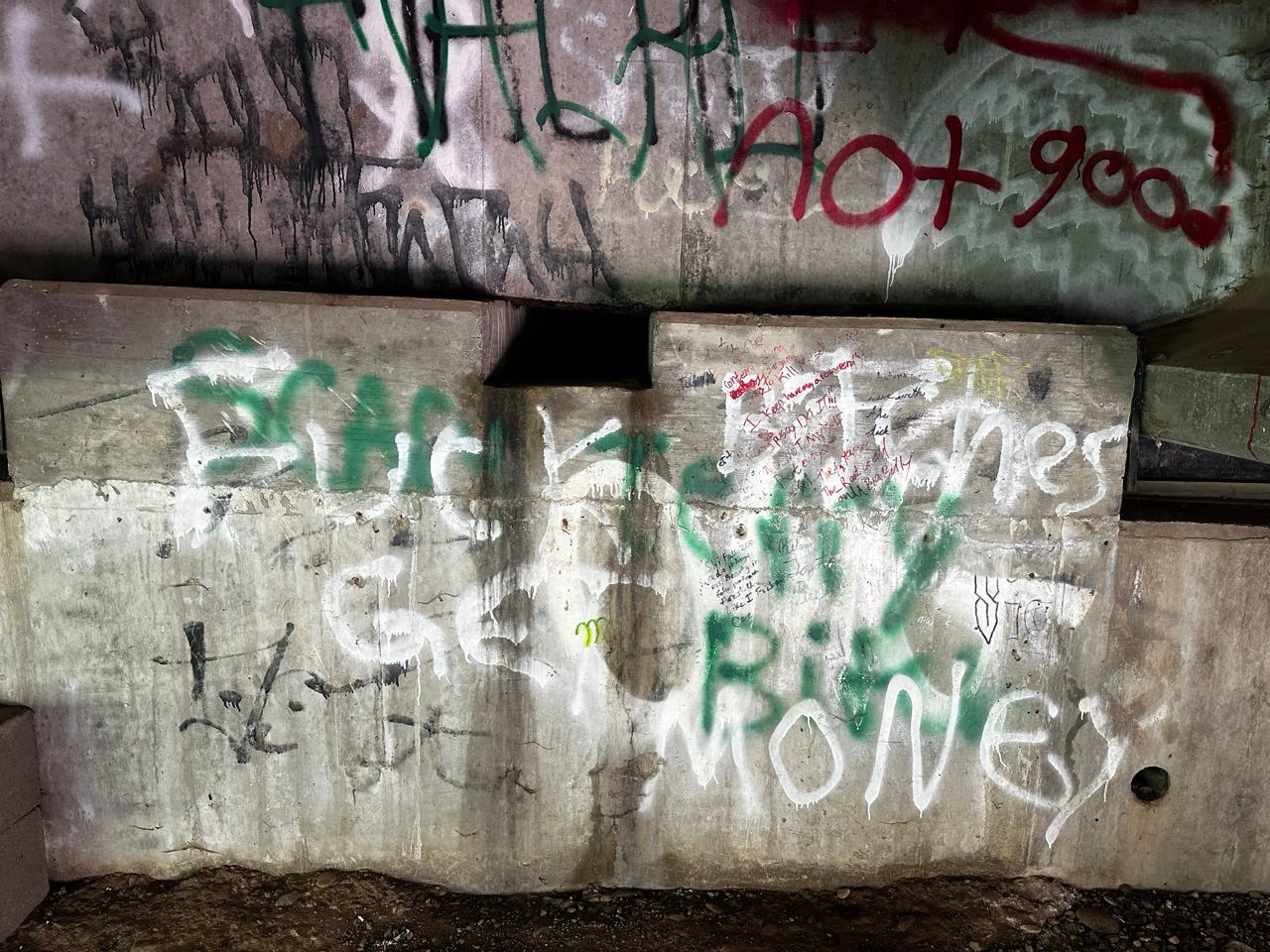
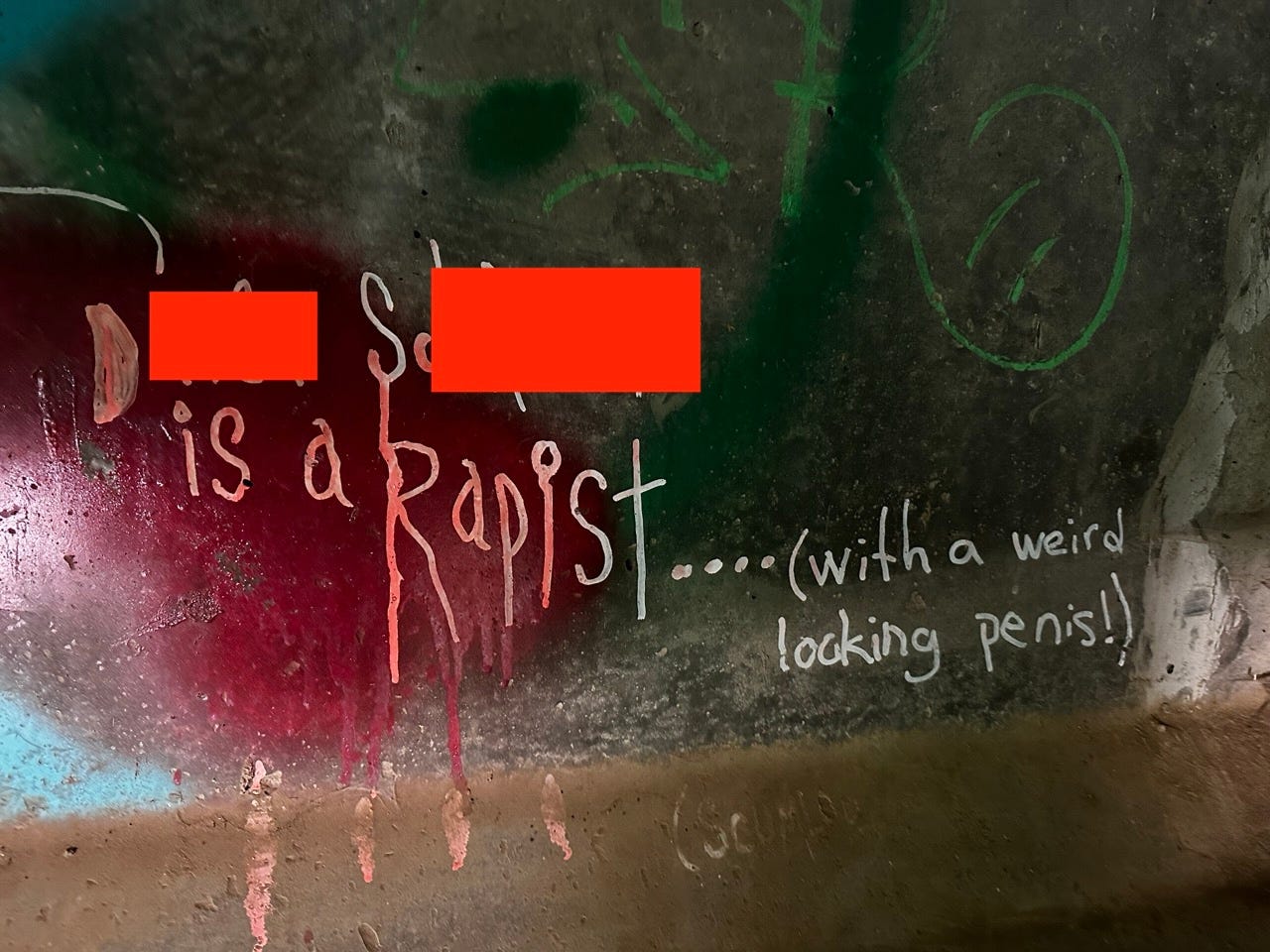
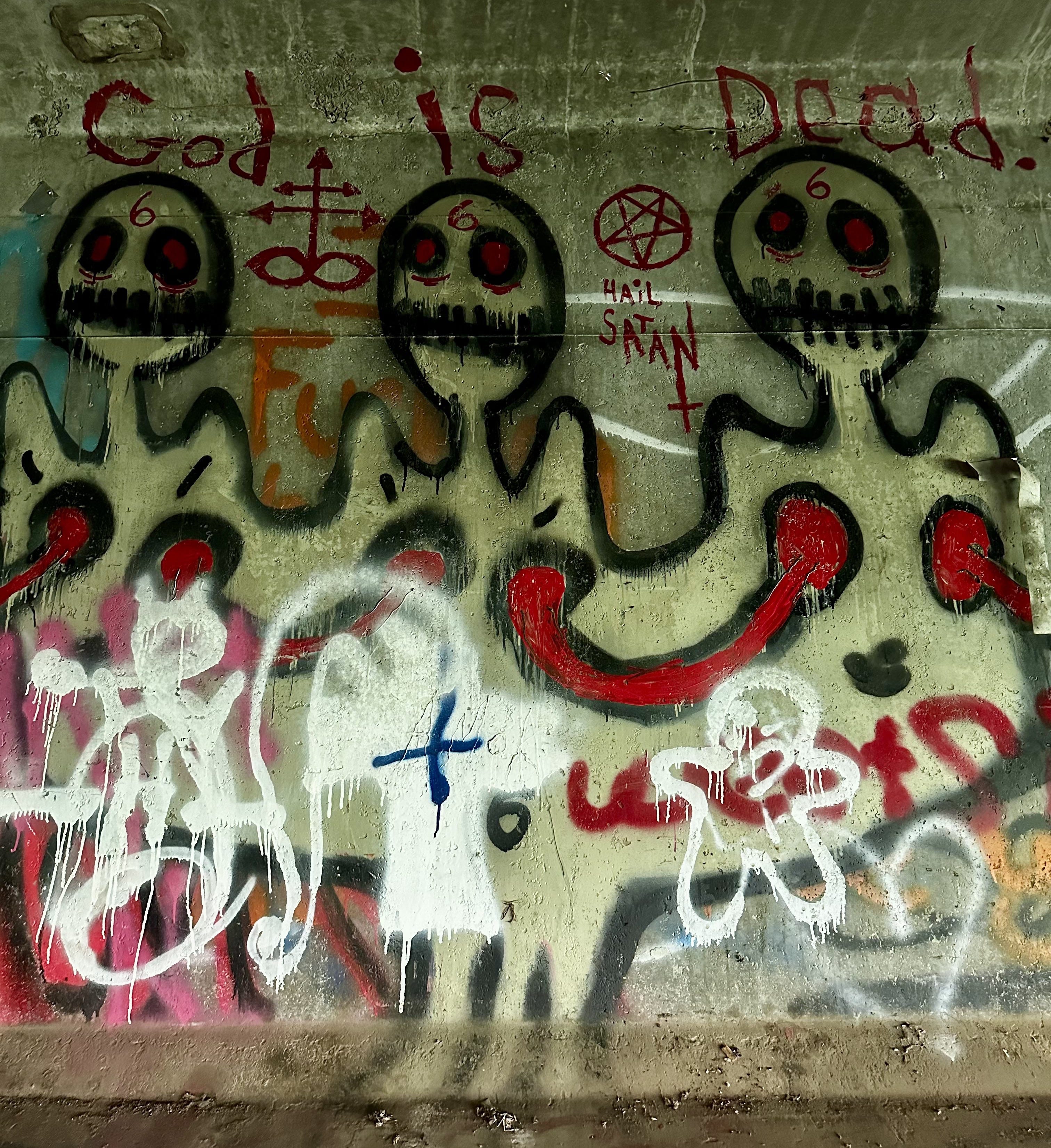
It wasn’t evidence of drug use that disturbed me most. The writing on the walls revealed something much darker.
“Semen Demon.”
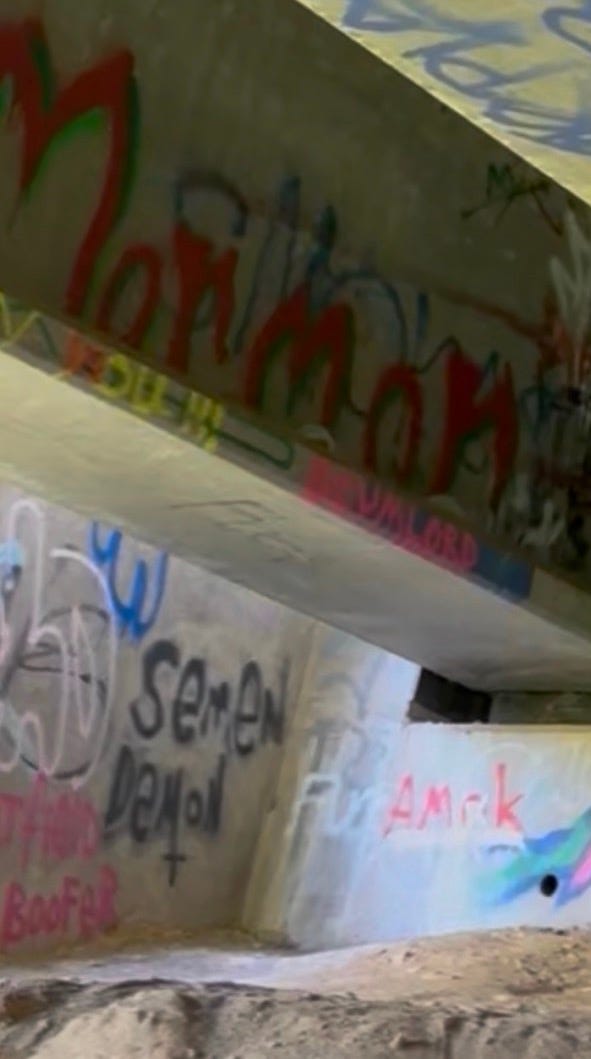
“Play Boy Crib.”
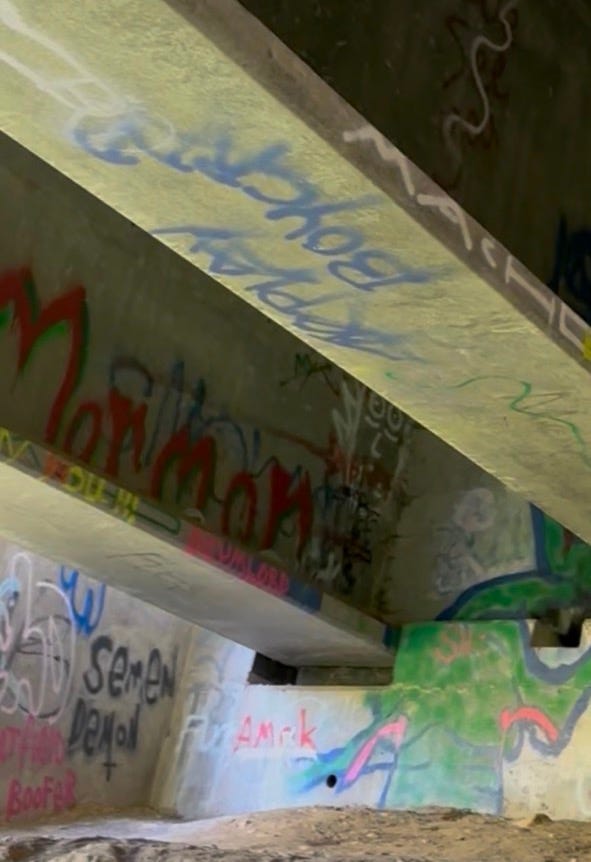
“F*** Bit***, Get Money.”
“D.S. is a rapist.”
The denial of God and pursuit of devil-worship.
And then there was the sign I found during the cleanup.
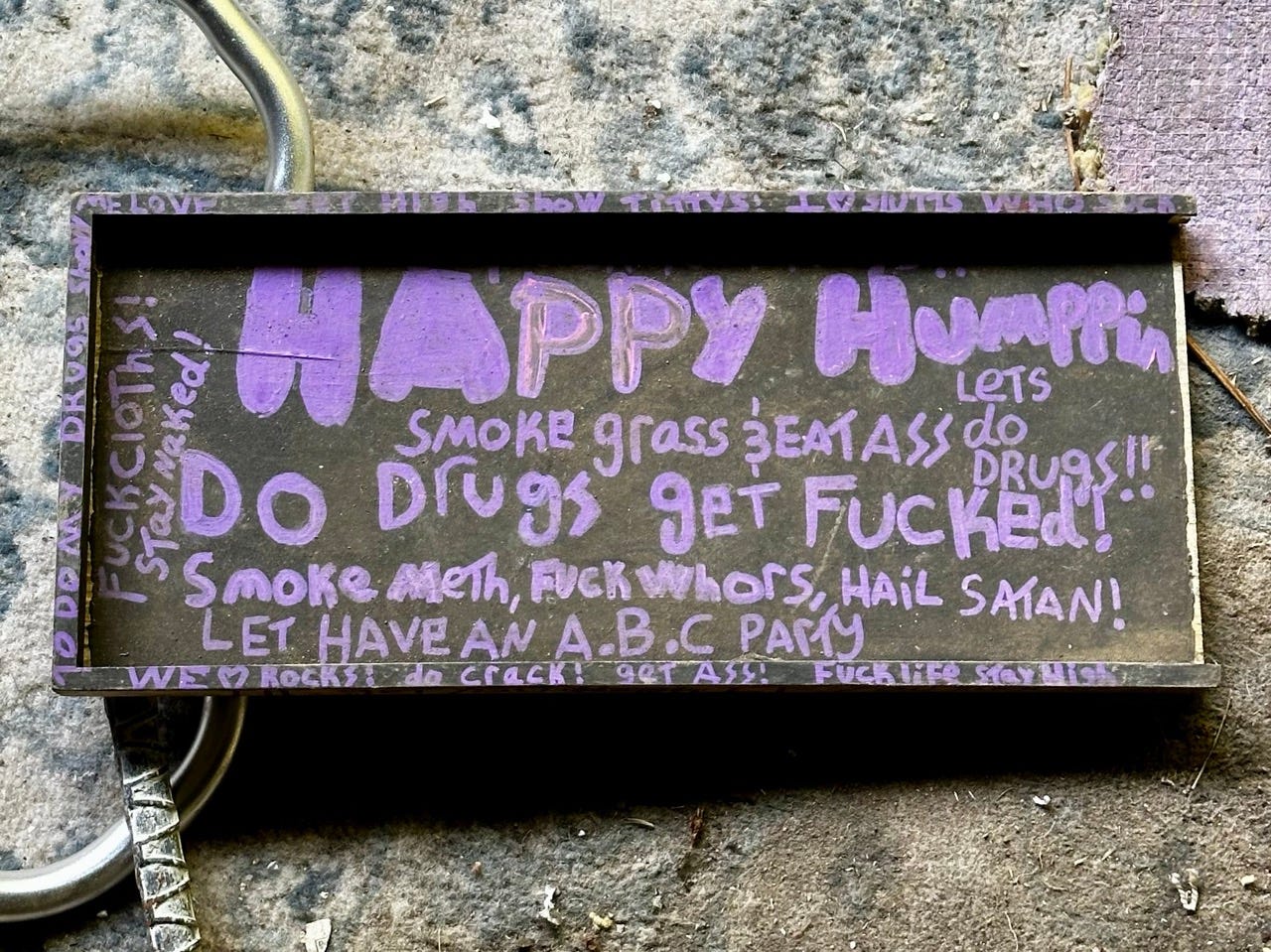
Its messages reduced the relationship between drugs and sex to a transaction:
“To do my drugs, show me love.”
“Get high, show titties.”
“I love sluts who suck.”
“Smoke Grass and eat a**.”
“Do drugs, get f***ed.”
“I’ll get you high if you suck me dry.”
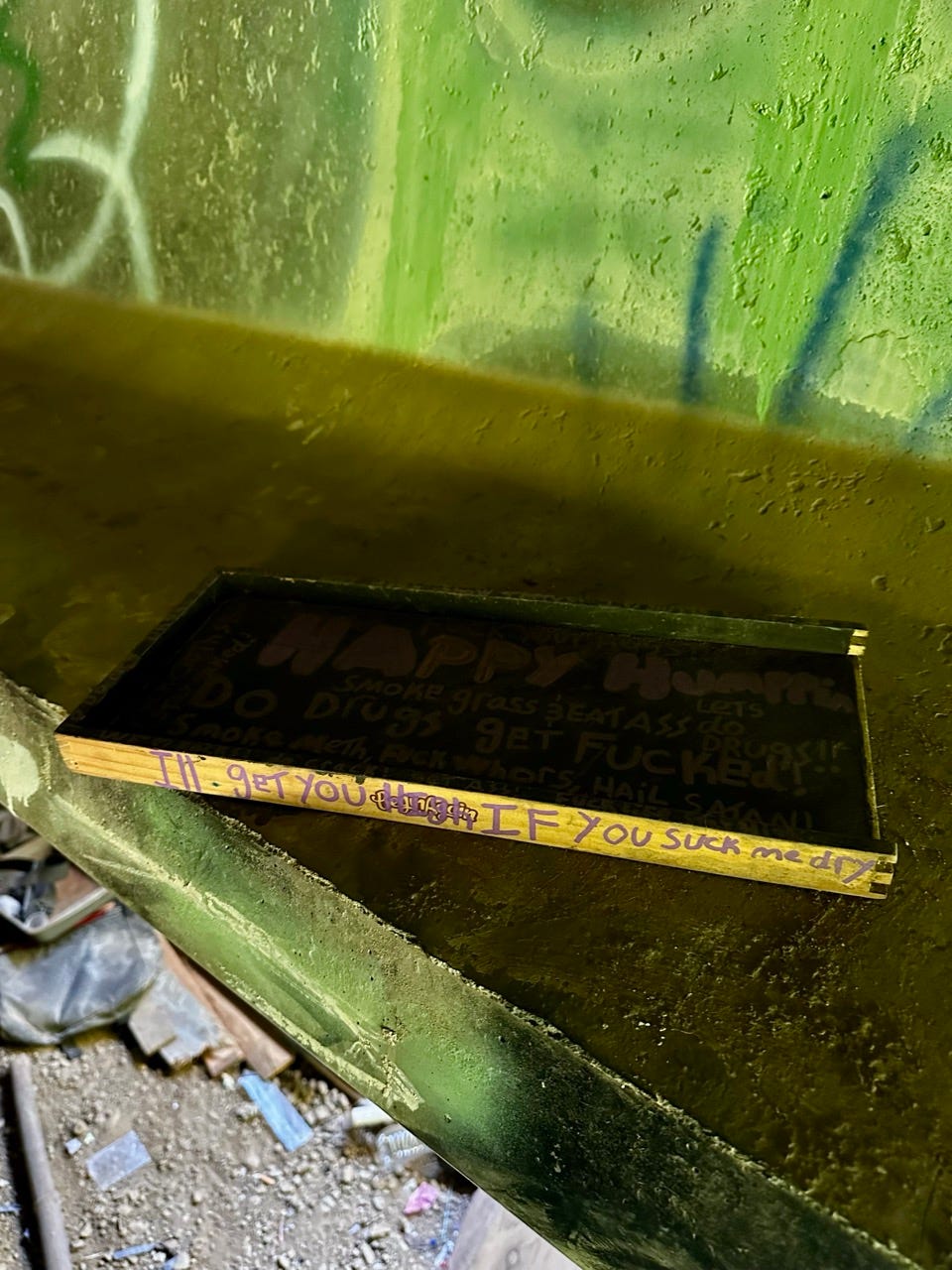
The message was unmistakable:
I have the drugs that you cannot live without.
You have the body that I want to exploit.
Let’s make a deal.
That is precisely why addiction creates such extraordinary vulnerability to sexual exploitation.
Vulnerability as Leverage
A friend who has spent time conducting street outreach described watching that dynamic firsthand. She knew a homeless woman who repeatedly warned her about “date rape.” According to my friend, men with tents would offer the woman shelter, food, money, or marijuana. Once she accepted, she would be told that staying in the tent required sex.
No gun was necessary. No stranger needed to drag her into a van.
Her vulnerability supplied the leverage.
She could submit or return to the street.
That is why the sign beneath the Eighth Street Bridge has haunted me.
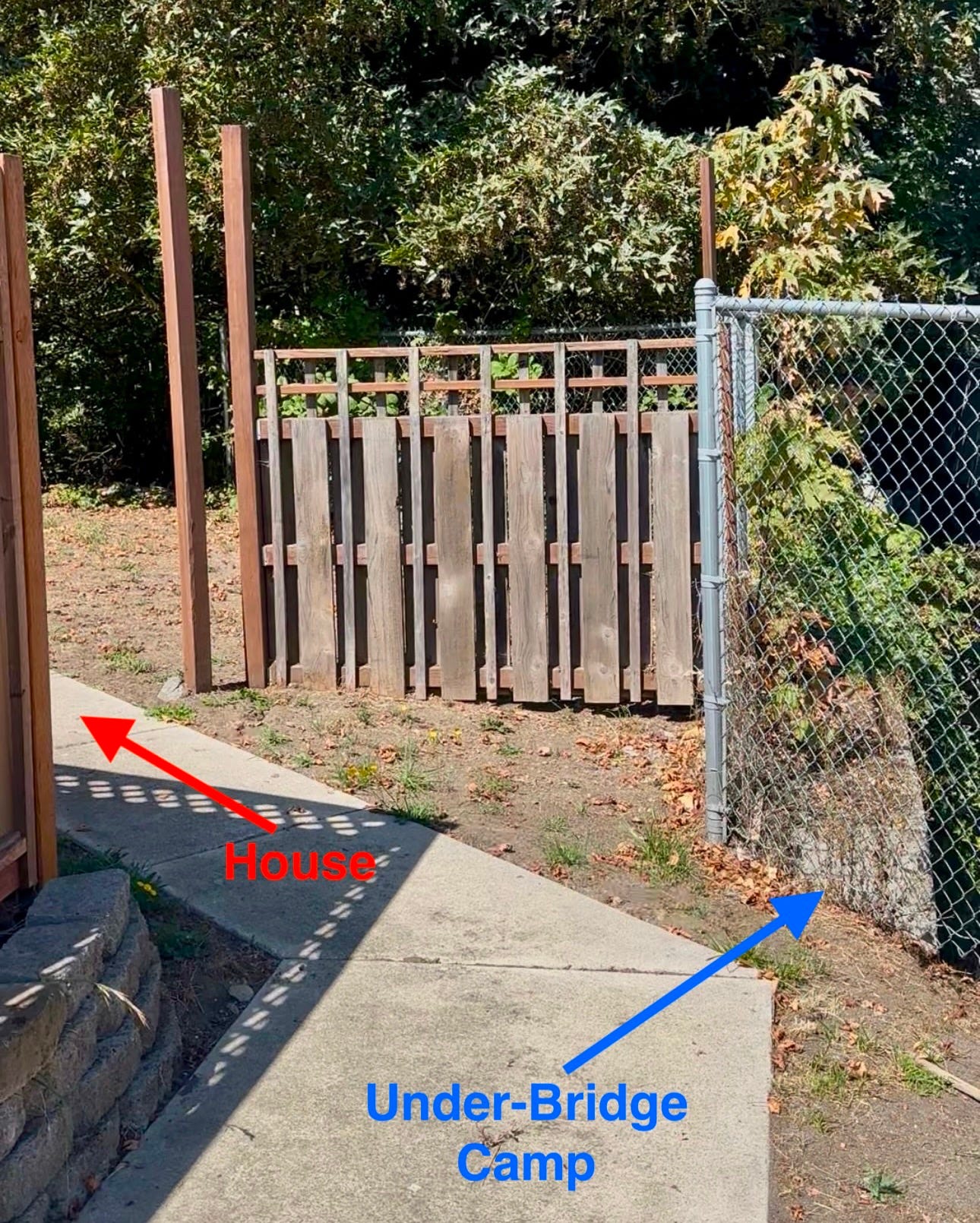
For over eight months, this camp was allowed to proliferate beneath a public bridge, just feet from a neighboring house listed for sale in April.
Imagine walking the sidewalk to your own front door every day past an illegal encampment where drugs are openly used, and the walls advertise trading those drugs for sexual access to vulnerable people.
Yet we are repeatedly told that enforcing laws against these environments is somehow uncompassionate.
When Victimhood Becomes Policy
Our leaders have increasingly embraced a philosophy in which substance use and people experiencing homelessness are viewed almost exclusively through the lens of victimhood.
Accountability becomes cruelty.
Enforcement becomes stigmatization.
And compassion becomes an excuse for tolerating conduct we would never tolerate from anyone else.
Michael Shellenberger summarized the contradiction in a November 2021 essay:
“Victimology leads progressives to maintain what is plainly an immoral situation.”
That single sentence precisely describes what unfolded beneath the Eighth Street Bridge. Prioritizing a narrative of victimhood led people to tolerate and defend conditions that were clearly harmful and wrong.
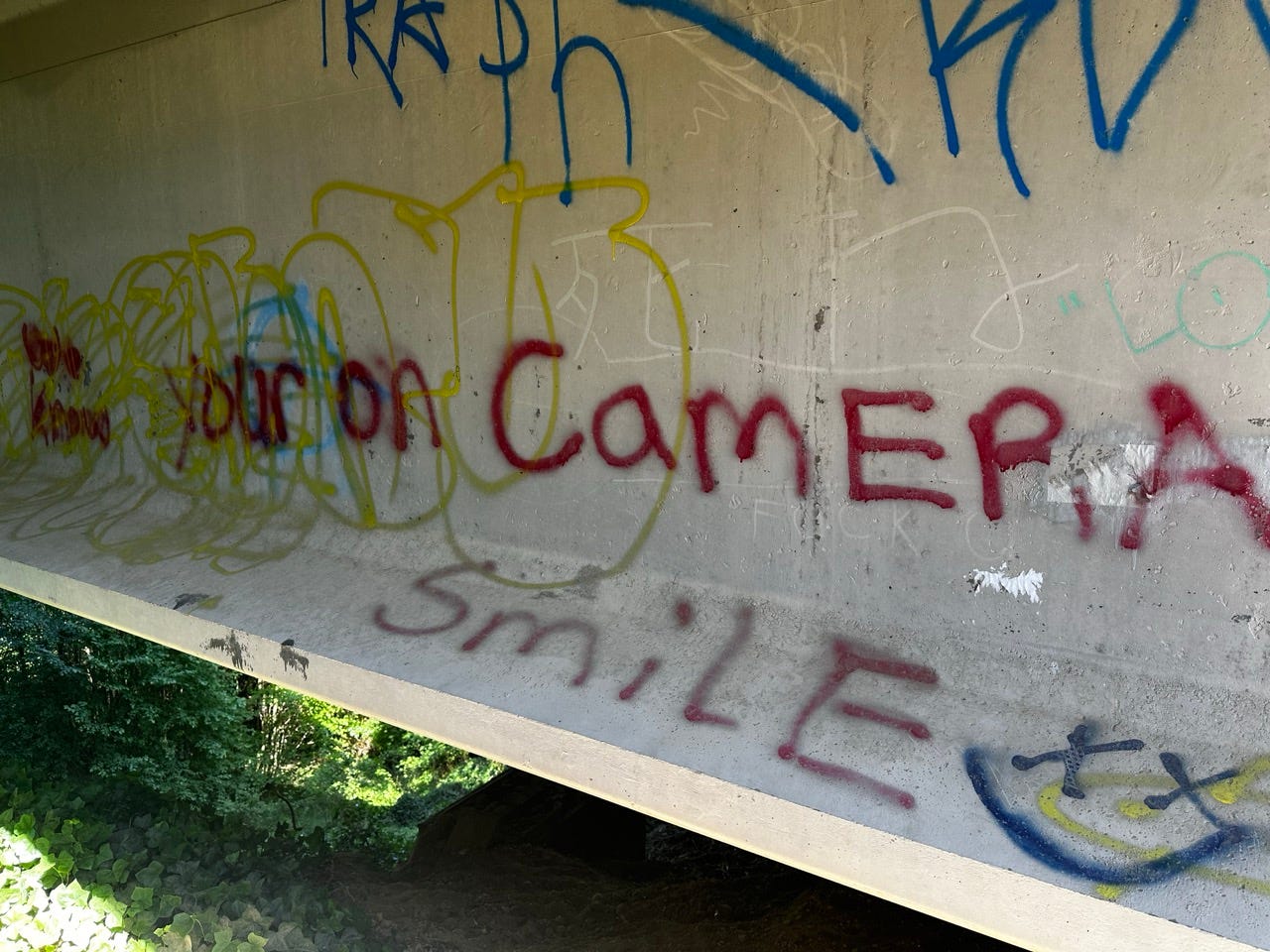
The intention may have been compassion, but the result was an illegal drug-for-sex den operating for months beside someone’s home. How many were exploited beneath our vehicles as we drove overhead each day?
What happens when we normalize the larger environment that allows exploitation like this to flourish?
We don’t have to speculate, we already know.
The 15-Year-Old at Gateway
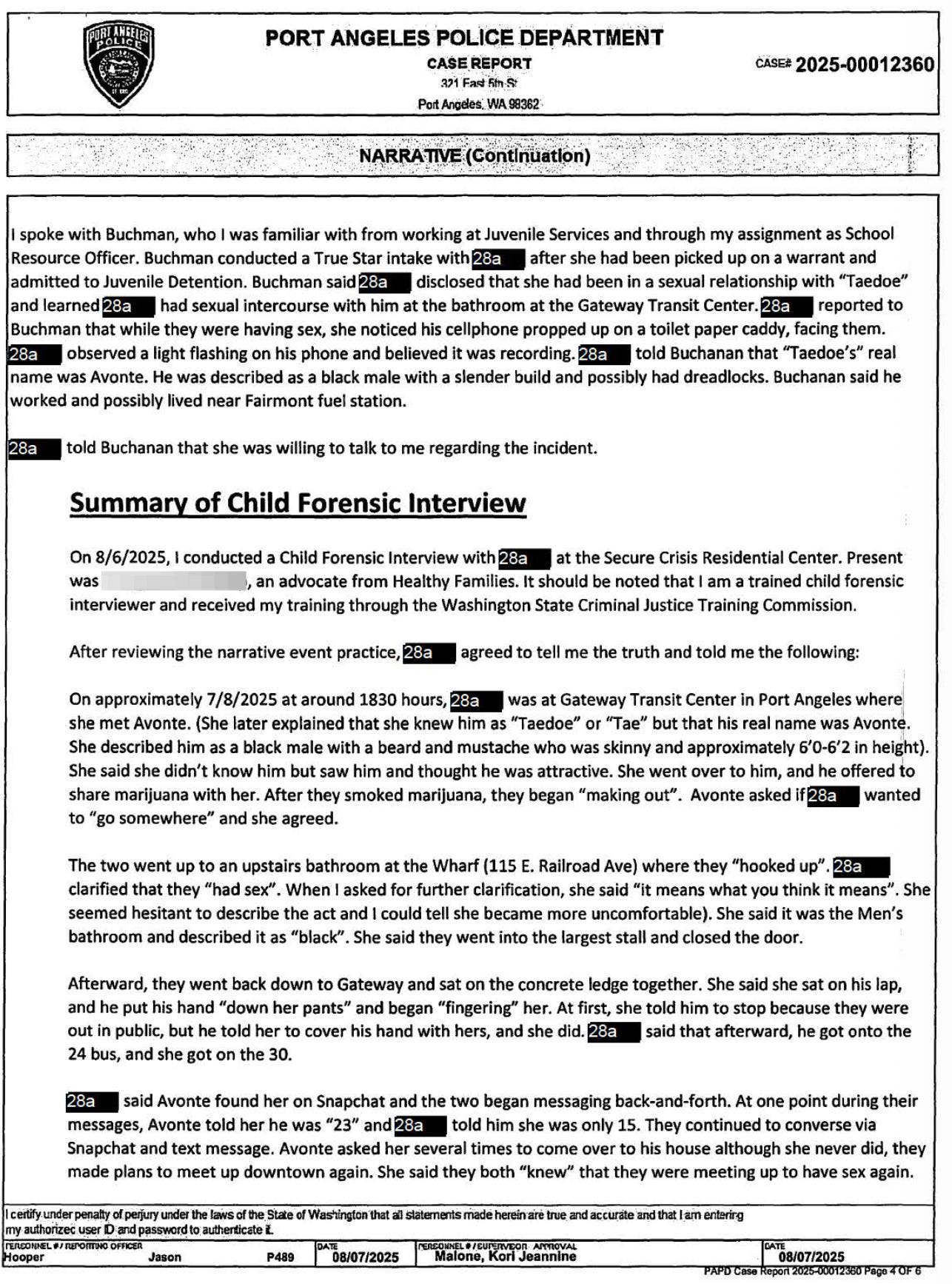
On July 8, 2025, a 15-year-old Port Angeles girl was at the Gateway Transit Center when she encountered a man she knew as “Taedoe.”
His real name was Avonte Trevon Abram.
He was 28 years old.
According to the Port Angeles Police Department investigation, Abram offered the girl marijuana. They smoked together, and he then took her to an upstairs men’s restroom at The Wharf, directly across from the Transit Center.
There, according to the police report and the girl’s subsequent forensic interview, Abram had sex with her.
This wasn’t simply an allegation that disappeared into a police file. Transit surveillance corroborated significant portions of her account. Cameras captured Abram and the girl emerging from The Wharf, crossing Railroad Avenue and sitting together at Gateway. An officer reviewing the footage reported seeing Abram pull the girl onto his lap and apparently put his hand inside the front of her pants.
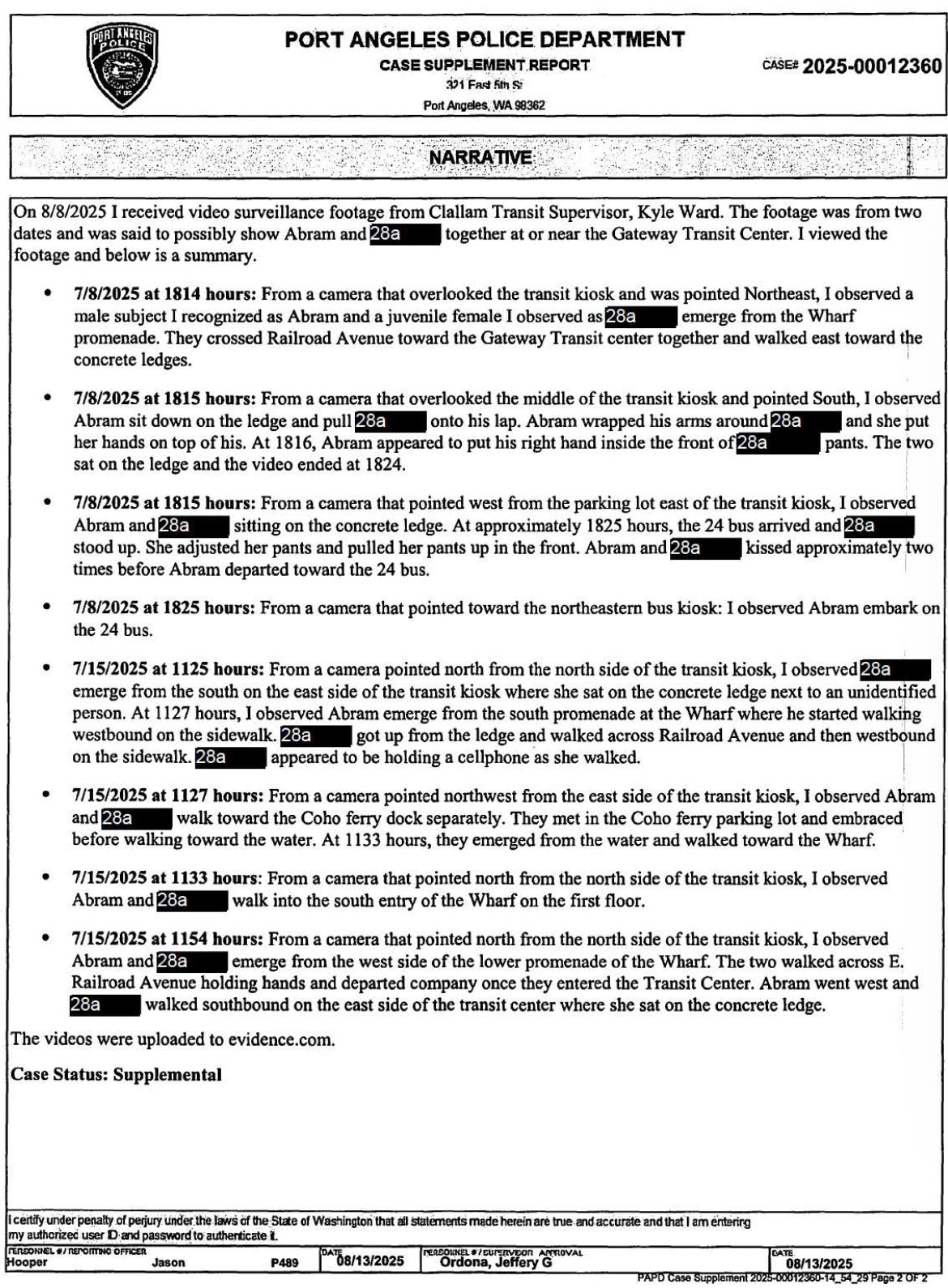
A week later, cameras captured the pair meeting again at Gateway, walking toward The Wharf and entering the building. They emerged approximately 21 minutes later.
The girl’s account was even more disturbing.
After their first encounter, Abram found her on Snapchat. He initially claimed that he was 23. She told him she was 15. He continued anyway.
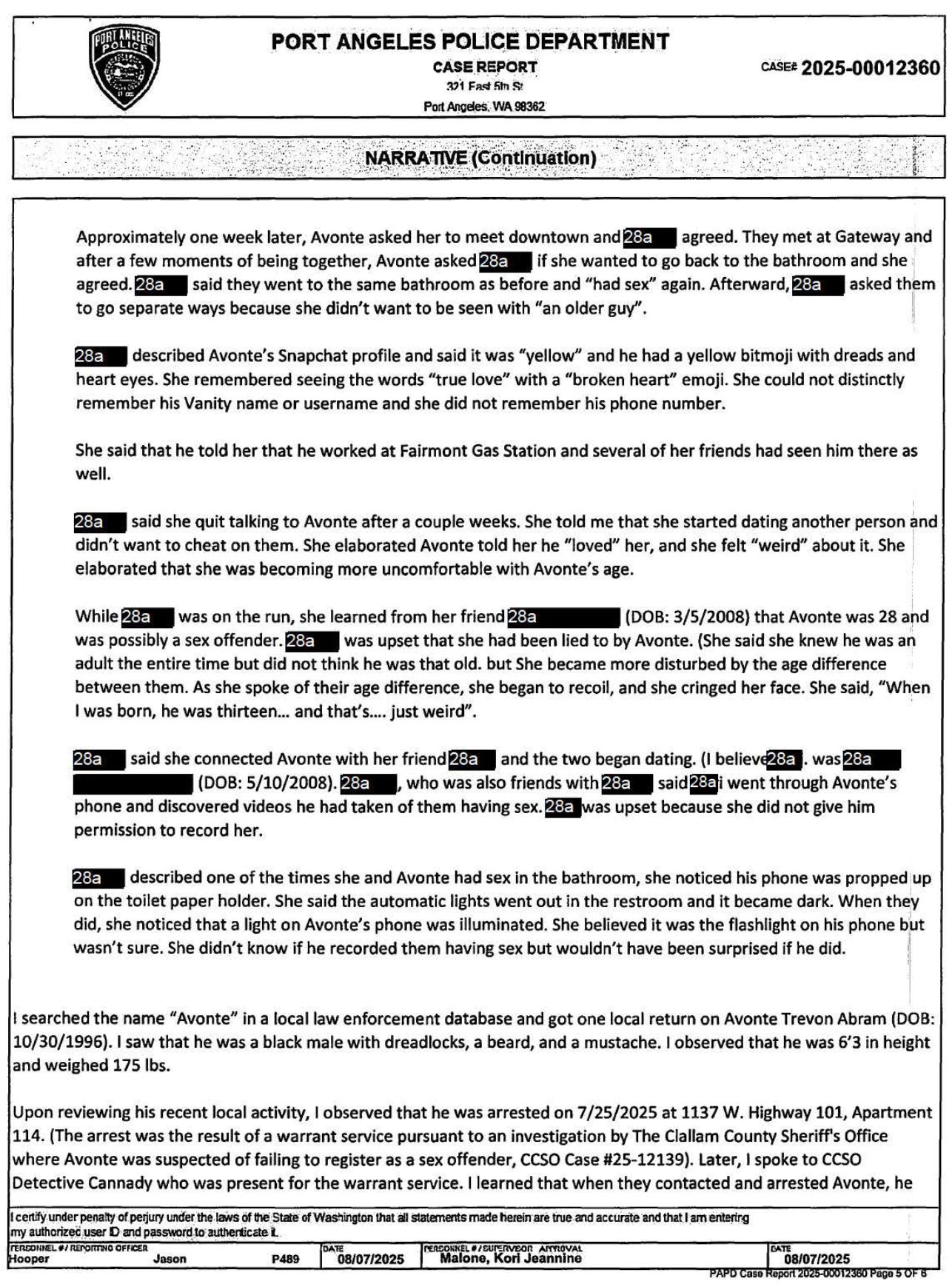
Investigators ultimately recovered a thread containing 311 messages between Abram and the girl. According to the police reports, he repeatedly sought additional meetings and sexual photographs from her.
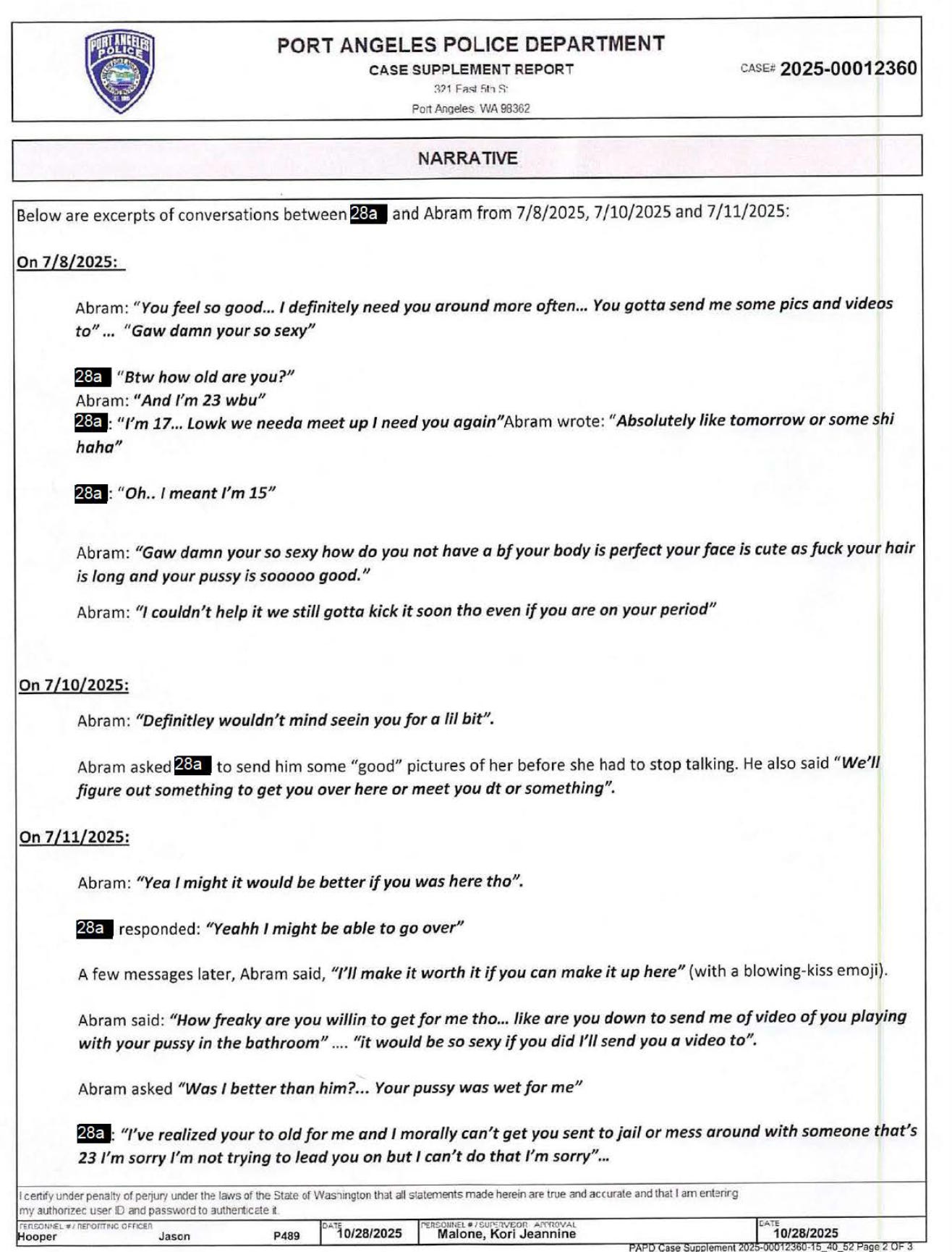
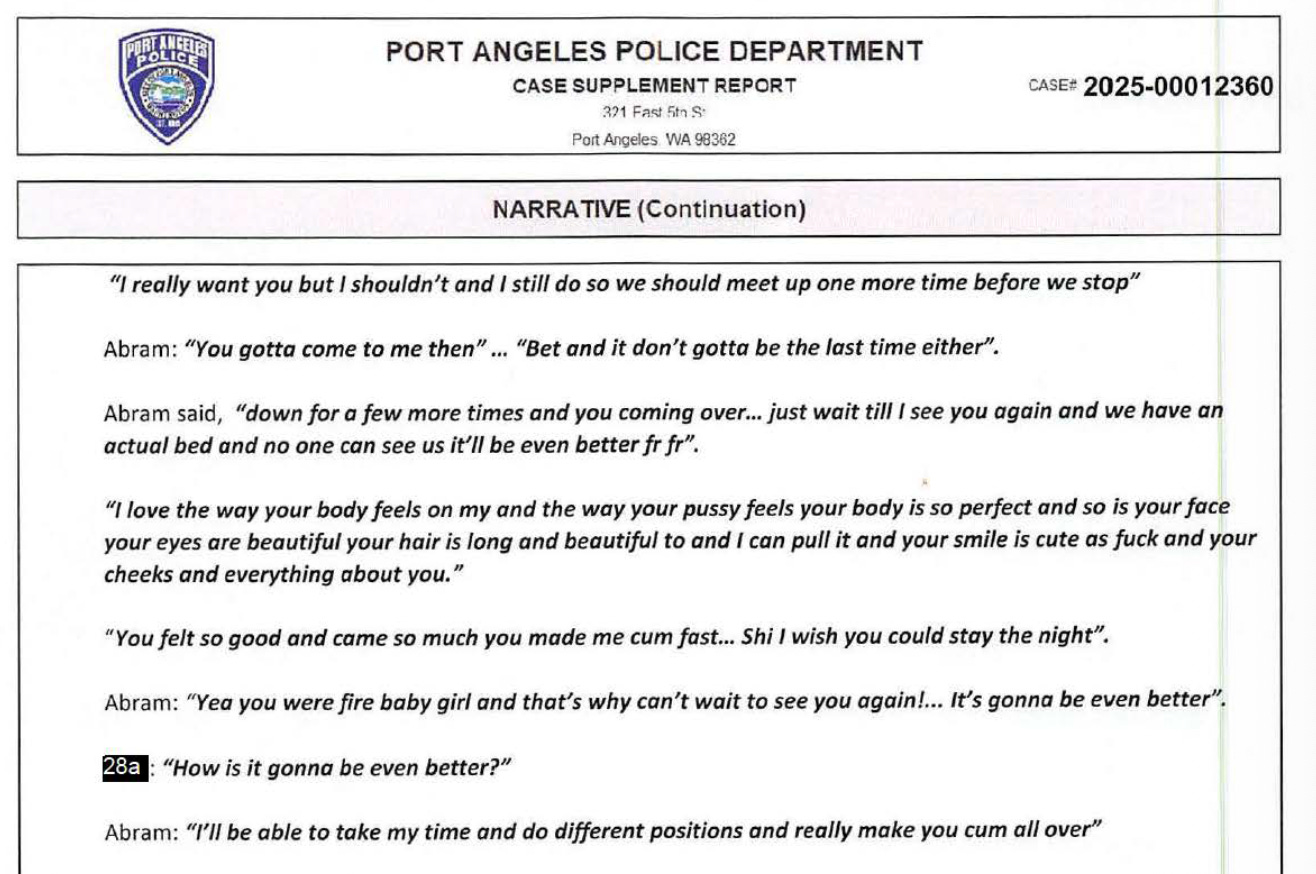
He discussed getting her to his residence. He also told the 15-year-old that he would bring alcohol and marijuana the next time they were together.
The girl eventually began telling Abram that the age difference made her uncomfortable.
She still believed he was 23. But he wasn’t. Abram was 28. And he wasn’t simply another adult hanging around downtown.
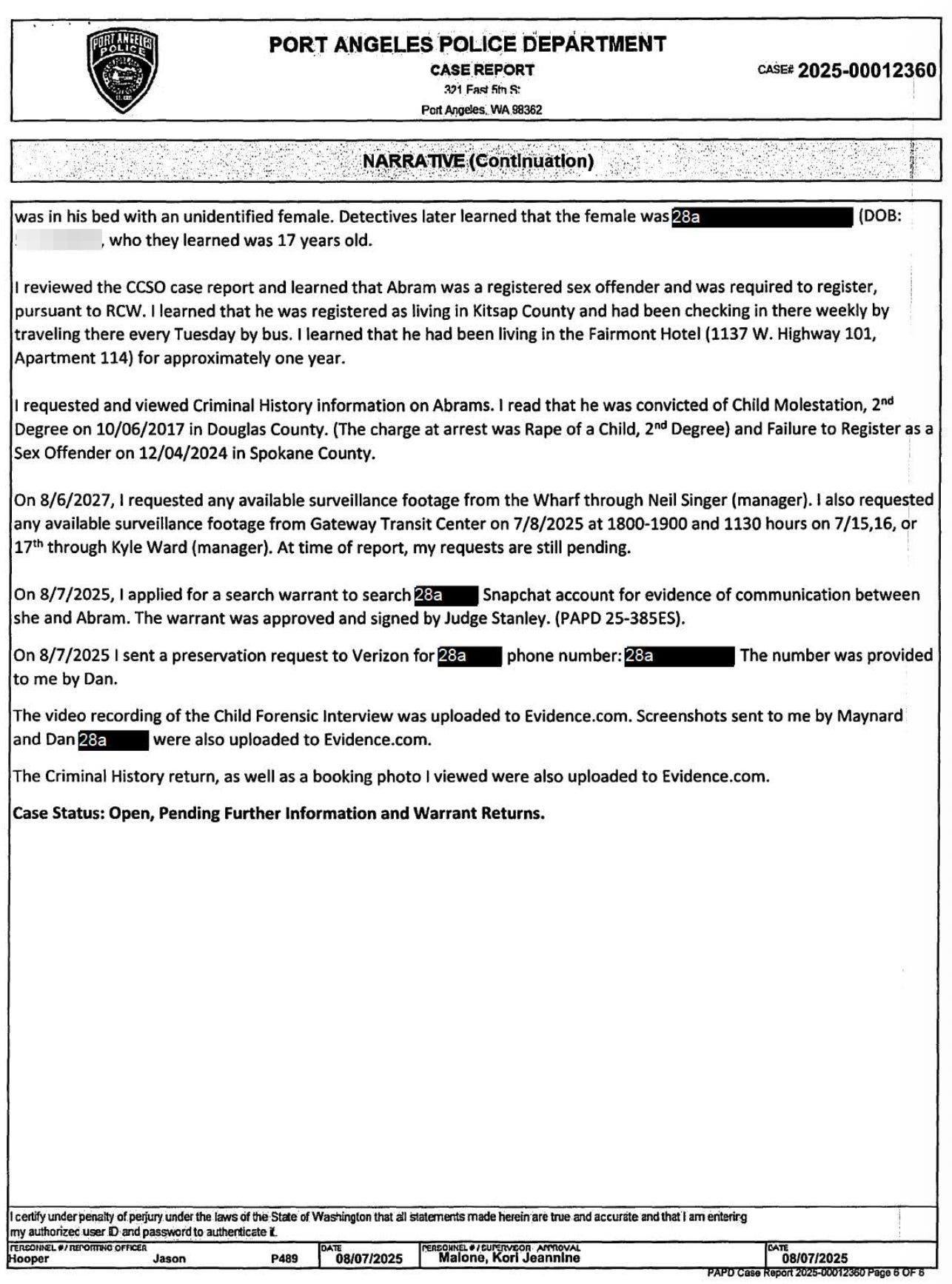
Police discovered that Abram was already a registered sex offender. He had been convicted of second-degree child molestation in Douglas County in 2017.
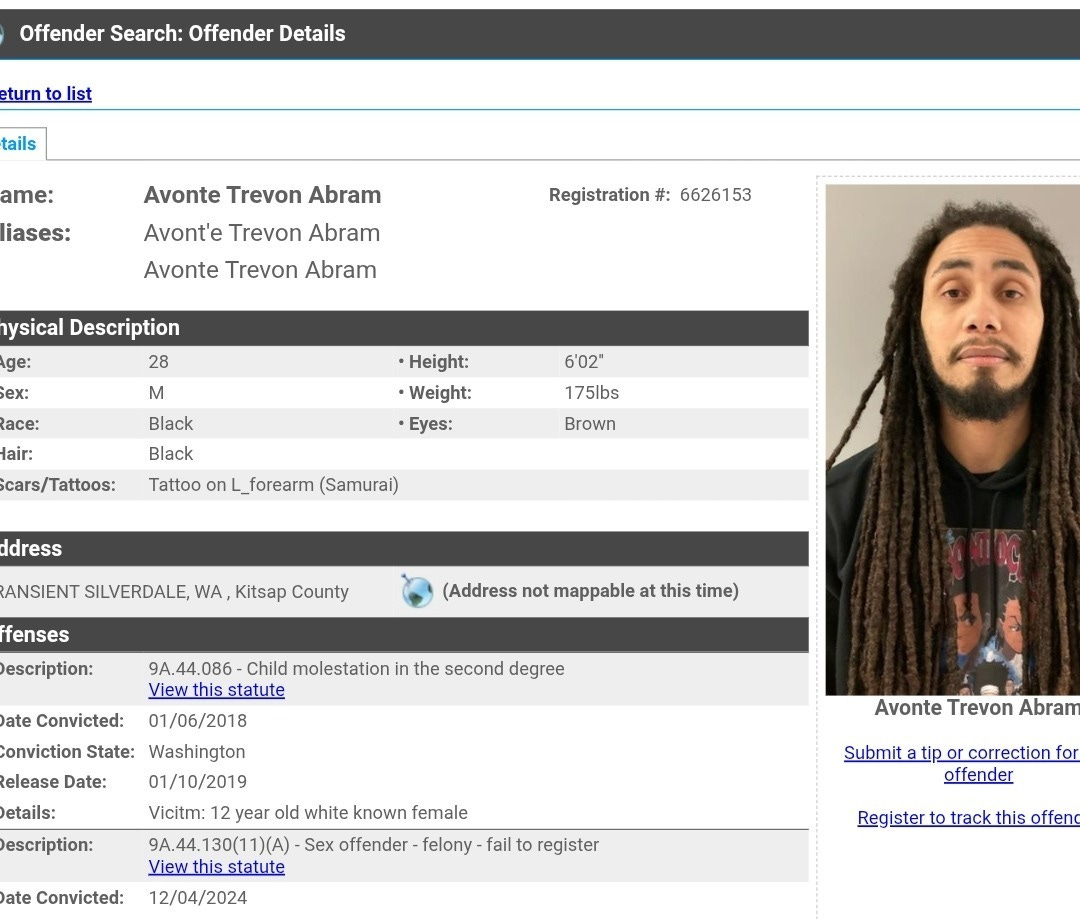
He had subsequently been arrested in Spokane County for failing to register as a sex offender.
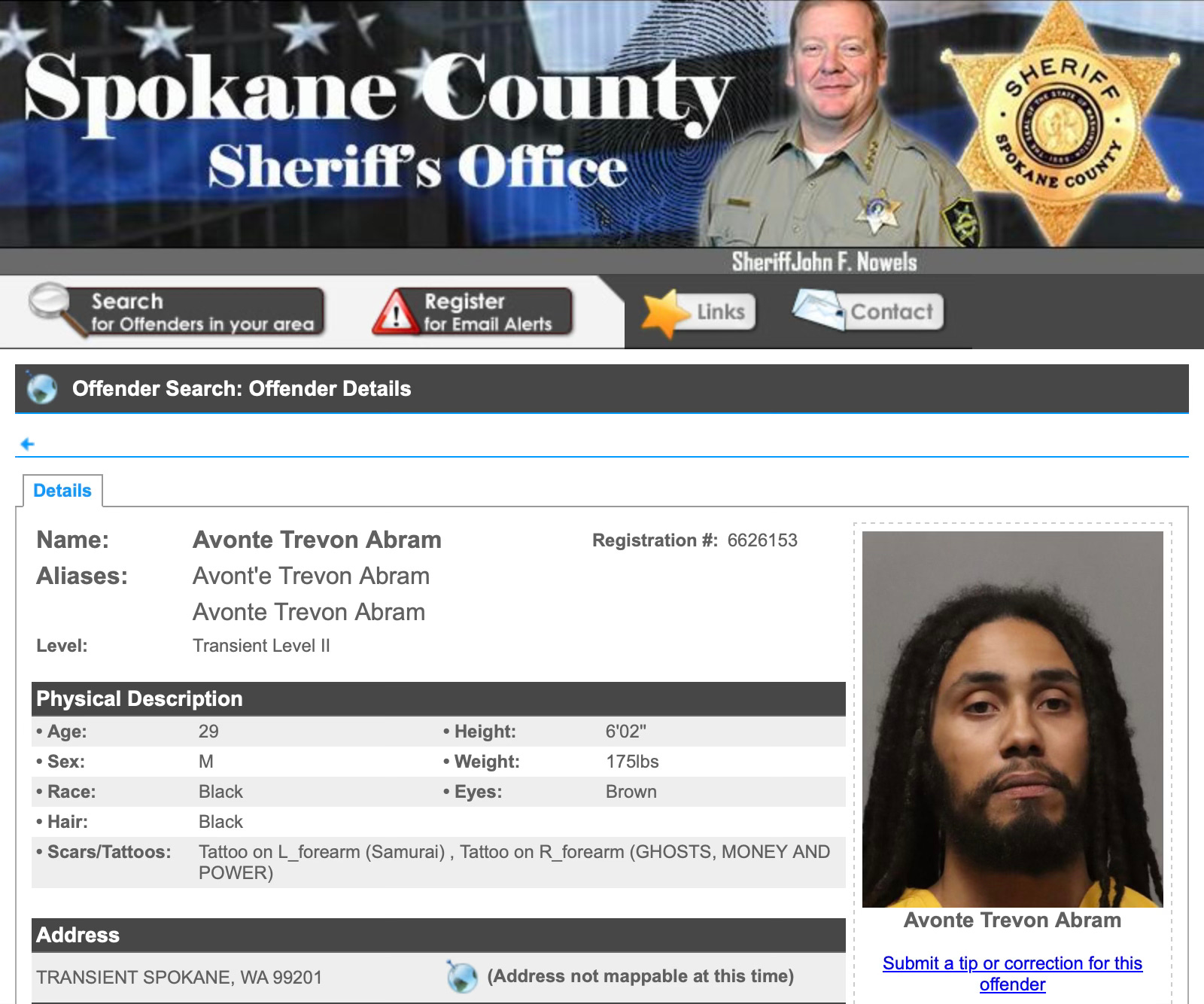
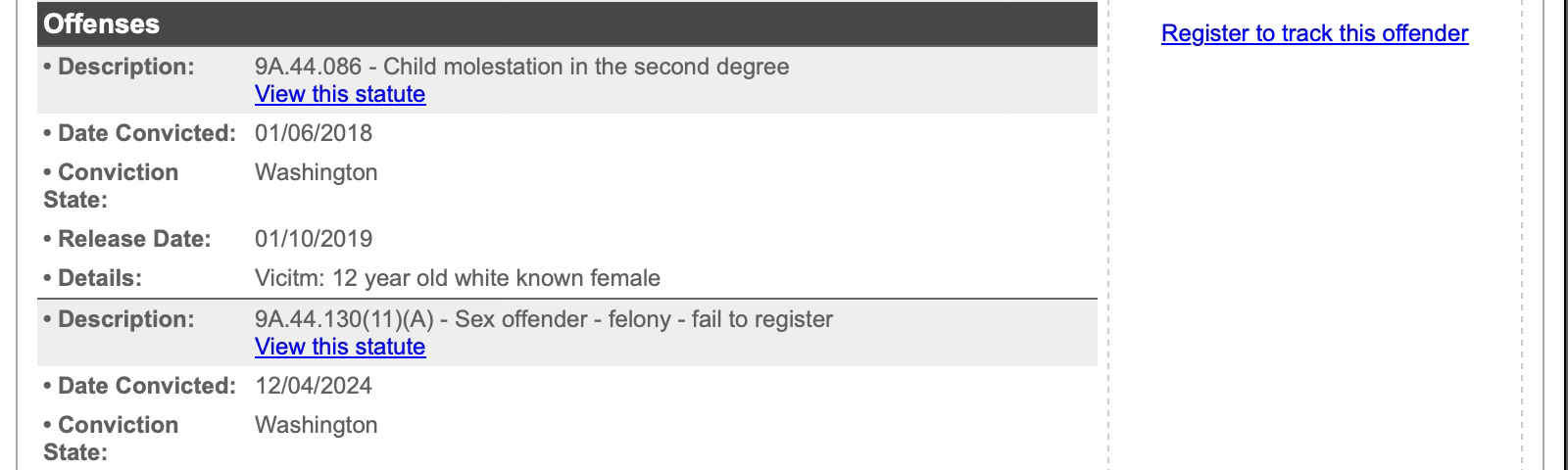
Yet by 2025, Abram had lived in Port Angeles for about a year, while apparently remaining registered as living in Kitsap County and traveling there weekly by bus to check in.
Even more disturbing, police learned that when Abram was arrested in Port Angeles on July 25 for the registration investigation, officers found him in bed with another girl.
She was 17.

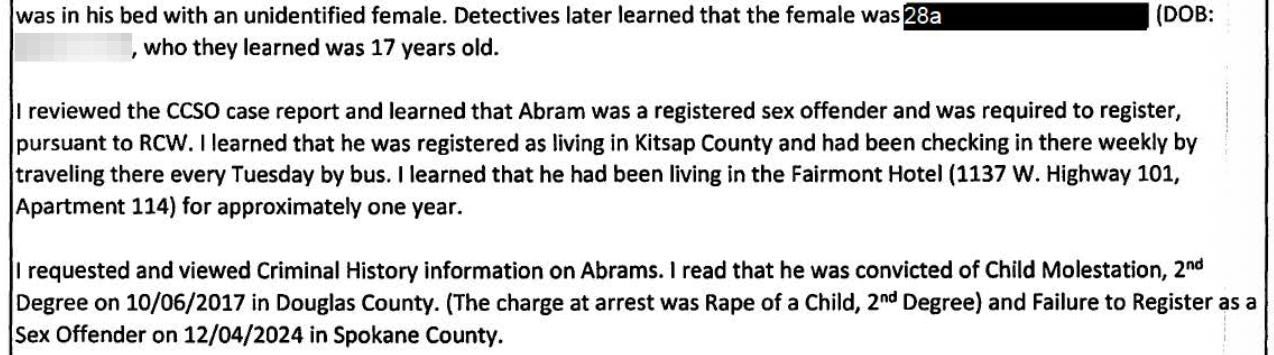
Think about that sequence.
A convicted child molester and registered sex offender was living in Port Angeles.
He encountered a 15-year-old girl at our downtown transit center.
He offered her marijuana and alcohol.
He took her into a public restroom.
He had sex with her.
He continued pursuing her after she explicitly told him she was 15.
He solicited sexual photographs from her.
Police subsequently found him in bed with another minor.
This is not a hypothetical discussion about whether predators exploit vulnerable people.
This happened in Port Angeles, and it is happening now. Fortunately, this 15-year-old girl’s family and the people around her intervened.
While she was on the run, a family member accessed her Snapchat account and discovered the messages. Those messages eventually reached Juvenile Probation and law enforcement, triggering an investigation.
Port Angeles Police ultimately established probable cause for three counts of third-degree rape of a child and communication with a minor for immoral purposes.
The prosecutor charged Abram, and he was eventually transported from the Spokane County Jail back to Clallam County on the arrest warrant.
On April 29, 2026, Abram pleaded guilty to Rape of a Child in the Third Degree.
He was sentenced to 48 months in prison followed by 12 months of community custody.
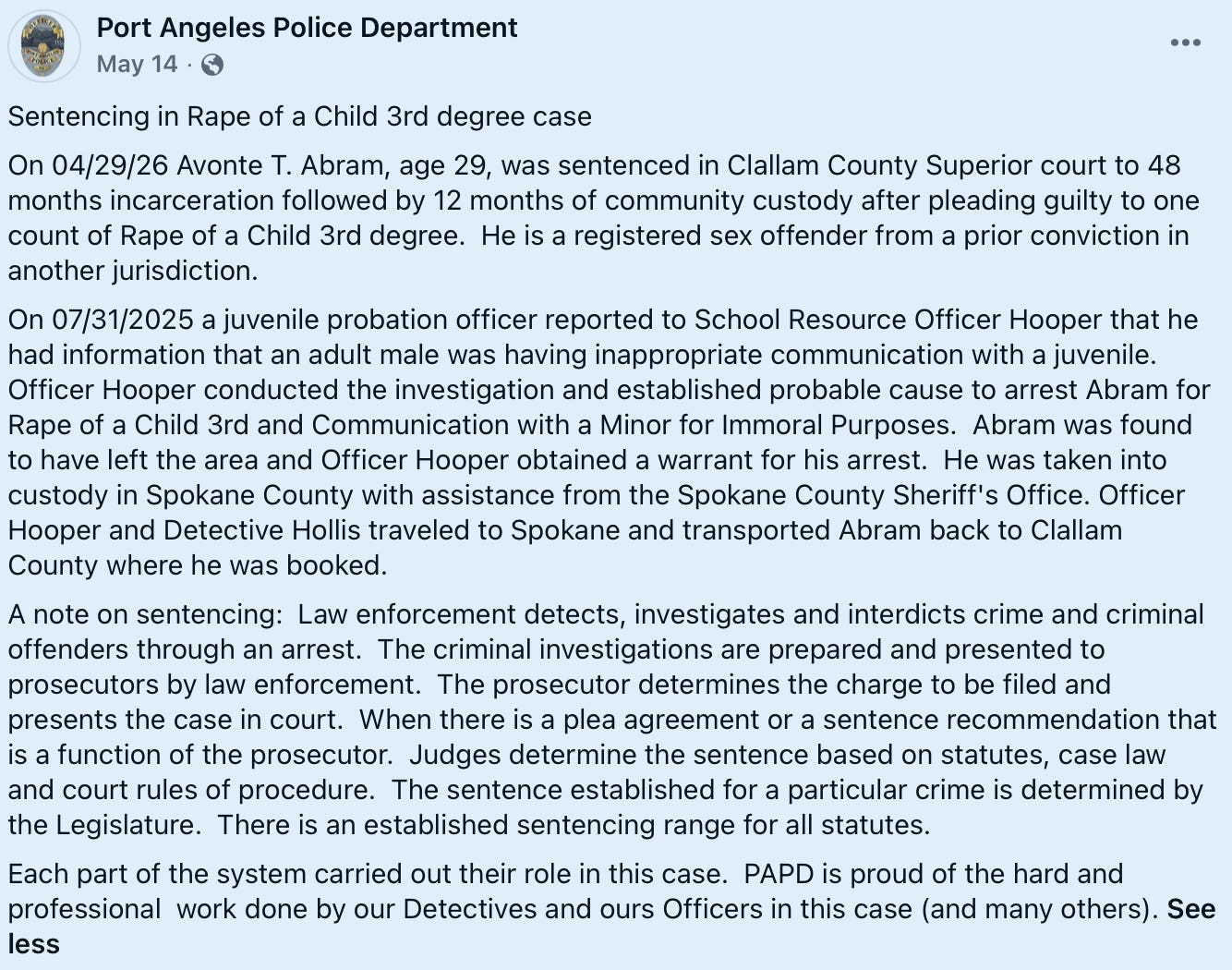
Police did their job.
The prosecutor did his job.
But we should be asking another question:
What kind of community environment are our policies creating before police ever get the call?
Compassion for Whom?
Our leaders almost always tell us the same story when defending homelessness programs.
It is the elderly woman who could no longer pay her mortgage.
It is the mother and children escaping a terrible financial situation.
It is the working man who lost his job, and he could be any of us.
Those people exist, and they deserve our compassion and help. But that carefully curated image cannot obscure the fact that another population is being served.
At Clallam County’s Harm Reduction Health Center (HRHC), active drug users are the customer. That is not an insult. It is the program's purpose and a reality.
The HRHC distributes supplies intended for people actively using drugs. And the county has also distributed vouchers there, giving participants access to showers and locker rooms at the William Shore Memorial Pool.
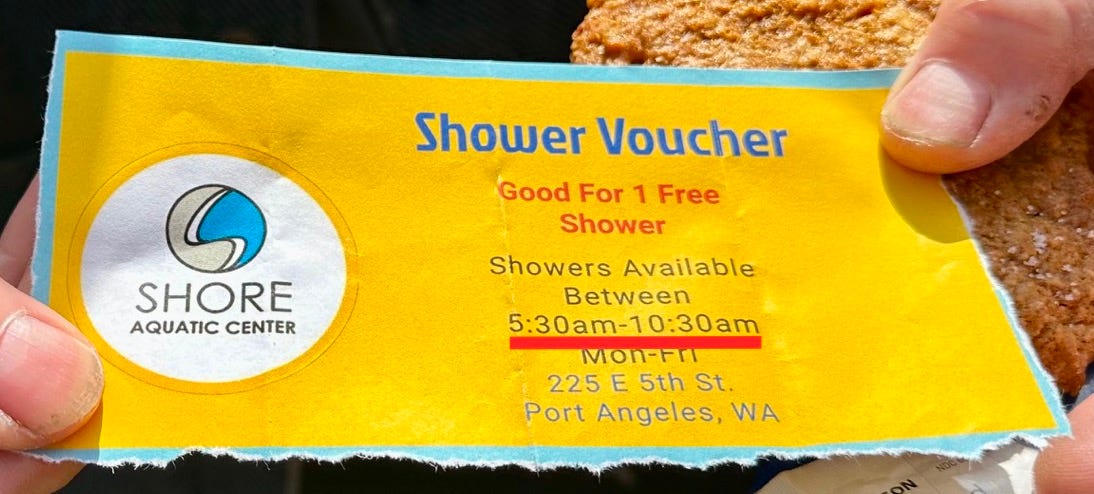
That should force us to ask an uncomfortable question.
Who are we protecting?
Drug addiction creates vulnerability. Predators exploit vulnerability. Drugs themselves can become currency for sexual access.
I saw the proposition written on a sign beneath the Eighth Street Bridge. It clearly communicated, “Drugs for sex.”
Then I read a police report describing a 28-year-old convicted child molester meeting a 15-year-old at our transit center, offering her marijuana and taking her into a public bathroom for sex.
These are not the same incident, and the police reports do not establish that Abram was connected to the bridge encampment or the Harm Reduction Health Center.
But they expose the same danger.
When a community normalizes open drug use, tolerates illegal encampments, concentrates vulnerable people in uncontrolled public spaces, and repeatedly removes accountability in the name of compassion, it does not create a sanctuary exclusively for sympathetic victims.
It creates opportunity for predators too.
And then, in the name of compassion, our leaders distribute shower vouchers through a program serving active drug users, providing access to the same locker-room and shower facilities used by children and families at our taxpayer-funded community pool.
Our leaders will tell you to picture the elderly woman.
The struggling mother.
The family that could be any one of us.
But we need to remember the 15-year-old girl at Gateway.
Remember the convicted child molester who offered her marijuana.
Remember the 17-year-old who police reportedly found in his bed.
Remember what was written beneath the Eighth Street Bridge.
Compassion without boundaries is not compassion for everyone.
Sometimes the person paying the price for our compassion is the victim we fail to protect.
What Can You Do?
The William Shore Memorial Pool Board controls whether the harm-reduction shower voucher program continues. These board members are:
Mike French — Mike.French@clallamcountywa.gov
Randy Johnson — Randy.Johnson@clallamcountywa.gov
Mark Hodgson — mhodgson@cityofpa.us
LaTrisha Suggs — losuggs@cityofpa.us
Greg Shield — gshield6@icloud.com
Contact them. Tell them the voucher program that routes active drug users from the Harm Reduction Health Center into the same showers and locker rooms used by children and families must end. Port Angeles already has multiple locations where people experiencing homelessness can access showers. The community pool does not need to be one of them.
Contact the Clallam County Commissioners through the Clerk of the Board at Loni.Gores@clallamcountywa.gov and state clearly that the shower voucher program is inappropriate and exposes the community to unnecessary harm.
Write to County Health Officer Allison Berry at allison.berry@clallamcountywa.gov and remind her that multiple shower options already exist throughout Port Angeles. The Shore Pool does not need to serve this purpose.
This sign has haunted me. Not just for what it says, but for what it represents. It represents some of our most vulnerable — people trapped in the lowest part of their lives — being exploited and victimized while our community leaders look the other way.
I don’t want the sign anymore. But what should I do with it?
Give it to the commissioners?
The pool board members?
Health Officer Allison Berry?
Or something else?
Please vote or tell me in the comments.
Editor’s note: This blog is published by Jeff Tozzer, the former campaign manager of Jake Seegers. Jake Seegers has never paid for any of the content here. To learn more about Jake Seegers, visit JakeSeegers.com.


