


From a candidate debate in Sekiu tonight to Portland shutting down its last major RV safe-parking site, a revolving-door sex offender in Port Angeles, debunked “success” metrics in Seattle, and sharp critiques of the homelessness industry—here’s what Clallam County residents need to know this week. These stories cut through the noise and ask the questions our officials should be answering.
Tonight’s Debate: Seegers vs. French in Sekiu
Don’t miss the debate between Jake Seegers and Mike French at the Sekiu Community Center at 6 p.m. Local voters get a rare chance to hear the candidates side-by-side on the issues that matter most to the West End.

Portland Winds Down Its Last Big RV Safe-Parking Program—While Clallam Expands Its Own
As Clallam County’s $118,000 three-space safe-parking pilot enters its second year and Trinity United Methodist Church in Sequim seeks more funding, Portland is moving in the opposite direction.

The city’s North Portland Road site—once featuring 70 RV spots plus sleeping pods—is phasing out the vehicle-living component as part of broader cost-cutting and a shift toward indoor or pod-style shelter. Officials aim to eliminate RV safe-parking entirely, arguing that long-term vehicle living is not a sustainable solution.
Clallam leaders might want to watch carefully: what looked like progressive “housing” in Portland is now being wound down after real-world results fell short of the rhetoric.
Joshua Mirka Arrested Again—Held One Hour
Remember Joshua Mirka, the transient sex offender linked to a break-in at the Cottage Coffee stand in Port Angeles a few weeks ago?
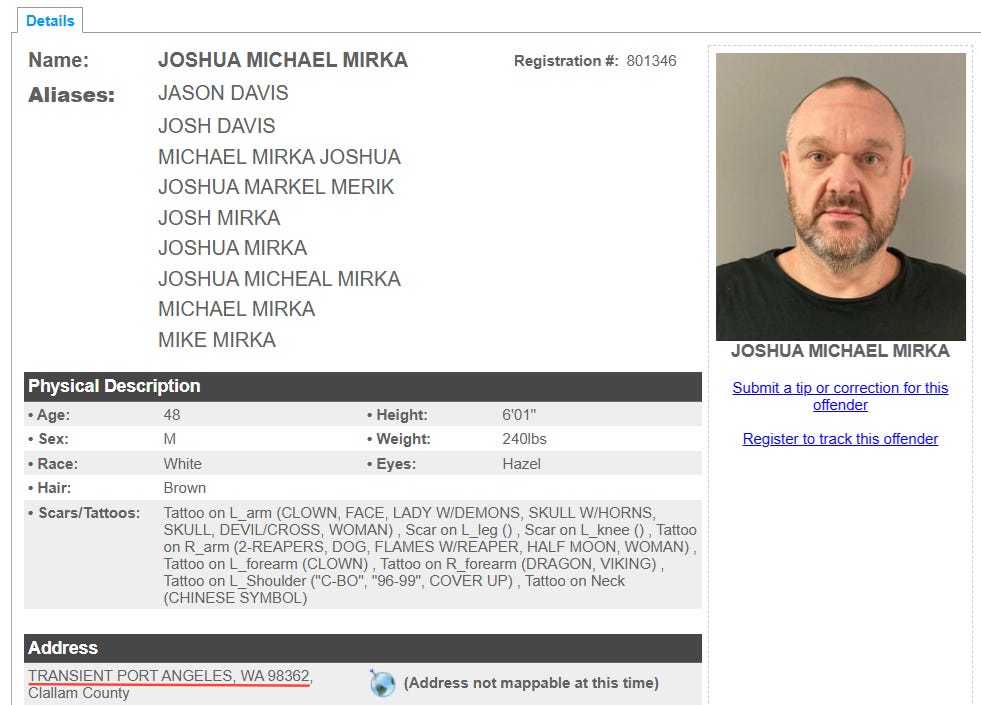
He was arrested again Friday, this time for driving with a suspended license.
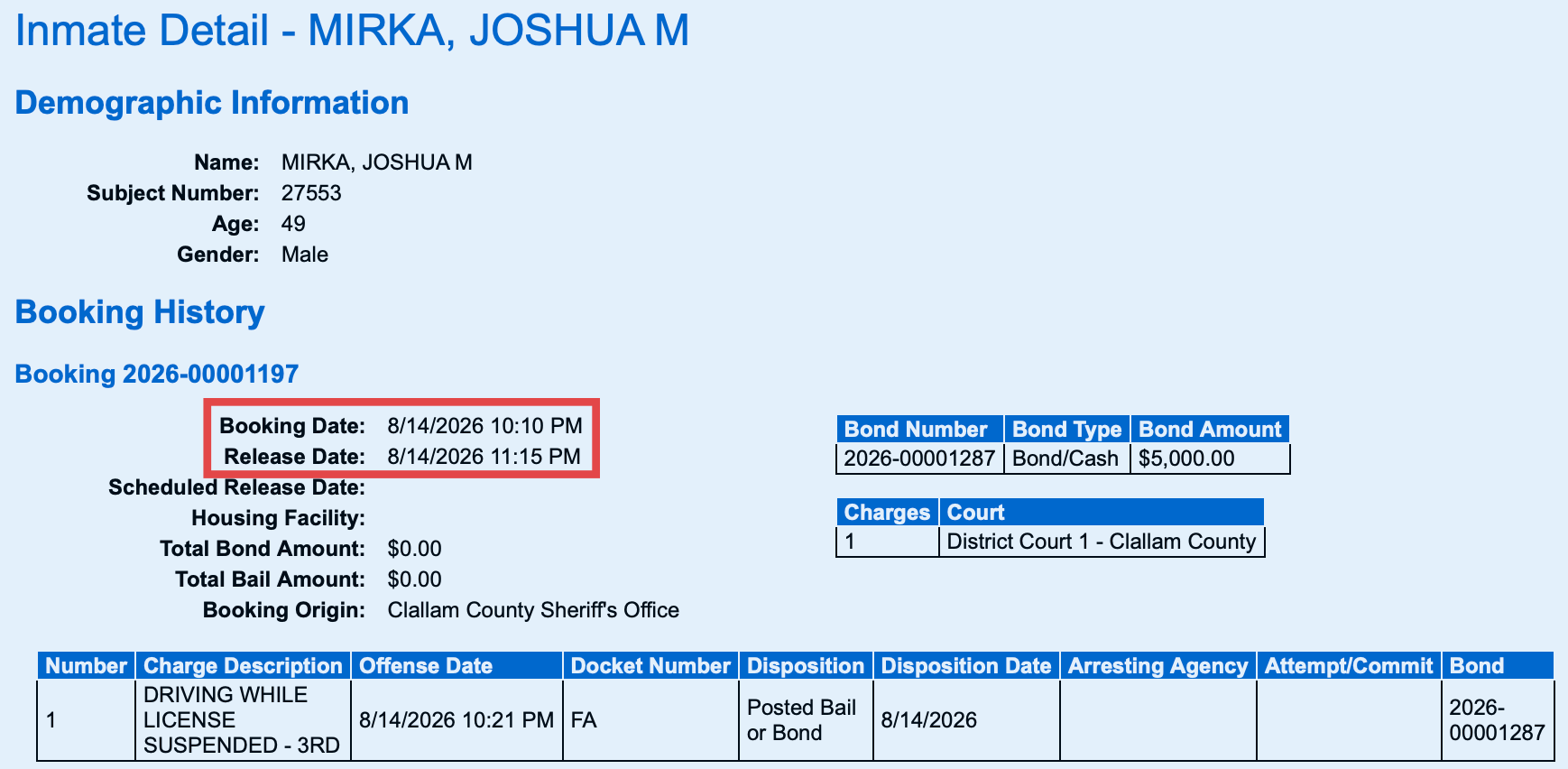
Authorities held him for one hour before releasing him. The revolving door continues.
Seattle’s LEAD Program Built on Flawed Data—Is Clallam Trusting the Same Numbers?
A new Washington Policy Center report delivers a blunt verdict: Seattle’s Law Enforcement Assisted Diversion (LEAD) model has been promoted for 11 years with inaccurate claims, systematic overstatements, and selection bias. Supporters touted a 58% drop in recidivism, 39% fewer felony charges, and 46% higher odds of employment. The underlying research does not support those figures.

In reality, employment gains were tiny and statistically insignificant; most participants stayed unemployed. These same rosy metrics have been used to sell LEAD-style programs nationwide, including to tribal governments. Clallam County decision-makers should read the full report and ask themselves whether any local diversion or “harm-reduction” initiatives rest on the same shaky foundation. The full analysis is essential reading.
Ginny Burton: “Getting in Line for Rotten Fish”
Former addict and prison educator Ginny Burton has written a powerful, no-holds-barred essay that every Clallam resident concerned about homelessness and addiction should read. She argues that the modern “help” industry projects its own fears onto people living on the streets, then builds an entire system of management rather than skill-building. Burton writes that what people need is not permanent excuses or indefinite medication, but the internal tools to hold a job, sit with pain, keep relationships, and become reliable.

Burton calls out MAT programs and permanent supportive housing that measure success by continued enrollment rather than exits from the system. Her conclusion is clear: people are not broken—they have simply never been taught. Read the full piece. It challenges everything the current industry assumes.
Sequim Monitor: July 27 Council Meeting Raises Hard Questions
The Sequim Monitor continues to deliver the detailed coverage the Sequim Gazette often skips. Its report on the July 27 City Council meeting highlights municipal funding requests that exceed the city’s 1.5% general-fund cap by nearly $60,000, transportation priorities stretching past 2032, unresolved property and tree-damage complaints, and lingering HOA utility-billing issues that could involve years of back charges.

An accompanying editor’s opinion asks the right question: when does community support become permanent dependency? Read the full Sequim Monitor account and decide for yourself whether the council is drawing the necessary lines.
China Targeting First Nations Leaders for Natural Resources
A Top Secret 2019 NSICOP report, newly analyzed, shows Beijing has long cultivated relationships with Canadian Aboriginal leaders under the false flag of “tourism” to gain access to strategically important natural resources. Chinese intelligence researched each leader’s usefulness in advance. The same tactics used on federal politicians are applied to provincial, municipal, and Indigenous officials.

Clallam County sits next to powerful tribal governments with significant land and resource interests. Residents and tribal members alike should read the full Bureau investigation and consider whether similar influence operations could target leaders on this side of the border.
What “Compassion” Isn’t
Laura Hollis’s Townhall column cuts through the fog: policies must be judged by results, not by the self-proclaimed compassion of their sponsors. Closing mental hospitals, enabling open-air drug use, ending enforcement of immigration and criminal laws, and medicalizing gender-distressed youth have all been sold as kind—yet produced measurable harm.

True compassion demands measurable outcomes, not perpetual funding for failure. Read the piece and apply the same standard to local programs.
The Strait Shooter: DNA Testing Before You Water Your Lawn
The Strait Shooter is back with sharp local satire. In the latest installment, Sequim’s water-conservation regime has evolved into a genetic equity program: residents must submit DNA samples to determine irrigation privileges.

Ordinary citizens get three minutes every third Wednesday; those with the right tribal ancestry proceed straight to the tee box. Golf-course water, it turns out, is scientifically different. Don’t miss the full piece—sometimes satire is the clearest way to see the absurdity of official policy.


