

While breaking news increasingly appears first on social media and independent news sites, traditional newspapers are searching for ways to remain relevant. Every Friday, CC Watchdog will take a look at what our local legacy media is publishing, the voices they’re amplifying, and the stories they may be overlooking.
The Gazette’s newest reporter? The League of Women Voters
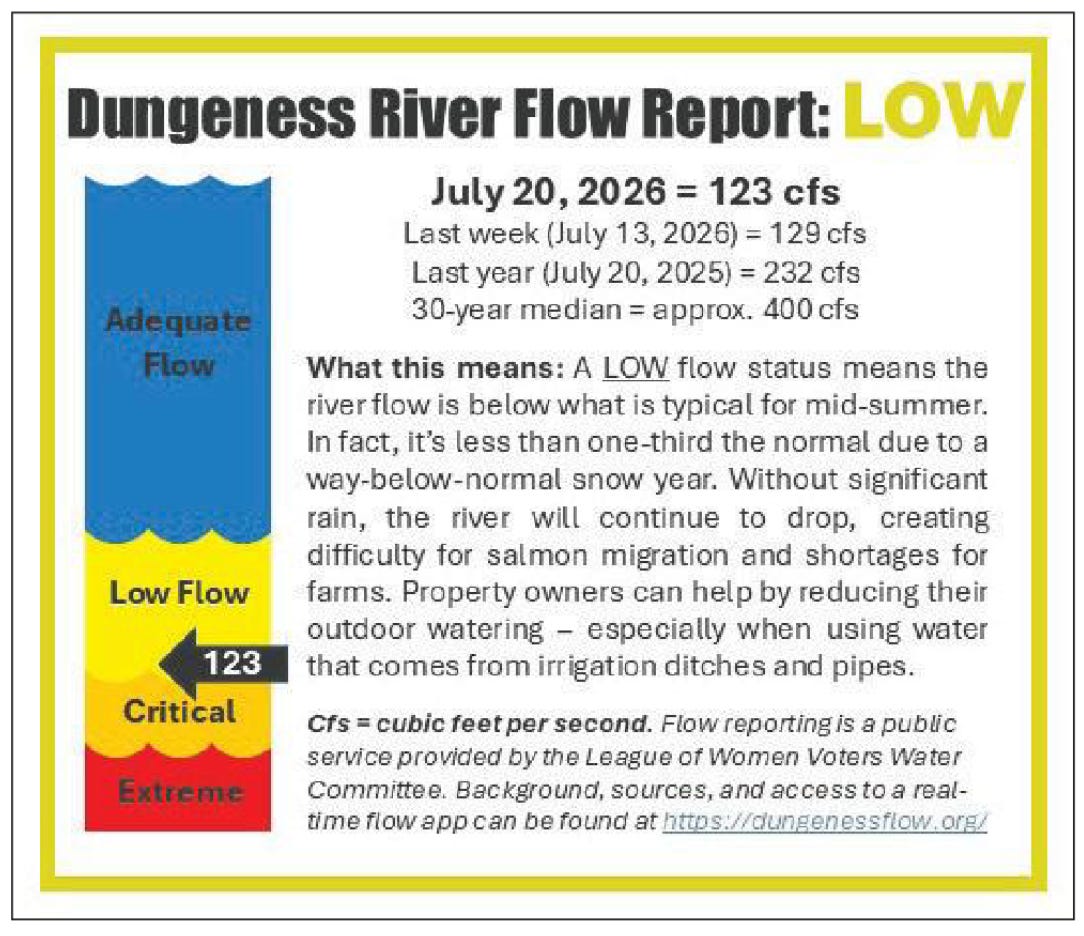
Every summer it happens. Residents are reminded to conserve water. Headlines warn about shrinking snowpack. Climate concerns dominate the conversation. This year, however, the Sequim Gazette has gone a step further.
The paper announced that its new recurring water feature will be produced in partnership with the League of Women Voters, an organization that has spent years advocating for the creation of a county Water Steward position.
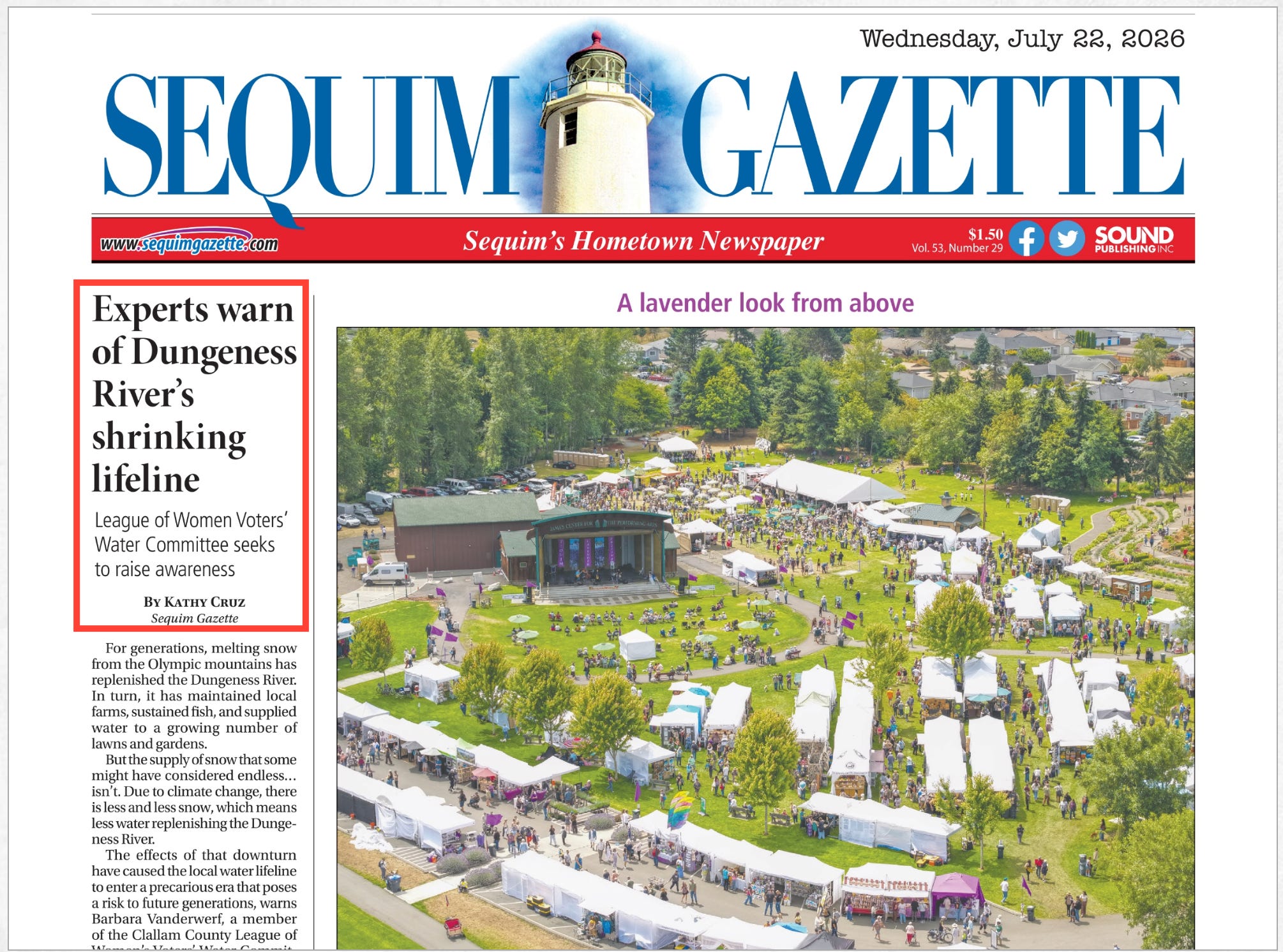
The Gazette describes the League’s water committee as helping explain the science. The committee describes itself as “non-political.” Yet the people quoted throughout the article are not merely explaining river flows—they have been actively involved in local policy discussions surrounding water management.
Barbara Vanderwerf, a member of the League’s Water Committee, warns that the Dungeness River has entered “a precarious era that poses a risk to future generations.”
Ann Soule, another committee member, predicts that roughly 70 percent of future years will resemble this year’s dry conditions, saying:
“Yes, it’s a dry year. We’re going to have 70% of our years in the future be that.”
Readers can decide for themselves whether that’s a scientific projection, a policy prediction, or something in between.
Perhaps the most revealing quote, however, wasn’t about hydrology at all. Discussing conservation messaging and water utilities, Soule asked:
“Why tell people to conserve when it means you’re going to be taking a cut in your revenue?”
Perhaps the most revealing comment came when Soule suggested that conservation is ultimately an ethical and moral decision for government—not individuals—to make.
“It’s an ethical or moral decision that must be made by, say, a political body, like a council. ‘We don’t care if we’re not going to be getting as much revenue. We need to tell people to conserve.’”
That statement is particularly noteworthy because supporters of the proposed Water Steward position have consistently described the office as a non-regulatory role focused solely on collecting data and educating the public. If conservation policies ultimately depend on political decisions about public behavior, some readers may reasonably ask whether the proposal is as limited as it has been presented.
Another question goes unasked in the Gazette’s article. If water conservation is everyone’s responsibility, are similar discussions taking place with all governments in Clallam County—including tribal governments that manage significant water resources and irrigated lands? The article never says.
One sentence near the end may be the most telling of all:
“The League’s Water Committee is partnering with the Sequim Gazette on a new regular feature.”
That means readers can get used to our local paper regularly partnering with this “nonpartisan” activist group.
The kids’ page has a message, too
The Gazette also debuted a colorful new Junior Gazette section aimed at children.
The pages encourage youngsters to become “Junior Reporters” while teaching lessons about shrinking snowpacks, water conservation, river ecosystems, and climate-related water challenges. The educational material asks children to interview adults about conserving water and write stories explaining why rivers need protection.

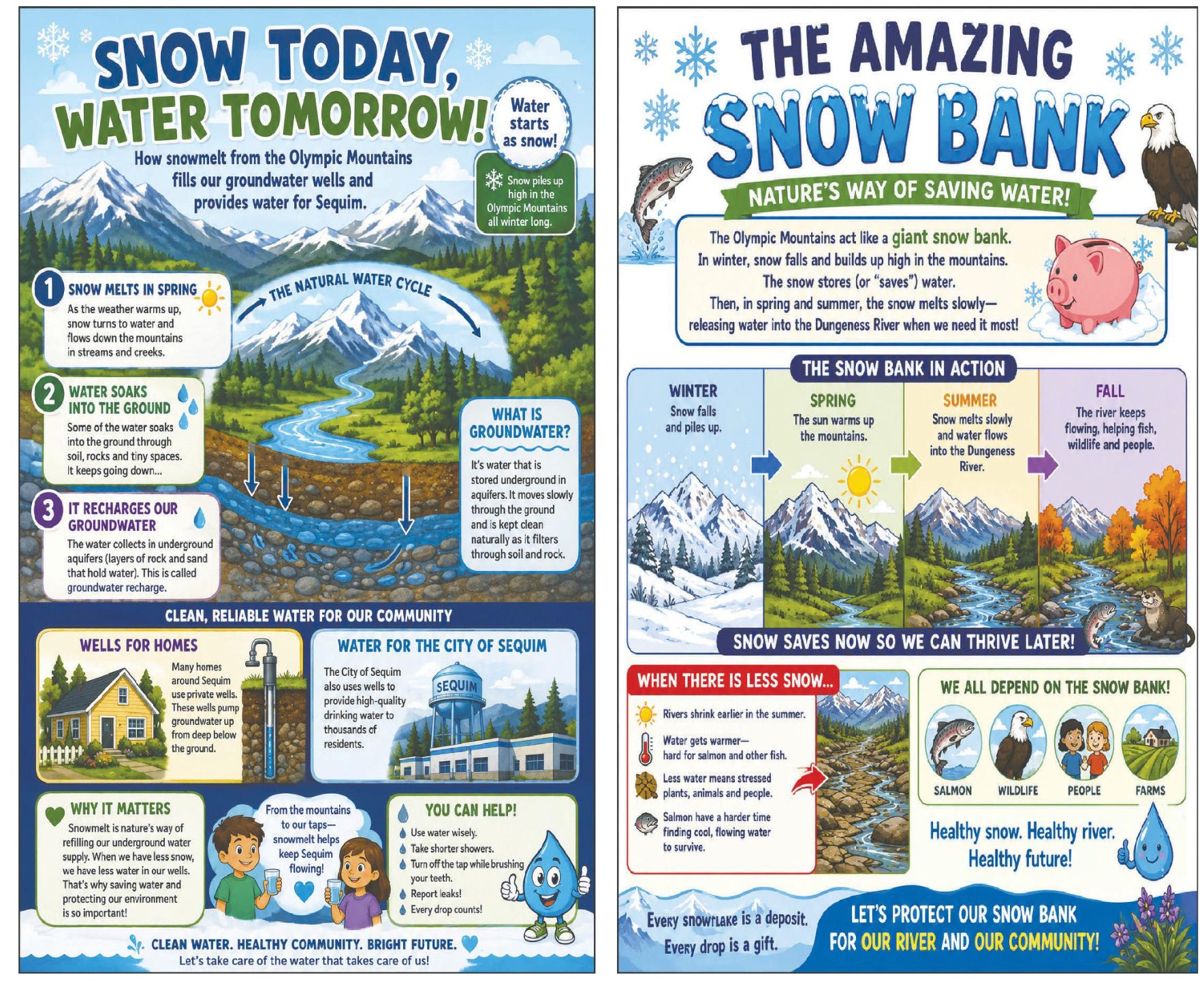
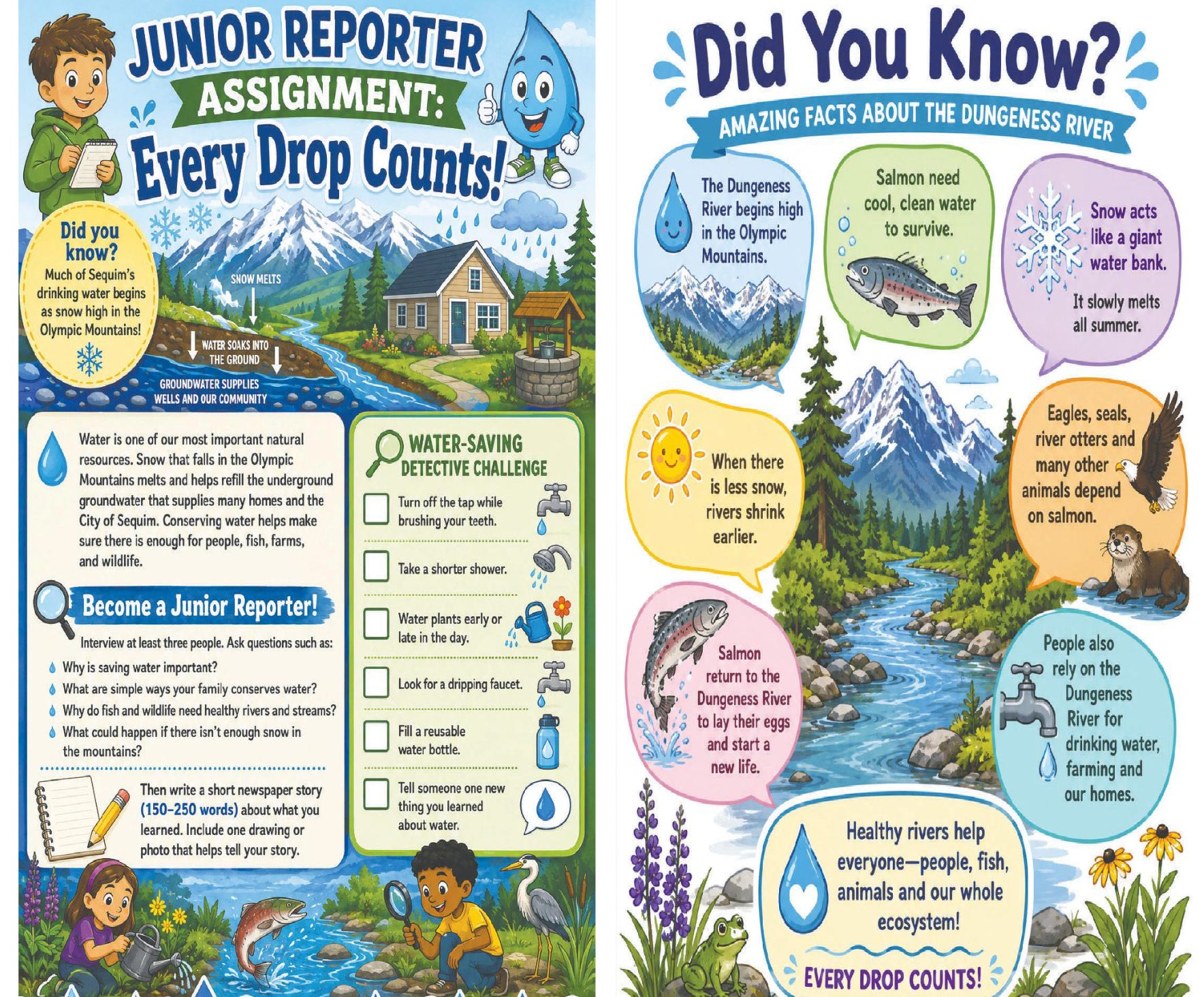
There’s nothing inherently wrong with teaching children about natural resources. But it’s worth noting that the themes closely mirror the messaging promoted throughout the newspaper’s new partnership with the League of Women Voters’ Water Committee.
When advocacy groups help shape both adult coverage and children’s educational content, readers may reasonably wonder where education ends, and advocacy begins.
News—or nonprofit marketing?
Another noticeable trend continues. An increasing amount of newspaper space is devoted not to reporting but to promoting nonprofit organizations. This week’s editions include stories highlighting organizations such as St. Vincent de Paul and Olympic Angels, presenting their work largely through favorable profiles.
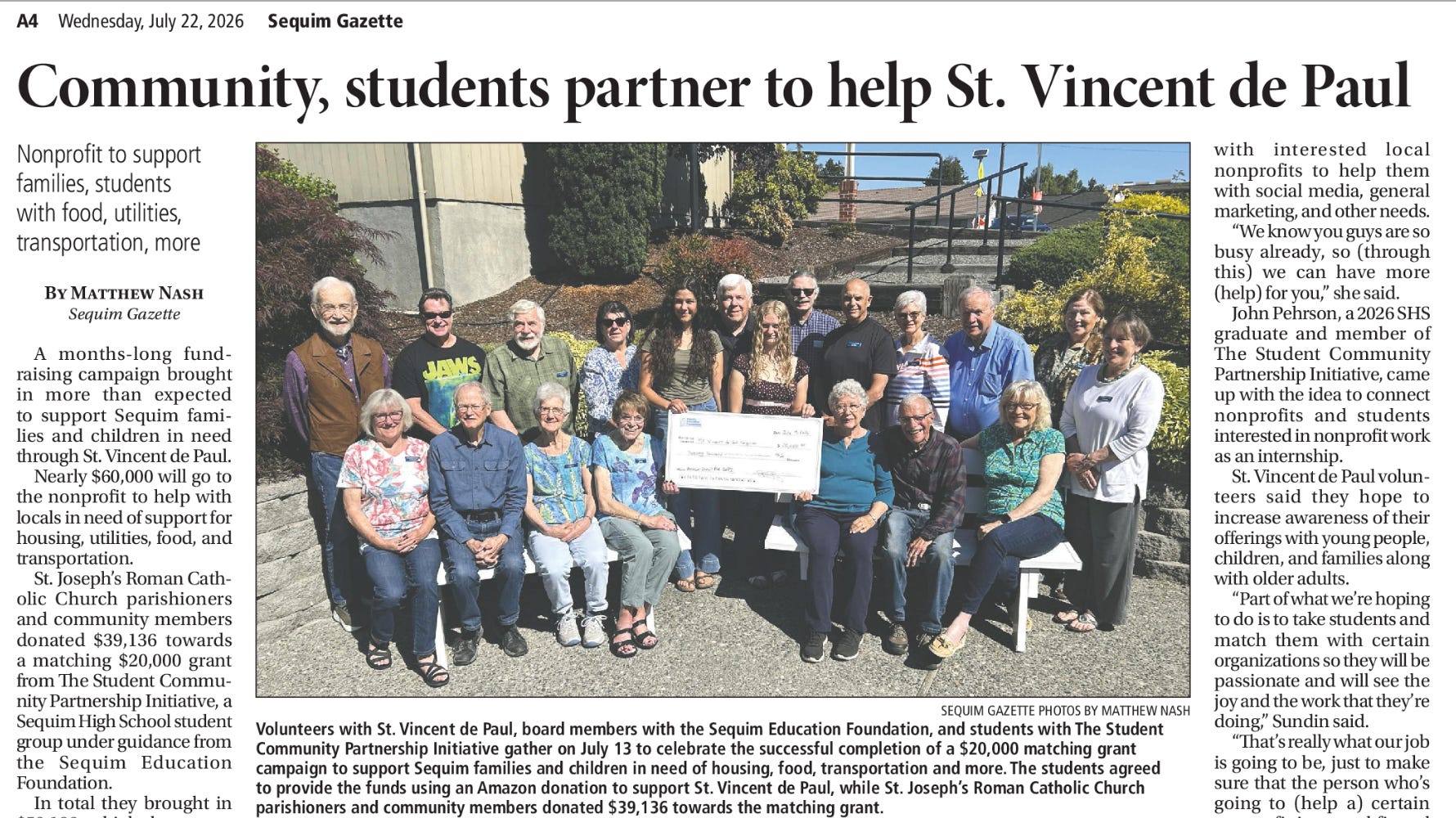
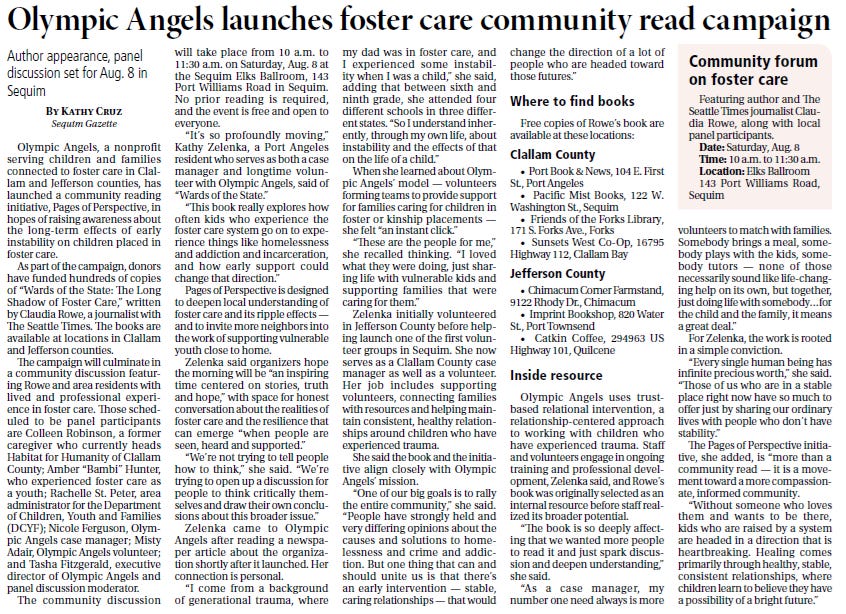
The most direct example comes from the Boys & Girls Clubs, where the organization’s CEO authored a guest column encouraging donations to its annual fundraising campaign.
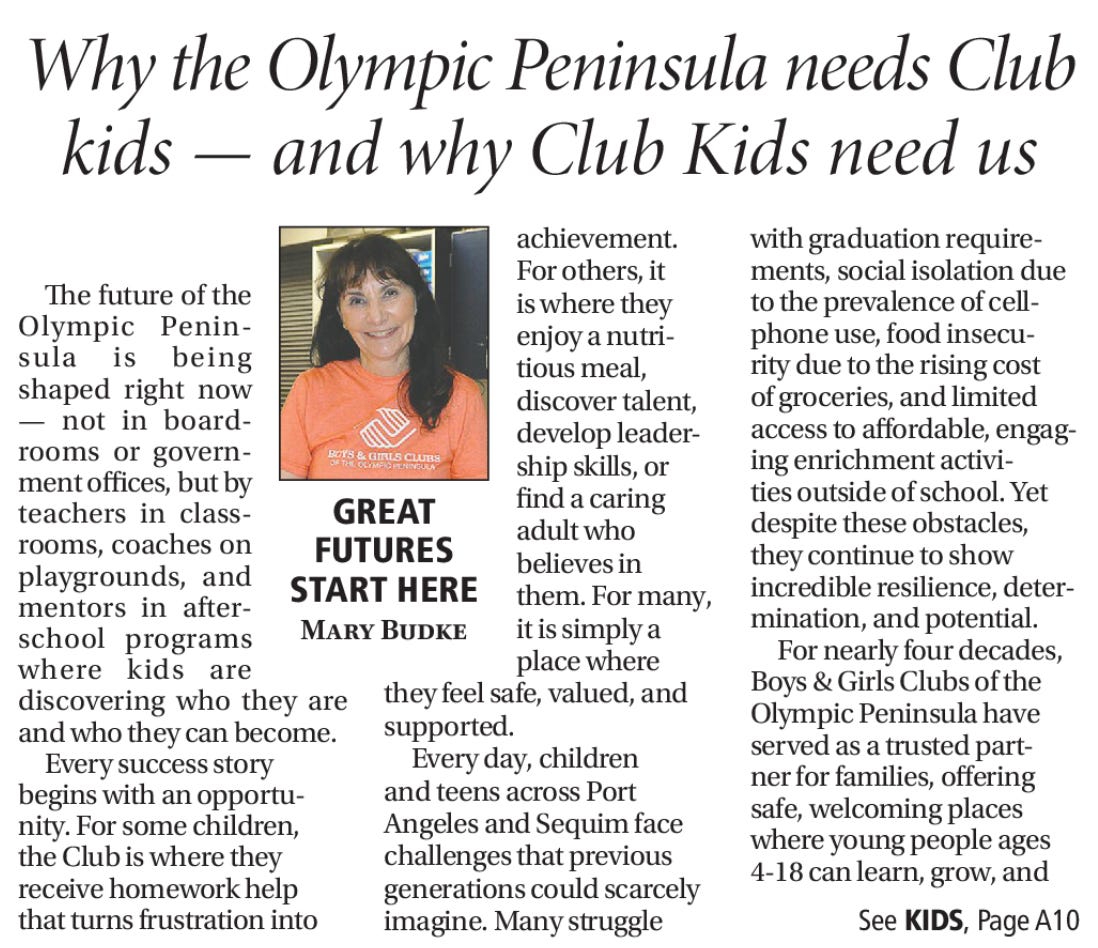
Readers are told:
“We are inviting everyone to consider a gift to the annual Campaign for Kids.”
The column also states that providing a year of programming costs $3,046 per child.
Community organizations certainly deserve recognition for their work. But there is a distinction between reporting on an organization and publishing fundraising appeals written by the organizations themselves.
Opinion pages without local opinions
The Peninsula Daily News also appears to be relying increasingly on syndicated commentary and advocacy organizations rather than local voices. One recent column discussing the Bonneville Power Administration argues that hydropower has come at a “devastating cost” to salmon and states BPA must do significantly more to restore salmon and meet obligations to Native American tribes.
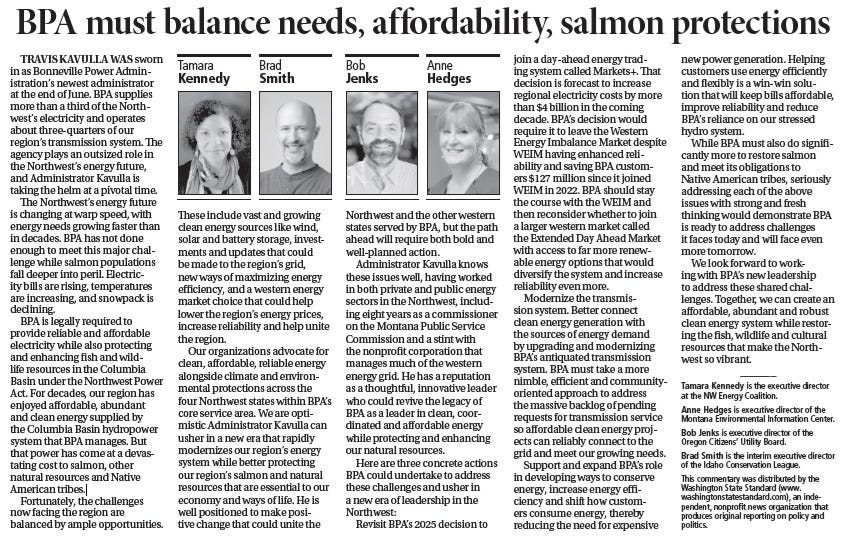
Whether readers agree or disagree with those conclusions, they continue a familiar pattern in regional opinion pages emphasizing environmental and tribal policy perspectives.
Nine days for a homicide. Immediate coverage for a missing table.
Readers may also remember how differently stories receive attention. Last year, a Sequim resident was killed in a fatal daytime attack during the Irrigation Festival. The Gazette did not report the incident until nine days later—and only after a local blogger had already brought the story to public attention.
By contrast, the disappearance of an expensive table from a local thrift store received prompt coverage.
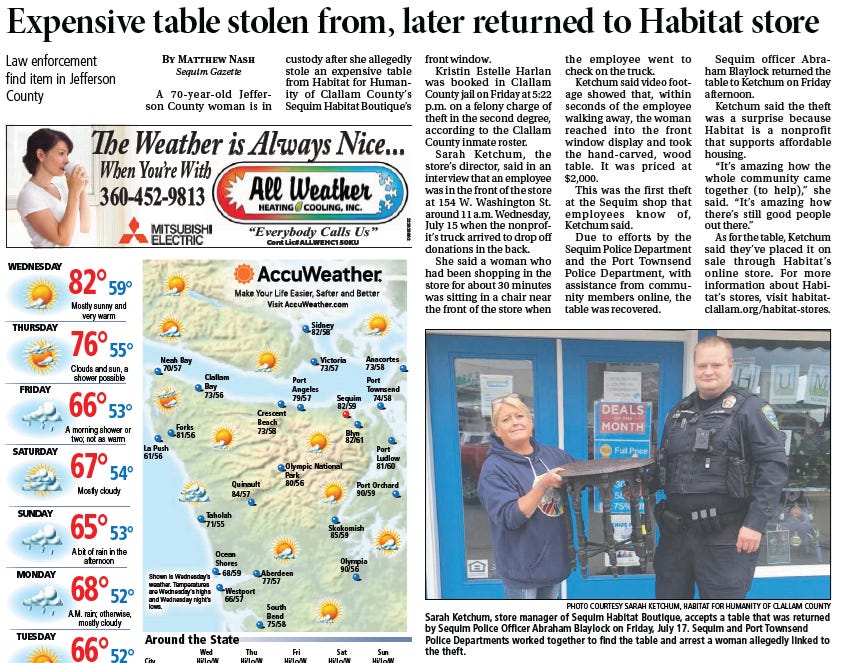
Editors make news judgments every day. Readers are equally free to judge those priorities.
Ozias returns to defend county government
County Commissioner Mark Ozias is back with another monthly guest column.
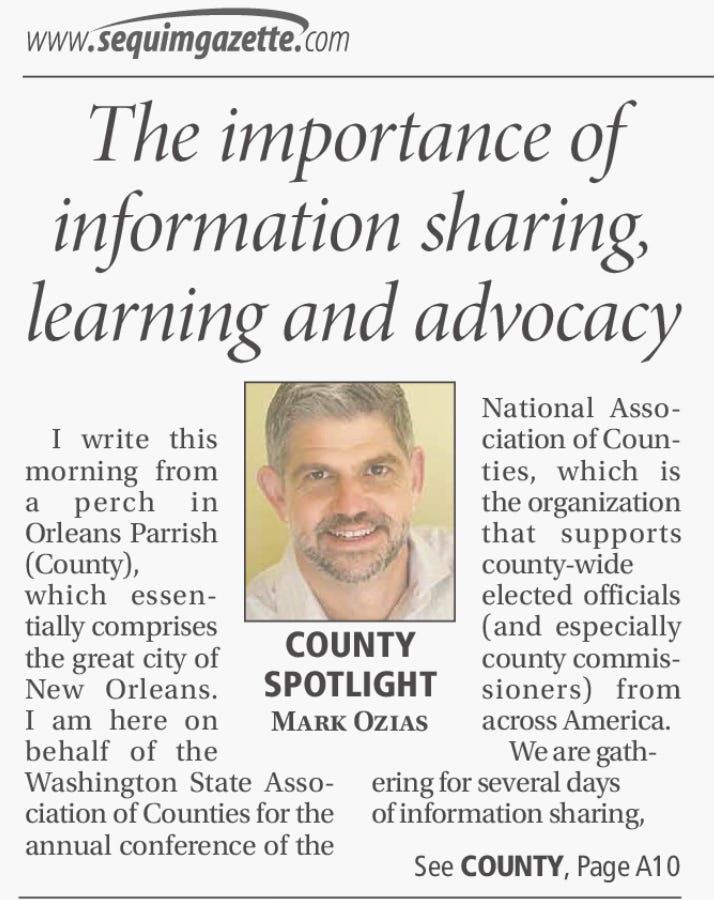
This week he explains why Clallam County benefits from membership in the Washington Association of Counties (WSAC), the Olympia-based NGO lobbyist organization that receives more than $40,000 annually in county dues.
Ozias currently serves as president of WSAC.
The column praises the value of the organization but does not address questions raised about the county’s expenditures or whether taxpayers receive adequate value for those dues.
The Bottom Line
Legacy newspapers face enormous challenges. Advertising revenue has declined. Social media often breaks stories first. Independent publishers can move far faster than weekly print deadlines.
Many newspapers are responding by emphasizing partnerships, guest columns, nonprofit features, and advocacy collaborations.
Whether that strengthens local journalism—or gradually transforms newspapers into platforms for organizations with established policy agendas—is a question readers will have to answer for themselves.
Today’s Tidbit: The County Wants To Hear From You
We all have them — those moments behind the wheel when something happens that makes your heart jump: a near collision at an intersection, a pedestrian stepping out unexpectedly, a driver passing too aggressively, or a roadway condition that almost caused a crash.
The Target Zero Coalition, a group of traffic safety and collision prevention specialists serving Clallam and Jefferson Counties, is asking residents to share those experiences through a short 8-question survey.
While agencies collect plenty of data on crashes that happen, they often don’t know about the thousands of “near misses” that never make it into official records — but could provide important clues about where and how crashes can be prevented.
As the saying goes: The experts don’t know what they don’t know.
Your experience on local roads can help identify problem areas, risky behaviors, and opportunities to make our highways and streets safer.
Take the short survey here:
A few minutes of your time could help prevent someone else’s close call from becoming a serious crash.

As far as water conservation is concerned, I follow the real science from actual professors, meteorologists, history etc.
when the golf courses start conserving water then I will conserve.
Did anyone think about all the homes going into Sequim and surrounding area that water usage might be an issue?
Has anyone ever heard of over fishing and netting might be one of the reasons that there isn’t as many salmon. They cry about the salmon but history tells a different story. Tribes fished to sustain their people not fish for profit
As far newspapers, we quit years ago because of all the political crap, no real reporting and all the narrative that they want you to believe, people need to get some common sense
Washington Association of Counties (WSAC) cannot and will not allow counties to take federal grants that do not support the Progressive agenda. To keep ruining America, county by county, they have to keep tying up resources.
I have identified multiple federal grants our county could get right now. I have sent those grants to the Commissioners and to the cities. They refuse to get federal grants to put local people to work, if it does not have a restorative justice purpose.
Water conservation is part of land back. Its an unconstitutional scam that property owners have to address. All the evidence is there but the will to fight it is not.