

Some of the most troubling actions taken by Clallam County officials didn’t come to light through press releases, public meetings, or proactive transparency. They were uncovered the old-fashioned way — by citizens filing public records requests. The pattern is unmistakable, and the lesson is clear: accountability only works when the public uses the tools it already owns.
What do all of these events have in common?
Discovering that the commissioners’ claimed “hundreds of signatures” supporting the Towne Road shutdown were fictitious.
Learning how much time Commissioner Mike French spent playing Star Wars role-playing games on his county laptop while avoiding public interaction.
Reading emails where Jamestown Corporation’s CEO referred to residents as “whiners and complainers” and instructed commissioners to “set them straight.”
Uncovering that the county was quietly taking steps to hand over management of a county park to a sovereign nation — without public discussion.
Finding out that Commissioner Ozias promised $125,000 in taxpayer-funded, automatic electric gates to a political ally, so a public road could effectively become a private driveway for a wedding venue.
Discovering that Charter Review Commissioner Jim Stoffer was passing confidential documents to a tribal ambassador.
None of these revelations came from official announcements. None were volunteered. Every single one surfaced because ordinary citizens submitted public records requests through the Clallam County Public Records Office.
That is not coincidence. That is how oversight actually works.

How the system really functions
Clallam County employs four full-time staff dedicated to fulfilling public records requests:
Two in the Sheriff’s Office
Two serving the rest of county government
Requests can be submitted anonymously. The county is not allowed to ask why you are requesting records. That is by design — not a loophole.
Yes, there are exemptions. Records may be withheld only if they fall under specific exemptions in the Public Records Act (PRA) or other statutes. Common examples include:
Victim and witness information
Driver’s license numbers
Social Security numbers
Personal employee information
Attorney-client privileged material
Medical records
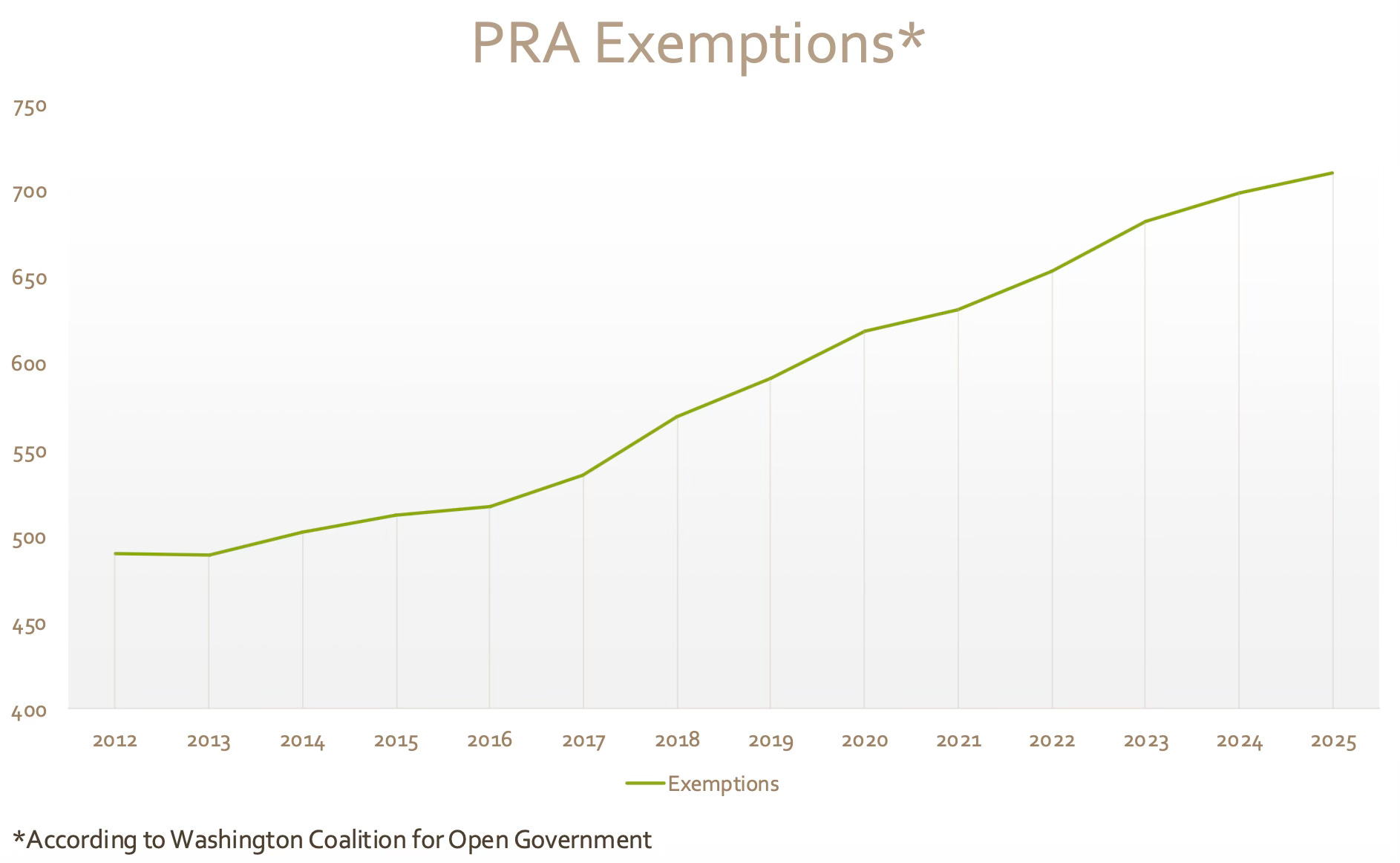
In total, there are now more than 700 statutory exemptions, up from roughly 500 just four years ago.
But exemptions are supposed to be narrow — not a blanket excuse for secrecy.
The numbers tell the story
2025 Public Records Metrics
1,833 new requests
1,926 closed requests
167 open requests
15 median days to close
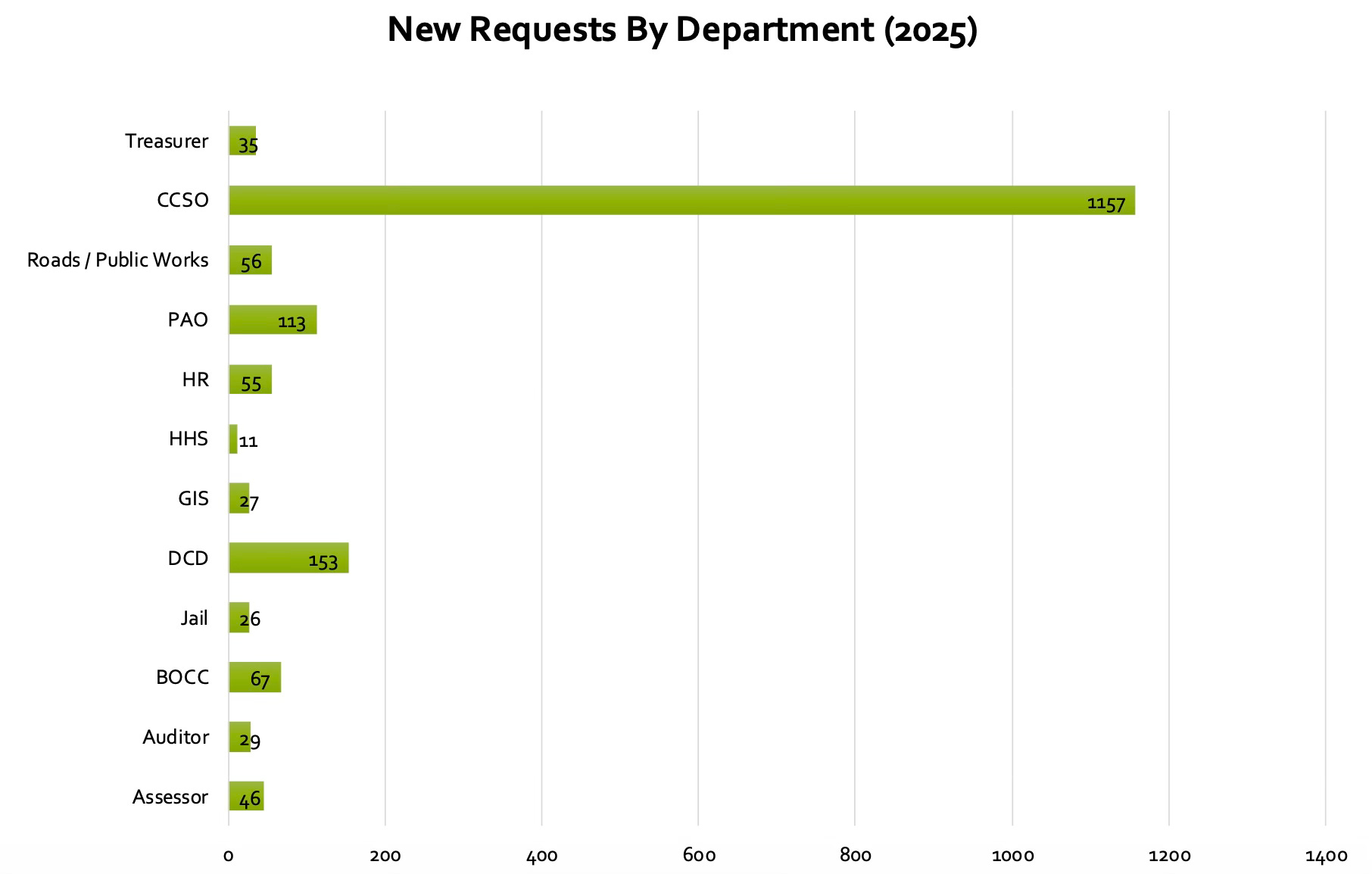
The Sheriff’s Office led all departments with 1,157 requests, largely due to police reports and body-worn camera footage. The Department of Community Development (DCD) ranked second with 153 requests.
Additional 2025 data:
187 invoices totaling $2,858
251 abandoned requests
70 canceled requests
205 requests with no responsive records
515 requests with no redactions
639 requests with redactions
Who is requesting records?
892 individuals
324 organizations
104 law firms
70 insurers
45 government entities
30 media outlets
14 current or former employees
12 incarcerated persons
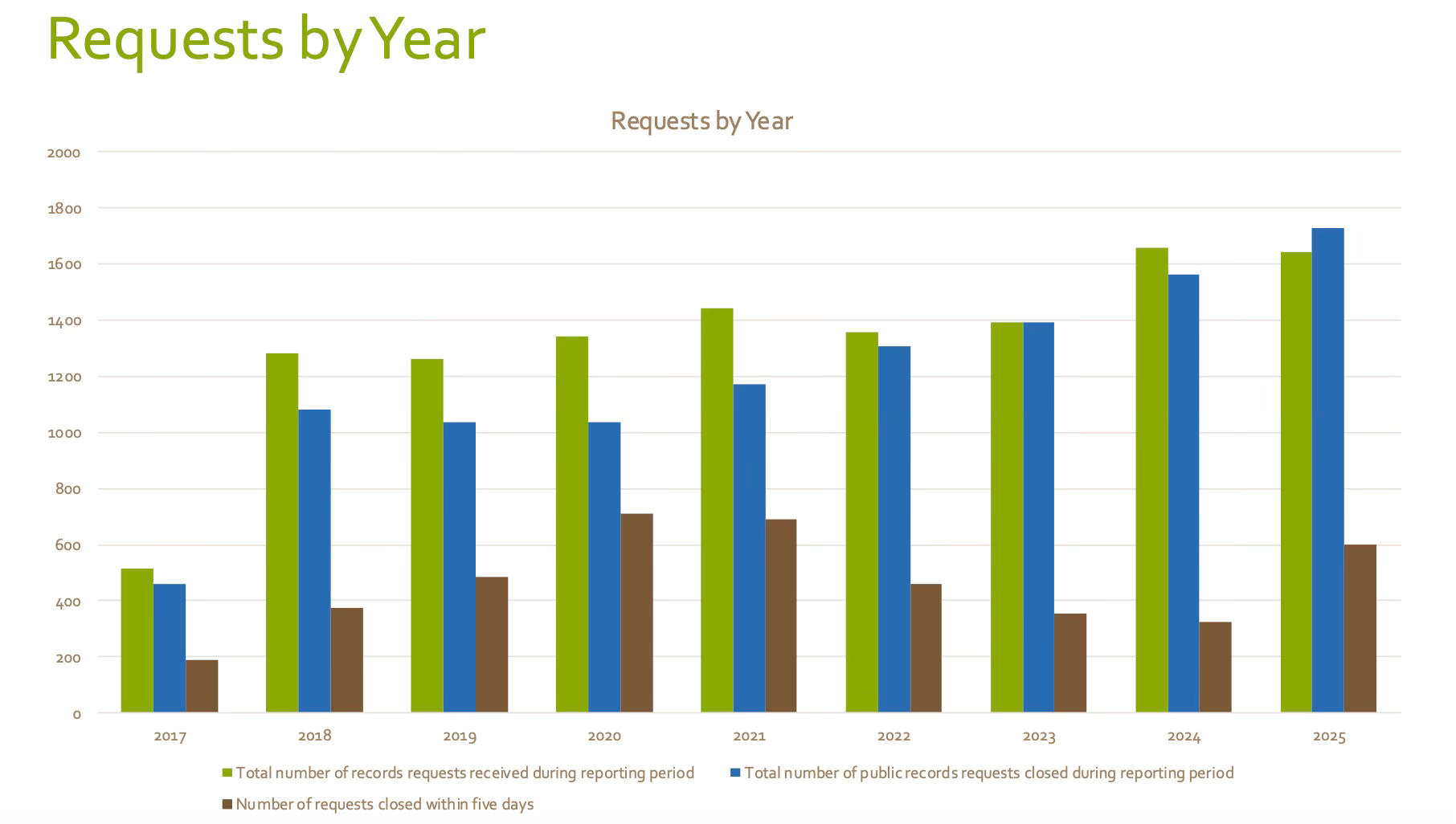
Requests have climbed steadily — from about 500 in 2017 to over 1,600 last year.
Since the county adopted PRR software:
10,189 requests closed
23.6 average business days to close
185,942 documents downloaded since 2022
Body-worn camera reality
In 2025 alone:
294 body-worn camera videos were redacted
97.58 hours spent redacting 81.43 hours of footage
Average video length: 16.62 minutes
1.2 minutes of redaction time per 1 minute of video
This is labor-intensive, meticulous work — and it matters.
What a request actually looks like
A typical request to DCD might read:
“We would like to request a report that includes detailed information on permits (building and electrical) issued between 9/01/2025 and 9/30/2025. Detailed information should include permit number, date issued, description of work, address of work, contractor, project cost, permit fees, and contractor license number please. You have my consent to withhold or redact personal names but please leave org/company names in the report.”
This is not harassment. It is not abuse. It is civic participation.
The principle that governs all of this
RCW 42.56.030 puts it plainly:
The people of this state do not yield their sovereignty to the agencies that serve them.
The people, in delegating authority, do not give their public servants the right to decide what is good for the people to know and what is not good for them to know.
The people insist on remaining informed so that they may maintain control over the instruments that they have created.
That principle matters — especially when commissioners quietly discuss handing over management of county parks to sovereign nations, advance road closures on false premises, or secretly push for new taxes like a cultural access tax without a vote of the people.
We do have a tool.
But tools only matter if they are used.
The right to request public records is one of the most powerful accountability tools citizens possess. It works because there is a dedicated, professional team at the courthouse doing the unglamorous work of preserving that right.
They deserve credit. They deserve thanks. And they deserve public support — because without them, democracy becomes whatever officials say it is.
Transparency doesn’t happen by accident.
It happens because people ask questions — and insist on answers.
Explore Clallam County’s Public Records Request portal here.
Good Governance Daily Proverb
If government exists to meet public needs, then records are how the public checks the work.
Power answers to the people only when its paper trail remains open.
References
Washington State Constitution. (1889). Article I, Section 1 (Political power).
https://leg.wa.gov/state-laws-and-rules/washington-state-constitution/
Washington State Legislature. (n.d.). RCW 42.56.030—Public records—Construction.
https://app.leg.wa.gov/RCW/default.aspx?cite=42.56.030
Jeff, your article pays tribute to those who are forgotten. In my experience with the Records dept., the employees are courteous, helpful, and prompt. They deserve recognition for their contributions to our community. Everyone should do a request at least once, because you never know what buried treasure you'll uncover.