

From Peninsula College weighing cuts to workforce programs while preserving electives, to public lands being overtaken or quietly transferred, and local officials navigating growing public frustration—this week’s stories highlight a recurring theme: decisions are being made, but not always in alignment with the needs of everyday residents. If you want to understand where Clallam County is headed, pay attention to what’s being cut, what’s being protected, and what’s being ignored.
Peninsula College’s Priorities Under Pressure
Peninsula College is facing a $1.8 million budget gap—and the response raises serious questions.
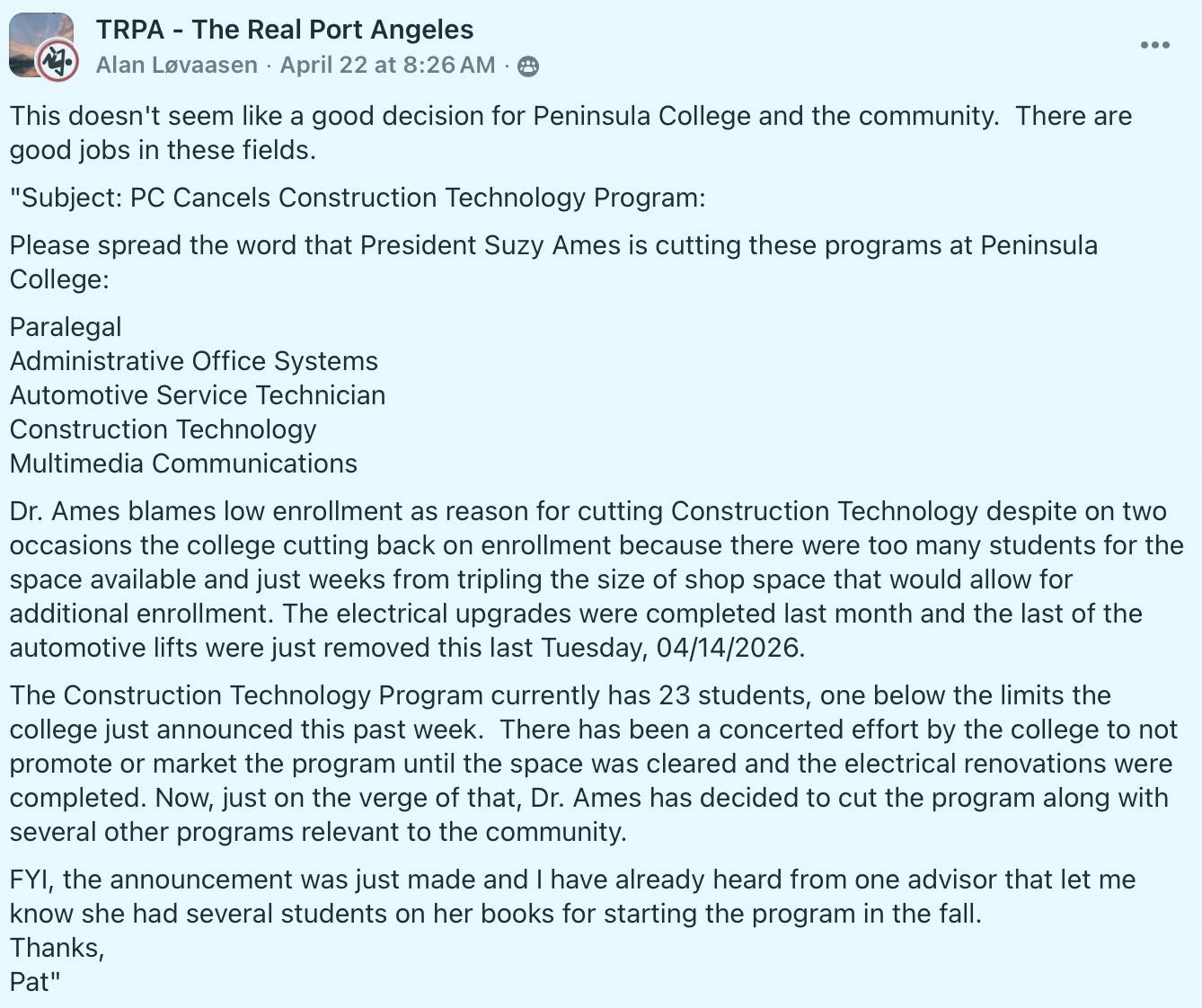
To close the shortfall, the college is tapping $800,000 in reserves and $240,000 from its foundation. Three staff positions are already gone. Looking ahead, higher-paid employees will face 12 furlough days, alongside retirement incentives.
But here’s where it gets concerning: program cuts are on the table—targeting areas like construction, automotive, office systems, and multimedia communications.
In a region facing a housing shortage and workforce gaps in the trades, these are not just classes—they’re pipelines to economic stability.
At the same time, there are no indications that elective programs like Klallam language courses are being considered for cuts.

Cultural education has value. No one disputes that. But when core workforce programs are on the chopping block while electives remain untouched, it raises a simple question: Are priorities aligned with community needs?
Clean Water—In Theory and In Practice
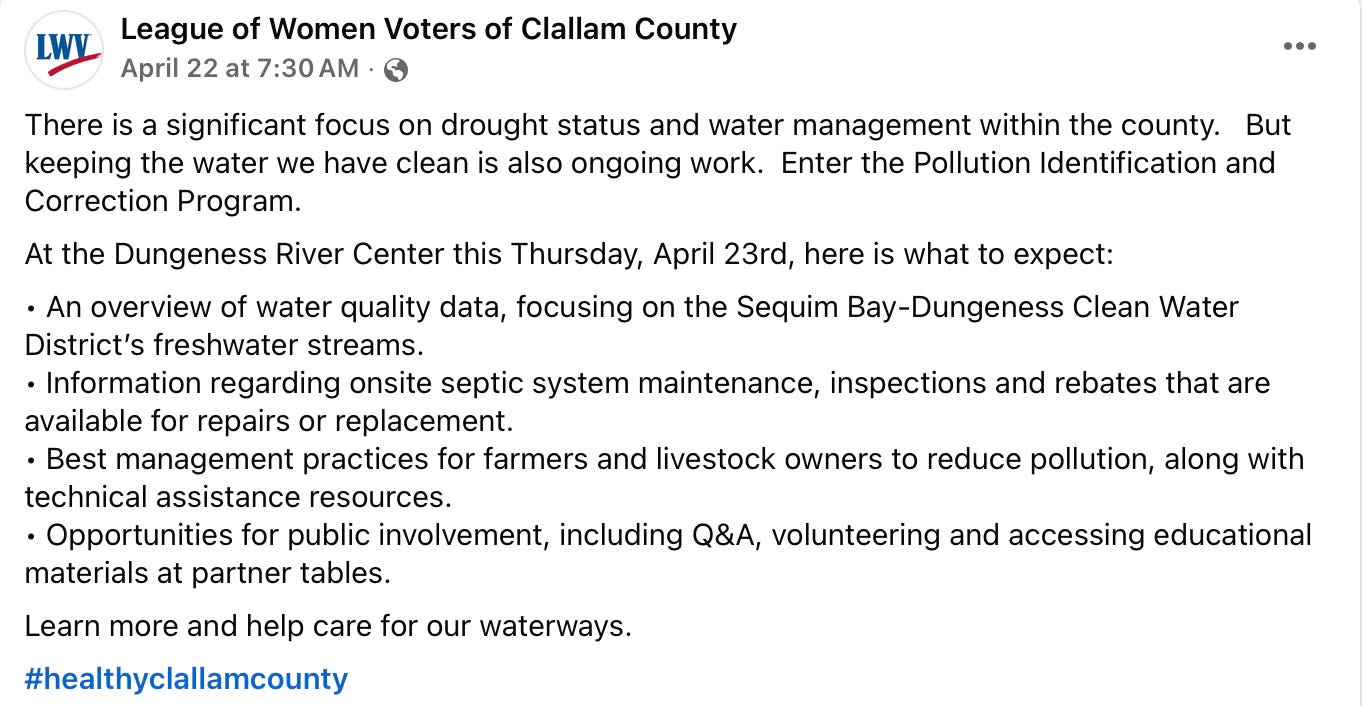
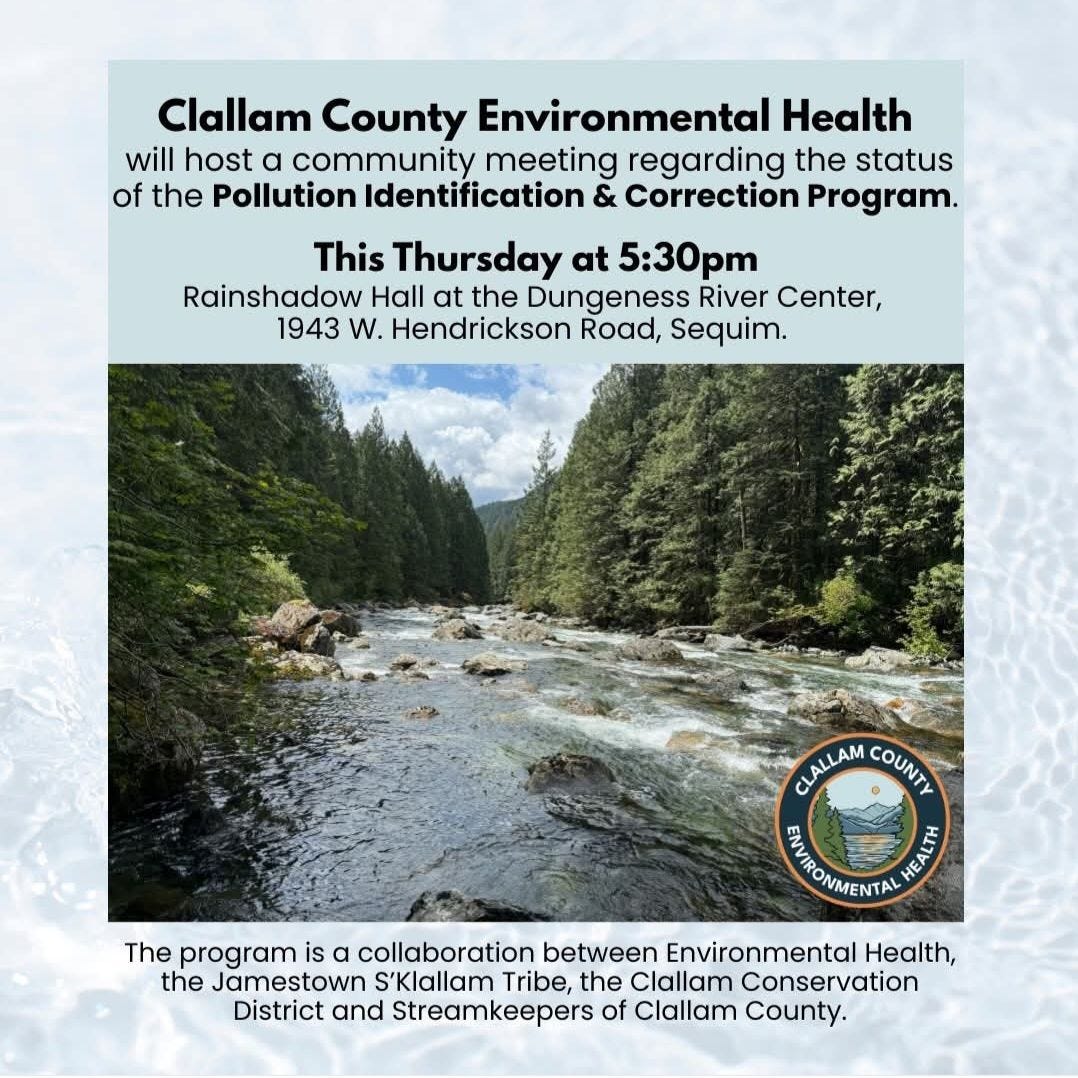
The League of Women Voters of Clallam County recently promoted a presentation with County Health and Human Services, the Jamestown Tribe, and the Clallam Conservation District focused on clean water—highlighting septic maintenance, pollution control, and protecting local streams.
On paper, it sounds exactly like what the community needs.
But just a few watersheds west, along Tumwater Creek—a salmon-bearing waterway—the reality tells a different story.
There, sections of the creek are being impacted by unmanaged encampments: human waste, discarded needles, space blankets, and other debris scattered through a sensitive habitat that should be protected.


It’s a striking contrast. On one hand, public workshops and presentations about water quality. On the other, visible, ongoing conditions that raise serious questions about enforcement, priorities, and follow-through.
Clean water isn’t just a presentation topic—it’s a responsibility. And for many residents, the expectation is simple: the standards being discussed in meeting rooms should also be applied on the ground.
Eminent Domain and “Land Back” Fears
A post circulating in Onalaska, Washington has residents raising alarms after WSDOT indicated it may acquire private land for fish passage projects.

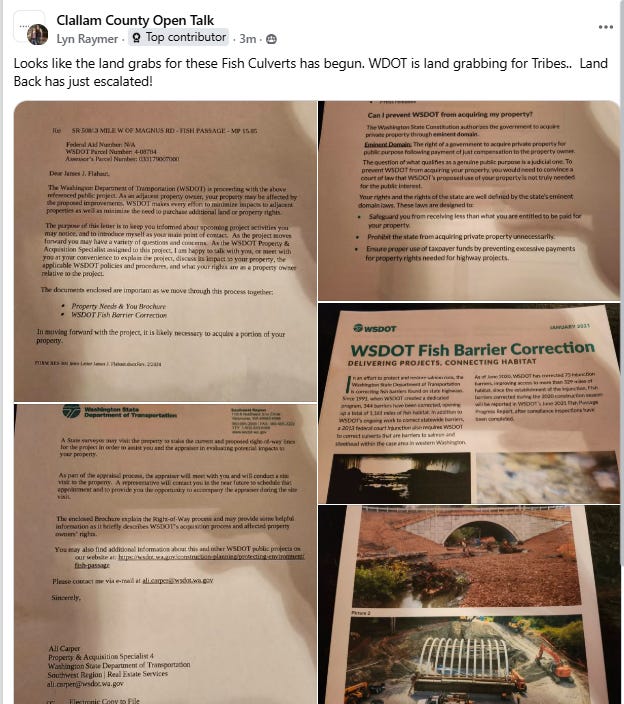
The language is straightforward: “It is likely necessary to acquire a portion of your property.”

For some, this is routine infrastructure work. For others, it’s part of a broader concern—that public and private lands are increasingly being transferred or repurposed under policies tied to environmental restoration and tribal partnerships.
Whether those fears are justified or not, one thing is clear: when land use decisions happen without widespread public awareness, trust erodes quickly.
And as some locals are already saying—if it can happen there, it can happen here.
Two Photos, One Reality at Tumwater Creek
County Commissioner candidate Jake Seegers captured two images just 50 feet apart along a public trail.
One: pristine Pacific Northwest beauty.
The other: a landscape overtaken by garbage, debris, and the impacts of unmanaged encampments.
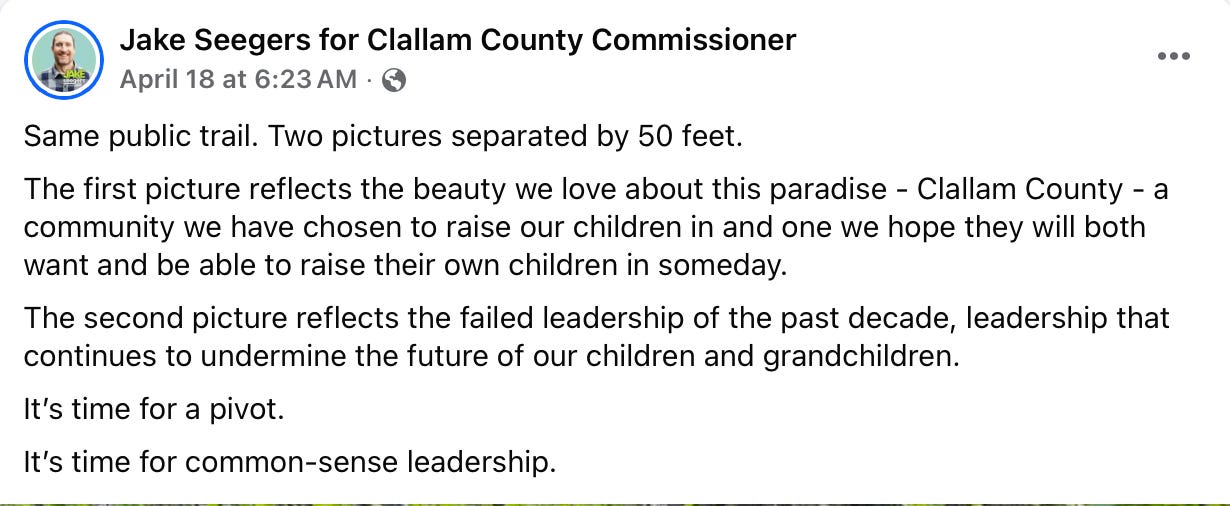
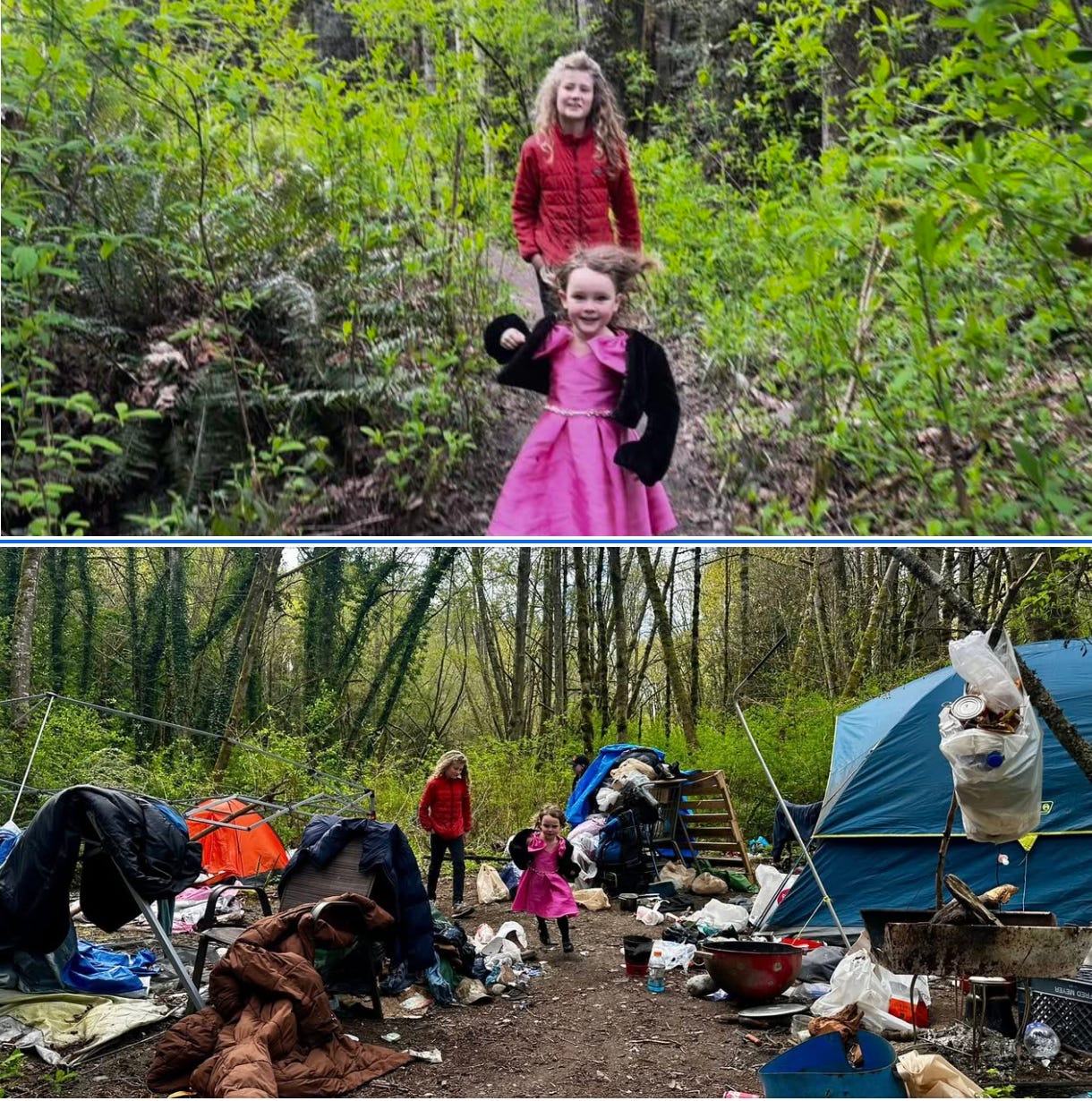
It’s a stark visual contrast—and a policy failure in plain sight.
When public land becomes unrecognizable due to illegal camping and lack of enforcement, it’s no longer just a homelessness issue. It becomes an environmental, public safety, and quality-of-life issue.
From “Protestors” to “Protectors”?
Indivisible Sequim may be rebranding.
Where they once identified as “protestors,” some messaging now leans toward “protectors”—a subtle but notable shift that mirrors tactics seen in other movements nationwide.
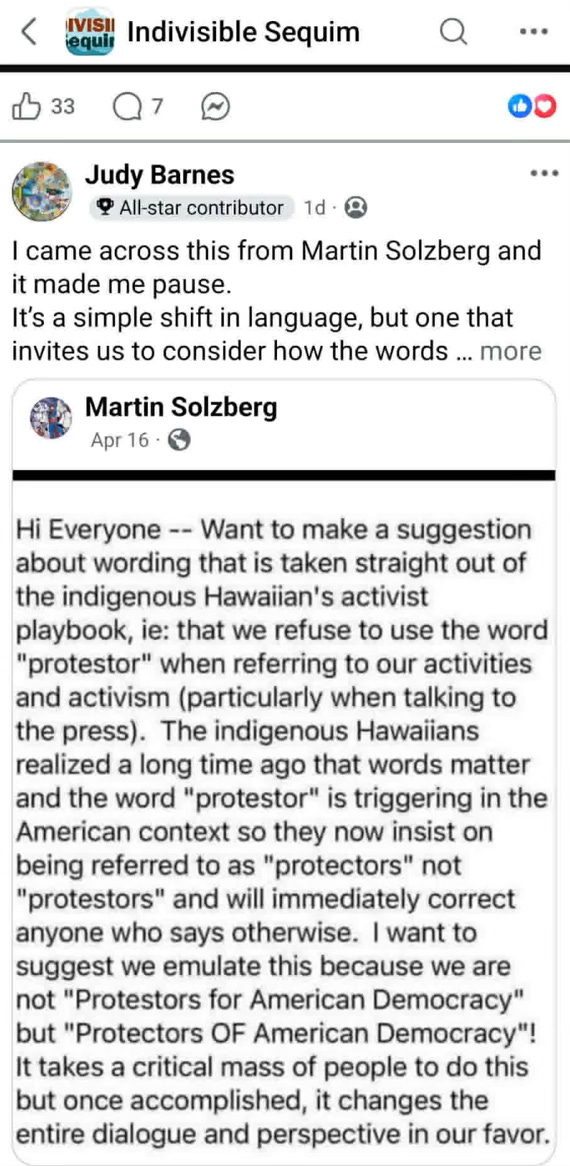
Whether it’s optics or strategy, the effect is the same: continued focus on national political narratives.
Meanwhile, many residents are asking a different question—who is protecting the local community from the issues happening right here at home?
When Public Land Gets Shut Down
Washington Department of Fish and Wildlife officers recently cleared out an encampment at the Morse Creek Wildlife Unit after what they described as a “large volume” of unlawful residents.
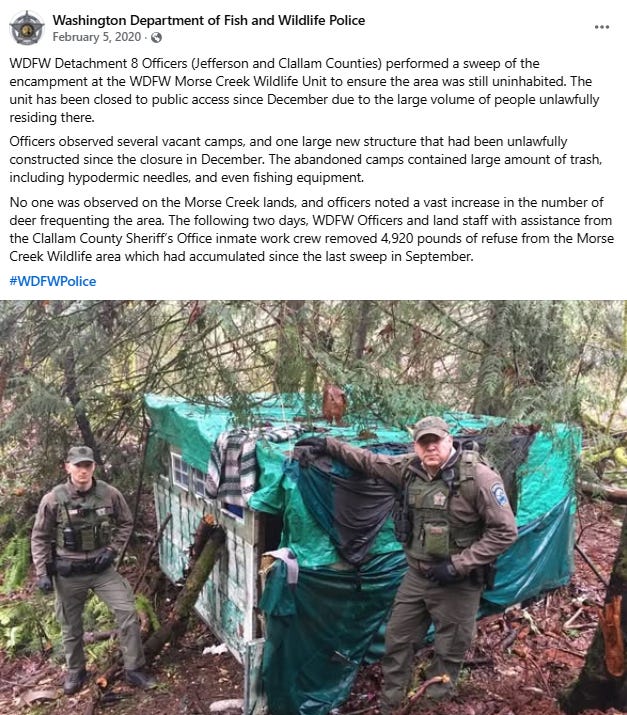
The result?
Two and a half tons of trash removed—accumulated in just six months. The debris included drug paraphernalia and even abandoned fishing equipment.
Let that sink in: a public wildlife area effectively closed off because it was overtaken by illegal activity.
This isn’t sustainable—and it’s becoming more common.
Lobbying for Billions While Locals Struggle
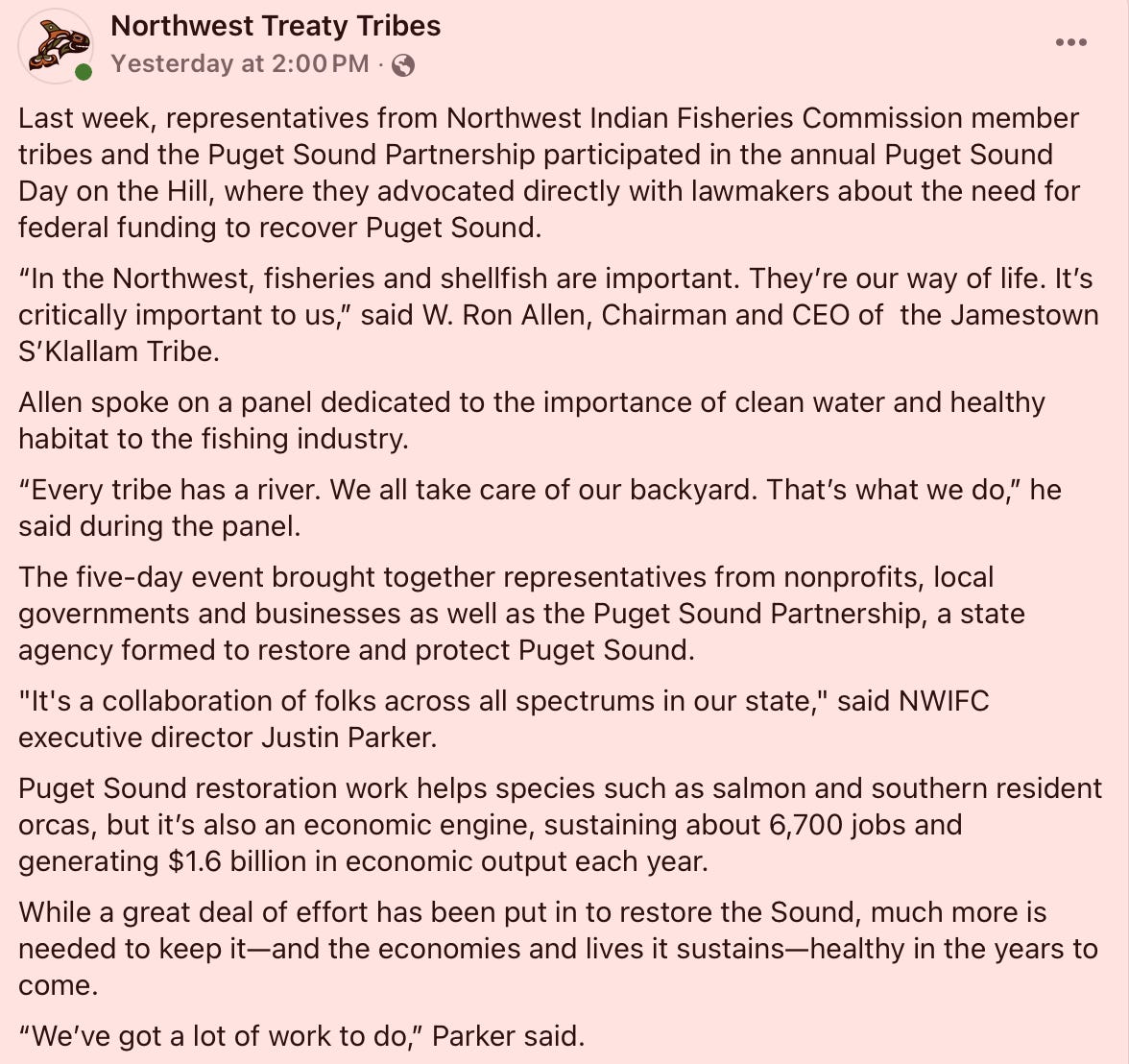
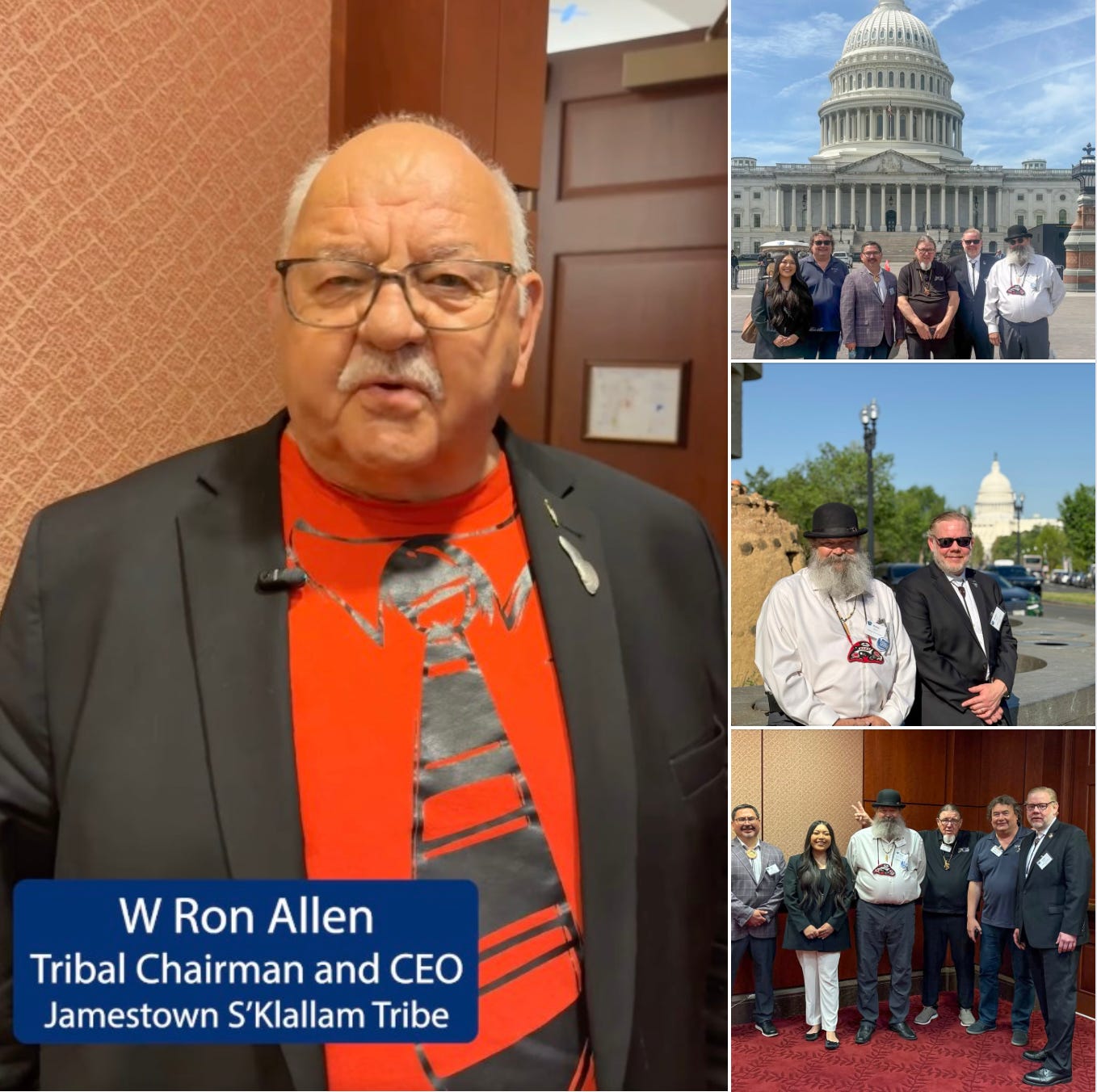
Jamestown Corporation CEO Ron Allen was in Washington, D.C. this week advocating for federal funding tied to Puget Sound restoration, emphasizing that shellfish and fisheries are “a way of life.”
There’s no doubt that environmental restoration matters.
But as federal dollars flow into large-scale initiatives, many locals are left wondering how much of that investment translates into tangible benefits for the surrounding communities—and how much is concentrated elsewhere.
Sequim Property Remains a Problem
The Clallam County Sheriff’s Office recovered stolen mail and financial documents on April 16th from a long-troubled property on Old Olympic Highway in Sequim.
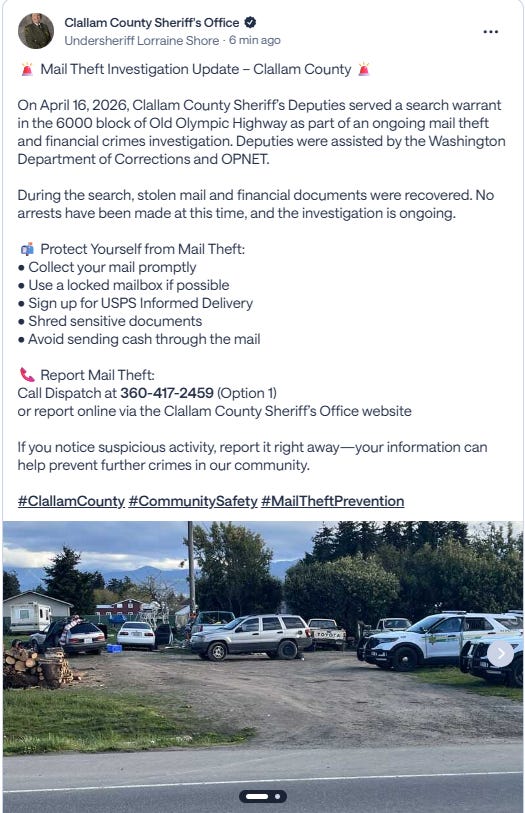
No arrests were made.
And for neighbors, nothing has changed.
The property has been out of compliance for years, and despite repeated issues, it continues to generate complaints. It’s another example of enforcement gaps that leave residents feeling unheard.
Federal Contracting—But Only for Some
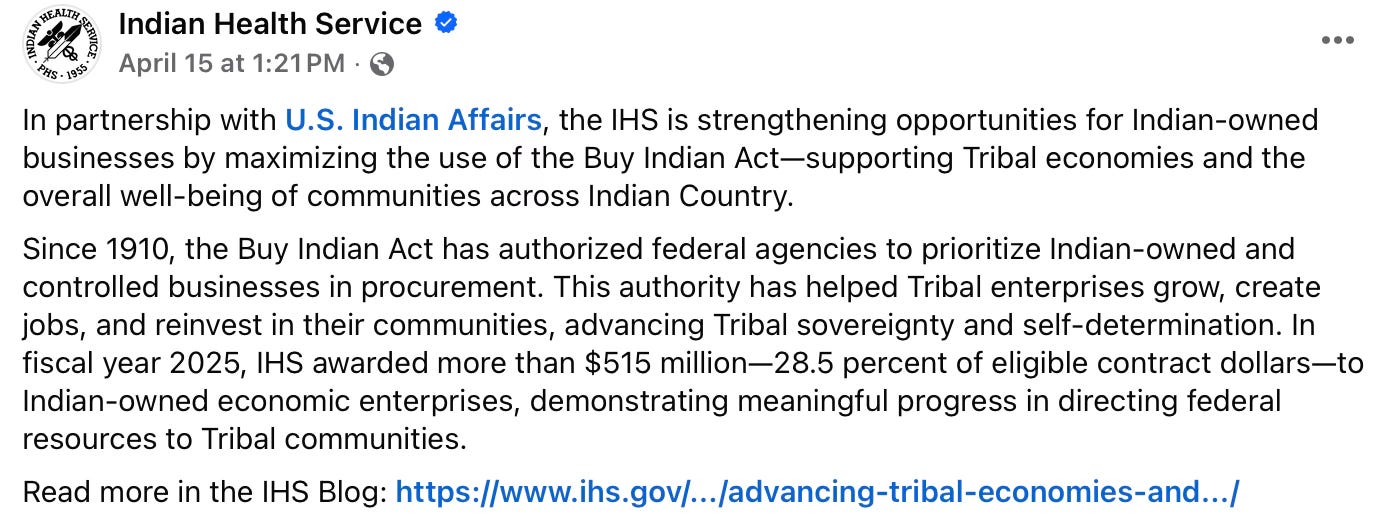
The Indian Health Service announced expanded efforts to support Indian-owned businesses through the Buy Indian Act, awarding over $515 million in contracts last year.

Supporters view this as economic justice and long-overdue investment.
Critics point to the obvious double standard—questioning whether any program favoring a different group in similar terms would be accepted.
Library Debate Turns Personal
Backed by the League of Women Voters, Indivisible Sequim formed under the founding principles of being “courteous and respectful.” But the activist group had a less-than-courteous take on a recent article by County Commissioner candidate Jake Seegers—calling it “most stupidly idiotic.”

Strong words—but also a bit revealing.
First, a genuine thank you to Dutchtown Spirit and others for drawing attention to the article, because more people reading it means more people understanding what’s actually being proposed: a library system expanding into Narcan distribution, food programs, and lending everything from drones to sewing machines—all while staffing costs rise and four-day work weeks are floated.
Second, it’s worth saying plainly: people can support the library and still ask questions about how it spends money. Those two ideas are not in conflict—they’re part of being an engaged, responsible community.
Third, a lighthearted word of caution—rumor has it some folks at Indivisible Sequim have been excommunicated for reading CC Watchdog. Hopefully, curiosity doesn’t become a punishable offense.
And finally, Bruce—those signs look great, and yes, one would look great on your property.
At the end of the day, spirited debate is healthy. If anything, this moment proves the point: when budgets, priorities, and public services are on the table, people are paying attention—and that’s a good thing.
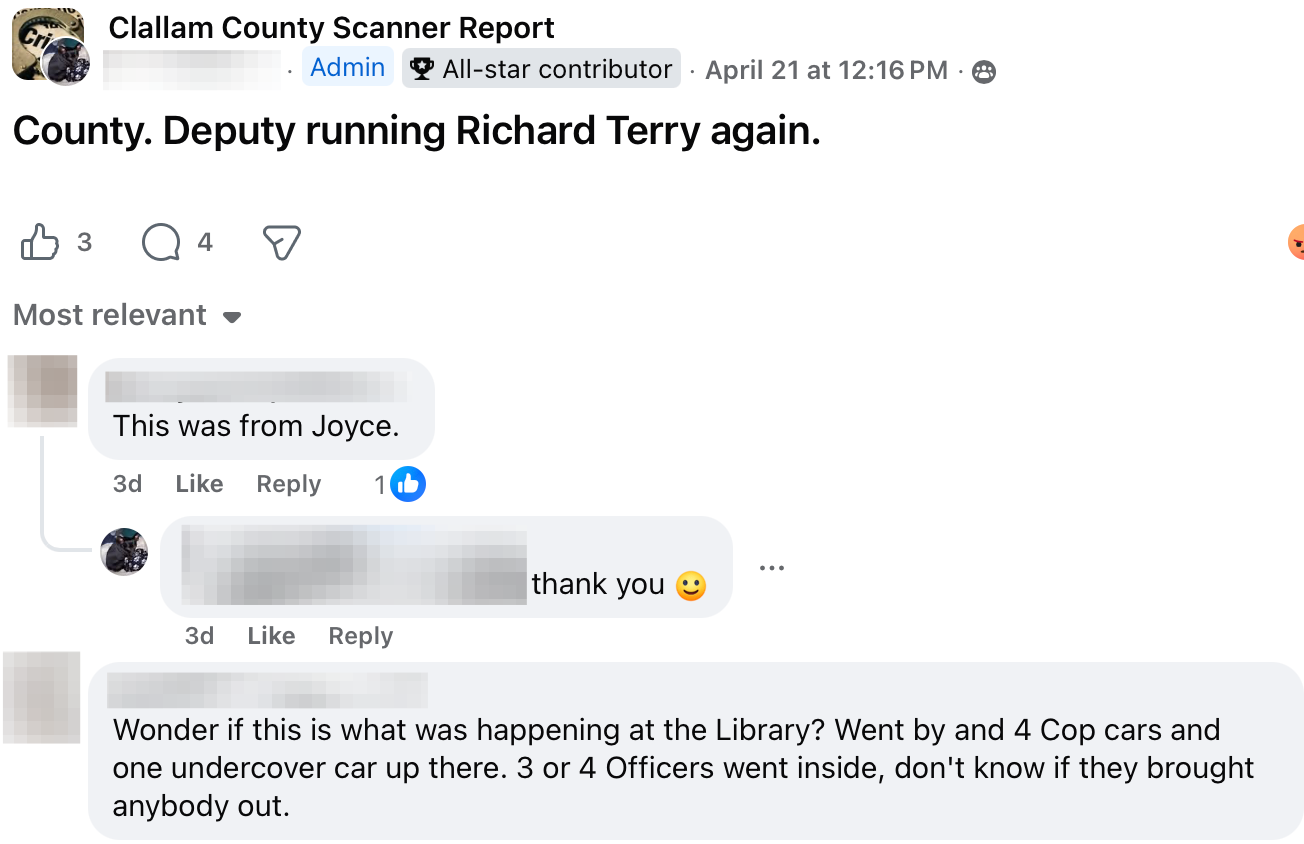
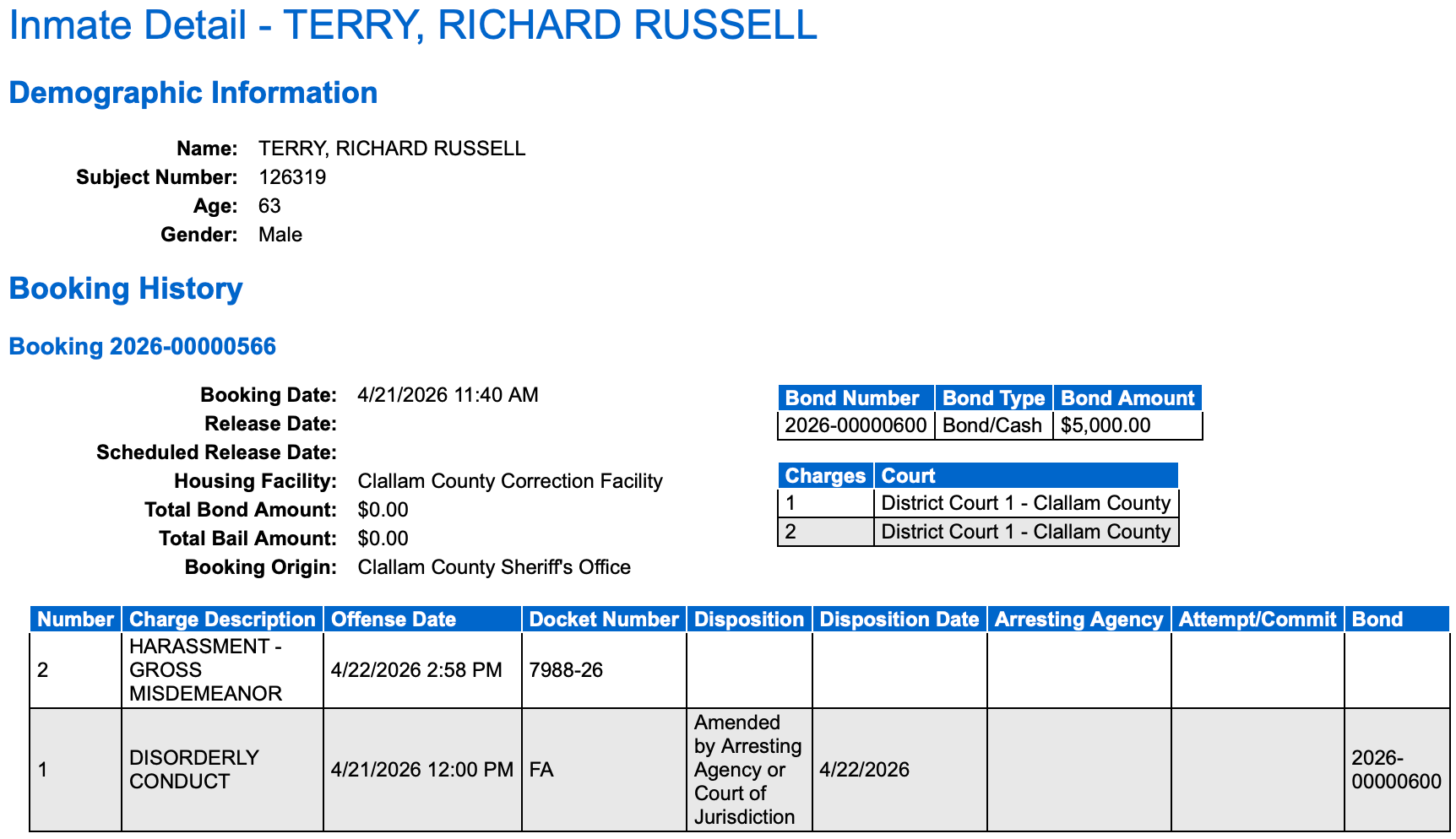
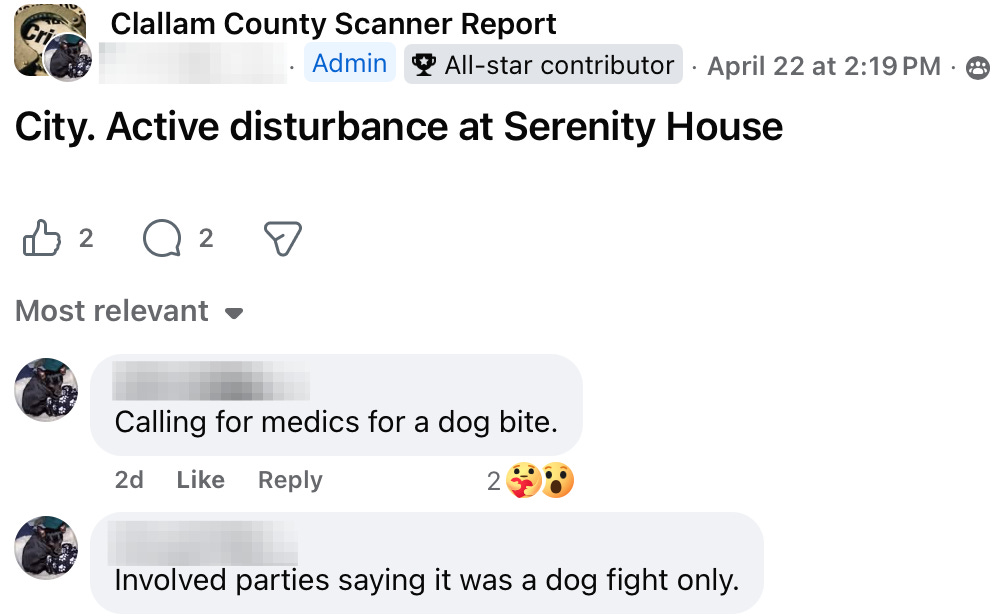
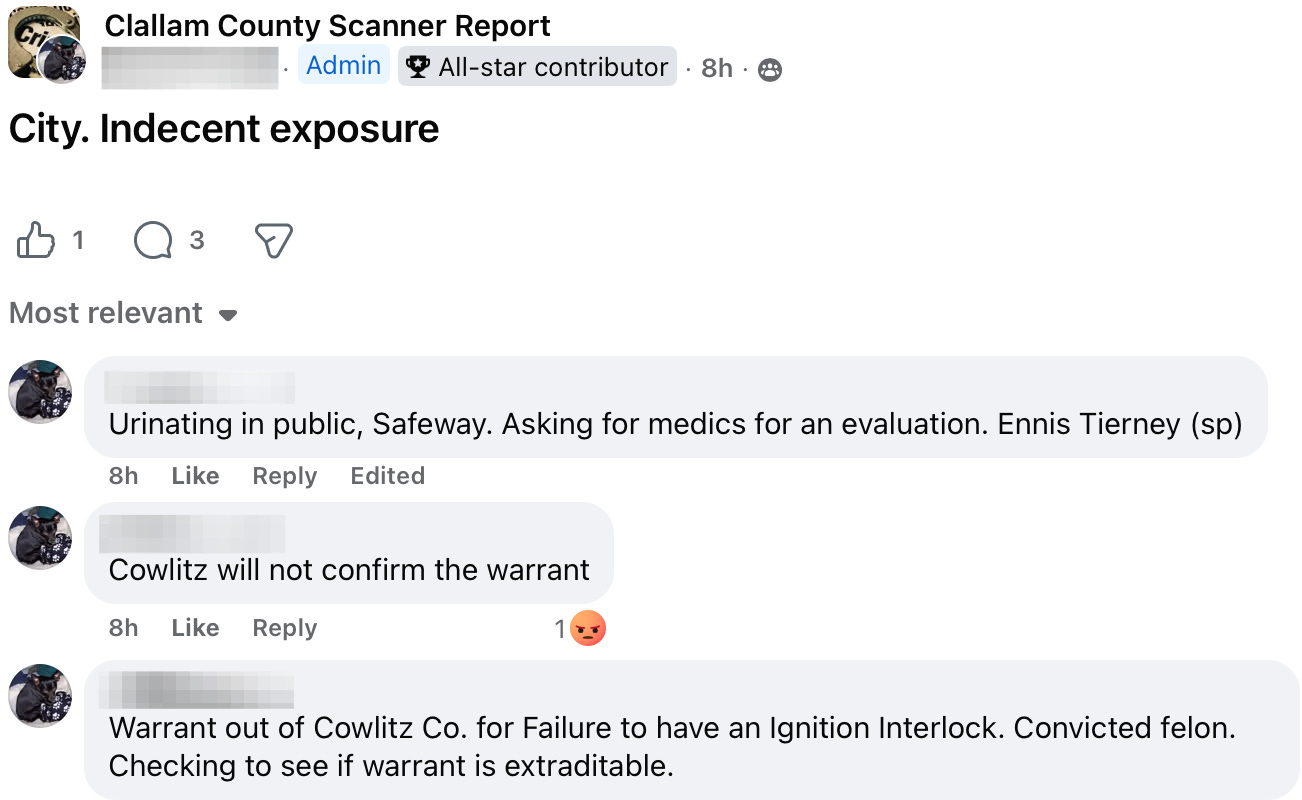
A Week on the Scanner
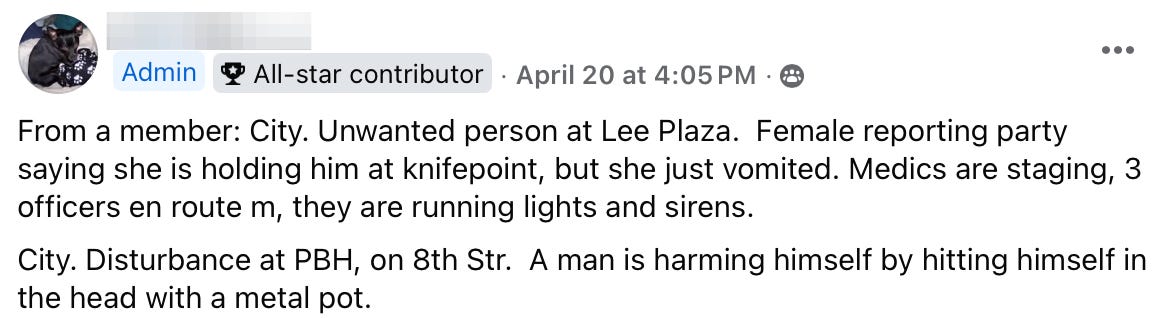
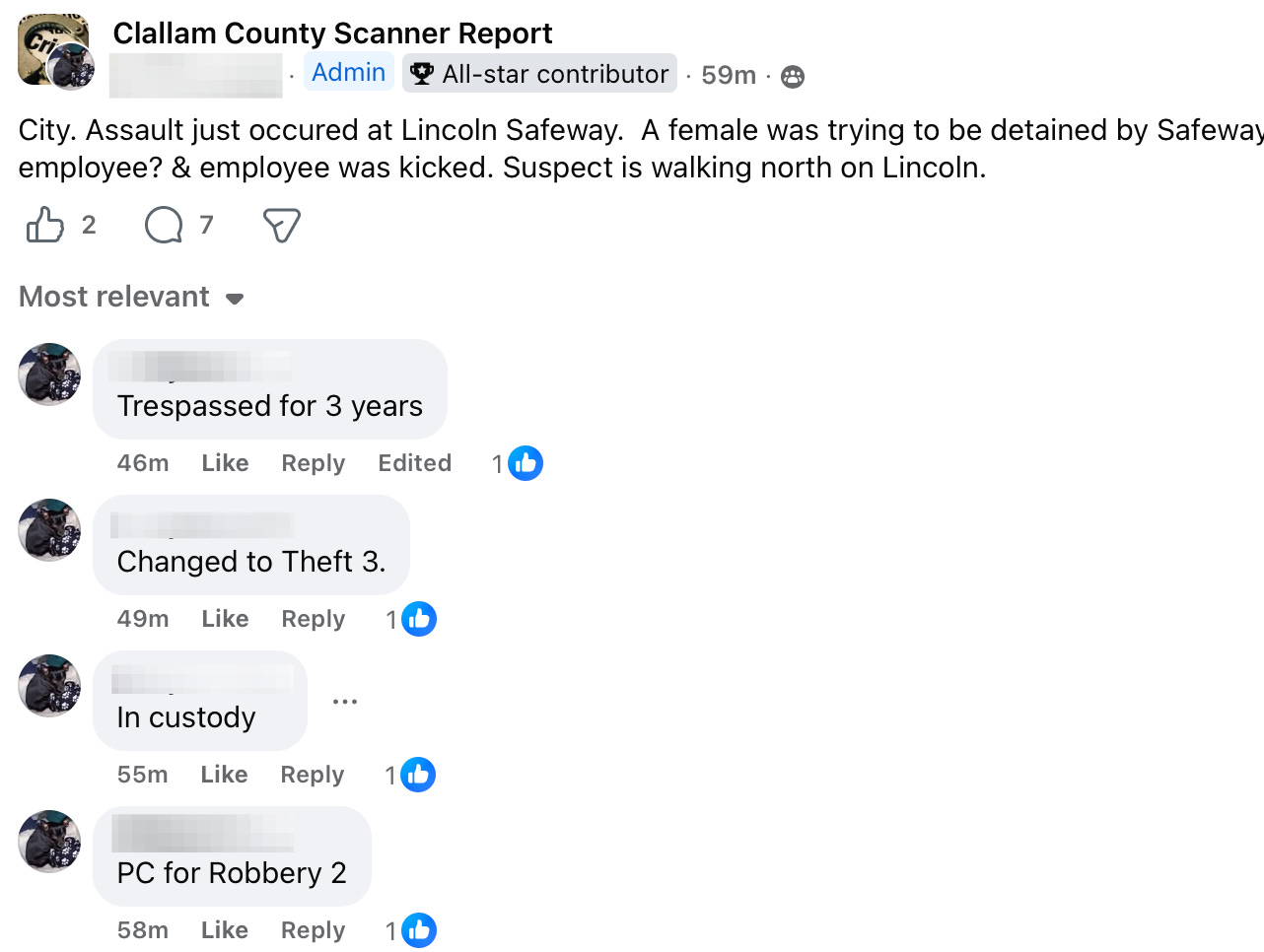
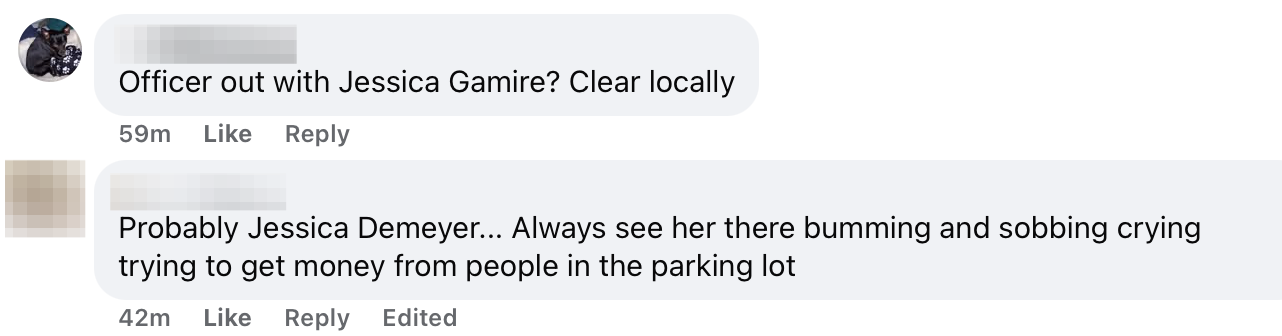
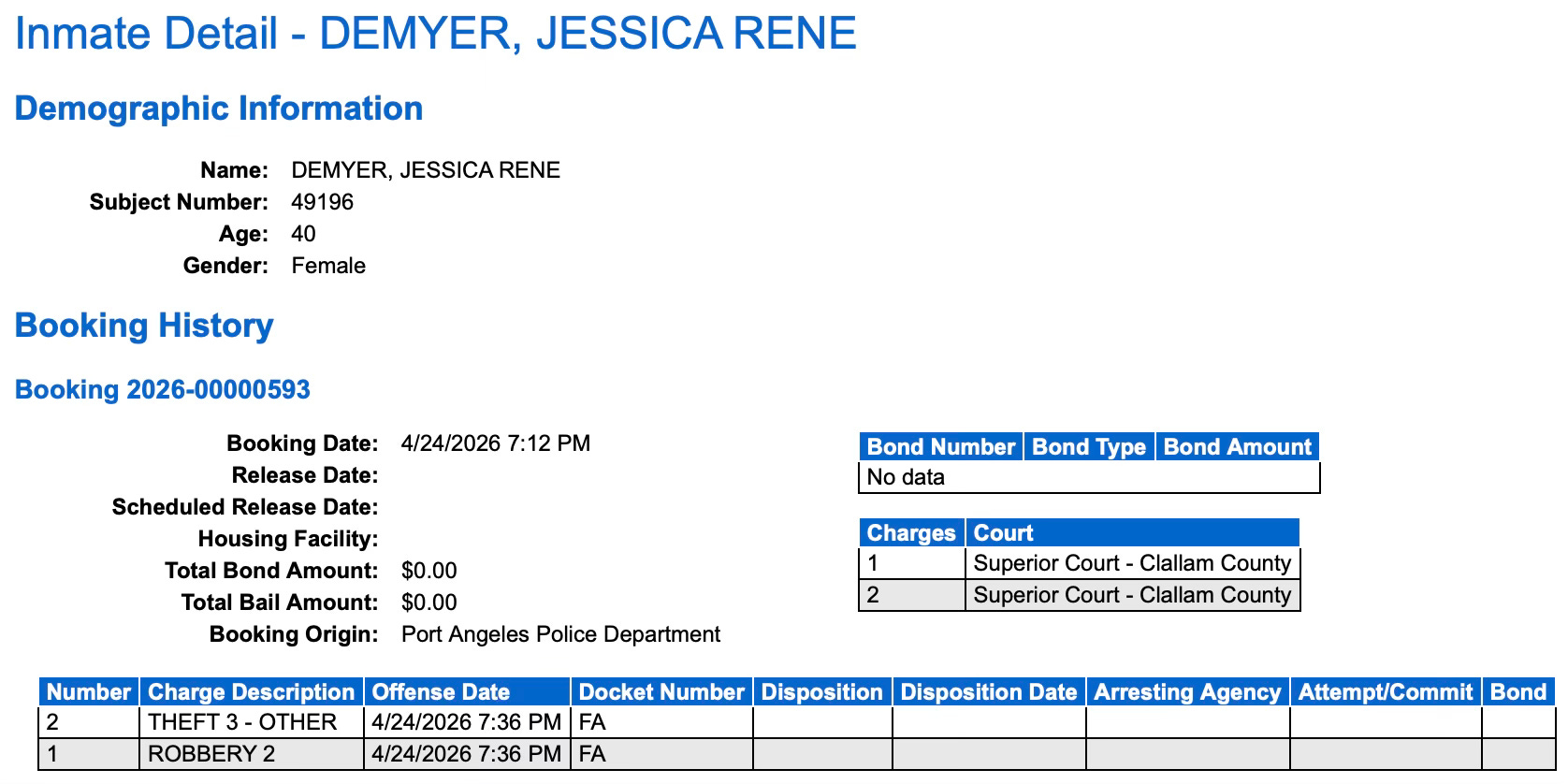
If you want a snapshot of where things stand locally, listen to the police scanner:
Assaults
Overdoses
Theft
Mental health crises
Warrants
Indecent exposure
This isn’t abstract policy debate—it’s daily life.



The commissioners did not reply to yesterday's question asking if they would consider pushing for more transparency and accountability from the Sequim School District. Here is today's email to the commissioners:
Dear Commissioners,
The County emphasizes protecting some watersheds through strict water quality programs, yet Tumwater Creek—despite millions in salmon restoration—remains impacted by human waste, garbage, and debris.
Much of this appears tied to activity surrounding the County’s Harm Reduction Health Center.
Why is water quality enforced in some areas but not in others like Tumwater Creek, and who is accountable for that disparity?
As he/she walked onto the construction site they located the foreman. ‘ I don’t know how to use a level, square, or those other things I see around here, but I have had three courses in Kallam language. I am sure that in itself will allow me to do a good job for you’. These educators basically have no common sense. Those that do are probably shut done.