

For two years, Clallam County residents have asked their commissioners to address a basic fairness issue: why some of the county’s largest lodging operators do not pay property or lodging taxes like everyone else. It took the Board eight months to send a single letter, which has now been ignored for five — with no follow-up, urgency, or transparency. Meanwhile, discussions about transferring management of a cherished county park to one commissioner’s largest campaign donor moved quickly and quietly, outside public view. That contrast is not accidental. It reflects priorities — and the public is not first.
The Copy-and-Paste Response
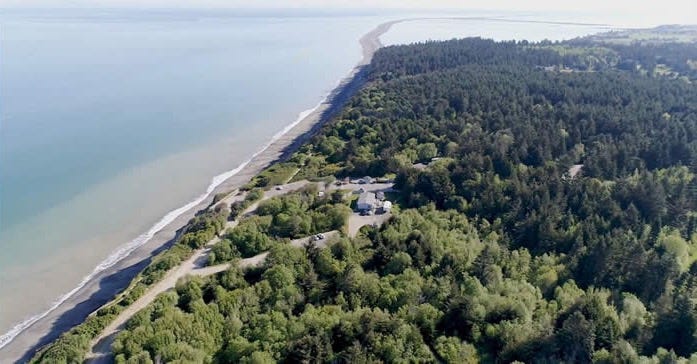
After news broke that Commissioner Mark Ozias had “quiet” discussions with the Jamestown Corporation about taking over the Dungeness Recreation Area, residents did what citizens are supposed to do: they contacted their elected officials.
At least 15 constituents received the exact same copy-and-paste response from Commissioner Ozias — a long, generic essay on county finances that avoided the central issue entirely: Why was a conversation about transferring control of a county park conducted privately with a major campaign donor before the public knew anything about it?
Commissioner Ozias’ letter opens broadly, listing nearly every function of county government, as if volume alone could substitute for accountability:
“County government encompasses a broad range of mandated functions ranging from the courts, to the Sheriff’s Department and jail…”
None of that explains why the public was excluded from discussions about a specific, irreplaceable public asset.
Slow Walking the Public — Fast Walking the Donor
Here is the contrast the Board does not want discussed.
January (a year ago):
After repeated public requests, the commissioners began discussing whether to send a letter to the Jamestown Tribe asking for a conversation about property tax and lodging tax equity — contributions paid by nearly every other resident and business in Clallam County.
August (eight months later):
The letter is finally sent requesting a discussion.
Five months after that:
The Tribe has ignored the letter. The commissioners have sent no follow-up. No urgency. No public pressure. No explanation.
Contrast that with what did move quickly.
A private email exchange between Commissioner Ozias and Ron Allen, the commissioner’s largest campaign donor and CEO of Jamestown Corporation, discussed Jamestown’s interest in “taking over” the Dungeness Recreation Area County Park — before any public process began.
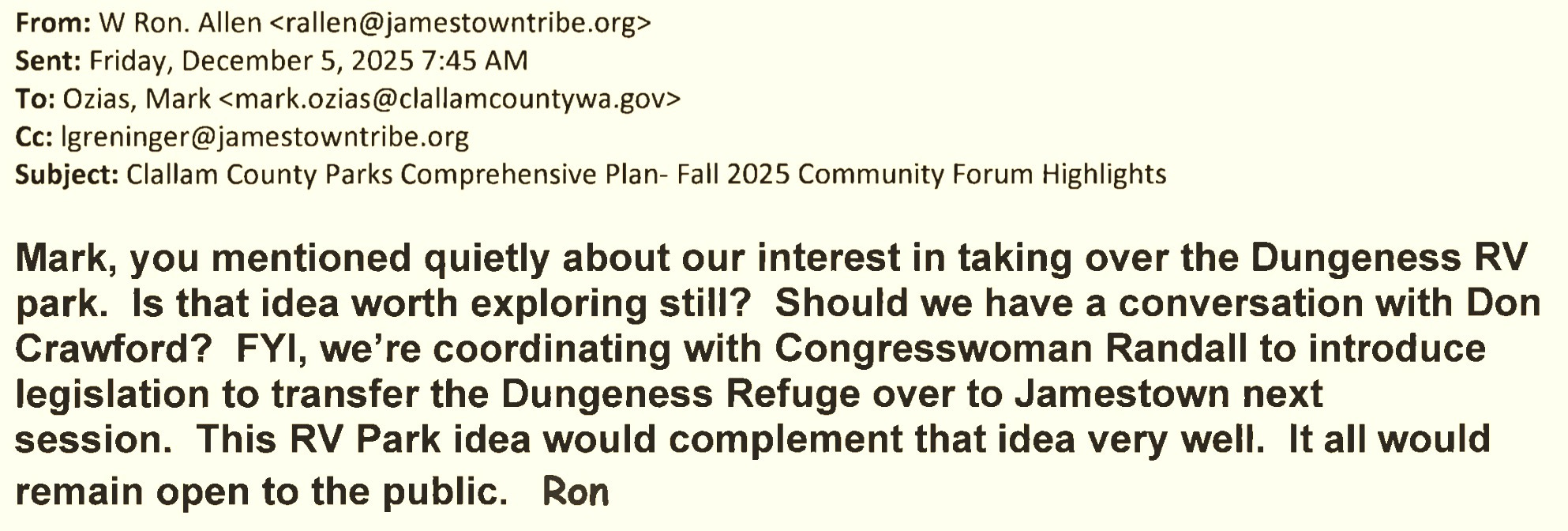
That discussion didn’t stall for eight months. It didn’t wait for public input. It didn’t require follow-up letters.
It happened quietly.
“I Believe It Is Worth Having” — Says Who?
Commissioner Ozias’s form letter attempts to reframe the issue as harmless brainstorming:
“My conversation with Chairman Allen has centered on encouraging our relevant parks staff members to get together to think more broadly about what partnership opportunities might exist…”
But this wasn’t a hypothetical policy discussion. It involved:
A specific county park
A specific sovereign corporation
A specific political donor
And a specific loss of public control
Commissioner Ozias admits he deliberately avoided public process:
“I have not brought this concept forward to a work session yet…”
That is not transparency. That is an intentional delay of public oversight.
The Lodging Tax Hypocrisy
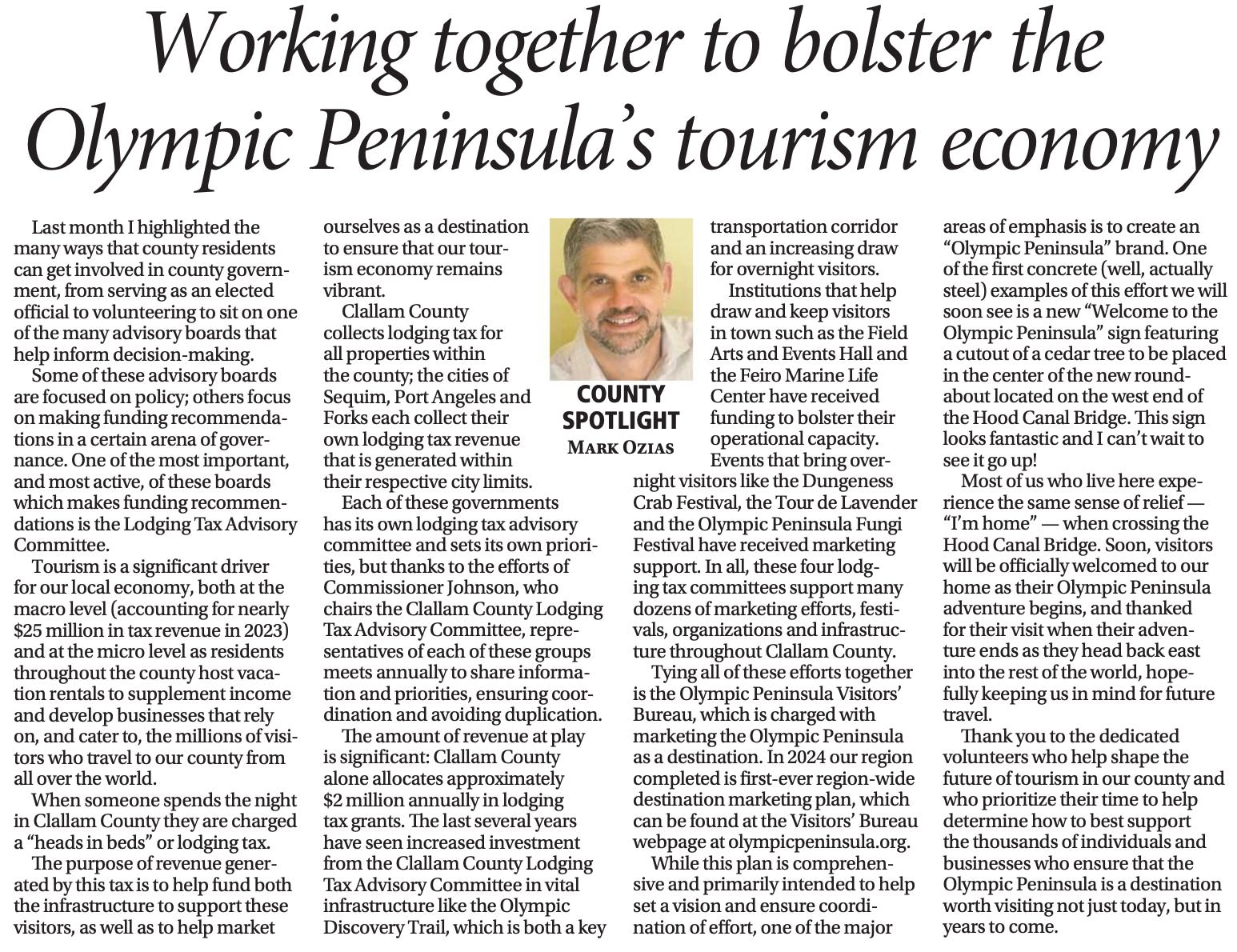
In his monthly Gazette column, Commissioner Ozias recently emphasized the importance of the lodging tax as essential county revenue.
What the public is not told:
Jamestown Corporation operates a 100-room hotel in Blyn that does not collect or remit the tax
A 200-room expansion is planned
Jamestown leadership has advocated for the demolition of a competing Port Angeles hotel that does generate lodging tax revenue
When the public asks for accountability on taxes, the Board moves at a glacial pace.
When a donor wants to discuss control of public land, doors open quietly.
It Isn’t Their Park
The Dungeness Recreation Area was not gifted to the commissioners.
Taxpayers:
Built the roads
Paid for the campsites
Funded the staffing
Maintain the facilities
Receive discounted access in return
This park is not surplus property. It is not expendable. And it is not the commissioners’ to barter away in private conversations.
Commissioner Ozias writes:
“I do not know where this conversation may lead, but I believe it is worth having.”
What he never explains is why the public didn’t get to decide whether the conversation was worth having at all.
Who Are They Working For?
That is the unavoidable question.
Why does a tax-equity letter amid a budget deficit take eight months — and no follow-up?
Why does a donor-initiated park discussion move quietly and quickly?
Why does “public process” appear only after the public finds out?
The answer is not budget pressure.
It is priority.
And the priorities of this Board — Mark Ozias, Mike French, and Randy Johnson — are now unmistakably clear.
Public land belongs to the public.
Not to commissioners.
Not to donors.
Not to quiet conversations.
And the longer this Board pretends otherwise, the deeper the breach of public trust becomes.
Commissioner Ozias’s form letter
Thank you for writing.
County government encompasses a broad range of mandated functions ranging from the courts, to the Sheriff’s Department and jail, to prosecuting local and state crimes, to juvenile services and detention, to property assessment and tax collection on behalf of the state, to managing elections, to licensing vehicles, to land use planning and permitting, to roads and bridges, to habitat restoration and environmental monitoring, to public health, and more. Every elected official has a broad range of statutory obligations, and administrative services like IT and Human Resources are required to support this work.
County government also includes a variety of non-mandated functions that nevertheless are vital to the community and well-being of its citizens. This would include the county fair, the Olympic Discovery Trail, the 4H and Master Gardener programs, and a park system.
Property tax is the primary funding source for counties, and with our ability to raise property taxes by only 1% each year we are unable to keep up with inflation. This is particularly true given that several mandatory costs are escalating at a much higher rate than 1%. Our liability insurance premium increase alone has exceeded the additional 1% property tax revenue amount the last couple of years. New court-mandated caseload standards for public defenders will triple this cost within the decade. Hiring competition for corrections staff, road deputies and prosecutors has created significant wage inflation in these areas.
Of course, even if we were able to raise property taxes by more than 1% each year it is clear that many people in our county cannot afford and do not wish to pay additional property taxes and they told us so with a strong voice when we went to the voters and asked for an increase last November.
The past two years we have been working to reduce costs and find efficiencies throughout the organization. We have reduced staffing across multiple departments; we reduced redundancy by creating a single health care team for both the adult jail and juvenile detention facilities; we are improving building efficiency and we will continue the effort to do more with less.
We are also working to identify new sources of non-local tax revenue. For example, we were the first jail in the state to take advantage of a change in law which now allows us to bill Medicaid for some health care services provided in our detention facilities, rather than that cost being borne by local taxpayers. This effort is expected to offset $800,000 worth of expense this year.
What all this means is that unless there is some kind of structural change in how the state funds counties, we will all (not just Clallam County) be looking for ways to reduce non-mandatory expenses every year moving forward. So far we have been able to focus on cuts, efficiencies and some new revenue but this will not be enough moving forward.
As you may know, the Jamestown S’Klallam Tribe has recently worked with the federal government to become co-managers of the Dungeness Wildlife Refuge, which is accessed via our county park. Because we are already working closely with them to coordinate planning and infrastructure investments in this area, my conversation with Chairman Allen has centered on encouraging our relevant parks staff members to get together to think more broadly about what partnership opportunities might exist that we haven’t considered. To see if we have any shared interests or priorities that we haven’t discussed or discovered. I am aware that many other counties around the county are successfully entering into co-management agreements with their local Tribal governments for county parks as they too look to reduce expenses while maintaining facilities.
I do not know where this conversation may lead, but I believe it is worth having. I have not brought this concept forward to a work session yet as my hope was to facilitate that staff-level meeting first to explore ideas to bring to the table for vetting and feedback from the other Commissioners and the public. In any possible arrangement, I would prioritize maintaining or improving public access, maintaining or improving camping and other facilities and payment into the lodging tax system at a minimum. Of course the county would need to recognize a significant and ongoing cost savings or no partnership makes sense.
This is one of many difficult conversations we can expect over the coming years, but I am looking for a win-win. If there appears to be enough common ground for us to move forward with a discussion at a work session that would be the very first step in a long process should any actual changes be contemplated. The other Commissioners might listen to the ideas and tell me I’m barking up the wrong tree. If not, next steps might include anything ranging from additional staff-level meetings, to more nuanced financial analysis projecting anticipated actual costs for this park moving forward, to community meetings, etc. in order to determine next steps. Under any circumstance, there will be ample information shared with the public and ample time and opportunity for the public to weigh in.
Please forgive me if any of the information I provided above seemed obvious or redundant; I am attempting to provide as much context and information as possible so that you are fully-informed.
Sincerely,
Mark Ozias
Clallam County Commissioner
The commissioners did not answer yesterday's question about discussions with the Jamestown Tribe regarding lodging taxes. Here is today's email:
Dear Commissioners,
Before any further private discussions occur, will the Board commit to a public town hall on the future of the Dungeness Recreation Area—and release the actual numbers: how much revenue the park generates from camping and day use, what it costs to operate, and what gaps exist? Given that residents only learned of these talks through public records requests, why weren’t these figures and potential solutions discussed publicly before exploring the transfer of a public park to a major campaign donor?
All three commissioners can be reached by emailing the Clerk of the Board at loni.gores@clallamcountywa.gov
Good Governance Proverb of the Day
Public assets are held in trust; good intentions do not replace clear authority, lawful process, or public consent.
Good governance isn’t about stopping conversations—it’s about sequencing them correctly. When public assets, multiple jurisdictions, and sovereign governments intersect, clarity about authority, process, and limits isn’t a technical detail; it’s the substance of public trust.
If this issue has done anything useful, it’s highlighted an opportunity: to model how county leadership can explore hard questions in the open, with clear board direction, clear jurisdictional boundaries, and clear respect for tribal sovereignty from the start. That’s how collaboration becomes durable instead of divisive.
This isn’t about this park alone. It’s about setting a pattern the public can recognize and rely on next time.