

As “No Kings” protesters take to Sequim streets, a deeper contradiction comes into focus: the same organization championing democracy has remained silent while unelected power and procedural control reshape decisions here at home.
When Democracy Took a Back Seat
Four years ago, in the spring of 2022, Clallam County faced a looming disaster.
A dike holding back the Dungeness River west of Towne Road had been deliberately breached by the Jamestown Corporation—ahead of schedule, without coordination, and despite requests from the County to pause. At the time, the County had not yet completed the new Towne Road levee that would protect downstream residents and keep the road open.
The danger wasn’t immediate—but it was coming. When fall rains arrived, the risk was clear: flooding in the Dungeness community.
The warning from the Jamestown Corporation to county leaders and local media was stark:
“News helicopters would circle the devastation and speculate on the number of dead. The County, Tribe, and the Corps would be embroiled in wrongful death suits for years or decades.”
The County engineer proposed a simple fix:
A temporary levee costing $200,000, buildable in 10 days, requiring no permits. It would have:
Blocked the breach
Protected salmon habitat
Prevented downstream flooding
Avoided millions in construction impacts
Kept Towne Road open
It was the definition of a practical, accountable, taxpayer-minded solution.
The response?
“Chairman Allen is not in favor of this solution.”
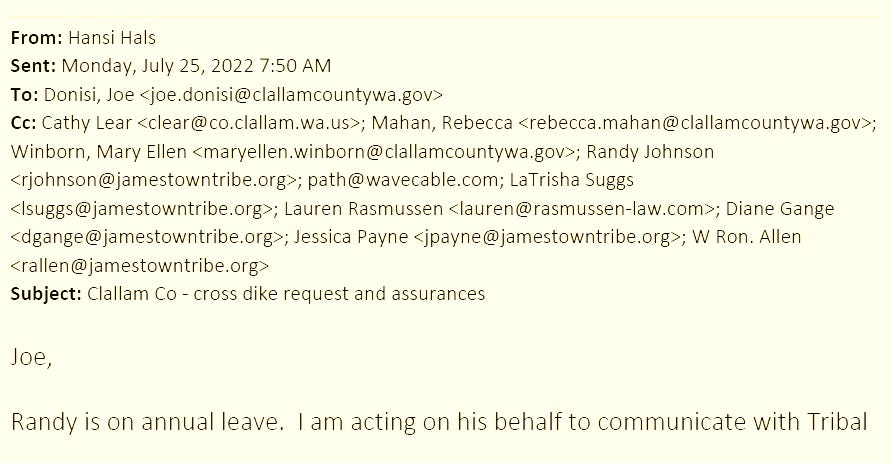

Instead, the Tribe’s demands came back:
$15 million bond
$750,000 escrow for restoration
Up to $25,000 in legal reimbursements
A $200,000 solution was rejected in favor of something 75 times more expensive.
Who Was Actually in Charge?
Clallam County is supposed to be a democracy.
We elect county commissioners
They appoint leadership accountable to the commissioners
Public employees ultimately answer to voters through that chain
But in this case, the decision wasn’t made by elected officials accountable to Clallam County residents.
It was made by Ron Allen—a leader of a sovereign nation not accountable to county voters—determining how local taxpayer dollars would be spent and how a public safety risk would be handled.
For that moment, the system flipped.
Local democratic authority paused.
An unelected external leader dictated the terms.
That’s not democracy.
And Where Was the League?
This is where the contradiction becomes impossible to ignore.
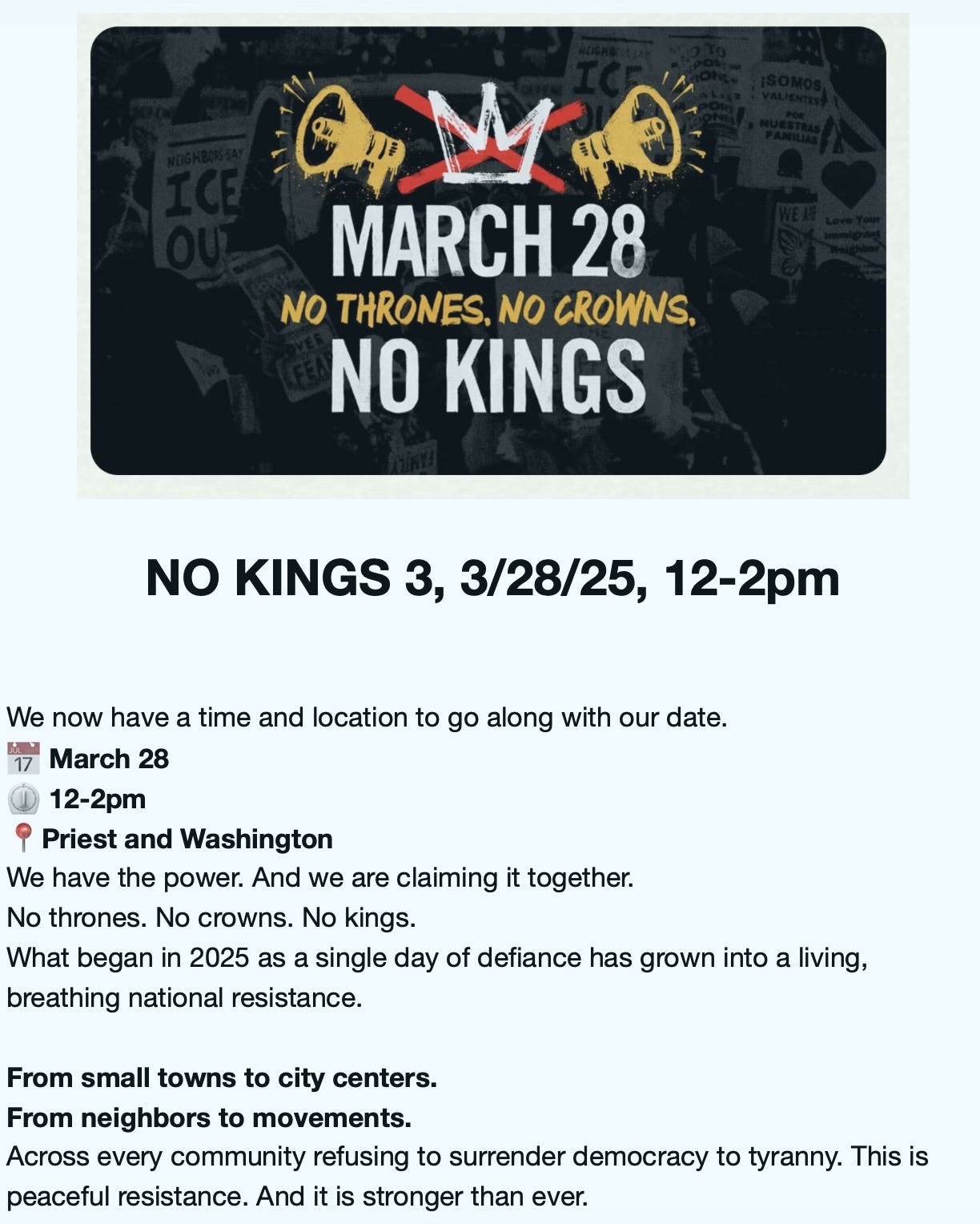
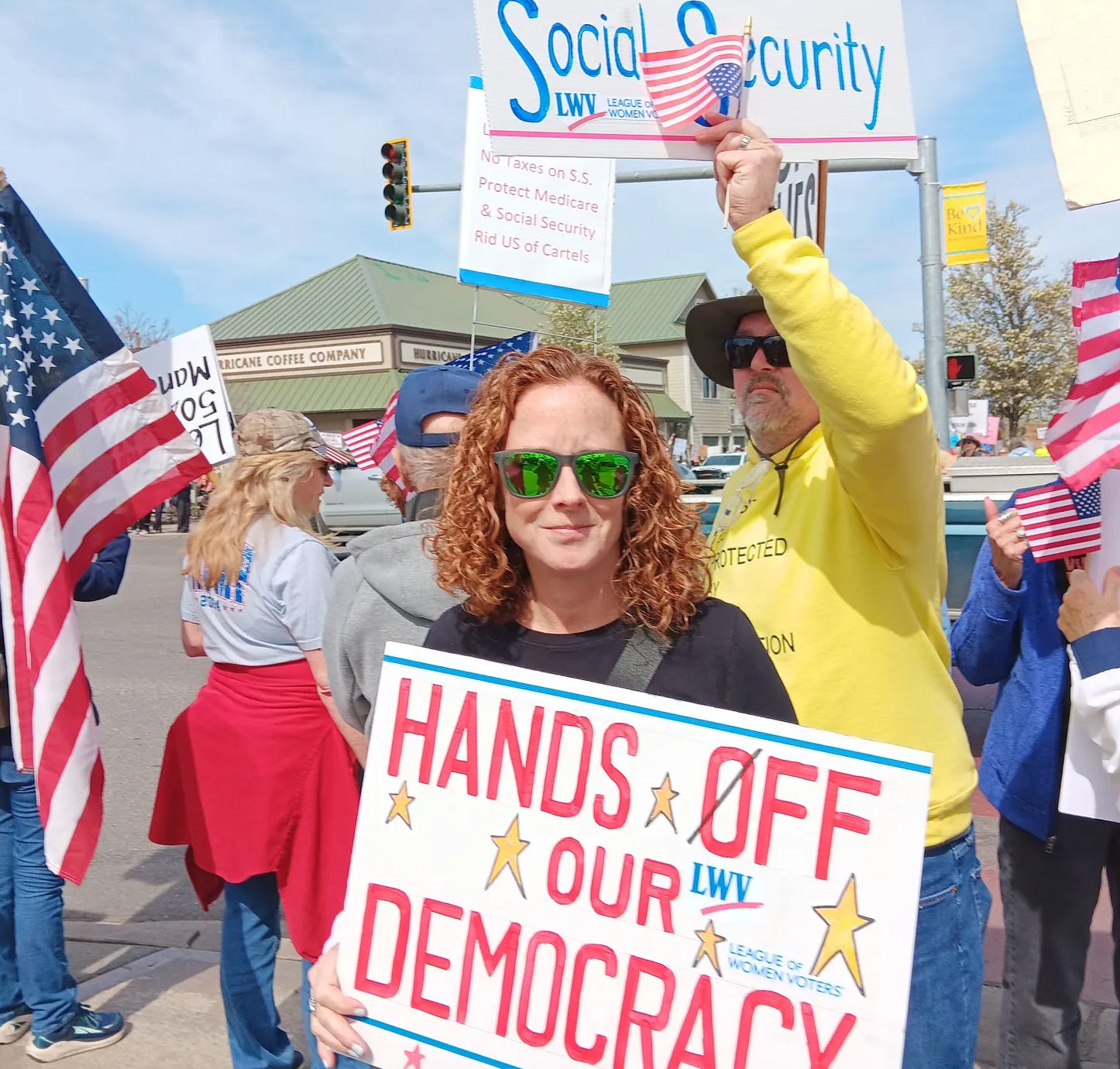
Tomorrow, Indivisible Sequim, which is promoted and supported by the League of Women Voters of Clallam County, is holding a “No Kings III” protest.
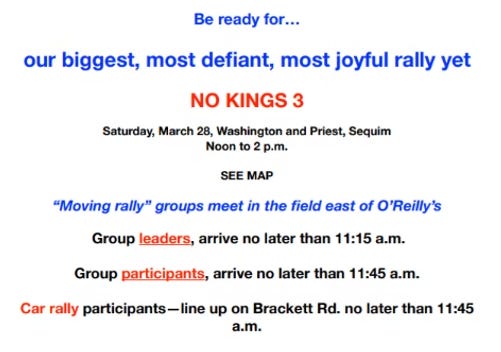
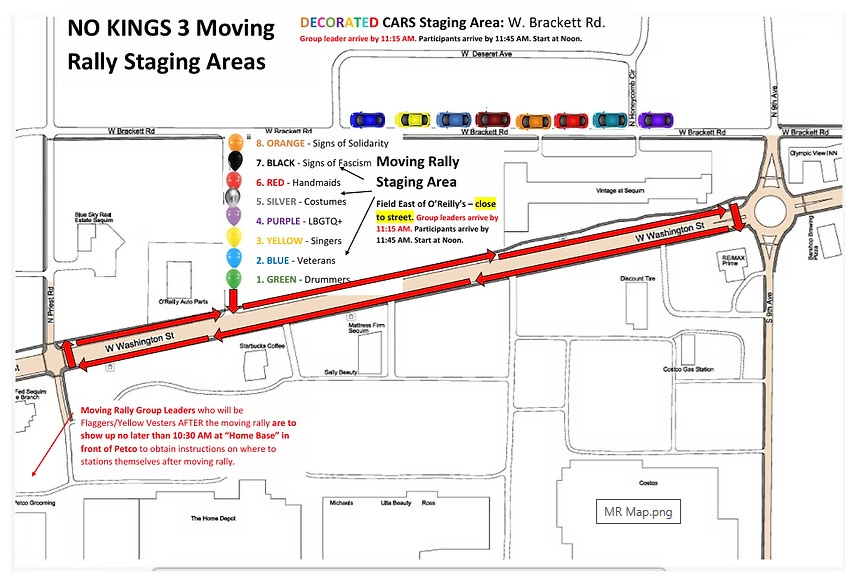
The message from protesters is simple:
No unchecked authority. No king-like leadership. Defend democracy.
But when Clallam County residents faced a real-world example of exactly that—
a non-elected authority shaping millions in taxpayer spending and public safety outcomes—
Where was the League?
No statements
No public concern
No call for accountability
No rally
No outrage
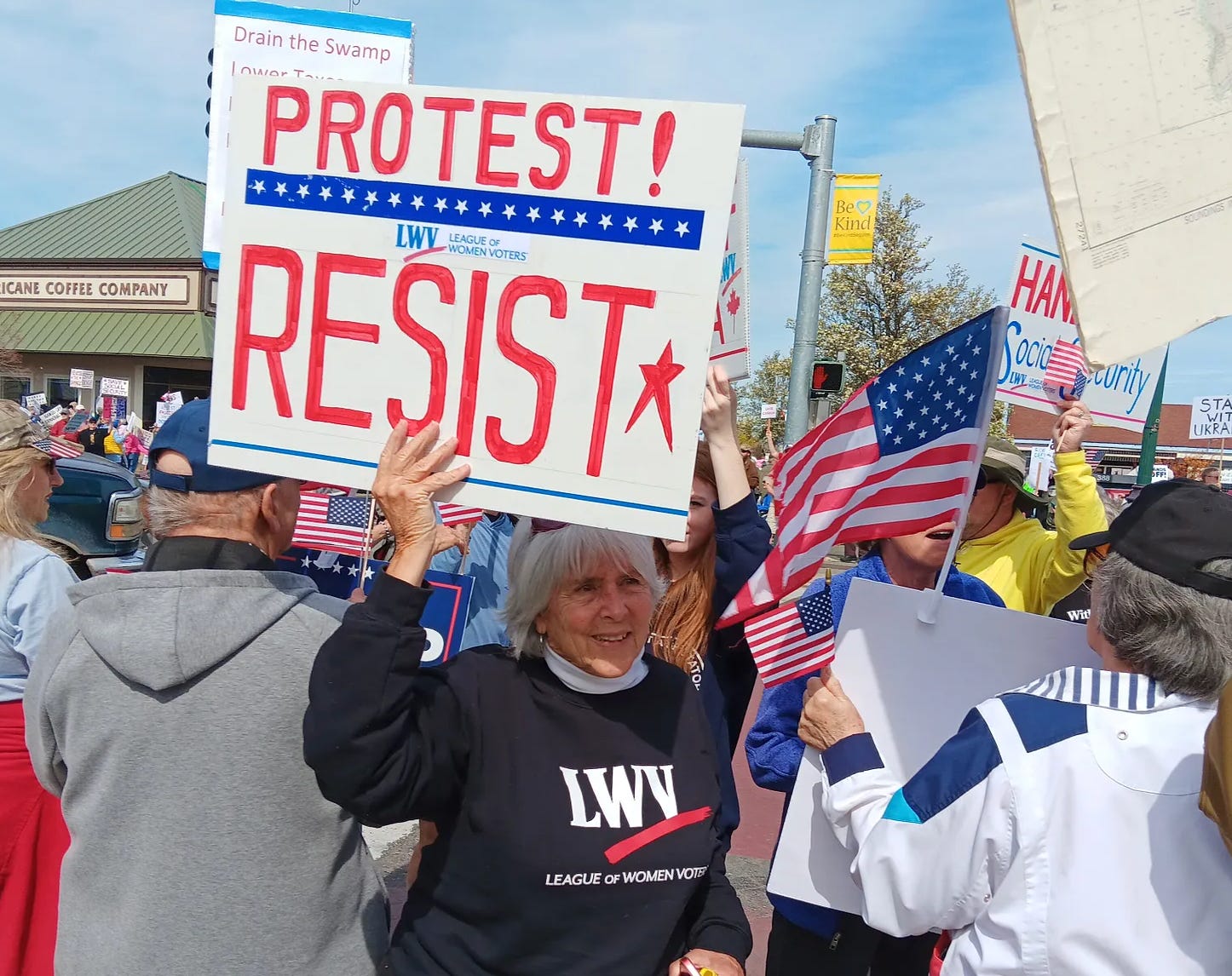
The same organization that urges residents to “stand courageously” when democracy is threatened remained silent when it was tested locally.
It’s Not Just One “King” — It’s a Pattern
If this were only about one decision, it would be troubling.
But the pattern continues—again, in full view of the League of Women Voters.
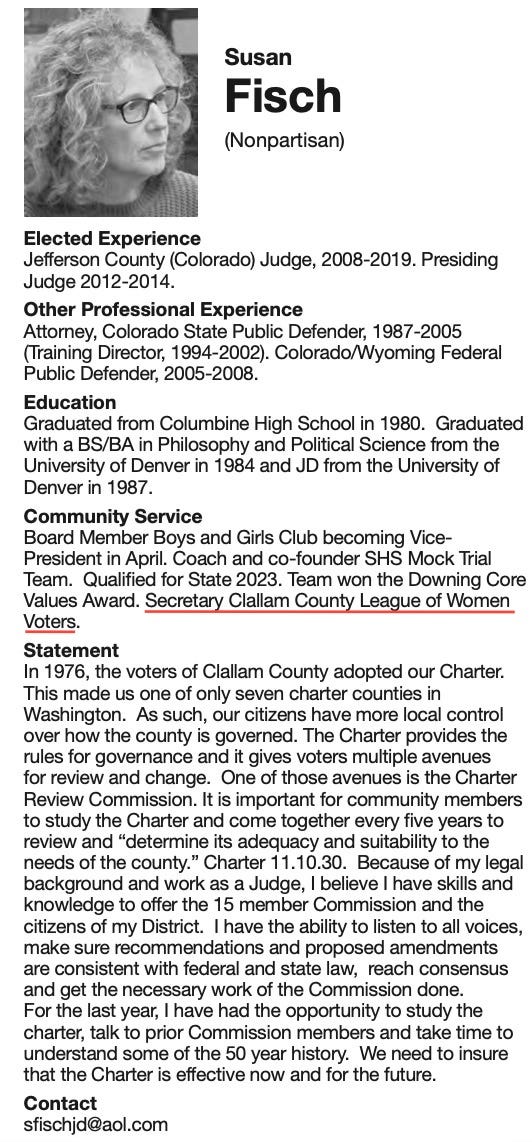
The 2025 Charter Review Commission was a case study in selective democracy. Susan Fisch, who identified herself in the voter pamphlet as Secretary of the League, rode that trusted, nonpartisan reputation to receive the highest vote total of any Charter Review Commissioner—and ultimately became chair.
That matters.
Because what followed wasn’t just policy debate—it was control.
Susan Fisch Ruled by Decree
The public priorities survey—the commission’s primary tool for gathering citizen input—was delegated by Chair Susan Fisch to a subcommittee led by Jim Stoffer without a vote of the full commission. That decision allowed a small inner circle to shape the questions, frame the responses, and route feedback through a private email address outside normal public records visibility.
When the collection of public input is controlled behind closed doors rather than decided openly, the process stops being representative.
Susan Fisch Ruled by Gatekeeping
Certain agenda items were blocked by Fisch’s executive committee, while favored topics were allowed through. This created an uneven playing field where not all commissioners had equal ability to bring forward issues raised by their constituents. When challenged, discussions were cut short or meetings recessed, leaving key questions unanswered.
Susan Fisch Ruled by Narrative
A proposed amendment brought forward by Ron Richards that applied broadly and did not name any tribe was framed by Susan Fisch as targeting Jamestown’s tribal interests. That reframing shifted the debate away from the actual language and toward a perceived intent.
When leadership controls the narrative, it can shape outcomes before the discussion even begins.
Susan Fisch Ruled by Control of Public Engagement
Fisch ended the Sequim town halls an hour early, limiting the time available for public participation. She also restricted commissioners from directly answering questions, reducing opportunities for real dialogue.
What should have been open forums became tightly managed events with limited public exchange.
Susan Fisch Ruled by Uneven Standards
Under Fisch’s leadership, procedure itself became inconsistent—at times strictly enforcing Robert’s Rules of Order, at other times ignoring or suspending them when it suited the moment. Meetings spent hours attempting to adopt new rules that aligned with her preferred outcomes, while similar or more serious actions by others went unaddressed. This selective application of rules created the appearance of favoritism rather than fairness.
When procedure becomes a tool of convenience rather than a standard applied equally, trust in the process erodes quickly.
Susan Fisch Ruled by Secrecy
Concerns were raised when taxpayer-funded private security was arranged for Commissioner Jim Stoffer—with involvement from Chair Susan Fisch—without clear public discussion or prior transparency. When questions surfaced about how that decision was made and whether it complied with the Washington Open Public Meetings Act, efforts to bring the issue forward for discussion were blocked by Fisch. Agenda attempts to address the matter were removed or denied, preventing the full commission and the public from examining the decision.
When leadership facilitates action but refuses scrutiny, transparency gives way to control.
The League Watched—And Said Nothing
Here’s the part that should concern every resident.
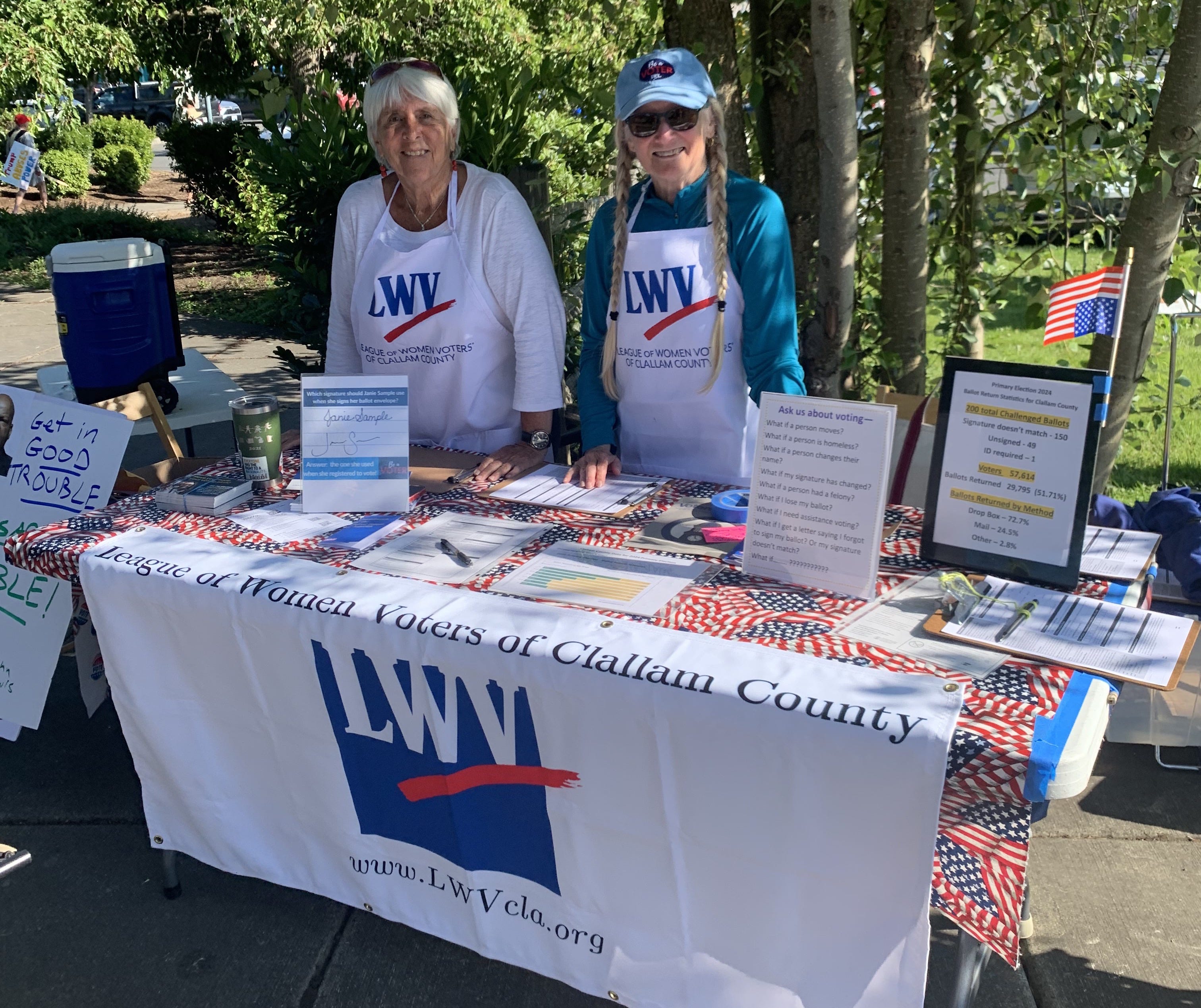
Members of the League of Women Voters were there.
They attended meetings.
They sat in the gallery.
They observed the process unfold in real time.
They did not raise public concerns
They did not question procedural inconsistencies
They did not defend open participation
They often praised the very leadership exercising that control
At least one League member was even observed passing signals to Fisch during meetings—hardly the posture of a neutral observer.
So the question becomes unavoidable:
What exactly does “defending democracy” mean to the League?
Because it appears to depend on where—and who—is involved.
A Five-Year Opportunity—Handled Like a Closed Circle
The Charter Review process happens once every five years.
For many residents, it’s the closest they will ever come to shaping their government.
It should be:
Transparent
Open
Accountable
Instead, what many witnessed was something far more controlled—
and the organization most associated with protecting democratic norms stood by without objection.
That’s not neutrality.
That’s selective engagement.
No Kings… Unless They’re Local?
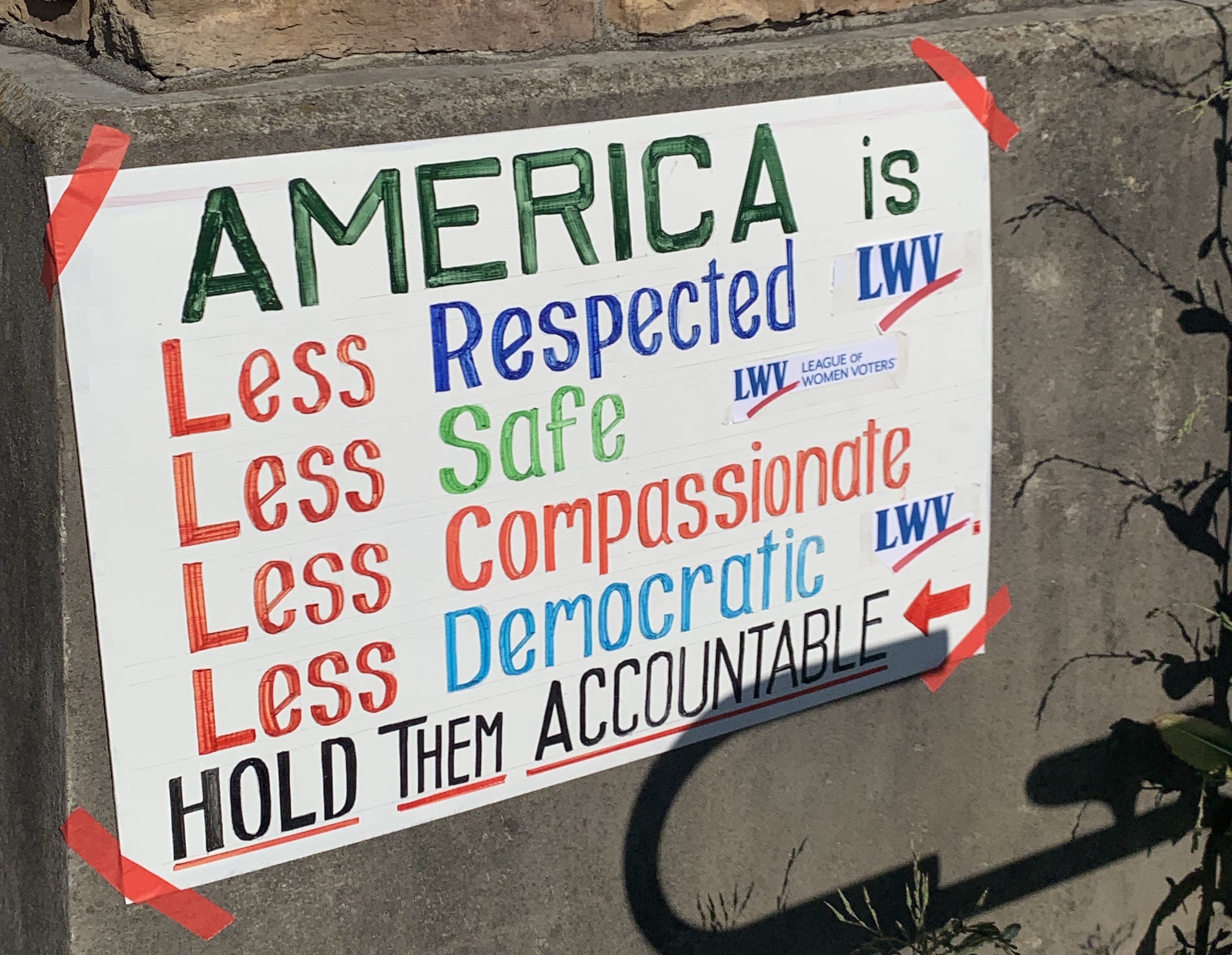
Indivisible, with the League’s support, is asking residents to take to the streets to oppose “king-like” authority.
Fair enough.
But credibility matters.
Because here in Clallam County, we’ve already seen:
Unelected authority influencing millions in public spending
Small groups controlling process and access
Public participation limited or redirected
And in those moments, the League was silent—or worse, supportive.
Questions the League Still Hasn’t Answered
Two weeks ago, questions about their textbook for elementary school-aged children were sent to the League of Women Voters.
They did not respond.
So here are a few more:
Do you believe the Charter Review process was conducted fairly and openly?
Why did you not speak out about the concerns raised during that process?
How do you reconcile promoting “No Kings” while ignoring concentrated power locally?
Do your standards for accountability apply equally at the local level?
If the League stands for democracy, these should be easy questions to answer.
Final Thought
Imagine what could happen if the same energy being directed at distant political figures was focused right here at home.
On the decisions.
On the processes.
On the people actually shaping this community.
Because democracy doesn’t collapse overnight.
It erodes quietly—
often with the approval, or silence, of those who claim to defend it.
And if we’re being honest—
The problem isn’t that we don’t have kings and queens.
It’s that too many people are willing to ignore them when they’re local.
Today’s Tidbit
Sequim resident Kaylee Kuehn has announced her candidacy for Legislative District 24.
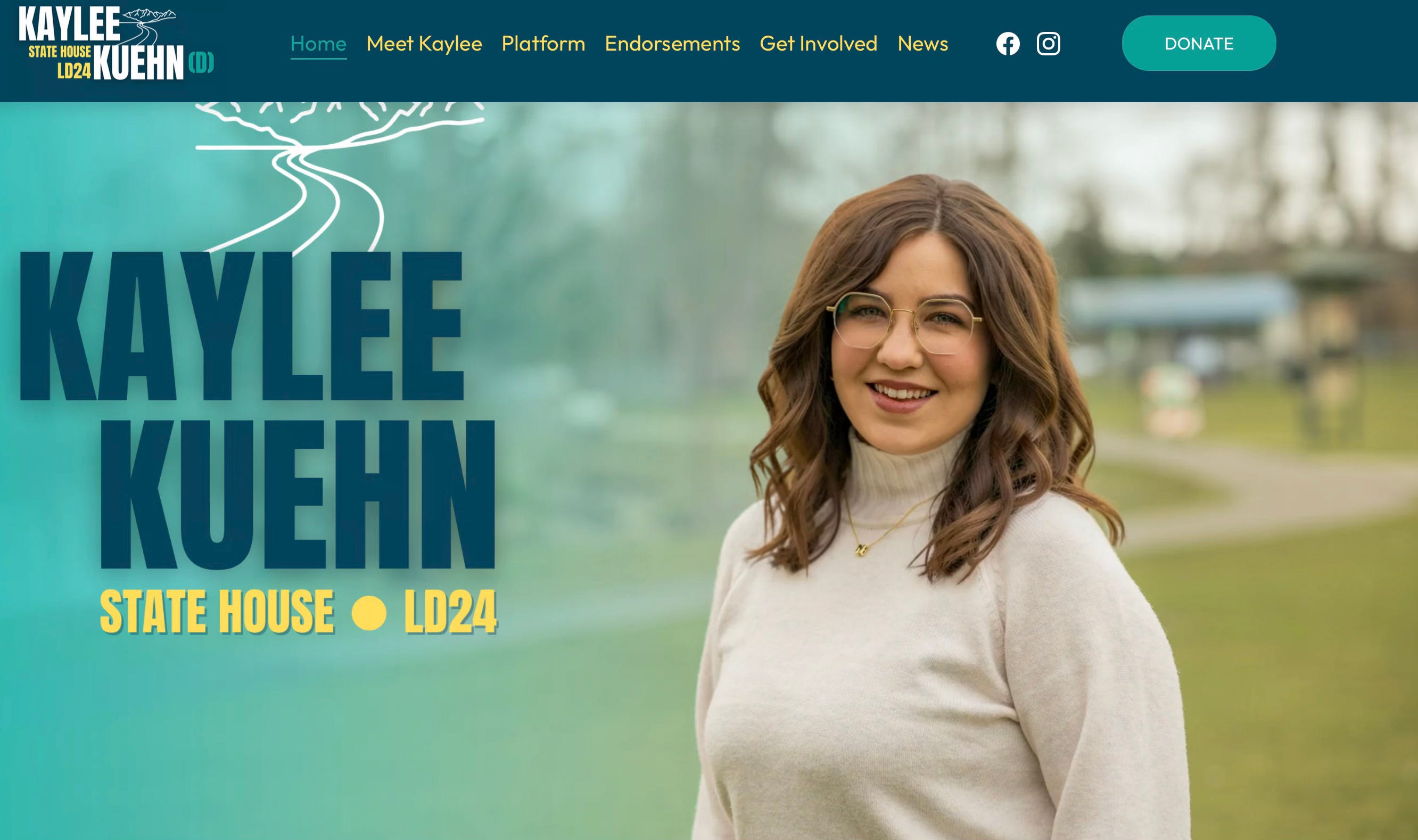
According to her biography, she holds a bachelor’s degree in liberal arts from The Evergreen State College, with a focus on politics and psychology, and has already secured several notable endorsements.


Clallam County Commissioner Mike French, who has described $350,000-per-unit luxury developments for the homeless as “affordable housing.”
Sequim City Councilmember Nicole Hartman, who is considering support for the Jamestown Tribe’s request to transfer two national wildlife refuges out of public ownership.
Community advocate Jim Stoffer, who resigned from the Sequim School Board amid controversy and was later linked to the disclosure of confidential documents during his time on the Charter Review Commission.
The commissioners did not respond to an email asking why they haven't followed up with the Jamestown Corporation about paying their fair share of property and lodging taxes. Here is today's email sent to the League of Women Voters at info@lwvcla.org:
Dear League of Women Voters of Clallam County,
The purpose of this email is simple: to give you an opportunity to respond directly to several questions raised in the article and to provide any clarification, context, or corrections you feel are appropriate.
As an organization that plays an active role in civic engagement and public discourse, your perspective is important. I want to ensure that readers have access to your explanations in your own words.
To that end, I will publish your response in full and unedited so that the public can review it directly, without interpretation or filtering.
If you’re willing to participate, I would appreciate your responses.
Thank you for your time and for your continued involvement in our local community.
Sorry Jeff. Pre-Coffee I am animal. I edited out the worst of it. My cussing and hatred for the Governors office pales anything you can imagine.