

Another campaign sign gets destroyed. A county commissioner defends property destruction as a path to change. Overdose deaths fall—but who deserves the credit? Meanwhile, repeat offenders cycle through the system, activist groups fracture from within, and parents are warning each other about terrifying encounters at local parks. This week’s Social Media Saturday dives into the posts, photos, scanner chatter, and community debates shaping life in Clallam County—and asks the question many residents are already asking themselves: are things really safer than they were four years ago?
The One-Sided Sign War Continues
The Seegers campaign is spending time, money, and volunteer energy bringing every campaign sign into full PDC compliance after concerns over font sizing that could expose the campaign to $30,000 in penalties.
But compliance issues aren’t the campaign’s only problem. Signs are now disappearing.
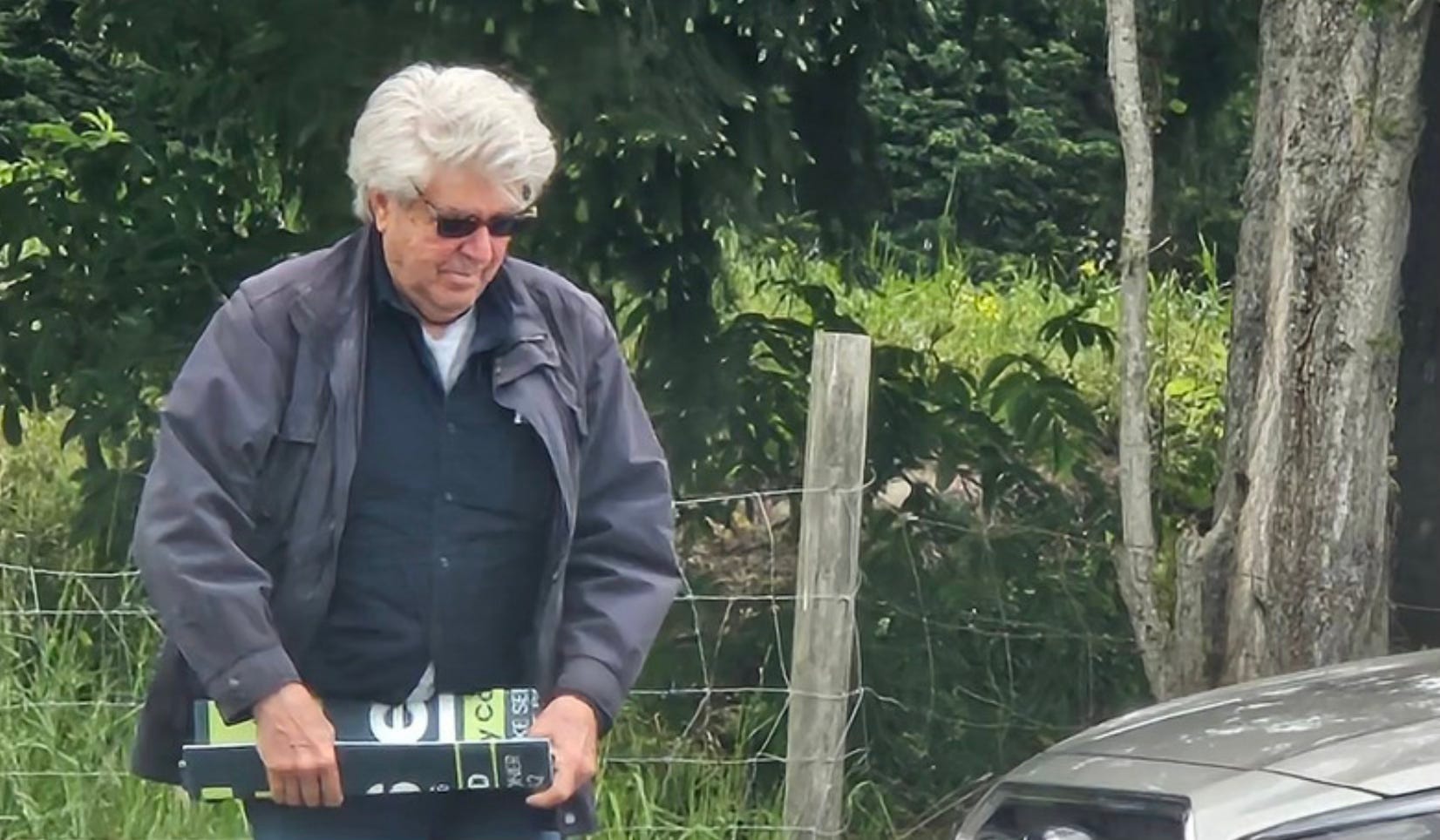
One newly updated and fully compliant sign was recently stolen and destroyed. The metal stake was left behind, and an engaged CC Watchdogger captured the incident on camera.
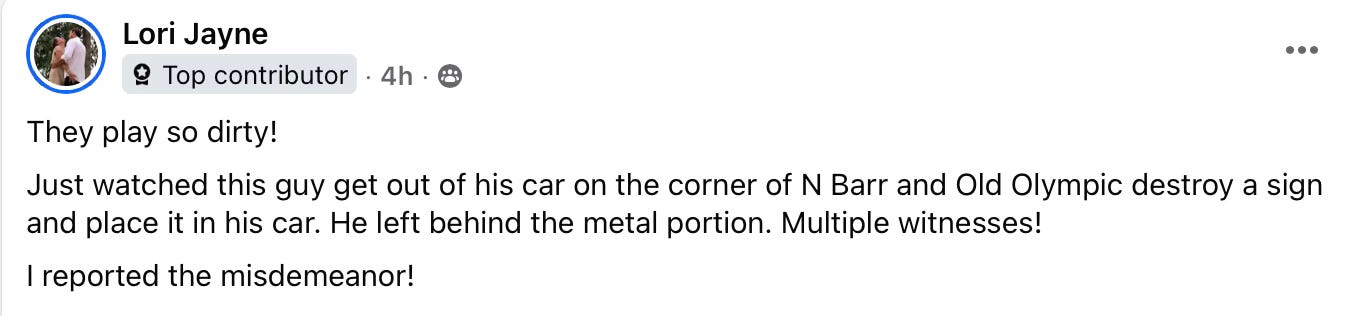
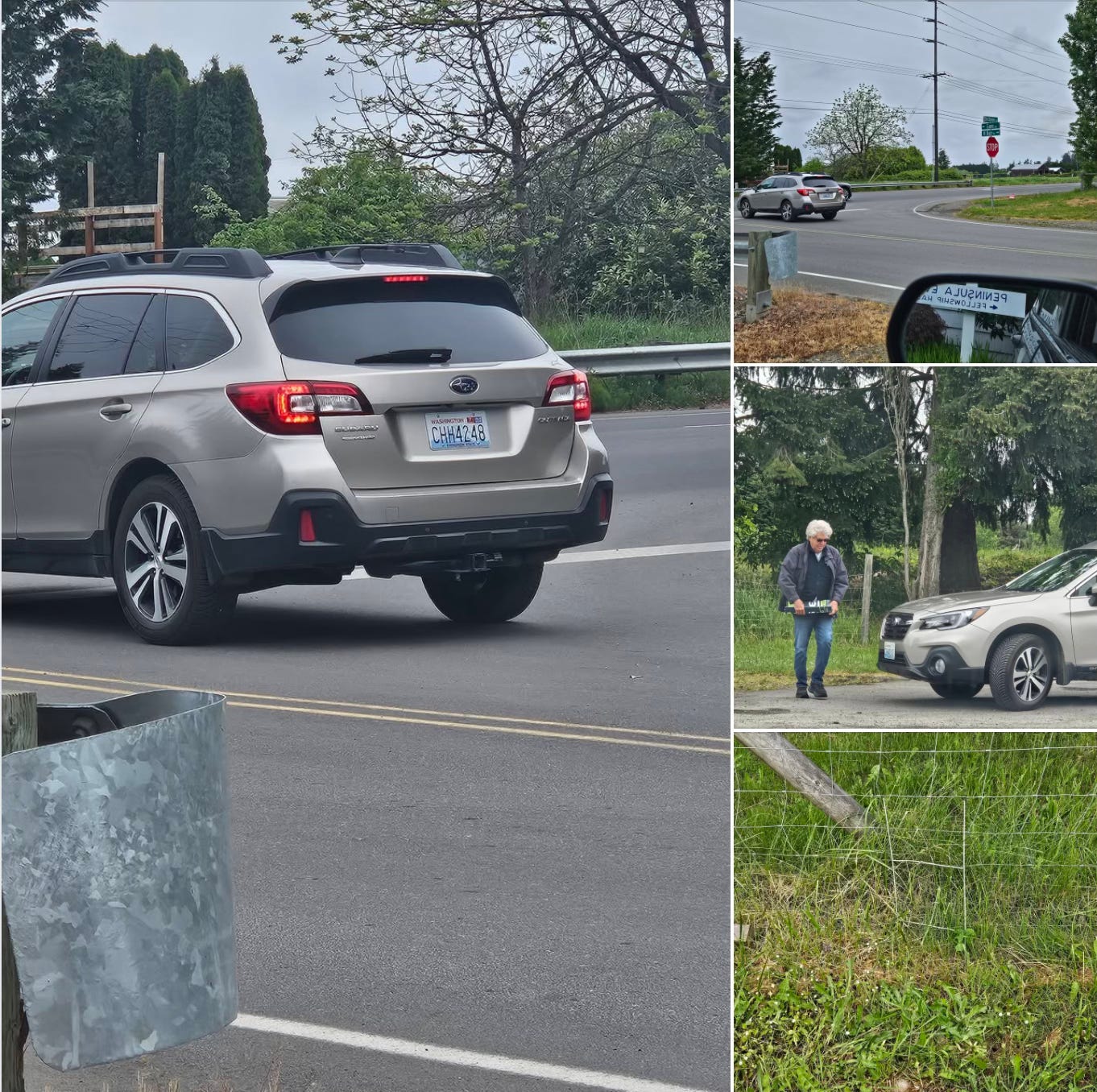
And if there’s one thing people in Clallam County know by now, it’s this: if anyone can solve a mystery, it’s the CC Watchdog community.
With filing week now closed, the race for County Commissioner is officially a two-man contest between Jake Seegers and incumbent Commissioner Mike French.
That makes the contrast even sharper. Commissioner French has publicly stated that “property destruction is not only fine, it’s usually the only way we’ve ever seen actual change happen.”
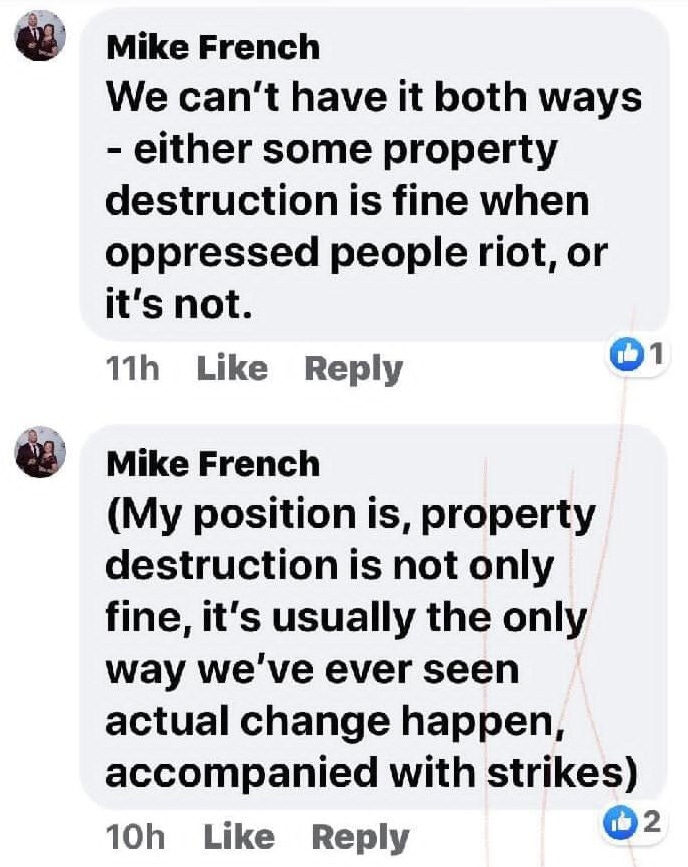
But there’s another way to create change.
Build something.
Find a candidate you believe in. Donate. Knock on doors. Put signs out legally. Volunteer. Engage your neighbors. Participate in the process.
Whether residents support Jake Seegers or Mike French, many are discovering that building something you believe in is a lot more rewarding than destroying something you dislike.
Who Really Reduced Overdose Deaths?
Operation Shielding Hope launched in 2024 as a partnership between police, fire personnel, and community organizations focused on reducing overdose deaths and connecting survivors to treatment immediately after crisis intervention.
Commissioner Mark Ozias credited the county’s harm reduction efforts for a 33% reduction in overdose deaths compared to 2023. But the timeline suggests another major factor: the launch of Operation Shielding Hope by the Port Angeles Fire Department.
Unlike traditional harm reduction programs focused on distributing supplies, Shielding Hope emphasizes immediate paramedic response, relationship-building, and treatment referrals after overdoses.
Before the program, roughly 60% of overdose survivors reportedly refused help. Under Shielding Hope, officials say 78% engaged with services, compared to just 3% without paramedic intervention.
By May 2025, Fire Chief Derrell Sharp reported overdose deaths had dropped sharply, and Clallam County fell from having the second-highest overdose rate in Washington to outside the top ten.
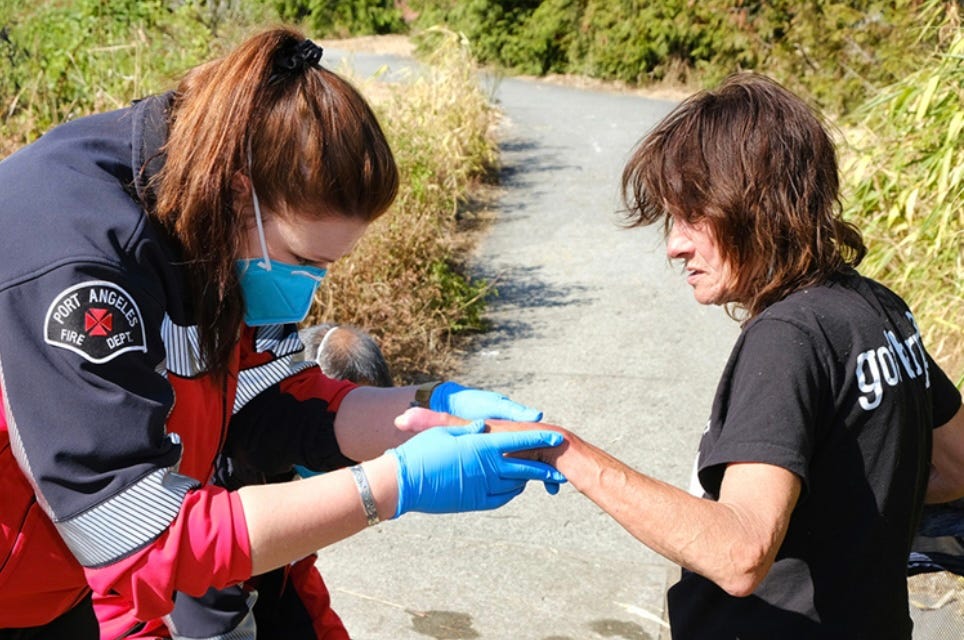
Most overdoses occur in Port Angeles—the exact area where Shielding Hope operates. The timing aligns. The results appear measurable.
Which raises a political question heading into election season: if overdose deaths are declining because of a fire department-led treatment program, will county leaders credit the Port Angeles Fire Department—or frame the success as validation of expanded county harm reduction policies?
Justin Cox Is Back
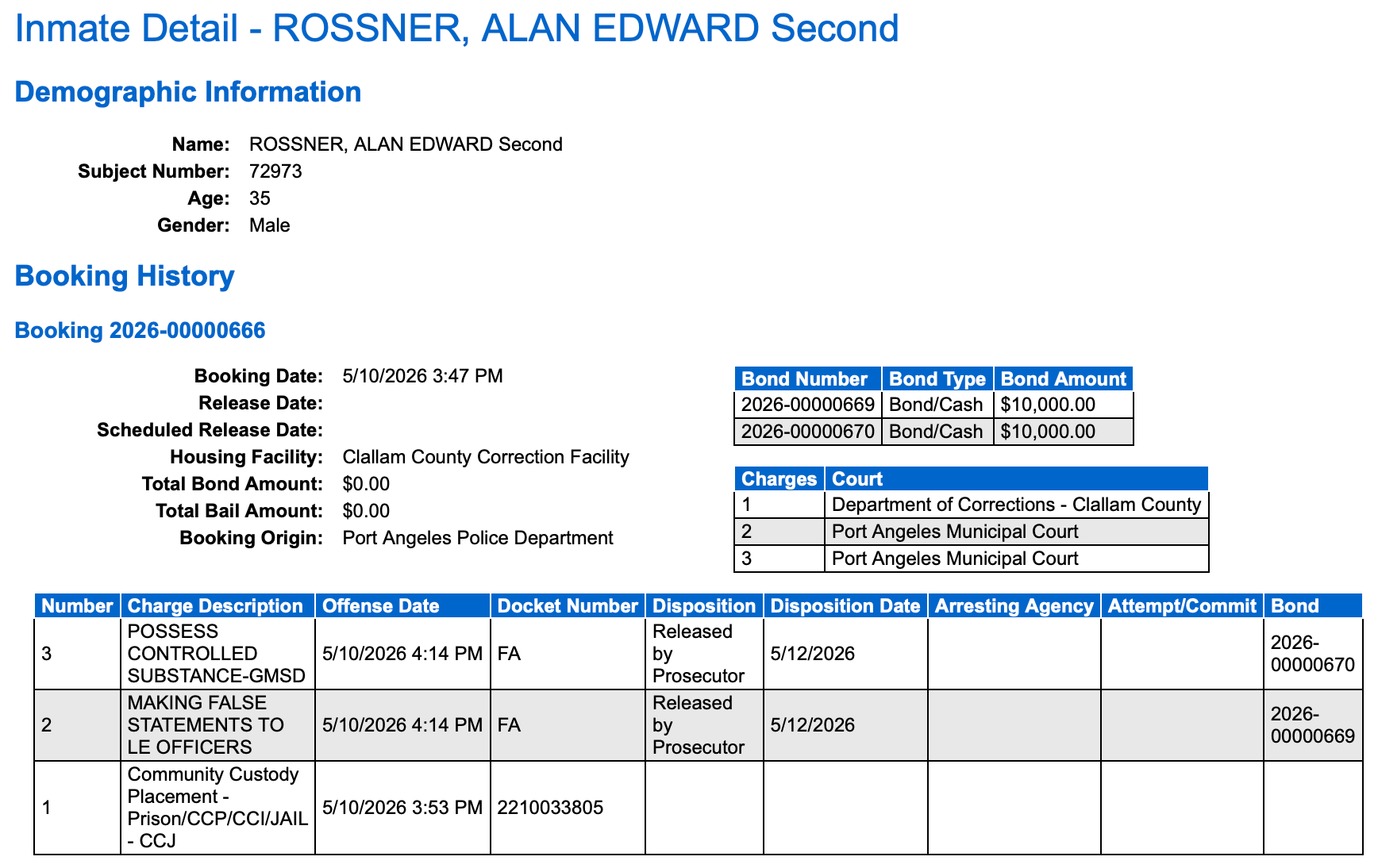
Residents may remember Justin Cox from previous arrests involving stolen vehicles, methamphetamine possession, resisting arrest, and damaging emergency vehicles.
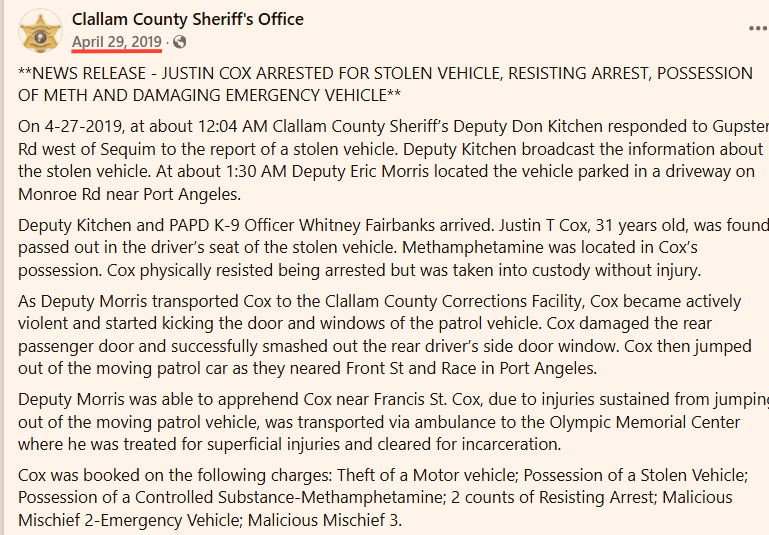
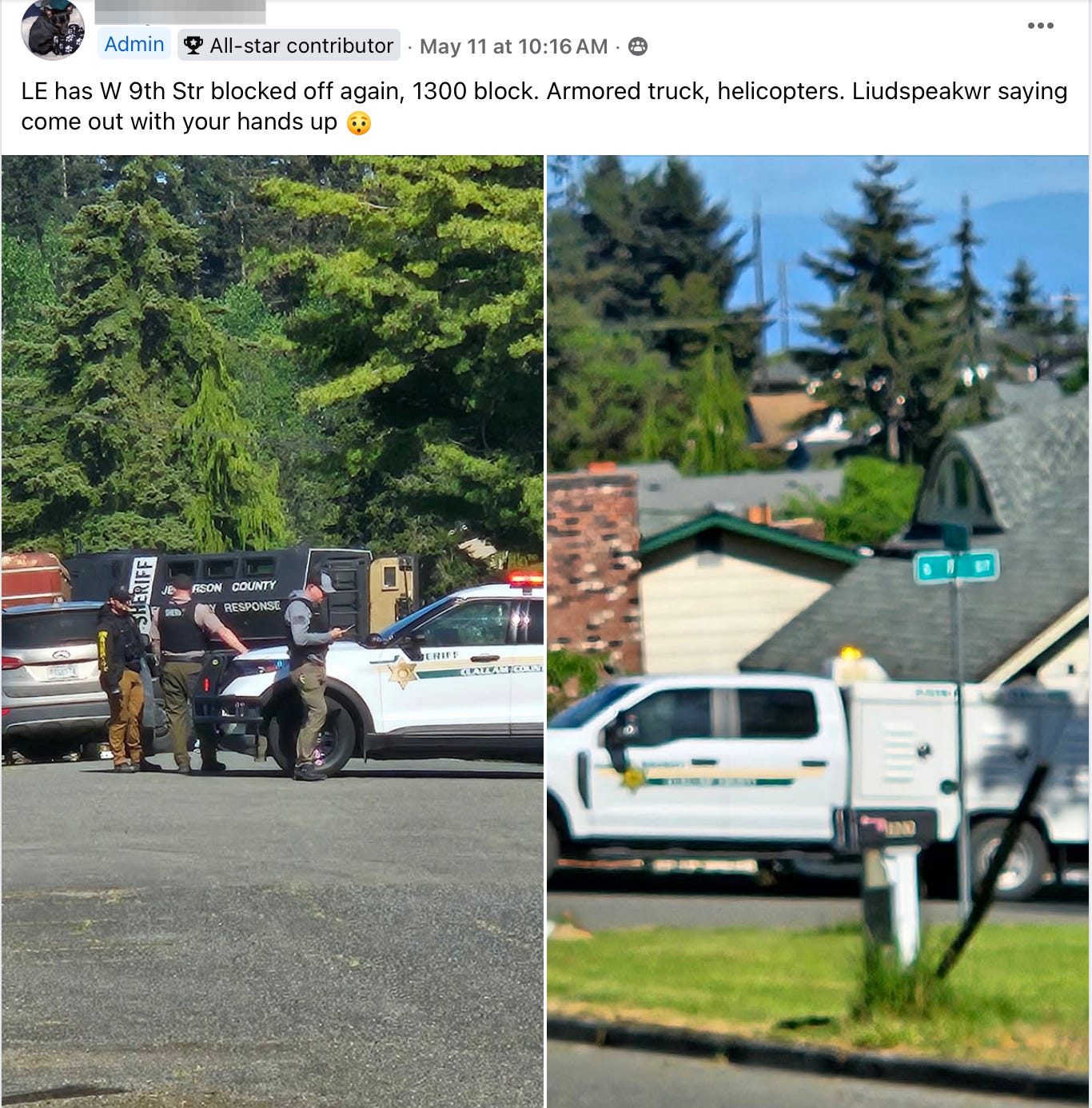
Then came the Carlsborg standoff last year.
According to law enforcement, Cox allegedly fired 25 to 30 rounds from an AK-style rifle toward deputies and armored vehicles after barricading himself inside a home and threatening officers.
Investigators say he claimed to be “the Messiah,” threatened to kill law enforcement, and used an elderly resident as cover while armed.
The situation escalated into a full tactical response involving crisis negotiators, armored vehicles, and chemical munitions before Cox was eventually arrested. No one was killed.
Now he’s back.
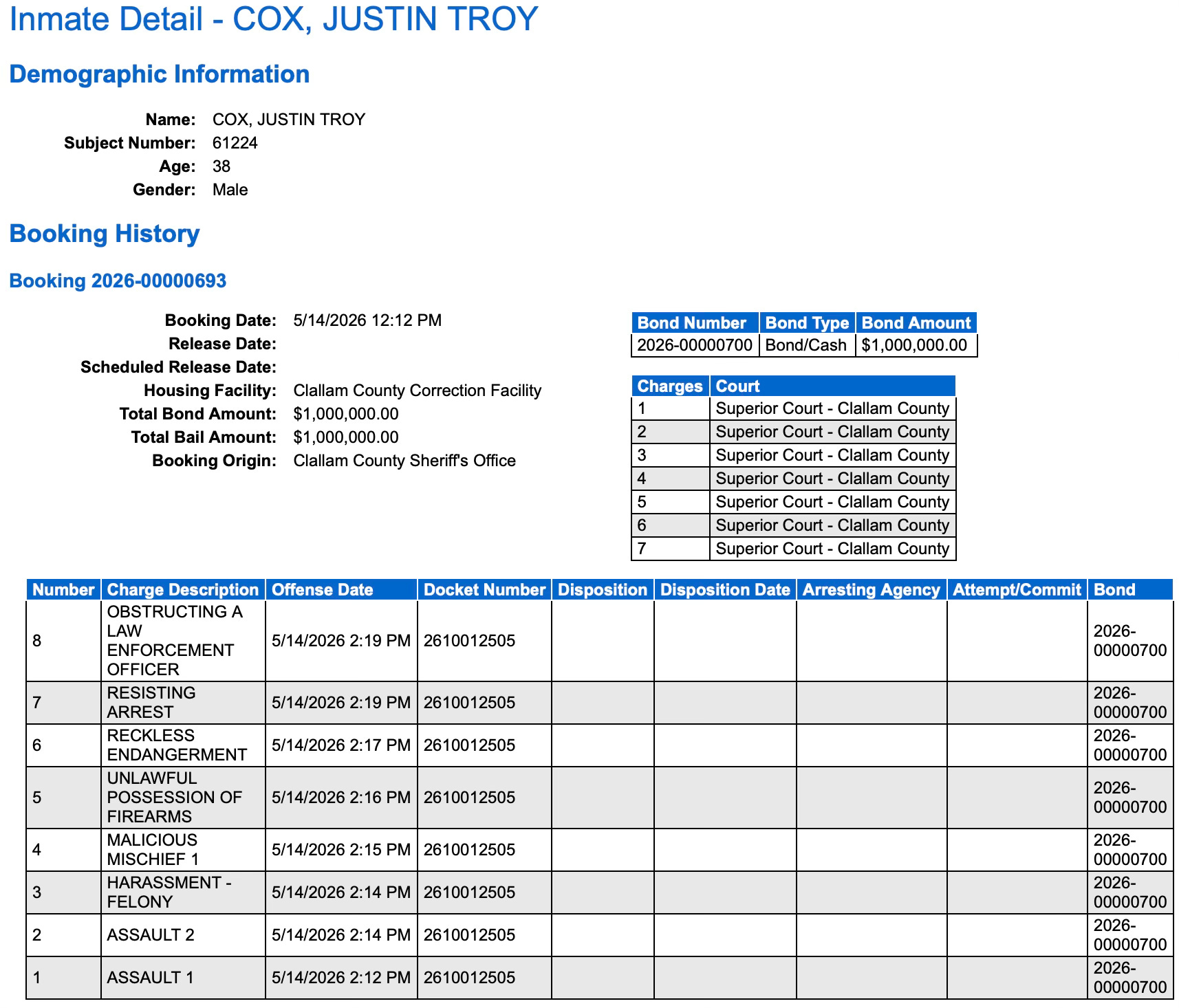
This week, Cox was arrested for obstructing law enforcement, resisting arrest, reckless endangerment, unlawful firearm possession, malicious mischief, felony harassment, and assault charges.
At the recent Public Safety Town Hall, attendees were asked whether Clallam County feels as safe today as it did four years ago. Out of 172 attendees, only three said yes.
One of them was Commissioner Mike French.
Is the League of Women Voters Really Nonpartisan?
At the national level, Indivisible openly aligns with Democratic Party causes and activism. They say so themselves.
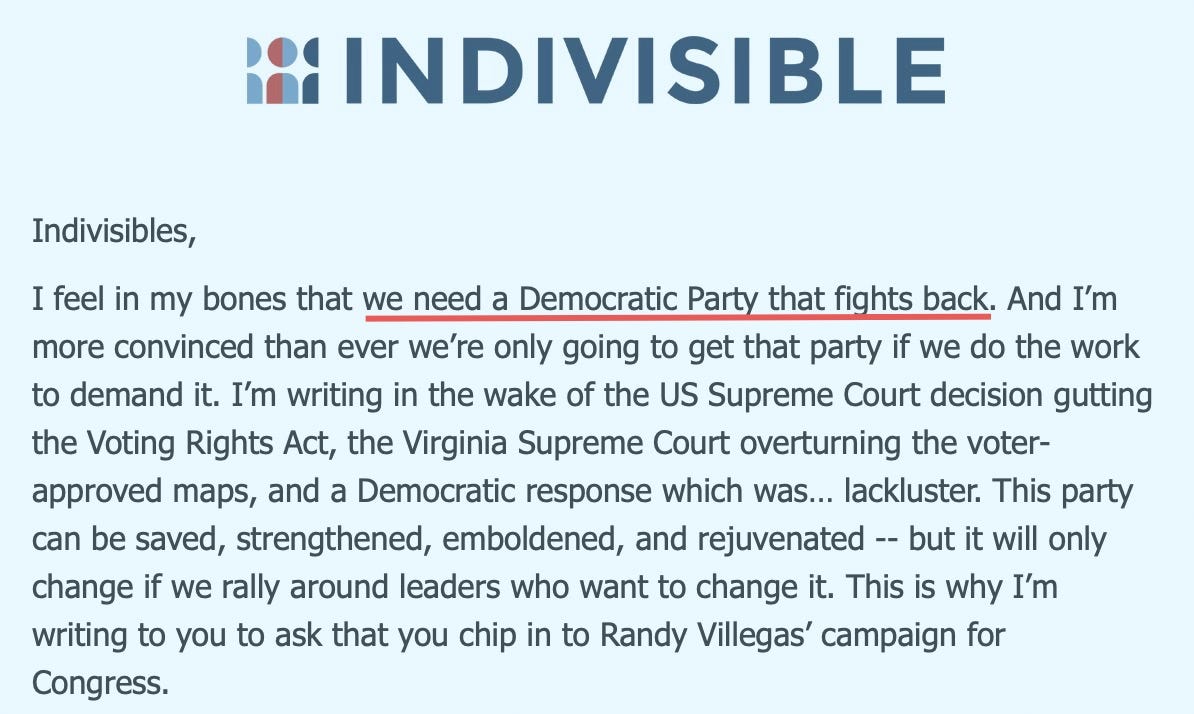
No mystery there.
Indivisible Sequim has also publicly encouraged Democratic voter turnout in newsletters and organizing efforts.

Again—that’s their right.
But questions are increasingly being raised about organizations that simultaneously claim neutrality while appearing consistently aligned with one side politically.
This week, an Indivisible Sequim member posted about organizations supporting their efforts, including the League of Women Voters.
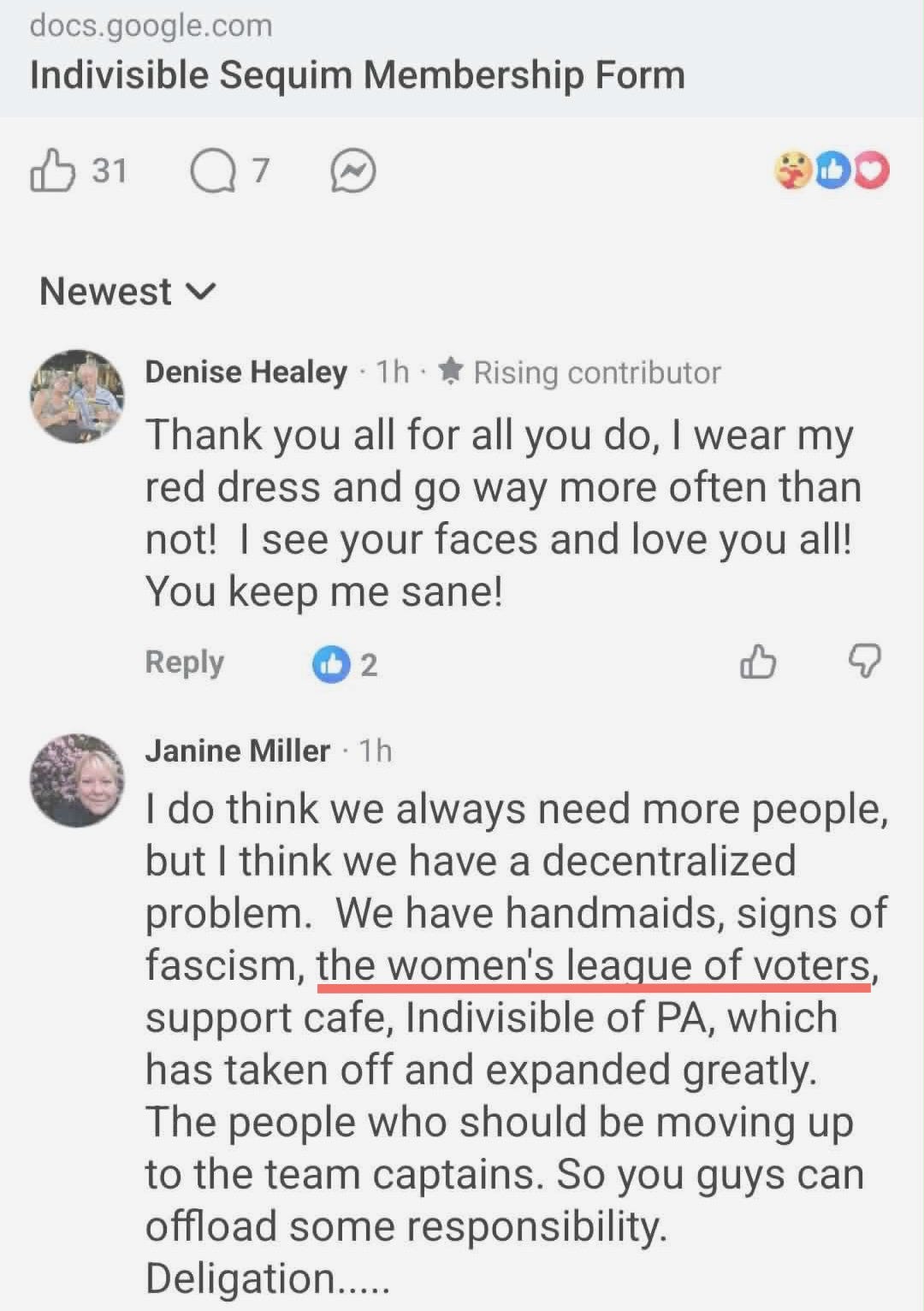
That caught people’s attention.
The League of Women Voters strongly markets itself as “nonpartisan,” which gives it credibility in election monitoring, civic engagement, and local government participation.
But critics increasingly argue the organization functions as functionally partisan while maintaining the protective branding of neutrality.
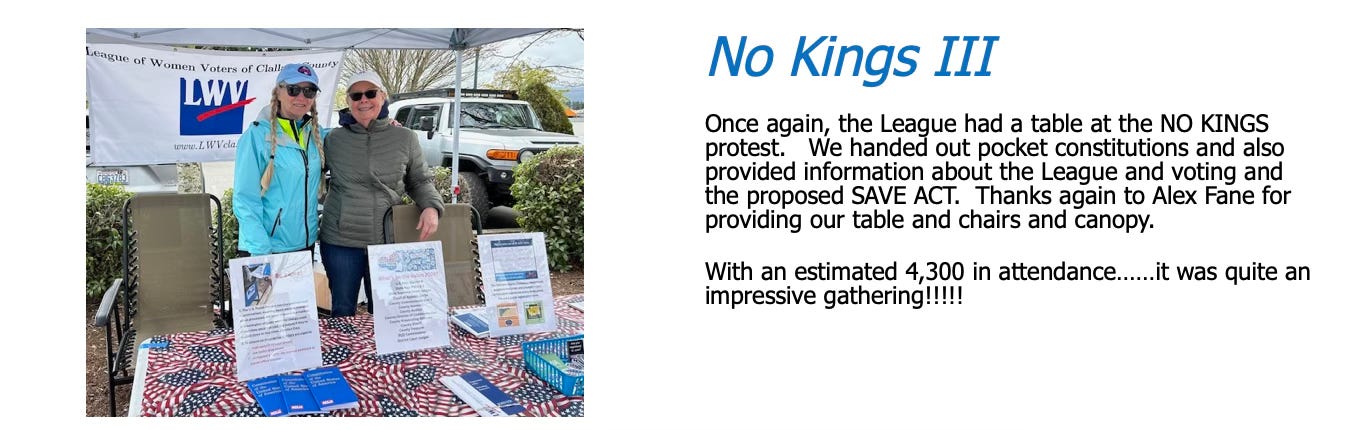
Residents searching for examples of the League supporting conservative causes or Republican candidates locally are struggling to find them.
Fair or unfair, skepticism is growing. And once public trust starts eroding, rebuilding it becomes difficult.
Trouble Inside Indivisible Sequim
Indivisible Sequim itself appears to be facing internal strain. Founder PJ Harris recently posted online that she was “in tears because I’m weary,” suggesting too few members are carrying the workload.
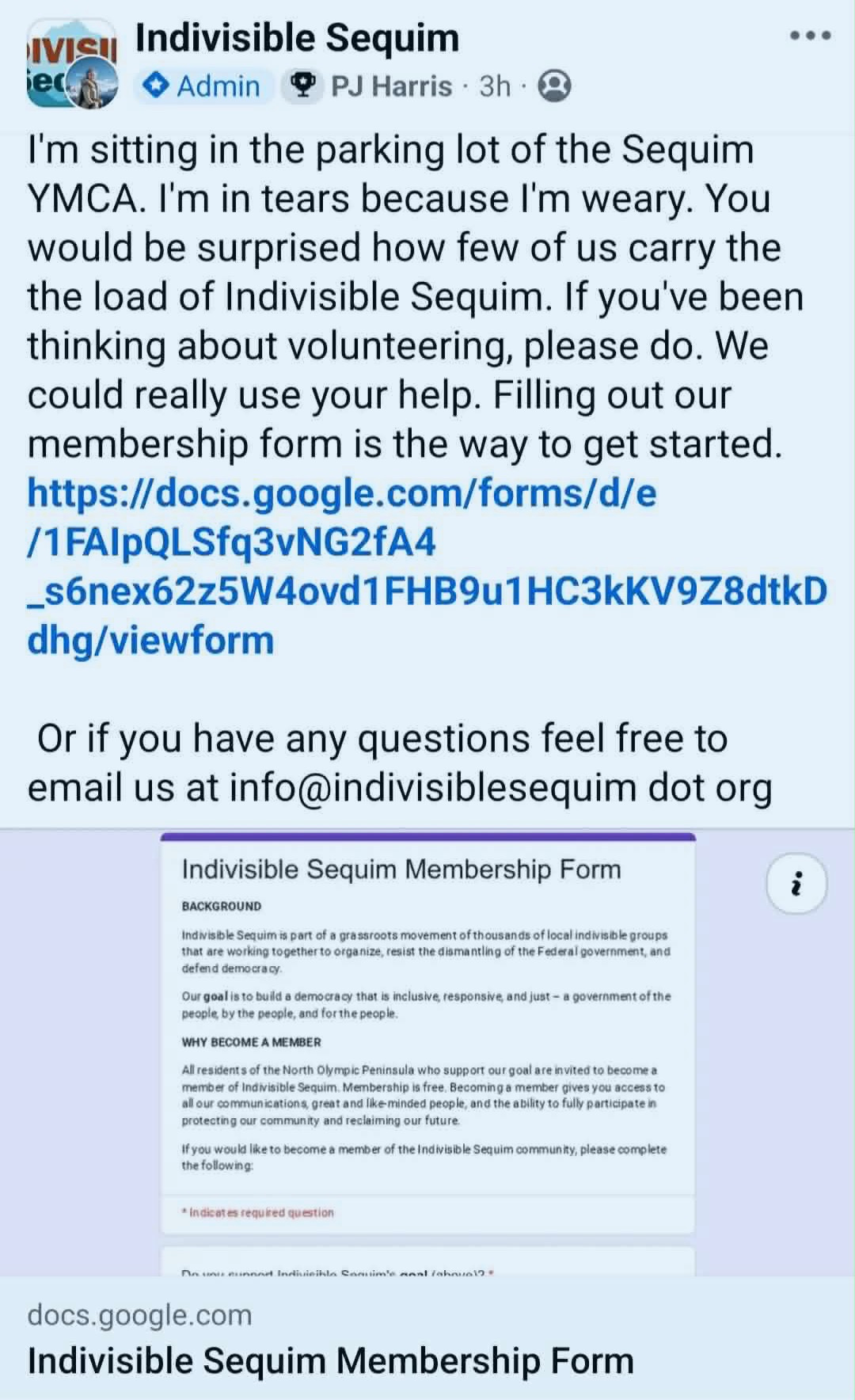
At the same time, critics continue accusing the organization of ideological gatekeeping—claiming people are excluded if they do not fully align with climate activism and social justice politics.
Meanwhile, former Sequim School Board member Jim Stoffer, who serves in a security-related role within the organization, has been accused of pushing out members who engage with CC Watchdog content.
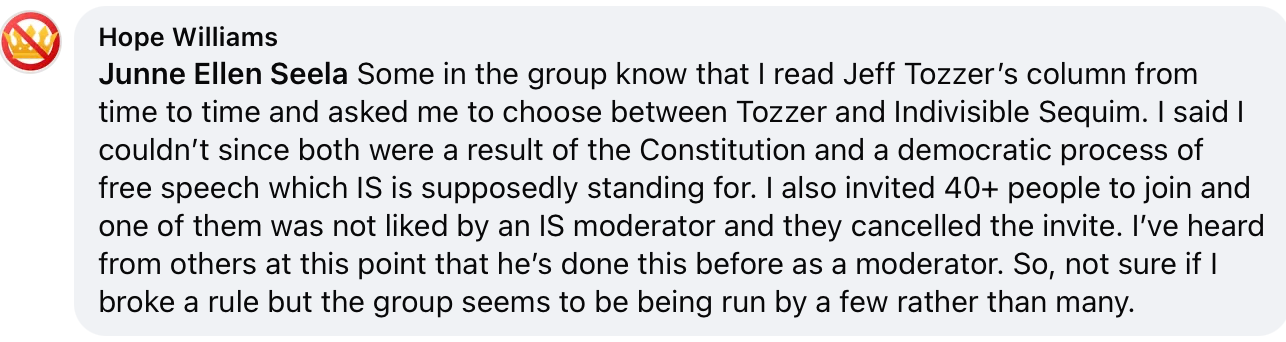
Whether those accusations are fully fair or not, the organization appears increasingly fractured. And some are asking whether ideological purity tests are contributing to dwindling participation.
What Happened to Beth?
Earlier this week, an Indivisible Sequim member named Beth posted concerns about feeling unsafe and vulnerable online, expressing interest in blocking people who disagree with her politically.
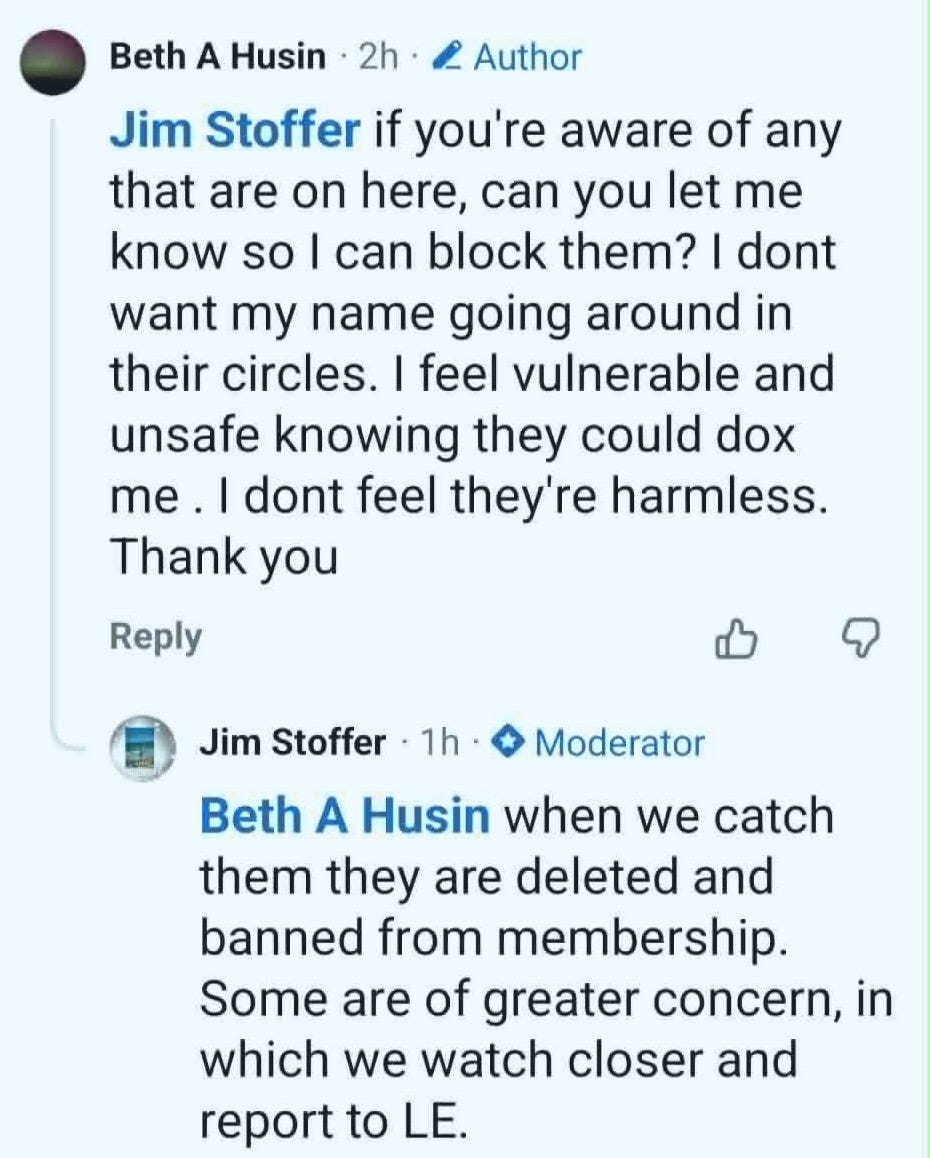
That might sound understandable in today’s climate. But prior social media posts tell a different story.
Back in 2019, Beth expressed concerns many local residents shared: homelessness, drug use, garbage, public disorder, and rising crime. At the time, she appeared focused on practical solutions and concern for the community.
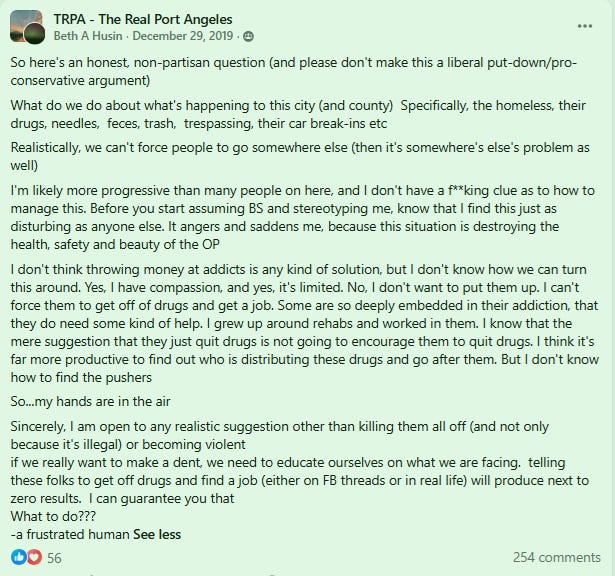
Fast forward several years, and her online rhetoric became dramatically more aggressive. Last year, she openly mocked the murder of political activist and commentator Charlie Kirk after he was killed while exercising his free speech rights.
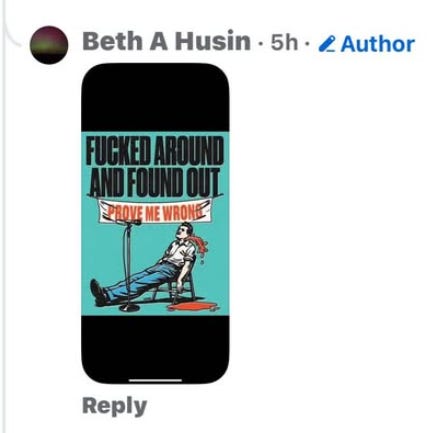
That transformation raises uncomfortable questions.
How does someone move from concerned community member to celebrating political violence?
What role do activist echo chambers play?
What role do fear-based political messaging and social media radicalization play?
And perhaps most importantly: What has happened to civility in Clallam County?
A Frightening Warning From Carrie Blake Park
One of the most alarming social media posts this week came from a mother in Sequim warning parents after a terrifying encounter at Carrie Blake Park. According to her account, a man approached while her two-year-old daughter was on a swing and repeatedly demanded the child, telling the mother he “wanted” her daughter and “wouldn’t hurt” her.
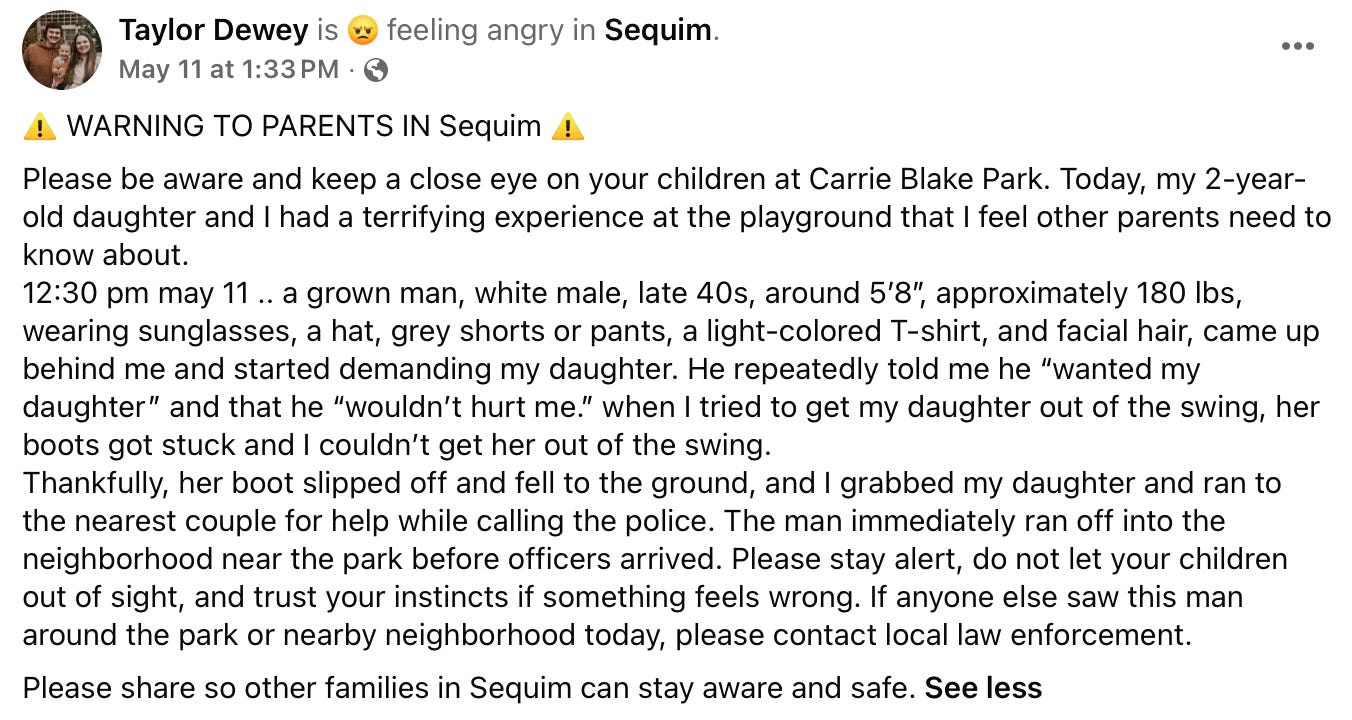
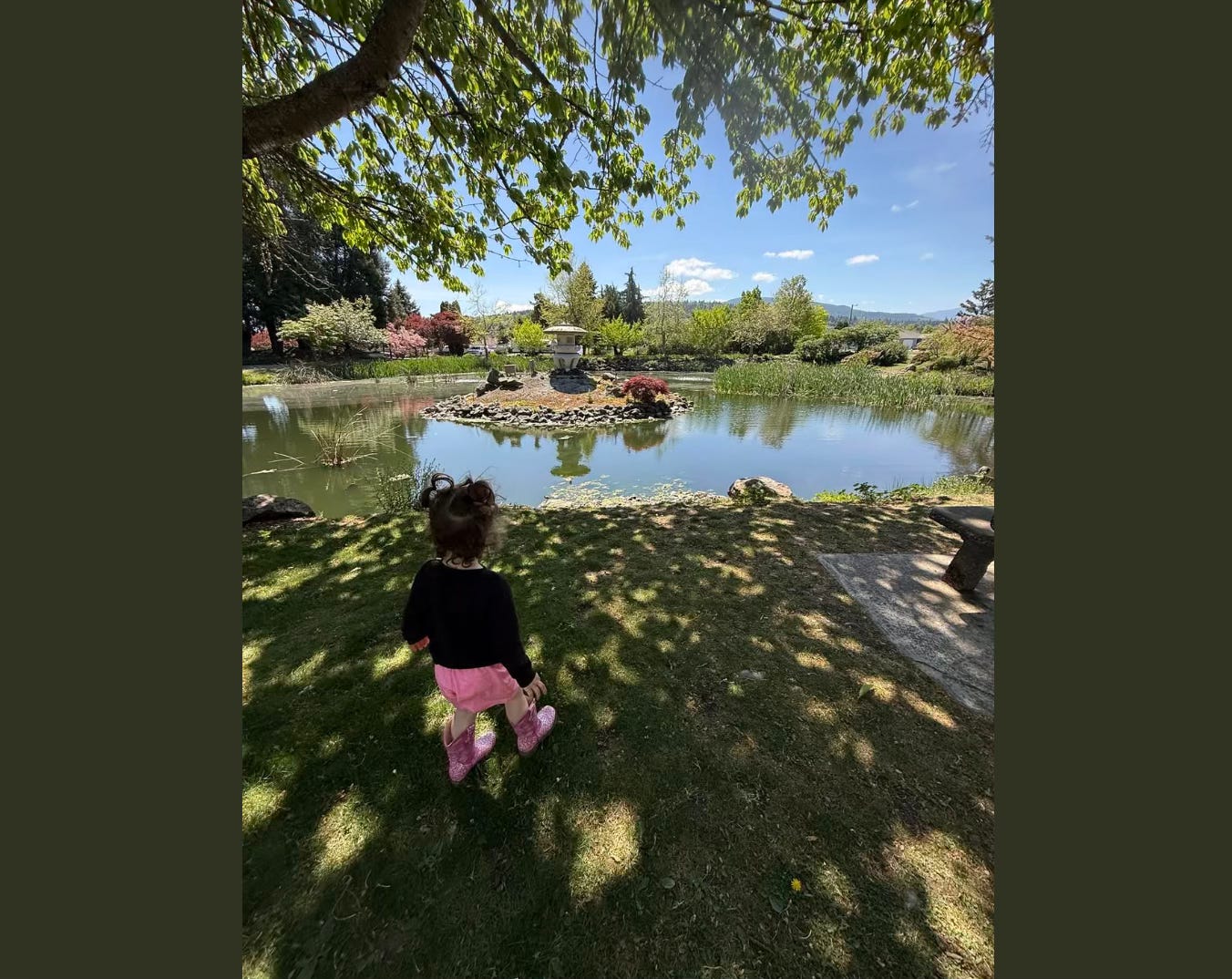
The mother said she struggled to free her daughter from the swing as the man continued approaching. She eventually escaped and ran for help while calling the police. The suspect reportedly fled before officers arrived.
The post spread rapidly across community pages, with many parents expressing fear and frustration. And again the question resurfaced:
Are residents really safer today than they were four years ago?
Craig Gallauher: Out Already?
This week, social media lit up with warnings about Craig Gallauher allegedly riding throughout Sequim near parks, trails, and children’s areas.
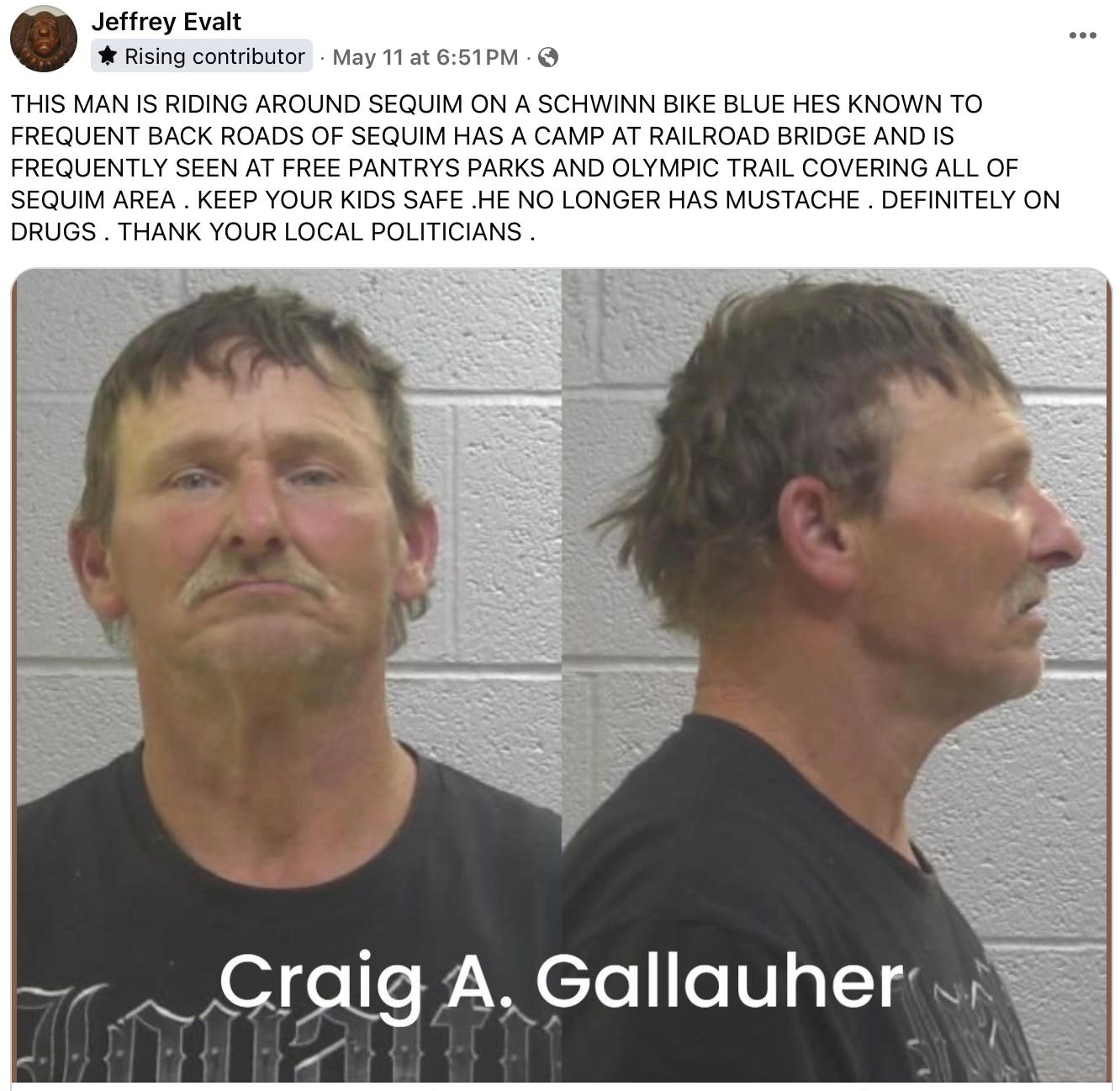
Posts described him frequenting the Railroad Bridge area and various public spaces.
What shocked many residents was that Gallauher had already been arrested last year in connection with disturbing allegations involving children near a campsite south of Railroad Bridge Park.
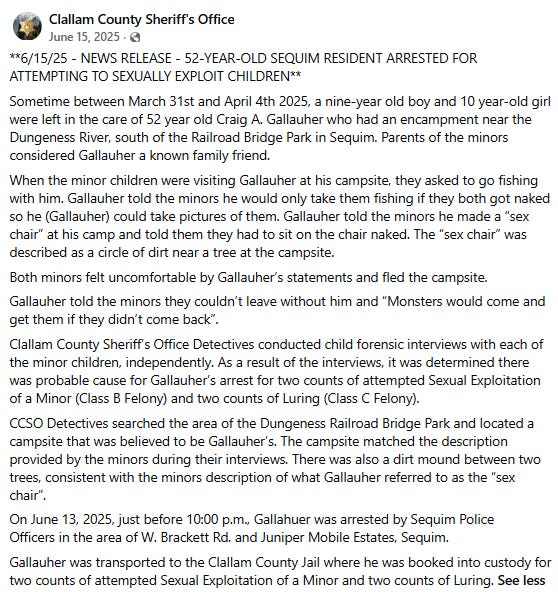
According to law enforcement, two children told investigators Gallauher attempted to persuade them to remove their clothes and sit in what he allegedly called a “sex chair” at his encampment.
The children fled. Detectives later located a campsite matching their descriptions. Gallauher was arrested on multiple felony charges involving attempted sexual exploitation of minors and luring. Now residents are asking the obvious question:
Why is someone accused of crimes like this already back on the streets around public parks and trails?
Another Disturbing Park Incident
Another troubling social media post circulated after parents reported a man approaching children and asking to push them on swings and play on playground equipment.
One parent claimed the man was hiding inside a slide waiting for children to come down. When confronted by several fathers and asked whether he had children at the park, he reportedly answered, “No.”
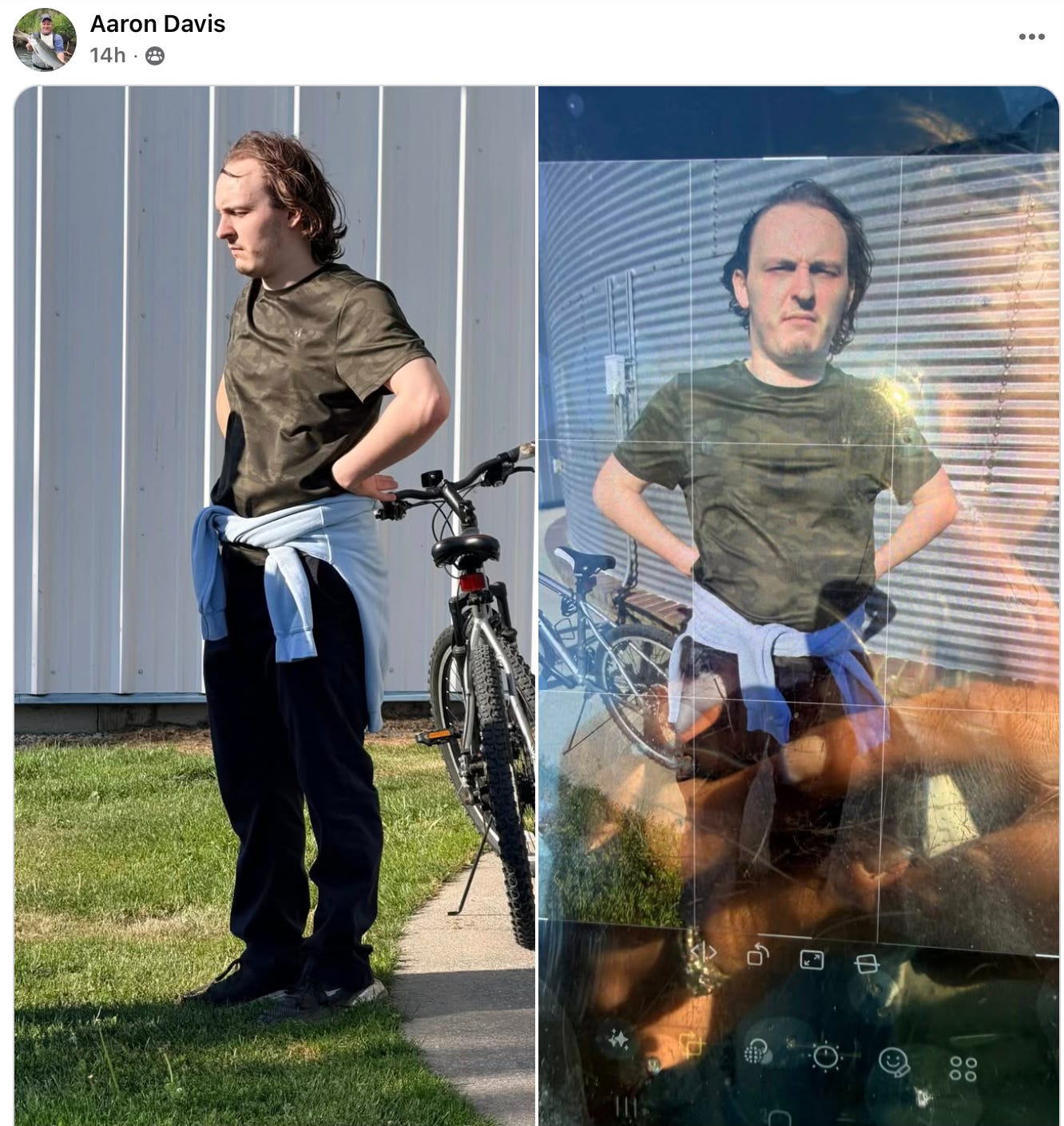
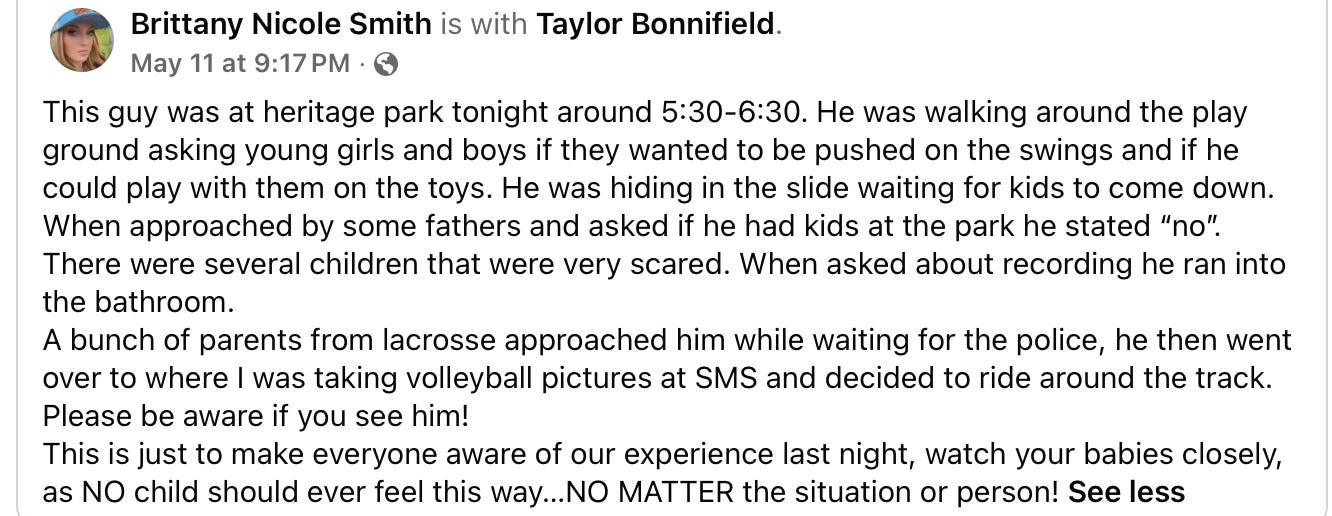
Parents said several children were frightened. When people discussed recording him and waiting for the police, the man allegedly ran toward the bathroom area before later riding around near Sequim Middle School during volleyball activities.
The mother who shared the post said her goal was simply awareness and vigilance.
“Watch your babies closely,” she wrote. “NO child should ever feel this way.”
For many residents, incidents like these fuel growing concerns that Clallam County no longer feels as safe as it once did.
Flashback: Jim Stoffer and the Vigil
For this week’s social media flashback, we return to November 2021.
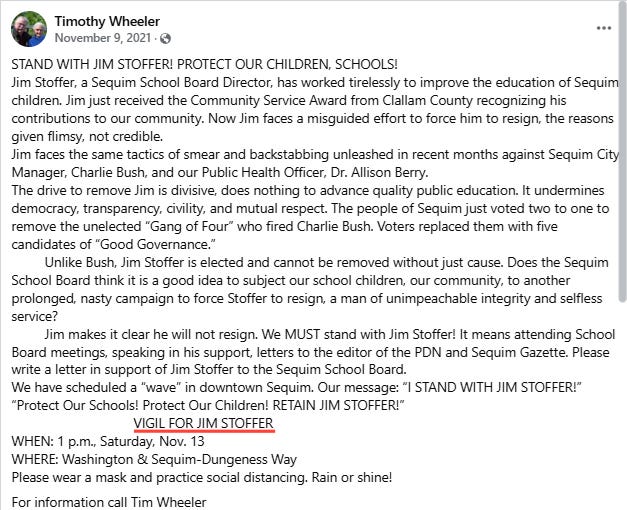
Former Sequim School Board member Jim Stoffer had just received a community service award while simultaneously facing criticism and censure efforts involving allegations of disclosing confidential school board information.
That controversy sparked intense political division locally.
Among those publicly rallying to Stoffer’s defense was Tim Wheeler—Sequim’s well-known communist activist—who organized a public vigil on Stoffer’s behalf.
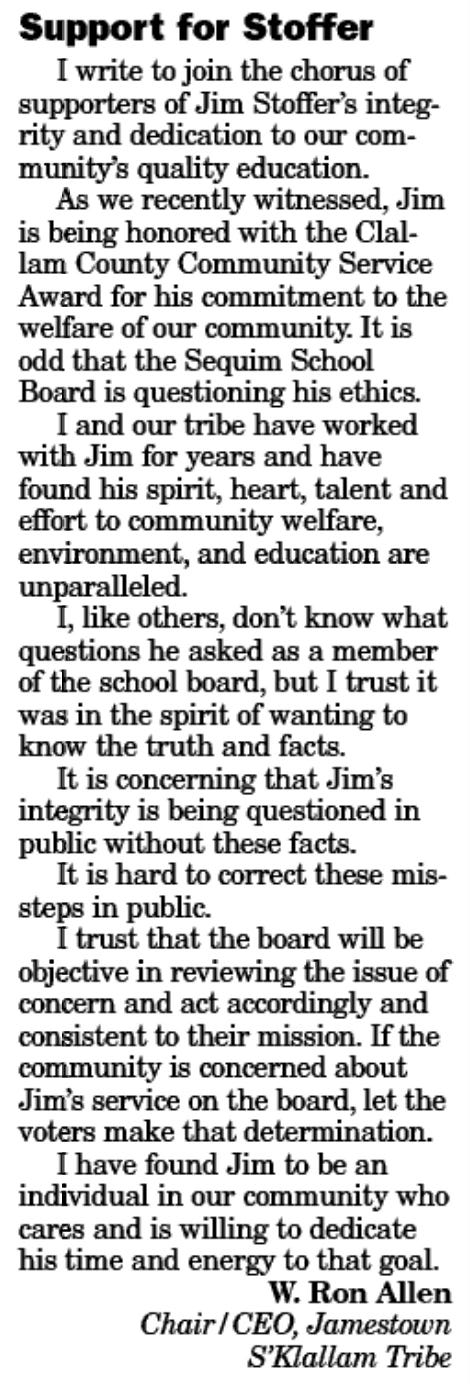
Even Jamestown S’Klallam Chairman Ron Allen submitted a public letter defending Stoffer’s integrity and character.
In small-town politics, alliances can get complicated quickly.
Scanner Chatter of the Week
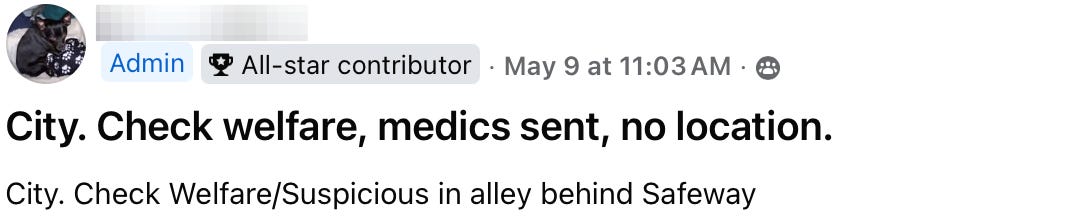
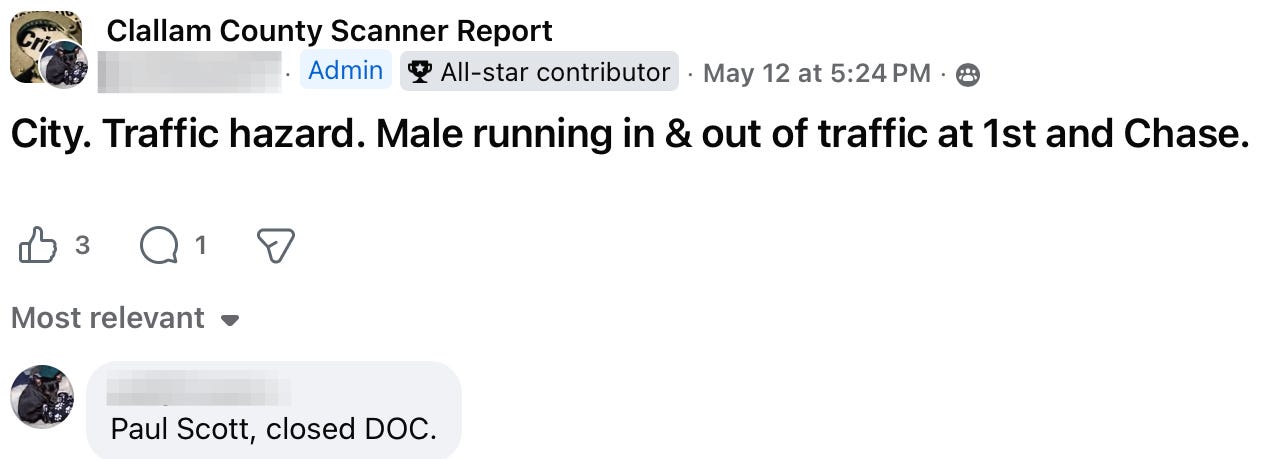
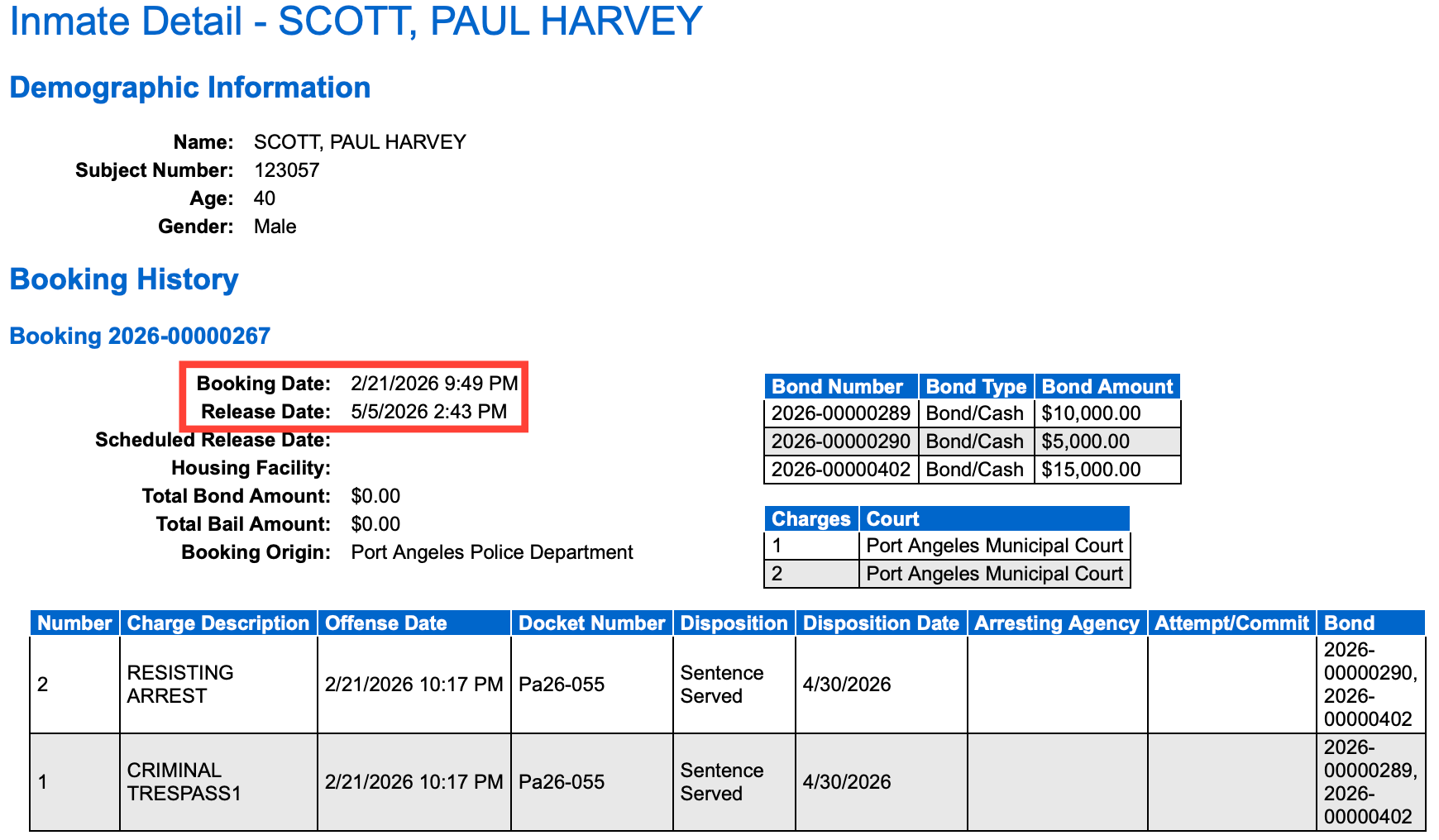
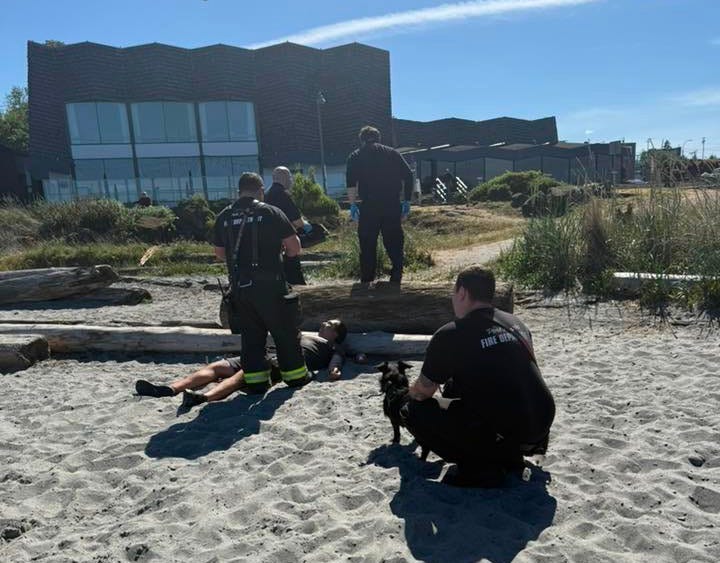
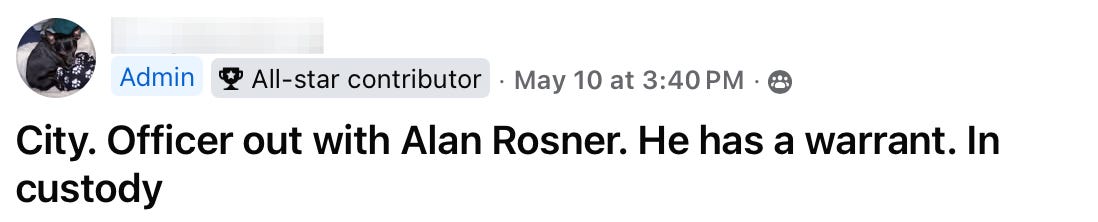
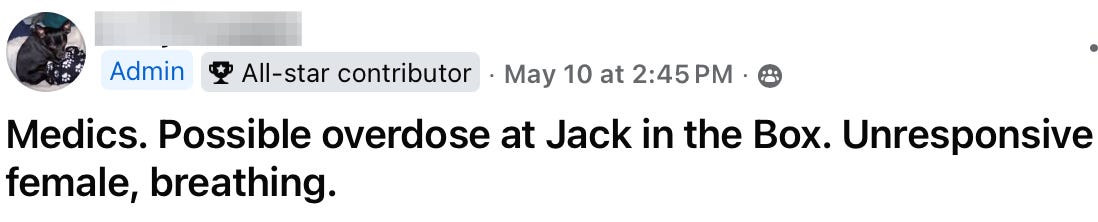
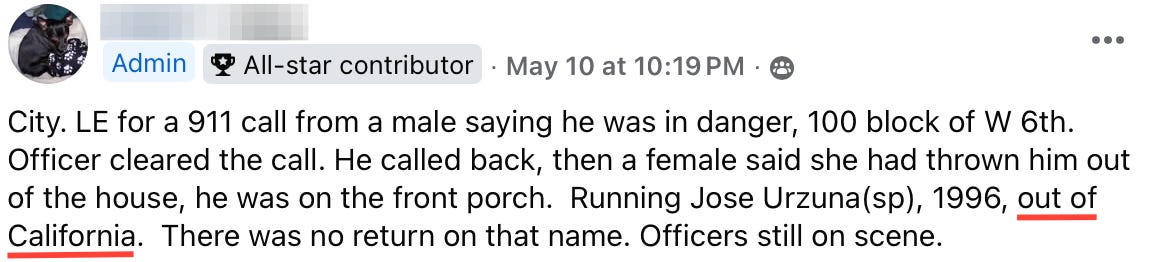
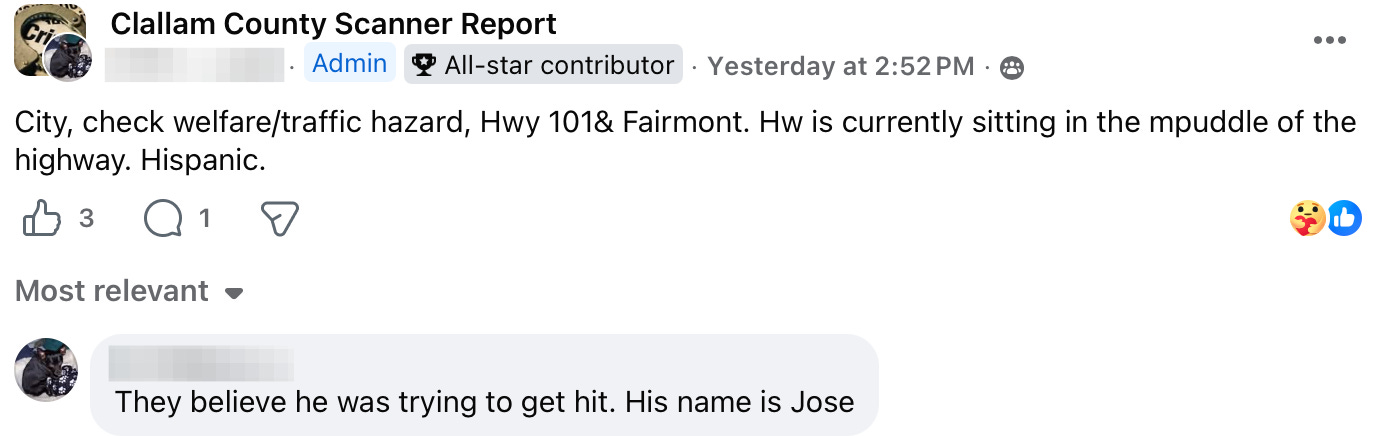
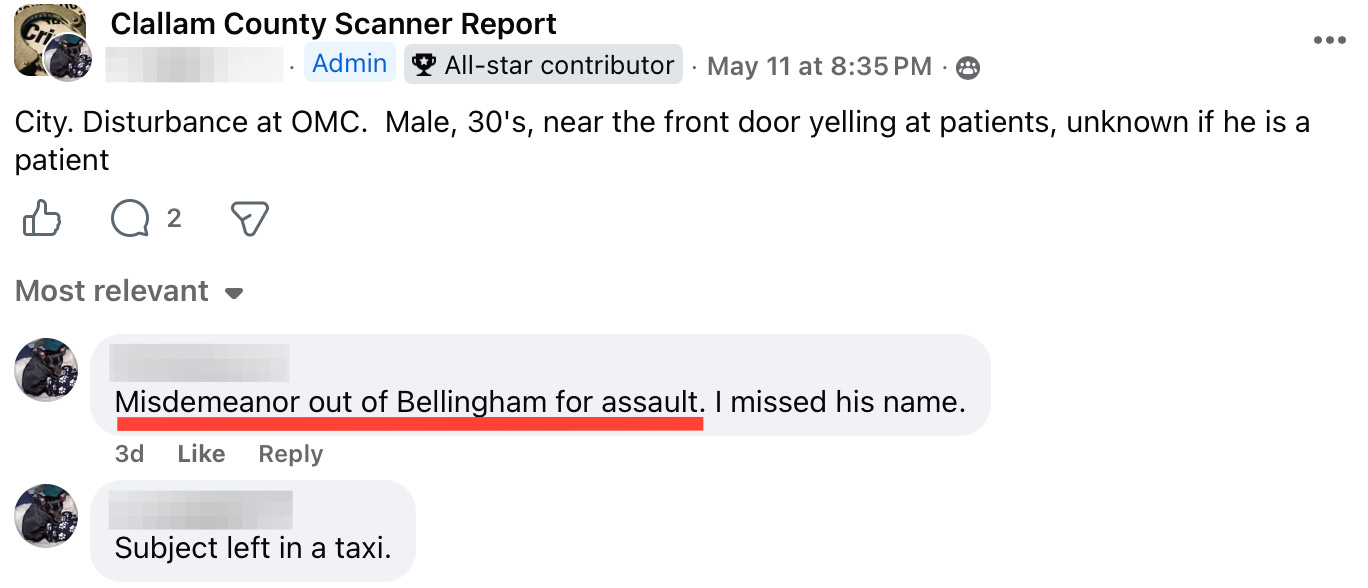
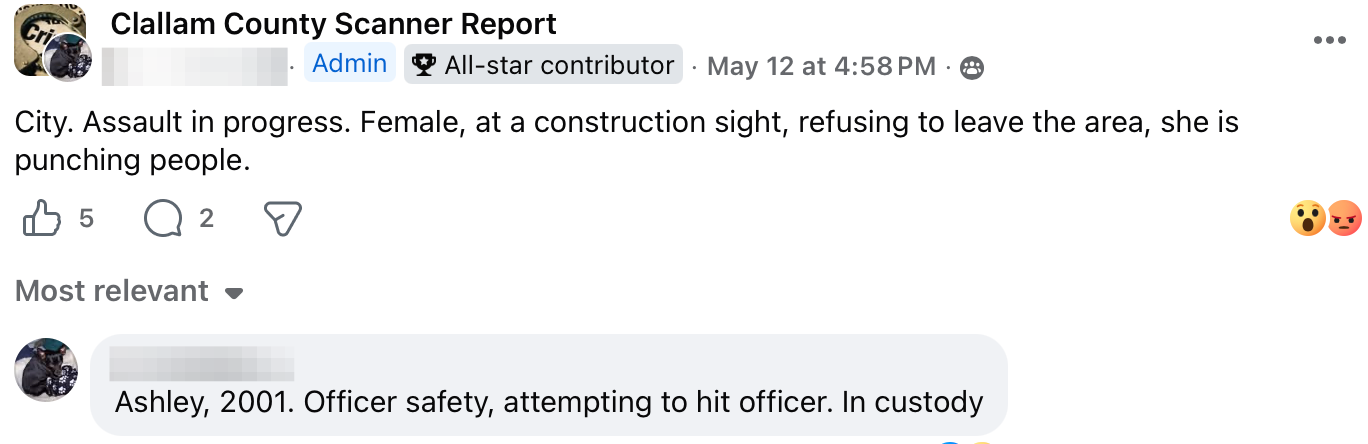
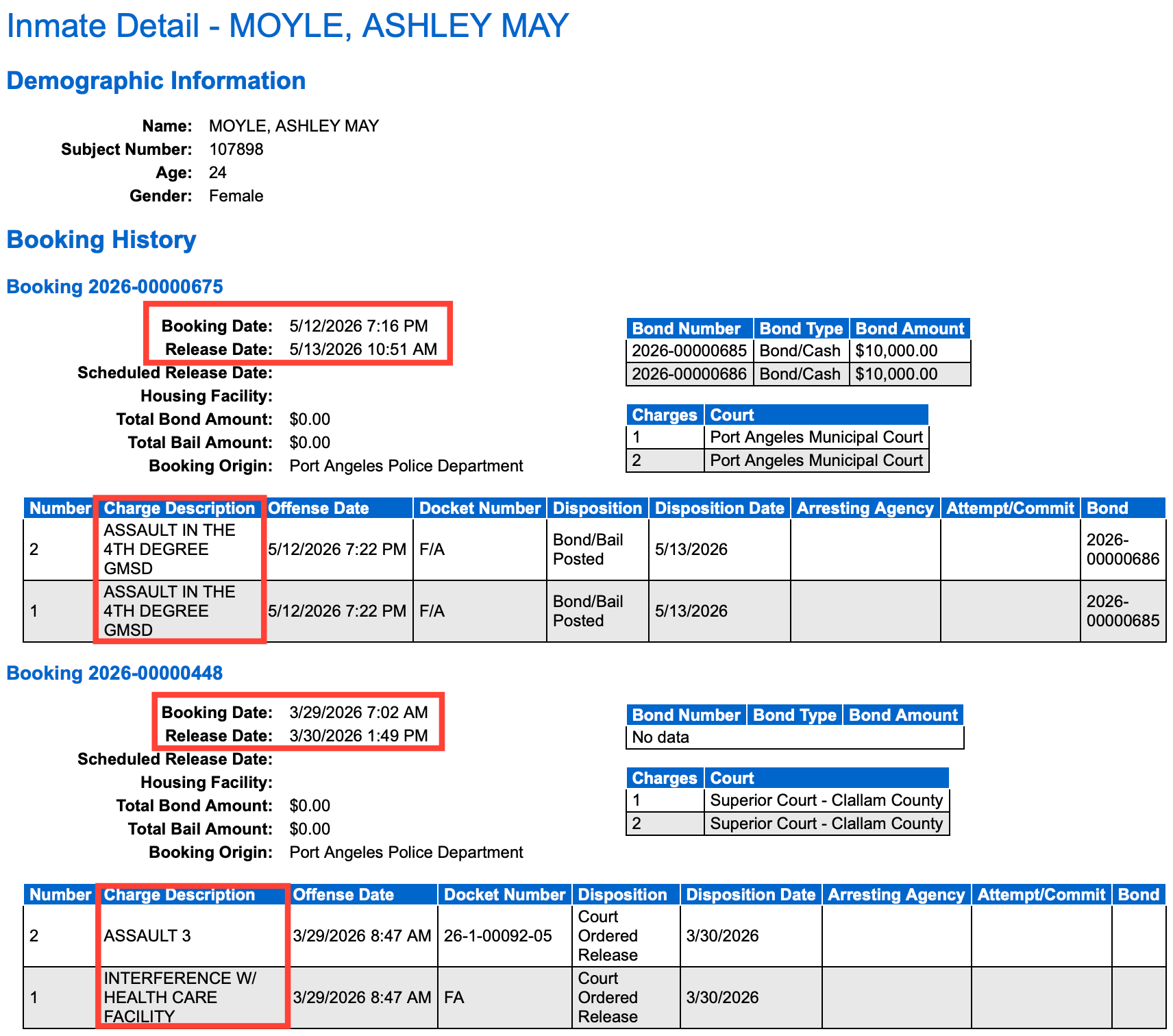
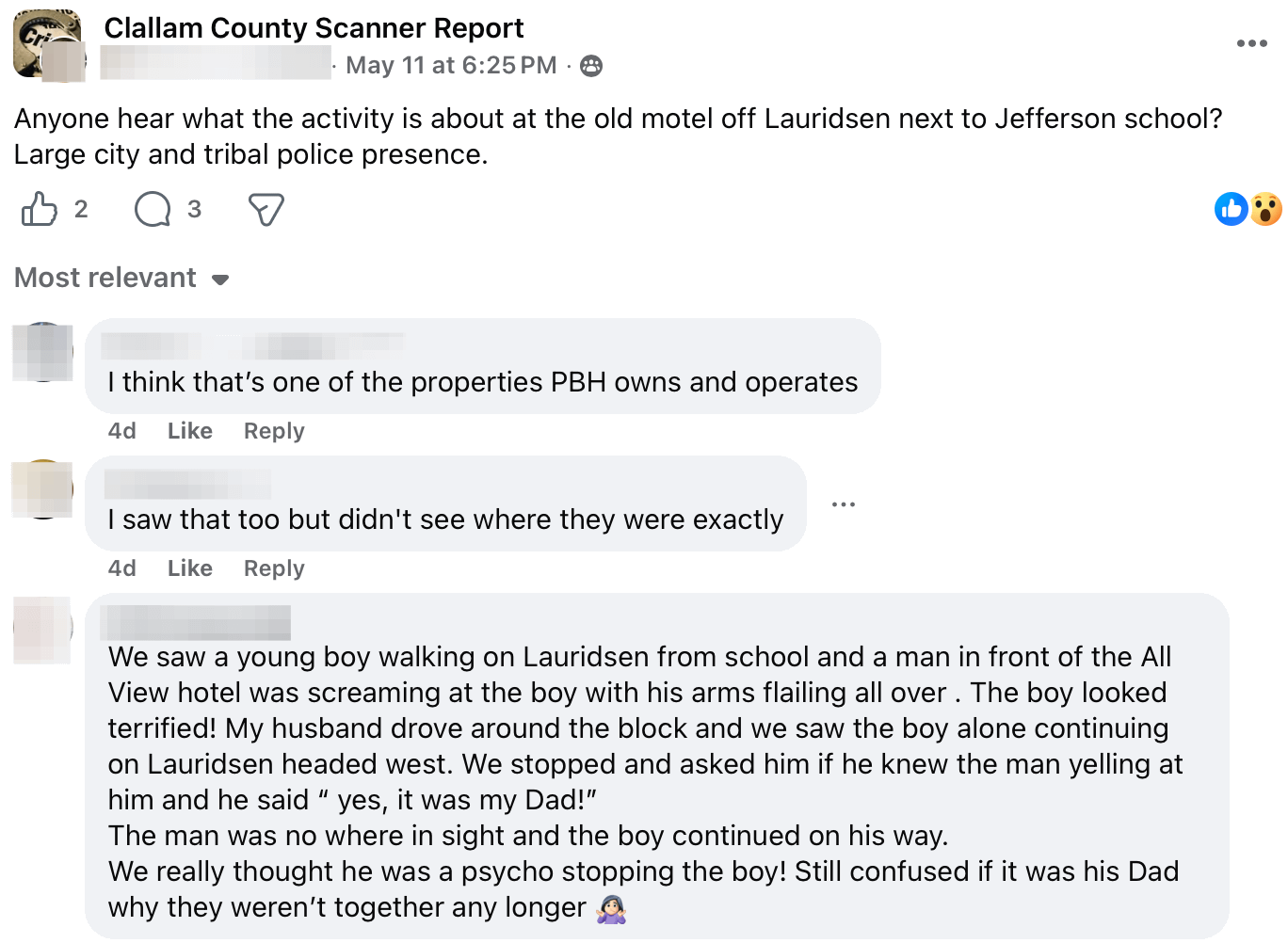
And finally, another week of scanner traffic brought more reports involving drugs, repeat offenders, disturbances, thefts, mental health crises, and transient-related incidents throughout Clallam County.
Many residents say they feel the county is changing rapidly—and not for the better. Others insist progress is being made. But one thing is undeniable:
Public safety, addiction, homelessness, and political accountability are no longer fringe issues in Clallam County.
They are now front-and-center election issues.








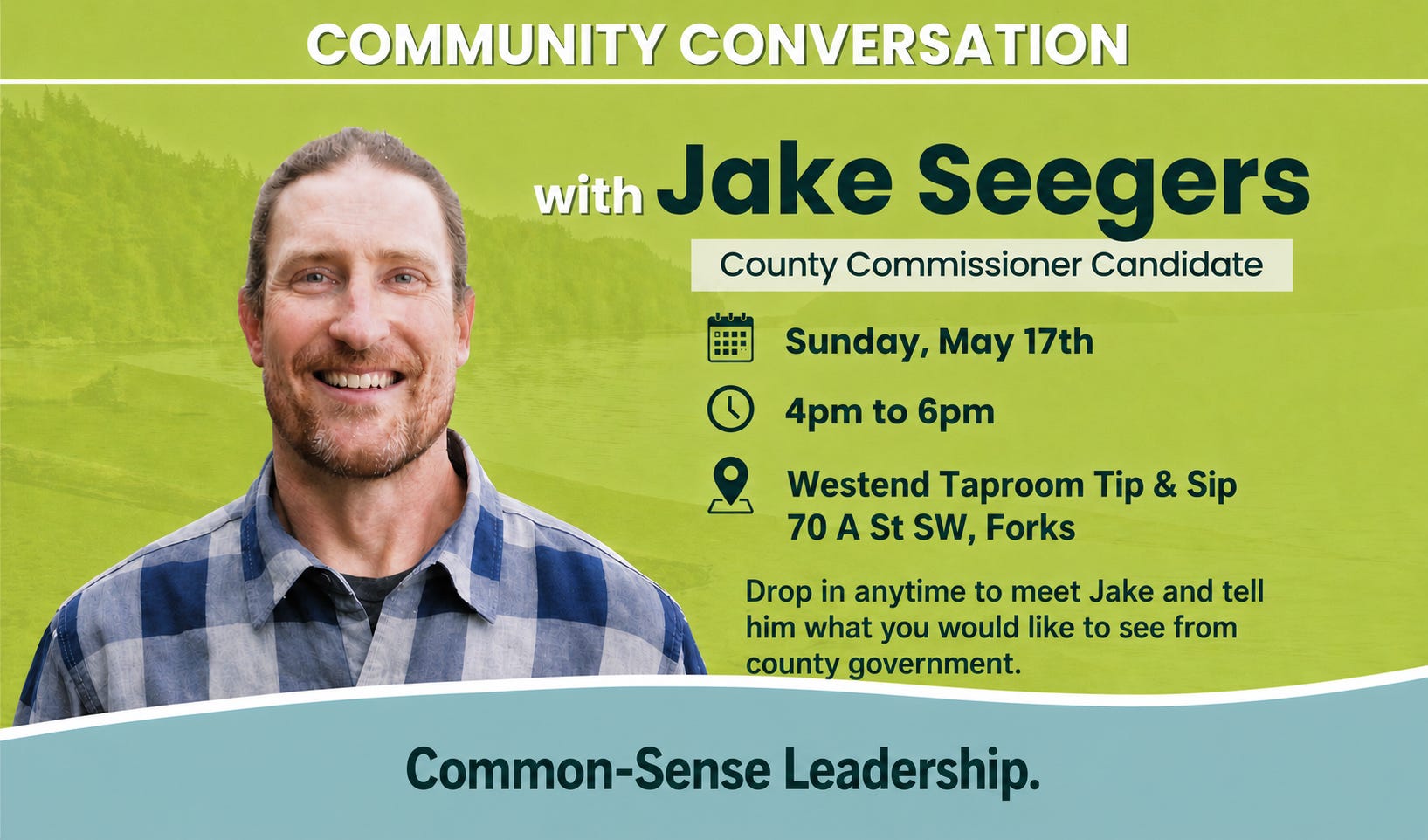
West End Seegers Event Tomorrow
The commissioners did not answer any questions related to the vandalism that has occurred in downtown Port Angeles. Nor has Viola Ware of OlyCAP answered questions posed four days ago about the $118,000 Safe Parking Program. Here is today's email to the commissioners:
Dear Commissioners,
How do the commissioners reconcile the promising outcomes reported by Operation Shielding Hope — a program focused on intervention, recovery, accountability, and protecting vulnerable individuals — with the continued funding and expansion of the Harm Reduction Health Center, which many residents believe contributes to ongoing drug use, repeat criminal behavior, encampments, and worsening public disorder?
To many in the community, these approaches appear fundamentally at odds with one another. One prioritizes recovery, stability, and public safety, while the other has become increasingly associated in the public mind with open drug use, repeat emergency responses, criminal activity, and deteriorating conditions in public spaces.
What measurable outcomes are the commissioners using to evaluate whether the Harm Reduction Health Center is genuinely improving conditions in Clallam County versus perpetuating the cycle of addiction, incarceration, and emergency intervention?
Additionally, has the county conducted any comparative analysis between individuals successfully connected to treatment or recovery through Operation Shielding Hope and those who continue cycling through harm reduction services, EMS responses, law enforcement contacts, emergency rooms, and the jail system?
Residents are increasingly asking whether county policy is truly focused on helping people achieve recovery — or simply managing addiction indefinitely while taxpayers absorb the growing financial, environmental, and public safety costs.
My regret is that I didn't video tape the man destroying the sign and tell him to calm down, that its just a sign. However, there were 3 of us who watched this man in complete disbelief. The look on his face when he pulled the sign showed so much aggravation especially when trying to remove the metal stakes. He tossed those aside and began rolling it up. Threw it in the back seat of his car while a woman in the front seat of the car was also watching. The sign was on public property. The soccer fields in Agnew. I just cant imagine a "sign" making me that upset. Get a grip! Lets just hope he never counts ballots!