

A Road That Didn’t Last
The relocation of Towne Road was celebrated. It won awards. County officials claimed it came in under budget. Commissioner Ozias even cited it as proof that Clallam County is “punching above our weight.”
Barely a year after opening to traffic, the road is already showing signs of failure.
Local resident Mitch Zenobi documented erosion following a recent rainstorm, posting video of washed-out gravel and sand exposing guardrail footings and beginning to undercut the raised roadbed.
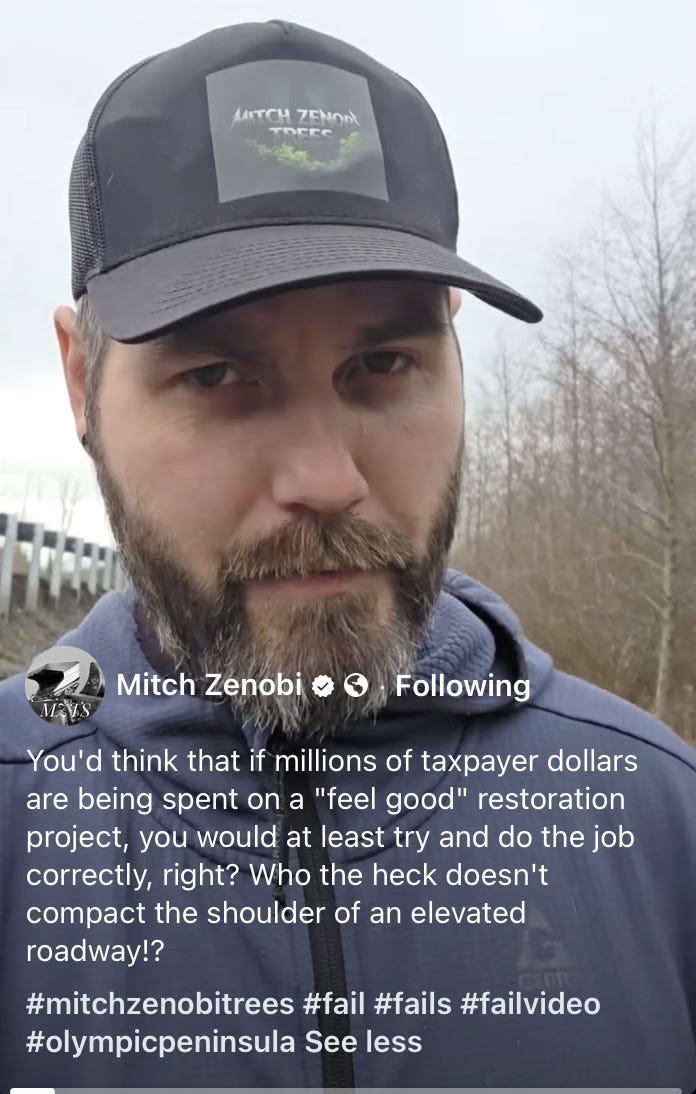
Zenobi freely admits he is not an engineer — but the problem doesn’t require credentials to recognize. When the foundation of a newly completed public works project is visibly eroding, questions about construction standards, compaction, and long-term durability are unavoidable.


Awards don’t stop erosion. Good press doesn’t stabilize roadbeds.
More Crime, Fewer Questions
Five years ago this week, the Sequim Gazette police blotter listed 35 incidents for the entire week.
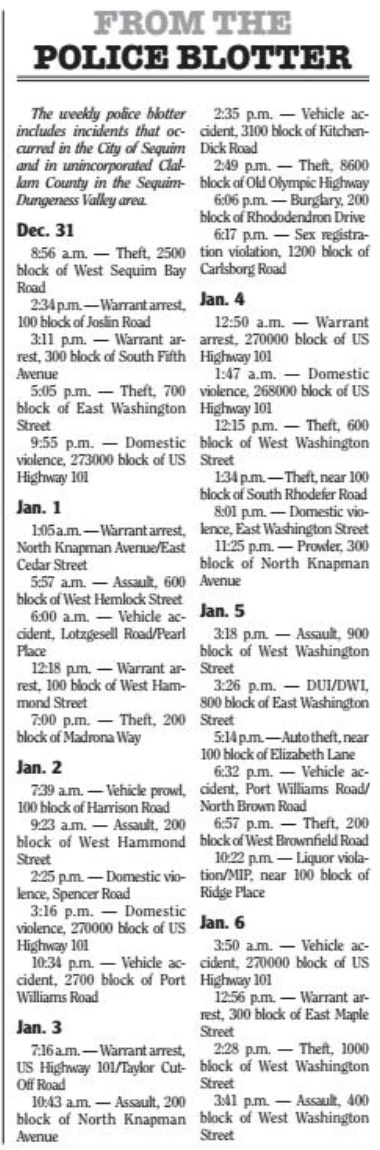
This year, that same week recorded 52 incidents.
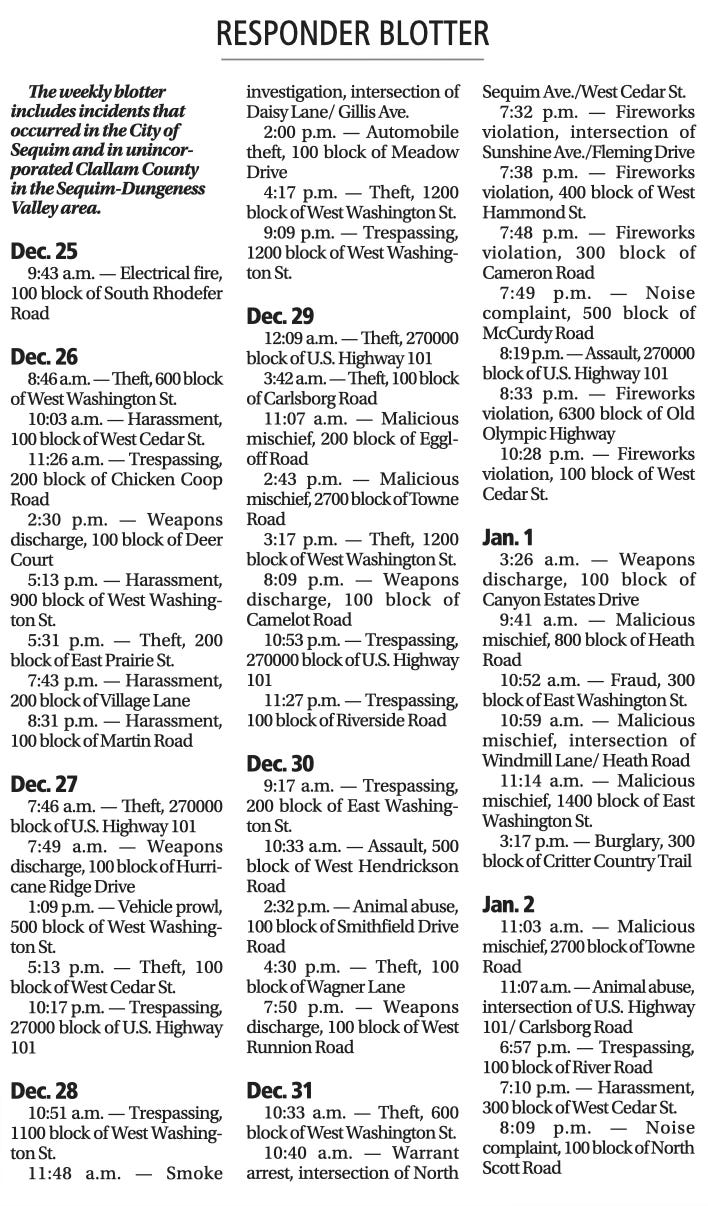
That increase alone should prompt public discussion. Instead, it quietly passes by — another data point that rarely finds its way into policy conversations about public safety, enforcement priorities, or resource allocation.
Selective Appreciation
On National Law Enforcement Appreciation Day, the Jamestown S’Klallam Tribe posted a message expressing deep gratitude for law enforcement officers — specifically Jamestown S’Klallam Tribal Law Enforcement.
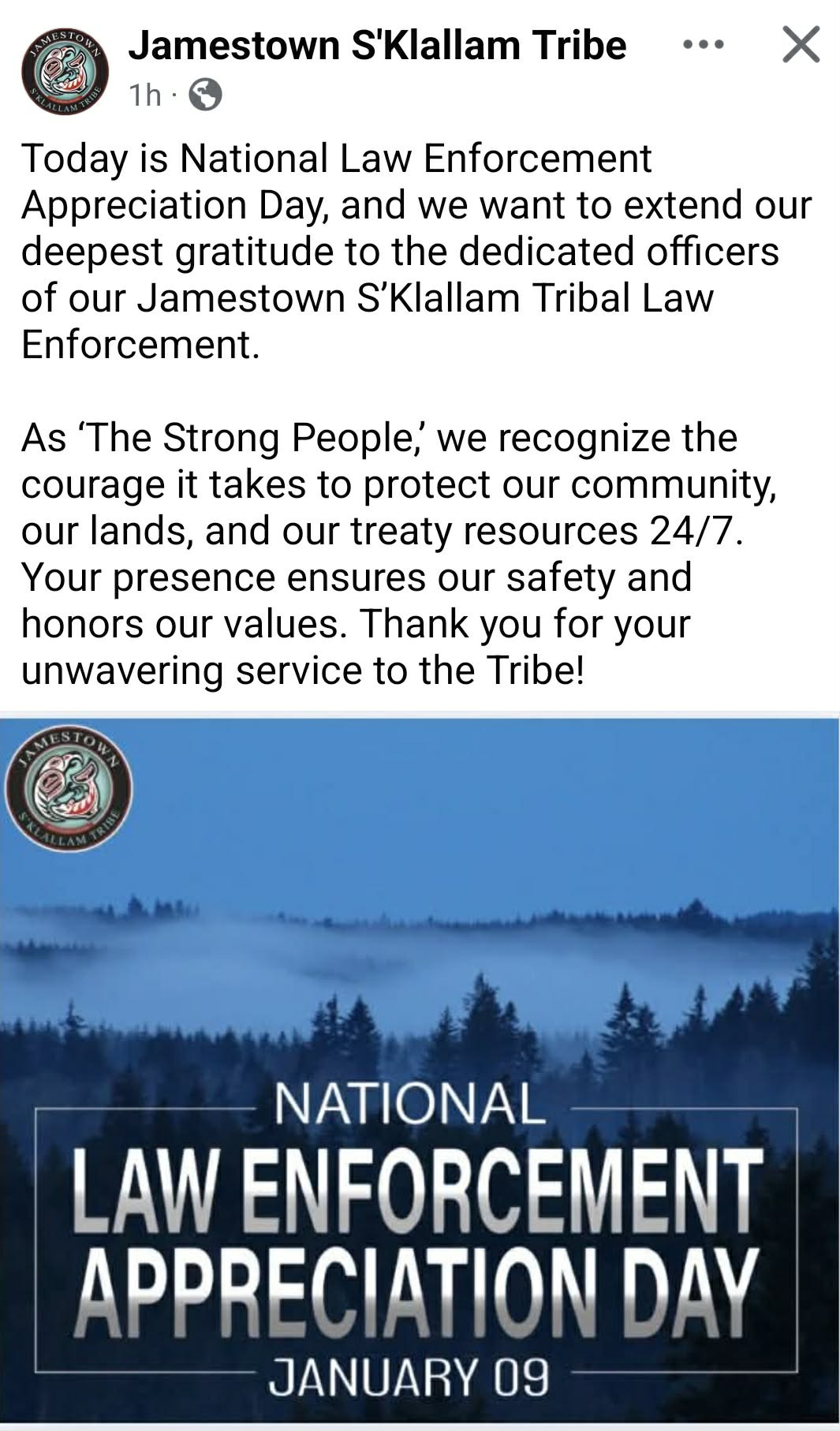
The post praised those who protect “our community, our lands, and our treaty resources 24/7.”
Respectfully, the omission was notable. There was no mention of the Clallam County Sheriff’s Office or the Sequim Police Department — agencies that also patrol, respond, and protect buildings and properties of the Jamestown Corporation, often in coordination with tribal authorities.
Gratitude is most meaningful when it is inclusive. Consistently centering only one’s own institutions, while benefiting from shared systems and partnerships, reinforces the perception that concern extends only inward.
Charges Quietly Fade
Sergey Kubai, a recently arrived felon from Montana, was featured on Seattle-area news after being arrested three times in Clallam County in December on drug- and weapons-related charges.
Kubai has remained in the Clallam County Jail since December 30.
What has changed is the case itself. Of the eight charges originally associated with his arrests, half have now been “released by the prosecutor.” Two additional drug-related charges were never filed.
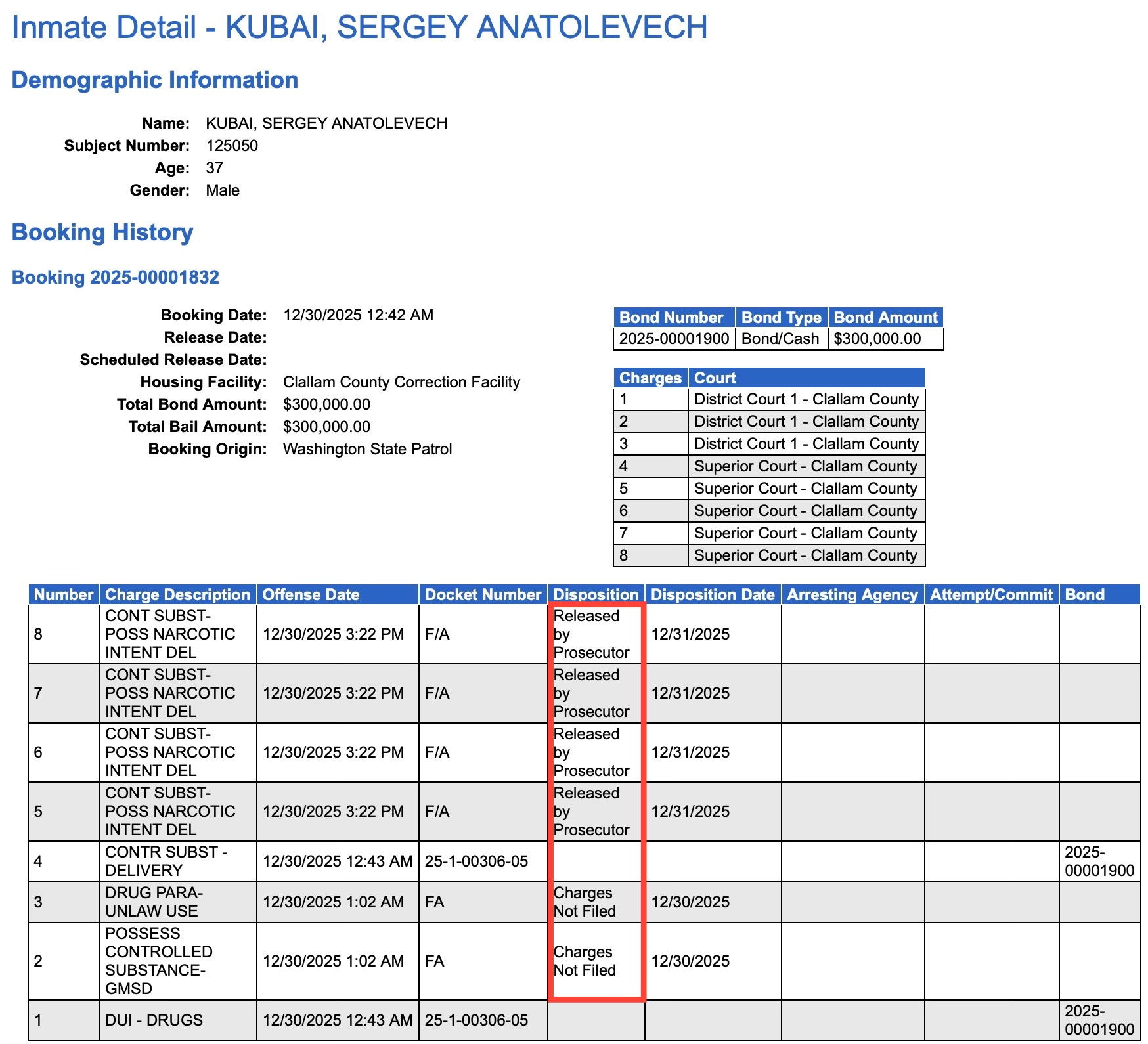
That leaves a great deal unexplained — and a growing sense that serious cases are being quietly reduced without public accounting. Transparency matters most when consequences fade out of view.
Name-Calling as Governance
First, Ron Allen dismissed concerned citizens as “complainers and whiners.” Now, his niece Paula Allen has added “creep” to the vocabulary.
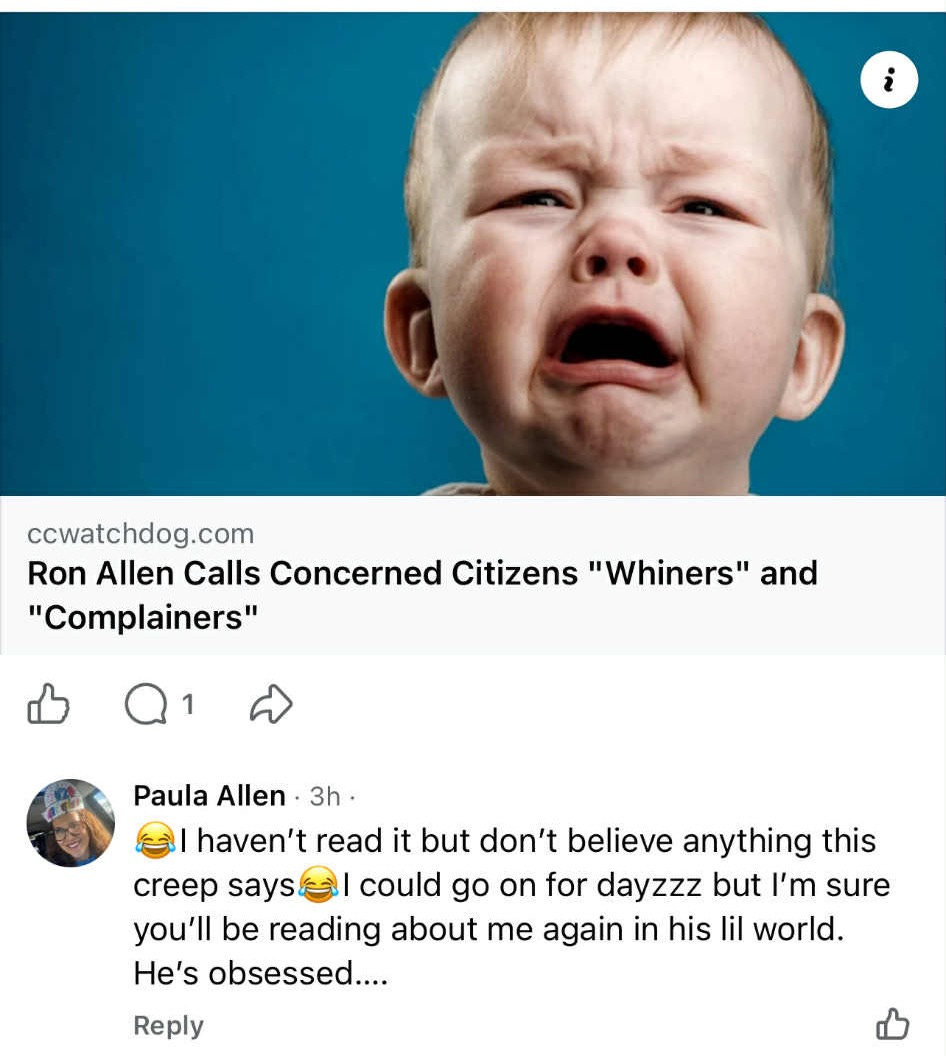
In a public Facebook post, she admitted she had not read the CC Watchdog article in question, but stated she doesn’t “believe anything this creep says.”
This pattern deserves attention because Paula leads the Allen Academy of Leadership Development.

Dismissing critics without engaging their arguments is not leadership. Attacking people rather than addressing facts isn’t leadership either. In Clallam County, it increasingly appears that having the right last name offers leadership and insulation from scrutiny — while those asking questions are met with insults instead of answers.
That is not strength or leadership. It is avoidance.
Have Your Say on Hurricane Ridge
Not everything this week reflects dysfunction.
The public is encouraged to help shape the future of a new Hurricane Ridge facility as Olympic National Park begins early planning to replace its historic lodge, destroyed by fire nearly three years ago.
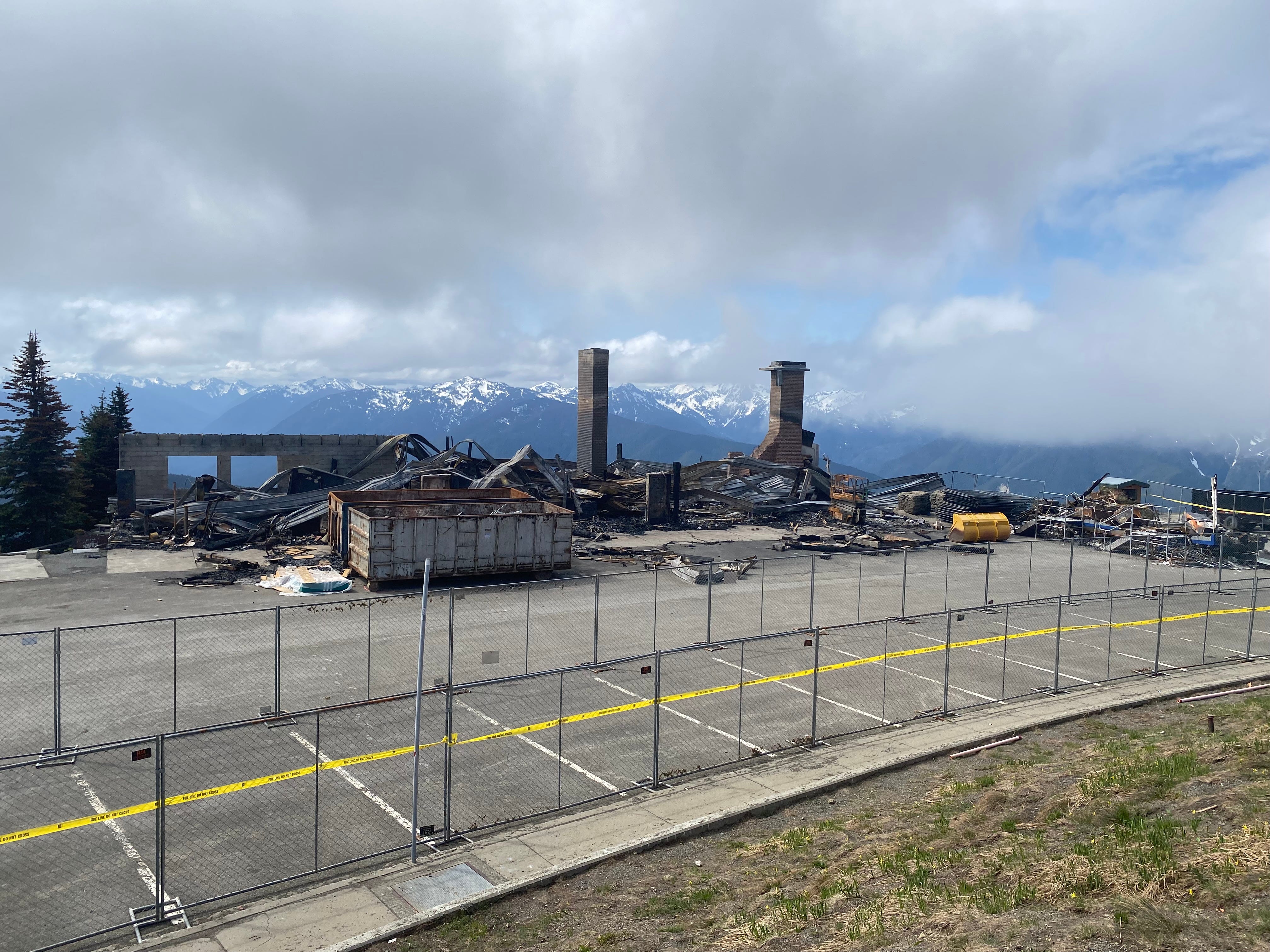
A public listening session will be held on Wednesday, January 14, from 4:00 p.m. to 6:30 p.m. at Field Arts & Events Hall (201 W. Front St., Port Angeles). Attendees can ask questions, offer ideas, and even bring photographs for a memory board honoring the original 1952 lodge.
Those unable to attend may submit written comments, which must be received or postmarked by January 21.
This is public process done right — open, transparent, and participatory.
A Warming Center Question
As temperatures drop, Clallam County has released a list of warming centers — including public libraries.
One major facility is notably absent.
The Jamestown Corporation’s Healing Clinic received millions in taxpayer funding, offers ample heated indoor space, is centrally located near Sequim services, and sits along existing bus routes. Yet it is not listed as a warming center. Posted signage states: “Restricted Access Private Property. Only patients, authorized staff and Jamestown S’Klallam Tribal guests are permitted.”
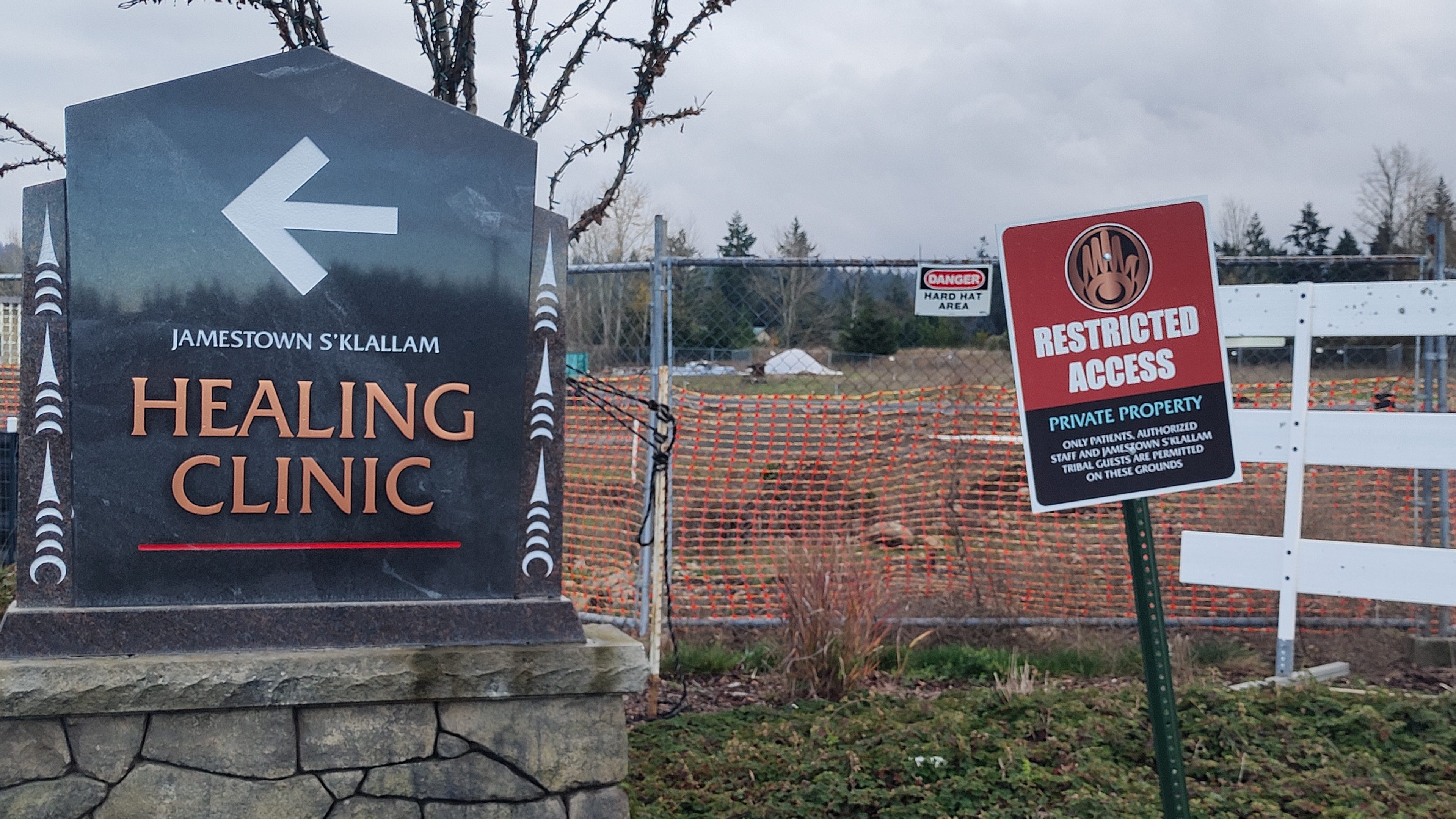
As buses and libraries grow crowded during inclement weather, residents are left to ask: if public dollars helped build this facility, why is it unavailable during emergencies?
A 2004 Warning Worth Revisiting
A 2004 article from the American Enterprise Institute reads today like a cautionary map of Clallam County’s present trajectory.
The piece examines the concept of tribes as “domestic dependent nations” and questions the legal and democratic implications of expanding sovereign authority within state boundaries — especially when it erodes local governance, accountability, and public access.
Casinos cause property devaluation and lost taxes when businesses and lands are taken over by tax-exempt tribes. While casino owners argue that they create jobs and help neighboring businesses, the casinos (which, as Indian enterprises, do not have to pay the same taxes or abide by the same laws as other establishments) actually damage competing businesses nearby–restaurants, bars, hotels, retail outlets. “When the Indian casino comes to town, nobody else does well,” says Benedict.
The author asks a question that resonates locally: how can Congress create governing powers within a state that it could never itself exercise?
As tribal governments expand land holdings, enterprises, and influence — often with limited local recourse — the concerns raised two decades ago feel increasingly relevant here at home.
The business impact and loss of property and sales taxes has some local communities teetering on bankruptcy. “The tribes hurt us in a number of ways,” explains Scott Peterman, president of Upstate Citizens for Equality. “They buy a property and refuse to pay property tax because they say they are re-acquiring their ancient reservation. Then they open a business on that property and refuse to collect sales tax.”
Disinformation, or Discomfort?
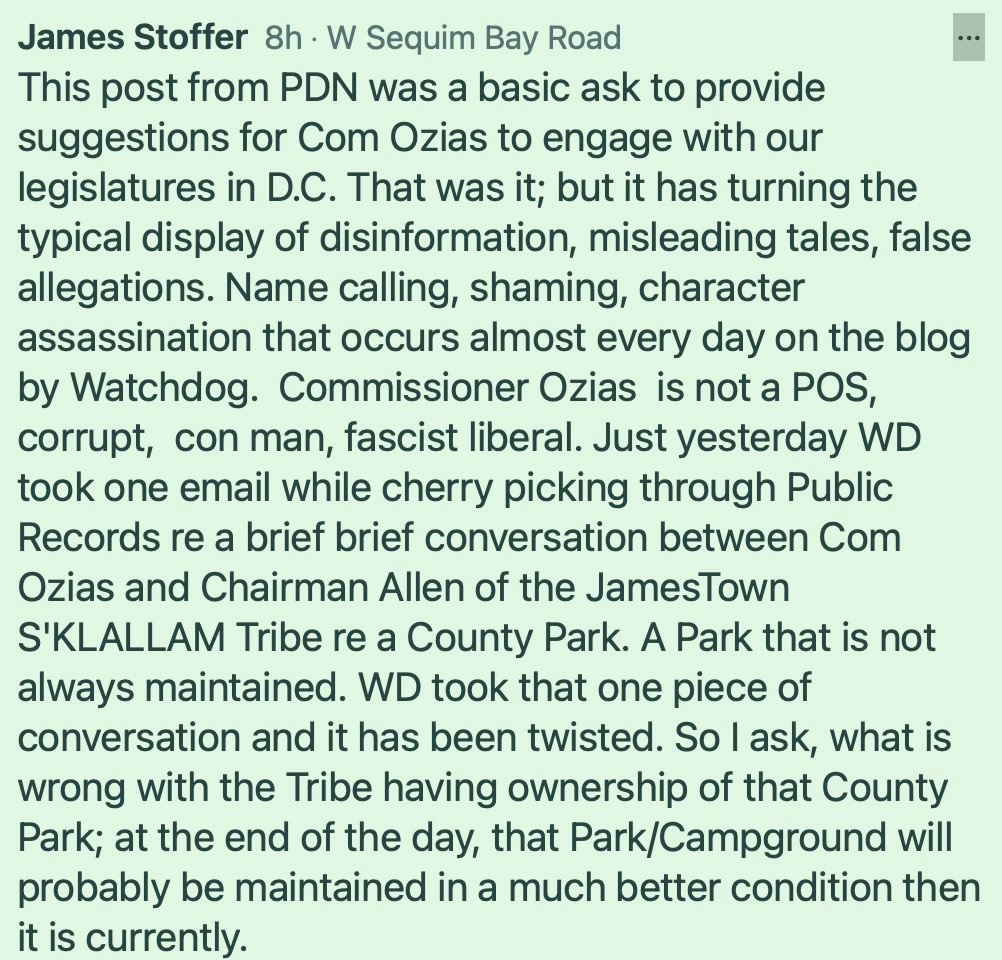
A Nextdoor discussion about Commissioner Ozias’ upcoming trip to Washington, D.C. — tied to his role as President of the Washington State Association of Counties — turned critical. Some residents questioned whether his attention is shifting toward political and special interests while local concerns take a back seat.
Former Charter Review Commissioner Jim Stoffer stepped in to defend Commissioner Ozias, calling the criticism from CC Watchdog “disinformation,” “false allegations,” and “character assassination.” He even suggested that handing over a county park to the Jamestown Corporation would be beneficial because it would “probably be maintained in much better condition.”
Here is a standing offer: point out a single factual error, identify one false claim, show where the reporting is wrong, and it will be corrected.
Until then, borrowing a phrase recently used elsewhere, accusations without specifics sound a lot like “whining and complaining.”
Hope, Not Handouts
Finally, a reminder of what real recovery looks like.
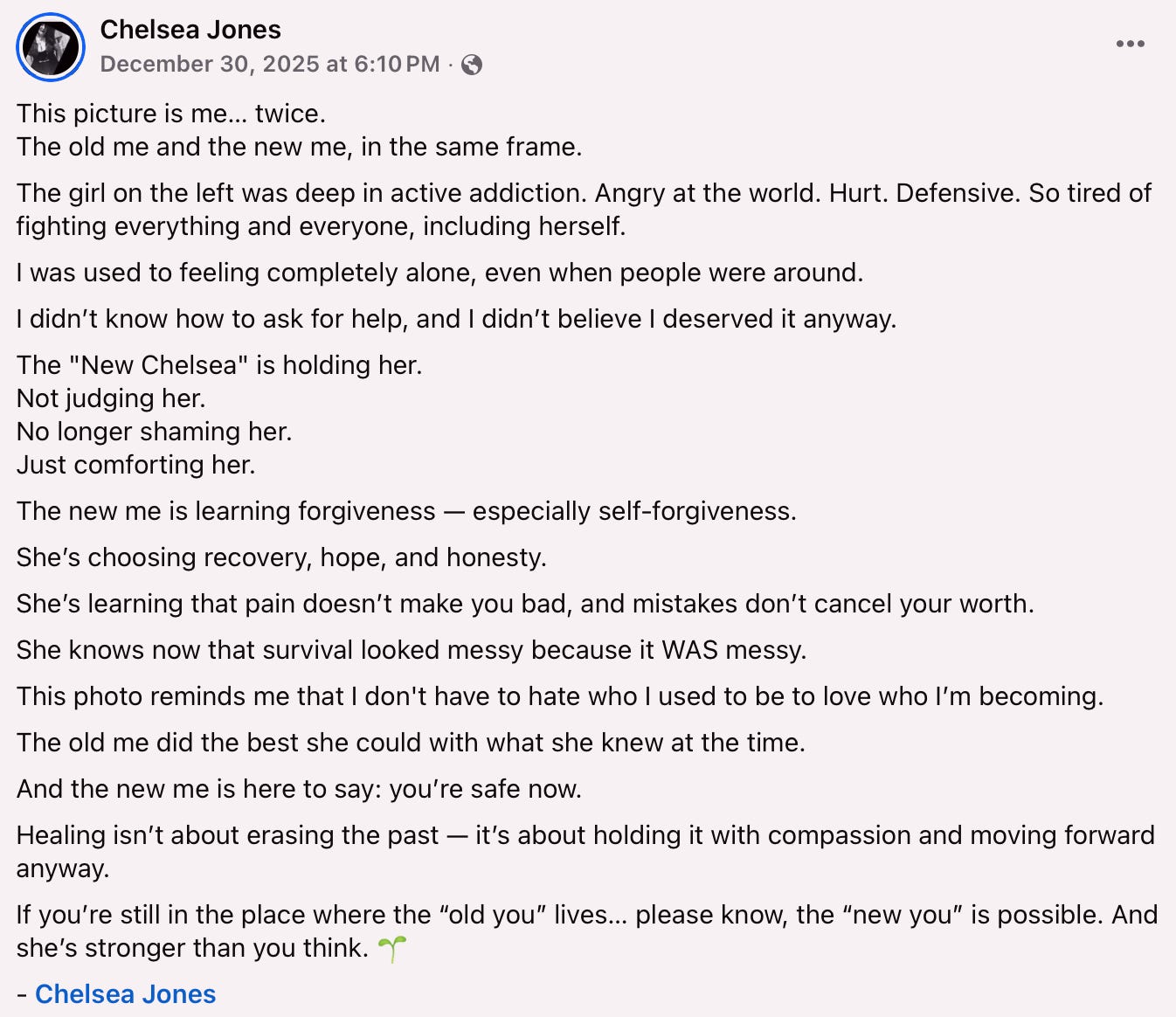
Many will remember Jake Seeger’s interview with Chelsea Jones — once homeless on the Olympic Peninsula, addicted, panhandling for drug money, pregnant, and ultimately losing custody of her child.
What turned her life around was not harm-reduction programming. It was rock bottom. It was accountability. It was the fierce motivation of a mother determined to get her child back.
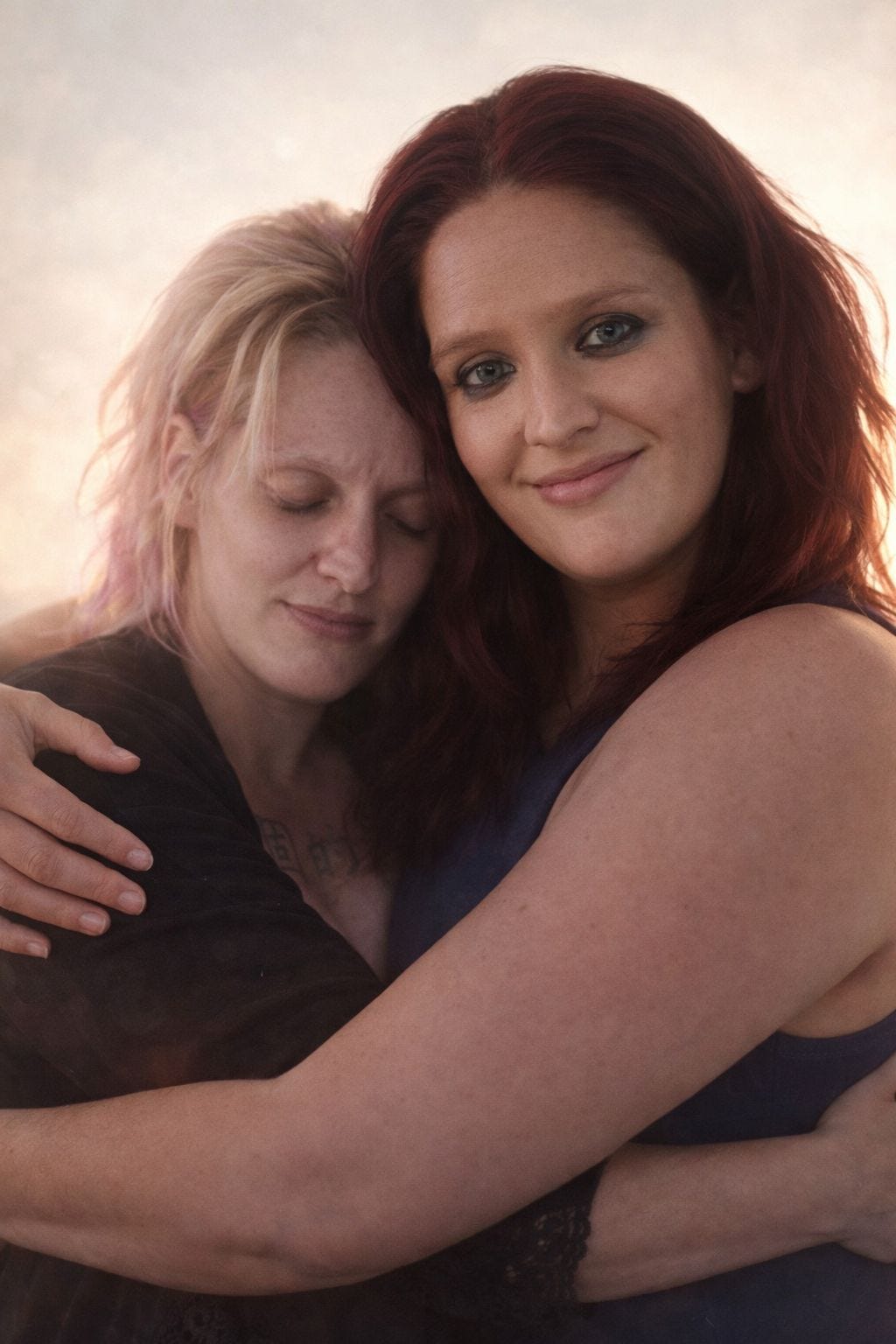
Recently, Jones shared a powerful image: the sober version of herself holding the addicted version in her arms.
Three words come to mind: hope, perseverance, achievement.
Sometimes, the most compassionate thing society can offer is not enabling — but a path back to responsibility, dignity, and self-worth.
The commissioners did not answer yesterday's email. Here is today's question:
Dear Commissioners,
Towne Road received awards and was held up as a success, but just over a year after opening, we’re already seeing erosion and visible problems. At what point does the county step back from the praise and do a hard evaluation of whether the project actually worked — and will you share those findings publicly?
All three commissioners can be contacted by emailing the Clerk of the Board at loni.gores@clallamcountywa.gov
God bless you Chelsea , and thank you for telling your story, may it give the hope others need to regain their life.