

A 15-year-old took the podium. But the question that lingered afterward wasn’t what they said—it was who put them there, and why.
On December 22nd last year, just twenty minutes before the 2025 Charter Review Commission wrapped up and slipped into dormancy for the next four years, the youngest public commenter of the entire year approached the podium.
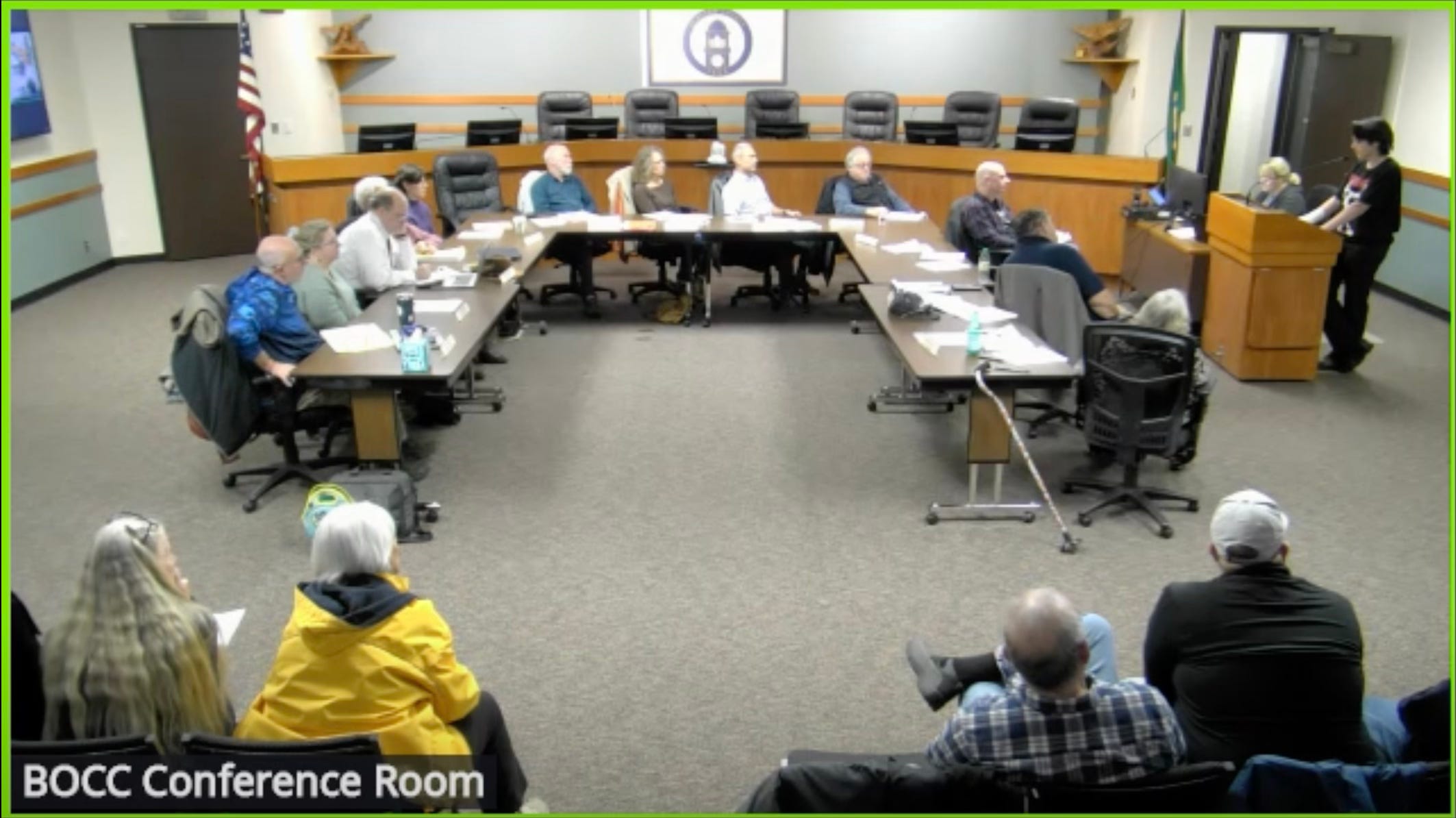
What followed caught the room off guard.
Here is what the student said, in full:
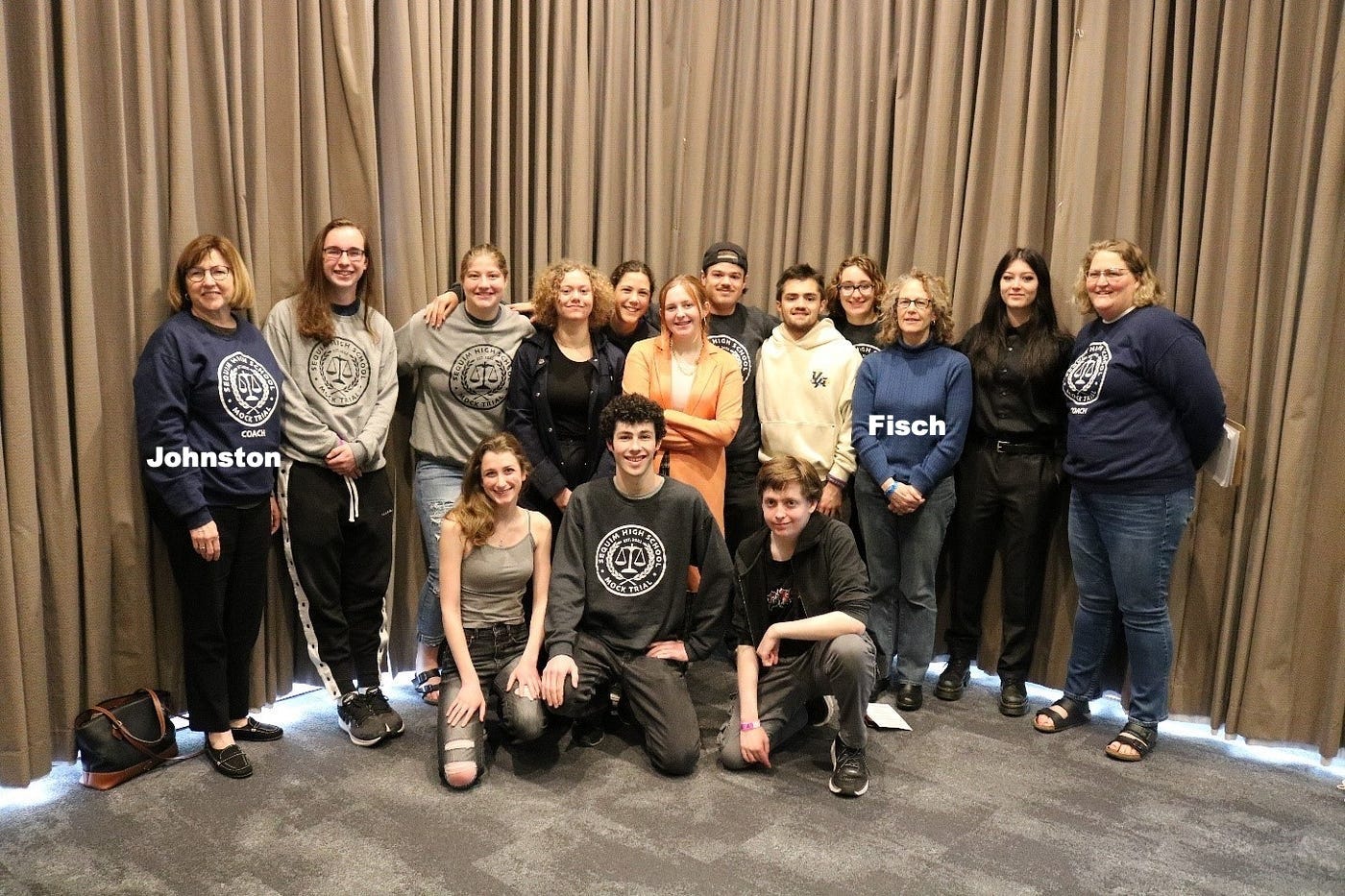
“Hello, I choose not to state my name. I’m a minor. I just recently turned 15 years old. I’m a freshman and I’m part of Sequim High School’s Mock Trial Program. I recently saw a post on social media from one of the Charter Review Commissioners. Its title, ‘Blindfold Removed,’ and was posted December 16th, 2025. This post was regarding inappropriate topics such as acting out pedophilia while referring to people who were networked to another commissioner. Photos which are unrelated contain students in mock trial and they are not his property and were not stated from where they were from. There were four minors in said photo. I’m sorry, I think I may have restated something. It’s a submitted photo to the Sequim Gazette published in an article by Michael Dashiell February 1st, 2023. One of the students is a young woman who is a current Sequim High School student who I look up to. I’m concerned for her and my fellow peers, as the comments, which are unmoderated by said commissioner, stated that anyone networked to the people in these photos were bullied, bullies, or were molested. How far is an elected official allowed to go when using free speech to cause outrage by using disgust and involving minors, attacking my advisors and in turn attacking me and my peers. Thank you for your time.”
[Watch the public comment by clicking here and advancing to 3:09:45.]
The student was clearly referring to me and my article, “Blindfold Removed.”
That article focused on Charter Review Commission Chairwoman Susan Fisch and what many observed as a pattern of selective enforcement—rules for some, exceptions for others. It documented instances where agenda items were blocked, political allies were accommodated, and decorum was unevenly applied. It also highlighted a specific incident involving a supporter who disrupted public proceedings while Susan Fisch allowed it to continue.
The student’s comment was, at times, difficult to follow. But for a 15-year-old, it was still impressive. Civic engagement at that age should be encouraged.
But something didn’t sit right.
The phrasing.
The structure.
The framing of the argument.
It didn’t sound like a student speaking organically. It sounded… coached.
A Serious Line Was Crossed
There’s another piece of this that cannot be ignored.
Embedded in the student’s remarks—and in the broader narrative surrounding that post—was an implied connection between me and inappropriate conduct involving minors.
Let’s be very clear about what that means.
In modern society, suggesting that someone has inappropriate intentions toward minors is among the most serious and damaging implications that can be made. It carries reputational consequences that can follow a person indefinitely, regardless of whether there is any evidence behind it.
Layer onto that the reality that I am gay.
For decades, one of the most harmful and false stereotypes pushed against gay individuals was the idea that they posed a danger to children. That narrative has been widely discredited, but its use—implicit or explicit—remains deeply offensive and dangerous.
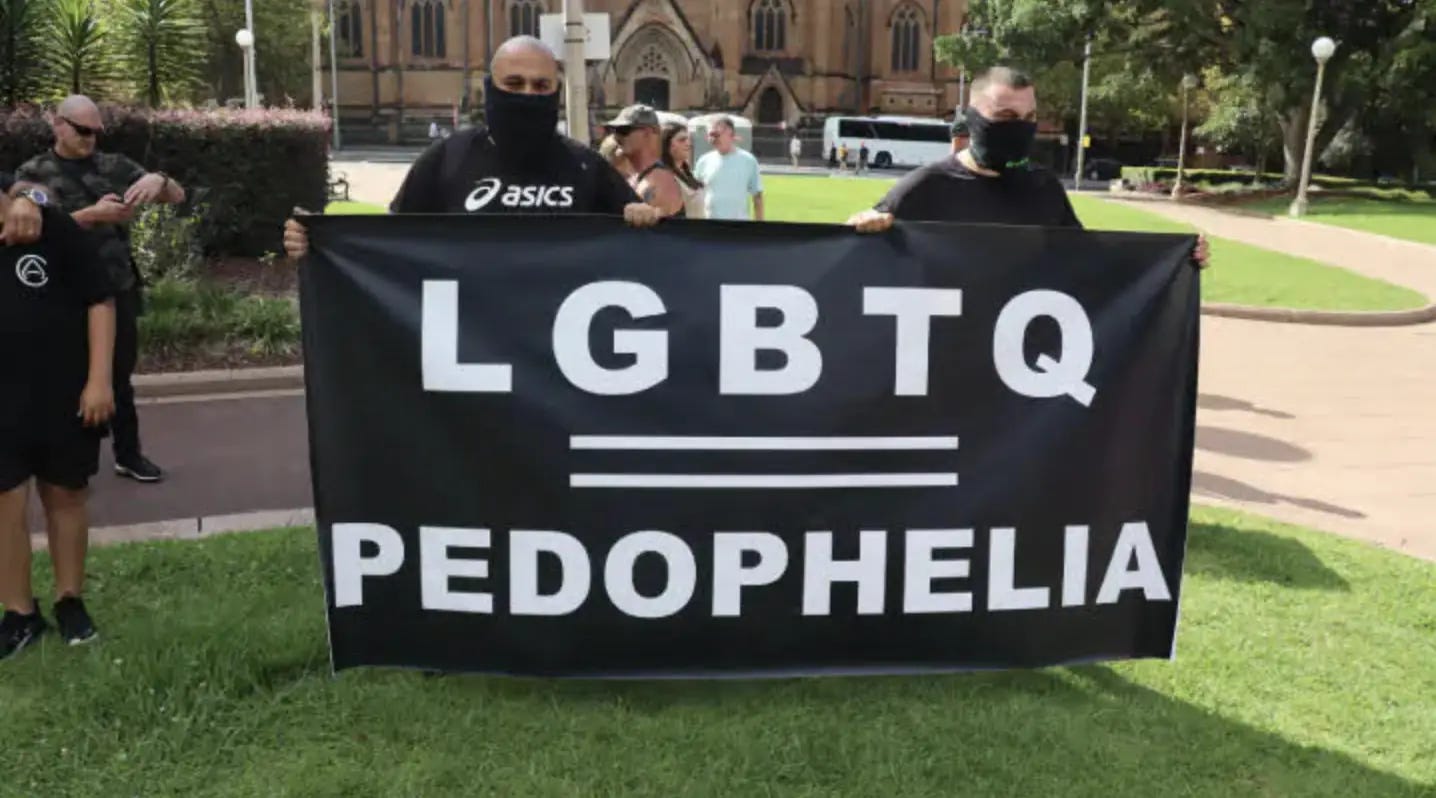
Whether intentional or not, the framing of these comments echoed that same stereotype.
That’s not just inappropriate—it’s reckless.
And when those implications are introduced into a public setting, involving minors, and tied to political disagreements, it raises the stakes considerably.
Because at that point, this isn’t about criticism or disagreement anymore.
It’s about crossing a line that should never be crossed.
So Who’s Coaching the Kids?
The student identified themself as affiliated with the Sequim High School’s Mock Trial program.
That program didn’t appear out of thin air.
It was started with the involvement of retired judge Susan Fisch and retired lawyer and current Sequim School Board member Patrice Johnston—both activists with the League of Women Voters, and both directly involved in controversies surrounding the Charter Review Commission.
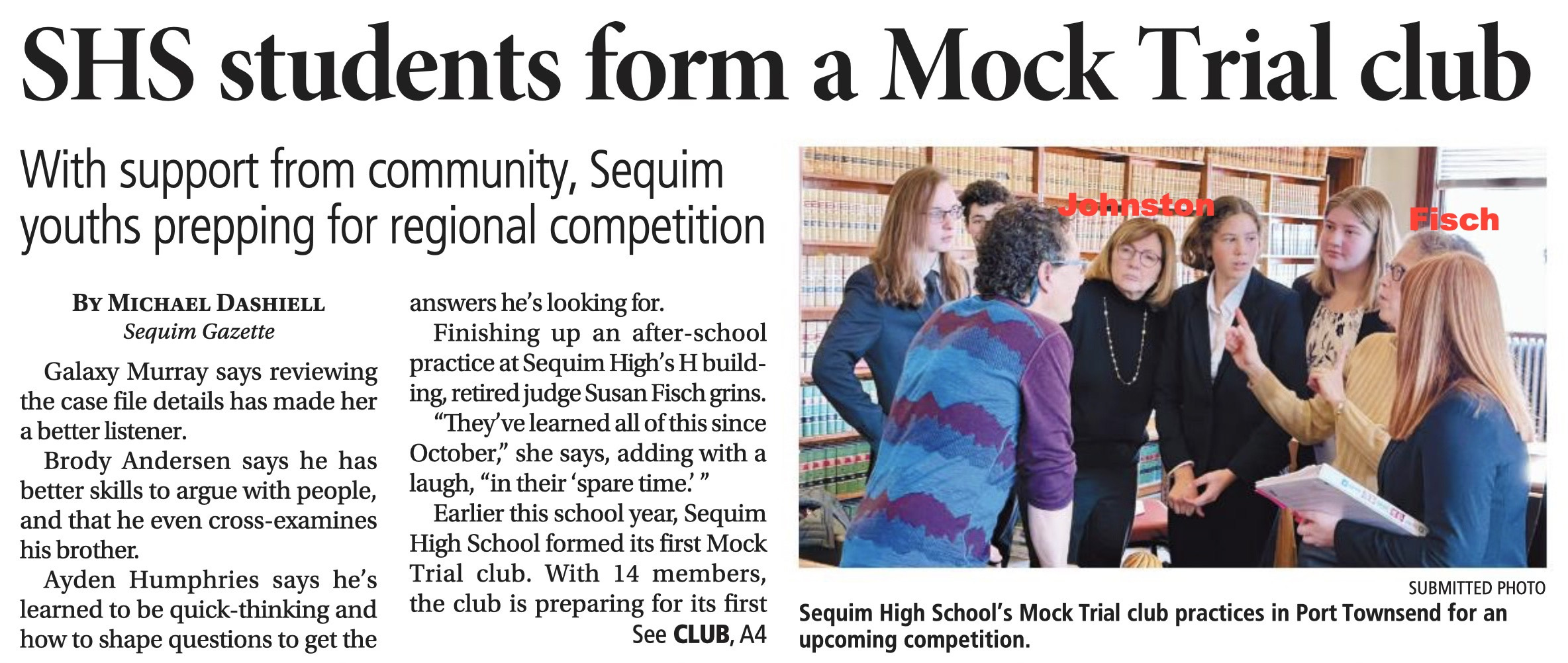
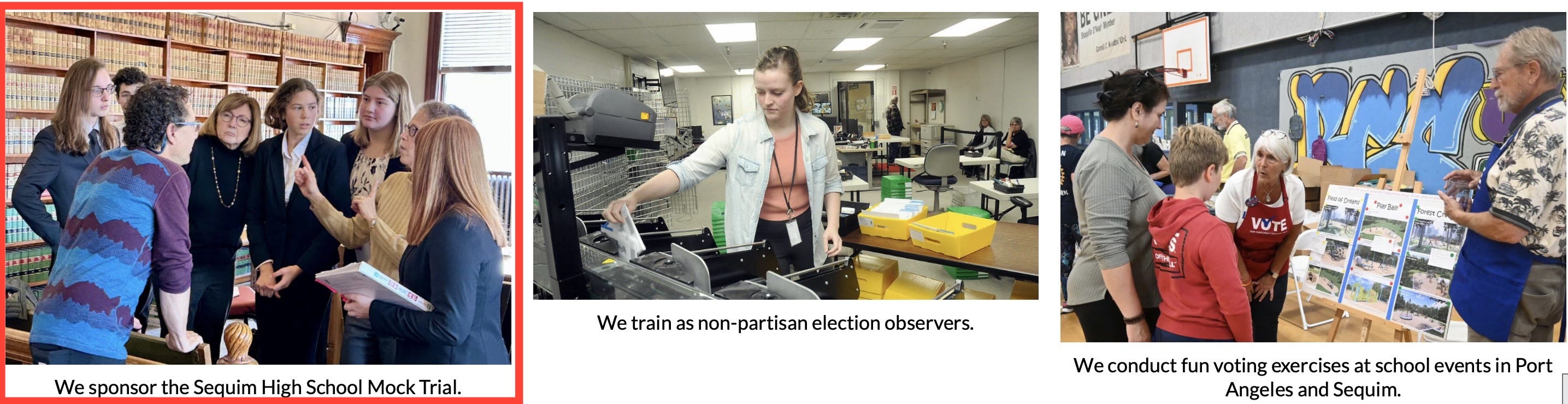
According to reporting from the Sequim Gazette, the program was launched with outside support, including a $700 civics from the League of Women Voters. The club itself is designed to teach students how to argue cases using facts, evidence, and structured reasoning.
That’s the goal, at least.
But that’s where the contradiction begins.
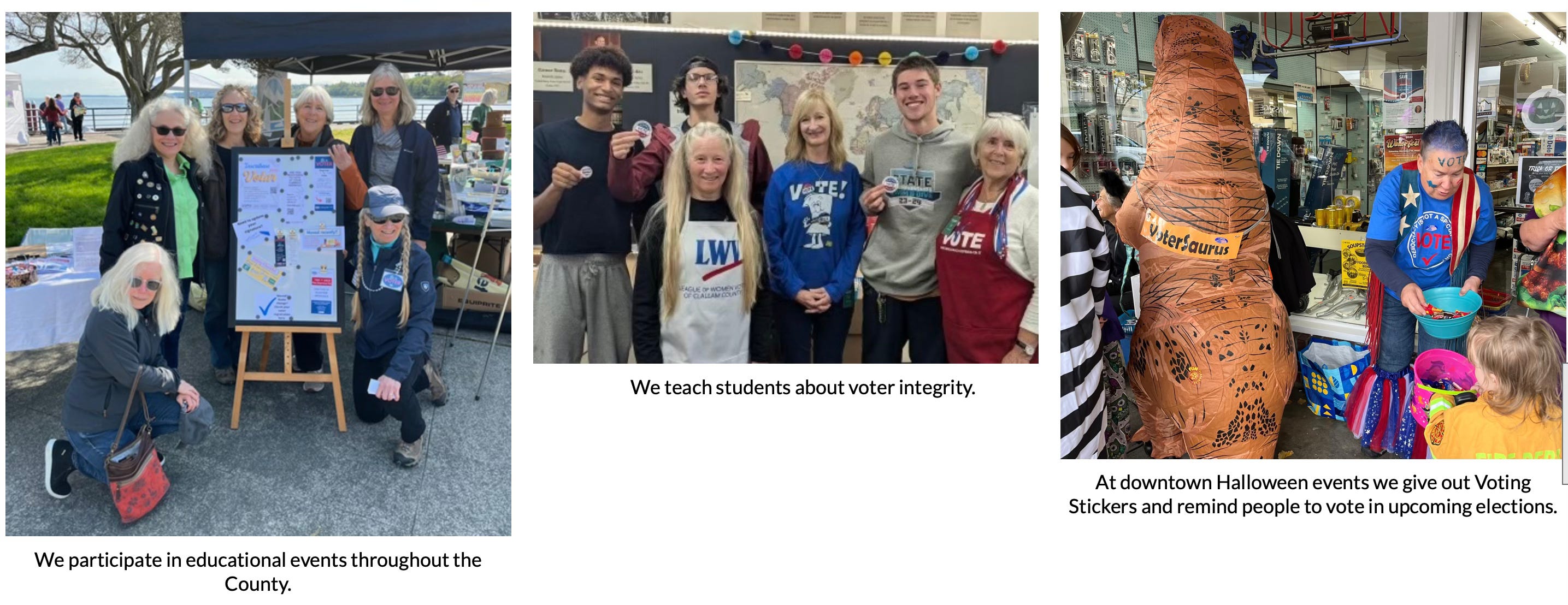
During the Charter Review process, Johnston advocated for rules that would have restricted the reporting of publicly available information—rules that would have directly impacted watchdog journalism and public transparency.
That’s not a minor policy disagreement. That goes to the core of how free speech is understood.
The First Amendment does not exist to protect comfortable speech. It exists to protect speech that is critical, inconvenient, and, at times, unwelcome—especially to those in positions of authority.
What was being proposed—and defended—moved in the opposite direction.
Limiting the reporting of public information.
Reframing criticism as harassment.
Drawing boundaries around lawful expression.
That isn’t a misinterpretation of the First Amendment.
It’s a rejection of it.
And when individuals, like Susan Fisch and Patrice Johnston, in positions of influence—particularly those helping shape how students understand law, argument, and civic engagement—get something that fundamentally wrong, it raises a much bigger question:
What exactly are they teaching the next generation about free speech, dissent, and accountability?
At the same time, Fisch and Johnston publicly accused CC Watchdog of bullying, harassment, and intimidation—claims that were never supported with verifiable evidence.
Then, just hours before a special meeting, an anonymous email surfaced making those same accusations.
According to retired judge Susan Fisch, the “evidence” was the email itself.
No corroboration.
No documentation.
Just allegation.
The Pattern Matters
If this were an isolated moment, it would be easy to dismiss.
But it isn’t.
The Sequim School District has faced a series of controversies over the past decade:
A $40,000 settlement over a Public Records Act violation regarding transparency
A lawsuit alleging misconduct and retaliation involving staff
Suspension of top administrators
Curriculum controversies involving sensitive topics
Student safety threats and arrests
A mass disciplinary incident involving 45 students
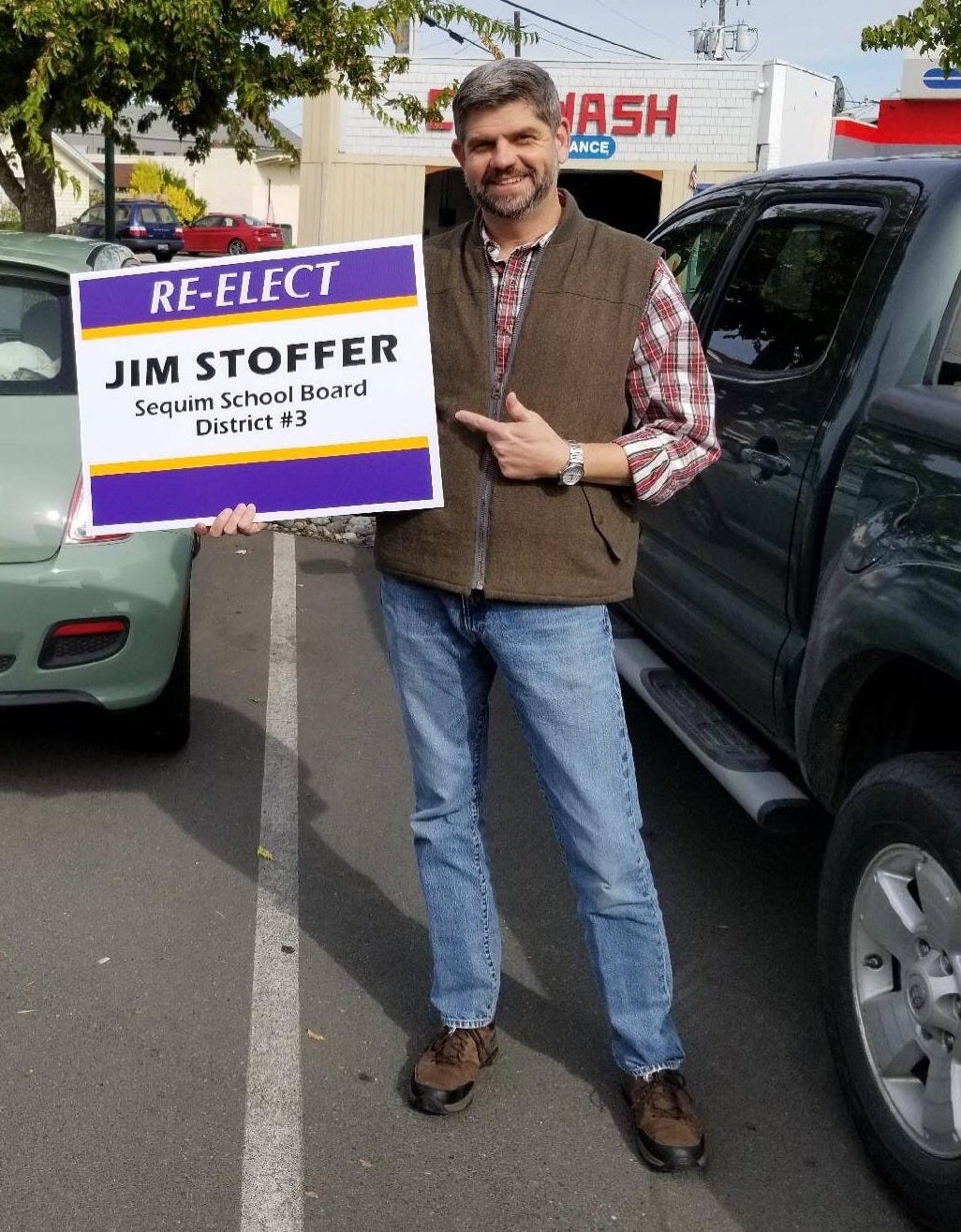
The resignation of former School Board member Jim Stoffer amid allegations that he shared confidential information, following efforts to censure him
Individually, each incident can be explained away.
Together, they paint a picture.
A pattern of strained trust.
A pattern of questionable judgment.
A pattern of blurred lines between authority and accountability.
When Education Becomes Advocacy
Mock Trial is supposed to teach students how to think—not what to think.
How to evaluate evidence.
How to argue both sides.
How to understand that disagreement is not an attack.
But what happens when the adults leading that program are themselves deeply entangled in political disputes?
What happens when those same adults are the subject of criticism—and suddenly, students appear at public meetings echoing those narratives?
That’s where concern shifts from education… to influence.
A Community Concern, Not Just a Personal One
This is my platform.
My opinion.
My perspective.
But I’m not alone.
Many who attended that meeting—or watched it online—came away with the same question:
Was that student speaking for themself… or for someone else?
Because if students are being encouraged—directly or indirectly—to participate in political disputes involving the very adults overseeing their education, that’s a line that should not be crossed.
Where This Leaves Us
I grew up in the Sequim School District.
So did my parents.
So did my grandparents.
So did my great-grandparents.
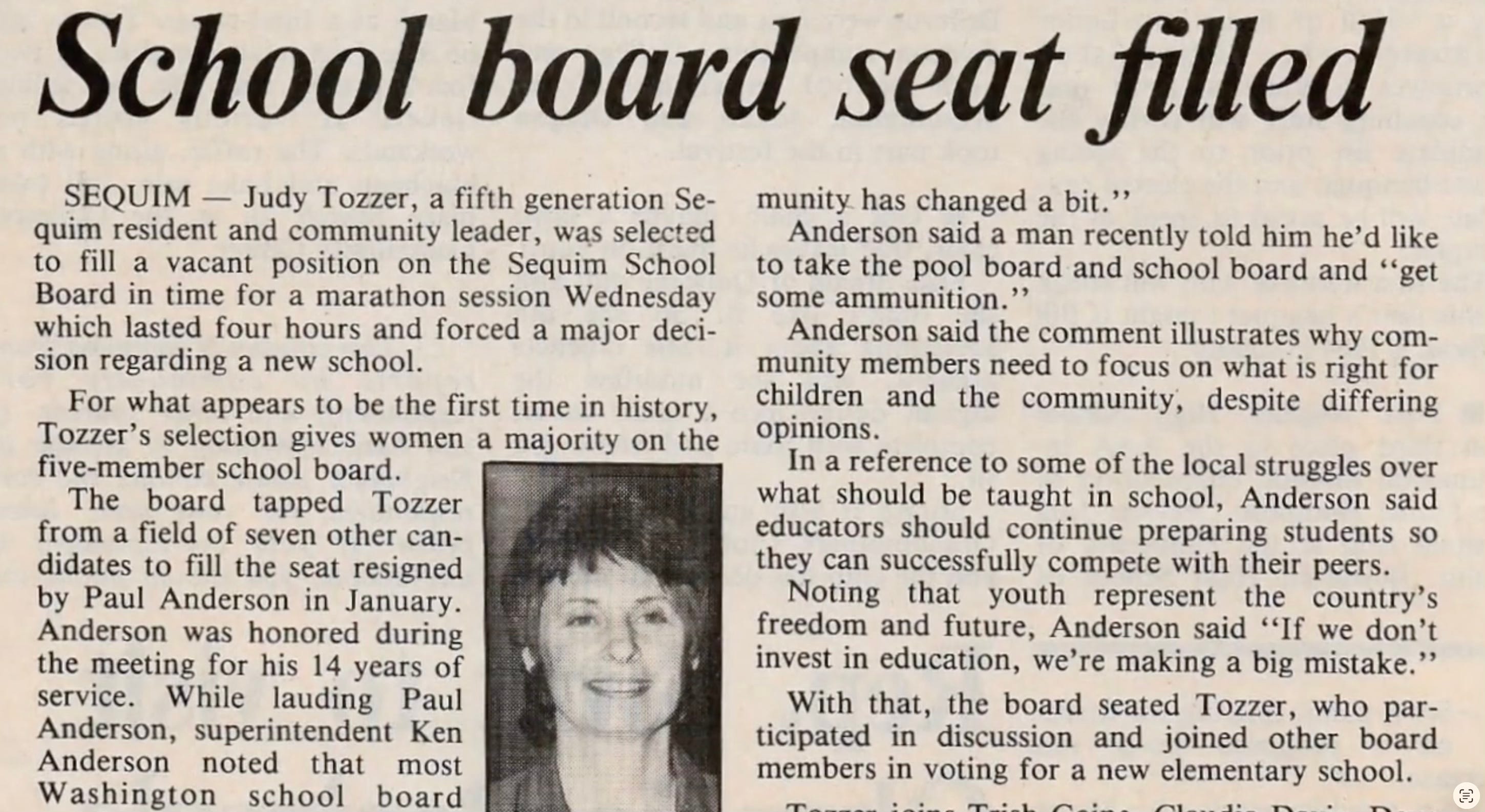
My mom served on the Sequim School Board decades before it became entangled in the kind of political activism we see today from figures like Patrice Johnston and Jim Stoffer.
This isn’t abstract to me. It’s personal.
And that’s why this matters.
Because when education starts to look like advocacy,
when mentorship starts to look like influence,
and when students start appearing in adult political conflicts—
We owe it to them to ask questions.
What Happens Next
I am formally requesting an investigation into a potential inappropriate relationship between League of Women Voters–affiliated activists and students involved in the Sequim High School Mock Trial program.
If wrongdoing is found:
The program should be disbanded or placed under new leadership
Appropriate safeguards should be implemented
And any conflicts of interest should be addressed immediately
Additionally, I am requesting that School Board member Patrice Johnston recuse herself from any involvement in this matter.
Because if we are going to teach students about justice—
We should probably model it first.
Today’s Tidbit
Subject: Request for Review — Mock Trial Program
To: rnickels@sequimschools.org, epickens@sequimschools.org, mhalvorsen@sequimschools.org, nbell@sequimschools.org, mrocha@sequimschools.org
April 9, 2026
Dear Members of the Sequim School Board and Superintendent,
I am writing to formally raise concerns regarding the Sequim High School Mock Trial program and the potential involvement of students in adult political matters.
At a December Charter Review Commission meeting, a minor affiliated with the Mock Trial program delivered public comments tied to an ongoing political dispute involving adults connected to the program’s leadership. While student civic engagement should be encouraged, the circumstances surrounding these remarks have raised reasonable questions about whether the student was acting independently or may have been influenced, prepared, or coached by individuals in positions of authority.
The public comment can be viewed by clicking here and advancing to 3:09:45.
This concern is heightened by the fact that individuals associated with the program, Susan Fisch and Patrice Johnston, have also been directly involved in the underlying political controversy. When students appear in public forums addressing disputes involving their own advisors or program leaders, it creates the appearance—whether intended or not—of students being placed in the middle of adult conflicts.
Additionally, I am concerned about the broader civic framework being modeled for students. During the Charter Review process, proposals advanced by Mock Trial advisors Susan Fisch and Patrice Johnston would have limited the reporting of publicly available information and recharacterized criticism as harassment. These positions raise questions about how foundational principles such as the First Amendment, free speech, and open public discourse are being conveyed to students participating in programs intended to teach law and civic engagement.
I also want to raise a separate and serious concern. The content and framing of the student’s remarks, combined with related public commentary, appeared to suggest an implied association between me and inappropriate conduct involving minors. As you can understand, such implications—whether intentional or not—carry significant reputational harm. Given the historical misuse of similar insinuations, particularly toward individuals who are gay, this is not a trivial matter and warrants careful consideration.
Based on these concerns, I am formally requesting a district-led investigation into potential inappropriate conduct and boundary violations involving adults affiliated with the Mock Trial program and students participating in that program.
Specifically, I am requesting that the district examine whether individuals connected to the program—including those in positions of authority or influence, such as Susan Fisch and School Board member Patrice Johnston—have in any way:
Directed, encouraged, or influenced students to participate in public political disputes involving those same adults
Used their roles in an educational setting to advance personal, political, or reputational interests
Crossed appropriate boundaries between mentorship, instruction, and influence over students
Students should never be placed—directly or indirectly—in the middle of adult conflicts, particularly when those conflicts involve their own advisors or authority figures. Any appearance of such involvement warrants serious and independent review.
In addition, I am requesting:
That School Board member Patrice Johnston recuse herself from any involvement in this matter to avoid conflicts of interest
That the district clearly outlines the scope, process, and findings of this investigation
That appropriate corrective actions be taken if any misconduct or boundary violations are identified
I appreciate your attention to this matter and respectfully request a response outlining how the district intends to review and address these concerns.
Sincerely,
Jeff Tozzer
The commissioners did not respond to yesterday's email asking what their response would be to a constituent who doesn't feel they are sufficiently represented in land use, taxation, and public policy issues at the county level. Here is today's email sent to the League of Women Voters at info@lwvcla.org.
Dear League of Women Voters,
It appears that two of your members may have used positions of authority to coerce a minor into targeting a political rival. I am seeking clarification on your organization’s role and policies in situations like this.
What role, if any, does your organization play in encouraging or facilitating student involvement in political or advocacy-related activities within local schools?
What safeguards are in place to ensure minors are not influenced or directed by adults in ways that could be considered coercive or inappropriate?
Are there internal guidelines or policies that define the boundary between civic education and political advocacy, particularly when it involves students?
If members of your organization are found to have crossed those boundaries, what accountability measures are in place?
I would appreciate any clarification you can provide on these matters.
They must be very afraid of you and what you have started Jeff!
Using the old “list of Rhetorical Fallacies” to try to create a smear campaign against you!
“When the debate is lost, slander becomes the tool of the loser”.