

The Charter Review Commission handed the Board of Commissioners two clear recommendations—one controversial, one common sense. Now the question is simple: will our elected officials listen, or will they continue a pattern of inaction that has already cost taxpayers for years?
April is shaping up to be a pivotal month for civic engagement in Clallam County—and for good reason.
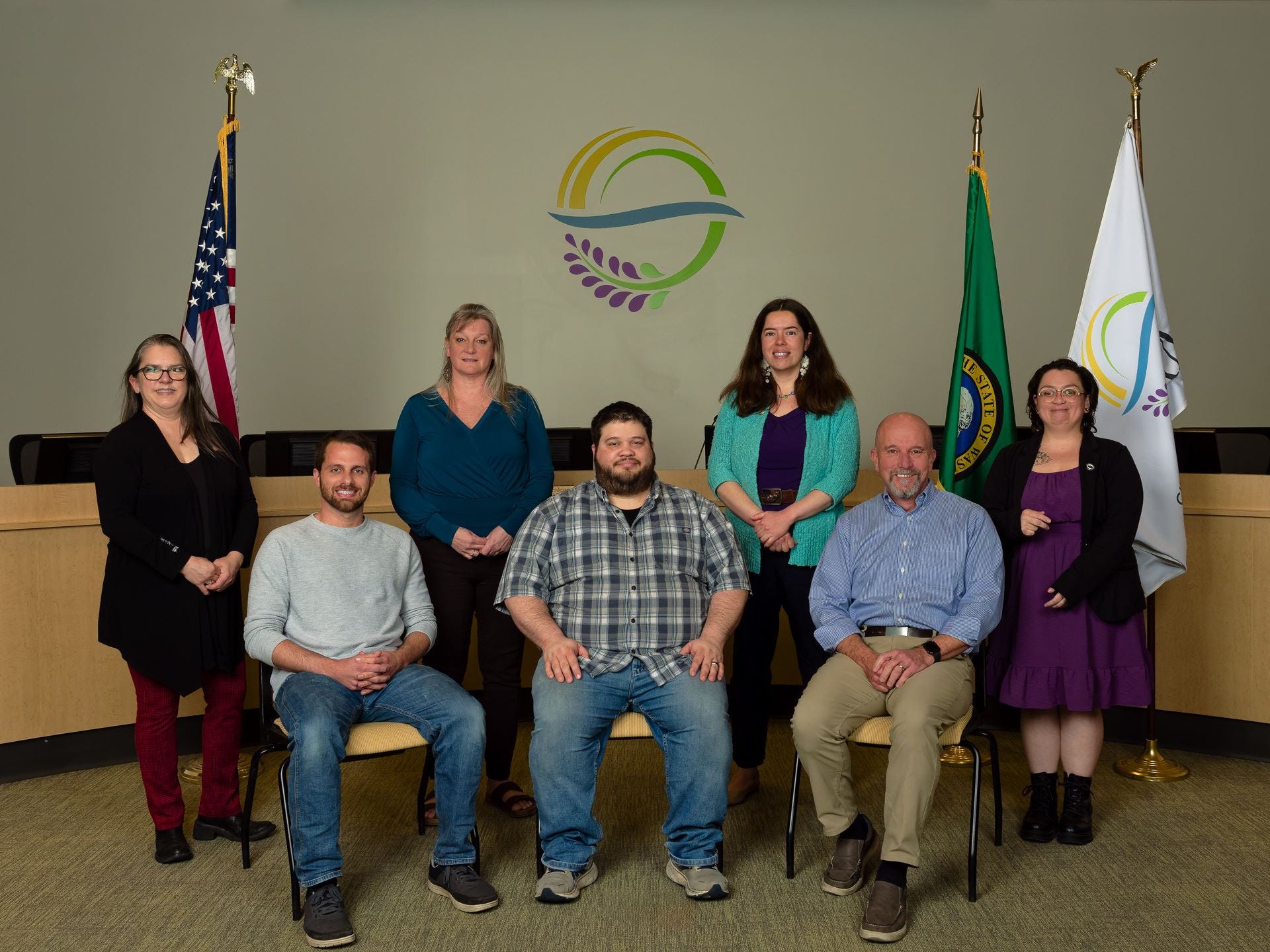
The 2025 Charter Review Commission (CRC) concluded its work with two official recommendations to the Board of County Commissioners. One introduces a new layer of government. The other asks commissioners to do something far more basic: respond.
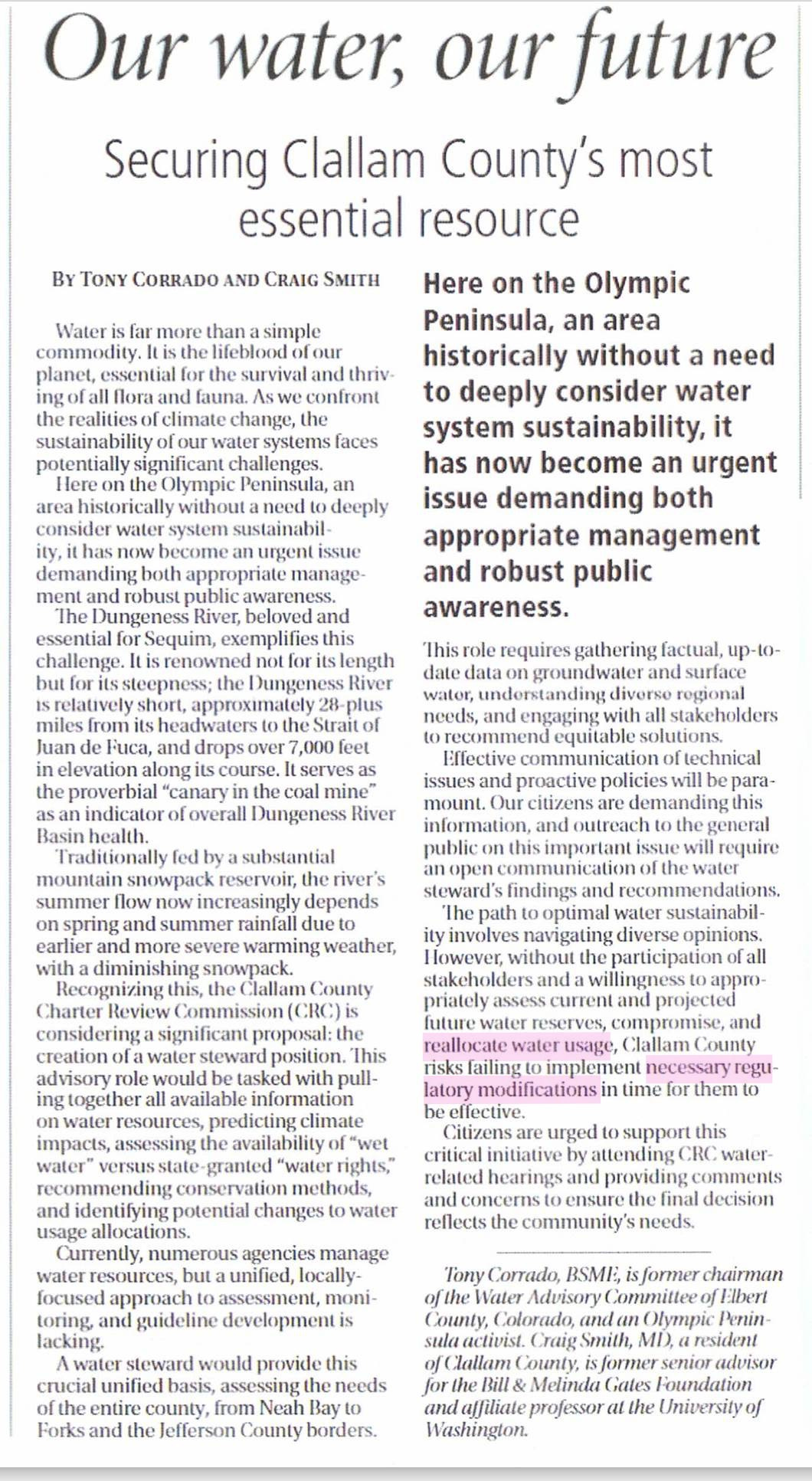
1. The Water Steward Proposal

The first recommendation calls for the creation of a Water Resources Specialist—often described as a “Water Steward”—within the Department of Community Development.
This idea, heavily promoted by the League of Women Voters, has been the subject of ongoing concern and scrutiny.
As previously documented on CCWatchdog:
The position could expand regulatory oversight on rural landowners, particularly those relying on wells and septic systems
It introduces new bureaucracy without clearly defined limits or measurable outcomes
It raises serious questions about enforcement authority and long-term costs
And critically, it would not apply to tribal lands, creating an uneven regulatory landscape
That last point is not minor—it goes directly to fairness, jurisdiction, and who ultimately bears the burden of new policy.
Supporters frame the position as proactive water management. Critics see it as regulatory creep with unclear accountability.
2. A Recommendation That Shouldn’t Be Necessary

The second recommendation is far less controversial—and far more telling.
It asks the commissioners to respond to formal requests from state and federal agencies, particularly regarding land transfers into tribal trust.
For over a decade, Clallam County has largely failed to respond to these inquiries.
That includes letters from the Bureau of Indian Affairs (BIA), which routinely ask for input on:
Impacts to property tax revenue
Zoning and land use implications
Long-term effects on county services and infrastructure
When the county does not respond, those concerns are effectively absent from the record.
As CRC member Ron Richards emphasized during commission discussions, this is not about opposing or supporting any specific transfer—it’s about representation.
Silence is not neutrality.
In practice, silence becomes consent.
This recommendation doesn’t ask for new authority, new funding, or new programs.
It asks elected officials to do their job:
Engage. Respond. Represent their constituents.
To their credit, the commissioners are seeking public input before taking action. Three town halls are scheduled this month:
Clallam County Board of Commissioners
Charter Review Commission Recommendations
Topics:
Retention of a Water Resources Specialist
Procedures for County Responses to Land Acquisitions
Monday, April 6, 2026 – 5:00 PM
Forks City Hall Council Chambers
500 E. Division Street
Forks
Tuesday, April 14, 2026 – 5:00 PM
Guy Cole Event Center
144 N. Blake Avenue
Sequim
Tuesday, April 21, 2026 – 5:00 PM
Clallam County Courthouse – Commissioner’s Board Room
223 East 4th Street, Room 160
Port Angeles
Virtual attendance is possible. Click on the dates for Zoom instructions.
Public comments can also be submitted to:
loni.gores@clallamcountywa.gov
More Opportunities to Get Involved
If you’ve ever wondered whether your voice matters—this is one of those moments where it does. Civic engagement isn’t limited to county policy.
City of Sequim: Salary Commission Openings
The City of Sequim is currently seeking applicants for its City Council Salary Commission, which determines compensation for elected officials.
Mayor currently earns: $7,944/year
Deputy Mayor: $6,360/year
Councilmembers: $4,632/year
Positions are open until filled, and applicants must live within Sequim city limits.
Apply here:
https://www.sequimwa.gov/214/City-Advisory-Bodies
Field Hall Event: The Importance of Local Journalism

📍 Tuesday, April 7, 2026 – 6:00 PM
A panel discussion on the future of local journalism featuring regional media leaders.
It’s a timely topic—especially considering that at last year’s event, the Peninsula Daily News publicly asked the community for financial donations and advocated for tax hikes to stay afloat.
The event is free. For additional details, including a live stream option, click here.
Public Safety Forum – No Gatekeepers

📍 Thursday, April 16, 2026
⏰ 6:30–8:30 PM
📌 Fairview Grange Hall, Port Angeles
Hosted by the Calico Cat Social Club, this “People’s Forum” offers something different:
No moderator interference
No strict time limits
Audience-driven Q&A
Panel includes:
County Commissioner Mike French
County Prosecutor Mark Nichols
County Sheriff Brian King
Port Angeles Police Chief Brian Smith
With rising concerns around crime, enforcement, and accountability, this could be one of the most candid public discussions of the year.
The Bottom Line
The Charter Review Commission has done its work.
Now it’s up to the commissioners—and the public.
One recommendation expands government.
The other simply asks government to function.
The question is no longer what should be done.
It’s whether those elected to lead are willing to do it.
Today’s Tidbit
Counties Can Respond—Here’s Proof
There’s a persistent narrative locally that counties have little to no role when it comes to federal tribal decisions—particularly land-into-trust actions or related jurisdictional questions.
That’s simply not accurate.
A clear example comes from Skagit County, which formally engaged with the Bureau of Indian Affairs during a dispute involving the Swinomish Indian Tribal Community.
In its official response to the BIA, Skagit County:
Raised concerns about jurisdictional impacts
Addressed potential boundary interpretations and legal implications
Highlighted effects on non-tribal landowners and local governance
Asserted the county’s role in representing its residents and tax base
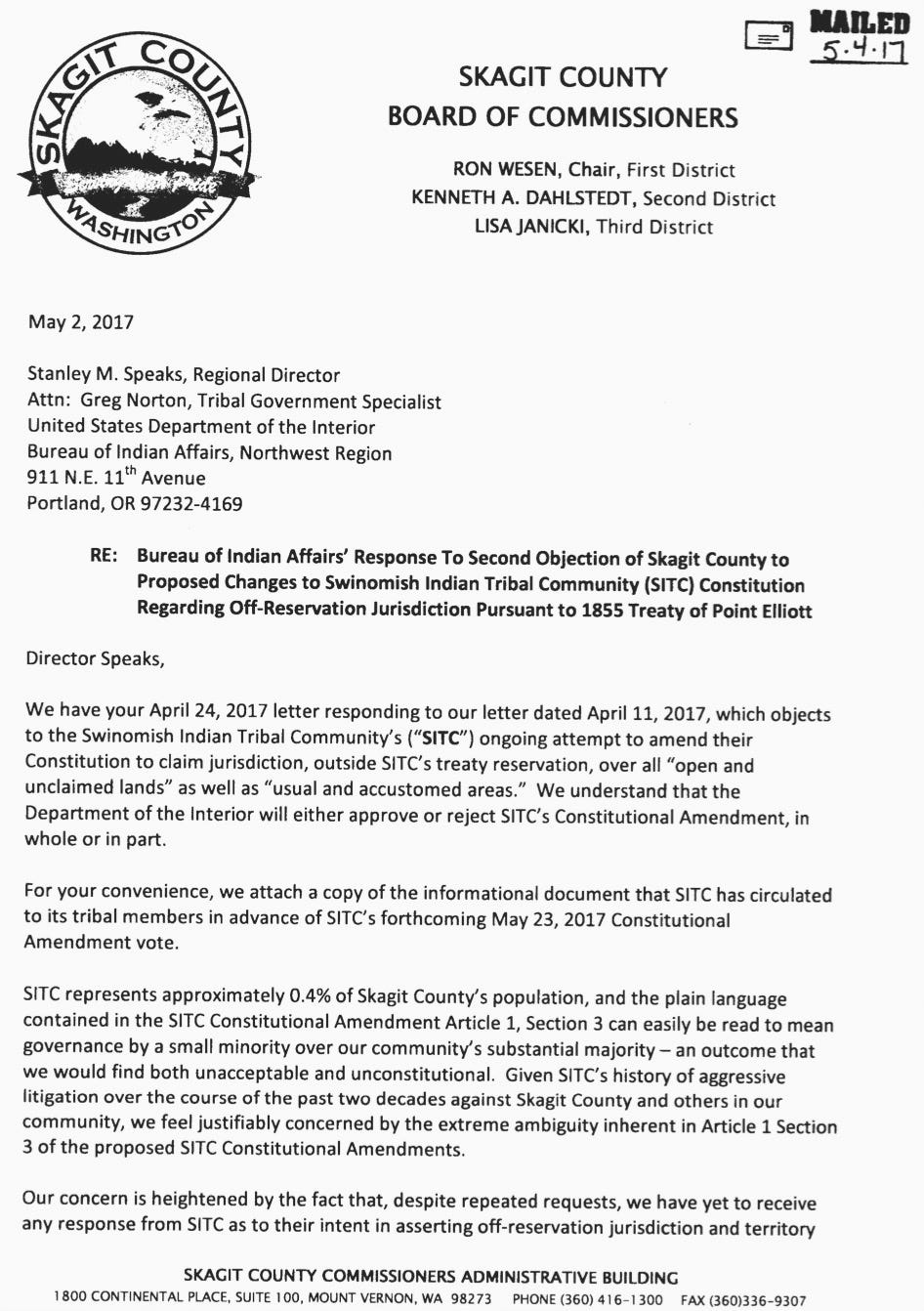
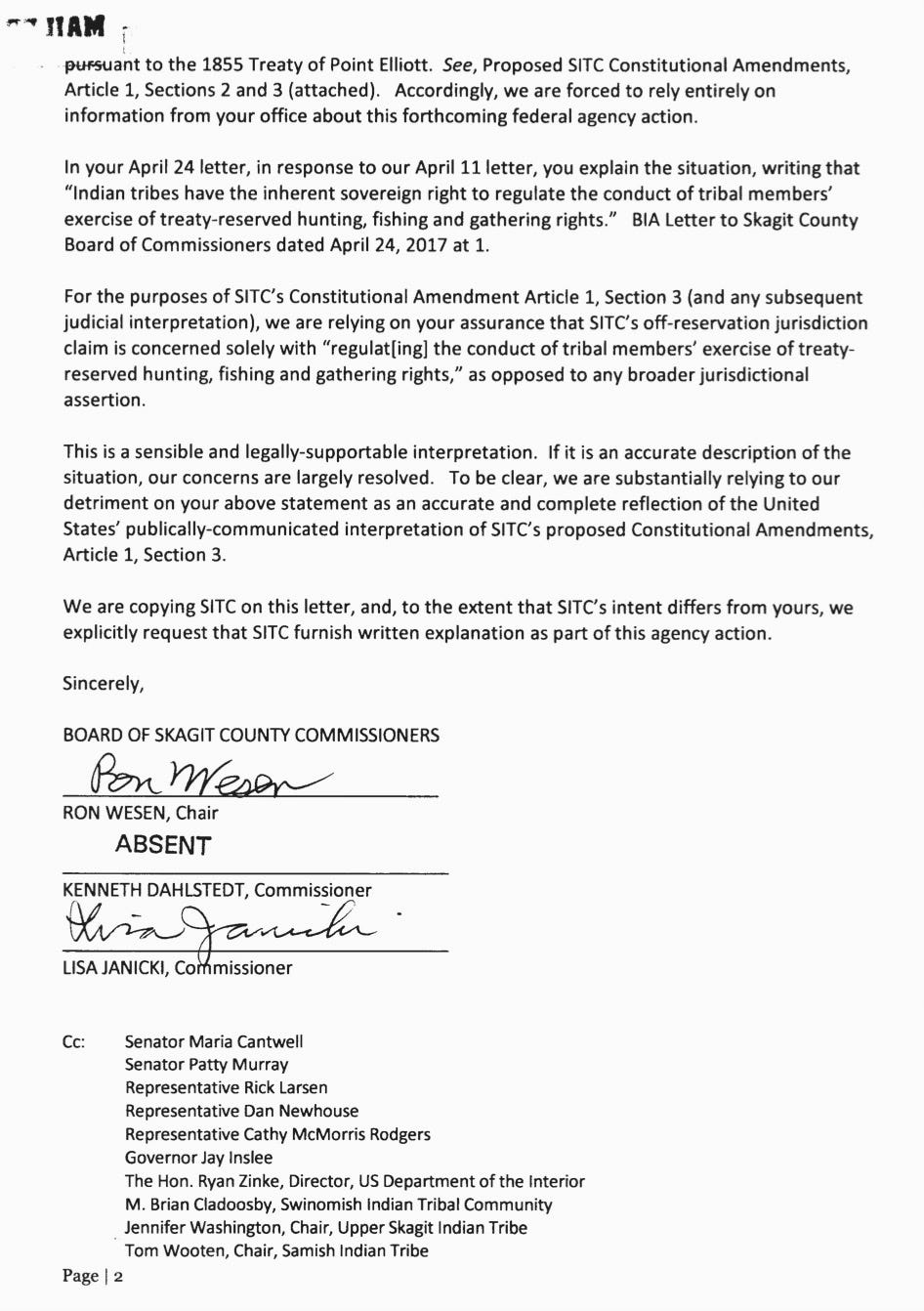
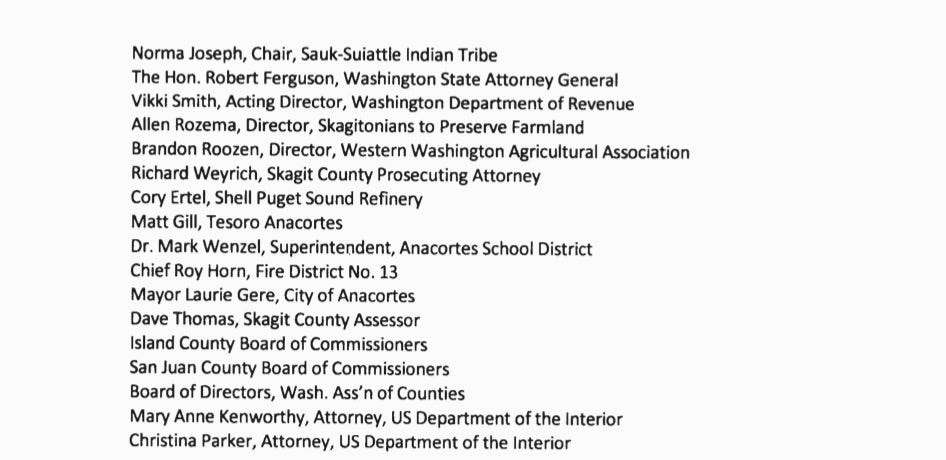
This wasn’t symbolic. It was part of the federal administrative record.
And importantly—it was not framed as anti-tribal.
It was framed as government-to-government communication, which is exactly how the process is designed to work.
Federal agencies like the BIA routinely solicit input from local governments before making determinations. That input helps inform decisions about taxation, land use, infrastructure, and jurisdiction.
When counties respond, their concerns are considered.
When they don’t, those concerns are absent.
In past cases involving the Swinomish, local governments—including Skagit County and nearby cities—have formally objected or raised concerns about how land status or boundary interpretations could affect property rights, taxation, and jurisdiction.
That is not racism.
That is not targeting.
That is governance.
It’s elected officials doing exactly what they were chosen to do:
Represent the interests of their constituents in decisions that affect them.
Note: CC Watchdog’s examination of the League of Women Voters continues next Friday.
The commissioners did not answer yesterday's question seeking clarification about whose interests they primarily represent. Here is today's email:
Dear Commissioners,
Skagit County has demonstrated that counties can formally respond to BIA land-into-trust actions as part of the administrative record—so why has Clallam County failed to do so for over a decade, and will you commit to submitting responses going forward?
I did not steal the property on which I reside. I pledge allegiance to one nation. I am not racially biased against tribal ancestry. I am in favor of governance of county commissioners responding to state and federal agencies requesting input on economic impact of land transfers. It is a dereliction of duty to not respond. There is also the impact on governance of sovereign nations control of land and exclusive admittance to such land.