

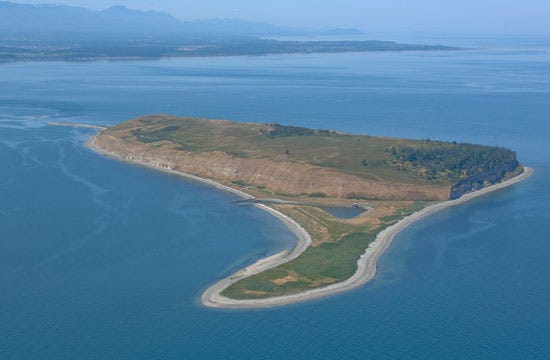
Less than two years after entering a “co-management” agreement, the Jamestown S’Klallam Tribe is now pursuing full ownership of the Dungeness and Protection Island National Wildlife Refuges—and days from now, Sequim’s City Council is preparing to support it. It’s time to examine what that shift means for public land, political influence, and who our elected officials are really representing.
From Partnership to Transfer
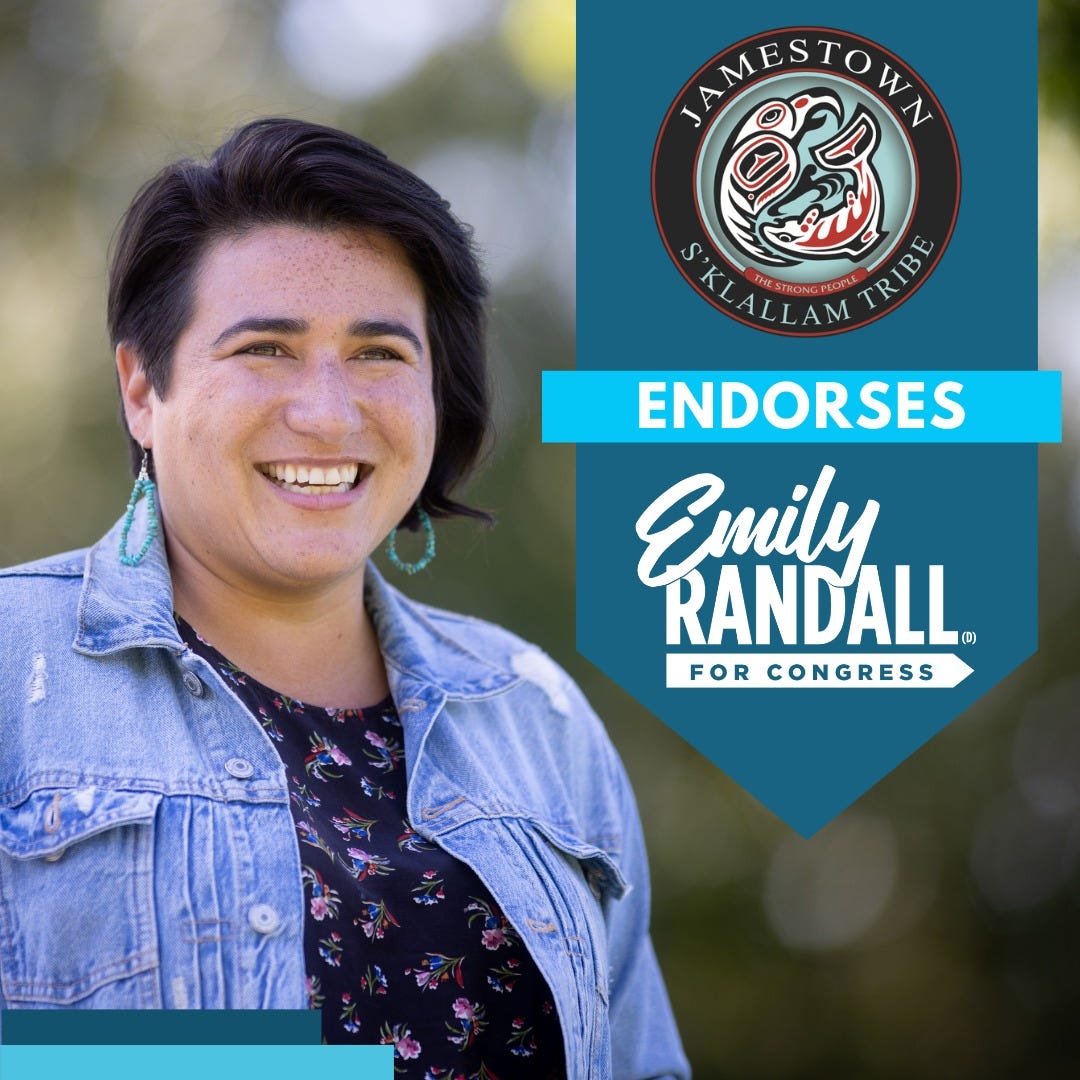
On March 23, the Sequim City Council is poised to send a letter to Representative Emily Randall and Senator Maria Cantwell supporting the “Jamestown S’Klallam Tribe Land Transfer Act of 2026.”
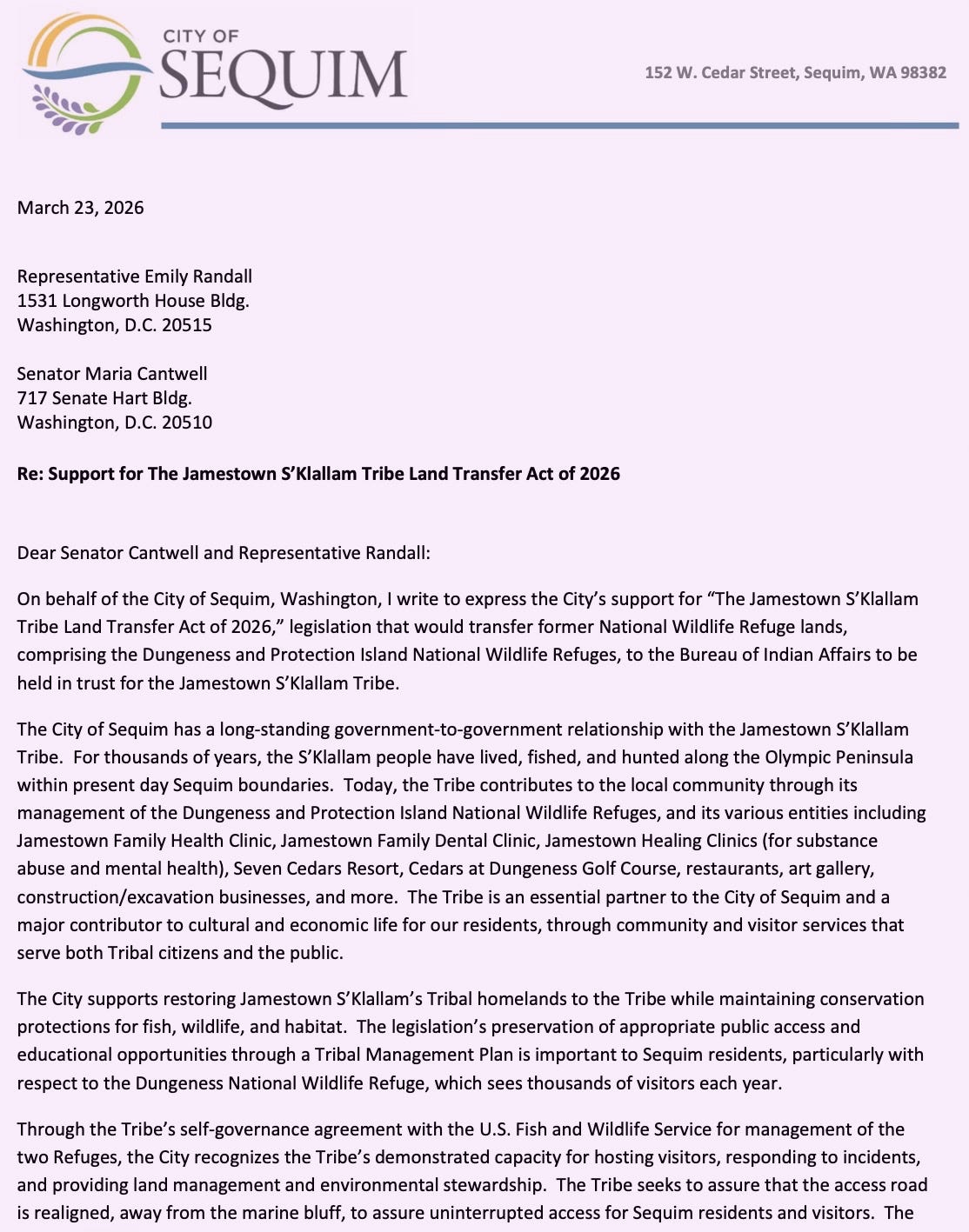
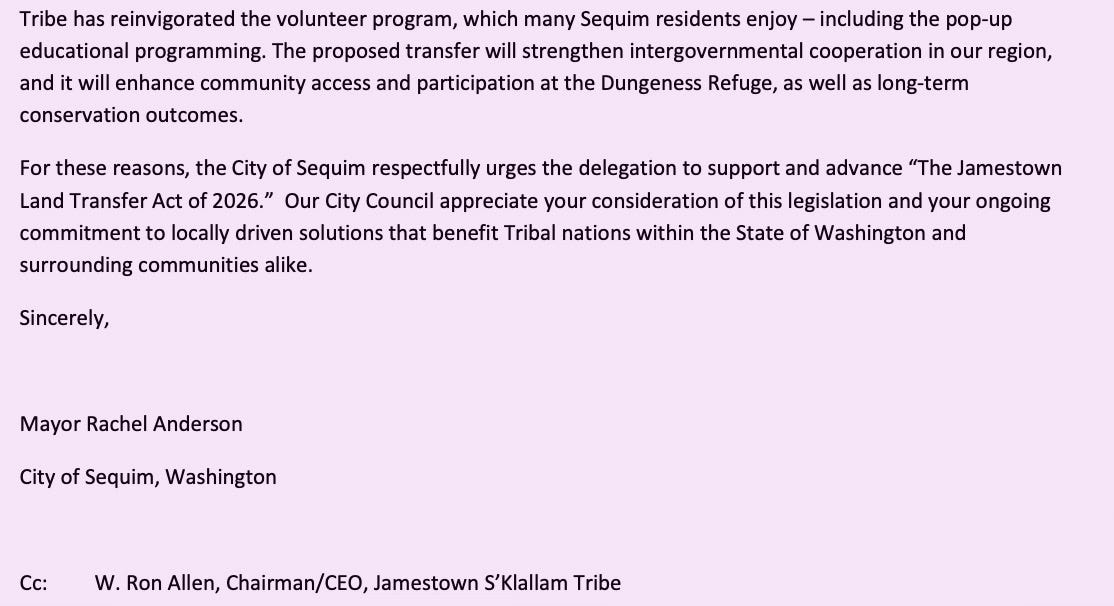
The proposal would transfer federal wildlife refuge land—currently held for the benefit of all Americans—to the Bureau of Indian Affairs, to be held in trust for the Jamestown S’Klallam Tribe.
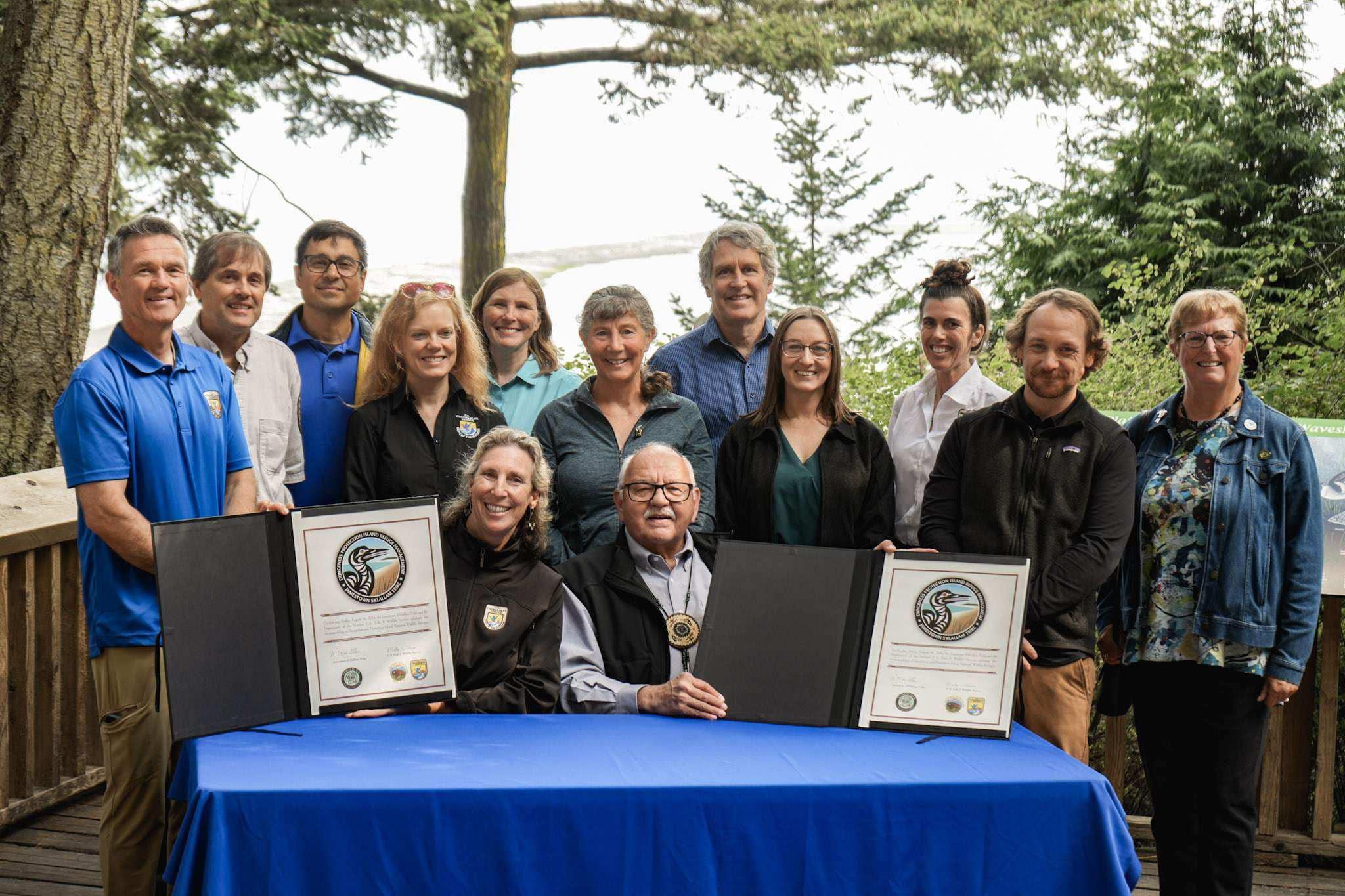
Less than two years ago, the Tribe entered into a co-management agreement for these refuges. Now, the goal is no longer shared stewardship—it is full ownership.
That is not a small step. It is a fundamental shift.
Who Do Our Representatives Represent?
The officials advancing this—Sequim City Council, members of this congressional district, and statewide elected leaders—were chosen to represent the public.
Yet here they are, supporting the transfer of a national public asset to a sovereign nation.
That raises a basic but unavoidable question:
Who is being represented in this decision—the public, or a separate sovereign government?
A Major Step for “Land Back”
This proposal reflects a broader and increasingly visible movement: Land Back—the transfer of public lands into tribal ownership.
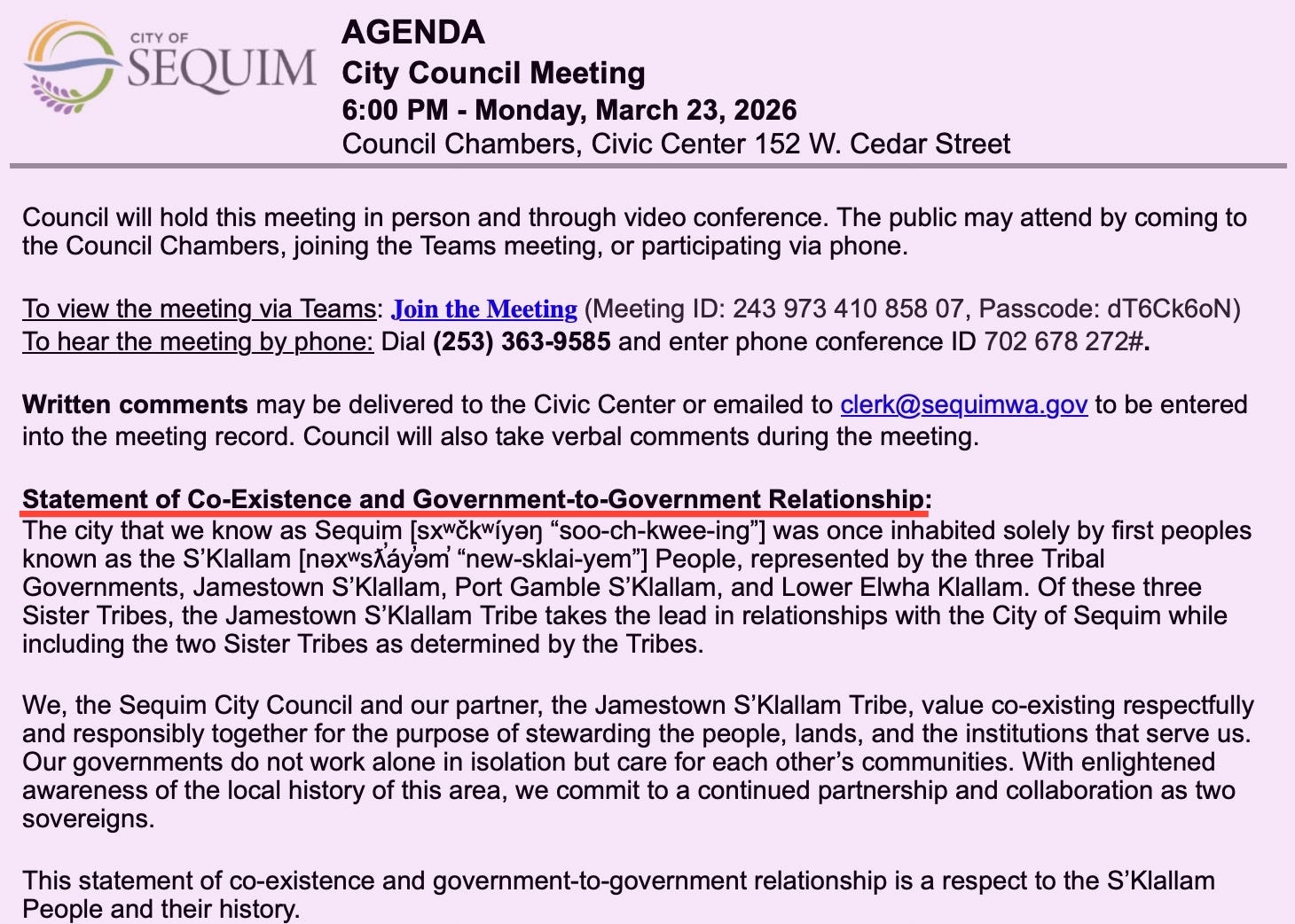
Sequim’s own “Statement of Co-Existence and Government-to-Government Relationship” makes clear how this moment developed. The City explicitly recognizes itself and the Jamestown S’Klallam Tribe as “two sovereigns” committed to shared stewardship.
Now, that relationship is evolving into something more permanent—and more consequential.
The City’s letter states it supports “restoring Tribal homelands.”
But that raises another question:
How much land qualifies as “homeland”?
And where does that process stop?
Competing Interests on Public Land
At the same time this transfer is being pursued, the Jamestown Corporation is preparing a 50-acre commercial, non-native oyster operation within the refuge—a proposal already facing legal and permitting challenges.
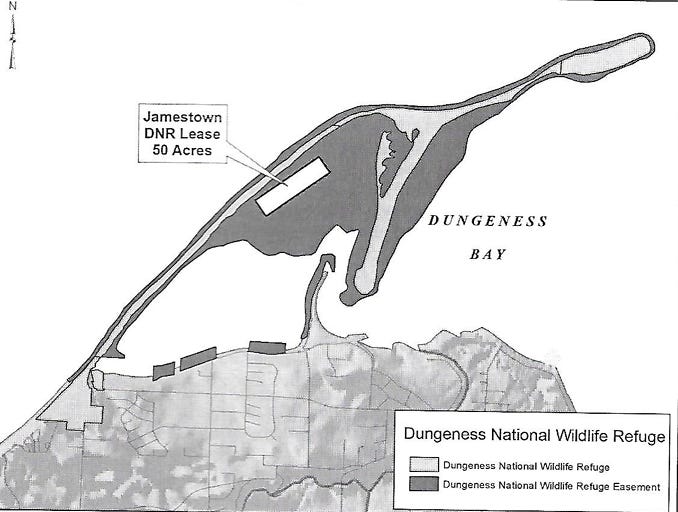
If the land is transferred into tribal trust, those challenges become far easier to navigate.
Ownership changes the rules.
Contradictions in the Record
The City’s letter praises the Tribe for “reinvigorating the volunteer program.”
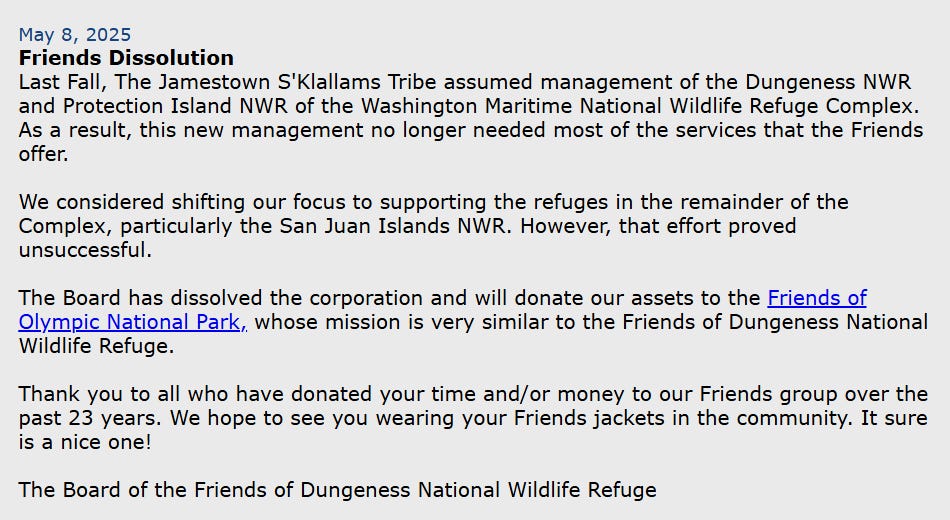
But less than a year ago, the Friends of the Dungeness National Wildlife Refuge reported that under new management, their services were largely no longer needed—and the long-standing volunteer board dissolved.
That contradiction deserves scrutiny.
Following the Money and Influence
Campaign finance records show:
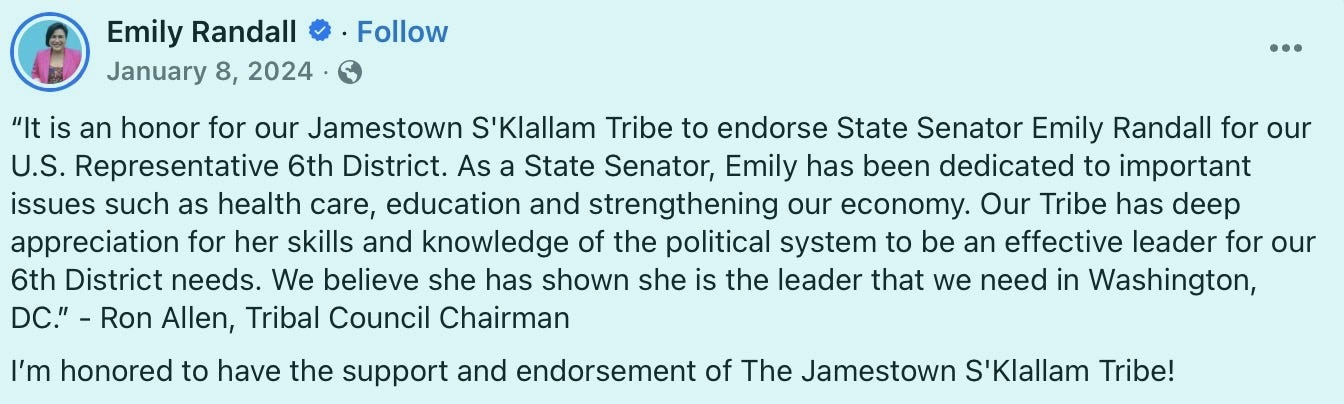
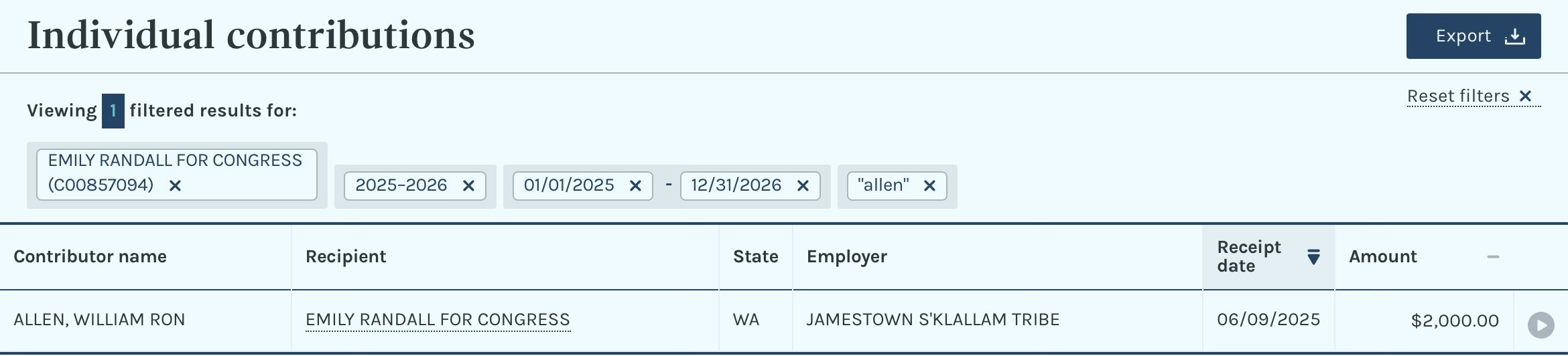
Jamestown CEO Ron Allen contributed $2,000 to Representative Emily Randall
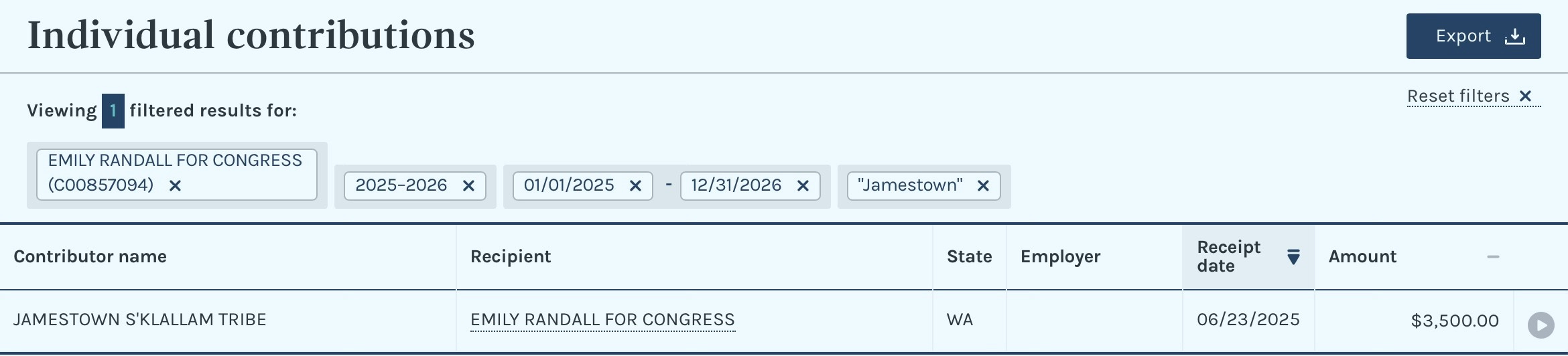
The Jamestown Tribe contributed an additional $3,500
More notably, Allen himself has openly described how tribal political influence operates. Reflecting on past elections, he explained how tribes mobilized funding and voter turnout to defeat Senator Slade Gorton and elect Maria Cantwell:
“We started generating money for her… we got our people registered… we chalked it up as an Indian victory, no question about it.”
This isn’t speculation. It’s a stated strategy—leveraging economic success into political power.
A Refuge for Wildlife—or Commerce?
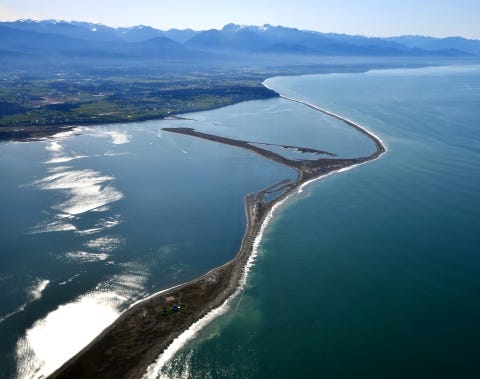
The Dungeness National Wildlife Refuge was established in 1915 by President Woodrow Wilson as a protected space:
“A refuge, preserve and breeding ground for native birds.”
Today, it is home to:
Over 250 species of birds
41 species of land mammals
8 species of marine mammals
For more than a century, it has belonged to the public—preserved, funded, and protected by generations of Americans.
Now, that same land is being considered for transfer to a sovereign entity, with active commercial aquaculture interests already in motion.
The Bigger Picture
This is not just about one refuge.
It is about precedent.
It is about whether public lands—held in trust for all Americans—can be transferred away through political alignment and quiet agreements.
And it is about whether the public has any real say before that happens.
What Happens Next
The Sequim City Council will review this letter:
City Council Meeting
📍 Civic Center, 152 W. Cedar Street
🕕 Monday, March 23, 2026 – 6:00 PM
Attend in person, join online, or call in. Click here for instructions.
Submit written comments: clerk@sequimwa.gov
Take Action
If you believe public lands should remain public, now is the time to speak.
Email Representative Emily Randall here.
Email Senator Maria Cantwell here.
Contact the Clallam County Commissioners and ask them to oppose this transfer with a letter of support from the citizens of Clallam County, and make it clear: The refuge is not for sale. It is part of our shared national heritage. All three commissioners can be reached by contacting the Clerk of the Board at loni.gores@clallamcountywa.gov.
Talk to your neighbors. Share this information. Show up to the meeting. Send the emails.
Because once land like this is transferred, it doesn’t come back.
And decisions like this are not reversed by silence—they are shaped by the people who step forward and make themselves heard.
Editor’s Note: Our weekly profile series investigating the League of Women Voters of Clallam County will continue next Friday.
The county commissioners did not reply to yesterday's email asking if their proclamation about the ongoing historical injustices brought on by colonization is unifying or divisive. Here is today's email for the commissioners:
Dear Commissioners,
I am writing to respectfully urge you to take a clear and timely stand on behalf of Clallam County residents by sending a formal letter to Representative Emily Randall and Senator Maria Cantwell asking them to keep the Dungeness and Protection Island National Wildlife Refuges in federal public trust.
As you know, these refuges—long managed for conservation and public access, and now under a relatively recent co-management agreement with the Jamestown S’Klallam Tribe —are treasured public assets that generations of local families have used, enjoyed, and helped fund through their tax dollars. They are not surplus property, nor are they available for transfer; they belong to the public, and their value lies in remaining accessible, protected, and accountable to all. County residents have a deep and enduring connection to these lands, and many are increasingly concerned about the trajectory from co-management toward potential transfer of ownership.
A letter from the Board affirming that these refuges should remain in public hands—protected for future generations—would send a strong and appropriate message that Clallam County stands for preserving public lands for the public good.
Good Governance Daily Proverb:
Good governance honors history, but it does not bypass the public’s right to know who governs, by what authority, and for whose lasting benefit.