

Last Tuesday Commissioner Mark Ozias read the Indigenous Peoples’ Day proclamation from the dais. Nobody was there to accept it — for the second year in a row. When asked who requested it and how it began, he and his colleagues said they couldn’t recall. Public records show it began with a 2019 suggestion from Jamestown Chairman Ron Allen, whose tribe has been Ozias’s largest campaign donor.
The Empty Room Ritual
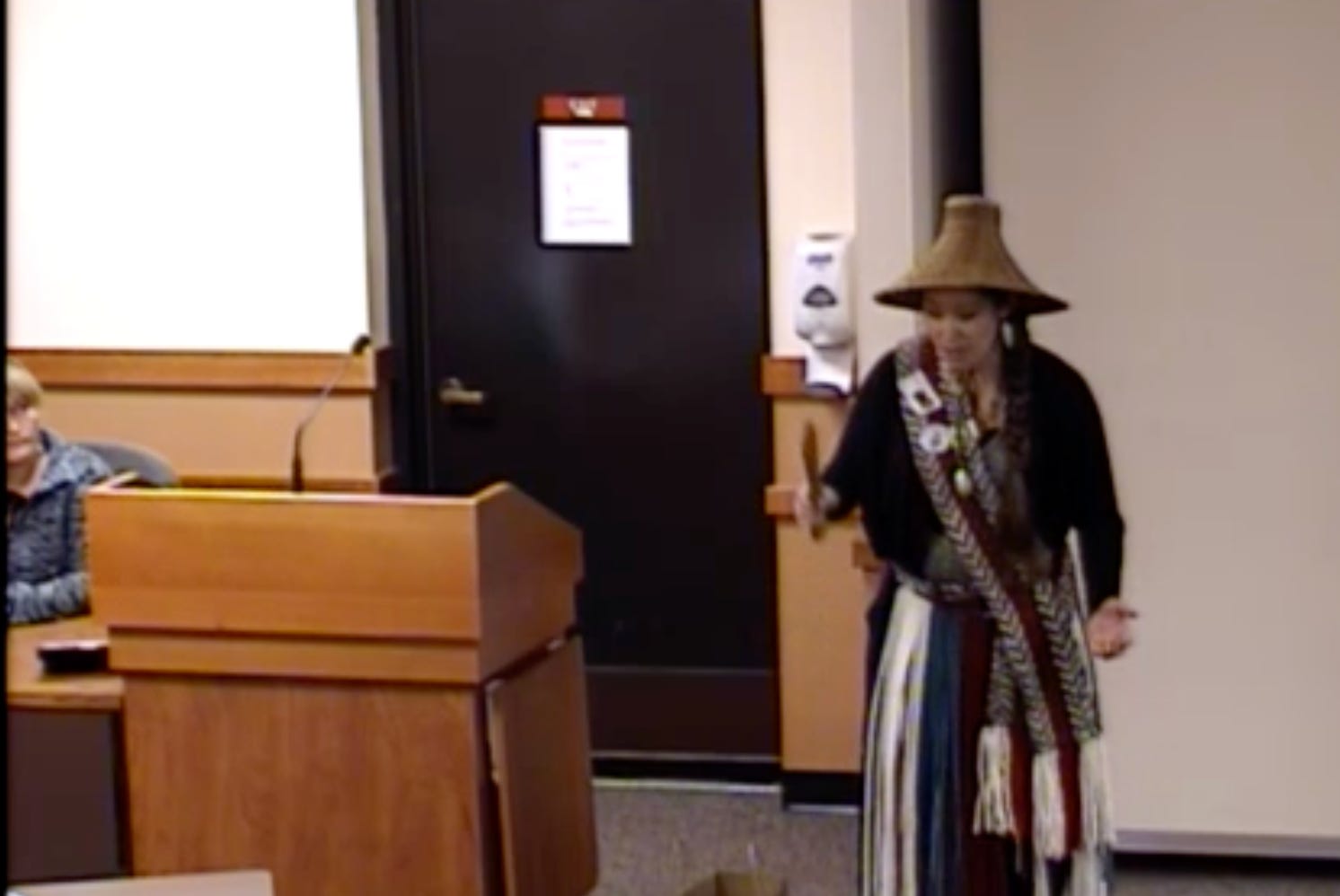
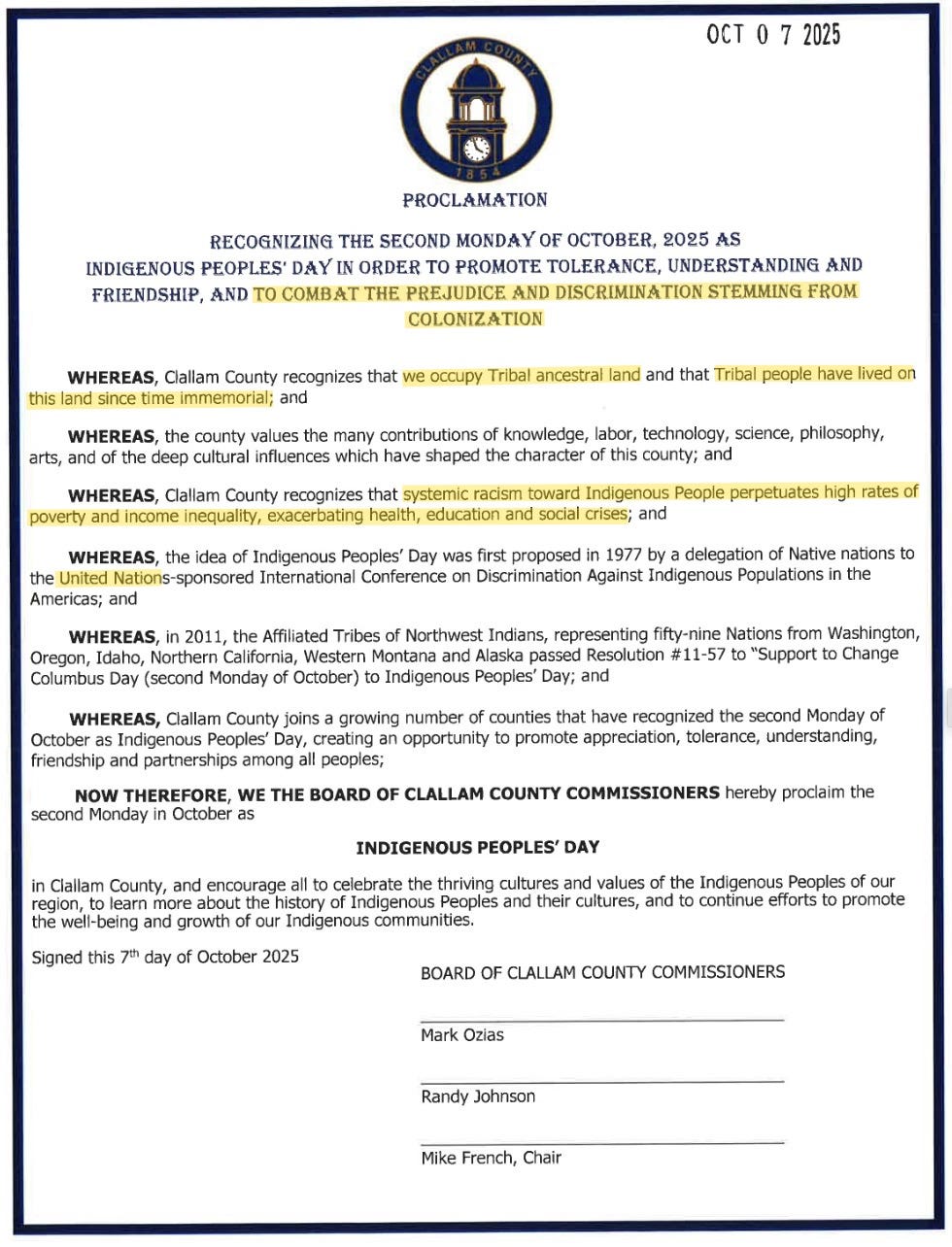
Today is Indigenous Peoples’ Day. Last Tuesday, Commissioner Mark Ozias read the proclamation from the dais, not the podium. No one was there to receive it. Not tribal leaders. Not elders. Not community members. For the second year running, the ceremonial handoff happened empty of indigenous people.
The commissioners still treat it as essential. At a recent forum, Ozias was asked how the proclamation got on the agenda and who requested it. He said he didn’t know if anyone had asked for it and couldn’t recall how it started. He has been on the Board for eleven years. Commissioner Mike French said Ozias explained it well and noted that four federally recognized tribes have territory here; he also didn’t know the origin. Commissioner Randy Johnson’s name sits on the signature block with theirs.
They read it anyway.
The Emails They Forgot
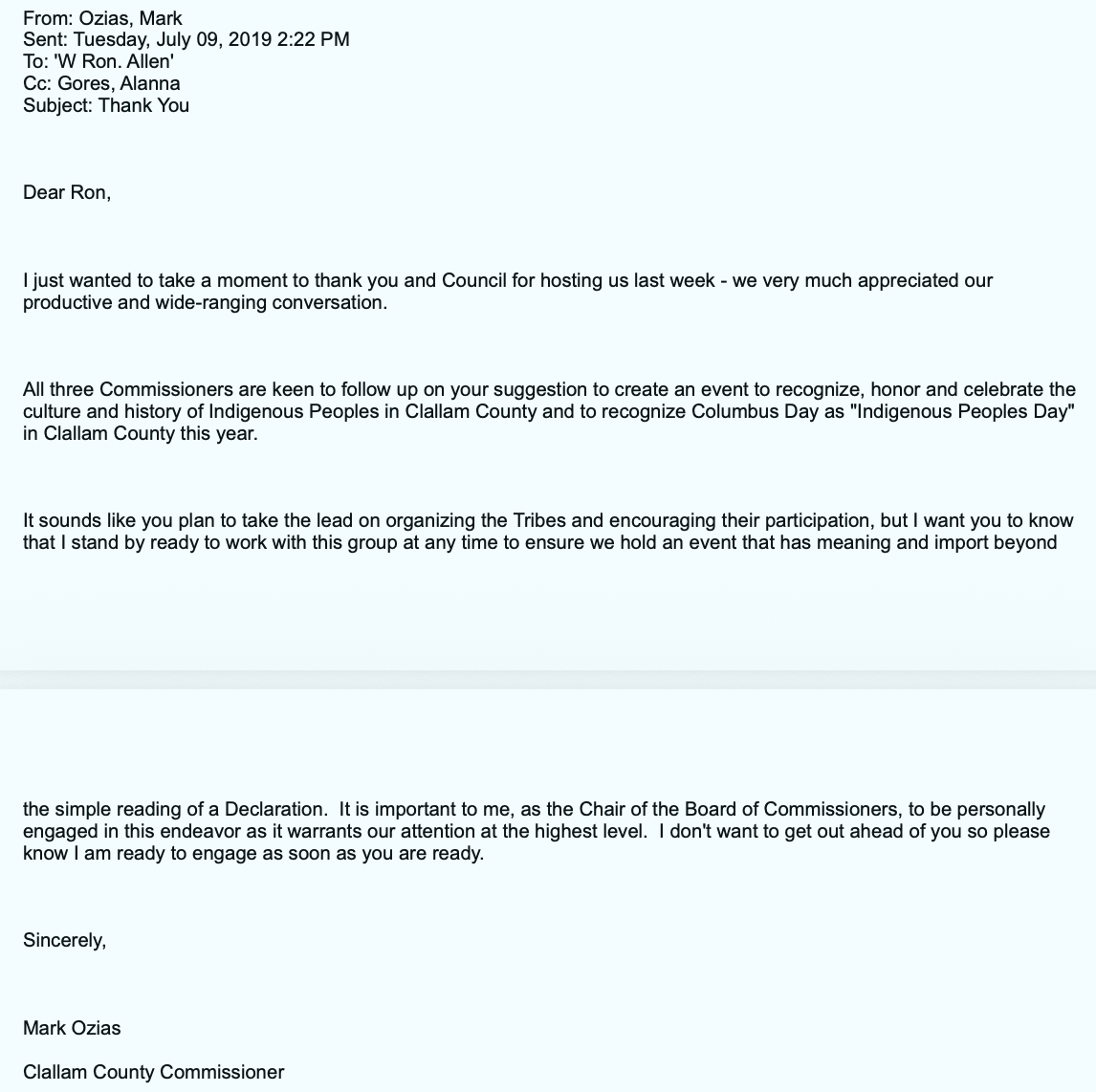
The records are not vague. On July 9, 2019, Ozias emailed W. Ron Allen, Chairman and CEO of the Jamestown S’Klallam Tribe:
“All three Commissioners are keen to follow up on your suggestion to create an event to recognize, honor and celebrate the culture and history of Indigenous Peoples in Clallam County and to recognize Columbus Day as ‘Indigenous Peoples Day’ in Clallam County this year.
It sounds like you plan to take the lead on organizing the Tribes and encouraging their participation, but I want you to know that I stand by ready to work with this group at any time to ensure we hold an event that has meaning and import beyond the simple reading of a Declaration. It is important to me, as the Chair of the Board of Commissioners, to be personally engaged in this endeavor as it warrants our attention at the highest level. I don’t want to get out ahead of you so please know I am ready to engage as soon as you are ready.”
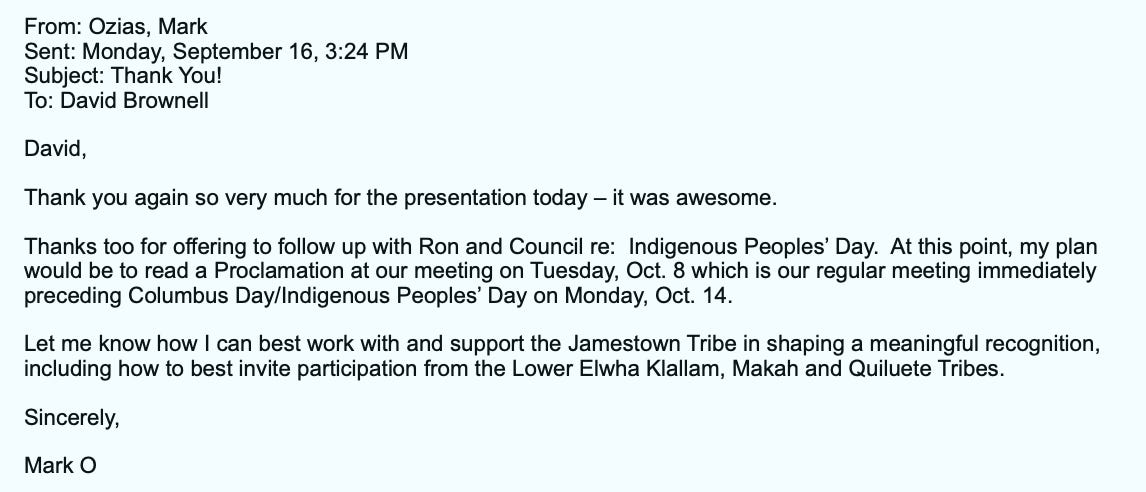
Ozias did not wait. On September 16, 2019, after a presentation by Jamestown’s Tribal Historic Preservation Officer David Brownell, he wrote:
“Thank you again so very much for the presentation today – it was awesome.
Thanks too for offering to follow up with Ron and Council re: Indigenous Peoples’ Day. At this point, my plan would be to read a Proclamation at our meeting on Tuesday, Oct. 8 which is our regular meeting immediately preceding Columbus Day/Indigenous Peoples’ Day on Monday, Oct. 14.
Let me know how I can best work with and support the Jamestown Tribe in shaping a meaningful recognition, including how to best invite participation from the Lower Elwha Klallam, Makah and Quileute Tribes.”
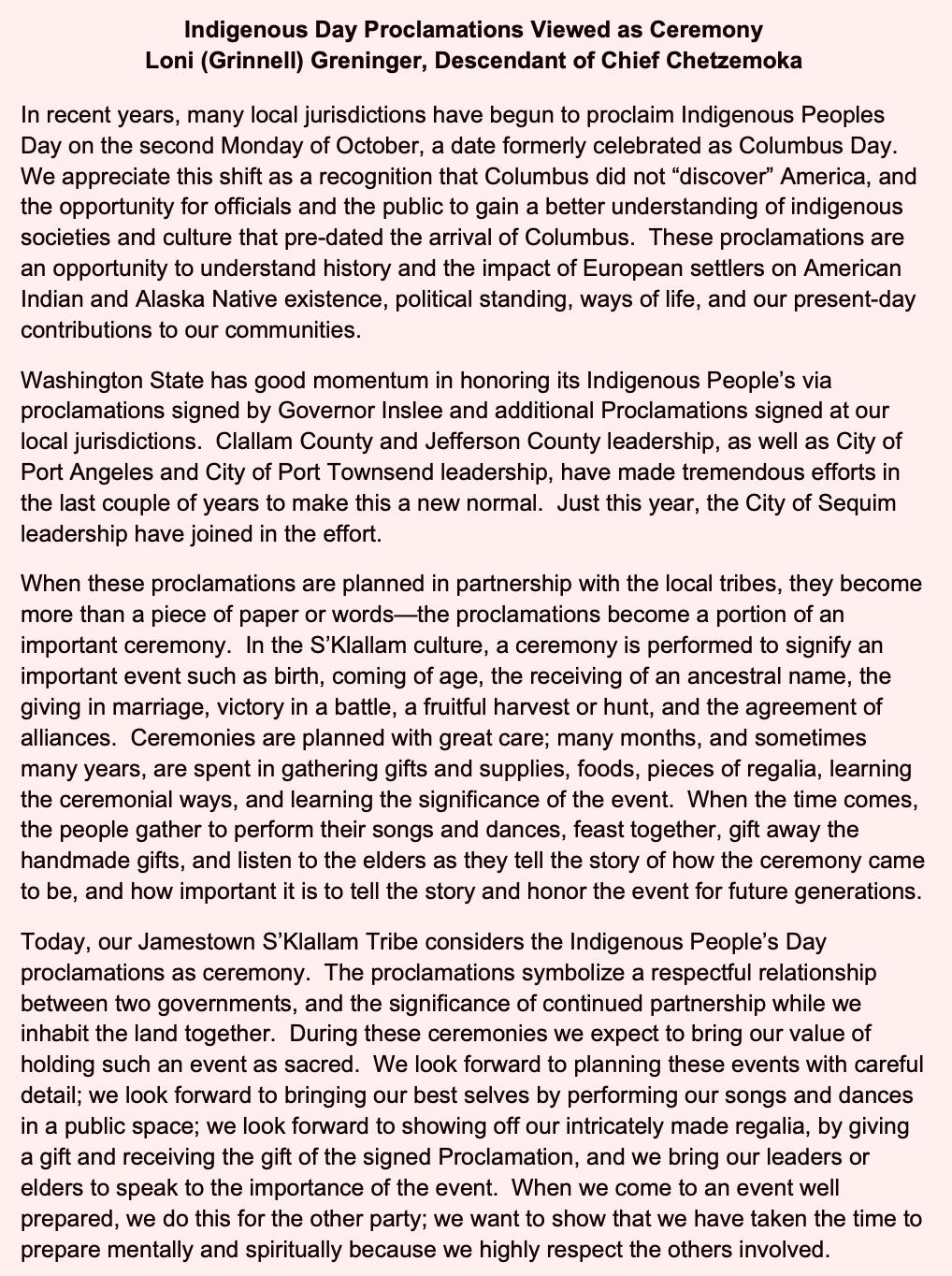
He coordinated dates, invitations, and language with Jamestown staff. He confirmed Ron Allen and three other Jamestown leaders would attend the October 8, 2019 meeting. He mailed formal invitations to the other tribal councils. Jamestown supplied an editorial framing the proclamations as sacred S’Klallam ceremony. They read the first one that fall.

Ozias personally drove the process that began with Allen’s suggestion. The paper trail is public. Forgetting it requires effort.
The Largest Donor Connection
The same tribe Ozias partnered with to launch the proclamation has been his top campaign contributor. Public Disclosure Commission records show repeated contributions from the Jamestown S’Klallam Tribe to Ozias’s campaigns. The Tribe funded over half of his last campaign. Ozias has called Jamestown Clallam County’s “most important partner in local governance.”
The suggestion that started the annual reading came from the chairman of his largest political donor. The commissioner who now says he cannot recall the origin is the same one who wrote that he wanted to be “personally engaged” at “the highest level.”
Government Resources for Ancestral Guilt
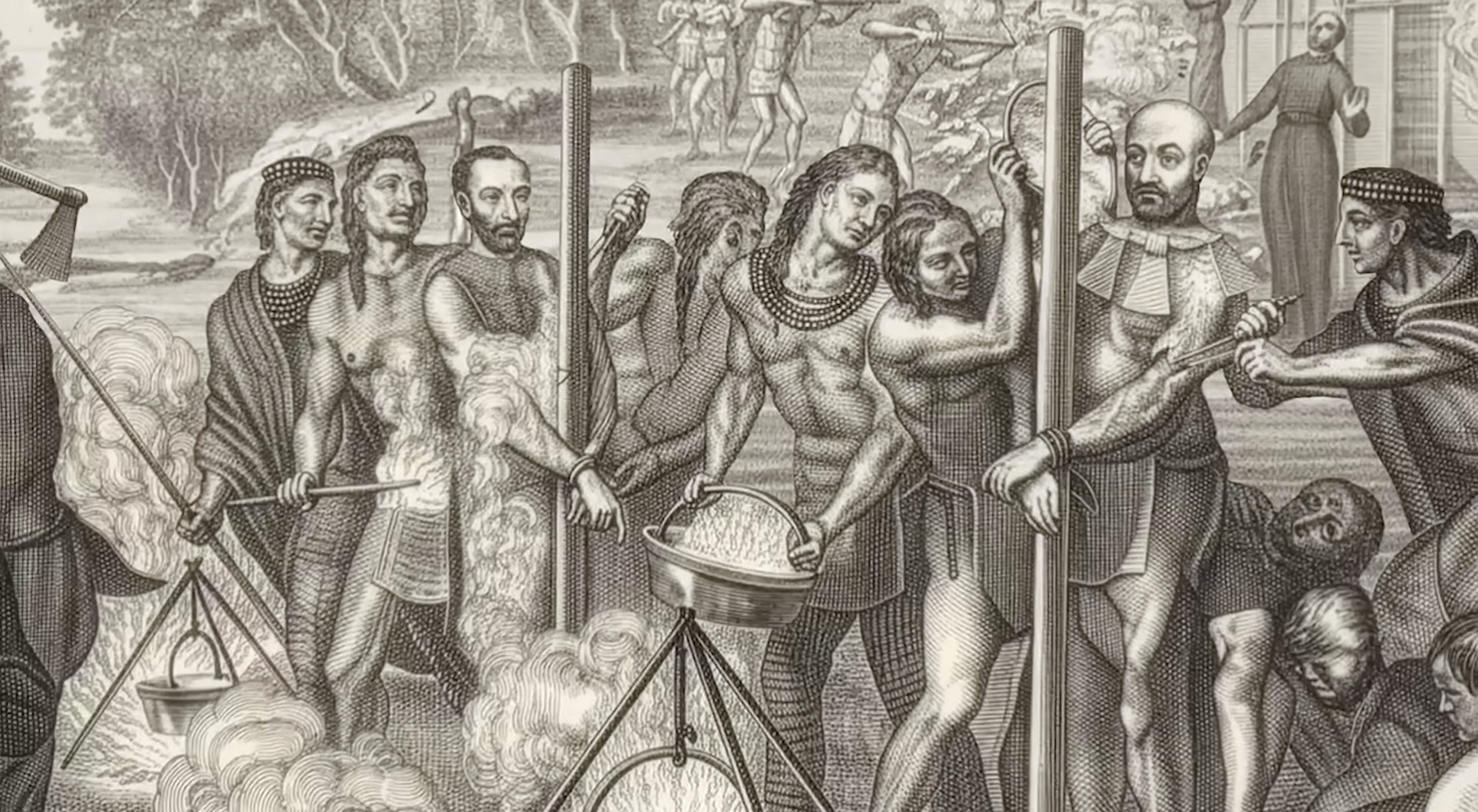
None of this requires a yearly proclamation that sorts residents by race, genetics, DNA, skin color, or who their grandparents were. Indigenous peoples lived, traded, raided, and warred on this peninsula long before Europeans arrived. Columbus sailed in 1492. Treaties and federal recognition followed. Those are historical facts. They do not justify using the Board’s time, staff, letterhead, and meeting room to lecture taxpayers about inherited responsibility for events centuries past while omitting intertribal violence, captive-taking, and raids that occurred both before and after contact.
The proclamation language about “ancestral land” and “time immemorial” puts a selective narrative on county letterhead. It does not rewrite deeds. It does not settle tax or land questions. It does create a yearly ritual in which three commissioners—none of them tribal members—read a statement no one requested this year and no one showed up to receive last year or this year, grounded in the personal belief that the public needs a lesson in systemic discrimination.
The Priorities That Do Not Require a Proclamation
Proclamations make the agenda because someone asks. This one began with Ron Allen’s suggestion and Mark Ozias’s enthusiastic follow-through. The emails are explicit. The funding is public. The empty room is visible. The claim that they don't remember doesn't hold.
What does hold is the pattern. Year after year the commissioners scramble to accommodate the calendar, language, and ceremonial framing of a sovereign nation whose chairman first proposed the recognition and whose organization has been Ozias’s largest campaign donor. They confirm the lists, refine the wording, and read it from the dais even when no one is there to receive it. Meanwhile, the constituents who elect them—and who fund the salaries, staff time, and meeting room—watch taxes climb, public safety erode, neighbors stay trapped in addiction, and basic accountability go unanswered.
The Board that cannot recall the origin of a ritual it has performed for years finds time for “ancestral land” language and discrimination lectures. It shows less urgency about the lodging and property taxes tribal enterprises do not pay, or about the residents who show up, pay the bills, and expect their representatives to represent them first. A sovereign government with more than $100 million in annual revenue does not need Clallam County commissioners to perform an annual guilt trip on its behalf. The people who live and vote here do need commissioners who remember who hired them.
The result is an empty room: a private suggestion from a major donor’s chairman, driven by the commissioner who received it, continued as an unrequested ritual. The emails are on record. The funding is public. The voters who hired these commissioners should decide if that is good enough.
Why is Ozias on the County payroll again? Between Allen, his non-profit North Olympic Land Trust, and his devotion to the Washington Association of Counties, what good is he? He's not doing any county business. He lied about not knowing about this proclamation, can we fire him for this?
Someone give Ozias a baby wipe to clean his brown nose!