

Port Angeles declared a Stage III water shortage after Elwha flows collapsed below 300 cfs. The reservoirs that once buffered the city are gone—removed in the name of science. Identical scientific claims are driving court-ordered spills and dam-removal pressure on the Columbia.
This week, Clallam County Watchdog is running shortened articles while volunteering at the Jake Seegers for Commissioner booth at the Clallam County Fair. Stop by today or Sunday to visit Jake and Jeff near the Yellow Gate (West Entrance) and sign the petition to reopen Hot Springs Road into Olympic National Park.
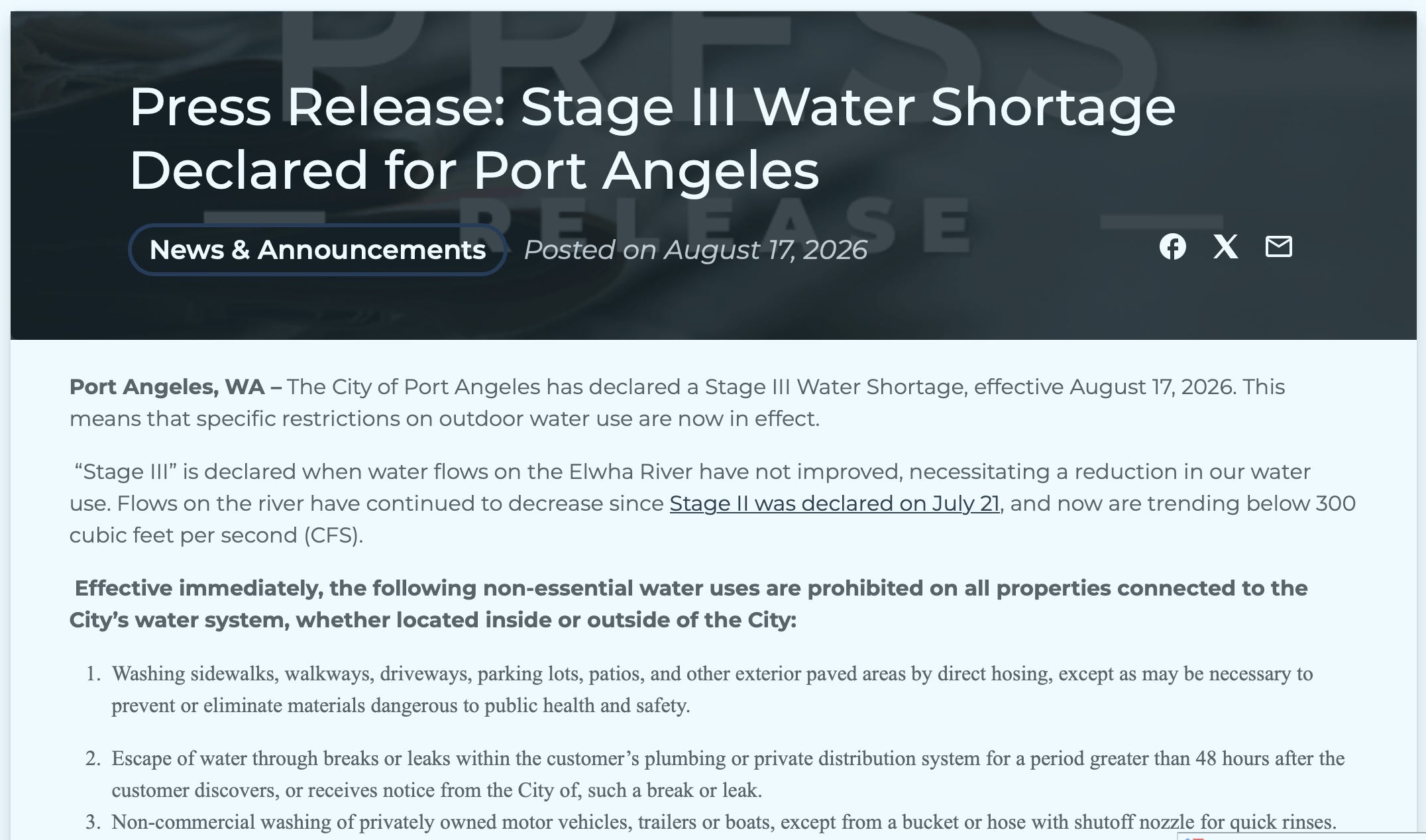
Port Angeles declared a Stage III water shortage on August 17. Outdoor watering is limited to odd-even days outside peak hours, with bans on most non-essential uses. Officials cite Elwha River flows that have not recovered since Stage II in July.
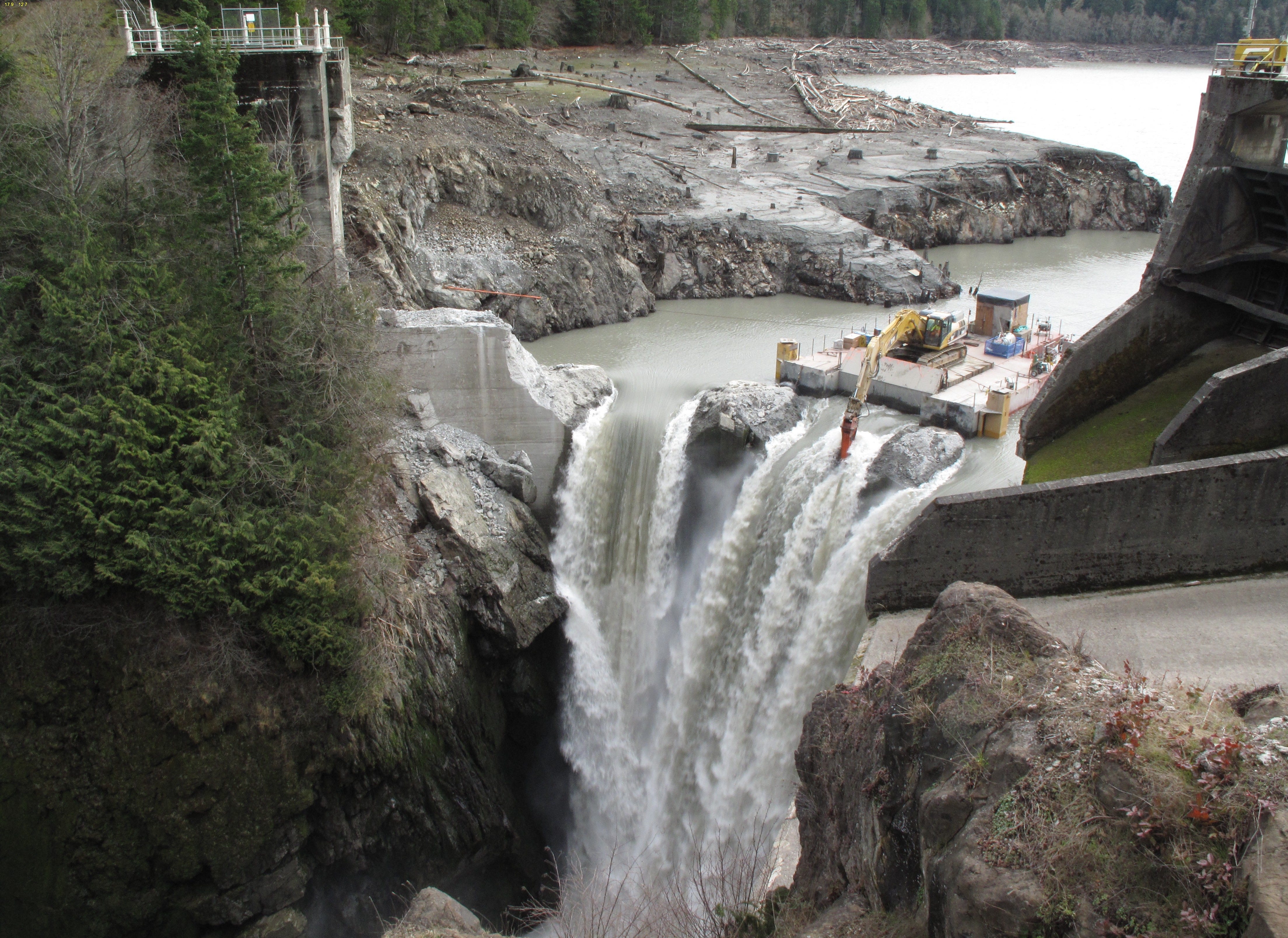
Two Elwha River reservoirs no longer exist because science said they had to go. The Elwha and Glines Canyon dams were removed between 2011 and 2014 under a federal restoration act. The stated goal was habitat reconnection and ecosystem recovery. The $351 million project eliminated the two large reservoirs that once stored water through dry summers for Port Angeles. The river now runs free—and free-flowing rivers can run nearly dry.
The same scientific language—“urgent action for endangered salmon”—is being applied to the Columbia and Snake River dams. Court orders forced by NGO lawsuits now mandate extreme spill volumes. Activists call it a “water slide for fish.”
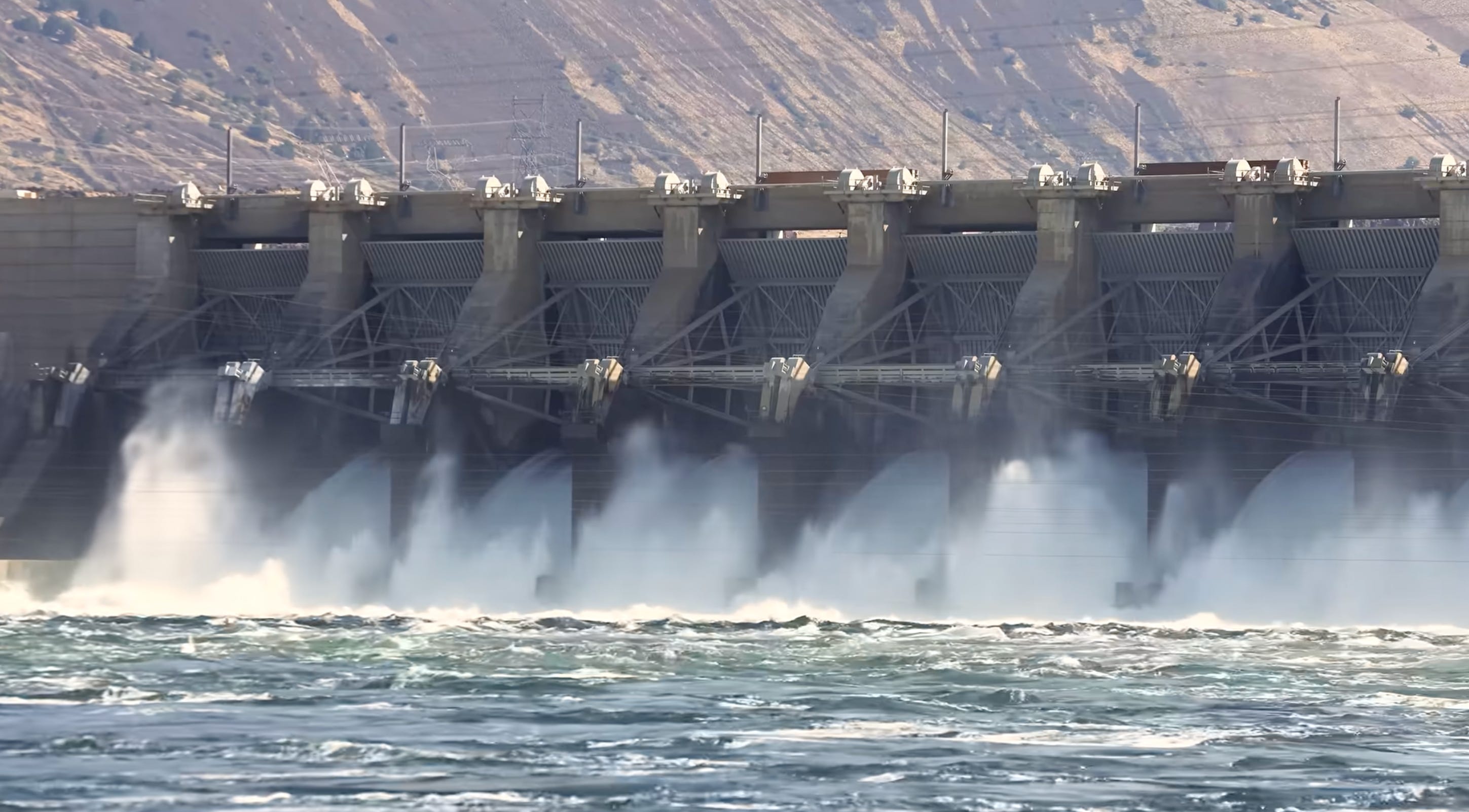
In June 2026, roughly 75 percent of adult Chinook became trapped below John Day Dam, unable to find the fish ladders amid the deluge. Fisheries data show the extreme spills deliver little or no extra juvenile survival while harming adults.
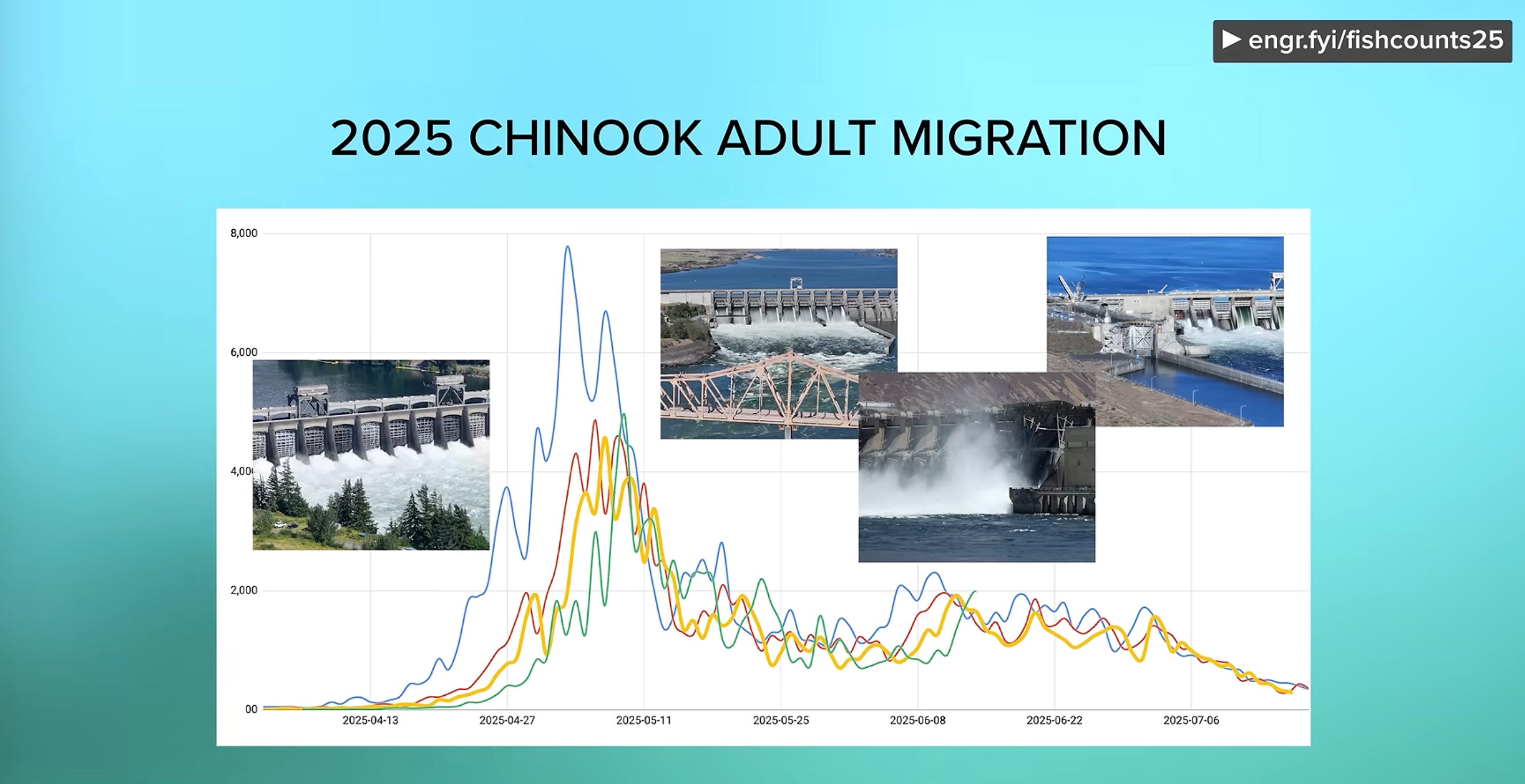
The same rules make power generation from the lower Snake dams effectively illegal during peak runoff months. Output is artificially suppressed, then cited as proof the dams are expendable—even as grid experts warn of tightening reliability margins.
Sometimes the science depends on whose science it is—and who pays the price when the water runs low and the lights flicker.
Watch the full investigation in a 17-minute video from the Armchair Engineer:
You hit the nail on the head when you said outcomes depend on whose science it is. Battles in the environmental regulatory field are won by whose side paid for the most pedigreed and convincing PhD.
Same people that want mandated EV auto sales want to eliminate inexpensive, abundant, clean hydro power . . .
So dumb