

A glowing letter to the editor—appearing to come from within the League of Women Voters itself—holds the organization up as “nonpartisan.” But a closer look at its recent messaging and local activity suggests otherwise. It’s time to examine whether that label still holds up—and whether the continued focus on national politics is pulling attention away from the real issues facing Clallam County.
A recent letter to the editor from Sequim resident Linda Benson attempts to draw a clean distinction between “political” and “partisan,” praising the League of Women Voters (LWV) as firmly in the former category while rejecting the latter. It’s a tidy argument—one that sounds reasonable at first glance. But it doesn’t hold up under closer inspection.
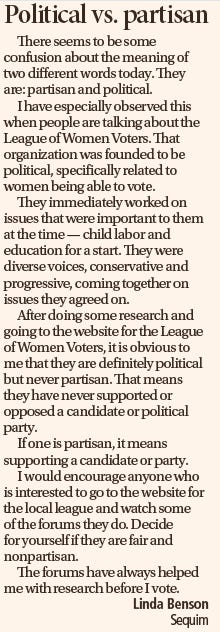
Benson argues that being partisan means supporting a candidate or party, and that the League does neither. But that definition ignores a more practical reality: you don’t have to explicitly endorse a candidate to consistently advance one side of the political spectrum.
A Message Without a Name
Consider the League’s own paid messaging. In a widely circulated advertisement, the organization condemned actions taken by a presidential administration, warning of threats to democracy, civil rights, and constitutional balance.
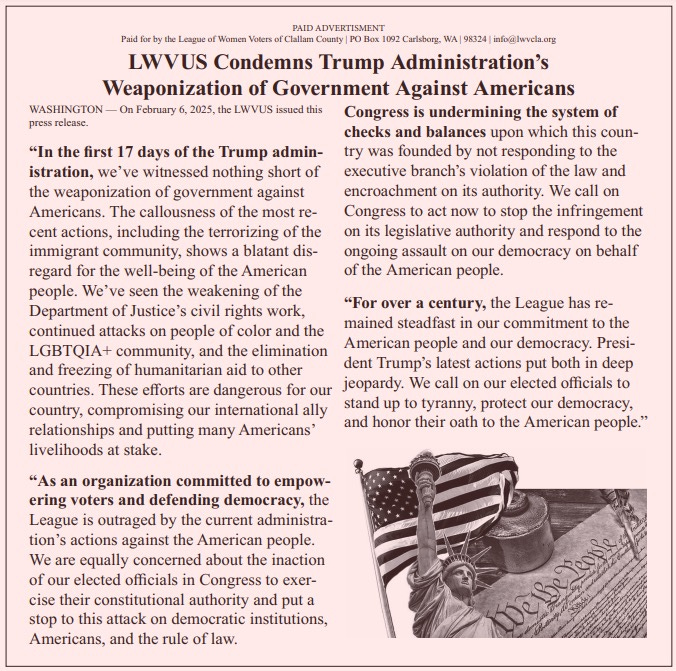
No candidate endorsement. No party logo.
Those weren’t needed; the message is unmistakable.
When an organization repeatedly frames national issues through one lens—highlighting one side’s failures while remaining silent on the other—it is shaping political opinion. And shaping opinion, especially in a selective and consistent direction, is not neutral. It’s partisan in practice, even if not in name.
The Exception That Raises Questions
That concern becomes sharper when looking at the League’s own policy positions.
Two years ago, the LWV adopted a position on the Clallam County Charter that called for all elected officials to be nonpartisan—except for county commissioners.
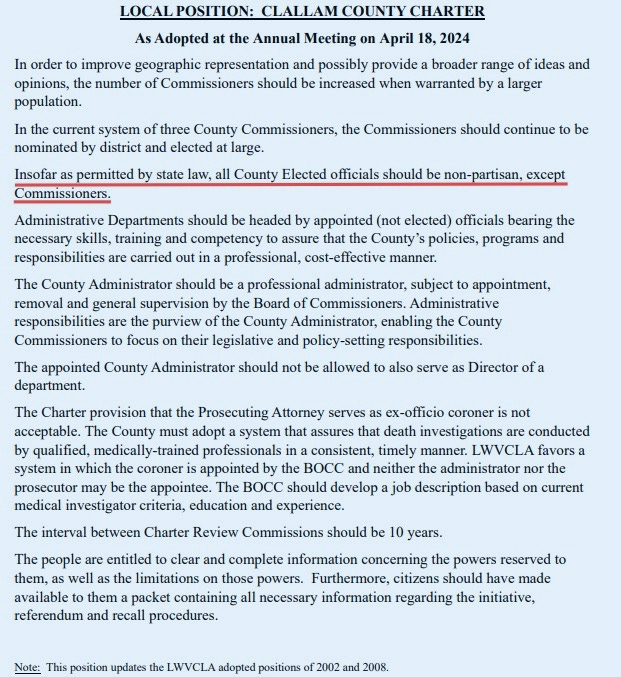
Why the exception?
Why preserve partisanship in the very offices that set policy, control budgets, and shape the county’s future?
If the goal is truly nonpartisan governance, carving out the most powerful local positions suggests something else is at play. It keeps the door open for party-driven influence where it matters most.
More Connected Than It Appears
There’s another detail that complicates the narrative.
According to a Sequim Gazette report covering local candidate forums, a “Linda Benson” is identified as part of the League’s Voter Services Committee and served as a moderator for one of its forums. That raises an obvious question: Is this the same Linda Benson now publicly defending the League’s nonpartisan reputation in a letter to the editor?
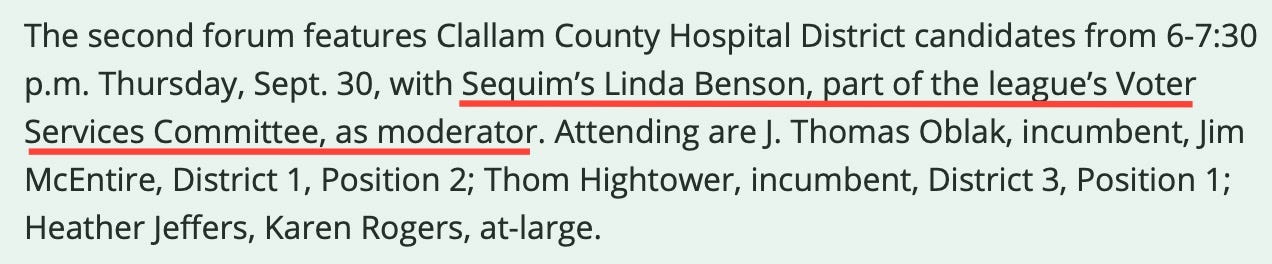
If so, the letter reads less like an outside perspective and more like an internal defense—something readers deserve to know as they evaluate the argument being made.
When Candidates Opt Out
The League often points to its candidate forums as proof of its neutrality—open platforms where voters can hear directly from those seeking office.
But even those forums tell a more complicated story.
In that same Sequim Gazette article, two incumbent city council candidates declined to participate. One cited prior experience, saying the forums included too many “gotcha questions.” Another questioned the structure and setup of the event.
Those aren’t minor complaints. They go to the heart of credibility.

If candidates—especially incumbents familiar with the process—are choosing not to participate because they perceive bias in how questions are framed or discussions are conducted, that undermines the claim of neutrality. And frankly, who would blame them?
A forum that appears tilted, even subtly, doesn’t inform voters—it shapes outcomes.
Focus on D.C., Ignore Clallam
There’s a broader pattern here—and it’s hard to miss.
While Clallam County faces real, tangible challenges—public safety concerns, environmental degradation in places like Tumwater Creek, questions about school performance, and the effectiveness of taxpayer-funded programs—the conversation is often redirected elsewhere.
Back to Washington, D.C.
Back to national narratives.
Back to federal politics.
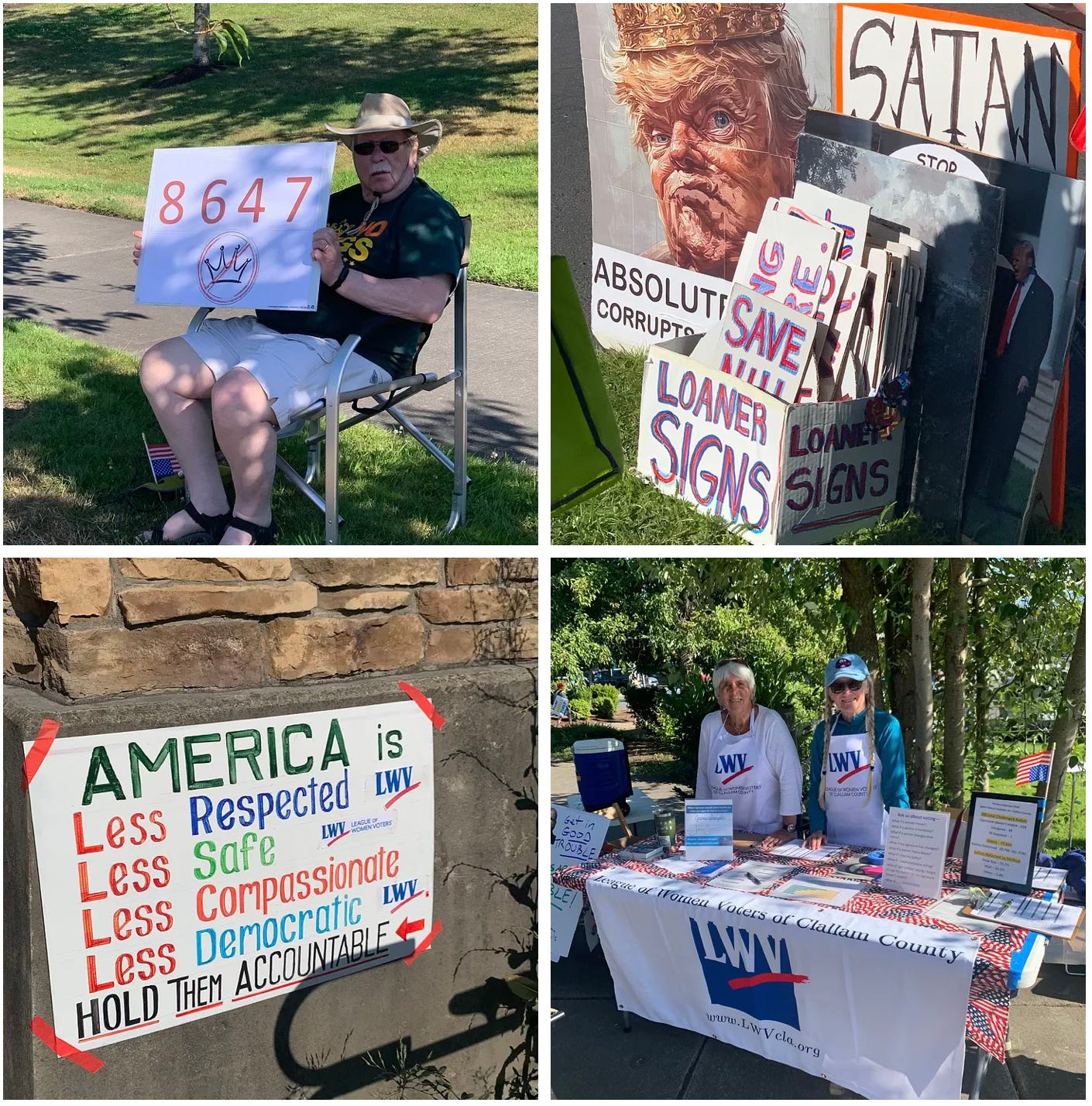
That shift matters. Because the more attention is focused outward, the less scrutiny is applied locally.
And that’s a convenient dynamic.
Activism by Proxy
The League often points to its lack of direct candidate endorsements as proof of neutrality. But endorsements are only one measure of partisanship. Where an organization shows up—and who it chooses to stand alongside—can be just as revealing.
That’s where the picture becomes clearer.
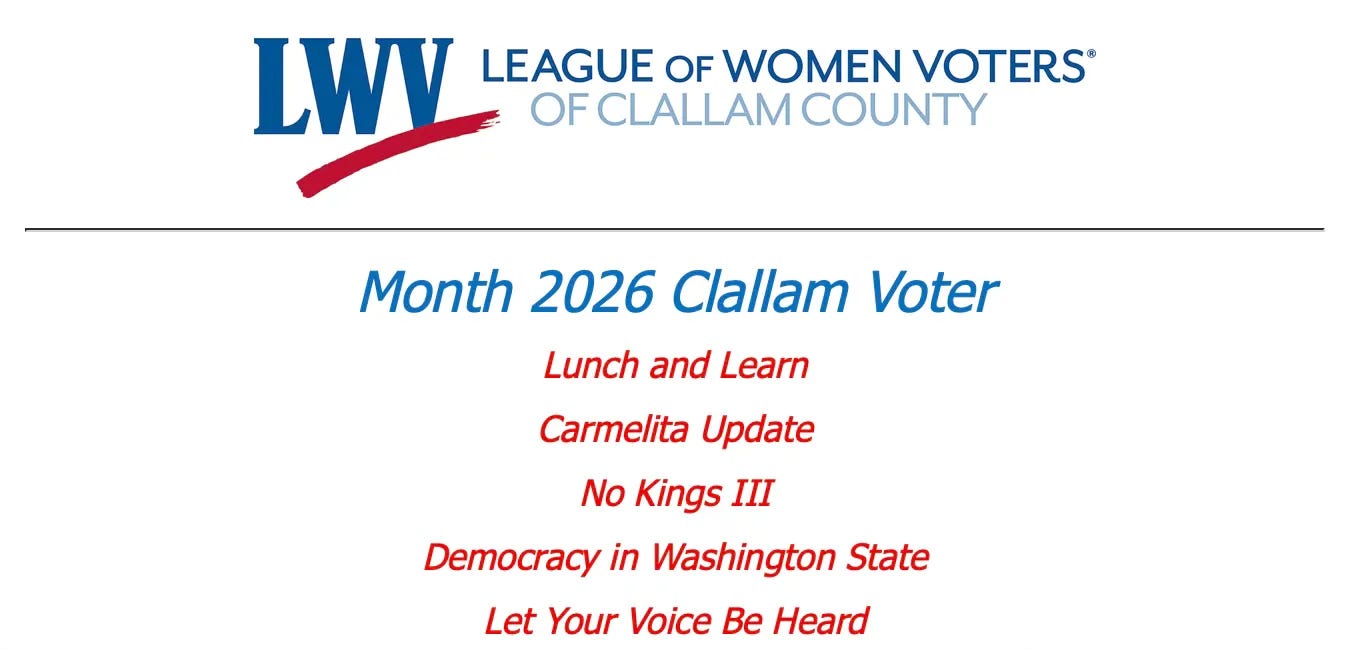
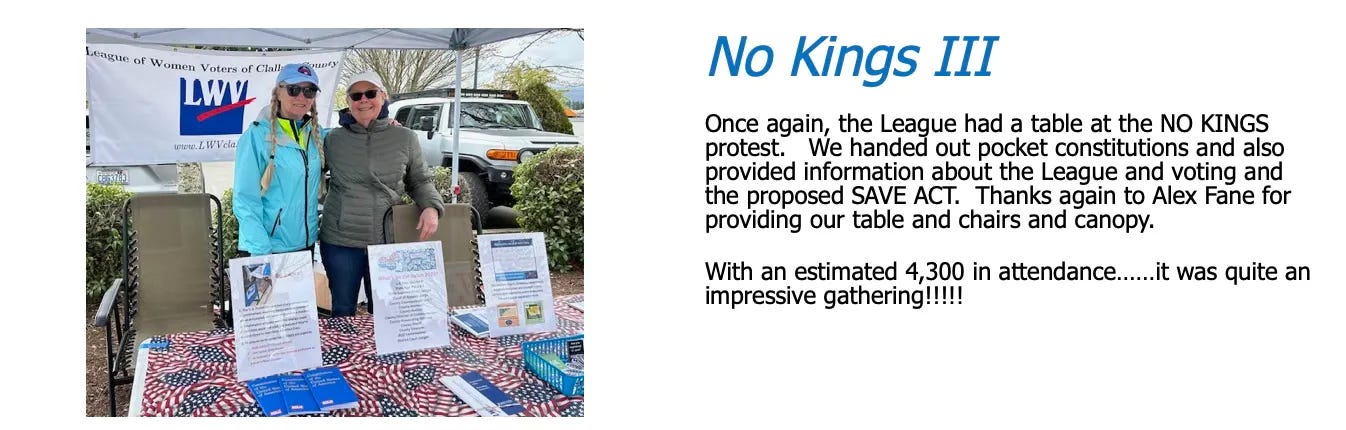
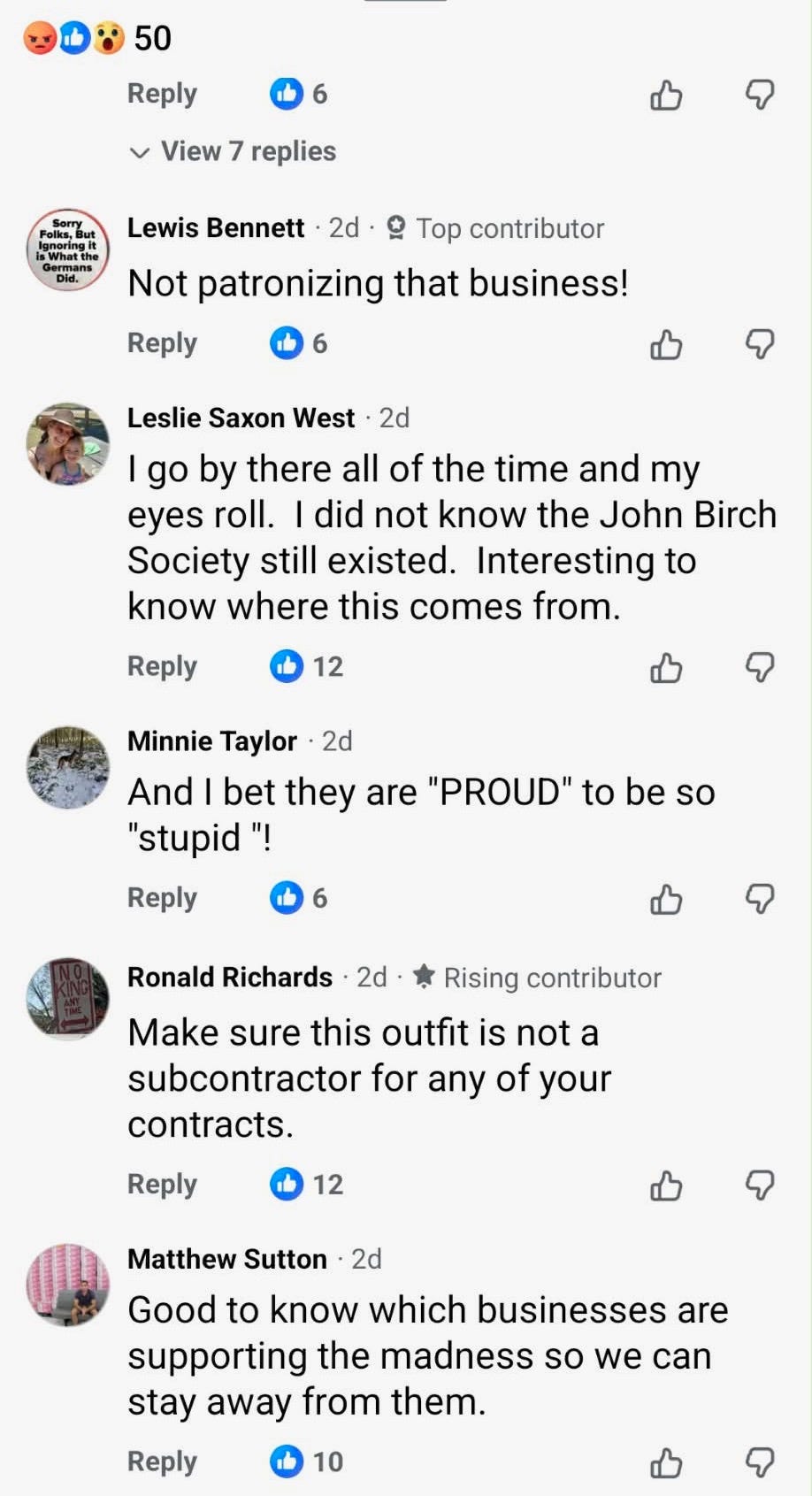
The League’s participation in and promotion of events tied to groups like Indivisible raises legitimate questions about that neutrality. These are not politically neutral spaces. Indivisible Sequim, for example, has openly called for boycotts of local businesses who do not align with their ideologies.
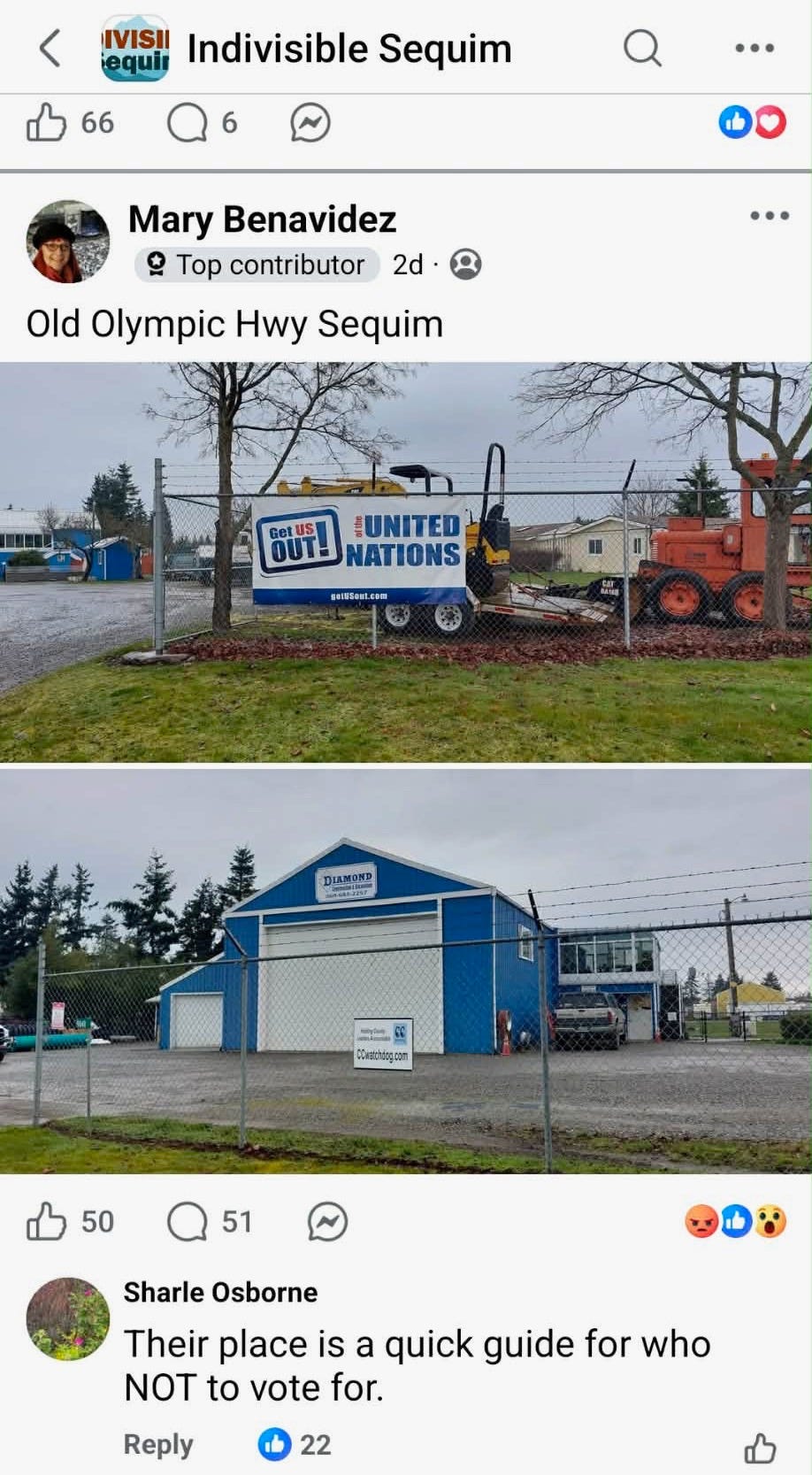
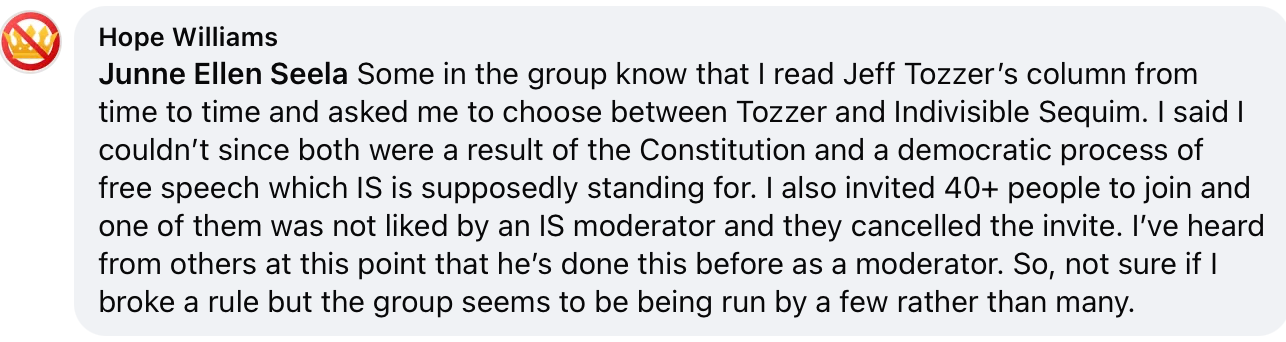
Indivisible has also removed participants for the materials they were reading or sharing.
These are advocacy-focused settings meant to energize a specific group, not reach all voters.
So when voter registration or civic outreach takes place in those settings, it isn’t broad-based civic engagement. It’s targeted engagement—aimed at a specific type of voter, in a space already aligned with a particular viewpoint.
Ask a straightforward question: what kind of voter are you most likely to reach at an ideologically charged protest? Then compare that to a setting like the Clallam County Fair, where the entire community—across backgrounds and beliefs—comes together.
One setting is consistently embraced. The other is noticeably absent.
That’s not incidental. It reflects a deliberate choice about where to engage—and who to engage with.
Local Leaders, National Talking Points
This national focus isn’t limited to advocacy groups.
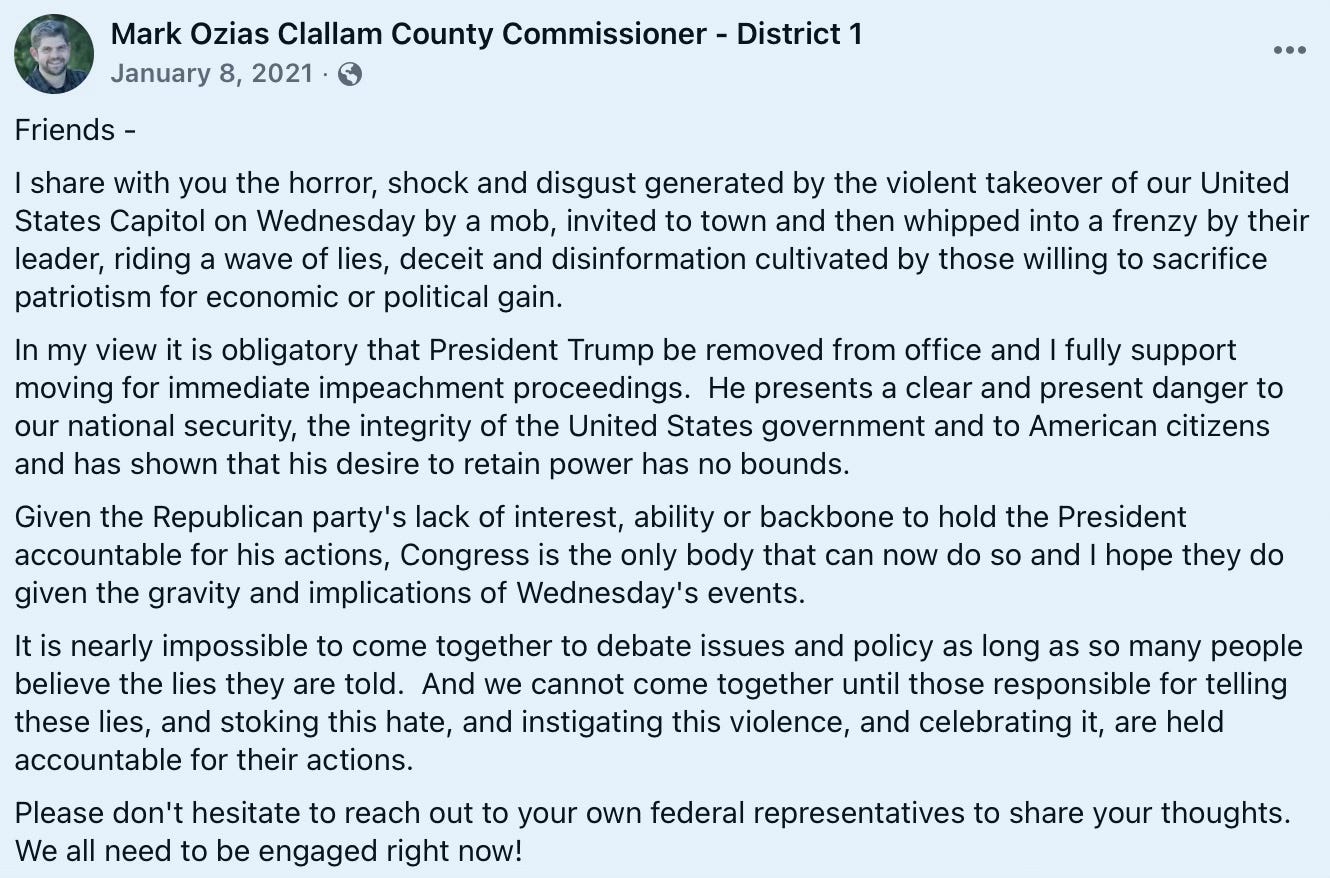
Local elected officials have increasingly leaned into federal political commentary, using their platforms to weigh in on presidential leadership, congressional actions, and national controversies. Strong opinions are expressed. Federal narratives are reinforced.
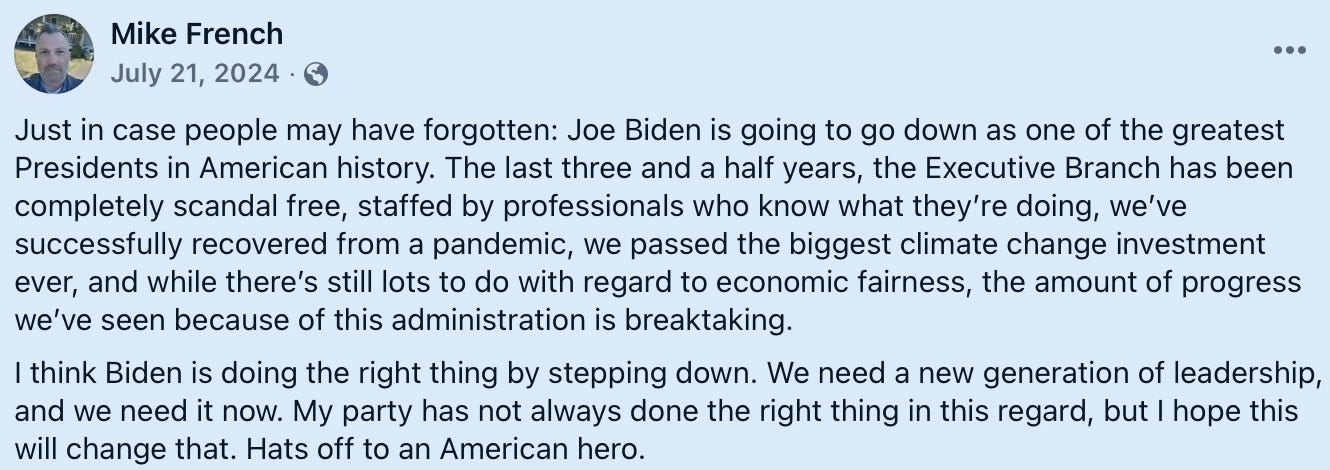
But the contrast becomes harder to ignore when measured against silence closer to home.
In 2021, current Sequim City Mayor Rachel Anderson participated in a downtown protest highlighting violence against Asian women—a national issue that drew widespread attention and public response.
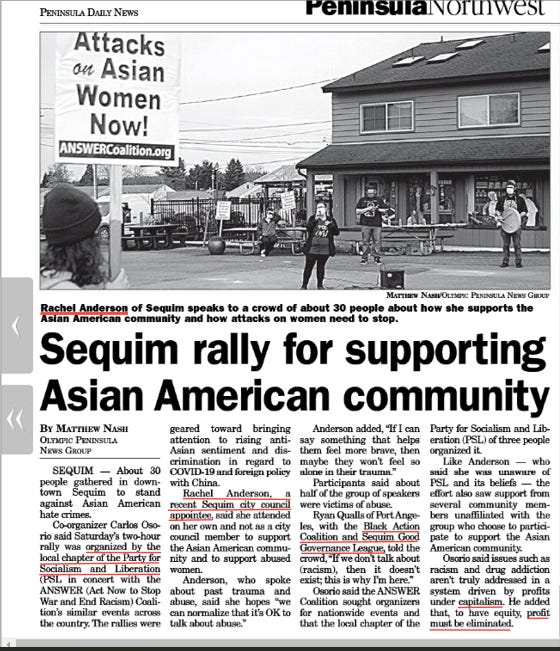
Yet fast forward to last year, when an elderly man was fatally assaulted in broad daylight during Sequim’s Irrigation Festival by a known drug user, there was no comparable public response. No statements. No visible urgency. Not from the mayor, and not from the city council.
That kind of contrast raises uncomfortable questions about what issues receive attention—and which ones don’t.
The roads still need fixing.
Public safety concerns persist.
Environmental problems continue to surface.
Families still have questions about schools and outcomes.
But those conversations don’t generate the same attention.
The Cost of the Distraction
When local discourse is dominated by national politics, something important gets lost: accountability.
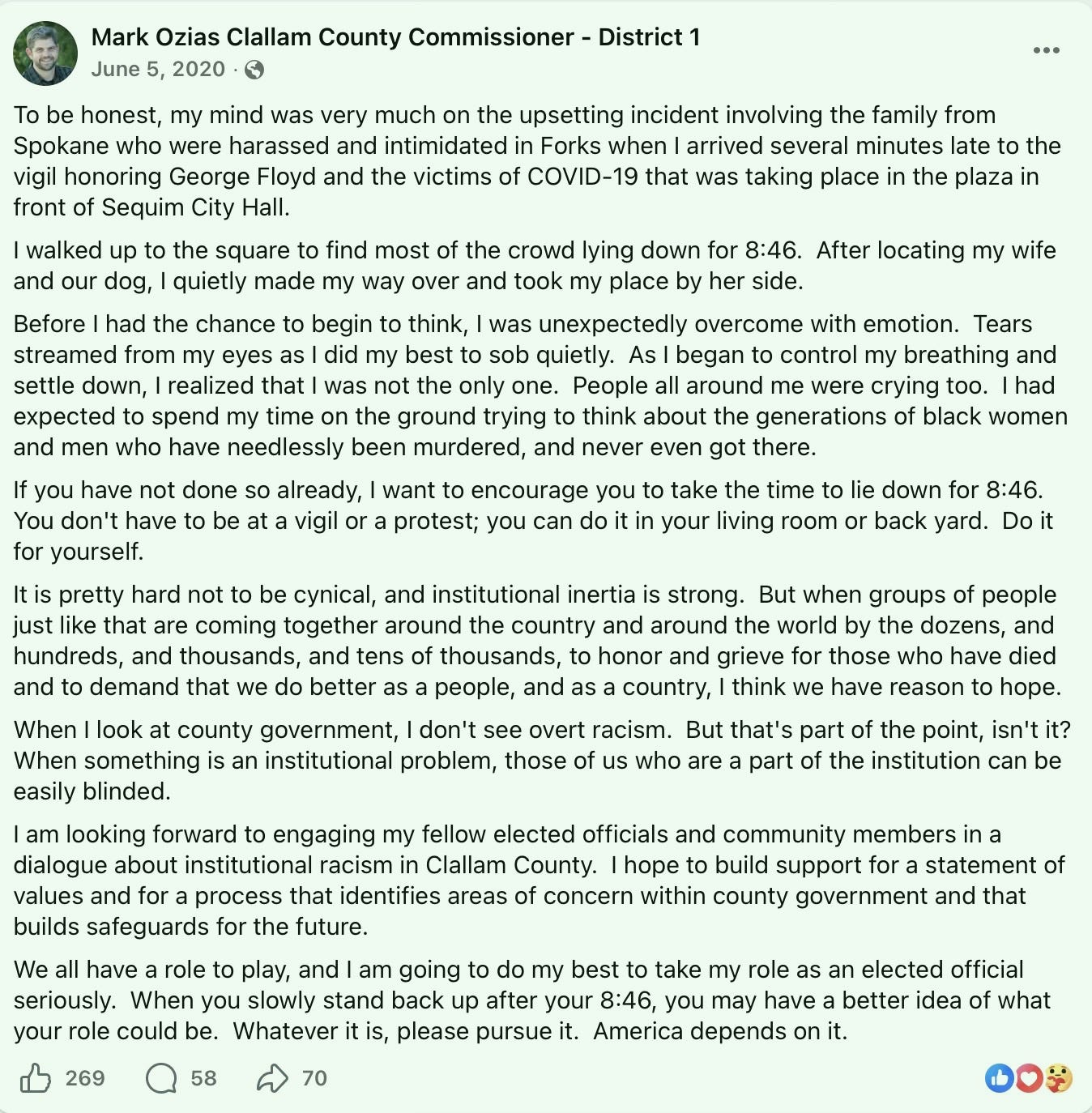


It becomes easier to rally people around distant issues than to answer difficult questions close to home. Easier to point fingers at federal institutions than to measure whether local policies are working.
That’s the tradeoff.
And it’s one Clallam County can’t afford indefinitely.
A Different Path Forward
Clallam County doesn’t have Democrat problems or Republican problems. It has Clallam County problems—and they demand common-sense solutions.
Public safety.
Economic Development.
Affordability.
Fiscal responsibility.
Environmental stewardship.
These are not partisan issues—they’re practical ones.
Imagine if the same energy used to drive national political messaging were redirected toward local outcomes. Imagine if organizations demanded measurable results from county programs, real transparency in spending, and clear accountability from elected officials.
We’ve done it before—that’s what led to Towne Road reopening—and it’s where real, meaningful change begins.
Think Independently
If there’s one takeaway, it’s this: labels matter less than behavior.
“Nonpartisan” isn’t defined by what an organization says—it’s defined by what it does, where it shows up, and how it operates when no one’s watching.
Clallam County deserves voters who think for themselves. Who question what they’re told. Who look beyond national narratives and focus on what’s happening here at home.
Question the League.
Question local government.
Question the loudest voices in the room.
Question CC Watchdog.
Because real progress doesn’t come from picking a side.
It comes from thinking independently—and demanding better.
Today’s Tidbit: Boycott Today, Shop Tomorrow?
The League of Women Voters has promoted and partnered with groups like Indivisible Sequim—so it’s worth taking a closer look at what that actually means in practice.
Start with Indivisible Sequim’s calendar.
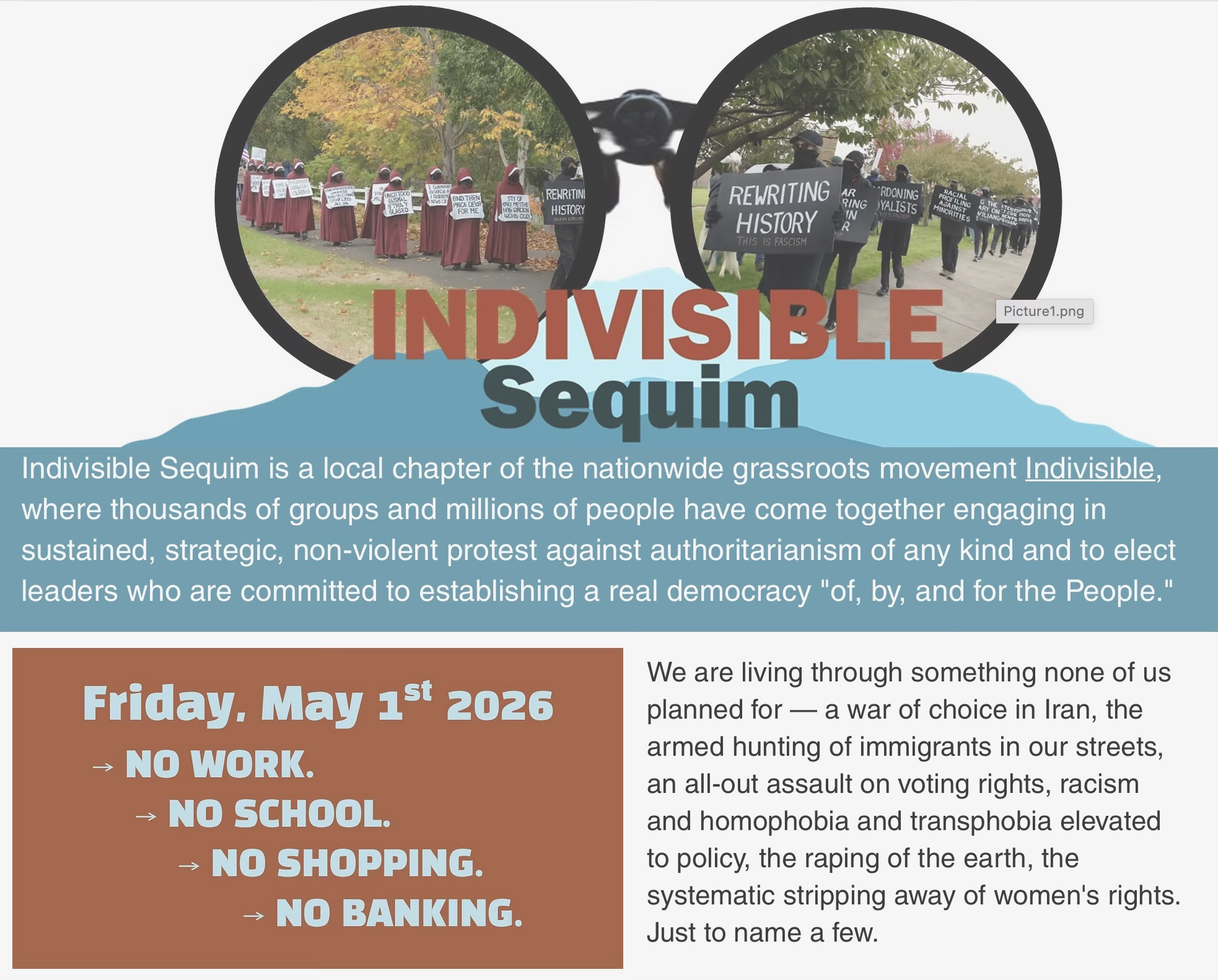
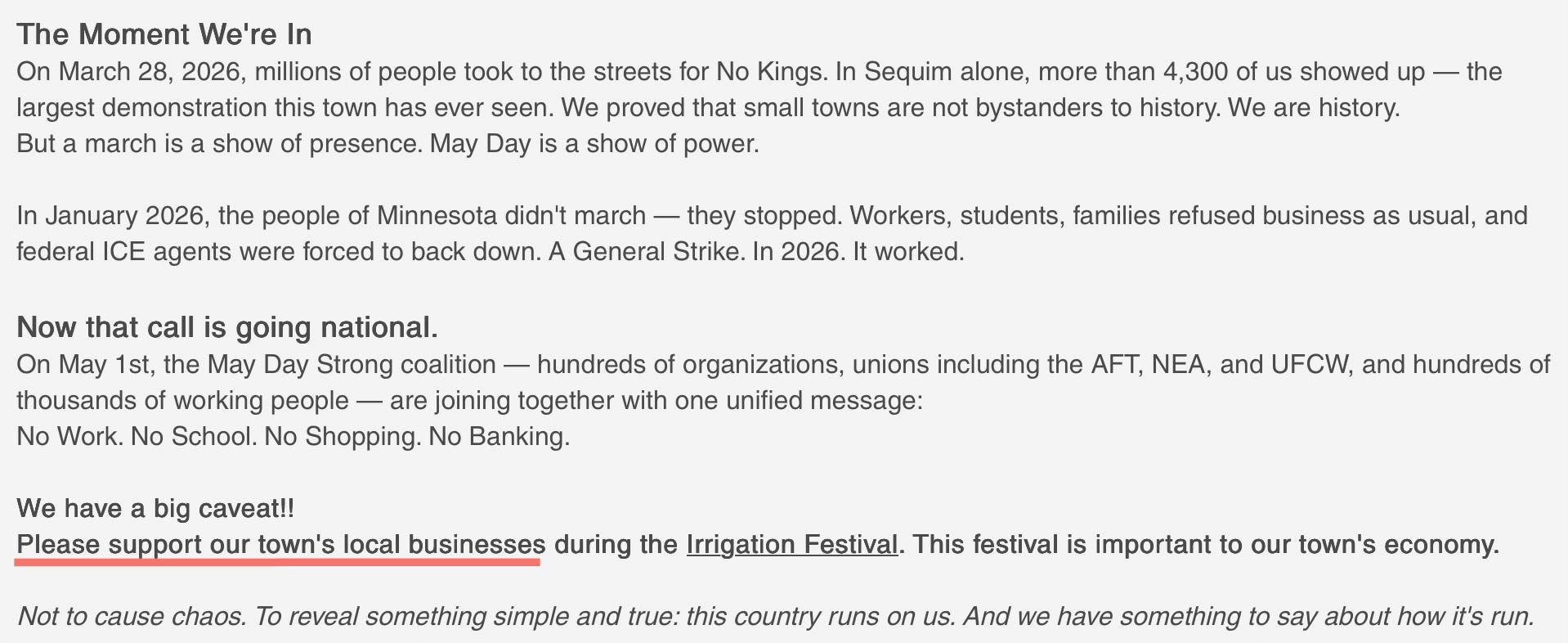
On certain “days of action,” the message is clear: no school, no shopping, no banking. Shut it down. Send a message. Apply pressure.
But when the Irrigation Festival comes around? Suddenly, it’s time to support local businesses.
So which is it?
Boycott the community—or support it?
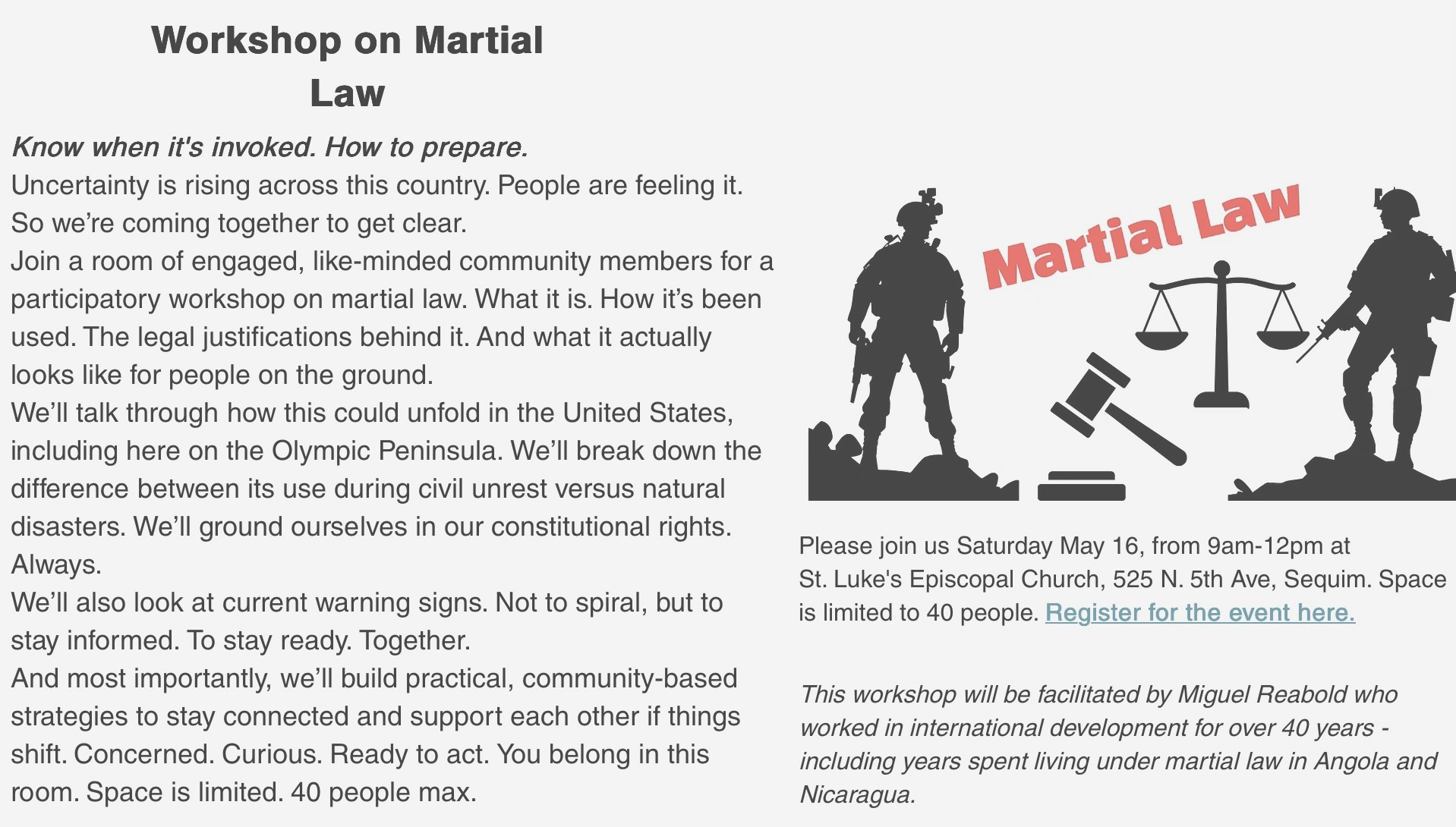
That kind of contradiction isn’t minor—it speaks to a broader pattern. These aren’t neutral civic efforts. Indivisible is an openly ideological organization, built around mobilizing people toward specific political outcomes. Locally, that shows up in calls for boycotts, reports of excluding participants over what they read or share, and even events like lectures on martial law.
And this is the group the League of Women Voters is choosing to promote and engage with.
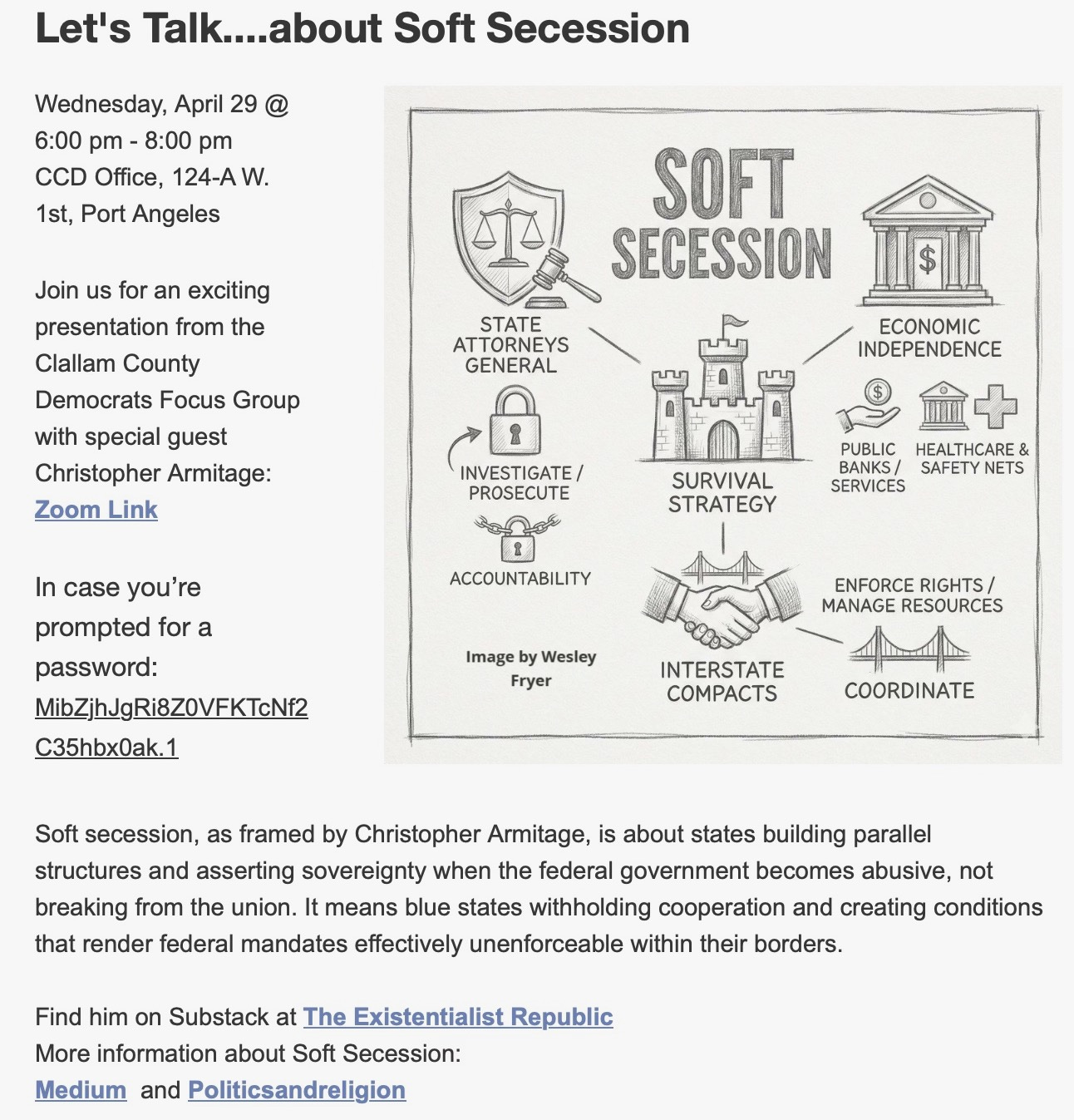
When an organization claims to be nonpartisan, but consistently aligns itself with groups that are explicitly partisan in tone and tactics, the label starts to lose meaning.
Step back and look at the full picture:
Encourage people to withdraw from everyday civic and economic life.
Push a specific political worldview.
Then pivot and promote local spending when it’s convenient.
That’s not consistency. That’s selective engagement.
And when the League lends its credibility to that kind of operation, it’s fair to ask whether “nonpartisan” is a description—or just branding.
The commissioners did not reply to yesterday's email asking if they would consider pivoting from policies that haven't produced results. Here is today's email sent to the League of Women Voters of Clallam County at info@lwvcla.org:
Dear League of Women Voters of Clallam County,
Questions have been raised about the League’s public messaging, local activities, and how the term “nonpartisan” is being applied in practice.
-Did a member of your organization recently submit a letter to the editor defending the League?
-Given that CC Watchdog has sent multiple questions without response, how do you prioritize communication—particularly when you have time to place ads and publish letters publicly?
-Do you plan to participate this year in community-wide events such as the Clallam County Fair, Sequim Logging Show, or Unity for Effort—events that draw a broad cross-section of residents?
-Or is your outreach primarily focused on voter registration efforts at more ideologically aligned events?
These are sincere questions about transparency, accessibility, and how the League engages with the full community.
I would appreciate your response.
We are all born ignorant, but one must work hard to remain stupid.
Benjamin Franklin