

From missing dogs in Neah Bay to a blunt admission from Port Angeles leadership—and a troubling police report tied to Lee Plaza—this week’s Social Media Saturday tells a story of a community asking questions while those in charge keep pointing elsewhere.
“Leave Our Dogs Alone” — Neah Bay Post Raises Bigger Questions
A post circulating on the Clallam County Lost Pets page struck a nerve this week.
A family, still grieving after a celebration of life for their mother, reported their dogs went missing—allegedly lured into a red truck and taken. The dogs, they said, are well-known in the community and regularly roam between homes in the village.
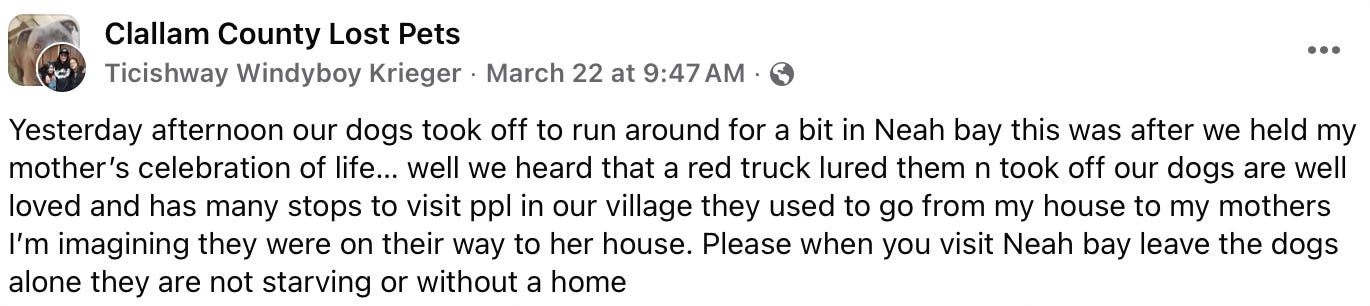
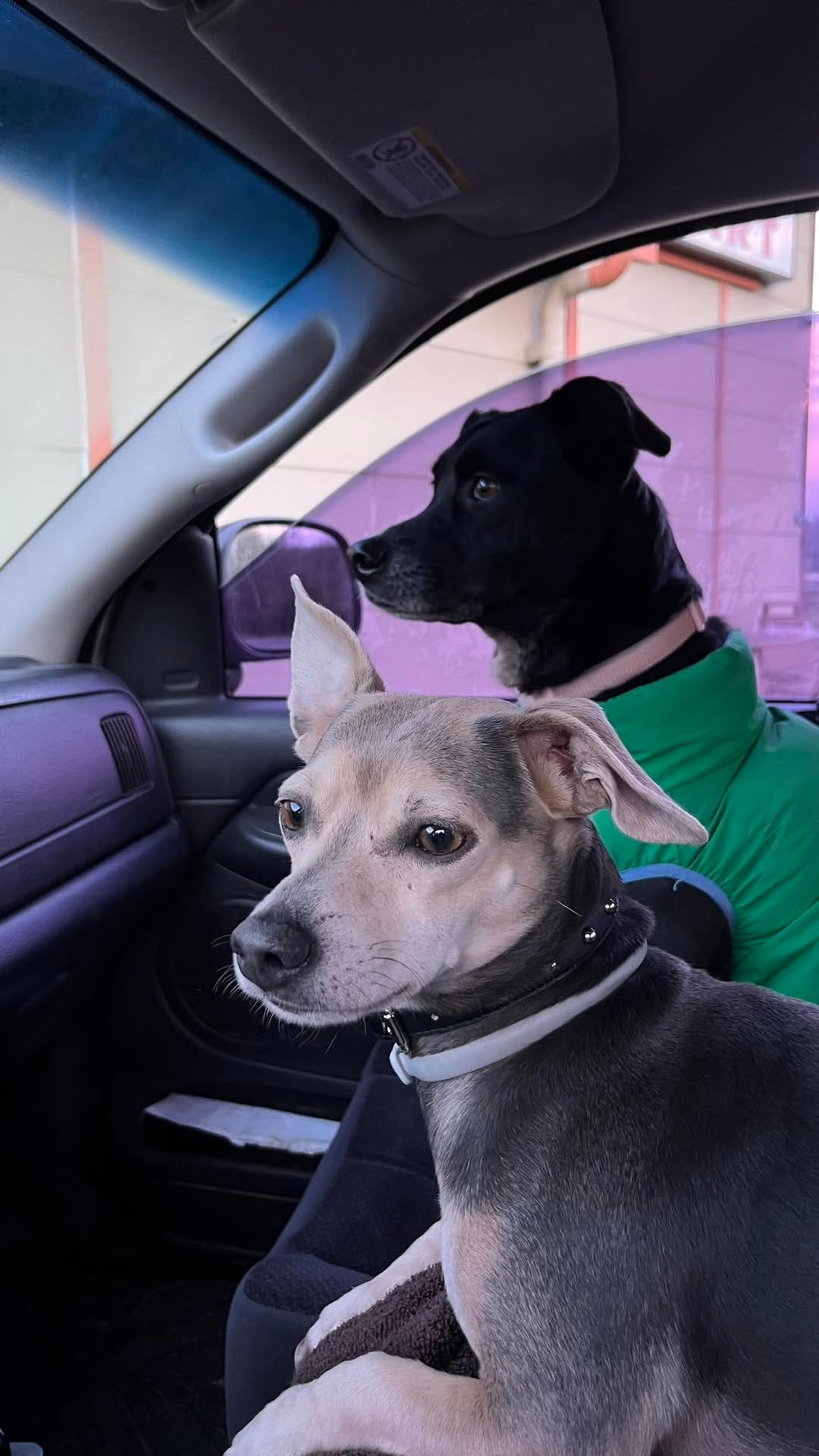
The message was simple:
Visitors—leave the dogs alone. They are not lost. They are not abandoned.

But the conversation quickly shifted.
Another commenter—who identified herself as the last animal control officer in Neah Bay—pushed back hard. She claimed the original poster was a “repeat offender” and described a deeper issue:
No current animal control presence
A cultural norm of free-roaming dogs
Public health concerns from parasites and exposure
Reports of dogs attacking children and teens
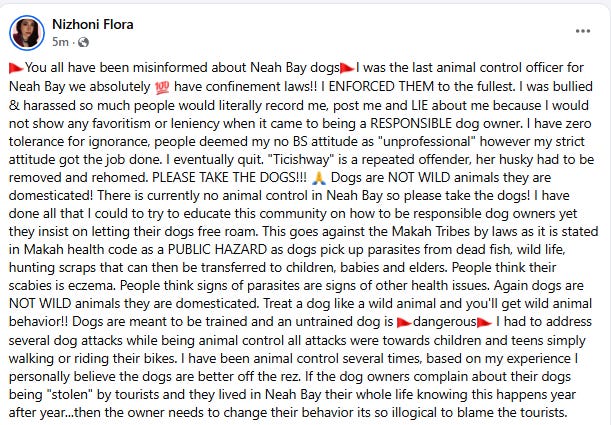
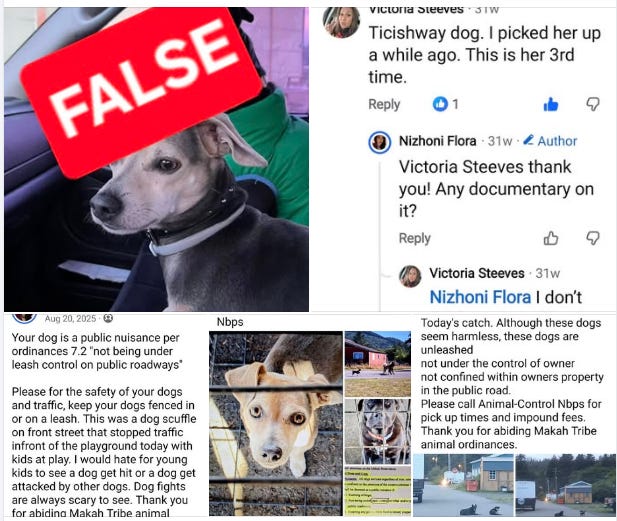
Her warning was blunt:
What some see as “community dogs,” others see as a growing safety issue being ignored.
And just like that, a missing dog post turned into something bigger—a collision between culture, accountability, and public safety.
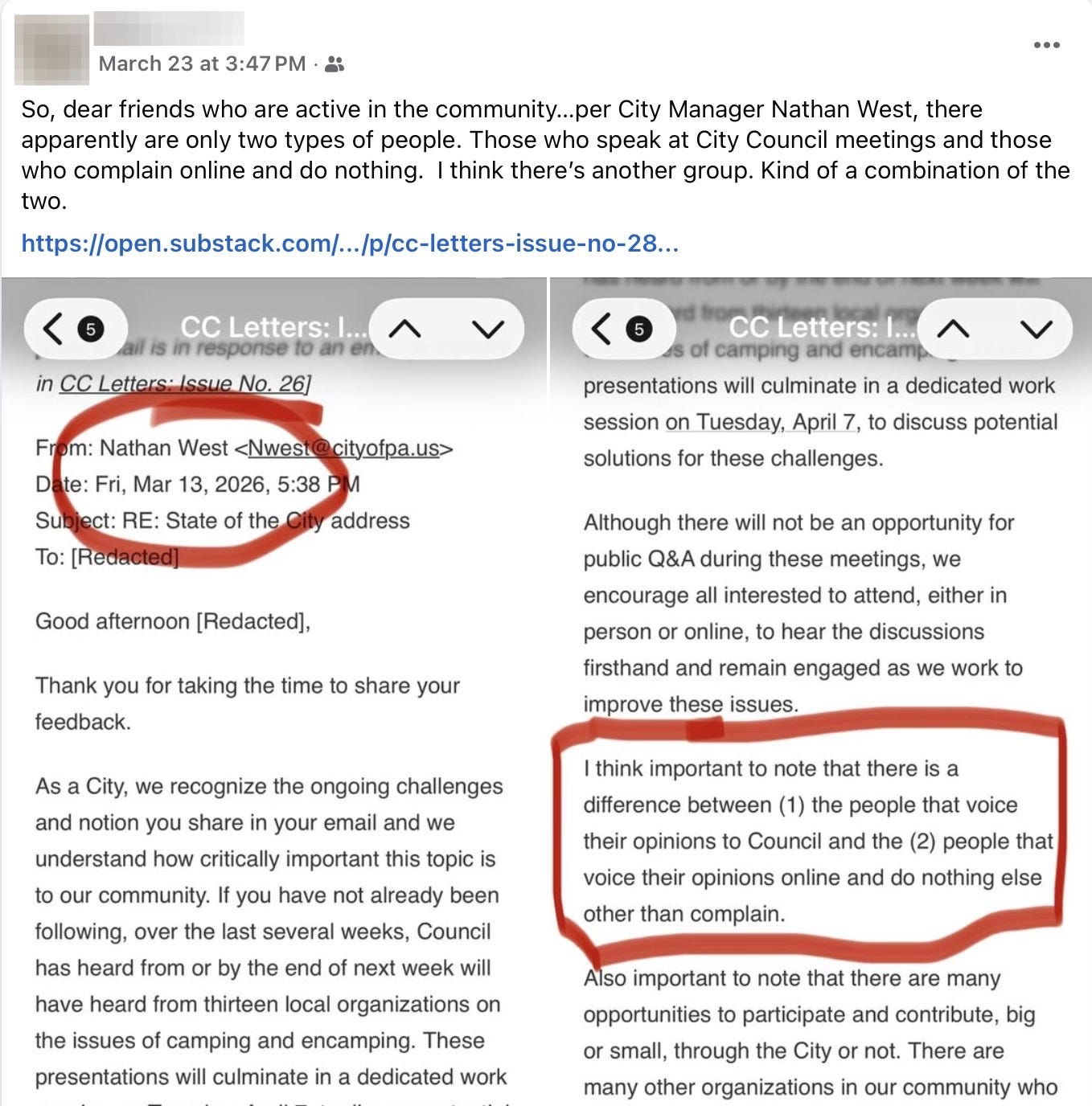
Nathan West: Speak Up… But Not Like That
Port Angeles City Manager Nathan West added fuel to the conversation this week with a statement that didn’t sit well with many:
“There is a difference between (1) the people that voice their opinions to Council and (2) the people that voice their opinions online and do nothing else other than complain.”
People are speaking up.
They’re identifying problems. They’re sharing what they see every day.
The issue isn’t silence.
The issue is response.
Because from the outside looking in, there increasingly appear to be two types of public servants:
Those who take seriously their responsibility to provide safety and security for all
And those who explain why nothing can be done—while blaming the public for noticing
We are not short on ideas.
We are not short on engagement.
We are short on results.
And when leadership’s response is “participate more, attend more meetings, pay more taxes,” it raises a fair question:
At what point does accountability shift back to the people in charge?
Tumwater Creek Death
The Facebook Clallam County Scanner Report page reported a death investigation on the 900 block of Tumwater Truck Route this week.
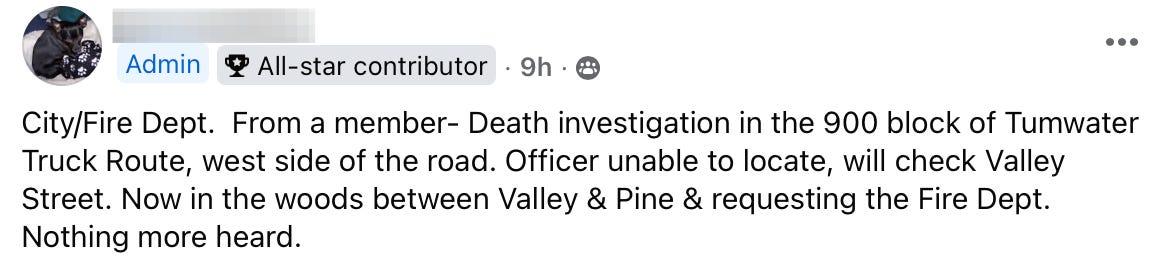
That location matters.
It sits near the growing homeless encampment along Tumwater Creek, beneath the 8th Avenue bridge—an area that has become increasingly associated with crime, drug activity, and deteriorating conditions.
For many residents, this isn’t surprising anymore.
And that may be the most troubling part.
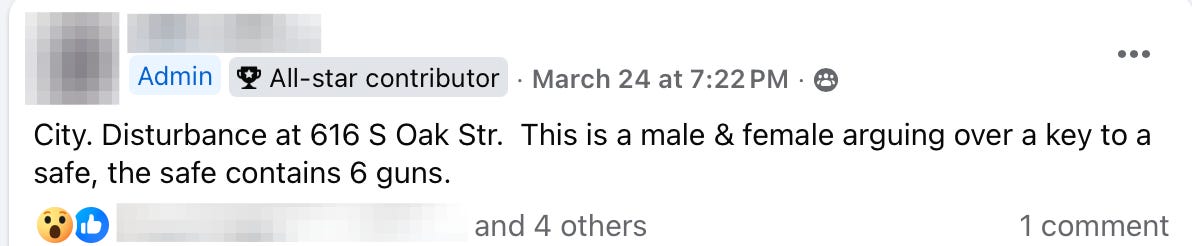
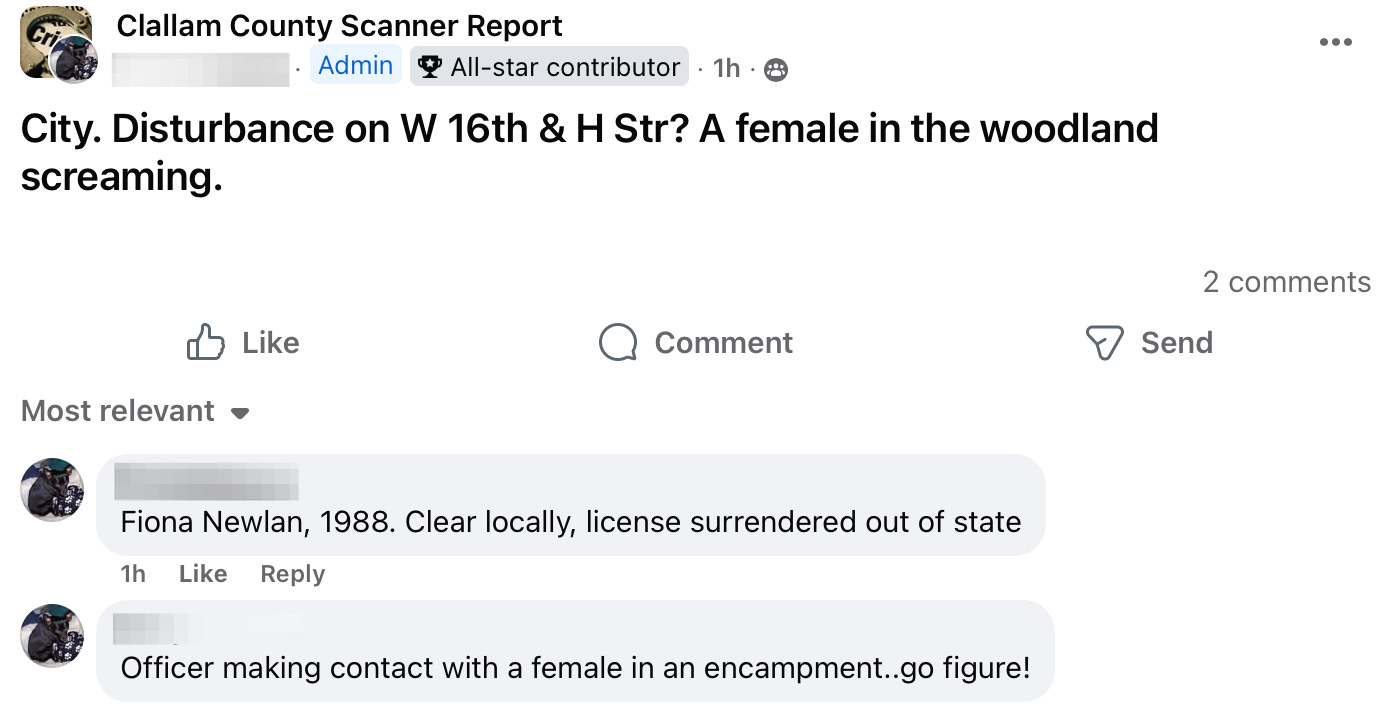
Here is more from the scanner this week:

Lee Plaza Shooting: What the Report Actually Says
Last week, we reported on a break-in and shooting at Lee Plaza. Now we have more details from the official police report.
According to the Port Angeles Police Department case file :
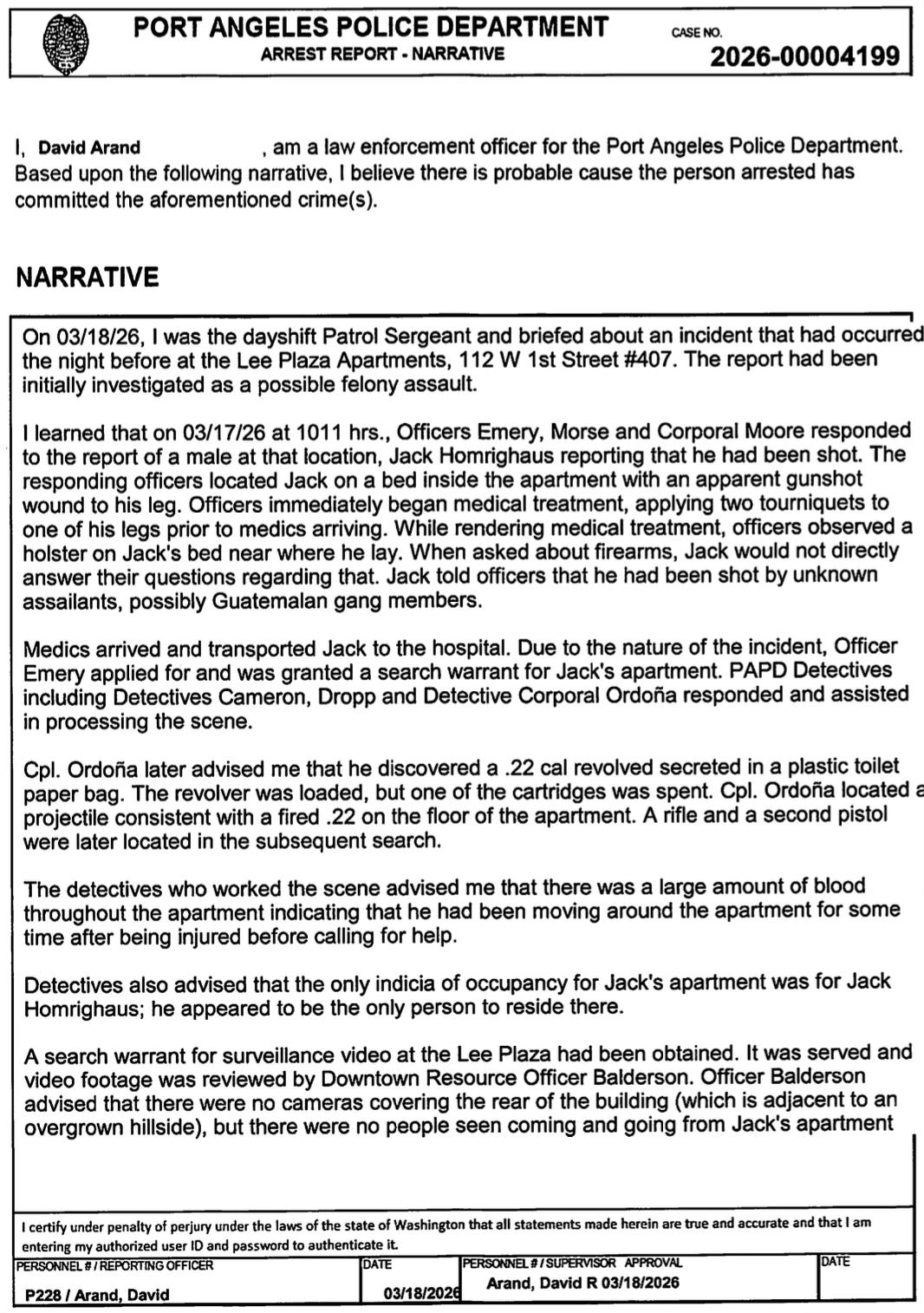
Officers responded to Apartment 407 at Lee Plaza for a reported assault
The victim, Jack Homrighaus, was found with a gunshot wound to the leg
Initial claims suggested multiple suspects entering through a window
But the investigation told a different story.
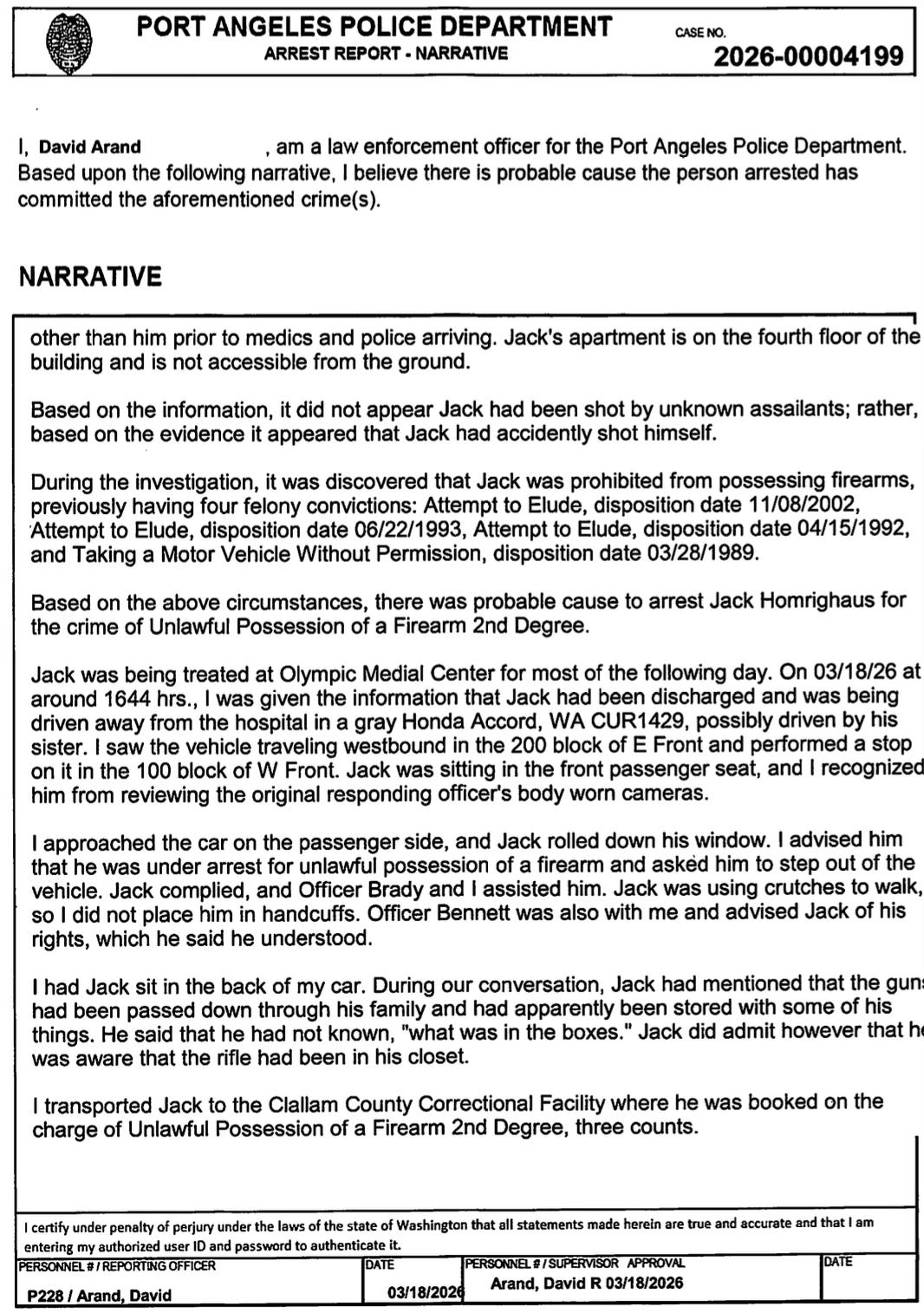
No signs of forced entry
No evidence of anyone entering or leaving the apartment
Multiple firearms were found inside the unit
The individual was a prohibited possessor due to prior felony convictions
Evidence suggested the shooting was likely self-inflicted
Ultimately, the case resulted in:
Arrest for unlawful possession of firearms (multiple counts)
Case cleared by arrest
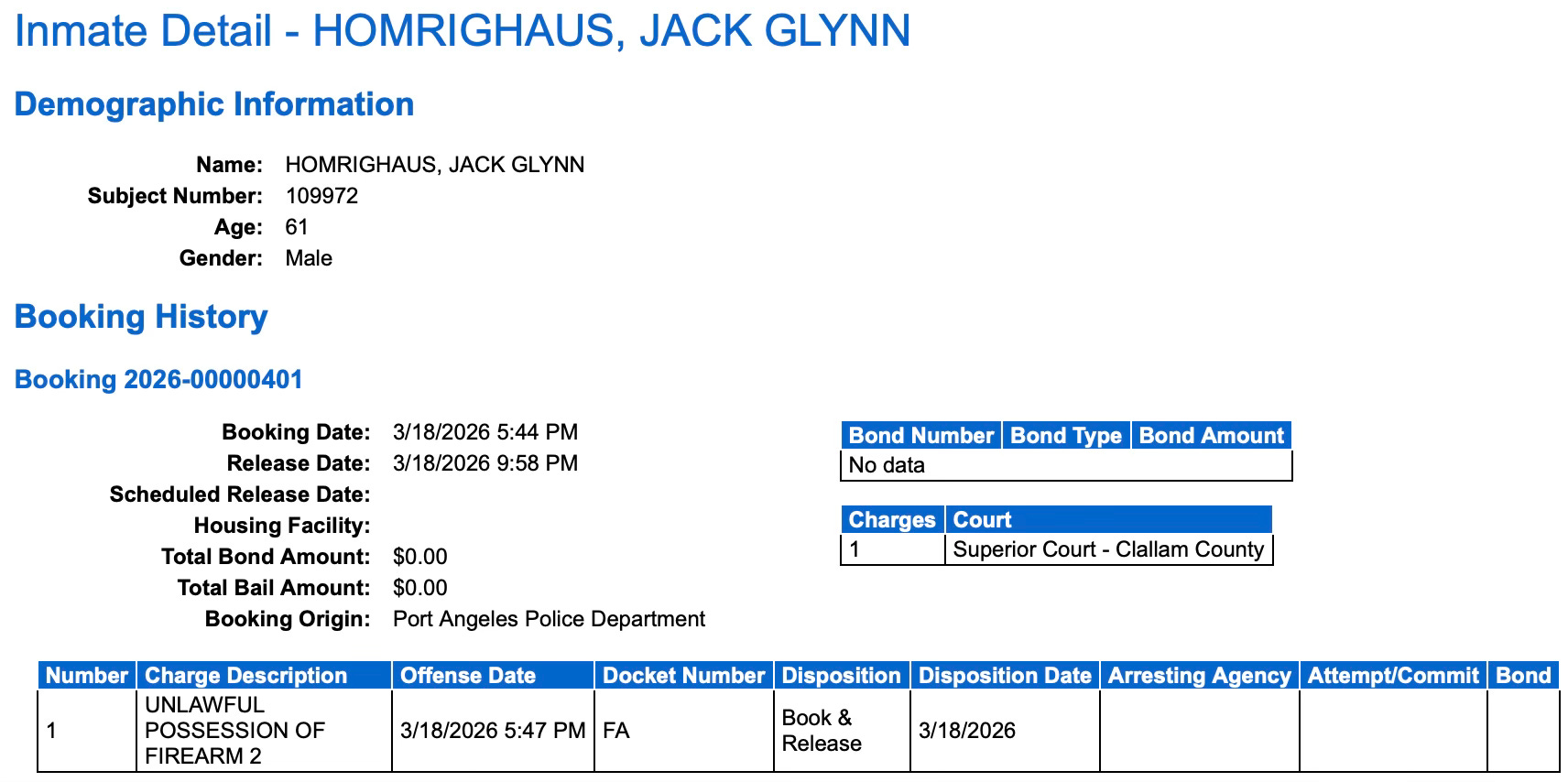
What began as a reported violent intrusion ended as something else entirely—a prohibited possessor, multiple weapons, and a shooting inside Peninsula Housing Authority’s subsidized housing.
The Bigger Picture
This week’s stories may seem unrelated:
Missing dogs in Neah Bay
A city manager criticizing online voices
A death near a known encampment
A shooting at Lee Plaza
But they all point to the same underlying issue:
A widening gap between what residents are experiencing—and what leadership is willing to acknowledge.
People are speaking.
They are documenting.
They are demanding change.
And whether leadership likes it or not—
Change is coming.
Today’s Tidbit
Remember Seattle Is Dying?
Seven years ago, Eric Johnson documented a crisis driven by addiction, mental illness, and leadership unwilling to confront it.
Today, it’s worse—and the response hasn’t changed.
More spending.
More bureaucracy.
Still no meaningful focus on treatment.
In a recent interview, Johnson described the same pattern: downplaying the problem, attacking those who speak out, and insisting things are improving while conditions deteriorate.
That should sound familiar.
Because it’s happening here in Clallam County.
Different scale. Same playbook.
And unless that changes— The outcome won’t either.
Seven years after the documentary, 35% of Seattle’s offices sit vacant, and residents feel unsafe due to encampments and open drug use.
It’s time to ask…
Is Clallam County dying?
The League of Women Voters did not respond to yesterday's email about their involvement in protesting "Kings" while ignoring examples of "Kings and Queens" here in Clallam County. Here is today's email sent to the county commissioners:
Dear Commissioners Ozias, Johnson, and French,
After reading this article, which highlights ongoing concerns about public safety, accountability, and quality of life in Clallam County, do you believe Clallam County residents are better off today than when each of you first took office (11, 10, and 3 years ago, respectively)? If so, in what measurable ways has the county improved—and how are those outcomes being tracked? I will publish your responses in full and unedited for the public.
I think that the summation, the indictment, makes sense. I appreciate the CCWD shining the light on the underbelly of the beast.
The ignorant comments from the PA "city manager" is emblematic of how lopsided power works. Like losing weight, you didn't gain it overnight, you can't shed it overnight either when you're pissed off looking at yourself in the mirror. The changes have been evolving for a while, and any attempts to reverse it will take time.
Focus your energy. Stay vigilant and look for opportunities.
Vote for Jake!