

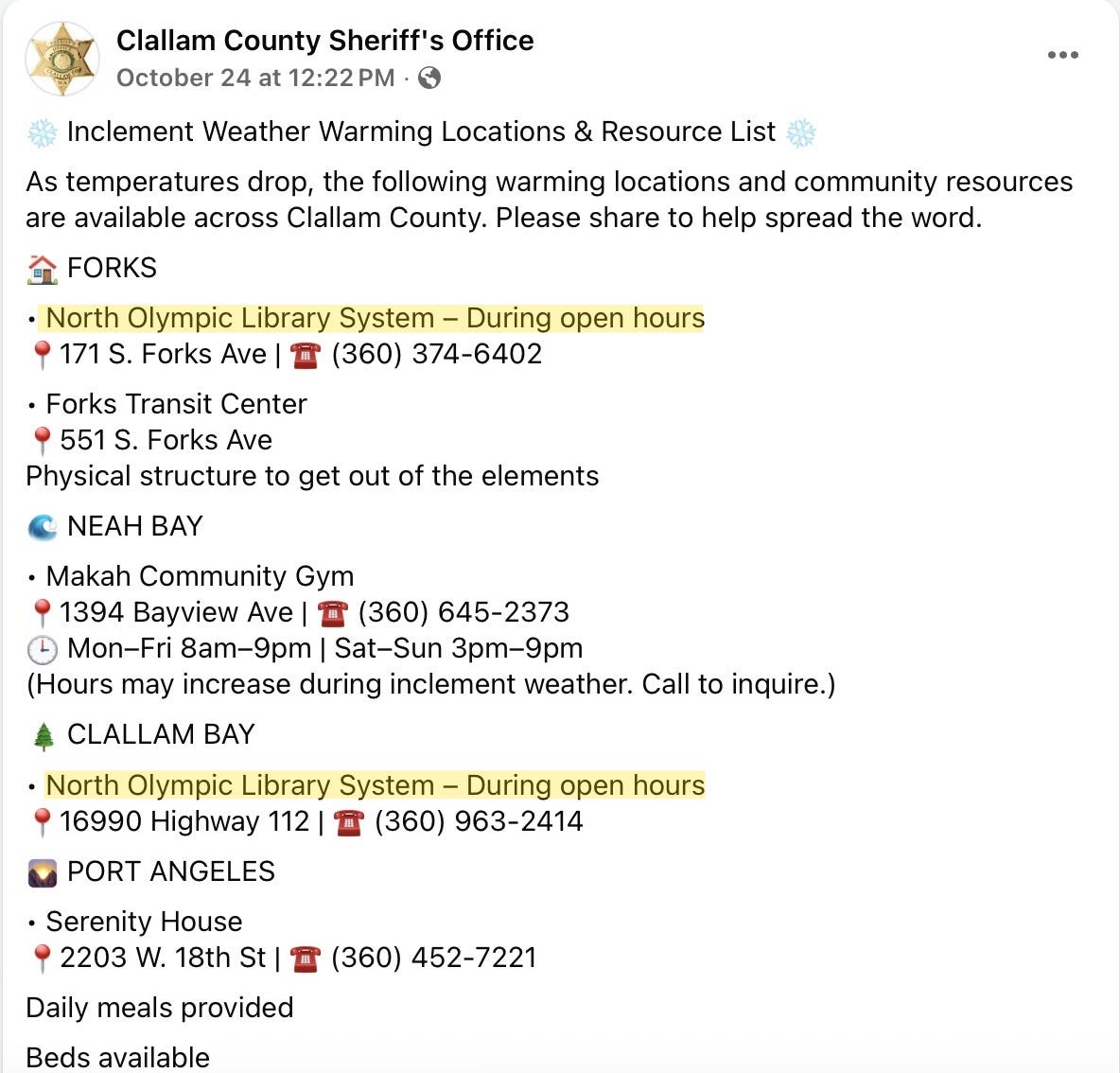
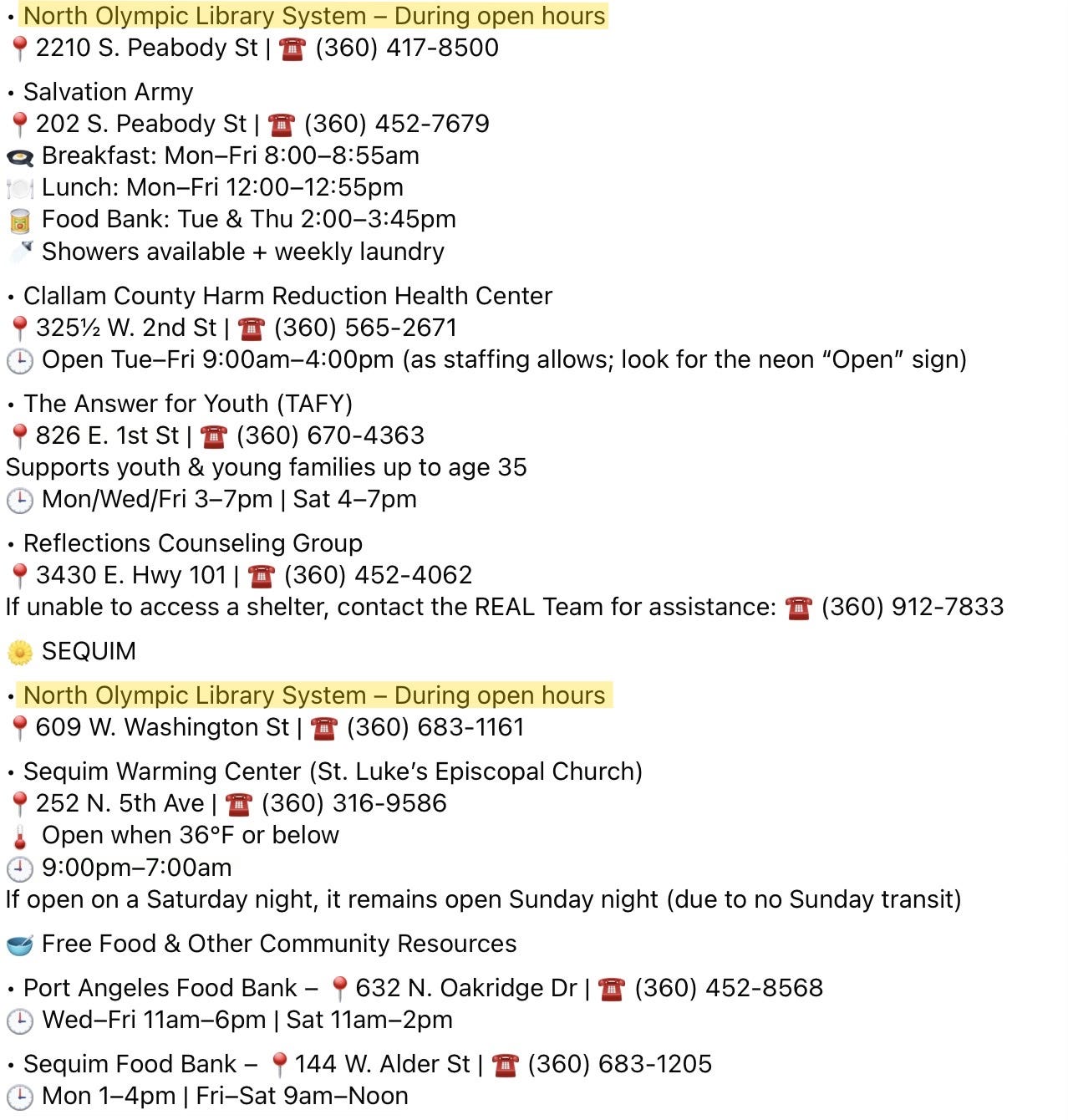
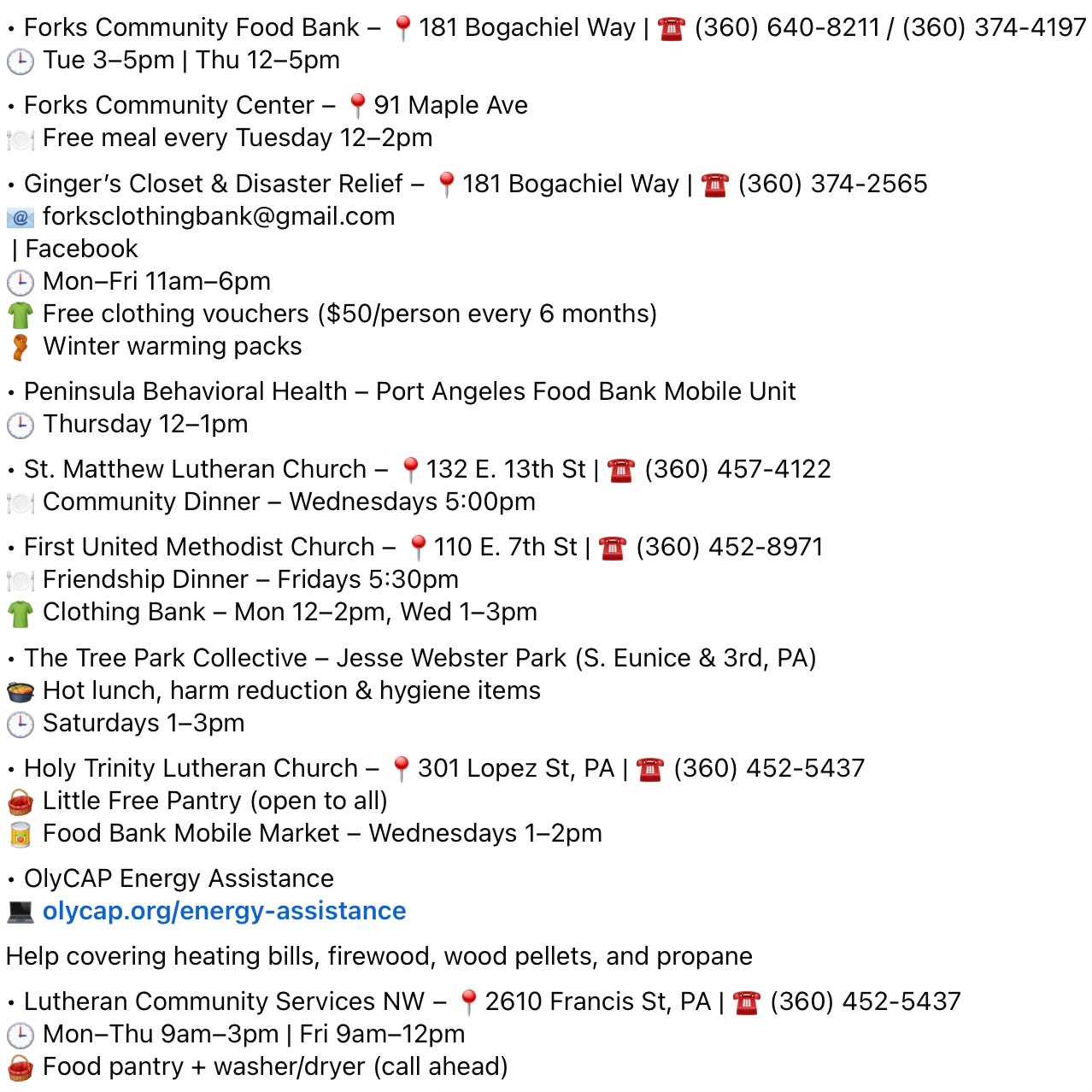
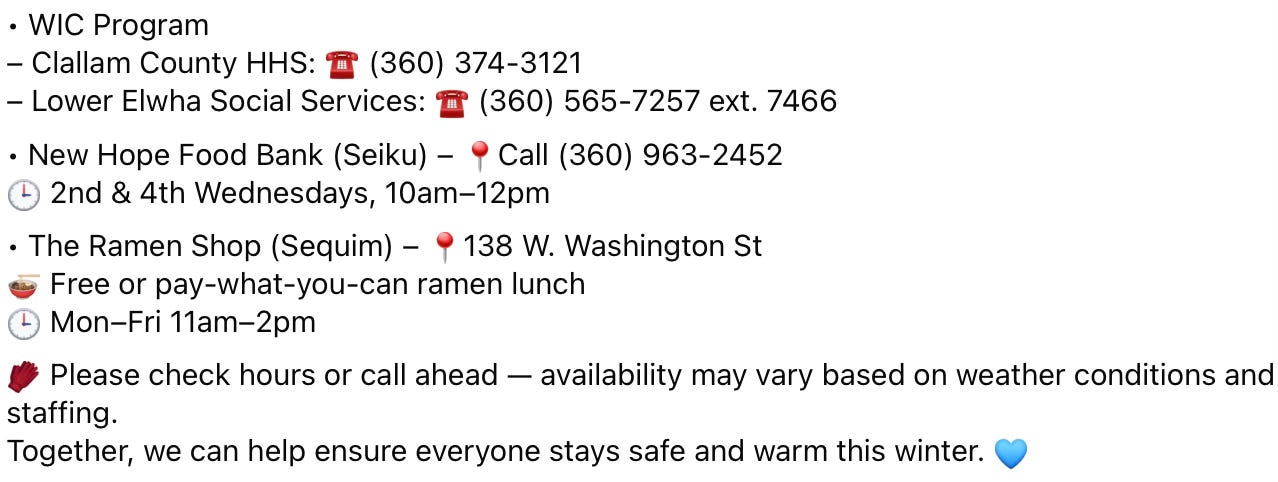
As temperatures fall, the Clallam County Sheriff’s Office and the Department of Health and Human Services published a Facebook list of “Inclement Weather Warming Locations.” Some of the locations are exactly what you’d expect: Serenity House, the Sequim Warming Center, meal services, and youth support programs.
But tucked among these resources is something far more complicated—and far more expensive: every North Olympic Library System (NOLS) branch in Clallam County.
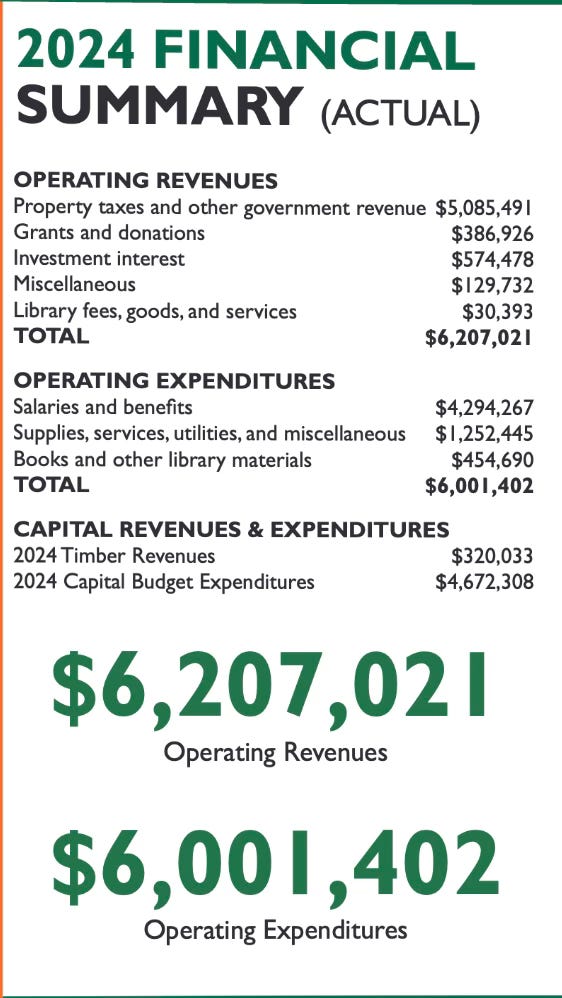
Taxpayers fund NOLS primarily through a dedicated property tax levy. This year alone, homeowners countywide will pay millions to keep our libraries open, staffed, heated, and stocked—not as homeless shelters, but as libraries: places meant for reading, studying, community programs, early literacy, job-seeking support, and quiet workspaces. That’s the mission voters approved and continue to fund.
Instead, the county’s own winter-weather resource list now advertises these taxpayer-funded buildings as warming centers—without additional funding, staffing, security, or acknowledgment of the strain this places on public spaces that were never designed to function as shelters.
Residents across the county have noticed the shift. Libraries meant for learning increasingly double as places to charge phones, stream videos at full volume, and take long naps in the comfortable chairs and cozy reading rooms.
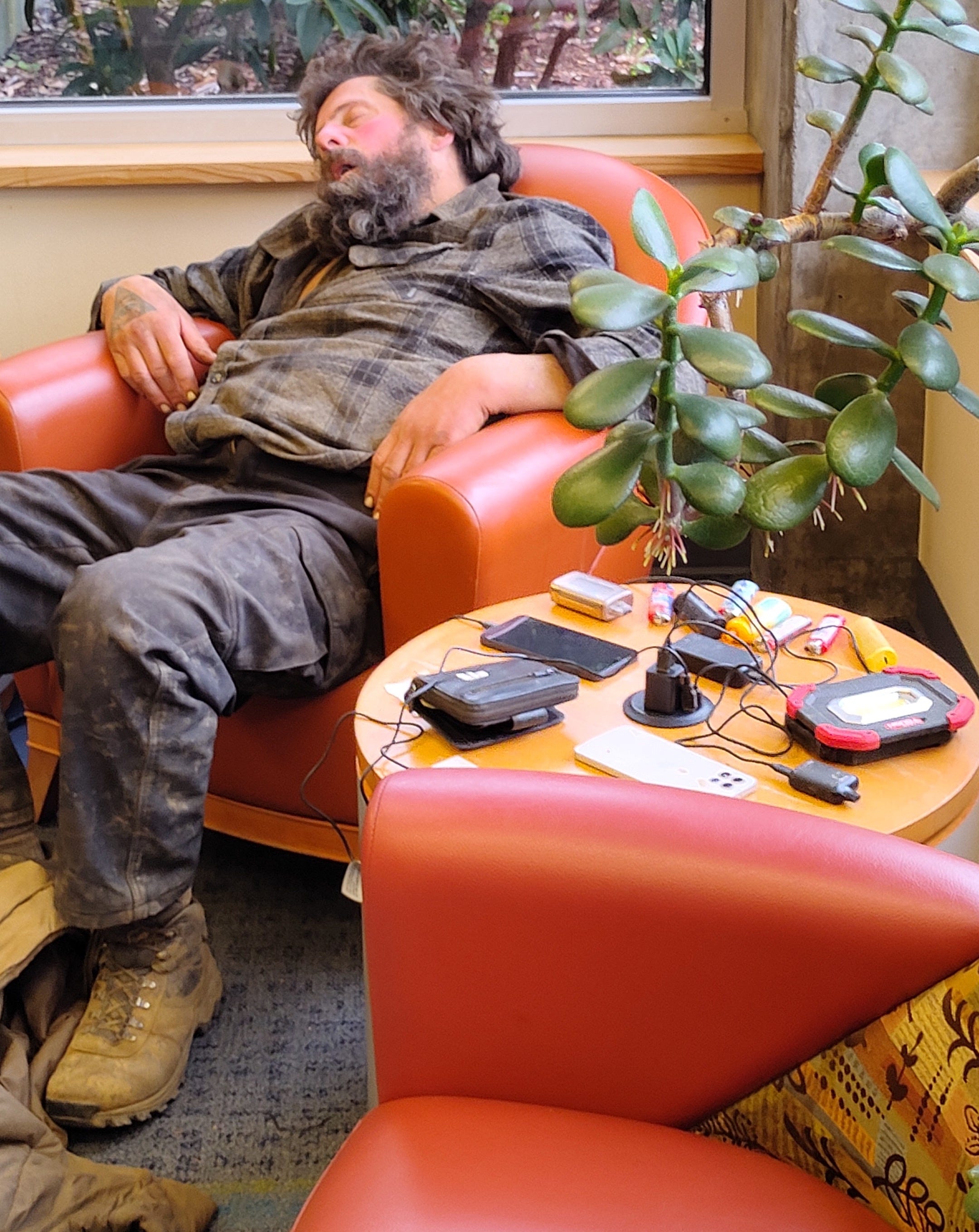
It’s not fair to the public, and it’s not fair to library staff. And it raises the question:
If the county needs more warming centers, why is the library system—one of the most expensive public services we have—quietly being asked to fill the gaps?
No one disputes that vulnerable people need a warm, safe place to go in winter. But using libraries as the default solution isn’t sustainable, transparent, or aligned with what taxpayers are paying for. Clallam County should be honest about the need for additional shelter capacity and fund it directly—not shift the burden onto institutions whose missions have nothing to do with overnight warming care.
A warming center is a public good.
A library is a public investment.
They are not the same thing, and the county shouldn’t pretend they are.
Mission-Critical: Ask the Hospital Board to Follow Its Own Bylaws
Forks Community Hospital added language to its bylaws—after two years of work—that supports public access to meetings in line with RCW 42.30.220. The law encourages agencies to offer remote access so the public can observe their government deliberate on their behalf.
But the board still hasn’t implemented it. We’ve been told it’s “too expensive” or “too risky,” even though remote access is standard across Washington and costs almost nothing.
This is a small ask with a big impact. Transparency matters. Accessibility matters. Trust matters.
Take One Minute
Email the board: board@forkshospital.org
Ask them to implement remote access for all public meetings, as their bylaws already support.
A community shouldn’t need to fight to simply watch its own government work.
My own use of the PA branch of the library has changed with the shift in the library's core mission.
I once sat in the alcoves to preview a stack of selected books before checking them out, but find those chairs now permanently occupied.
Being a neat freak also makes me question the sanitation issues the library staff must now contend with.
I notice the librarians often check the public library bathrooms. I assume it's to deter bathing in the sinks, to check for overdosed patrons in the stalls or to look for damages. I no longer use those facilities out of caution, just as I no longer venture into the bathroom on the city pier.
Maybe I have nothing to fear from the growing numbers of unhoused folks, but the reptilian part of my brain feels unsure and cautious in this new world.