

A man is struck in the head with a brick by a stranger. Parents report alleged drug use outside the Shore Aquatic Center. Residents post photos of people passed out in public spaces, sleeping in bank drive-throughs, and leaving drug paraphernalia behind. Meanwhile, local activists raise tens of thousands of dollars for unnamed individuals, and citizens continue debating whether Port Angeles and Sequim are becoming safer or less recognizable by the day. Welcome to another Social Media Saturday.
Hit in the Head with a Brick by a Stranger
If there was one post that captured why many residents no longer feel comfortable walking around Port Angeles, it wasn’t a political argument. It was a post from police.
This week, the Port Angeles Police Department reported an arrest after a man was allegedly struck in the head with a brick by someone he reportedly did not know. According to police, the victim suffered a head injury requiring medical treatment before officers located and arrested the suspect.
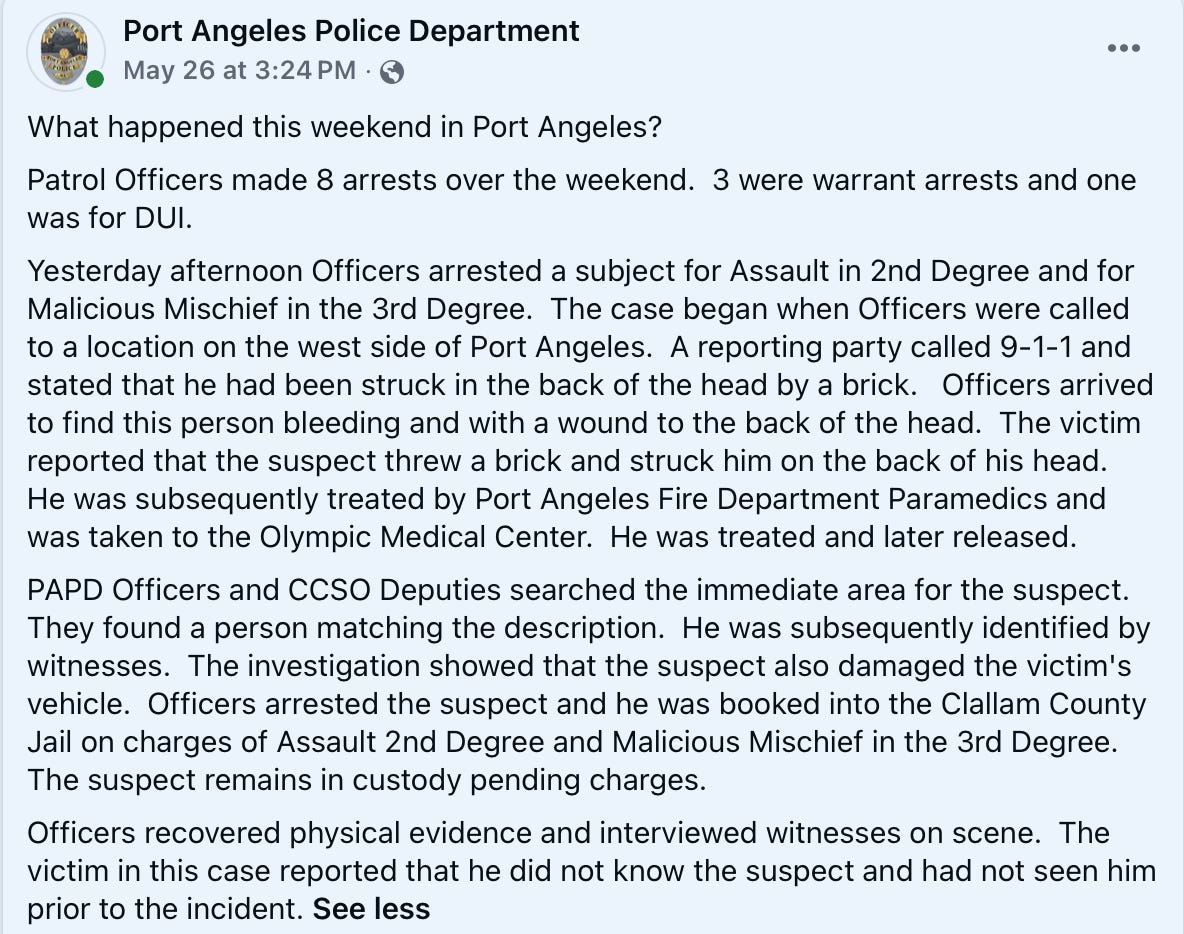
The detail that stood out to many readers wasn’t simply the violence. It was the statement that the victim and suspect were strangers.
For years, residents have been told that concerns about public safety are exaggerated, that crime is largely between people who know each other, and that we are just as safe as we were four years ago. Yet social media reactions to the incident suggest many residents viewed it differently.
For people walking downtown, taking their kids to the park, or visiting local businesses, the question isn’t whether crime statistics are up or down. The question is simple:
“What are the chances I become the next random victim?”
Seven Years of Warnings at Veterans Memorial Park
The debate surrounding Veterans Memorial Park continues to rage.
This week brought renewed complaints about drug use, disorderly behavior, and public safety concerns around public spaces in Port Angeles. Those complaints are not new.
Mike French’s first term on the Port Angeles City Council began in January 2018. In April 2019, a KING 5 report documenting conditions at Veterans Memorial Park showed a homeless man occupying the park and highlighted concerns that residents were already raising at the time.
What stands out today is not the video itself, but how familiar the discussion remains seven years later.
Residents are still posting photos of individuals passed out in public spaces. They are still debating whether parks are welcoming to families. They are still asking why conditions seem largely unchanged despite millions of dollars spent on homelessness, behavioral health, outreach programs, shelters, grants, and harm reduction efforts.
Seven years after Mike French first assumed public office, the arguments are nearly identical.
A Homeless Guy Shooting Up Outside the Pool
One of the most shared posts this week came from a resident who reported a man was injecting drugs outside the Shore Aquatic Center while families were using the facility.
According to the post, front desk staff were instructed to ask the individual to leave despite not being trained for that type of confrontation.

Hundreds of comments followed, many expressing frustration that public recreation facilities increasingly find themselves on the front lines of issues they were never designed to manage.
The debate comes only weeks after the William Shore Memorial Pool Board voted to reinstate its controversial shower voucher program for transient drug addicts.
For many residents, the concern is no longer about a single incident. It is about whether community facilities intended for children and families are gradually becoming extensions of the county’s broader homelessness and harm-reduction infrastructure.
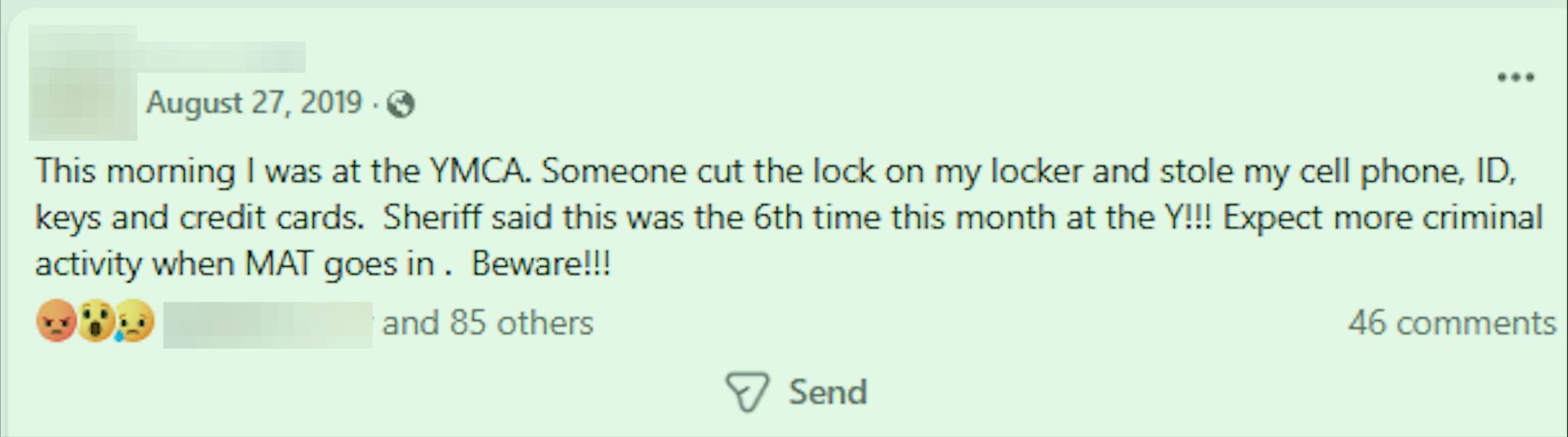
Pools are uniquely vulnerable because swimmers typically leave wallets, phones, keys, and other valuables unattended in locker rooms while they are in the water. The Sequim YMCA experienced a significant spike in thefts and property crimes several years ago, highlighting the challenges that can arise when public recreational facilities become targets for criminal activity.
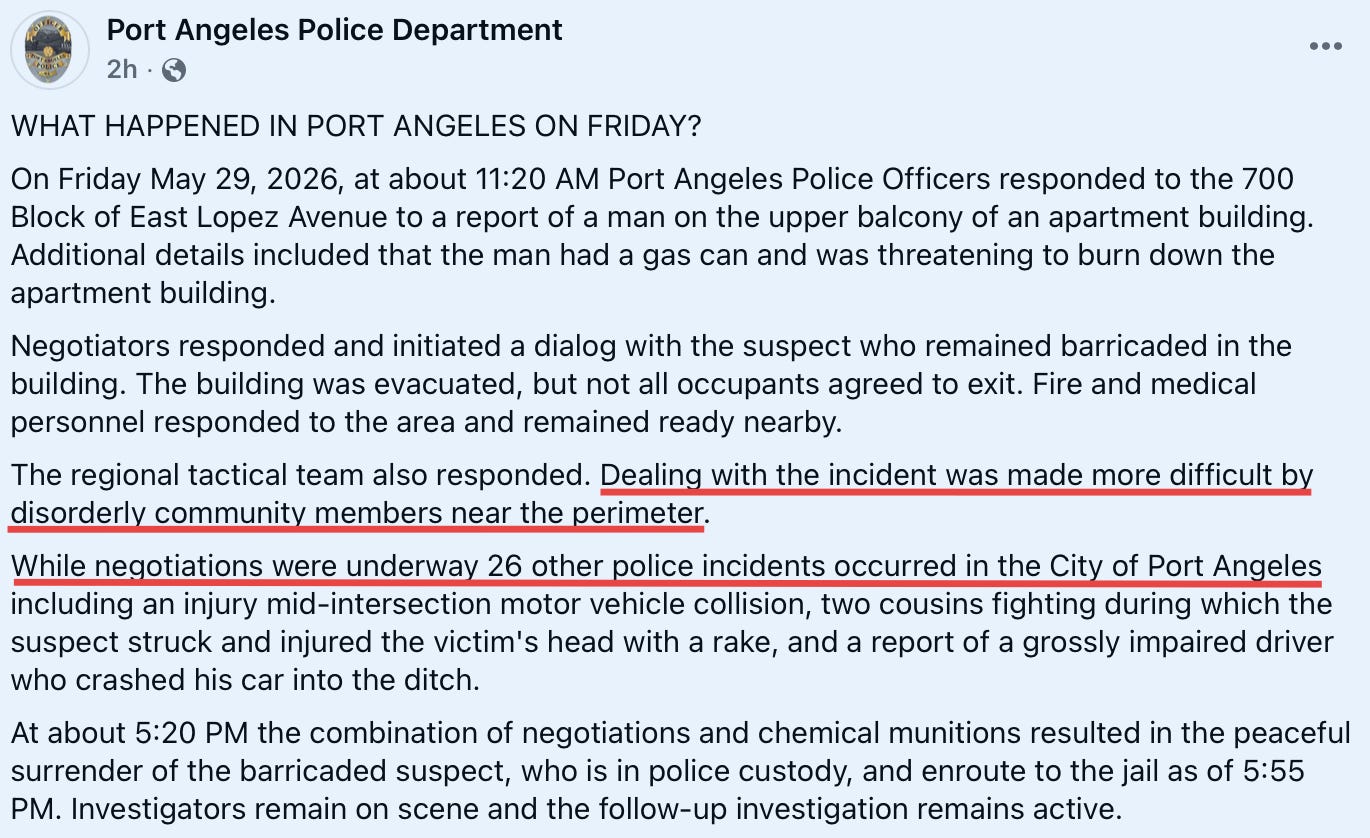
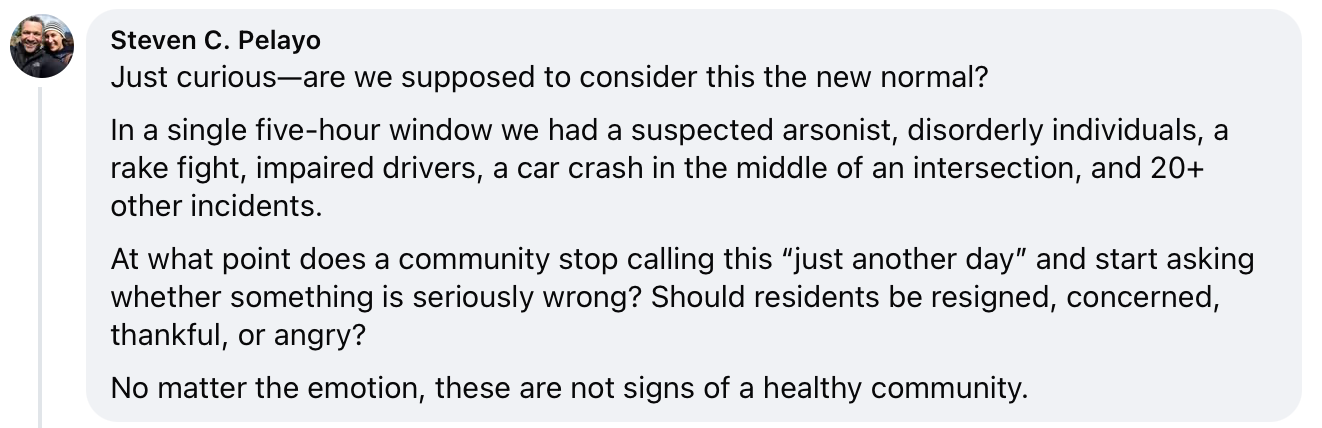
Is This the New Normal?
Crack Pipes at the ATM and People Sleeping in the Drive-Through
This week’s social media feed included:
A resident reporting a crack pipe left in a bank ATM receipt holder.

A photo of a man reportedly sleeping in a bank drive-through lane.
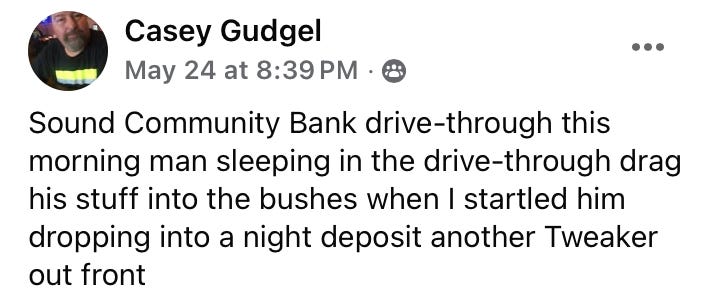
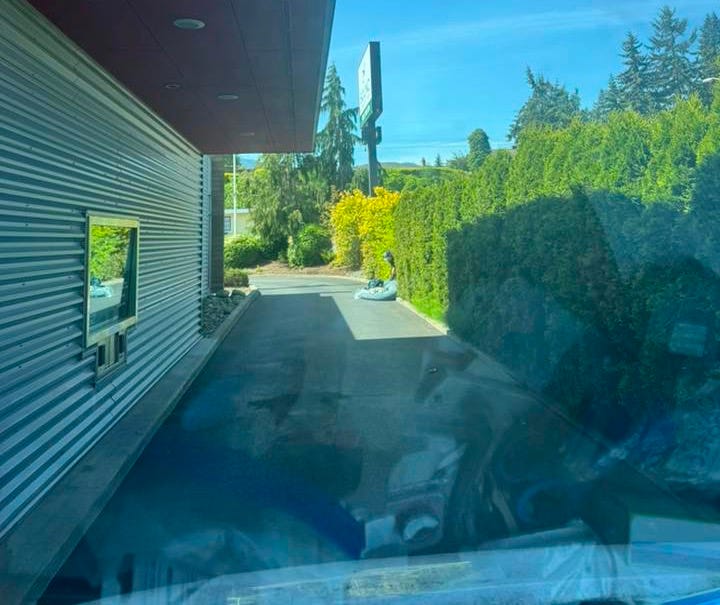
Photos showing individuals passed out on public property.

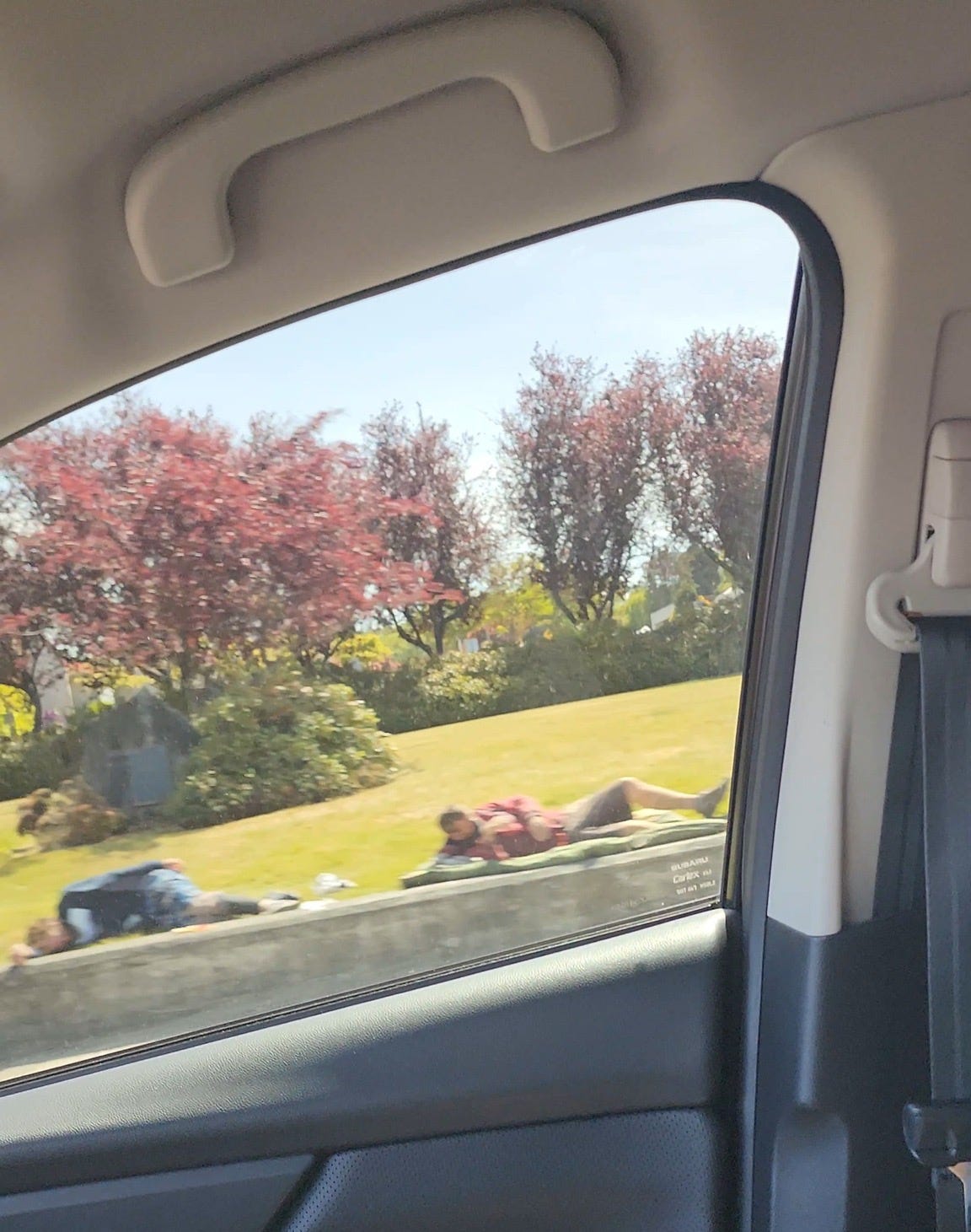
Complaints from residents about disorder around businesses and commercial areas.

Individually, each post may seem minor.
Collectively, they paint a picture of a community increasingly frustrated by what many perceive as a normalization of behavior that would have been considered unacceptable only a few years ago.
The Anonymous ICE Fundraiser
One of the more unusual discussions this week involved a GoFundMe campaign organized by local Indivisible activist Alex Fane.
The fundraiser states that a longtime community member was detained by ICE and that donations will be used for legal expenses and family support. The campaign does not identify the individual involved, citing privacy concerns, yet had raised more than $25,000 at the time screenshots were shared online.
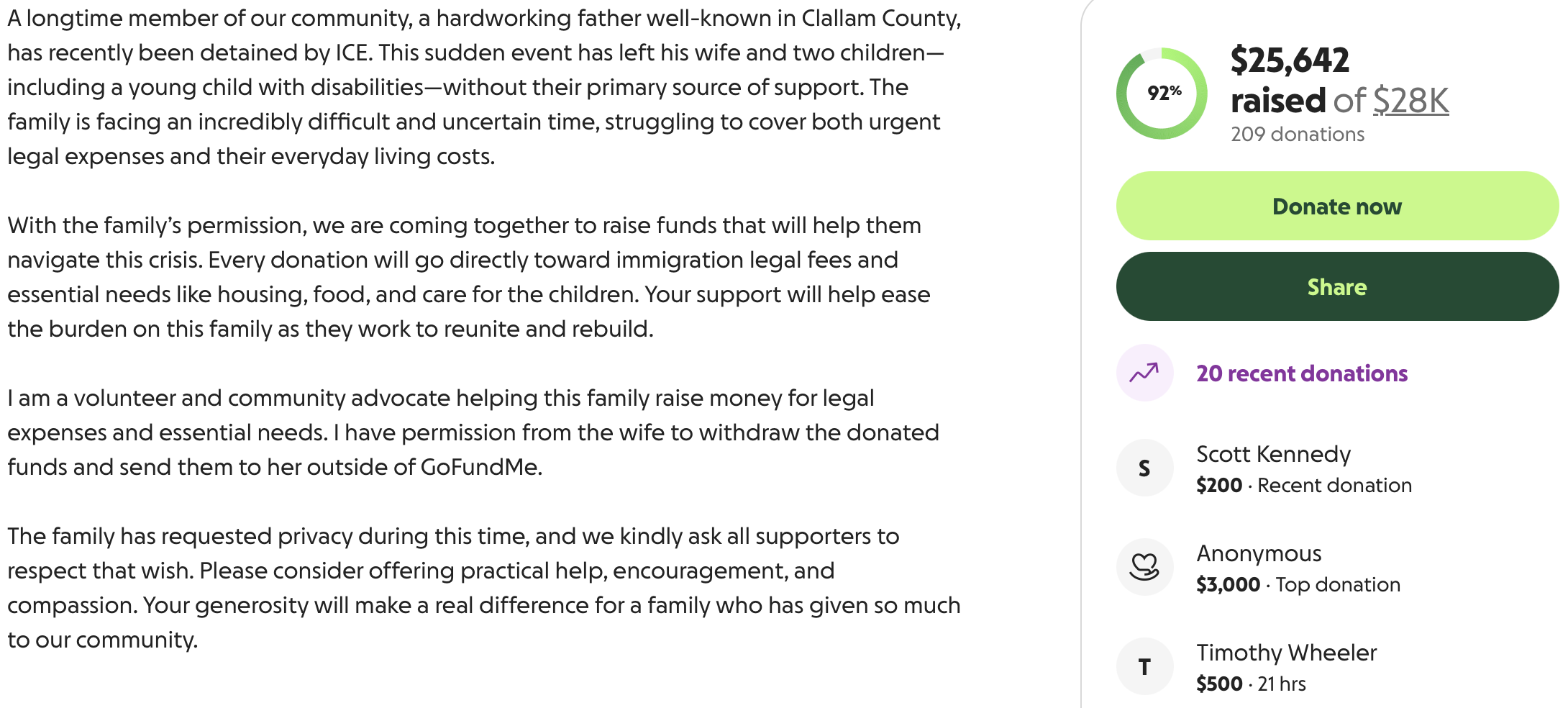
That immediately raised questions among some residents.
Who is the individual?
What are the circumstances of the detention?
How are donors expected to verify the claims being made?
The fundraiser notes that donations are being collected by the organizer and transferred outside of GoFundMe to the family.
To be clear, there is no evidence the fundraiser is illegitimate. However, when tens of thousands of dollars are being collected from the public while the recipient remains unnamed, questions about transparency are inevitable.
At roughly the same time, other social media users were posting claims that federal authorities had not detained anyone locally, creating even more confusion.
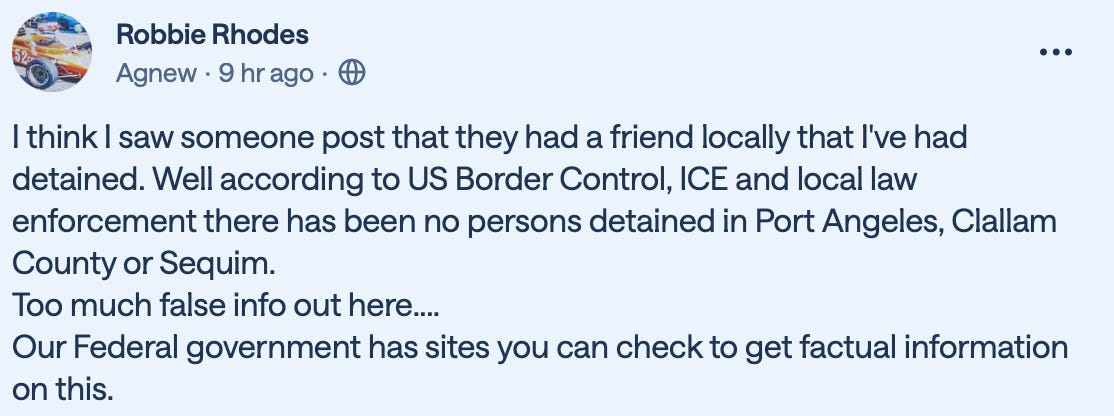
The result was another familiar theme: residents trying to separate facts from rumors while receiving very little verifiable information.
Who Gets a Voice in Port Angeles?
Another discussion gaining traction involved city advisory committees.
One resident questioned why Clallam County residents who work, shop, pay taxes, and spend time in Port Angeles are prohibited from serving on certain city committees unless they reside within city limits.
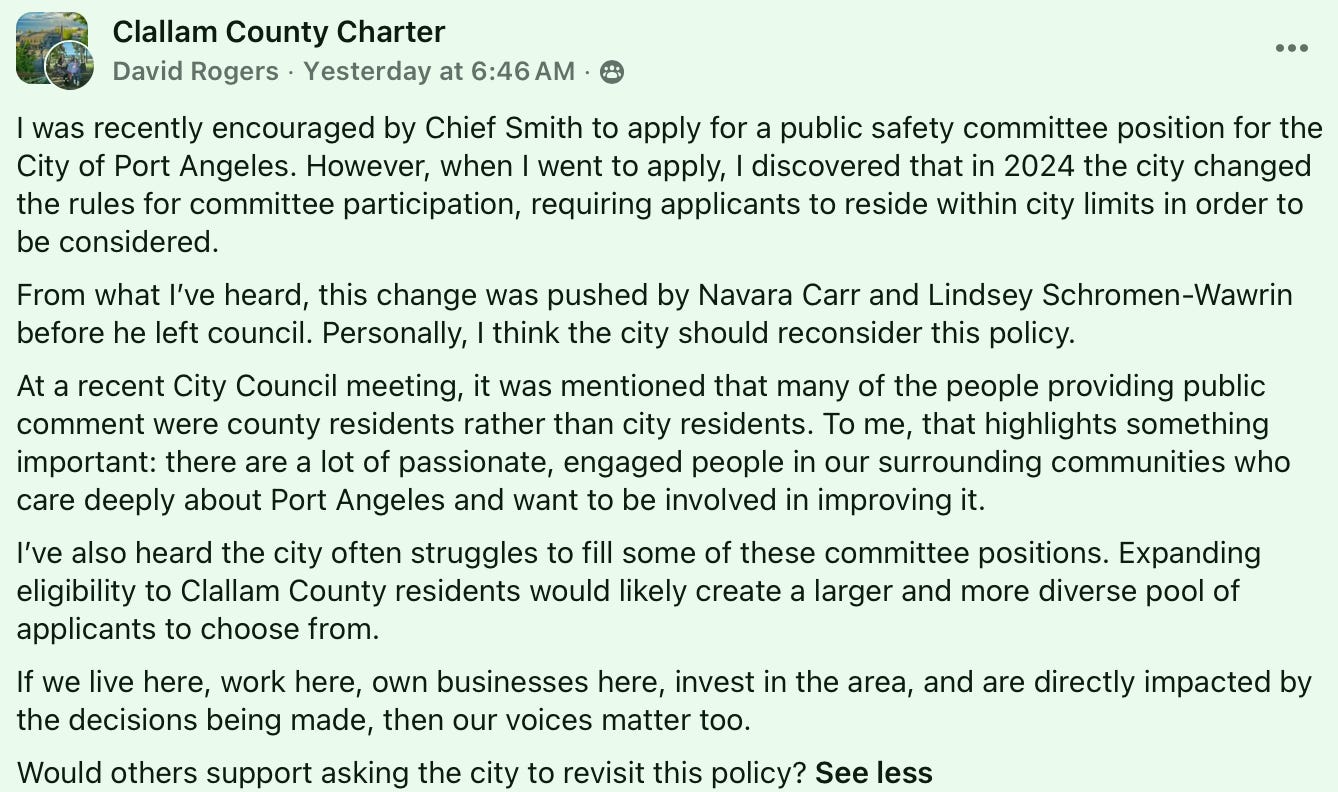
The argument from supporters is straightforward: city residents should govern city affairs.
The argument from opponents is equally straightforward: many county residents are deeply affected by city decisions and should have opportunities to participate.
Expect that debate to continue.
Million-Dollar Nonprofit Looking for Free Yard Work
The North Olympic Land Trust is asking volunteers to pull weeds around its office.
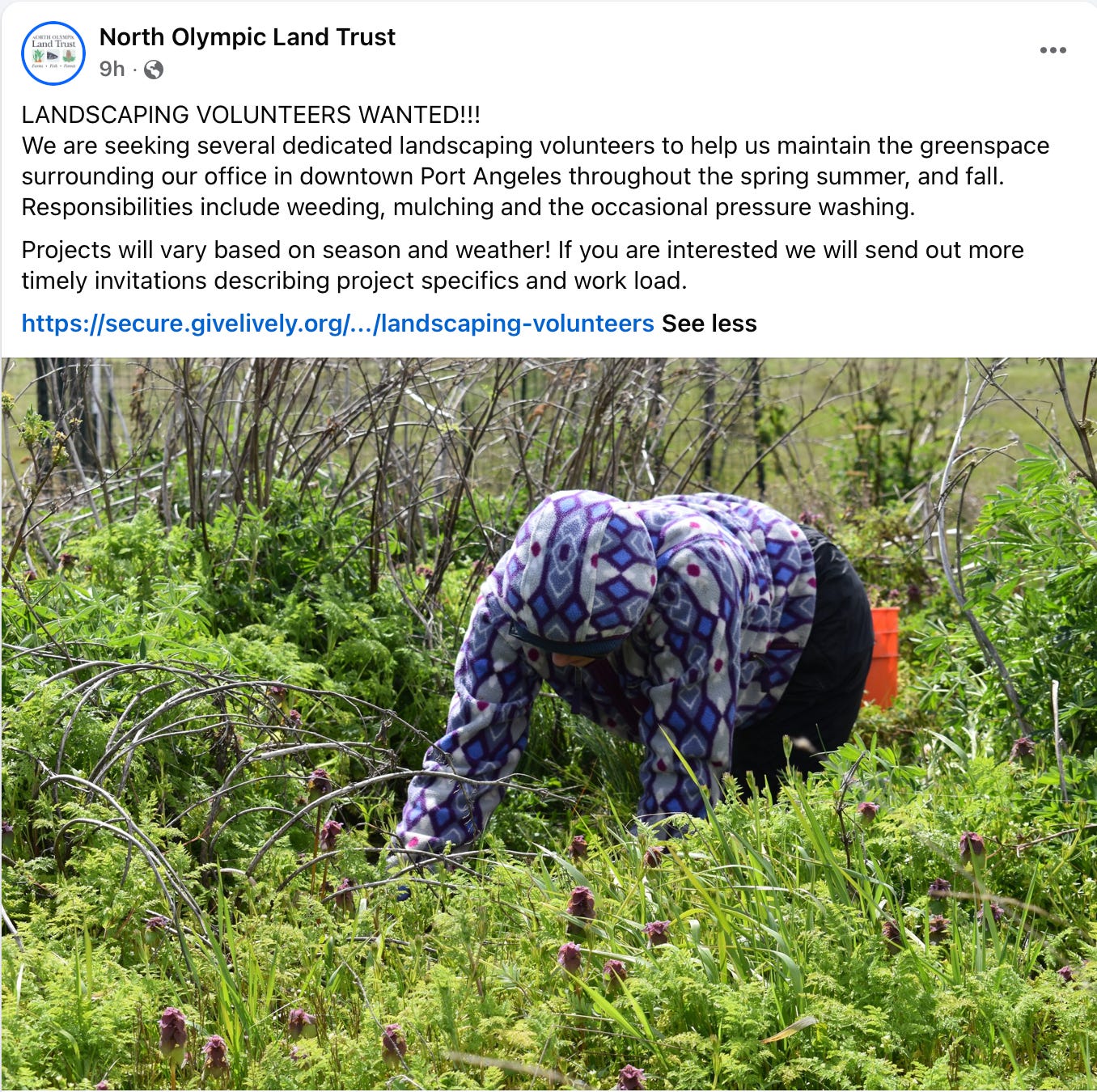
When an organization reports nearly $3 million in annual revenue, more than $11 million in assets, and a staff of ten employees, residents may reasonably wonder why basic office landscaping is being outsourced to volunteers rather than handled as a routine operating expense.
Compassion or Consequences?
Perhaps the most revealing discussion of the week involved a resident describing a senior mobile home park where a homeowner had reportedly allowed several homeless individuals to stay on the property.
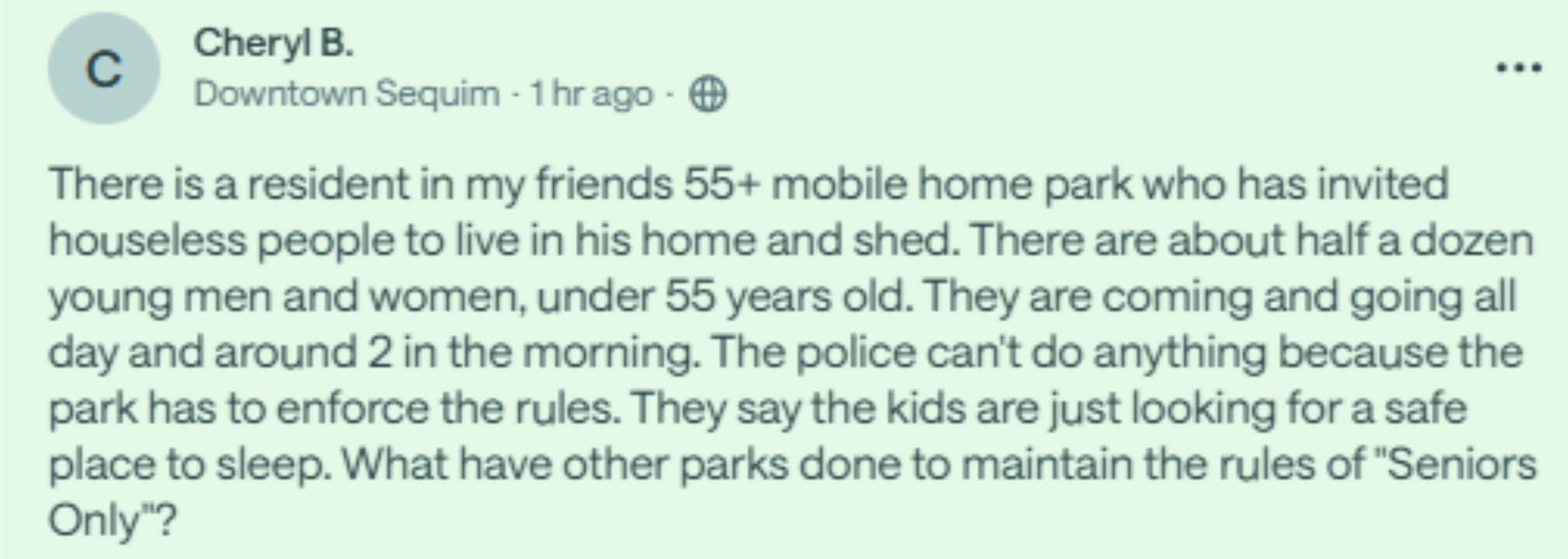
Some commenters viewed the arrangement as an act of compassion.

Others focused on quality-of-life concerns, safety concerns, and the fact that the park was intended for seniors.
The exchange highlighted a broader divide that continues to define local politics.
One side asks whether enough is being done to help vulnerable people.
The other asks whether enough consideration is being given to the people who already live here.
Increasingly, both sides believe they are the compassionate ones.
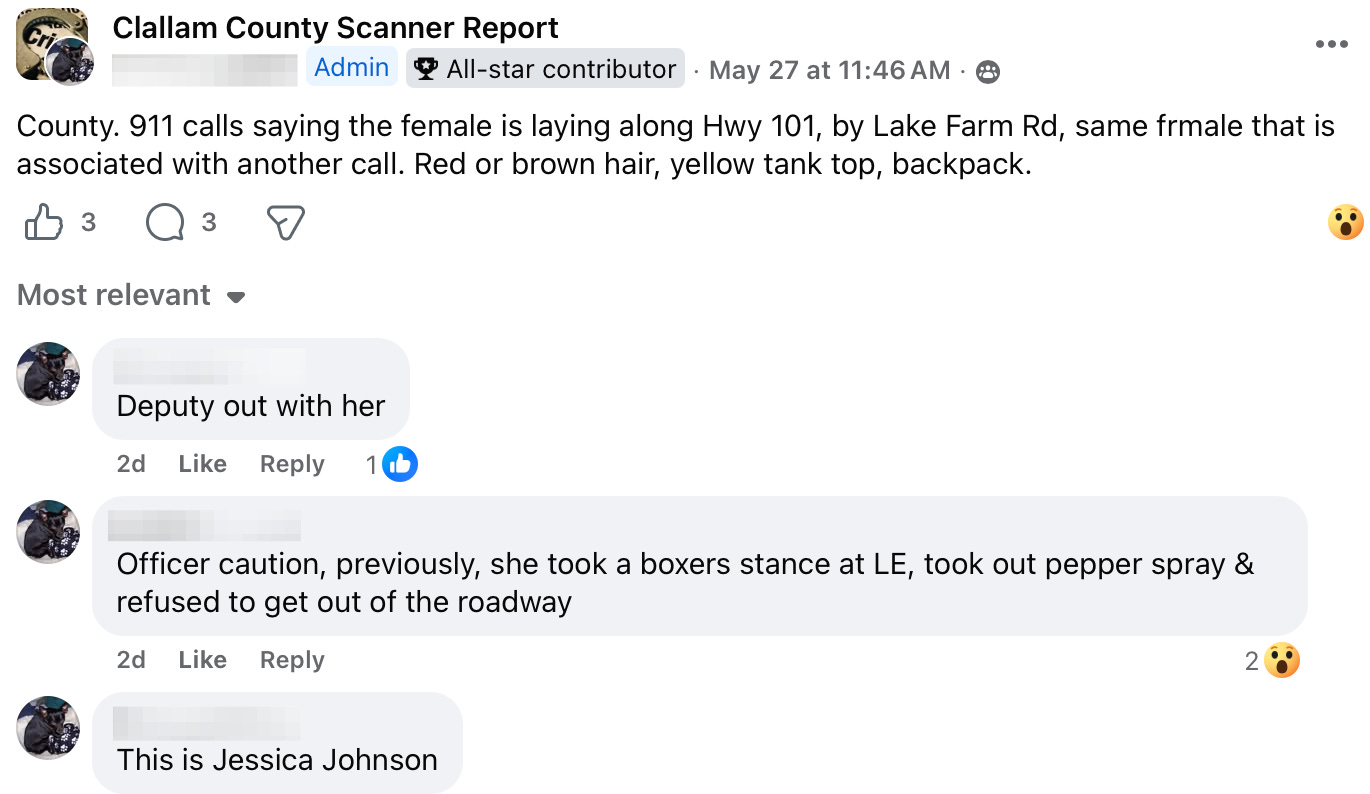
From the Scanner


See You In Joyce Today!
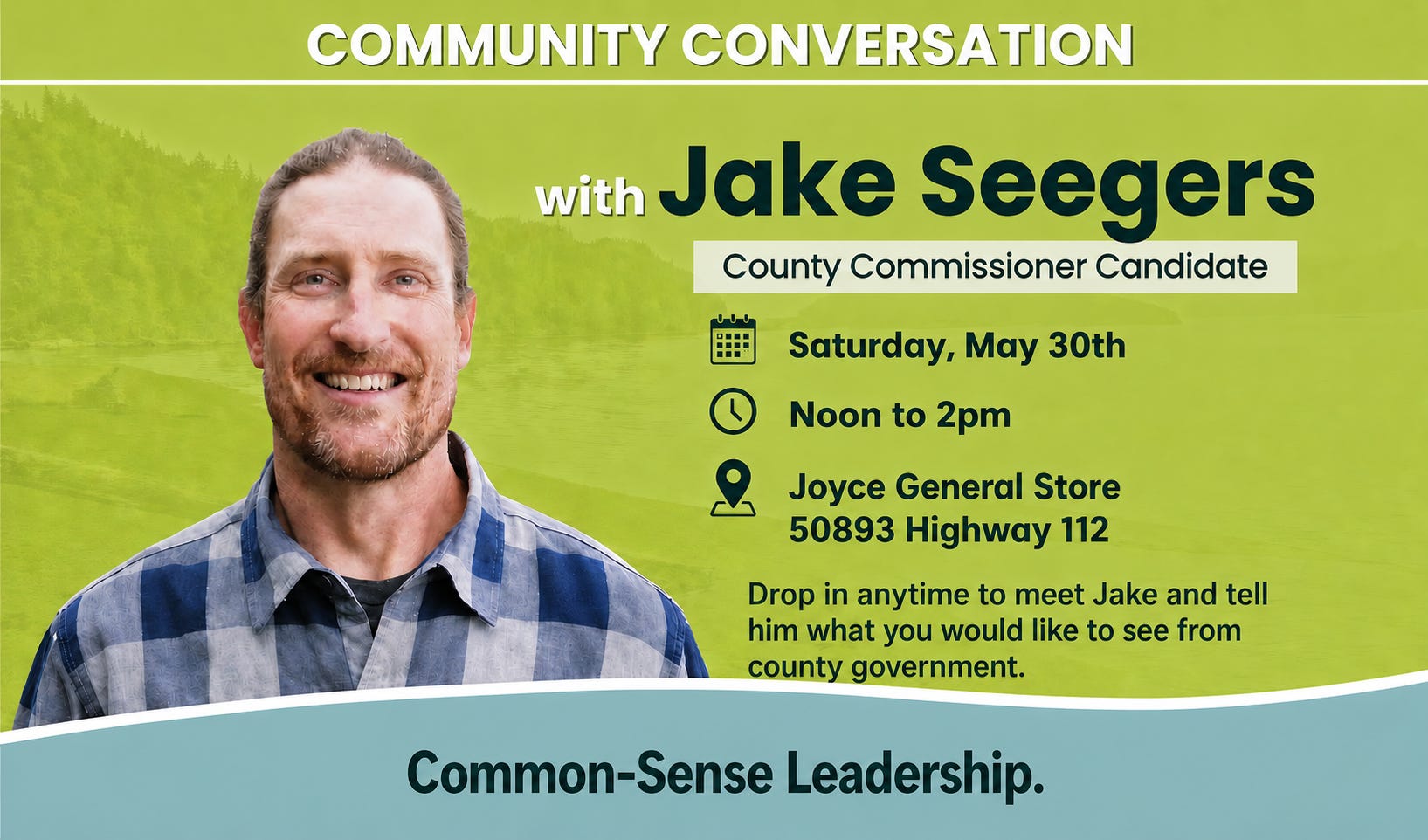
Come meet Jake, sign the petition to reopen the Olympic Hot Springs Road, and go home with a yard sign.
The commissioners did not respond to an email calling for a serious conversation about OlyCAP's Safe Parking Program, the expenditures in question, and the fleeting transparency. Here is today's email sent to the two county commissioners who also serve on the Shore Pool Board:
Dear Commissioners French and Johnson,
This week, a widely shared social media post alleged that a man was injecting drugs outside the Shore Aquatic Center while families were using the facility.
Given that both of you voted to continue providing free shower vouchers through the Harm Reduction Health Center:
Why have you chosen to continue distributing shower vouchers through a facility that primarily serves transient individuals struggling with addiction and substance abuse?
Can you assure the community that pool staff are properly trained and prepared to handle situations involving drug users utilizing a facility that was originally designed for families, children, and recreational use?
What specific safeguards are in place to ensure that parents, children, and pool employees are not placed in situations they are neither trained nor equipped to manage?
Residents continue raising concerns about safety and the changing role of community facilities. A response would be appreciated.
Regarding allowing homeless to stay at 55 plus park; Compassion without situational awareness can unintentionally create risk — not only for the individuals offering help, but for every neighbor around them. Our county is not the same place it was decades ago as we know. Crime patterns have shifted, drug activity has increased, and opportunistic offenses now occur in areas that were once considered safe.
Many of our older residents simply do not see this change. They are not on social media, they do not receive real time crime updates, and they rely on personal history — “nothing has ever happened to me” — as their safety plan. That mindset leaves them vulnerable. I have friends in their seventies and eighties who still shop alone late at night because they genuinely believe the world operates the way it did when they were younger. They are not being reckless; they are being uninformed.
When individuals with untreated addiction or criminal histories — and many of these individuals are currently homeless — are invited into a residential park, the entire community inherits the risk. It only takes one incident: a theft, an assault, a fire. Comments such as “don’t you appreciate a compassionate neighbor?” or “if there’s no harm, what’s the issue?” overlook a critical question: how do they know there is no harm? Elderly residents are among the most vulnerable targets in any community, physically, financially, and situationally.
We should not wait for a tragedy before acknowledging that well intended decisions can have unintended consequences.
Our elderly neighbors deserve accurate information about how this area has changed. They deserve to understand the risks so they can make informed choices. And our residential parks deserve clear policies that balance compassion with responsibility and safety for all.
We cannot afford to ignore the vulnerabilities of those who are least aware of the dangers around them. Awareness is not fear — it is prevention.