

A group that still prints “nonpartisan” on the letterhead spent a decade studying the Dungeness, then mailed Olympia a wish list of tighter rules, new fees, and more mitigation. The people who live on the wells were not asked. The causes of those wells going dry were left “unclear.” The U.S. Geological Survey was not.
A letter, not a vote
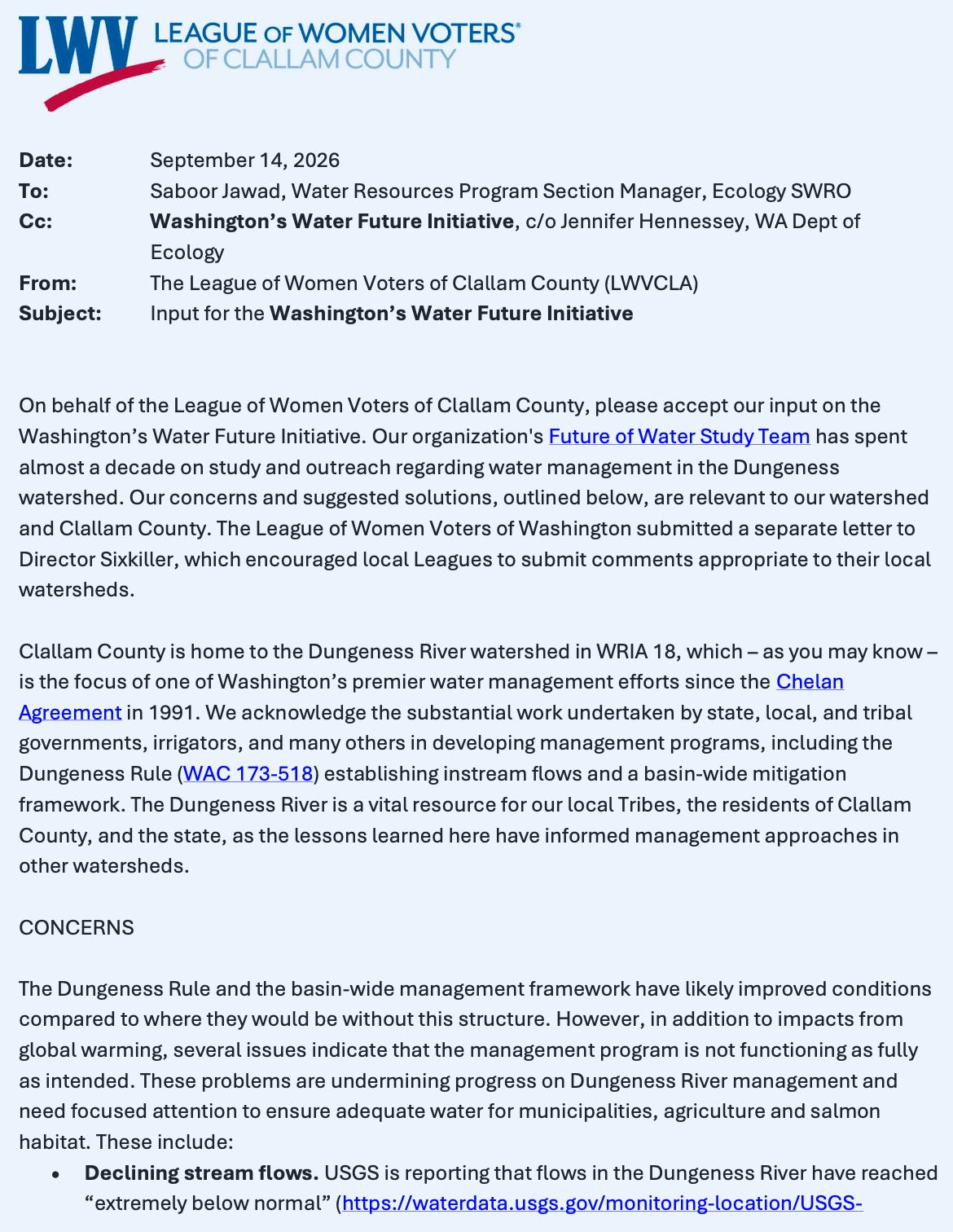
On September 14, 2026, the League of Women Voters of Clallam County wrote Saboor Jawad at the Department of Ecology’s Southwest Regional Office and copied Washington’s Water Future Initiative, care of Jennifer Hennessey, at Ecology. The letter is input on the state’s water-future process. It is also a lobbying document, sent on behalf of a study team, not a vote of the people who drink from the aquifer.
It never went in front of the public that has to live with it. No hearing in Sequim. No notice to ditch shareholders. A study team, a state portal, a cc to the director’s office. That is how activists move policy when they do not want a room full of well owners.
The bill they didn’t price
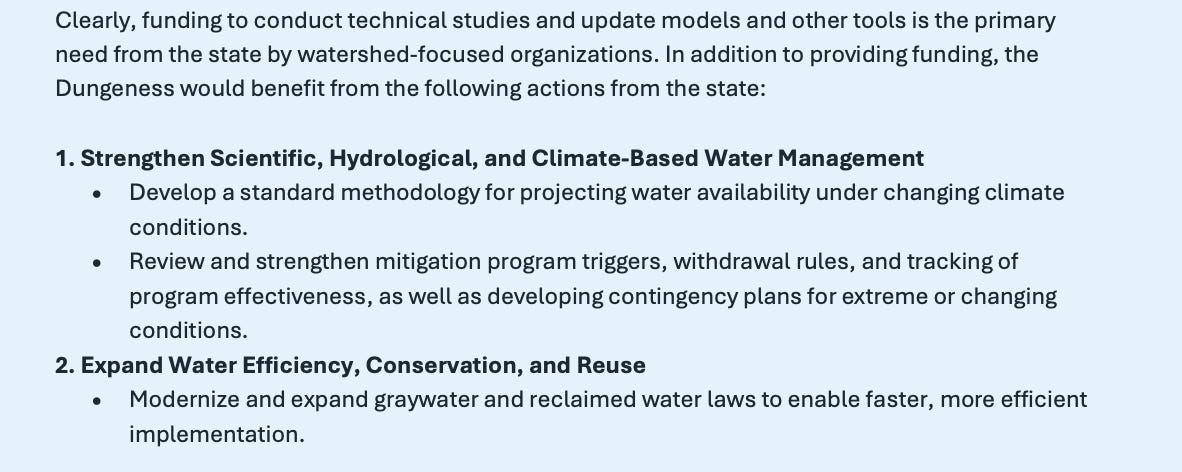
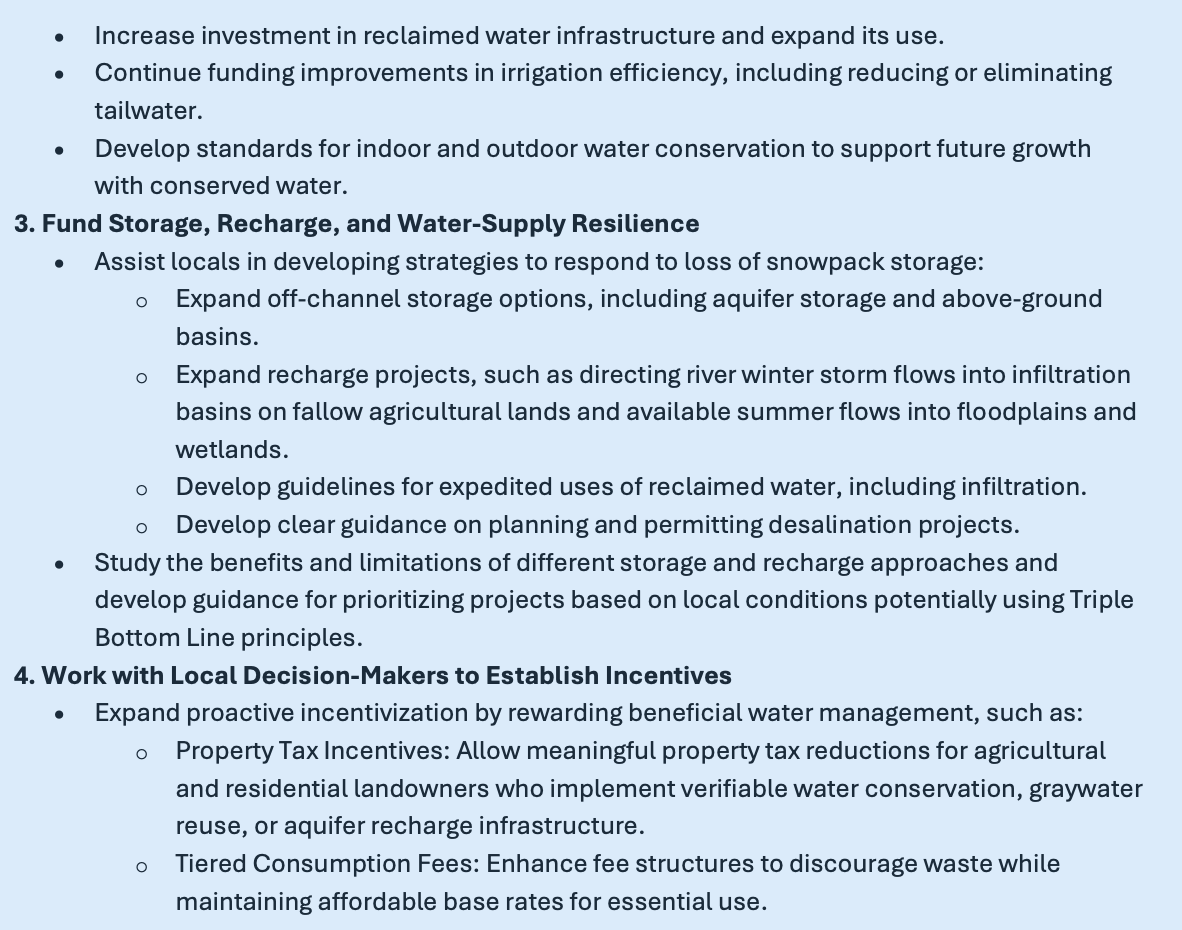
The League says the Dungeness Rule and the basin framework “have likely improved conditions.” Then it asks the state to go further. Update the model. Strengthen mitigation triggers and withdrawal rules. Write contingency plans. Modernize graywater and reclaimed-water law. Keep funding irrigation “efficiency,” including cutting tailwater. Set indoor and outdoor conservation standards “to support future growth with conserved water.” Expand storage and recharge. Add property-tax incentives and tiered consumption fees.
Read that in a county where a starter home is already out of reach. Conservation standards, mitigation packages, and new fee structures are not free. Those costs land on building permits and monthly bills. The League never prices them. It never asks whether another layer of process is what an economically strained county needs before the next subdivision or the next farm season. It treats cost as someone else’s problem.
“Unclear” was a choice
On the wells themselves, the letter is careful to the point of evasion. “Many domestic wells in the basin have had to be deepened or re-drilled; the causes are unclear but may include climate impacts and the combined effect of other users and the management program.”

In 1983 the U.S. Geological Survey modeled this peninsula and published the result in Water-Resources Investigations Report 83-4094. The abstract still says what the League did not:
“Analysis using the model shows that leakage from irrigation ditches is the area’s most important source of ground-water recharge. Termination of the irrigation system would lead to lower heads throughout the ground-water system. After 10–20 years of no irrigation, the water-table aquifer would have average drawdowns of about 20 feet and some areas would become completely unsaturated. Several hundred wells could be in danger of going dry.”
That scenario is ending irrigation, not merely slipping a pipe into a ditch that still delivers water. It is still the starkest official warning on the books about what happens when ditch leakage, the recharge the model called most important, goes away. Piping is how this county has been removing that leakage while calling it conservation. The League’s own solution list asks the state to keep funding irrigation efficiency. It does not mention the USGS finding. A group that claims to have studied this watershed for almost a decade did not forget that paragraph. It left it completely out.
Treaties first, homeowners second
The rest of the letter tells you the priority. Tribal treaty fishing rights are named as impaired. Salmon habitat is an ecological risk. The state League’s land acknowledgement, which this chapter sits under, says the land is the homeland of Native peoples who have “long resiliently resisted the ongoing harms of colonialism,” and commits the League to partner with tribes, amplify Indigenous voices, and educate the public on treaty issues.

That is a political program. It is allowed. It is not neutral hydrology.
The green golf course and the dry well
The audience for the letter makes the same point. It is addressed into Ecology under Director Casey Sixkiller, appointed by Governor Bob Ferguson. His father, Sonny Sixkiller, is the former University of Washington quarterback who recruits the celebrities and lends his name to the Sonny Sixkiller Celebrity Golf Classic, held at the Jamestown Tribe’s Cedars at Dungeness course.

The course stays green in the driest weeks of the year. New rural wells in the same watershed have, since the 2013 Dungeness Rule, had to buy mitigation for a lawn. Tribal trust land is exempt. The visual is not. One group is told to conserve. The other group hosts a celebrity golf tournament on irrigated turf.
Nonpartisan, except for the candidate
And the local messenger is not a blank slate. Norma Turner, a fifty-year League member and multi-term president of the Clallam chapter, proposed the charter amendment that let the east end outvote District 3 and seat Mike French. Public disclosure filings reported by this site show she gave his reelection campaign $1,000. She has also used a newspaper letter to police his opponent over 2020. The League still says it does not endorse candidates. Its most durable local figure funds one, rewrites the rules that elected him, and sits inside the organization now telling Ecology to tighten the basin.
What they didn’t study
None of this is a study of harm reduction. None of it is a look at county waste. Those are local issues where an engaged civic organization, like the League, could make a real impact. Instead, it is a request for more state control of a scarce resource, aimed at a director whose family name is on the tribe’s golf tournament, from a civic brand that has picked a side and called it nonpartisan. The drying wells were the fact they could not use. So they called the cause “unclear.”
