

Starting Clallam County Watchdog changed more than my daily routine. It changed decades-old friendships. I want to share with you what it feels like to express unpopular opinions and see lifelong friends quietly drift away—and why, despite the cost, I wouldn’t go back.
“I Feel Sorry for You”
Doug and I had an intersting conversation as we drove home from an event in Port Angeles last year.
It had been one of those evenings where you reconnect with people you’ve known for decades. There had been laughter, hugs, stories, and conversations about everything from old memories to local politics. On the surface, it had been a wonderful night.
But something felt different.
“Did you hug her too?” Doug asked.
“Yeah,” I said. “It felt like she didn’t really want to.”
It wasn’t just one awkward hug.
Some people had been genuinely excited to talk about CC Watchdog, property taxes, and representation in local government. Others had been almost overly friendly before making a point of avoiding us for the rest of the evening. Nobody said anything rude. It was simply... different.
Like always, we replayed the evening during the drive home. Then Doug said something I’ve thought about ever since.
“I feel sorry for you.”
“Why?”
He explained that many young gay people spend months—or even years—wondering what will happen when the people they love discover who they really are. Will their family still accept them? Will lifelong friends still treat them the same? Will they lose people they care about?
That fear of rejection weighs heavily on a lot of people. I told him I’d never experienced that. I was fortunate. My family loved me. My friends loved me. My hometown loved me. I never doubted any of it.
Doug nodded.
“Exactly,” he said. “You’re going through that now.”
I looked at him, confused.
“You’re not telling people you’re gay,” he said. “You’re telling them your opinions. And just like those young people wonder who will still accept them afterward, you’re finding out who still accepts you after they know where you stand.”
I didn’t fully understand what he meant that night.
I do now.
The First Crack
The first hint came in late 2024.
CC Watchdog had been around for about a year. Towne Road was still a major issue, but I had also begun researching the Dungeness Off-Channel Reservoir, Steve Tharinger’s seeming favoritism toward a particular local tribe, and how the county’s second-largest employer could promote environmental stewardship while grading over wetlands to expand its driving range.

Then, out of the blue, I received an email from someone I’d known most of my life.
“Hi Jeff,
I’ve been reading some of your stuff and you make some good points but some of your writings make me think you may be a trumper. Are you a trumper?”
I simply replied that I wasn’t. But the question lingered. This was someone who had attended my mother’s memorial service. Someone who had comforted me during one of the hardest periods of my life. Yet somehow, after decades of friendship, the question that now seemed to define me was whether I belonged to a particular political tribe.
Months later, another email arrived.
“Hi Jeff,
During the last 4 social gatherings I’ve been part of, your name has come up. You are getting quite a reputation—a reputation for being mean-spirited, nasty and racist. I’m tired of coming to your defense and explaining that you are a nice, intelligent person who has sent [name redacted] and I many thoughtful and clever cards and spent nights at our house when you were younger. You have some legitimate concerns and make some valid points, but what do you expect to accomplish by alienating good people?”
Reading it, I realized something. The friendship had already changed.
I wasn’t interested in debating him or convincing him otherwise. In an odd way, the email was a gift. It clarified where we stood.
When History Isn’t Enough
More conversations followed over the next two years.
Different people.
Different wording.
The same theme.
People I’d known for decades suddenly felt compelled to explain why they were disappointed in me, saddened by me, or embarrassed by what I had become.

Eventually, I stopped trying to preserve friendships simply because they had existed for a long time. Instead, I chose to appreciate them for what they had been.
History doesn’t have to be rewritten simply because the present has changed.
Losing Old Friends, Finding New Ones
At the same time, my own life was changing.
CC Watchdog became a daily commitment. I was writing articles, recording podcasts, attending public meetings, filing public records requests, and meeting people from every corner of Clallam County. Ironically, as some old friendships quietly faded, entirely new ones formed.
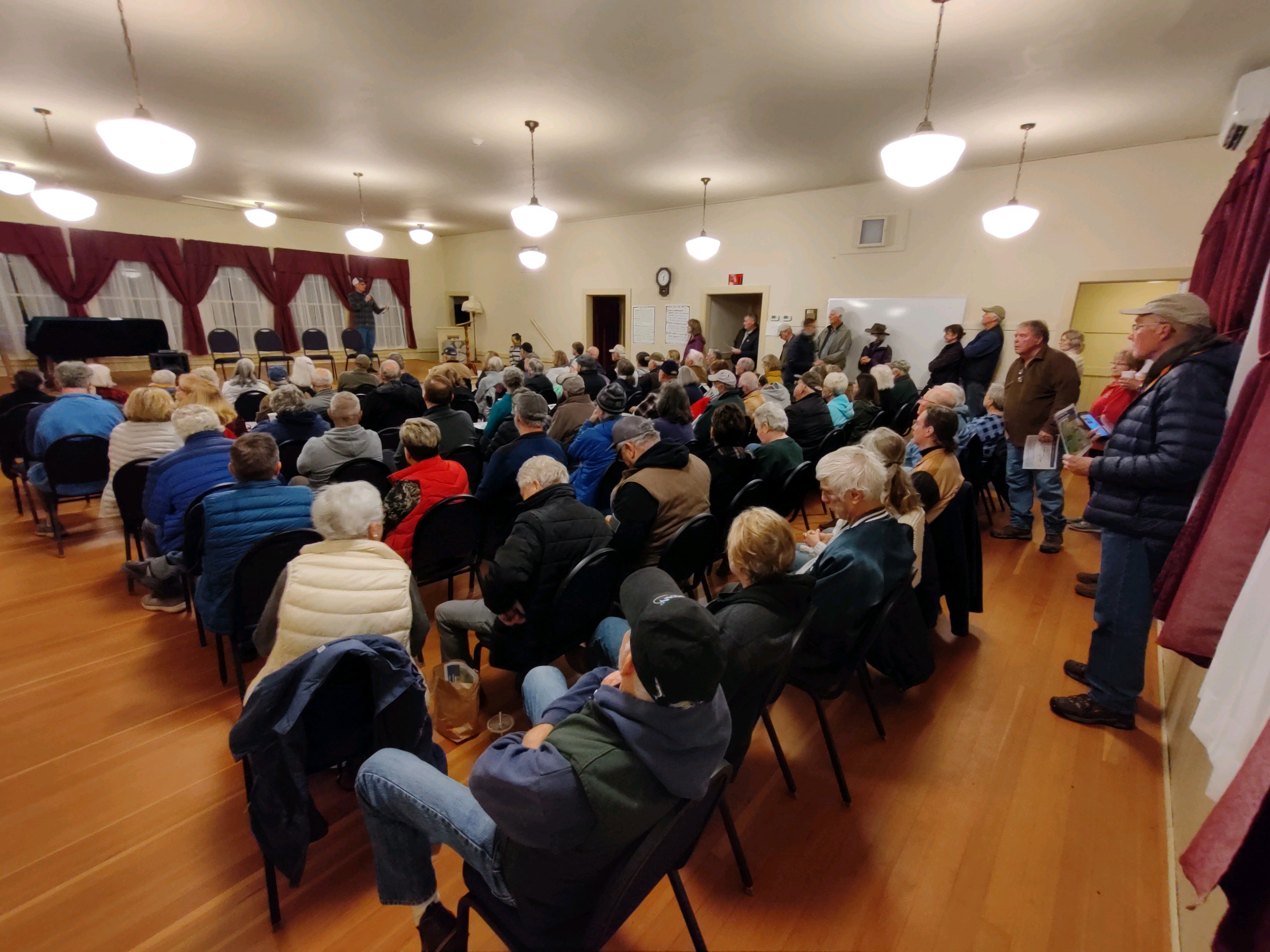
People I’d never met before became trusted friends. People I’d known my entire life slowly disappeared.
Looking back, I’m okay with that.
I’ve never been a fan of fair-weather friendships. If expressing honest opinions causes someone to walk away, perhaps the friendship wasn’t as unconditional as I believed.
The Goodbye That Hurt
One hard moment came while saying goodbye to a mutual friend who was nearing the end of her life. Several of us gathered around her bed, laughing, crying, sharing stories, and telling her it was okay to let go. We’d see her again someday.
As we left, I hugged another longtime friend. To me, it seemed like the most natural thing in the world. Then came the Facebook message.
“I have been perplexed and sad to see your gift for writing and your quick wit turn into a forum for inuendo, hate, prejudice and personal attack. I obviously did not know this part of you.
I discontinued receiving the CCWD online, but it still shows up because we are Facebook friends.
I remember seeing you in Costco when the Towne Road issue was beginning and we understood your position. I said that I hoped all this involvement wouldn’t take away from the novel you were working on, and you said, ‘This is a lot more fun!’ I think back on this meeting and can’t believe this is the ‘fun’ you intended.
I will always remember when your Mom told us she was expecting you. She was sitting on the steps in the back room of Fawnie’s flower shop! ...
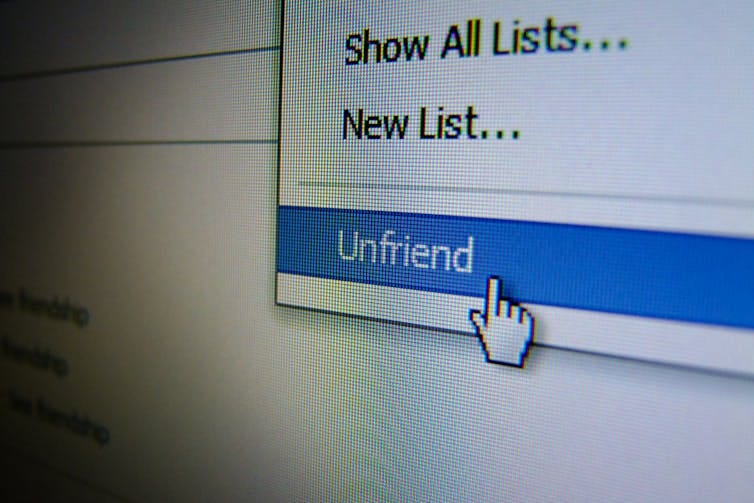
Anyway, I’m going to the ‘unfriend’ route because I don’t seem to be able to scroll by these posts without reading them. I am sad these days and they make me feel sadder.
Be well, Jeff.”
She could have unfollowed my page.
She could have hidden my posts.
Instead, she chose to end the friendship.
Not because she disagreed with me. But because after knowing each other for my entire life, disagreement had become more important than everything we’d shared before it.
No More Awkward Hugs
The last example happened recently.
I ran into another longtime friend while grocery shopping. Last year, she’d been critical of my work on the Charter Review Commission, but we’d talked through it.
Then life took an unexpected turn.
Commissioner Jim Stoffer’s actions ultimately led to me losing a volunteer position that had been one of the most meaningful parts of my life. His actions forced me out of my childhood church.
It was one of the lowest points I’d experienced since starting CC Watchdog.
During that time, I wondered if this friend might reach out. She knew how important that volunteer work had been to me.
But she didn’t. That was her choice, and I respected it.
When we bumped into each other at the grocery store, we smiled and said hello. No awkward hug this time. Partly because I happened to be carrying a fifty-pound bag of animal feed.
When I got home, there was an email waiting.
“Hi Jeff. I had an afterthought while heading home and just didn’t figure it out until then.
I wish I would have given you a hug when I saw you, but to be truthful I would have had to also tell you how it saddens me to watch how you are encouraging the division of our community, and I wonder, to what end. Very sad.”
I appreciated her honesty. But I also realized something.
I no longer needed the hugs.
The Pattern I Couldn’t Ignore
Looking back over the past two and a half years, four people have taken the time to explain why they no longer viewed me the same way.
All four are people I’ve known for most of my life.
All four are active in organizations like Indivisible, the Clallam County Democrats, the League of Women Voters—or some combination of the three.
I’m not suggesting everyone in those organizations thinks alike. Many don’t. But I couldn’t ignore the pattern. The irony wasn’t lost on me.
The people who most often spoke about inclusion and tolerance sometimes seem the least willing to include and tolerate someone whose opinions differed from their own.
What I Gained
Do I regret starting Clallam County Watchdog? Not for a second.
Towne Road reopened.
Stories that otherwise might never have been told became public.
I’ve met remarkable people across this county.
I’ve made friendships that I expect will last the rest of my life.
We replaced Austin’s stolen bike.
Mary Bickar has been sober for over three months.
Most importantly, I’ve learned something I probably should have understood years ago.
Real friendship isn’t tested when everyone agrees. It’s tested when they don’t. Some friendships passed that test. Some didn’t.
Doug was right. I wasn’t discovering whether people accepted me for who I was. I was discovering whether they accepted me when they knew exactly what I believed. Those are two very different things.
Today, I don’t feel angry.
I don’t feel like a victim.
If anything, I feel fortunate.
Fortunate for the friends who stayed.
Fortunate for the new friends I’ve made.
And grateful that, after two and a half years, I finally know the difference between friends who love me and friends who simply agreed with me.
Jeff, you have shed light on what our local government has been doing with our tax dollars and why they keep raising them.
Thank you very much from myself and alot of folks with common sense .
Keep up the good work!! Your friend!!
Jeff, You made me think of C. S. Lewis's The Four Loves:
"You will not find the warrior, the poet, the philosopher or the Christian by staring in his eyes as if he were your mistress: better fight beside him, read with him, argue with him, pray with him... Hence we picture lovers face to face but Friends side by side; their eyes look ahead."
Clallam County is not theirs to steal under our watch. Thanks for all you do, Friend.