

Naloxone has saved thousands of lives by reversing opioid overdoses. But what happens after someone survives? Growing medical literature suggests that many overdose survivors may suffer brain injuries caused not by naloxone itself, but by the oxygen deprivation that occurs before the drug is administered. As Clallam County continues expanding its harm reduction programs, are officials asking hard enough questions about the long-term outcomes—or simply counting another reversal as another success?
Saved Doesn’t Always Mean Recovered
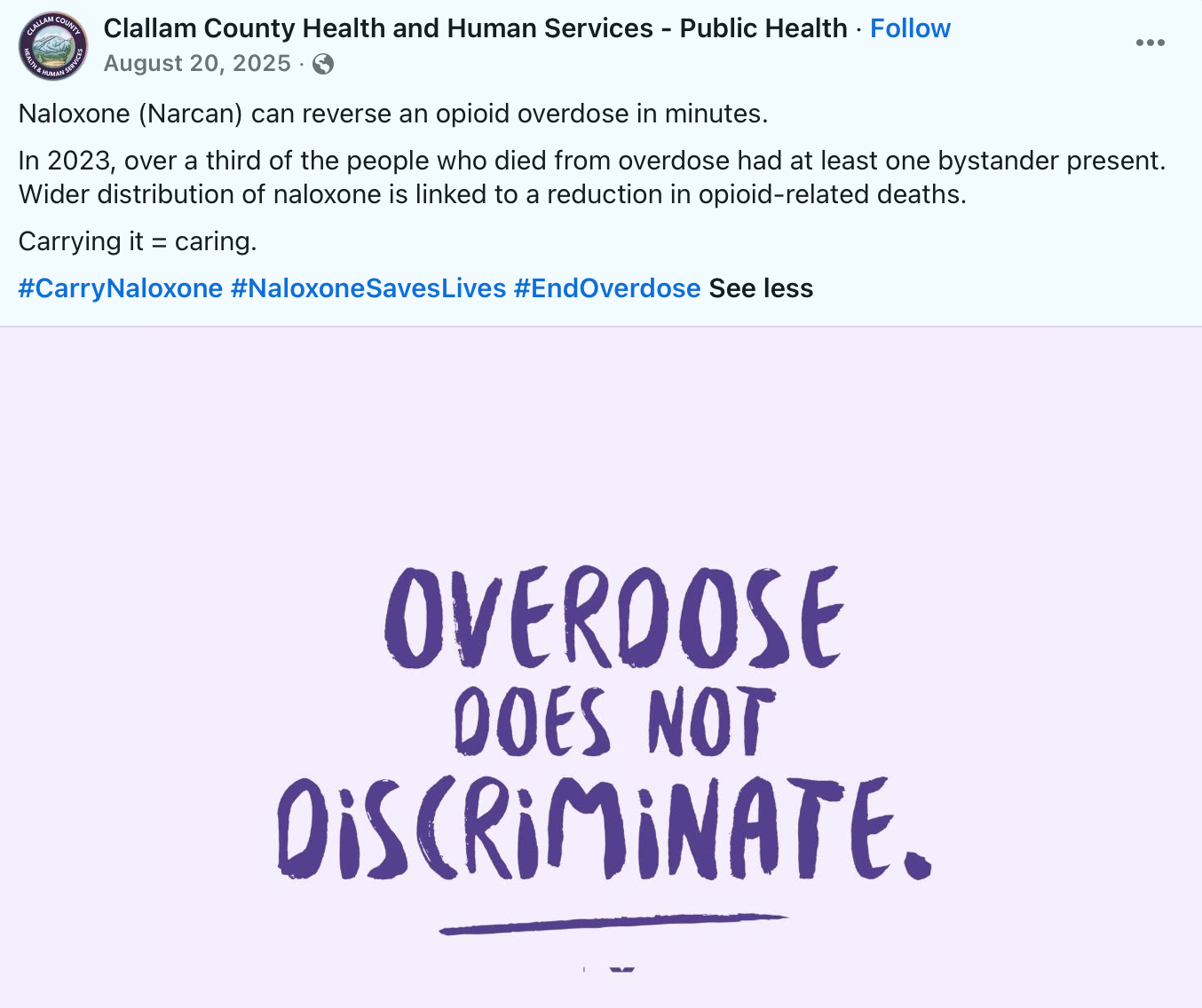
For years, Clallam County leaders have defended the expansion of harm reduction by making a simple argument: naloxone saves lives.
That’s true.
Naloxone rapidly reverses opioid overdoses and restores breathing. Without it, many people would die. But surviving an overdose is not necessarily the same as recovering from one.


One question receives remarkably little public discussion: what happens to the brain when someone spends several minutes without enough oxygen before naloxone is administered? Medical researchers have increasingly begun asking exactly that question.

The Hidden Injury
During an opioid overdose, breathing slows or stops altogether.
Without adequate oxygen, the brain begins to suffer what’s known as hypoxic or anoxic brain injury. Depending on how long the brain is deprived of oxygen, damage can range from temporary cognitive impairment to permanent disability.

Researchers have documented survivors experiencing memory problems, impaired judgment, slower thinking, personality changes, difficulty walking, speech problems, and abnormalities visible on MRI scans. Rehabilitation organizations likewise warn that survivors may experience lasting cognitive and neurological deficits even after their lives are saved.


That point is important. Naloxone doesn’t cause these injuries. It often prevents death. But it cannot undo the damage that may already have occurred while the brain was starved of oxygen.
What Does the Research Actually Say?
Ironically, one of the strongest papers on the subject is itself a systematic review of the available literature. The authors examined 79 published studies spanning nearly five decades. Their conclusion was careful rather than sensational.


They found consistent reports of brain abnormalities and neurocognitive impairment following opioid overdoses, but also acknowledged that much of the existing evidence consists of case reports, case series, and observational research with significant methodological limitations. Better prospective studies are still needed.


That doesn’t mean brain injury isn’t occurring. It means scientists are still working to determine how often it occurs, how severe it can become, and which patients are most affected.
A Missing Conversation
Locally, residents have heard county officials repeatedly describe naloxone distribution as a success.


But how many overdose survivors are later evaluated for cognitive impairment?
How many receive neurological screening?
How many enter brain injury rehabilitation?
How many are able to return to work?
How many overdose again?


Those outcomes receive far less attention than the number of naloxone reversals. If success is measured only by preventing death, we may be missing a much larger conversation about what life looks like afterward.
Brain Scans Tell Part of the Story
Medical literature already contains numerous MRI and CT images documenting white matter injury, hippocampal damage, cerebellar injury, and other abnormalities following opioid overdoses. Researchers have also explored whether repeated hypoxic injuries could produce pathological changes resembling those seen in neurodegenerative diseases such as Alzheimer’s, although that remains an active area of research rather than an established conclusion.
No credible researcher is saying an overdose survivor automatically develops Alzheimer’s disease.

But scientists are asking whether repeated episodes of oxygen deprivation may leave lasting neurological scars. That question deserves far more public attention than it currently receives.

The Question County Leaders Should Answer
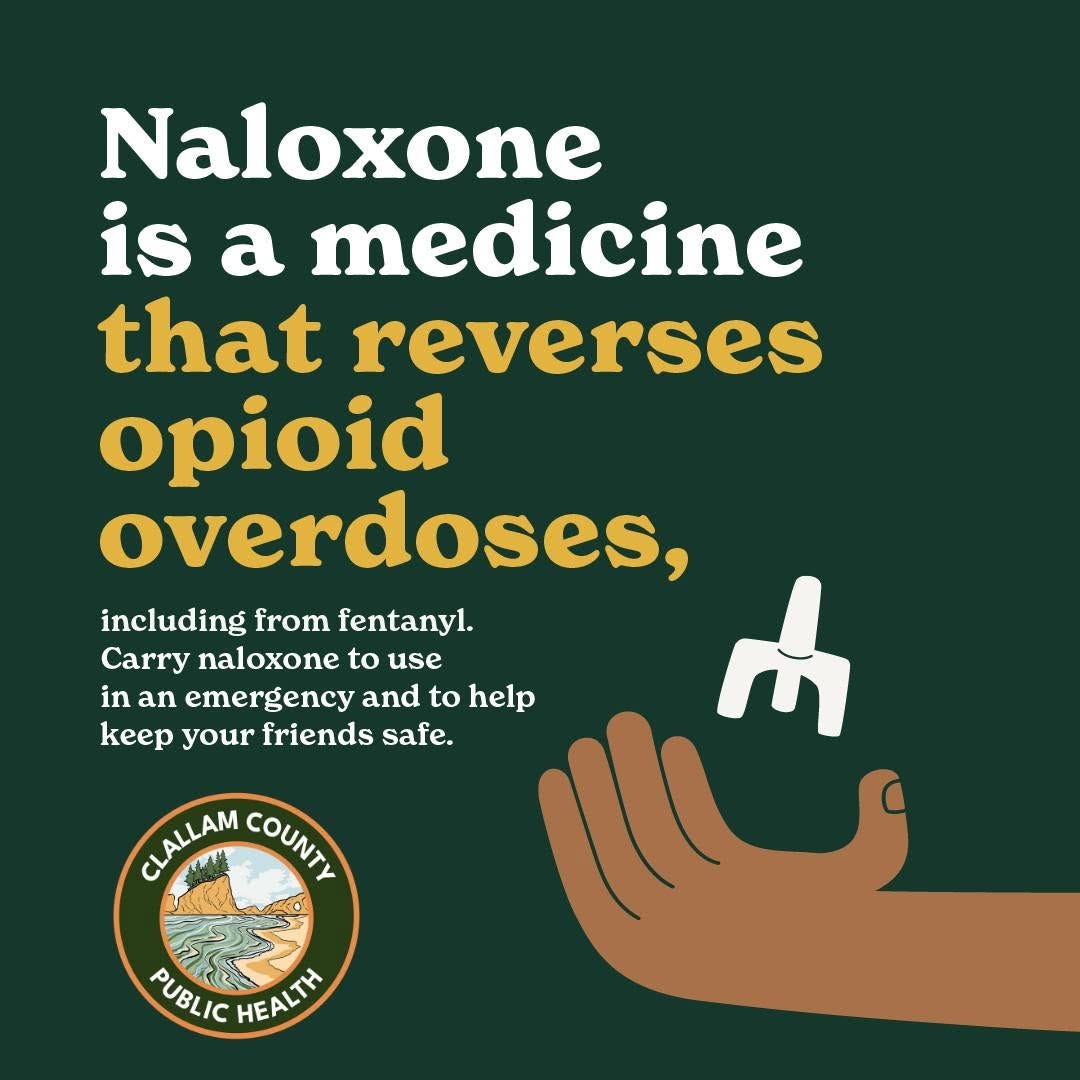
Clallam County has invested heavily in harm reduction. But harm reduction should mean more than reversing an overdose. It should also mean reducing the number of overdoses in the first place, helping people enter effective treatment, and understanding the long-term consequences suffered by those who survive.

Otherwise, residents are left asking an uncomfortable question:
Are we practicing harm reduction—or are we slowly building a system of street hospice that measures success by another revived overdose while asking too few questions about what comes next?

See You Saturday!
The commissioners did not respond to yesterday's email asking if they plan to engage with the Conservation District about the integrity of its last election. Here is an email sent today to all three commissioners and Health Officer Allison Berry:
Dear Commissioners French, Johnson, and Ozias, and Health Officer Dr. Allison Berry,
There are several questions regarding how the county measures the effectiveness of its current harm reduction approach.
At what point does repeatedly reviving the same individuals without getting them into treatment become evidence that the current strategy is failing? What benchmark would cause the county to change course?
The county often reports the number of overdose reversals. Can you also provide data showing how many of those individuals entered treatment, achieved recovery, and remained drug-free one year later?
Do you believe success should be measured solely by lives saved in the moment, or also by how many people permanently escape addiction? If the latter, what are those numbers for Clallam County?
How many repeat overdose reversals by the same individual does the county consider acceptable before acknowledging that emergency intervention alone is not enough?
Responses regarding how these outcomes are measured and what data the county relies on when evaluating its harm reduction policies would be appreciated.
It seems to me that our health director, Dr. Barry, has invested significant time and effort into her 'harm reduction' program and has stuck with it because it's her 'baby' . She has set herself up as the 'expert' because she's an educated professional and how dare anyone question her as she knows better than the rest of us. She refuses to admit that the harm she isn't reducing is twofold. 1) The only harm she has reduced is the number of drug deaths...maybe. She hasn't reduced the harm done to human beings by illegal drug use, whether or not they survive the drug abuse, and she hasn't reduced the harm done to the community and the damage done to the rest of the community because of the rampant illegal drug use. It seems to me that the best way to reduce the harm from illegal drug use is to get rid of Dr Barry and her program and find a health care professional who can help the people using drugs to stop using drugs, and stop the damage to the rest of us by that illegal activity. Dr Barry's harm reduction program simply doesn't work. It is time to change course.