

A public records request involving the 10,000 Years Institute raises questions about how Clallam County government handles support letters. Emails show the nonprofit drafted its own letter of support for a grant application, sent it to county staff, and later received back an official Board of County Commissioners letter that closely mirrored the original language. The records raise concerns about whether commissioners are independently evaluating requests or simply providing county letterhead for outside organizations seeking funding, while residents continue struggling to get action on issues affecting their own communities.
The NGO Behind the Request
The story begins with the 10,000 Years Institute, a Forks-based nonprofit that describes itself as working on watershed restoration, invasive species management, workforce development, habitat restoration, climate-related conservation projects, and environmental education throughout the Olympic Peninsula.
The organization has become deeply embedded in the region’s restoration industry. Its presentations to local governments highlight partnerships with tribal governments, conservation districts, Marine Resources Committees, salmon Lead Entities, federal agencies, state agencies, environmental nonprofits, and educational institutions. The organization works extensively with the Quileute Tribe, Hoh Tribe, Quinault Nation, Olympic National Park, Olympic National Forest, Washington Department of Natural Resources, and numerous restoration organizations.
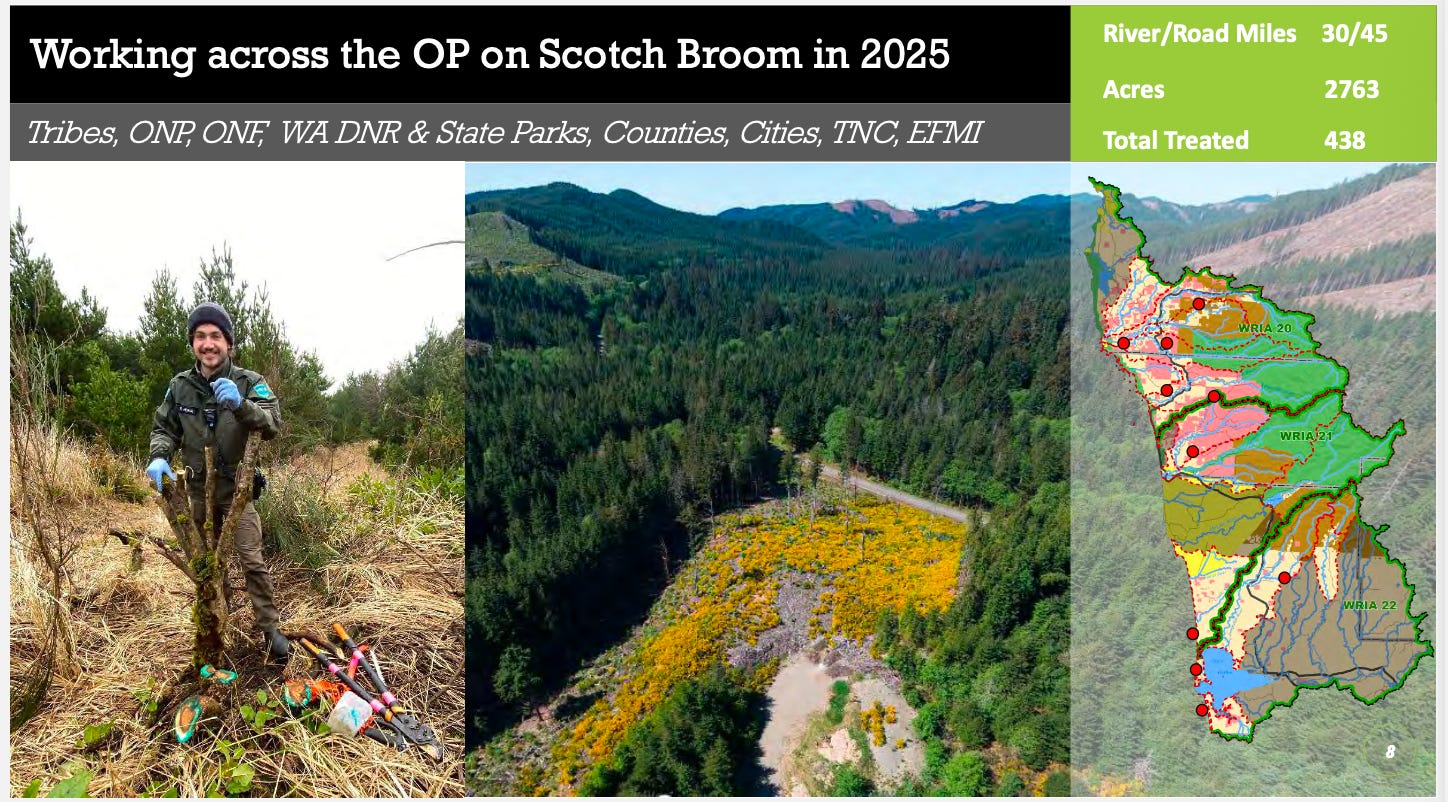
Much of the institute’s work centers around invasive species management, particularly Scotch broom, knotweed, reed canarygrass, and other non-native plants. Through various grants and partnerships, the organization coordinates crews that survey and treat invasive species across large portions of Clallam, Jefferson, and Grays Harbor counties.
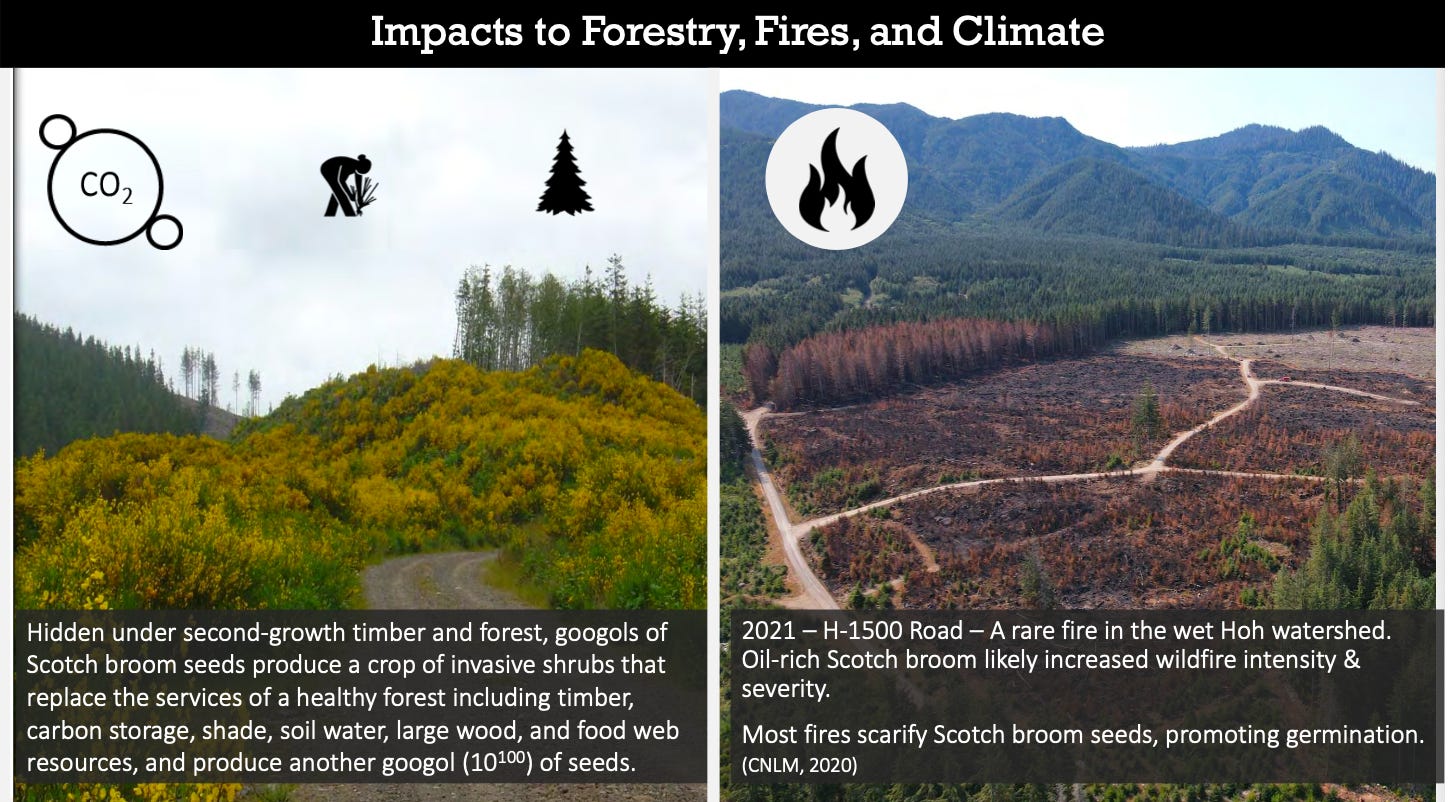
Whether those efforts are winning the war against invasive species is another question.
Residents driving Highway 101, Highway 112, and countless county roads can see Scotch broom exploding across the landscape. Every spring, the Olympic Peninsula turns bright yellow as millions of blooms spread across roadsides, timberlands, and vacant properties.
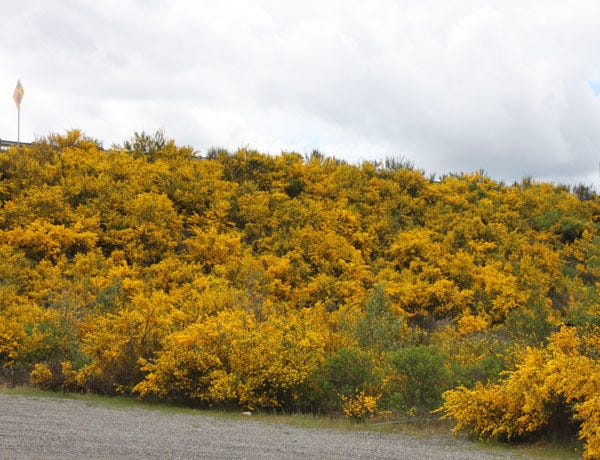
The institute’s own presentations show thousands of invasive species sites and hundreds of treated acres. Yet for many residents, the visible reality appears to be that Scotch broom remains one of the most successful and widespread invasive species on the peninsula.
That alone might be a worthy public discussion.
Instead, the records show how quickly the conversation moved toward obtaining another government endorsement.
A Letter Written Before the Vote
On March 23, 2026, Executive Director Jill Silver was preparing to appear before the Clallam County Board of Commissioners to request support for another grant application.
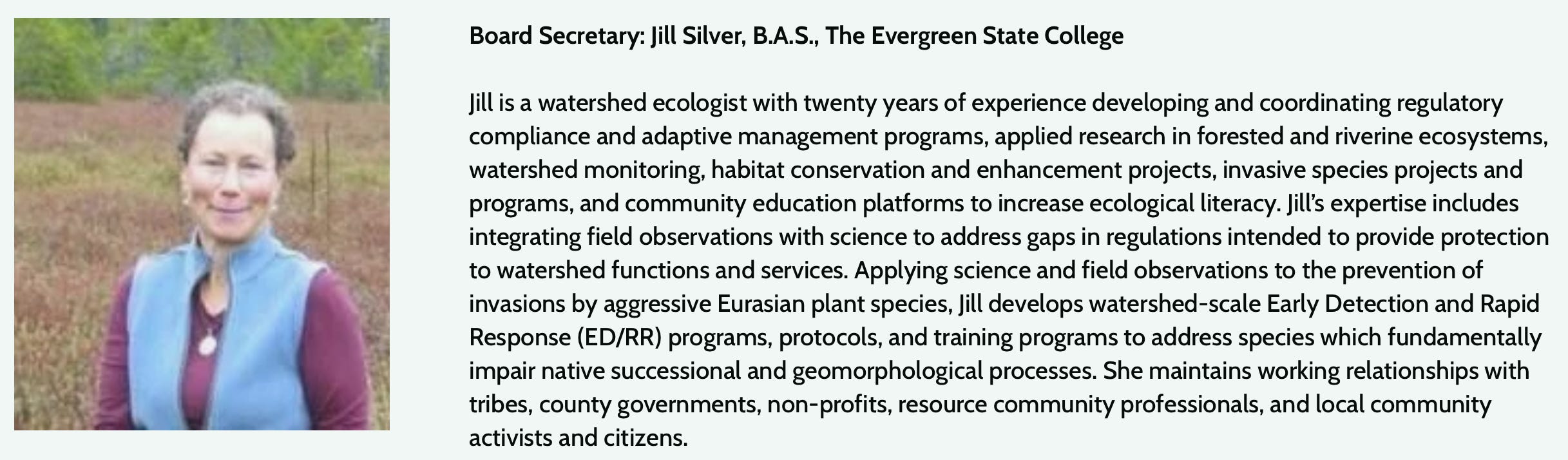
The grant would support the organization’s “Pulling Together in Restoration” program, a long-running effort focused on invasive species management and restoration work throughout western Clallam County.
Before the commissioners ever discussed the request, however, county staff made an interesting suggestion.
The Clerk of the Board emailed Silver and requested a letter of support for inclusion in the commissioners’ agenda packet.
“Please send me the letter of support,” the clerk wrote. “The BOCC will want that in the agenda packet. You can send in a word document and I’ll format on BOCC letterhead.”
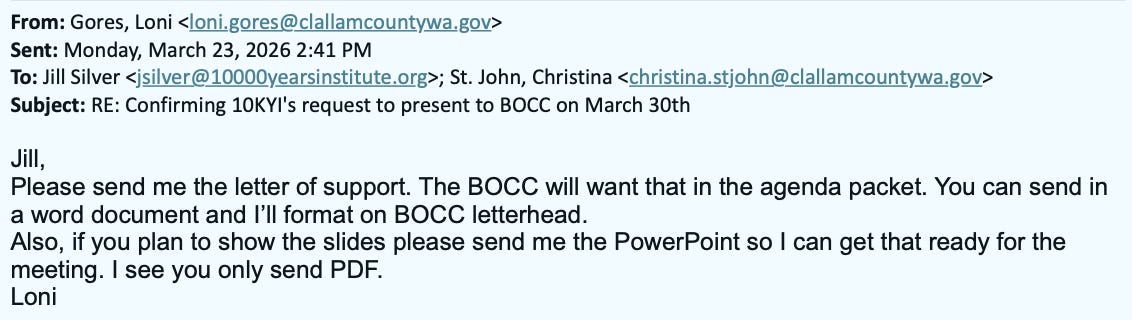
In other words, the organization seeking the endorsement was invited to draft the endorsement itself.
Silver responded shortly afterward.
“Here it is, it was so good then, few changes made now,” she wrote while attaching a completed draft.
She then added a sentence that would prove especially noteworthy after comparing the draft to the final version.
“May of course be adjusted as determined by the BOCC or staff.”
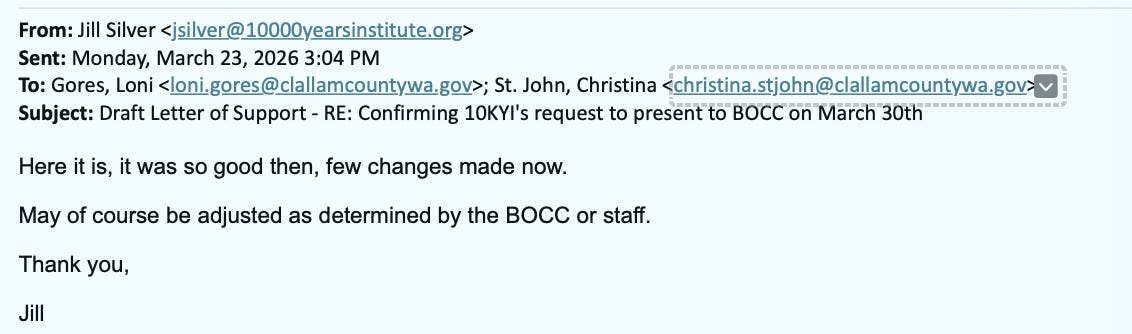
What Silver submitted was not a rough outline or a list of talking points.
It was a complete letter written from the perspective of the Clallam County Board of Commissioners.
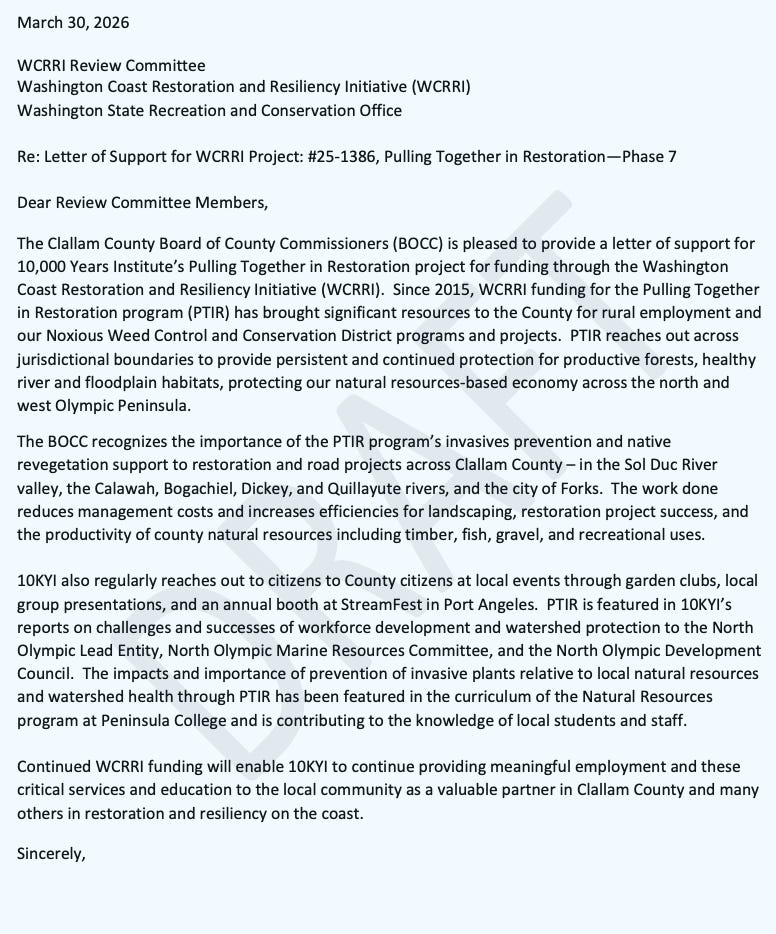
The draft praised the organization’s accomplishments, described the benefits of its work, highlighted educational outreach efforts, emphasized workforce development, and urged continued funding for the program.
The county’s official position had effectively been written before the commissioners had even reviewed it.
From Draft to Official County Position
After receiving the document, the clerk replied with a brief response.
“Thanks! I’ll get this formatted.”
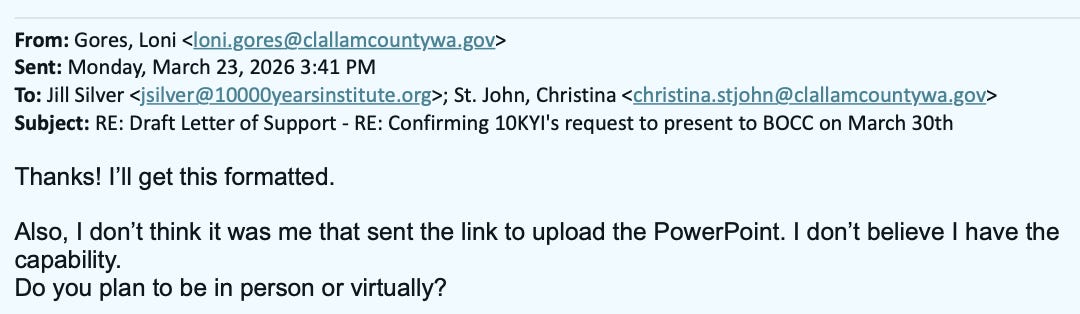
That sentence may ultimately become the most revealing quote in the entire records request.
Because when the final letter was approved and sent back to the organization, it looked remarkably similar to the document that had originally been provided by the nonprofit itself.
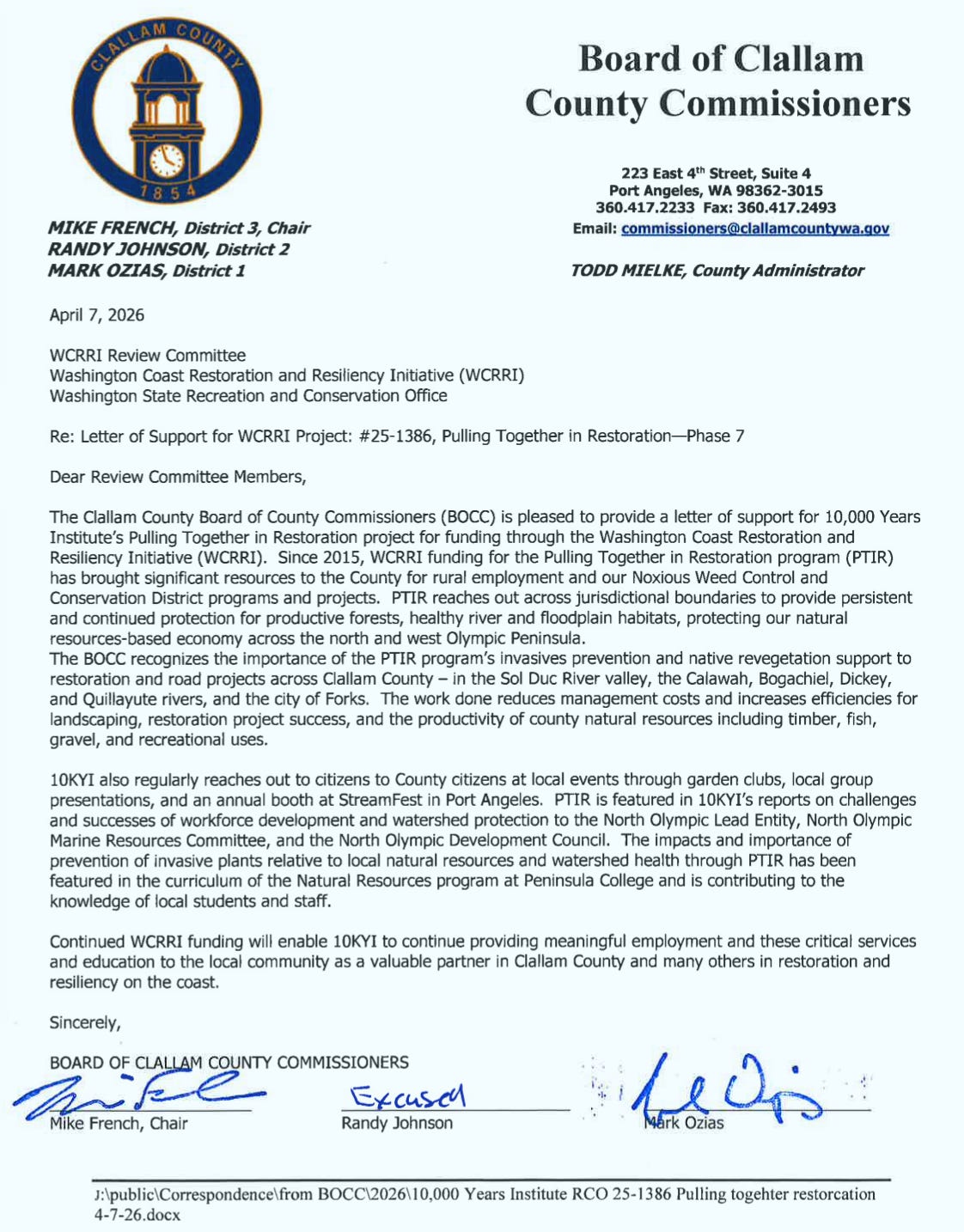
Paragraph after paragraph survived largely intact.
Descriptions of workforce development remained.
Descriptions of watershed protection remained.
Descriptions of educational outreach remained.
Descriptions of economic benefits remained.
The arguments supporting continued funding remained.
The language had not been substantially challenged, rewritten, or independently reconstructed by county officials. Instead, it appeared to have been transferred from nonprofit draft to county letterhead with minimal modification.
A few days later, county staff emailed the organization once again: “See attached approved letter.”
Mission accomplished.
More Than a Clerical Process
It is important to note that this is not a criticism of Clerk of the Board. The clerk works for the commissioners and handles the administrative side of county government. If county staff are routinely accepting draft support letters from outside organizations and preparing them for commissioner approval, that reflects the process established by the Board of County Commissioners, not the clerk. The questions raised by these records belong at the commissioner level, where county policy and priorities are ultimately set.
Supporters of the practice will undoubtedly argue that nonprofits routinely provide draft support letters and that government agencies frequently edit and adopt portions of those drafts.
That explanation misses the larger issue.
The concern is not who typed the words. The concern is whether elected officials exercised meaningful independent judgment before adopting them as the official position of Clallam County government.
When commissioners sign a letter, taxpayers assume county officials have independently evaluated the claims being made.
They assume someone verified outcomes.
They assume someone asked hard questions.
They assume someone considered alternative viewpoints.
Most importantly, they assume someone acted as an elected representative rather than a notary public. The records provide little indication that such scrutiny occurred.
Instead, the process appears largely administrative. A nonprofit requested support. A nonprofit supplied the language supporting itself. The county formatted the document. The commissioners approved it.
A Pattern Residents Have Seen Before
For many residents, this story feels familiar.
Earlier this year, controversy erupted after it was revealed that language from the City of Sequim supporting the transfer of the Dungeness and Protection Island National Wildlife Refuges closely tracked material provided by the Jamestown Corporation.
The public backlash was immediate.
Citizens demanded answers.
Public officials suddenly became reluctant to move forward, but did anyway.
Many observers believe the same thing would have happened with the Clallam County Commissioners had the public not sounded the alarm.
The pattern appears increasingly predictable. An NGO or sovereign nation identifies a funding opportunity, a policy goal, or a project. Local government is asked to provide support. The endorsement arrives with little resistance. The project moves forward carrying the weight and credibility of county government.
Meanwhile, ordinary residents continue waiting.
Residents Waiting in Line
The contrast becomes especially striking when compared to issues that residents have been asking commissioners to address for years.
Three Crabs homeowners continue dealing with flooding concerns.
Citizens continue asking for stronger opposition to the transfer of the National Wildlife Refuges.
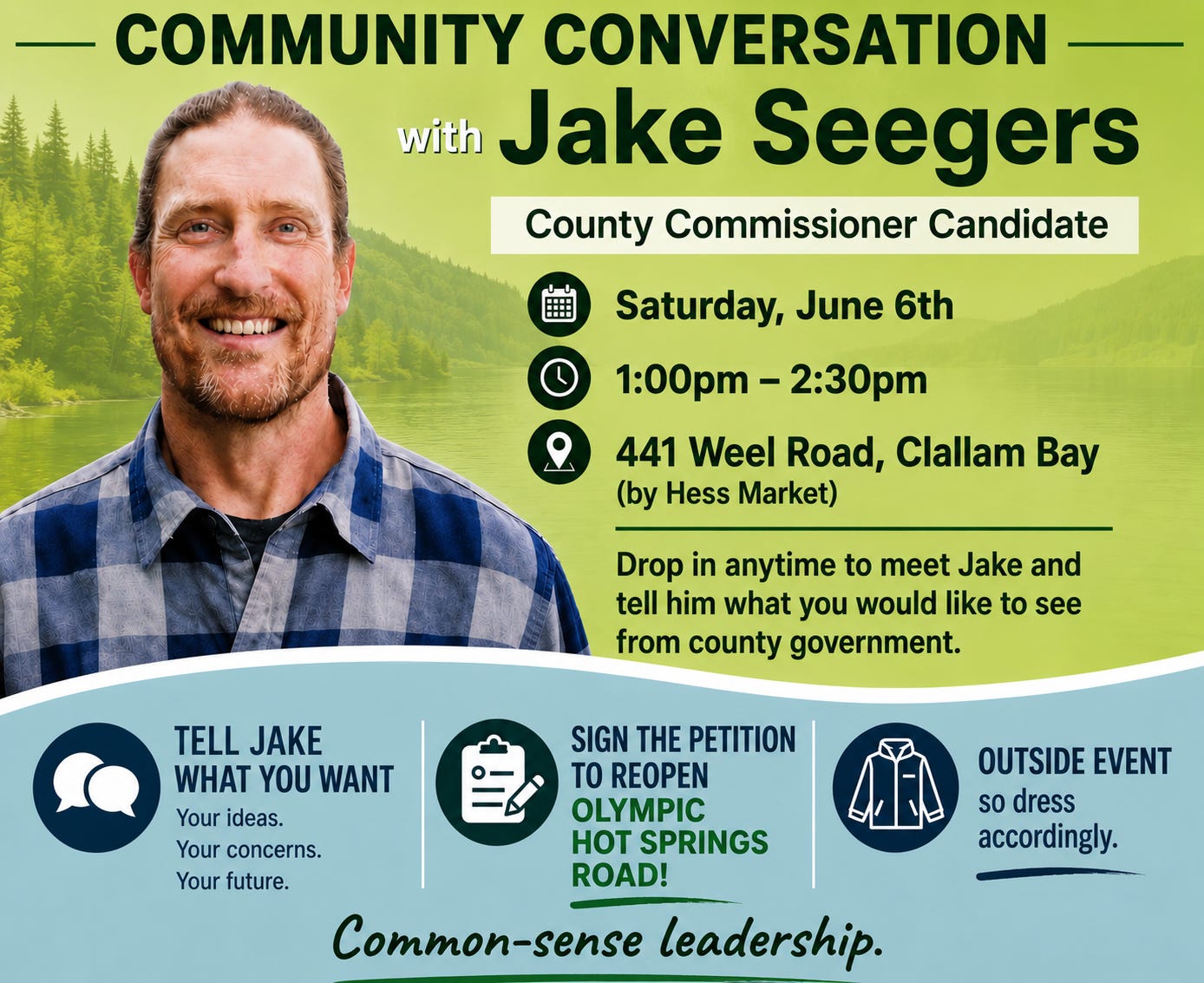
Residents continue advocating for reopening Olympic Hot Springs Road and restoring access to the Elwha Valley.
Taxpayers continue waiting for commissioners to follow up on their unanswered request for a conversation with the Jamestown Tribe regarding property taxes and lodging taxes.
Drivers continue navigating the accident-prone Cays Road and Old Olympic Highway intersection.


Those requests rarely seem to move with the speed demonstrated when a grant applicant seeks a letter of support.
The difference is difficult to ignore.
The County’s Mission Statement Says Residents Come First
The Board of County Commissioners has adopted a mission statement that includes a commitment to:
“Putting the translated desires of our residents into action through effective communication.”
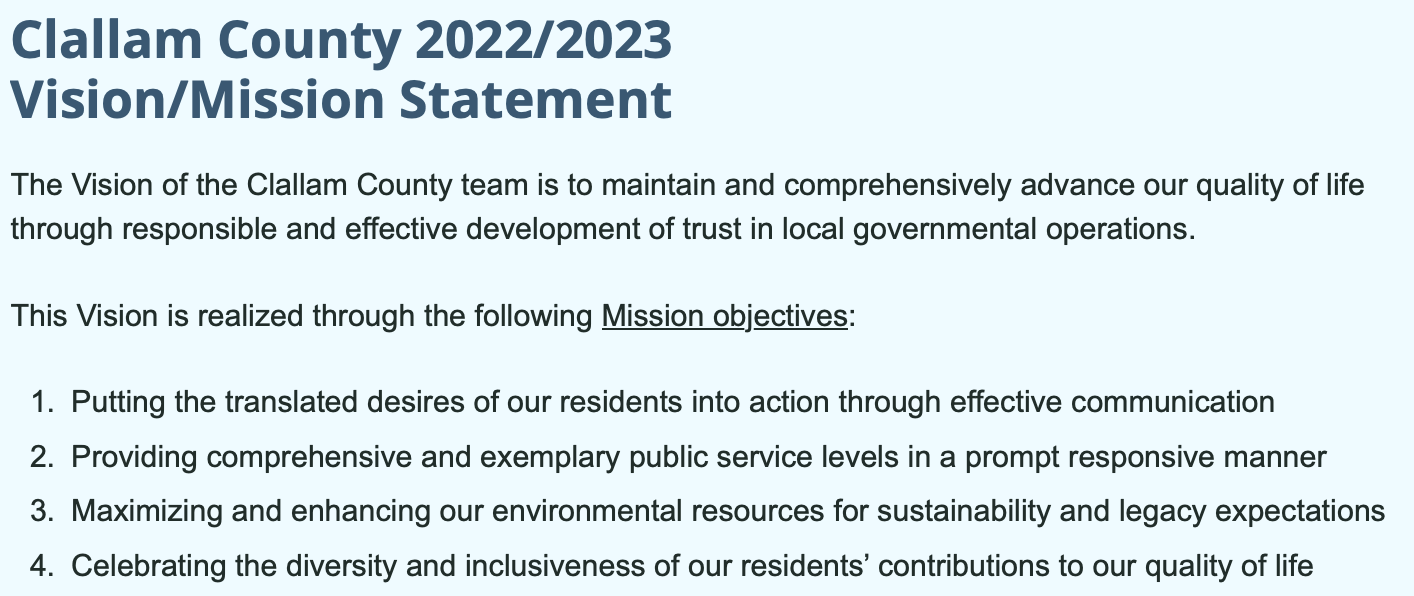
Notice what it does not say.
It does not say nonprofits.
It does not say grant applicants.
It does not say advocacy organizations.
It does not say special interests.
It says residents.
Yet the records surrounding the 10,000 Years Institute support letter suggest that organized outside groups have learned an important lesson about Clallam County government.
If you want county support, come prepared with the letter already written.
Five Quotes That Tell the Entire Story
Sometimes dozens of pages of public records can be distilled down to a handful of sentences.
This story may be one of those cases.
“Please send me the letter of support.”
“You can send in a word document and I’ll format on BOCC letterhead.”
“Here it is, it was so good then, few changes made now.”
“Thanks! I’ll get this formatted.”
“See attached approved letter.”
Taken together, those five quotes tell a story that should concern anyone who believes elected officials are supposed to independently evaluate requests before speaking on behalf of the people of Clallam County.
Today’s Tidbit: Take Action
Do you have an issue you’d like the Clallam County Commissioners to take seriously?
Perhaps you’re concerned about the proposed transfer of the Dungeness and Protection Island National Wildlife Refuges. Maybe you’re dealing with chronic flooding in Three Crabs, dangerous traffic conditions at local intersections, public safety concerns, rising property taxes, or another issue affecting your neighborhood and quality of life.
The Board of County Commissioners’ mission statement says its job is to put “the translated desires of our residents into action through effective communication.”
If that’s true, now is the time to ask for the same level of attention and responsiveness that nonprofit organizations and special-interest groups appear to receive.
Contact the Board of County Commissioners through Clerk of the Board Loni Gores at loni.gores@clallamcountywa.gov and respectfully ask that your concerns be given the same priority as the organizations that regularly receive county support letters, endorsements, and prompt action.
County government belongs to the residents of Clallam County. Let the commissioners know what issue matters most to you and ask what they are doing to address it.
For several years I have watched the commissioners’ meetings and a pattern that has become increasingly difficult for the public to ignore. During campaign season, we hear confident promises about representation, transparency, and service to the people of this county. Yet the conduct displayed in these meetings tells a very different story. Actions speak louder than campaign language, and the actions we see week after week are eroding public trust.
Residents watch and attend the meetings to raise legitimate concerns about safety, governance, and community well being. Too often, those concerns are met with circular responses, vague reassurances, or no answer at all. At times, the public is left listening to word salads rather than receiving clear information. Last week, one commissioner appeared via Zoom and displayed an expression that many of us interpreted as dismissive or mocking toward a commenter. That kind of visible disdain for citizens who take the time to participate is unacceptable in any public office. True public servants, would welcome comments from their constituents.
Another issue is the growing number of boards and committees on which commissioners sit. These positions carry influence, and they also raise questions about conflicts of interest—especially when those same organizations receive public funding or make decisions that intersect with county policy. If commissioners choose to sit on these boards, they should do so without voting power in matters where the county has a stake. Oversight cannot function when the overseers are embedded within the very organizations they are expected to monitor.
The Animal Advisory Committee is one example. At the last two meetings, two commissioners who serve on that board were absent. If there is no genuine interest in participating, those seats should be filled by community members who are committed to the work. Board positions should not be treated as résumé padding; they should be treated as responsibilities.
Many long time residents have shared that especially Ozias and French are not the same people they knew years ago. That is what happens when power goes unchecked. When elected officials begin to see public input as an inconvenience rather than a duty, the community suffers.
But the public is not powerless. Many of us are reaching out to neighbors who do not normally participate in local civic processes, voting and helping them understand why engagement matters and how local decisions affect their daily lives. Change happens one conversation at a time, and when each of us takes responsibility for that outreach, we build a stronger, more informed community.
If speaking up makes us “whiners” or “complainers,” then so be it. We will wear that title proudly. Because silence is what allows questionable practices, conflicts of interest, and disregard for the public to continue. Accountability requires persistence, and the people of this county are not going away.
This is a great article, Jeff. Some people will not see what we see and hear week after week, meeting after meeting. The exposed Sequim City Council draft letter by Ron Allen was upsetting to our community. So if one corporation, NGO, or non-profit does this, then every one will do the same without questions or scrutiny. It becomes a procedural formality no one wants to disrupt. Being a County Comminssioner is hard work, which is why they should not hold any other non-required board and committee positions. When will their breaking points come and at whose expense?