

Four months ago, when Clallam County’s three commissioners voted to impose a new parcel charge that will send $2 million over ten years to the Clallam Conservation District, they did so without asking voters for approval.
That decision changed everything.
When an agency must justify its funding to the public, it has a reason to listen, explain, and respond. Once that funding is guaranteed by force of government, those incentives disappear. What we are seeing now from the CCD is what happens when accountability is replaced with entitlement.
An Agency That No Longer Has to Answer to the Public
Following a court ruling that voided the CCD’s 2024 supervisor election for violating state administrative rules, the District had a choice: restore trust by expanding transparency and access, or tighten control.
On January 13, 2026, it chose control.
The CCD adopted a new 2026 election resolution that eliminates all in-person voting. No walk-in ballots. No election-day pickup. No opportunity to show up and participate. If you want to vote, you must request a mailed ballot in advance, hope your eligibility can be verified, and navigate a process designed entirely by the agency whose leadership you are voting on.
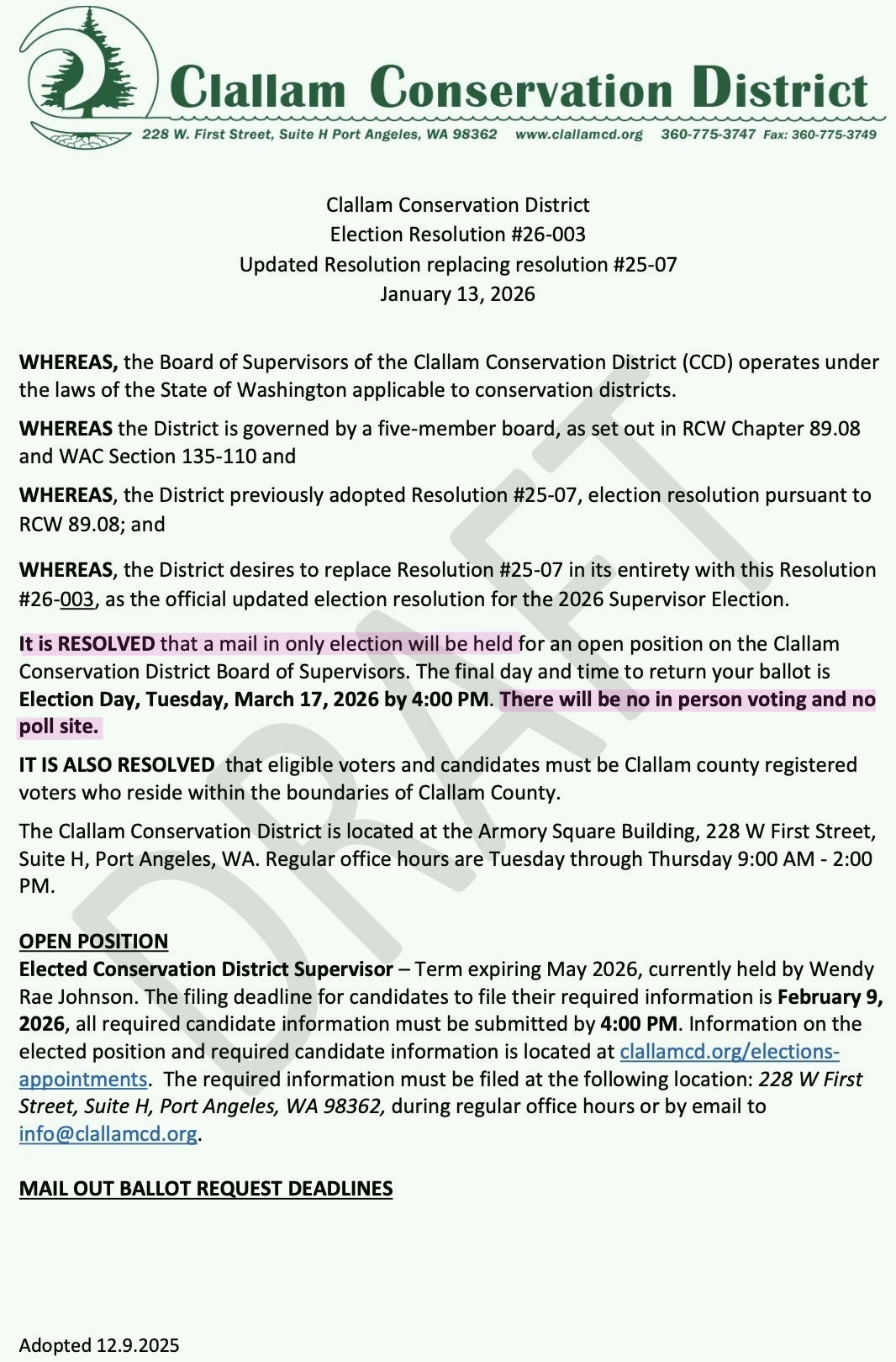
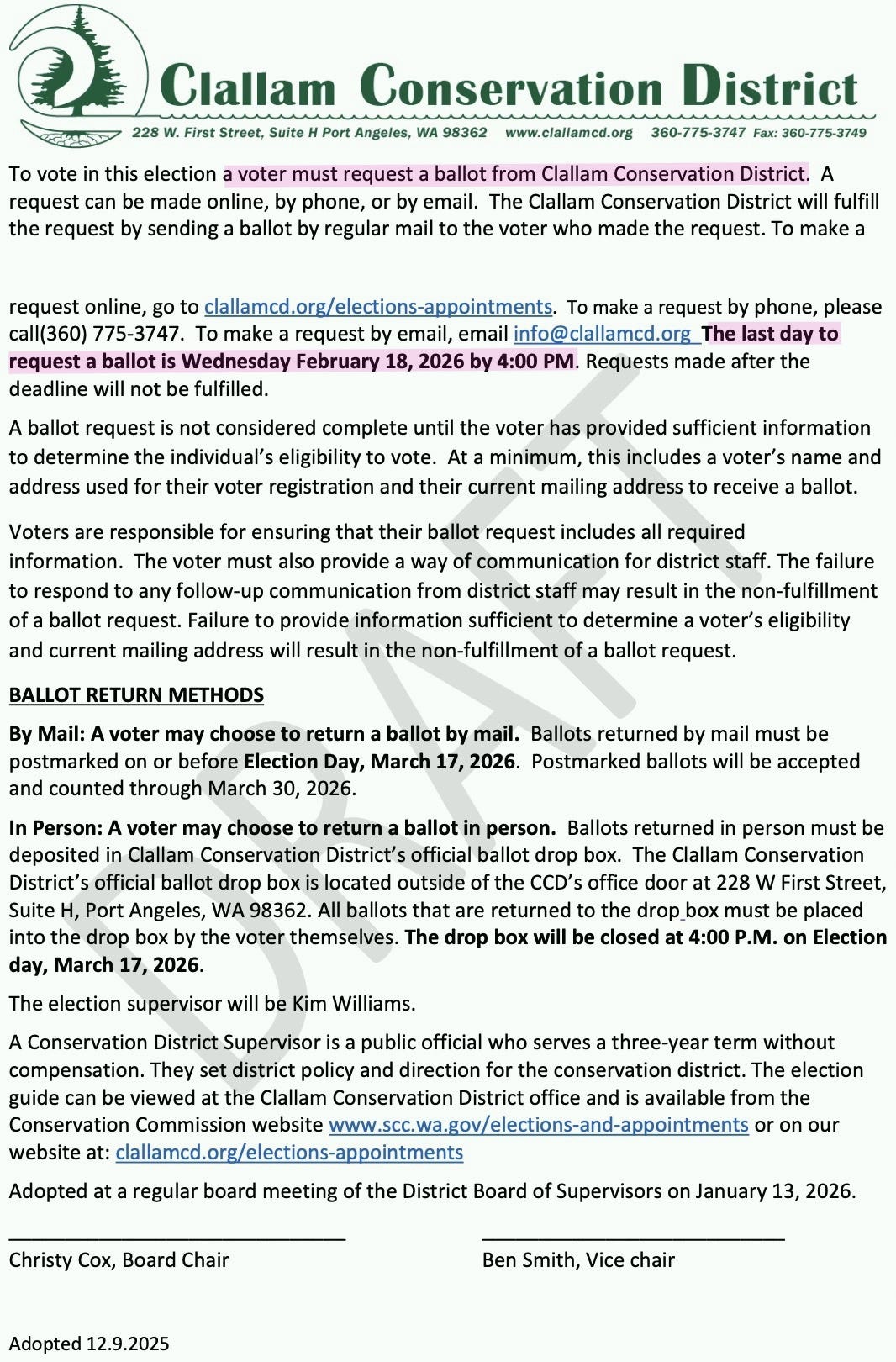
Ballots will be sent only to voters the CCD considers qualified, based on an internal voter list that Executive Director Kim Williams acknowledged is eight years old.
The deadline to request a ballot is 4:00 p.m. on February 18, 2026.
This is not modernization. It is voter restriction.
Restricting the Electorate, Not Expanding It
Mail-only voting is often defended as more accessible. That argument collapses when voters must first know they are eligible, know where to request a ballot, trust that their request will be honored, and rely on an agency with a documented history of election and accounting problems.
Voters not on the CCD’s internal list will not automatically receive ballots—only a postcard alerting them to the new rules. If a voter’s registration cannot be verified through the Secretary of State’s database, Williams stated they will be issued a “provisional ballot,” adding yet another discretionary layer to the process.
Even more troubling, the CCD plans to use an external drop box outside its offices—despite this being prohibited by administrative code and despite it being one of the election practices challenged in the lawsuit that voided the last election.
All of this complexity could be avoided. A single-day, in-person election with voter ID would be simpler, cheaper, and transparent. The CCD rejected that option outright and instead chose the most opaque system available.
“Expertise” Over Voters
During the meeting, Williams complained that the public does not “understand” issues like water quality and warned the District could “lose our expertise” if the pool of voters changes.
That framing is revealing. Elections are being treated as a nuisance rather than a safeguard. Expertise matters—but it does not replace consent. Public agencies exist to serve the public, not to protect themselves from it.
Impartiality—Optional?
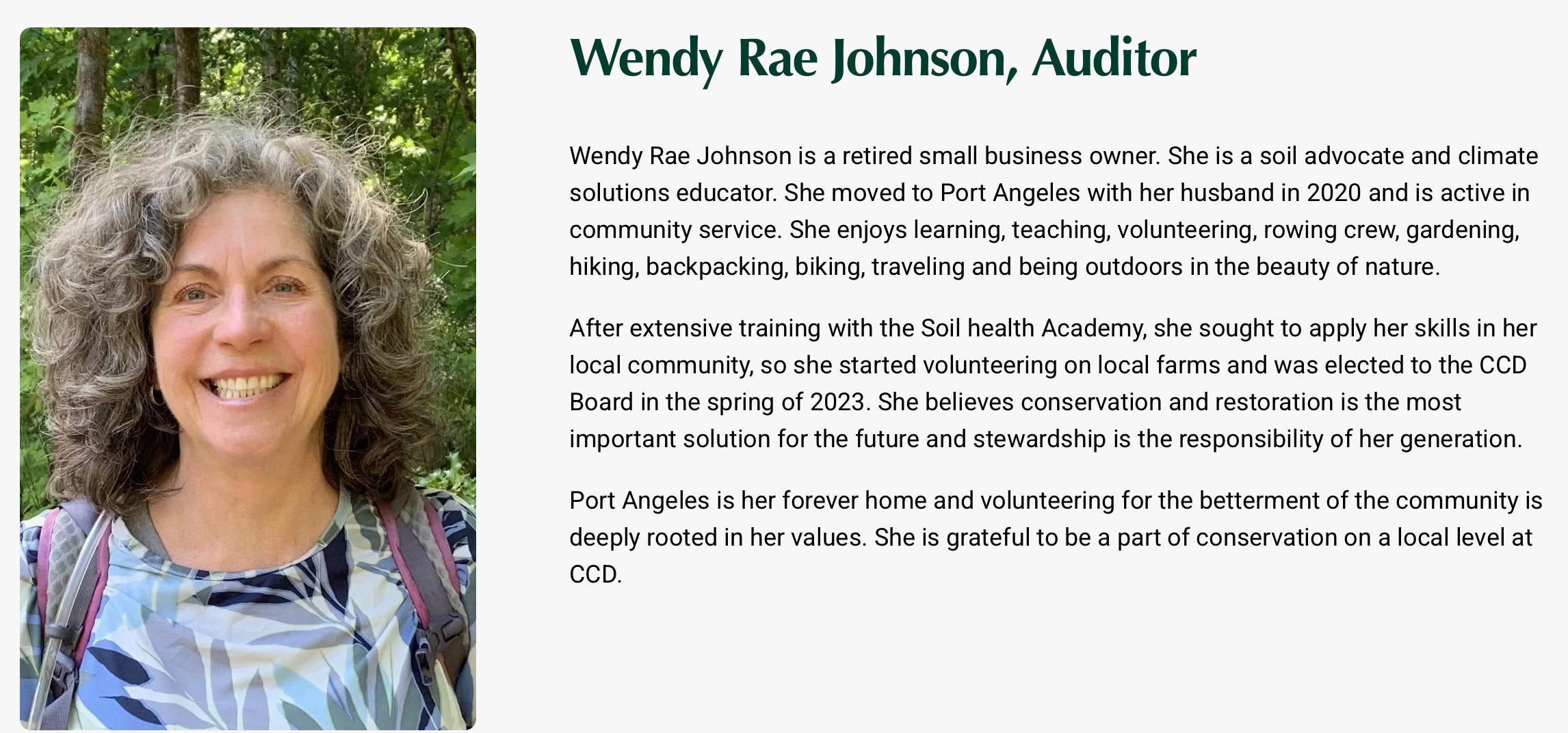
Supervisor Maggie Bockart openly discussed what sounded like electioneering at farmers markets in support of incumbent supervisor Wendy Rae Johnson.
That should alarm anyone familiar with the law.
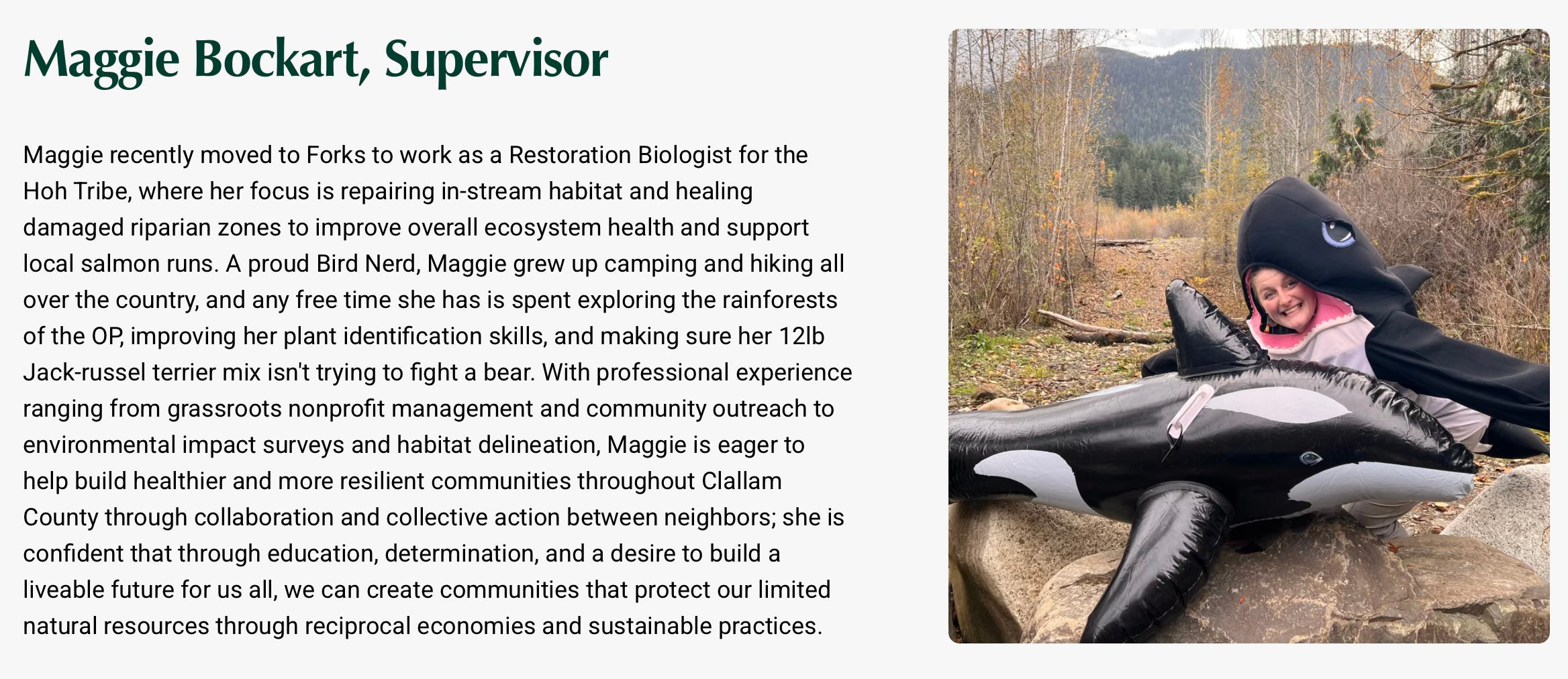
State rules are explicit: conservation districts must remain neutral in their own elections. WAC 135-110-150 prohibits supervisors and employees from promoting or prejudicing any candidate. Yet the discussion happened openly, without correction or concern.
Johnson, for her part, complained about what she called the public’s “litigiousness and harassment” over election procedures and dismissed the idea of placing CCD elections on the November ballot as a “waste of taxpayers’ money.”
That comment is difficult to square with an agency now guaranteed millions in taxpayer funding—especially one that has struggled to account for its finances accurately.
No Appeal—and a Telling Explanation
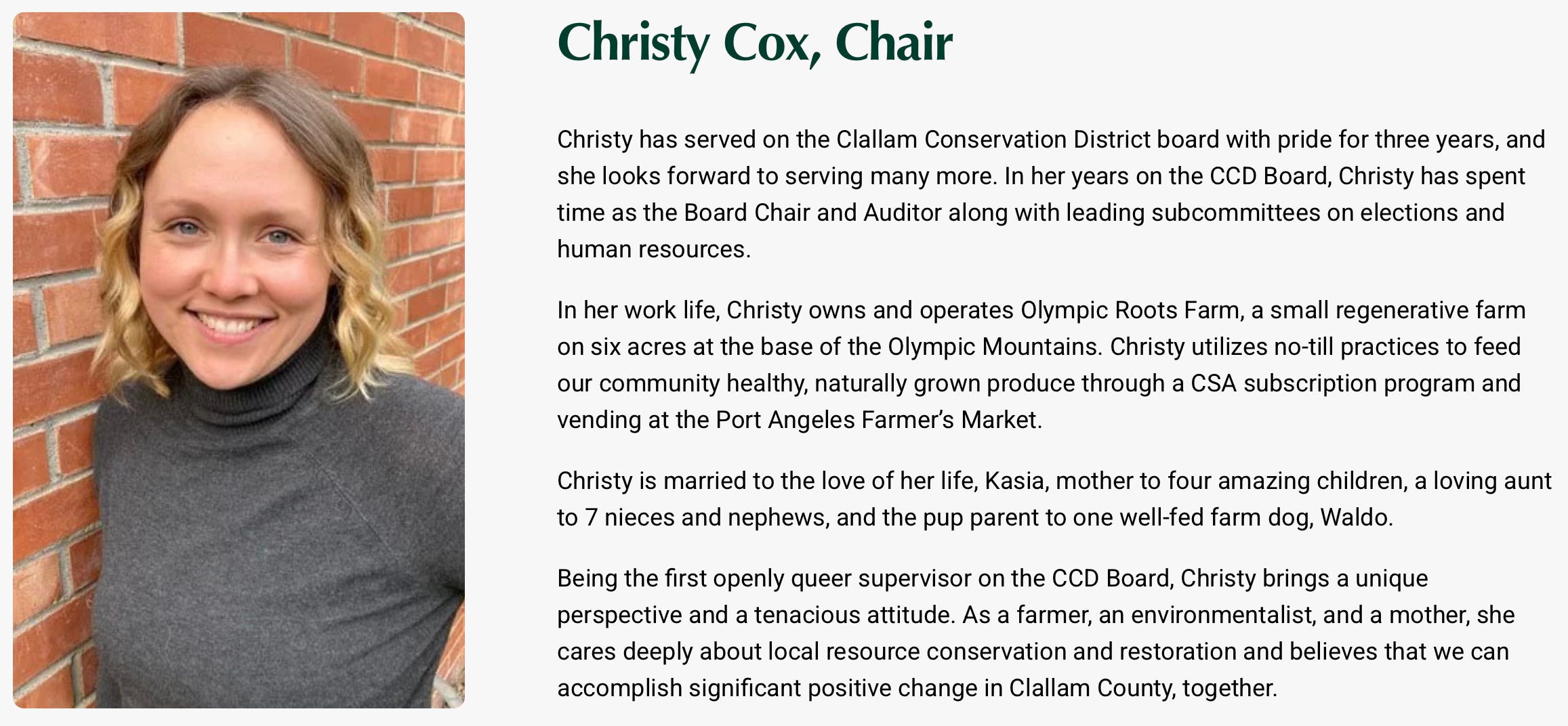
The CCD also announced that the State Conservation Commission will not appeal the Thurston County ruling that voided the 2024 election. The CCD board opposed that decision, with Chair Christy Cox insisting everything the District did was “legal.”
Cox said she was advised that the Attorney General’s Office did not believe an appeal would succeed and did not want to risk setting statewide precedent.
If the procedures were truly lawful, precedent would not be a threat.
Appointments Instead of Elections
With a supervisor seat now vacant, the CCD released a draft resolution to fill it by appointment, not election. The application window runs from January 23, 2026, to 4:00 p.m. on February 20, 2026, and eligibility is limited to farm operators, farm owners, or landowners.
That further narrows participation in an agency that now takes money from every parcel owner in the county.
Draft resolutions and applications have been circulated, but signed versions have yet to be publicly posted.
Why This Matters
The CCD is a county-level arm of a state agency. It influences land use, water policy, and agriculture. It now has guaranteed funding extracted from taxpayers who never consented to it.
At the same time, it has demonstrated:
Documented financial accounting errors (detailed by Jake Seegers)
Resistance to public scrutiny
A willingness to restrict elections rather than fix them
Open hostility toward critics
No meaningful oversight from the County Commissioners, who enabled this arrangement
That is not how public institutions are supposed to function.
A Path Back to Legitimacy
This situation is not irreversible. The loss of trust at the CCD is the result of deliberate choices—and different choices could restore confidence.
There is a straightforward solution:
Hold single-day, in-person supervisor elections with voter ID and same-day registration
Place CCD elections on the November general-election ballot, where turnout is highest and procedures are standardized
Require independent election administration, not CCD staff or affiliated groups
Mandate annual independent financial audits, clearly published and explained
Condition future county funding on measurable compliance and transparency benchmarks
These reforms would cost less than the current mail-only system and would eliminate discretion, confusion, and suspicion. Most importantly, they would restore the basic principle that seems to have been forgotten: public agencies answer to the public.
The County Commissioners created this accountability gap when they imposed a decade of funding without voter approval. They also have the authority—and the obligation—to fix it.
What You Can Do
Until that happens, participation matters more than ever.
If the CCD insists on limiting access, the public must respond by showing up anyway.
Request your ballot. Encourage your neighbors to do the same.
Phone: (360) 775-3747
Email: info@clallamcd.org
Ballot requests must be submitted by 4:00 p.m. on February 18, 2026.
The CCD may believe it no longer needs to answer to voters. This election is your chance to prove otherwise.
The commissioners did not answer the last email. Here is today's question:
Dear Commissioners,
After approving guaranteed, long-term public funding for the Clallam Conservation District without a vote of the people, what leverage do the Commissioners believe they still have to ensure the CCD follows election law, maintains financial accountability, and meaningfully engages the public—especially given that a prior CCD election was thrown out and the District is now restricting public participation?
All three commissioners can be reached by emailing the Clerk of the Board at loni.gores@clallamcountywa.gov
"During the meeting, Williams complained that the public does not “understand” issues like water quality and warned the District could “lose our expertise” if the pool of voters changes."
And there it is, Marky Mark and his funky bunch continue with their reign of conniving power.
The BOCCC has emboldened the CCD and instead of stepping up to defend the citizens of Clallam County capitulate to this insanity.
Jake, 2026!