

A full-page advertisement appearing in both the Peninsula Daily News and the Sequim Gazette laid out the Jamestown Corporation’s vision for taking ownership of the Dungeness and Protection Island National Wildlife Refuges. The ad presents the proposal as stewardship and restoration. But beneath the emotional language and conservation messaging, many residents are beginning to ask a harder question: why is federally protected public land being permanently transferred into sovereign tribal ownership with so little public discussion and so many unanswered questions?
A Full-Scale Public Relations Campaign
For weeks now, local residents have watched a coordinated campaign quietly build momentum around a proposal that would have sounded almost unbelievable not long ago: the permanent transfer of two federally protected wildlife refuges into tribal trust ownership.
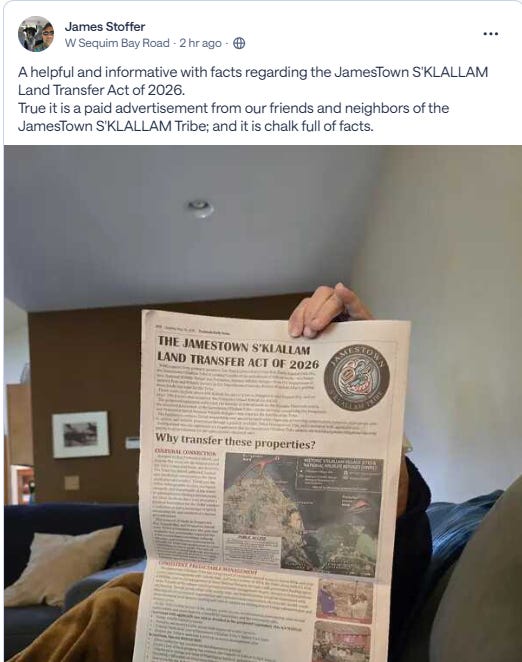
The Jamestown Tribe recently purchased full-page advertisements in both the Peninsula Daily News and the Sequim Gazette promoting the proposed transfer of the Dungeness National Wildlife Refuge and Protection Island National Wildlife Refuge into tribal ownership.
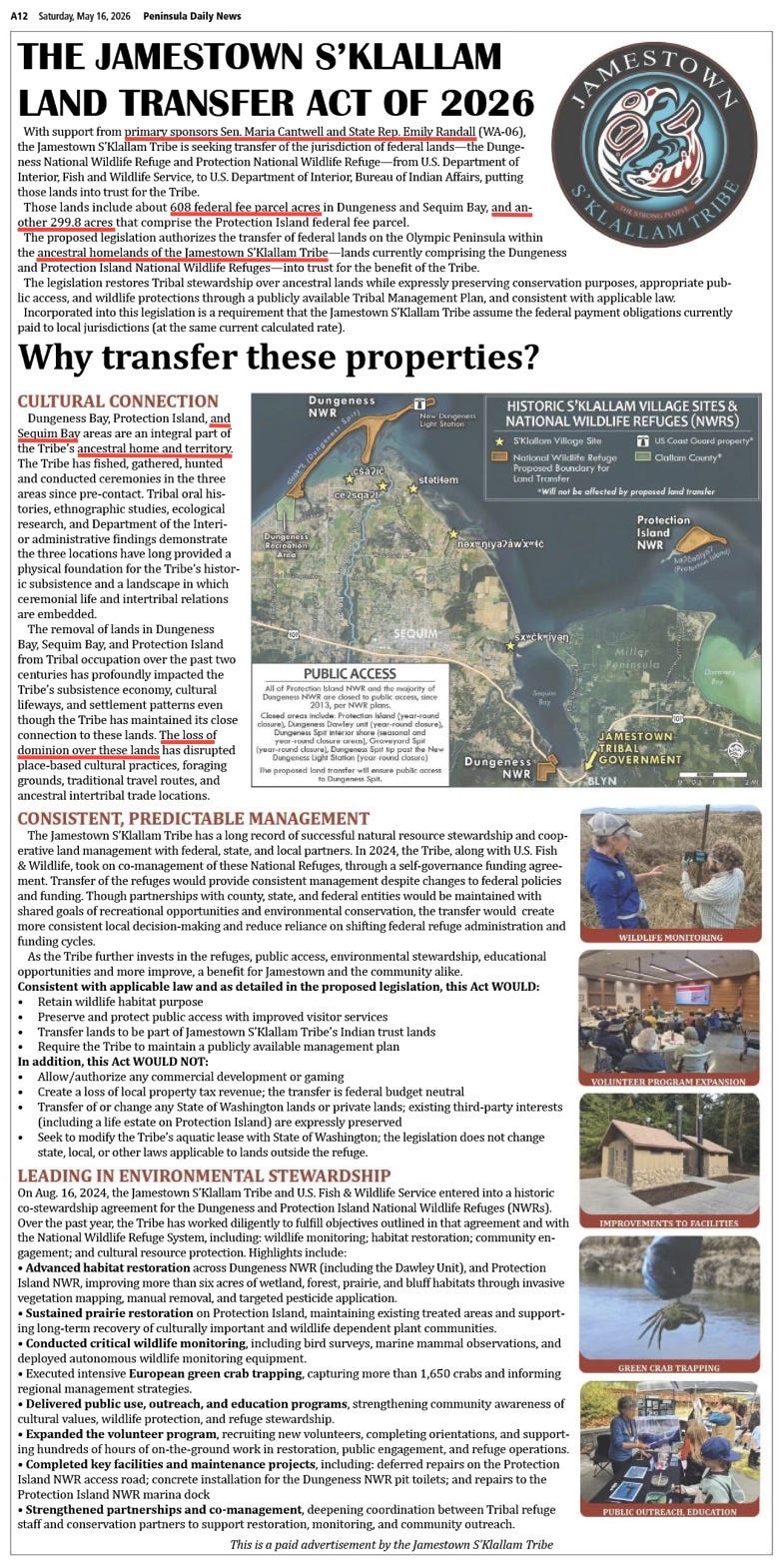
The ad is visually impressive and carefully crafted. It emphasizes cultural restoration, environmental stewardship, volunteerism, habitat protection, educational outreach, and continued public access. Anyone casually flipping through the paper would likely walk away believing this is simply a conservation effort with universal support.
But the deeper people look, the more questions begin to emerge.
The first question many people are asking is also the simplest: if these lands are already federally protected wildlife refuges owned by all Americans, why is there such urgency to transfer ownership at all?
The Questions Aren’t Coming From “Anti-Tribal” People
One of the few people publicly pumping the brakes is longtime environmental filmmaker and conservation advocate Al Bergstein.
What makes Bergstein difficult to dismiss is that he is not some anti-tribal activist or political bomb thrower. In fact, he has worked closely with the Jamestown S’Klallam Tribe for years. He produced films for the Tribe, worked alongside respected tribal elder Marlin Holden, interviewed leaders Kurt Grinnell and Ron Allen, and says he was trusted enough to videotape tribal meetings, something he was told outsiders had never previously been allowed to do.
He supported tribal environmental restoration projects. He supported tribal aquaculture efforts. He has repeatedly stated he has tremendous respect for the Tribe and its leadership.
Yet despite that history, Bergstein is already being labeled “anti-tribal” simply for questioning the refuge transfer proposal and asking for more public scrutiny before irreversible decisions are made.
That should concern people.
When citizens can no longer question permanent governmental land transfers without immediately being accused of hostility or prejudice, meaningful public discussion starts disappearing.
“If I Told You…”
Bergstein’s recent editorial in the Port Townsend Leader opened with a question that cuts directly to the core of the issue:
“If I told you that a prized National Wildlife Refuge was going to be handed over to an aquaculture company, what would be your reaction?”
He then asks whether people would react differently if they learned the recipient was the Jamestown S’Klallam Tribe.
It’s an uncomfortable question, but it forces people to separate emotion from policy.
The Jamestown Corporation has undeniably done important environmental restoration work across the Peninsula. Even critics acknowledge that. But the Tribe is also a sophisticated and growing economic organization with expanding commercial interests, including aquaculture operations.
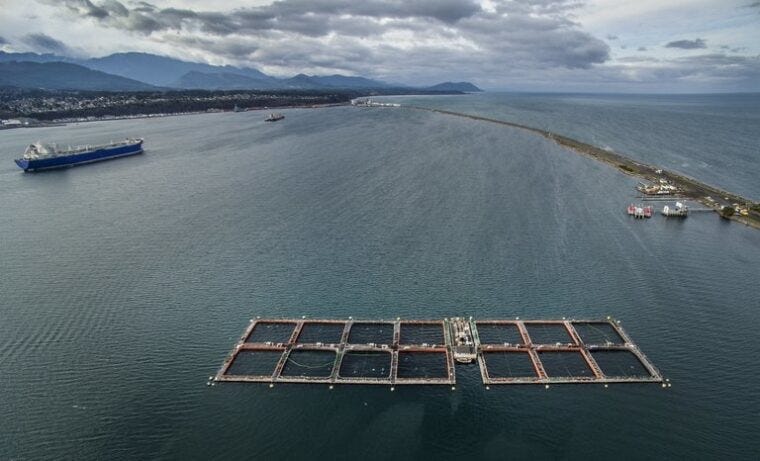
Bergstein’s concern is not whether the Tribe has done good work in the past. His concern is what happens once public land permanently leaves public ownership and enters sovereign tribal trust status, where future decisions are no longer governed by the same federal oversight, public input requirements, or national wildlife refuge laws that currently exist.
That concern is not theoretical. It is how tribal sovereignty functions.
The Shi Shi Beach Example
A useful example many Peninsula residents immediately understand is Shi Shi Beach near Neah Bay.
People often ask, “Wasn’t Shi Shi public?”
The answer is complicated.
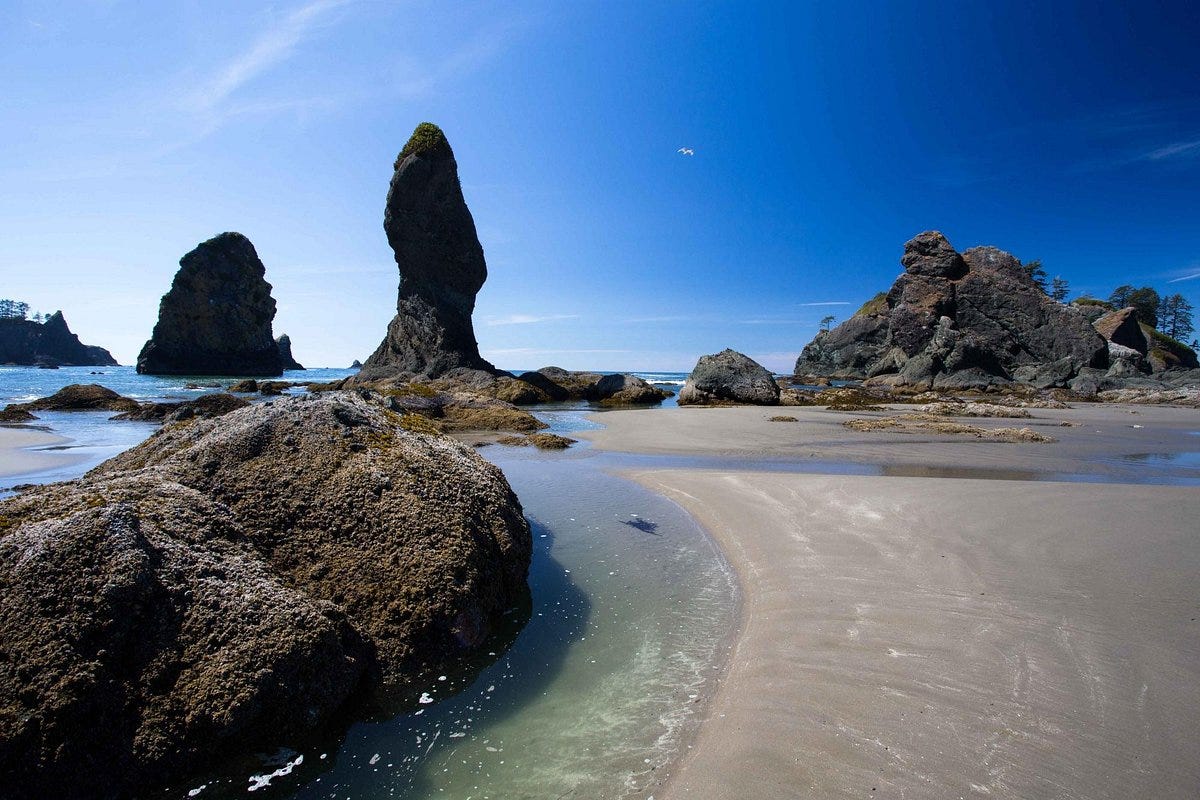
The beach itself remains accessible to the public, but access now operates under tribal authority because the trailhead and surrounding lands cross Makah tribal land. Visitors now pay recreation fees, deal with tribal parking systems and access rules, and operate under tribal regulations while visiting an area many longtime residents remember feeling far more informal and open decades ago.
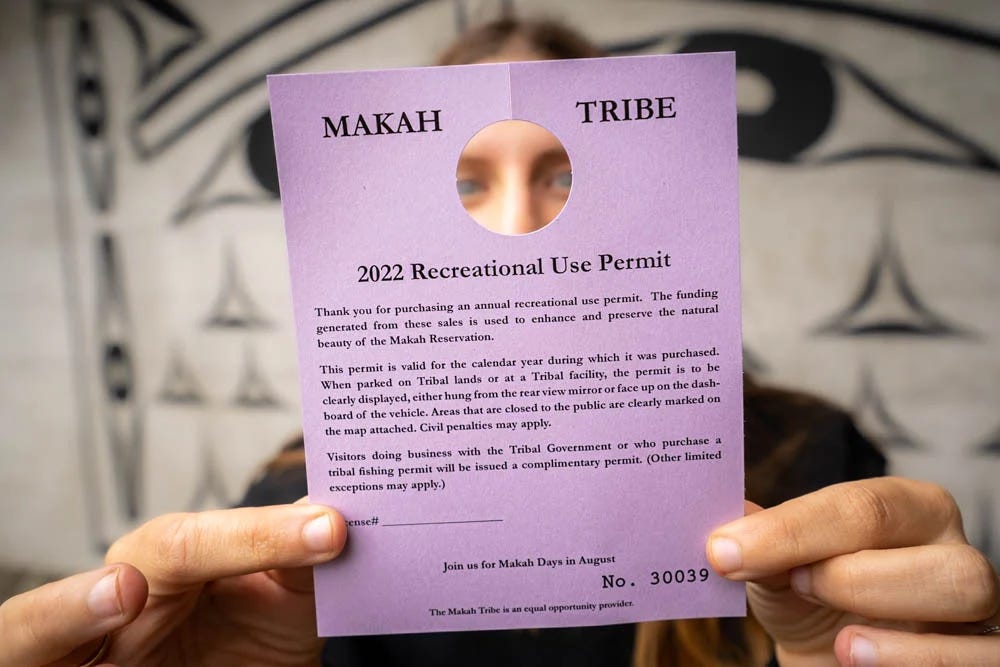
This example matters because it demonstrates what happens once access, management, and oversight shift under sovereign tribal authority.
Fees can change. Rules can change. Restrictions can change. Public influence becomes limited. And over time, benefits increasingly flow toward tribal governments rather than the general public.
That is exactly why many residents are uneasy about permanently transferring federal wildlife refuges into trust status.
“Trust Us Forever”
The Tribe’s advertisements repeatedly assure readers that public access will continue.
But people are beginning to notice how much of the language remains broad, flexible, and undefined.
What exactly qualifies as “public access”?
Will there eventually be permit systems? Access fees? Parking fees? Restrictions on shoreline use? Expanded aquaculture operations? Future public appeal processes?
What happens after the current leadership changes?
What happens after Ron Allen?
What protections exist if priorities evolve over the next fifty years?
Those questions are not clearly answered in either the advertising campaign or the proposed legislation. And that vagueness is precisely what makes many people nervous.
The public is essentially being asked to trust that future tribal leadership, future political priorities, and future economic pressures will always align with the promises being made today.
That’s a permanent gamble.
Protection Island Was Saved By Americans
One thing getting almost completely buried in the current discussion is how Protection Island became protected in the first place.
The refuge did not simply appear overnight. It took decades of activism and enormous public effort to save it from development. Local women like Eleanor Stopps and Zella Schultz helped lead a national conservation movement to stop the island from being subdivided into hundreds of housing lots.
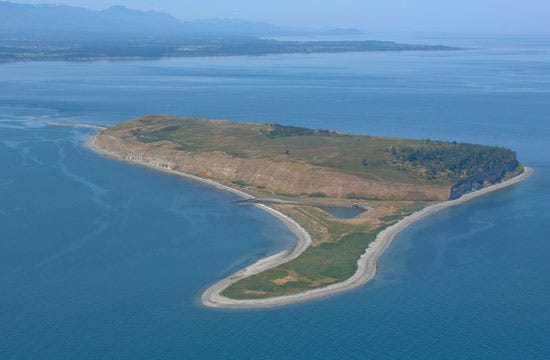
Environmental leaders like Hazel Wolf, organizations like Seattle Audubon and The Nature Conservancy, Republican and Democratic elected officials, volunteers, photographers, conservationists, and ordinary citizens all worked together to preserve Protection Island for everyone.
Now the public is being asked to permanently surrender ownership of that refuge with surprisingly little broad public discussion.
The Drift Cell Study
At the same time, residents are beginning to revisit older tribal planning documents through a very different lens.
One document receiving renewed attention is the Tribe’s decade-old “Dungeness Drift Cell Conservation Strategy.”
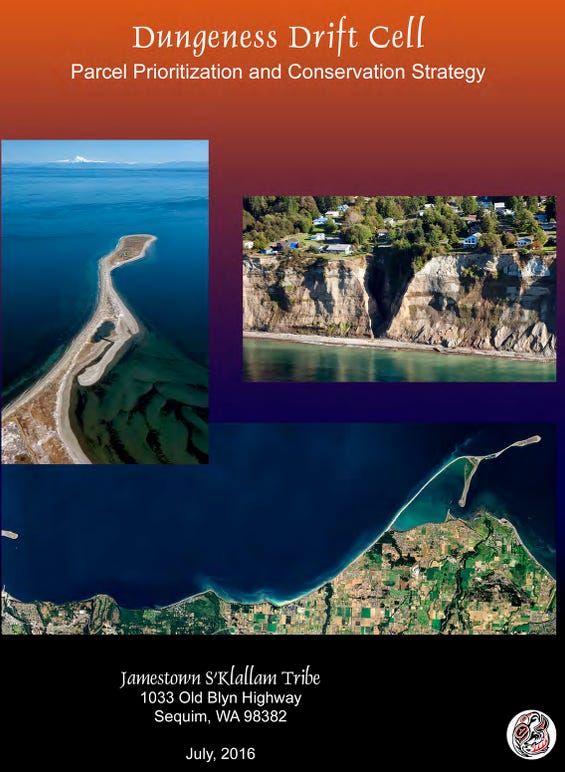
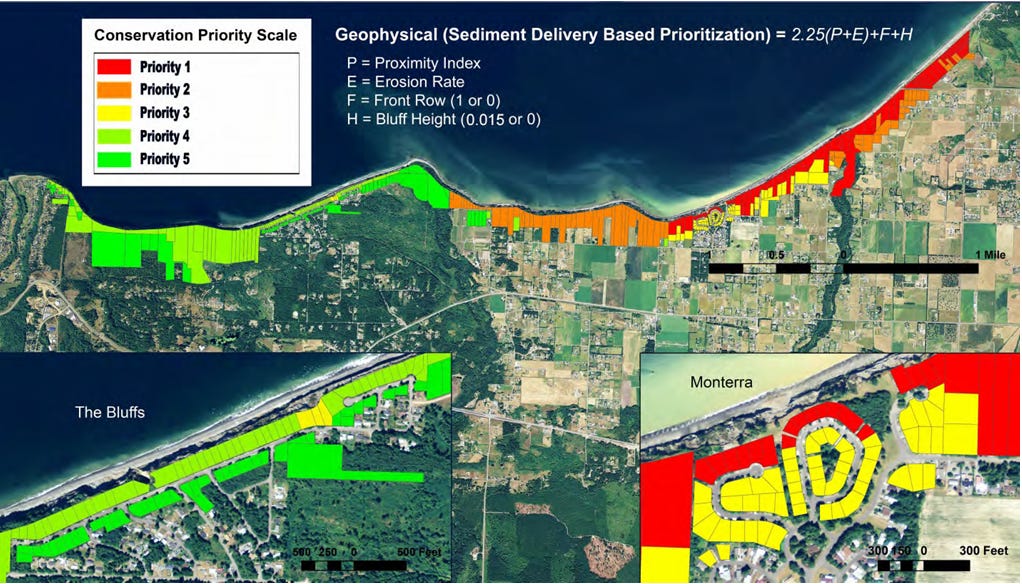
The document discusses shoreline conservation priorities, parcel rankings, acquisition opportunities, vulnerable properties, and long-term environmental planning throughout the Dungeness area.
Some residents now believe portions of the study read less like ordinary conservation planning and more like a long-range blueprint for strategic land acquisition and shoreline influence throughout the region.
“Fear may turn to desperation, especially where the landowner does not own sufficient property to move the structure back from the bluff.” — Jamestown’s Drift Cell Study
The language surrounding public fears is especially interesting. Critics point out that the study openly discusses concerns residents may have regarding land ownership and future control, suggesting tribal planners understood years ago that these issues would eventually become politically sensitive.
At minimum, it shows this refuge discussion did not suddenly appear overnight.
This has been developing for years.
Revising The Story
At the same time this refugee transfer campaign is accelerating politically, a broader cultural messaging effort is also becoming more visible.
The Sequim Gazette recently promoted a new lecture series at the Dungeness River Nature Center titled “People, Place, and Time.”
Today’s lecture is called “Since Time Immemorial: A Revised History of the Northeast Olympic Peninsula.”
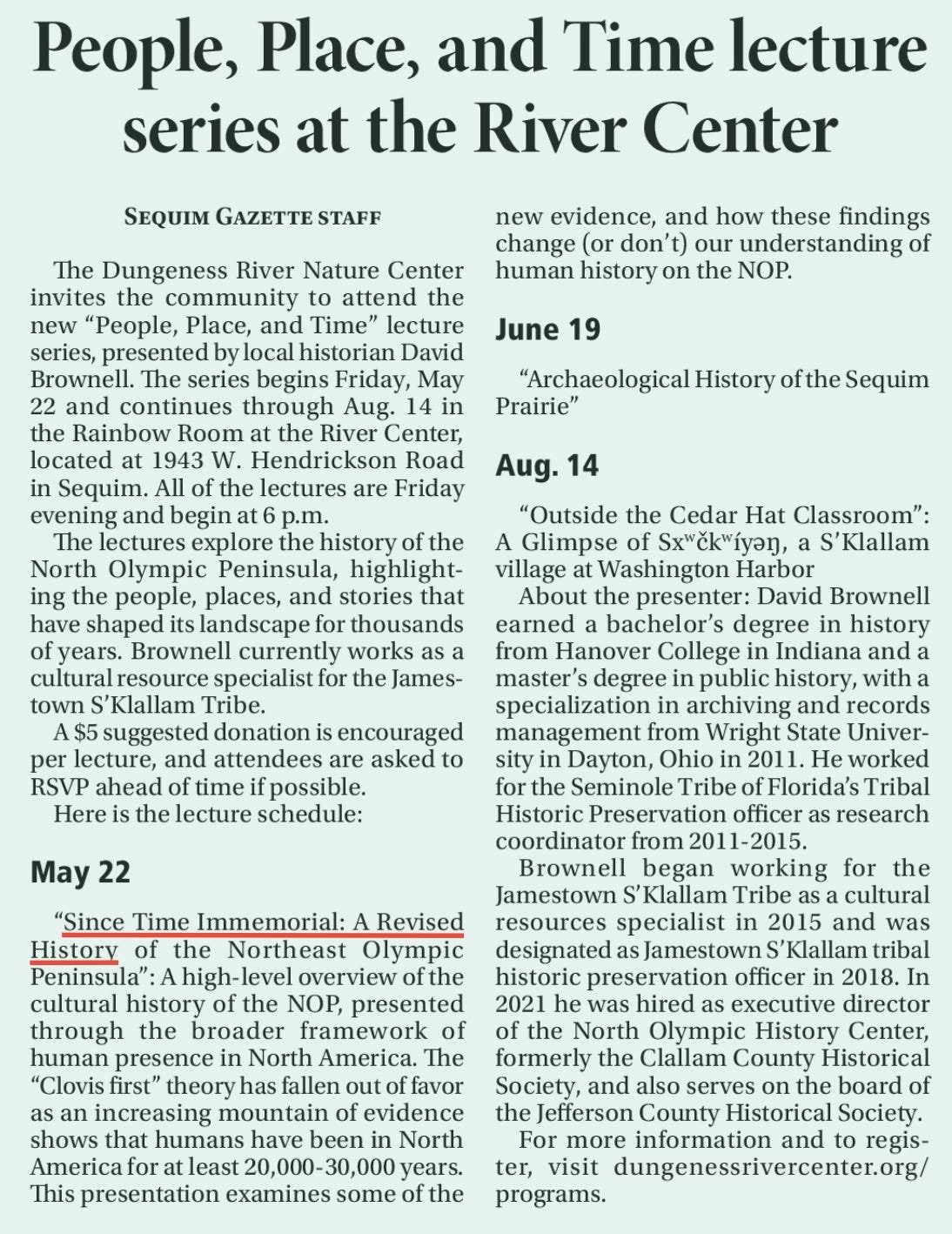
Revised history — Think about that wording. The presenter, David Brownell, works as a cultural resource specialist for the Jamestown S’Klallam Tribe.
Nobody disputes that Indigenous history deserves recognition and preservation. But many residents are beginning to notice how these efforts all seem to be moving in the same direction at the same time: revised historical narratives, expanding conservation strategies, political support letters, cultural restoration campaigns, and federal refuge transfers.
People are naturally beginning to ask whether the current proposal is part of a much larger long-term effort involving shoreline control, land influence, and future governance throughout portions of the Peninsula.
Local Governments Keep Falling In Line
Meanwhile, local governments continue falling into line.
The Sequim City Council has already submitted a support letter. Jefferson County Commissioners have done the same. Clallam County Commissioners are now considering their position.
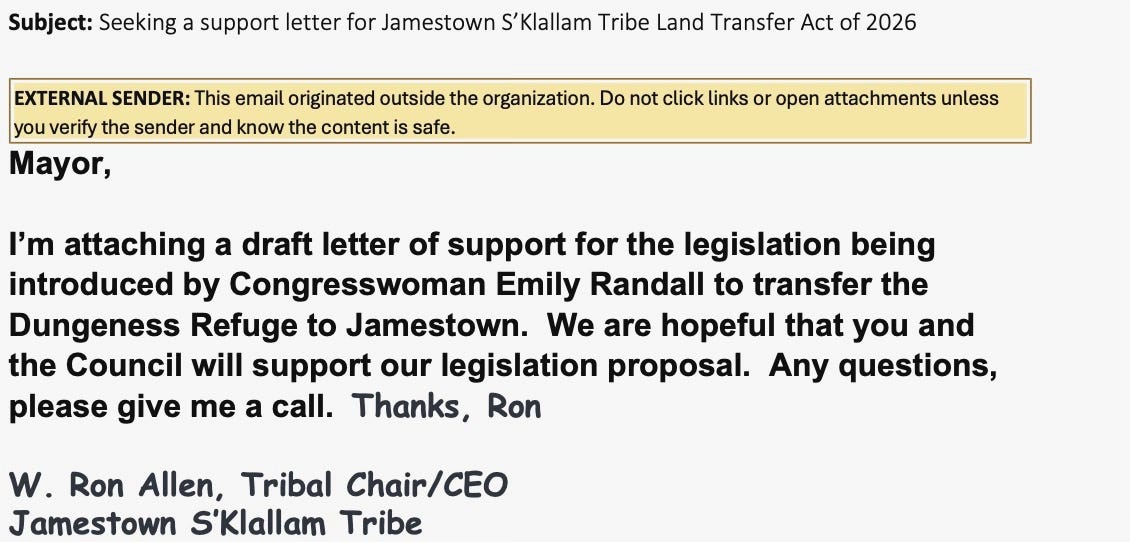
Yet many residents struggle to point to any truly robust public process that has taken place before these endorsements started rolling in.
There have been very few public forums, few public interviews, and remarkably little adversarial questioning, considering the magnitude of what is being proposed.
Instead, the public is mostly receiving polished advertising campaigns, carefully framed conservation language, emotional historical appeals, and pressure to move quickly before broader scrutiny fully develops.
The “No Funding” Narrative
One of the primary arguments supporters continue making is that the federal government no longer properly funds or maintains wildlife refuges.
But Bergstein recently pointed to a May 19 announcement from the National Wildlife Refuge Association celebrating more than $67 million in new federal refuge and wetlands funding nationwide.
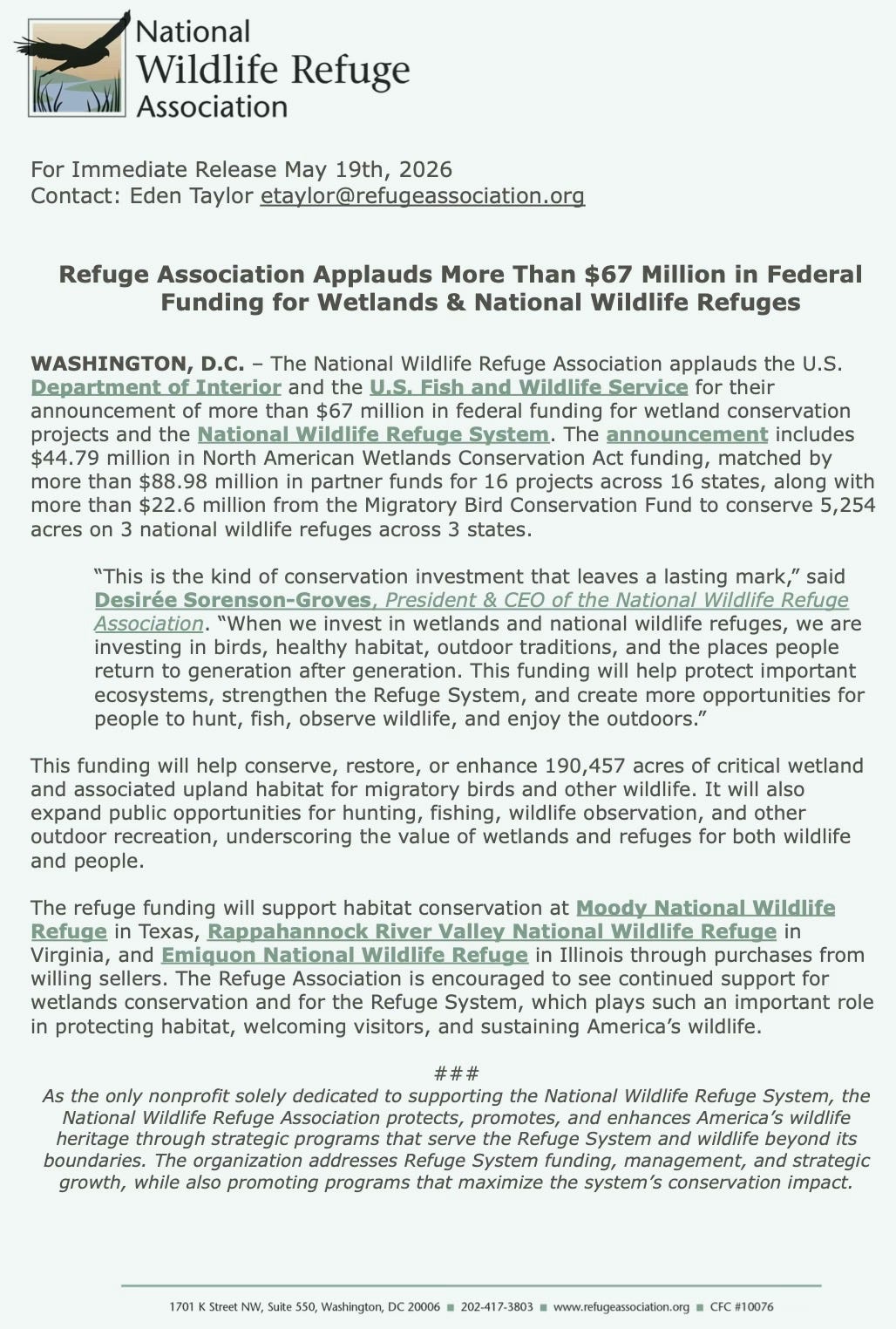
That funding includes millions for habitat conservation, wetlands restoration, public recreation access, and refuge expansion projects across the country.
That announcement complicates the narrative that federal refuge stewardship is somehow collapsing beyond repair.
And it raises another obvious question: if the federal government is still funding wildlife refuges, why is there such urgency to permanently transfer ownership now?
Once It’s Gone, It’s Gone
At the center of all this sits one unavoidable reality: these refuges already belong to the American people, including tribal members, because tribal members are Americans too.
What the public is now being asked to do is permanently surrender ownership and future control of nationally protected lands to a sovereign government under terms that remain surprisingly vague, considering how irreversible the decision would be.
And once that transfer happens, there is no easy way back.
Once it’s gone, it’s gone.
Residents interested in hearing more from Al Bergstein about the history of Protection Island and his concerns surrounding the proposed transfer can follow his blog and listen to a recent KPTZ interview.
One More Thing…
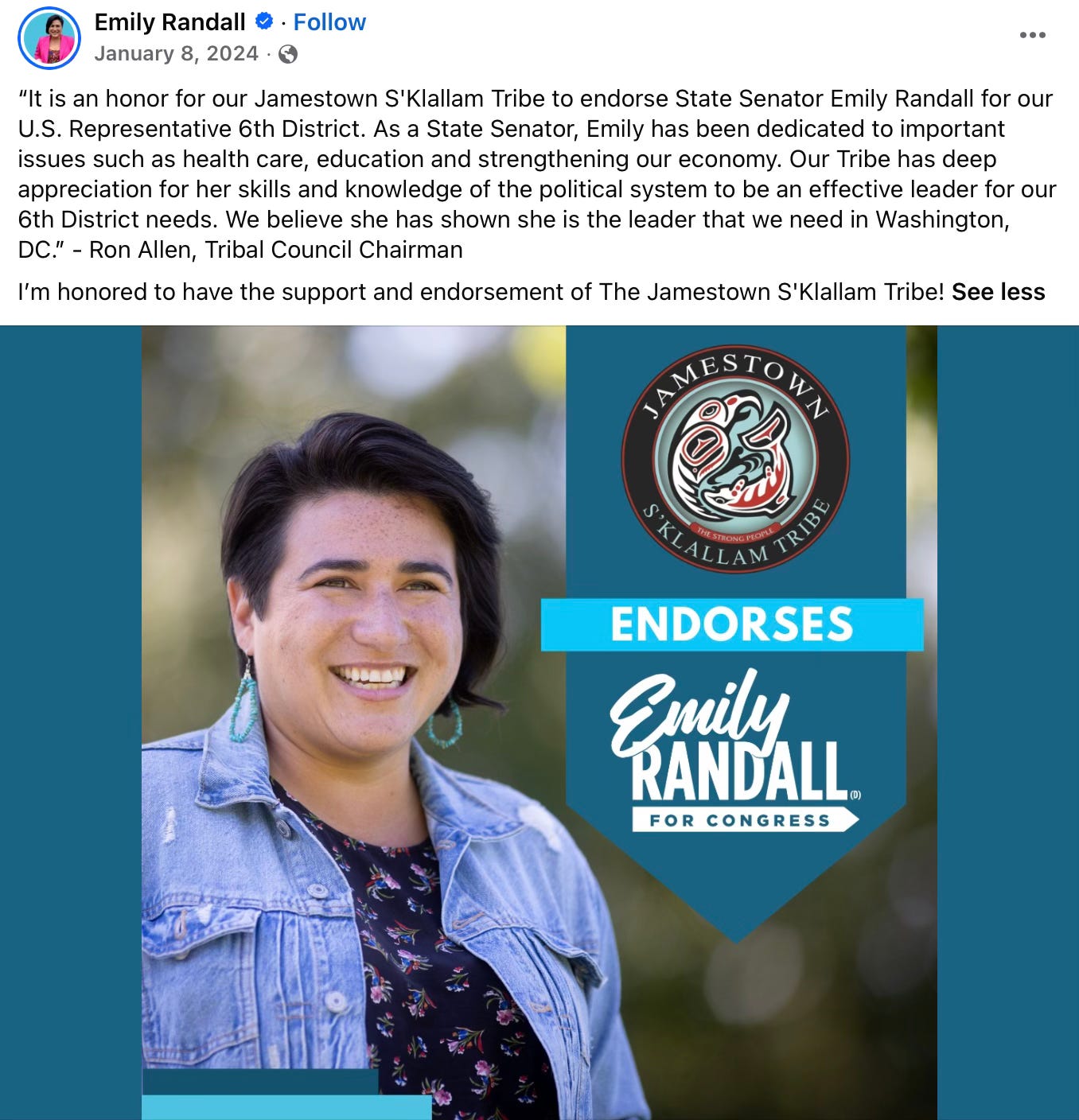
Congresswoman Emily Randall — the elected official now helping move the Jamestown S’Klallam Land Transfer Act through Congress — is coming to town.
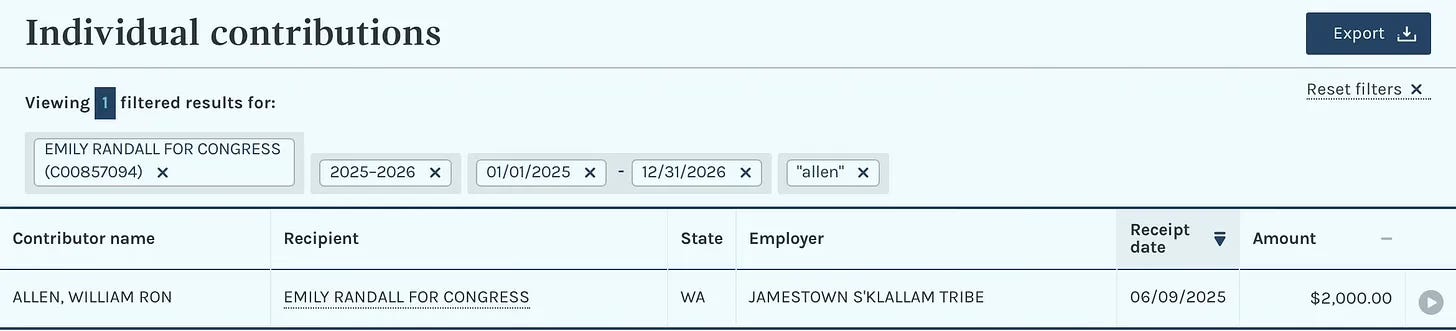
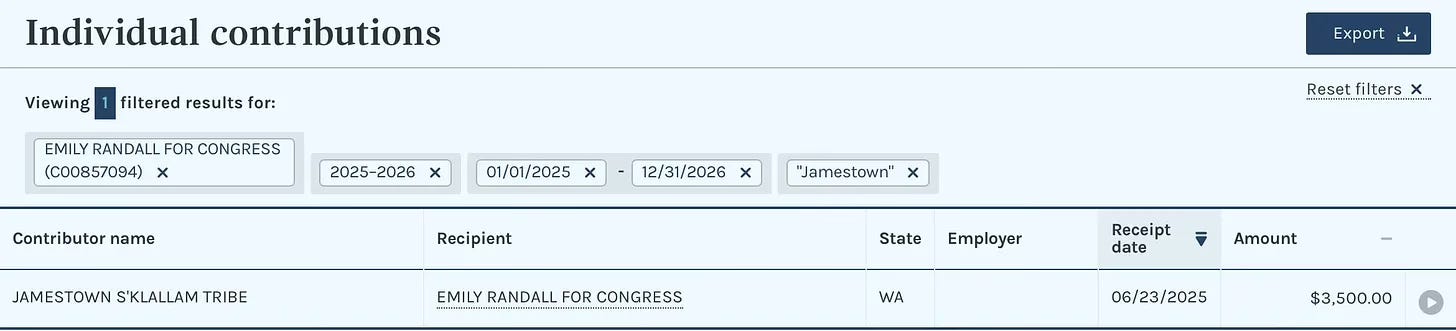
Campaign finance records show Randall previously received a $2,000 campaign contribution from Jamestown Corporation CEO Ron Allen and another $3,500 contribution from the Jamestown Tribe.
Now she is helping lead the effort to permanently transfer federally protected wildlife refuges into tribal ownership.
Randall recently sent the following text message to residents:
“Hey Neighbor! This is Congresswoman Emily Randall letting you know that I’ll be hosting a Town Hall on Thursday May 28 in Chimacum at 6 PM, doors open at 5:30 PM. I can’t wait to answer your questions and talk about what’s going on in Congress. If you’d like to attend, RSVP Here!”
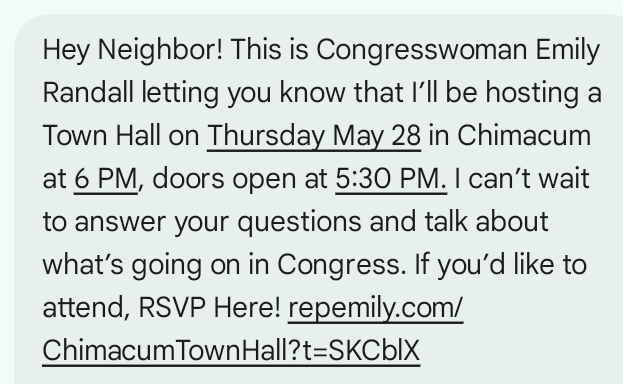
The location will be provided 48 hours before the event. Those interested should sign up here.
With so much of this process unfolding through political letters, closed-door discussions, and carefully managed public messaging, this may be one of the few opportunities residents have to directly voice concerns about handing federally protected public lands into sovereign tribal control.
Today’s Tidbit: The Rialto Reminder
The timing is interesting.
As the Jamestown S’Klallam Tribe pushes for ownership of the Dungeness and Protection Island Wildlife Refuges, the Peninsula Daily News is now reporting that the Quileute Tribe has begun charging parking fees for access near Rialto Beach after decades of free public parking.
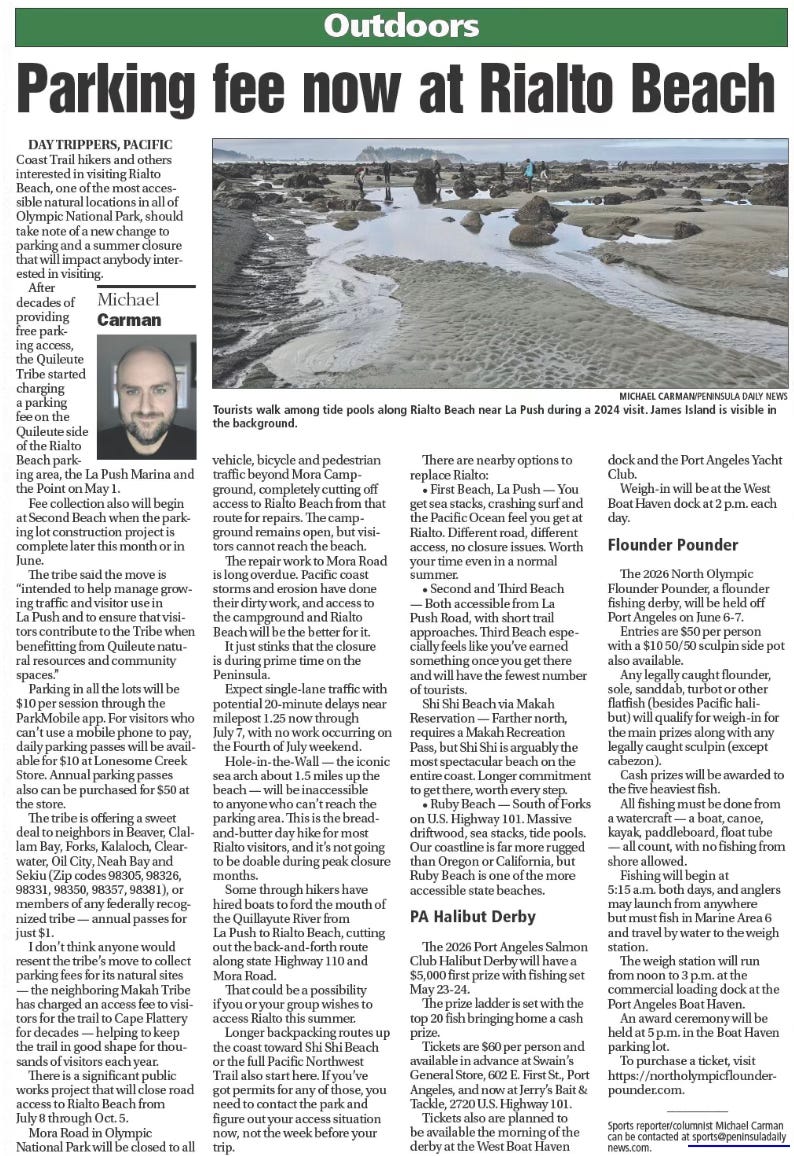
No, Rialto Beach itself is not closed to the public. But it is another reminder that when access points, parking, infrastructure, and surrounding lands fall under tribal control, public use can slowly become more regulated, more restricted, and more expensive over time.
That’s why some residents are paying very close attention to the promises currently being made about “continued public access” surrounding the proposed refuge transfers. History shows that those arrangements can evolve considerably once public land leaves public control permanently.
The commissioners and Health Officer Berry did not reply to yesterday's email asking if it's standard practice to mischaracterize their constituents' concerns to portray them as "hating" poor people or just wanting homeless residents to "die on the street." Here is today's email sent to the commissioners:
Commissioners,
I am writing to once again ask about the status of the reported request from the Jamestown Tribe for Clallam County to submit a letter of support to the federal government regarding the proposed transfer of public federal land into tribal trust status.
Has the Board discussed whether it intends to write such a letter, either publicly or privately? If so, what is the current status?
I would also like to ask whether the Commissioners would consider writing a separate letter on behalf of county residents supporting the continued public ownership of these lands and keeping them in the federal public domain for all Americans to access and enjoy.
These questions have been raised repeatedly by members of the public, yet there has been no direct response from the Board. Given the magnitude and permanence of transferring public lands into trust status, many residents believe the public deserves transparency and a clear explanation of where their elected officials stand.
Once public land leaves the federal public domain and enters trust status, the public loses meaningful oversight and future access protections can change permanently. For many residents, this is not simply a land transaction, but a generational public policy decision.
Will the Commissioners commit to publicly discussing:
Whether they support the transfer;
Whether they intend to submit a support letter;
And whether they are willing to advocate equally for keeping the land public?
Thank you for your time and consideration.
Good morning Jeff and Doggers,
My concerns are off the charts on this. I live 1/2 mile from bulldozed wetlands. They can and do skirt the environmental protection laws all the time.
This wetlands area is the second of 2 the other 6 miles away.
Keep putting the brakes on this everyone, Please.
Thanks all!